Senkō-ji Temple
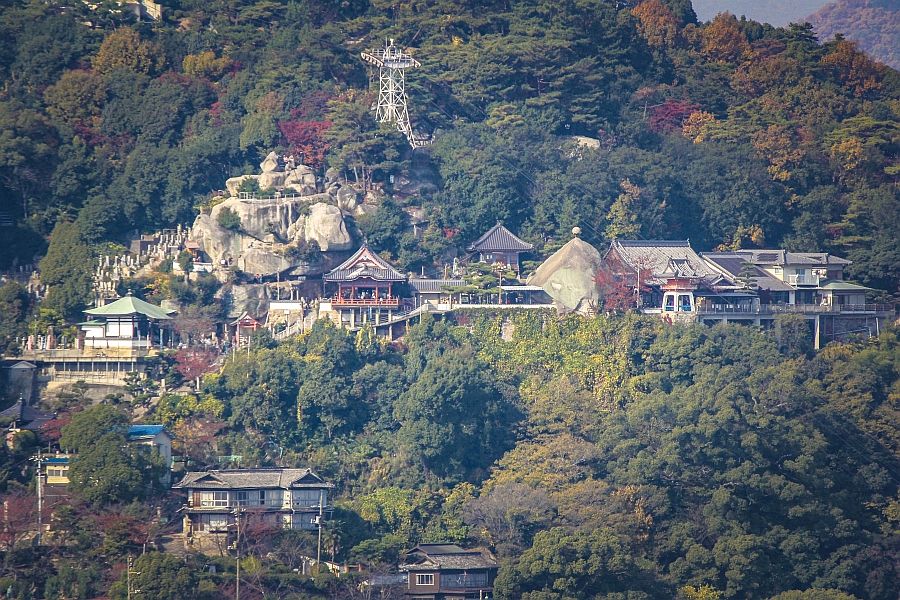
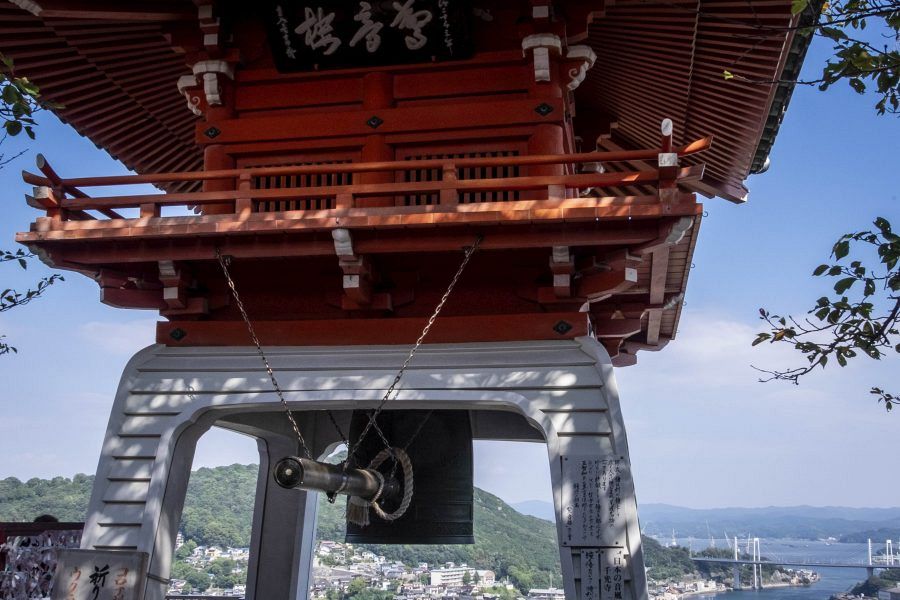
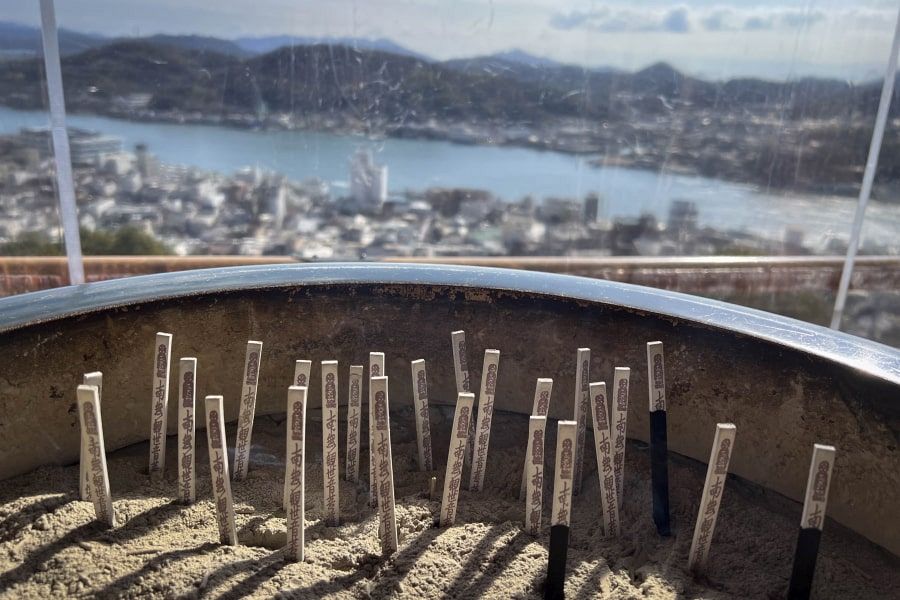
Senkō-ji Temple is located 140 meters above sea level, on the slopes of Mt. Daihō above Onomichi. This large complex of highly varied buildings on several levels stands among mysterious rocky outcrops. It affords an amazing view over Onomichi, the Onomichi Channel, and the islands of the Shimanami Kaidō.
Things to see
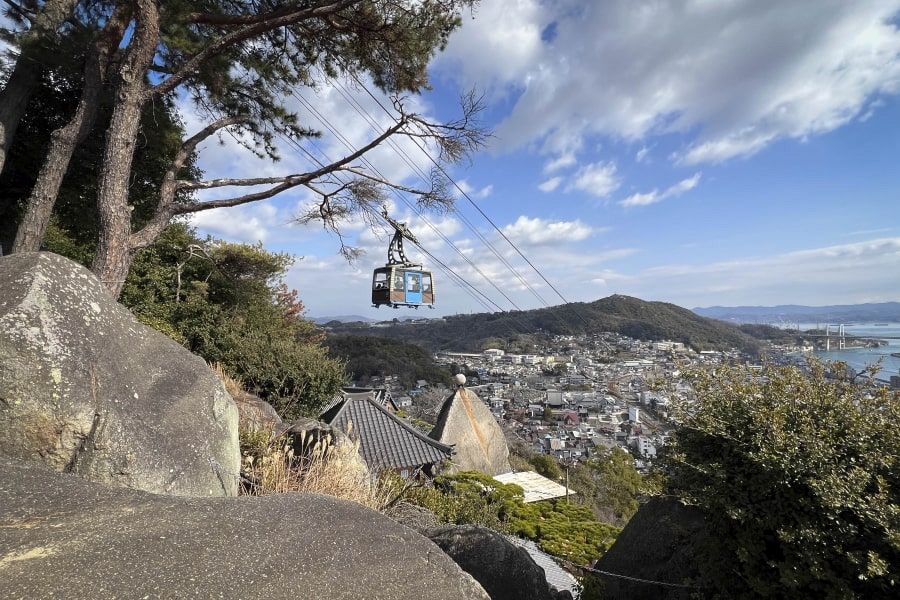
To get to Senkō-ji, you can walk up the roads and alleyways to the temple, or you can take the cable car. The cable car gives you a bird-eye view first of Ushitora Shrine, then of the structures and rock features of Senkō-ji. It’s a short but thrilling ride.
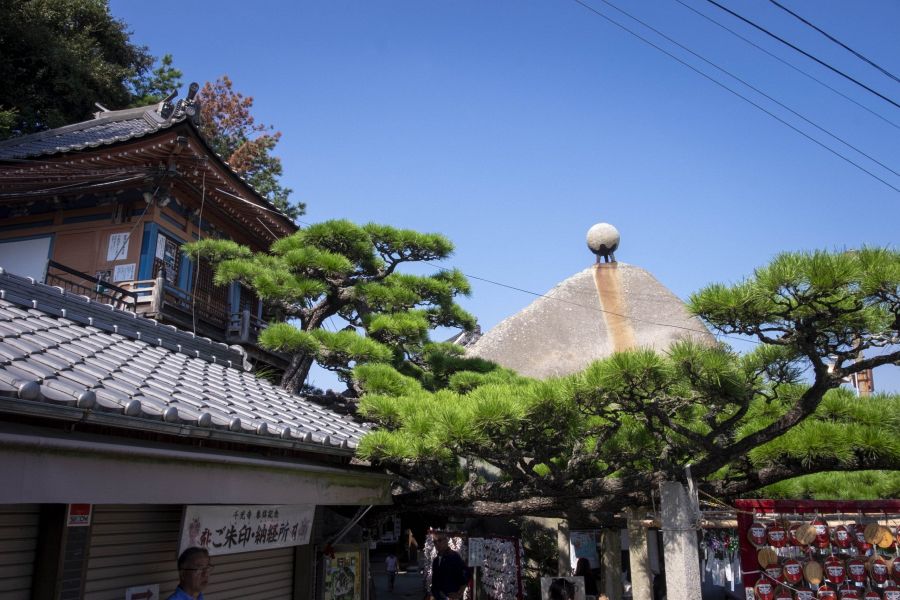
In the centre of the complex is a giant rock called Tama-no-iwa that comes to a point. It has a circumference of 50 m and a height of 15 m. A metal structure at the apex supports a smaller, round rock, which is said to have shone like a beacon in the old days, helping sailors find their way. The temple took its name from this supernaturally luminous rock.
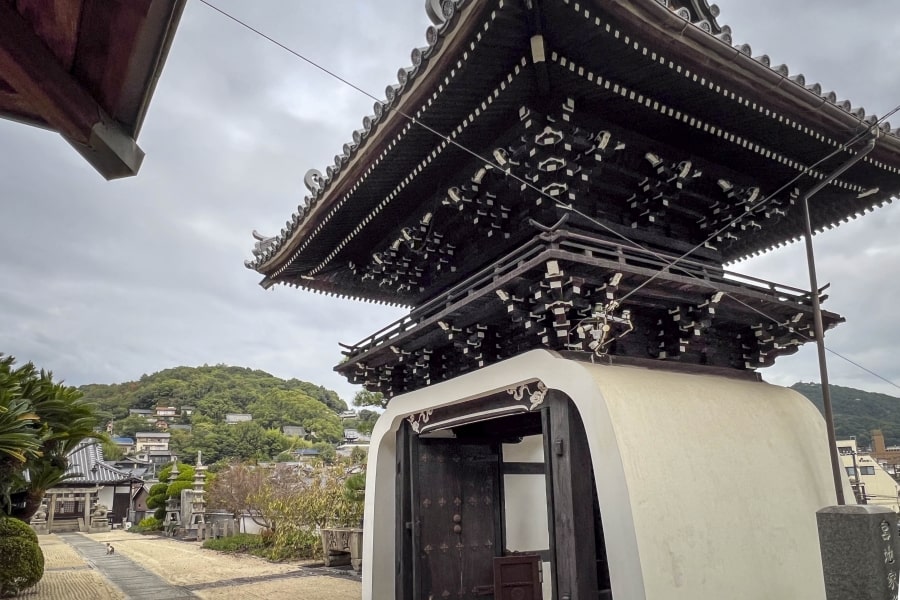
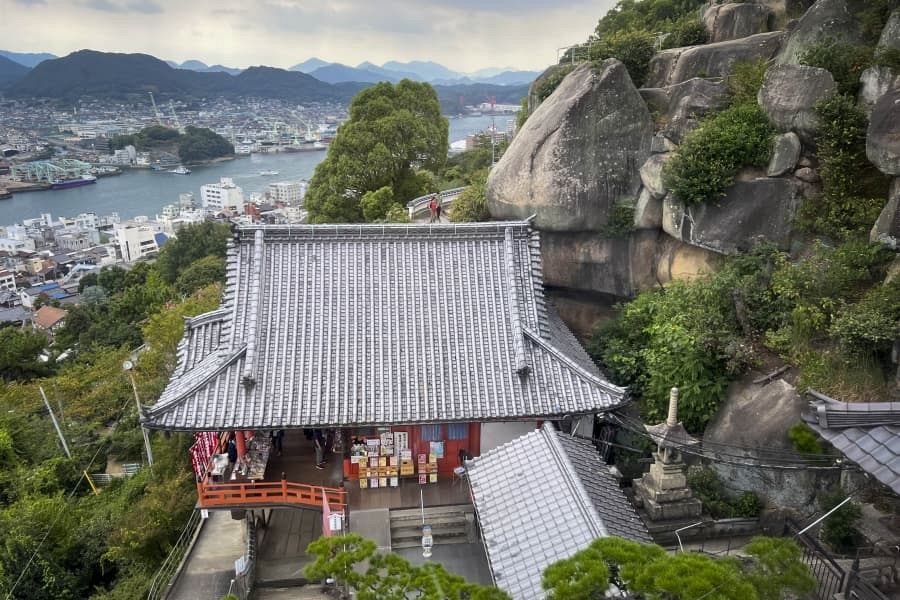
To the right of the rock is the vermilion-lacquered main hall on stilts with a stage-like balcony. Built in 1686, this structure is uncommon in this region. To the left of the rock is a belfry built in the southern Chinese style with a plastered base topped with a wooden part.
Ishizuchi Gongen Shrine stands atop another rocky outcrop, Kusari Yama. A chain (kusari) hangs down the rock, and climbing up the chain is regarded as a form of religious training. It replicates on a very small scale the huge cliffs hung with chains at Mt. Ishizuchi on Shikoku.
On the west side of Tama-no-iwa is Bonji Rock. Chanting a sutra in front of the rock is said to eliminate sins and obstacles to enlightenment.
The second largest rock on Senkō-ji Mountain, Pompon Iwa makes a slight drum-like sound when you tap it with the hammer provided for that purpose. The rock still shows the traces of chisels from the time when a failed attempt was made to cut the stone and send it to build Ōsaka Castle.
The “Meoto Rock” looks like two people snuggled together like a happily married couple. If two people pledge their love in front of this rock, their wishes will come true.
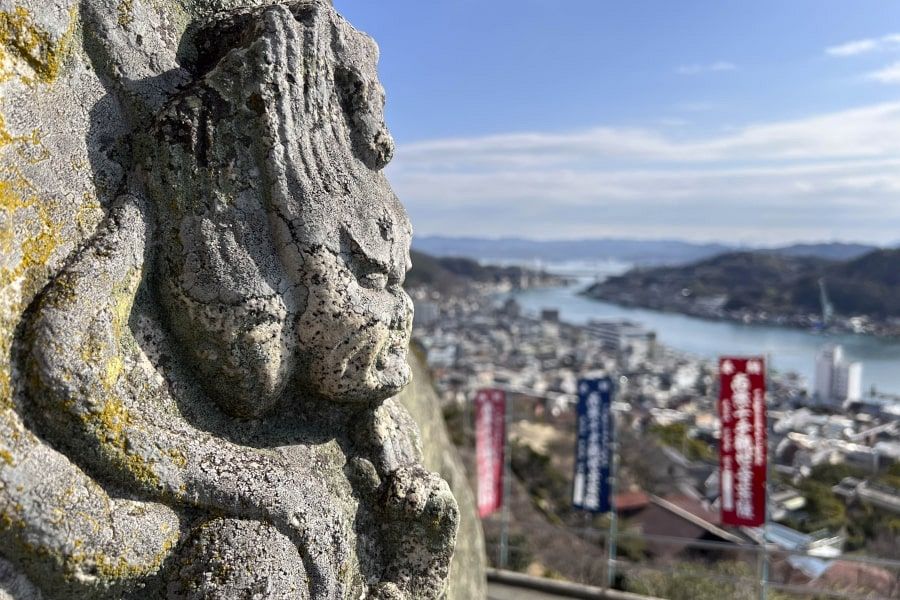
On either side of the long stairway leading up to the main hall, there are old stone Buddhas.
The Path of Literature is a walking trail where the works of the writers and artists associated with Onomichi are carved into the natural rocks.
Within Senkō-ji Park is the Onomichi City Art Museum, more glass and concrete courtesy of architect Andō Tadao. Another new concrete addition is the Senkō-ji Observation Platform.
Legends
Besides the legend of the luminous rock, the principal image of Senjū Kannon is said to have been created by Prince Shōtoku. It’s shown to the public only once every 33 years. It was called the Kannon of fire prevention since olden times, and is regarded as highly efficacious in preventing fires.
History
Senko-ji Temple is said to have been founded by Kūkai in 806, at the beginning of the Heian period (794-1185). It was later restored by Minamoto no Mitsunaka, a famous general of the Minamoto clan in the 900s.
Information
Name in Japanese: 千光寺
Pronunciation: sen-kō-jee
Address: 15-1 Higashitsuchidocho, Onomichi, Hiroshima 722-0033