Oysters and Sake
The luxury of enjoying the finest, freshest oysters by the sea.
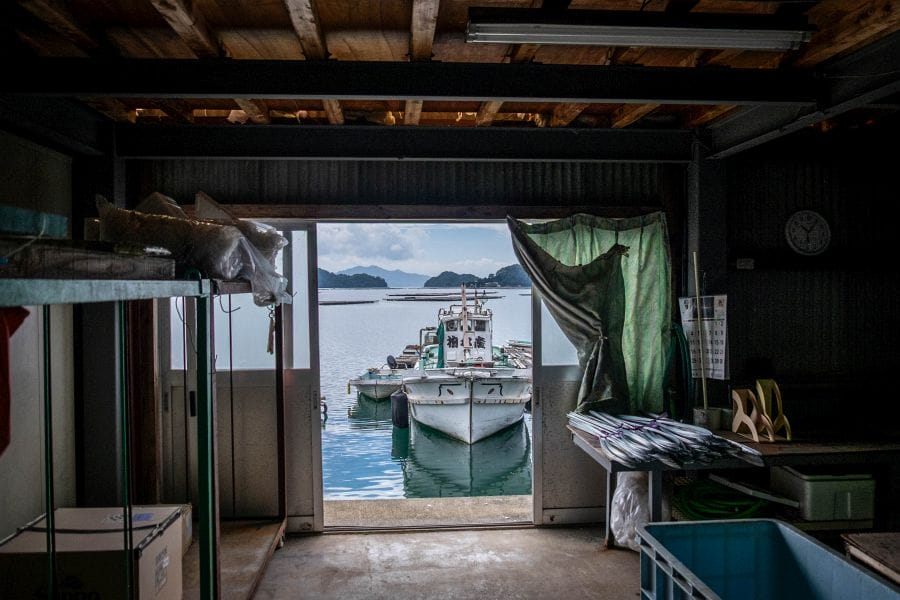
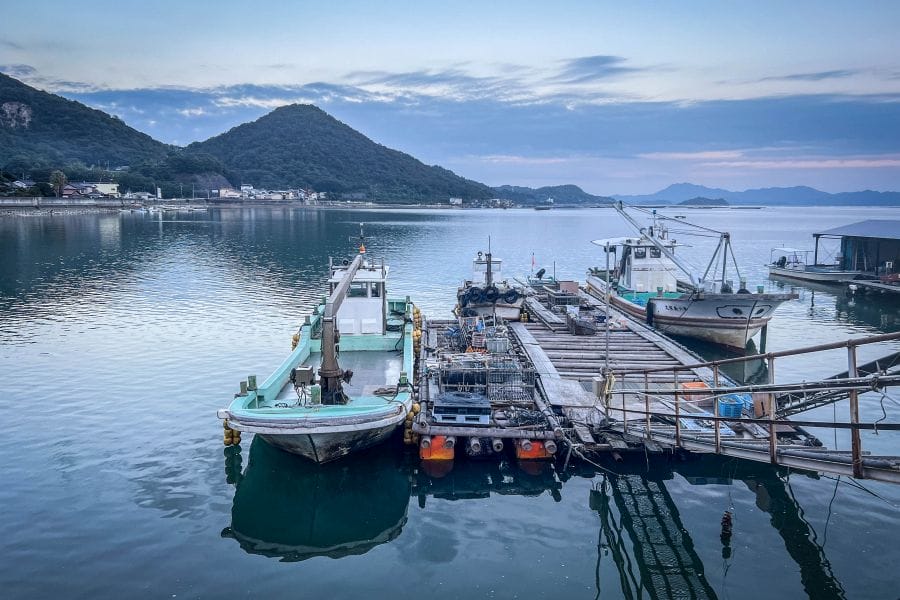
The fishing port of Yasuura sits in a bay on the Inland Sea at the eastern edge of Kure municipality in Hiroshima Prefecture. Within Japan, Hiroshima is known for the high quality of its oysters, but the oysters produced at Yasuura are extra special.
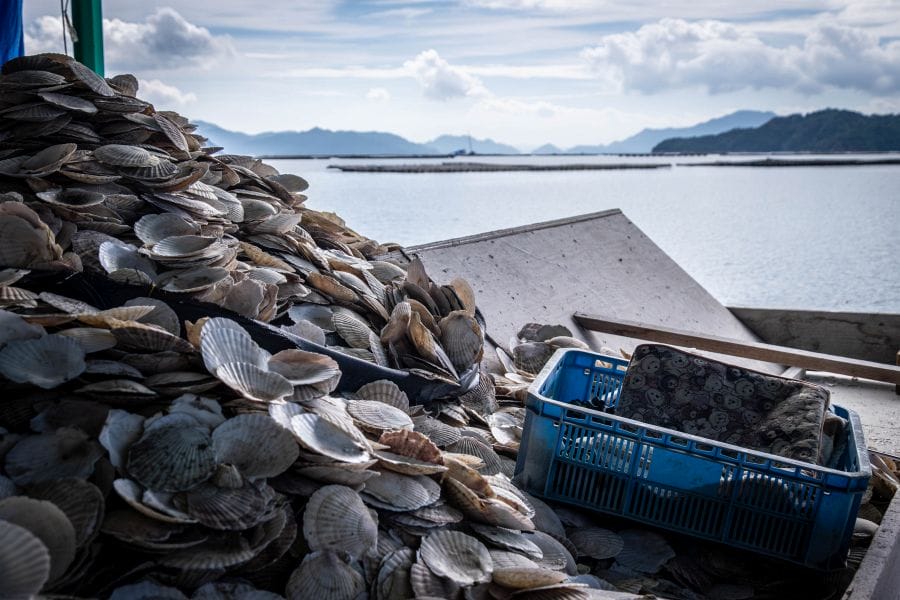
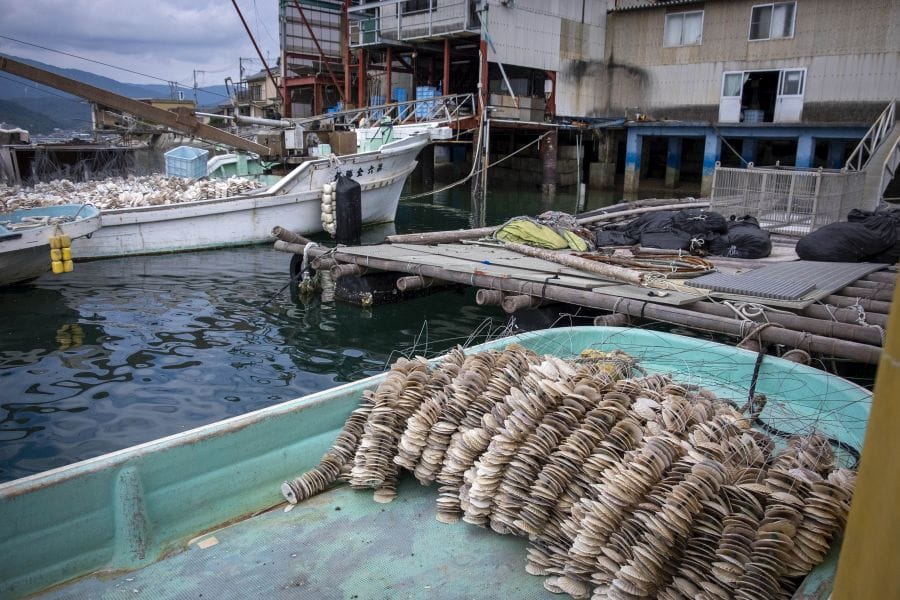
Typically, oyster farming in Hiroshima employs suspended cultivation, where oysters hang on ropes beneath rafts floating in bays. This method is used at Yasuura too, but an extra step is taken to enhance their quality. About six months before harvesting, the oysters are moved to more nutrient-rich waters for the finishing stage. This is where piling cultivation is used.
In the shallow waters near river mouths, bamboo pilings are assembled into shelf-like structures, and the oysters are suspended from these for cultivation. This is done to expose the oysters to the effects of the tidal ebb and flow, placing them in the same growth environment as natural oysters attached to coastal seawalls.
When the tide goes out, the oysters are exposed to the air, which makes them perceive danger. They’re subjected to the summer sun for hours or freezing cold in winter. Also, their time in the sea is reduced, limiting their opportunity to feed on plankton. To adapt to these harsh conditions, they strive to store nutrients within their bodies.
Oysters feed on phytoplankton, which in turn consume nutrients such as phosphorus, nitrogen, and silicon. These nutrients in the sea originate from the rivers flowing through forests bordering the ocean. The waters closer to the river mouth offer a more abundant supply of nutrients. During the time spent at the river mouth, glycogen, the primary nutrient component in oysters, doubles. The oysters accumulate nutrients, including flavourful umami components, in the same way as wild oysters. The environment and techniques unique to this region nurtures oysters of greater richness.
Piling cultivation was once used throughout Hiroshima Prefecture, but it was replaced by the more productive suspended cultivation due to its labour-intensive nature and low efficiency.
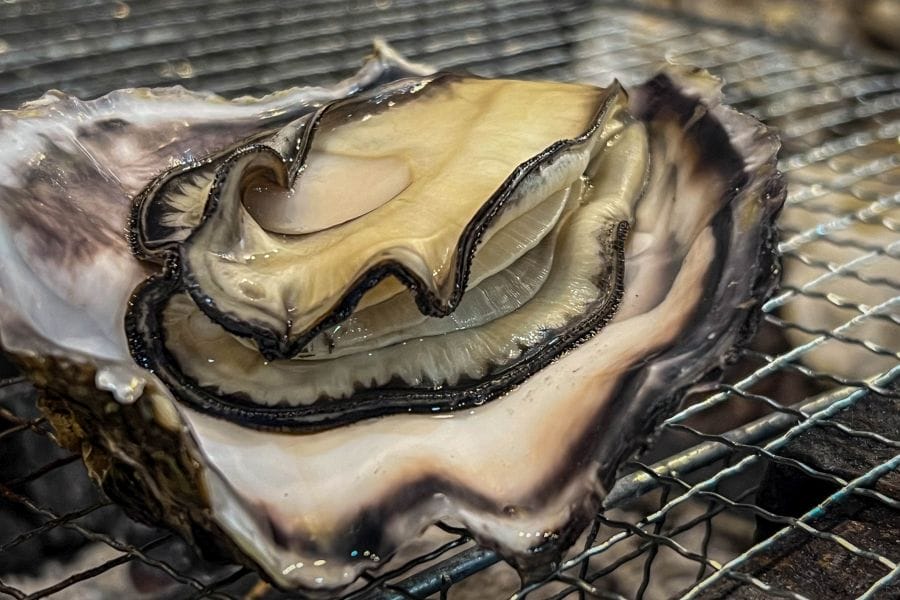
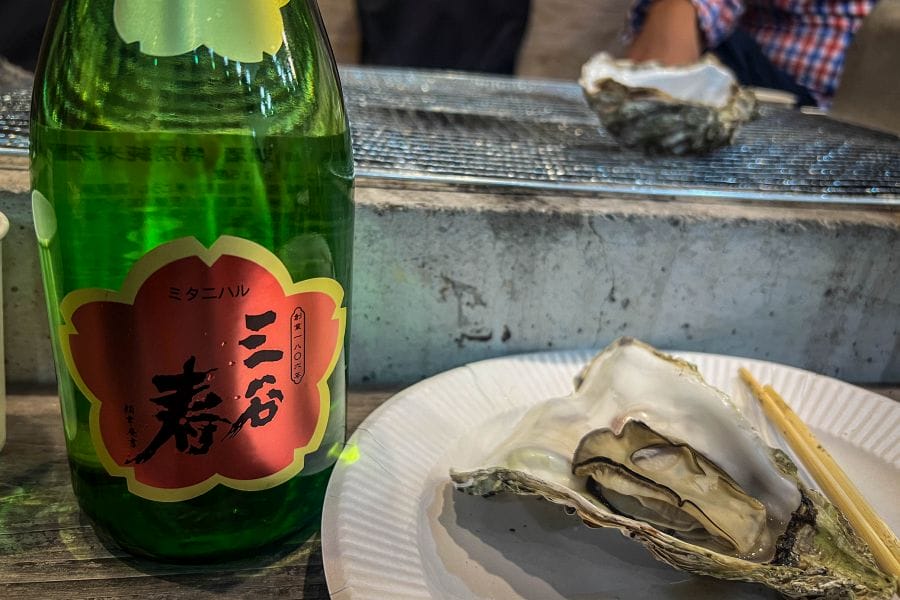
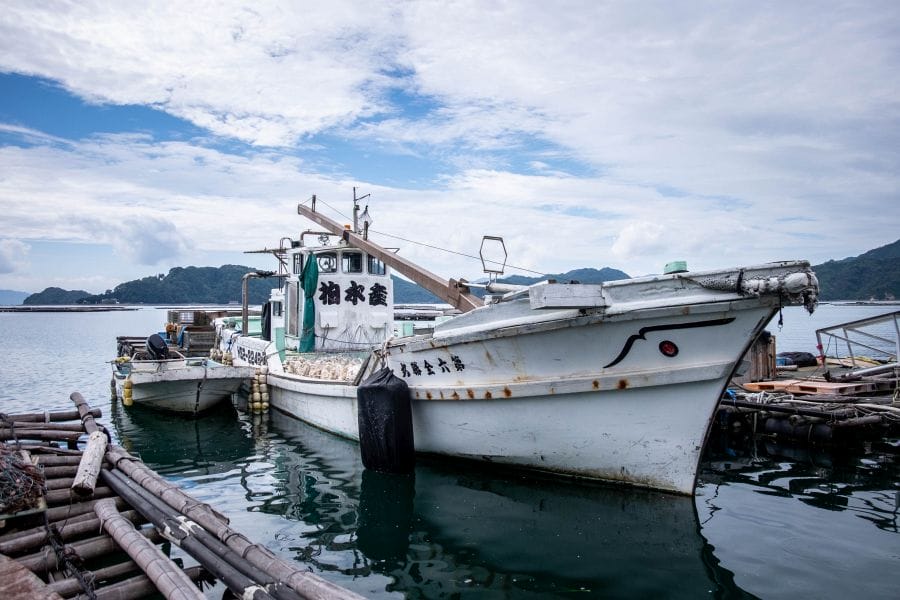
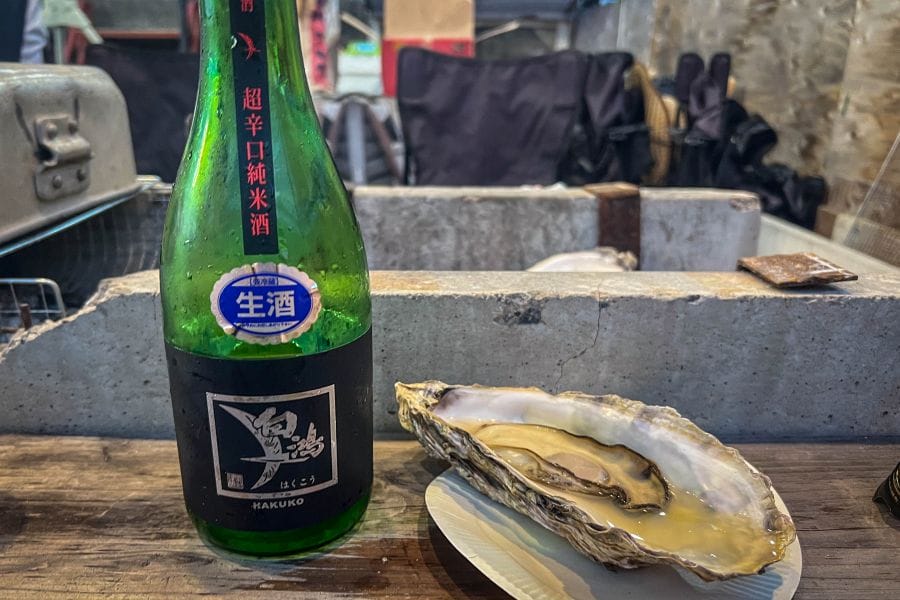
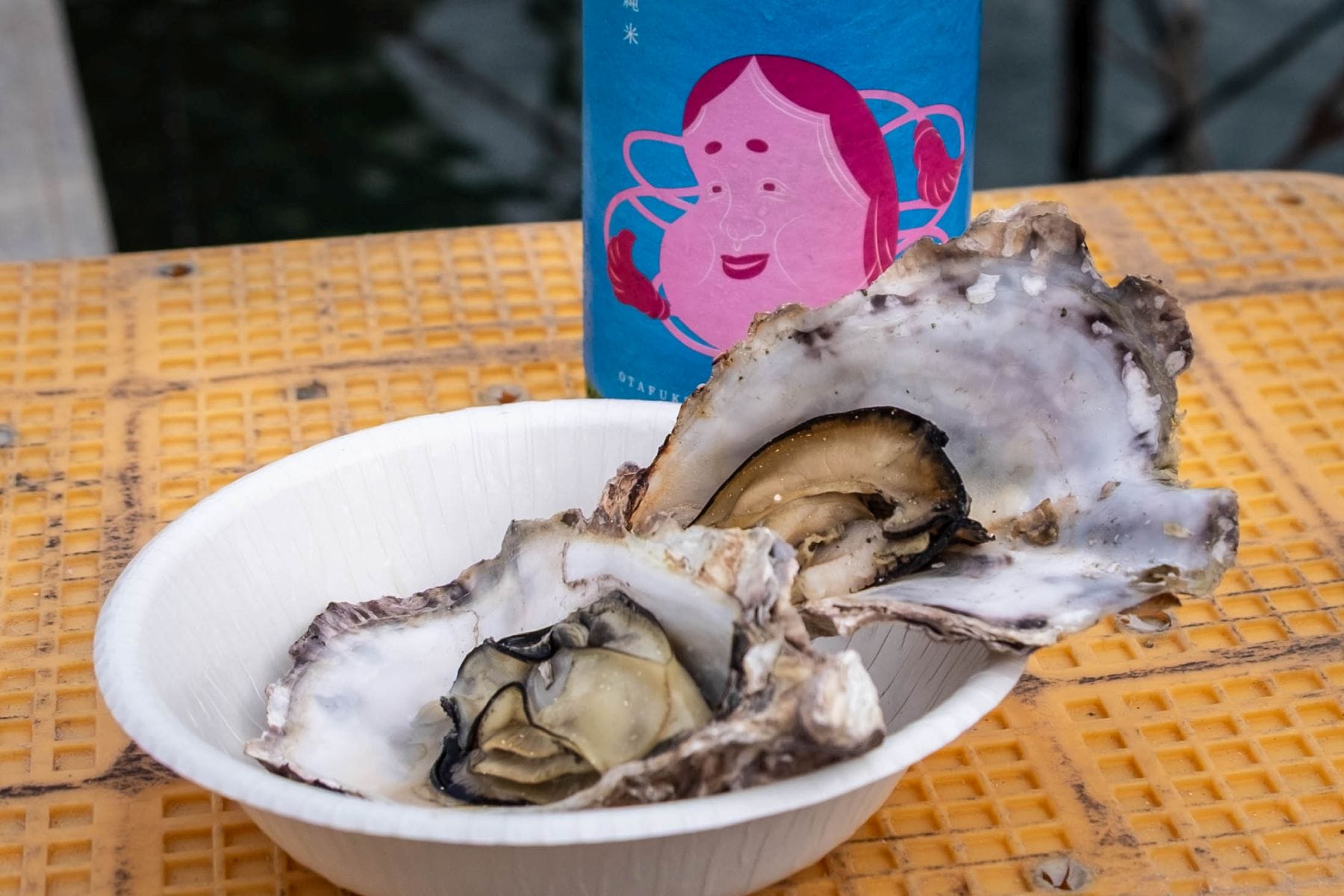
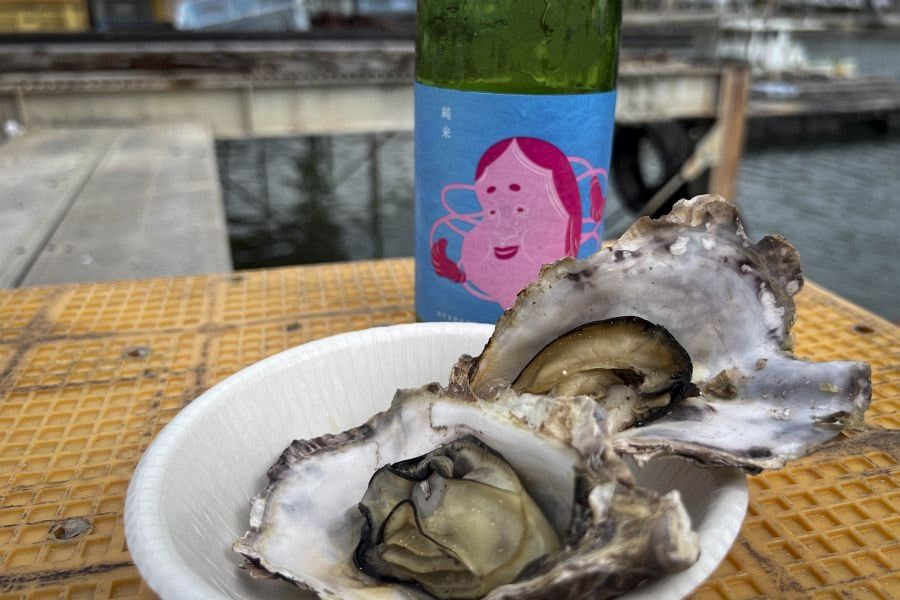
At Yasuura, you can eat your fill of these rich, flavourful, and aromatic oysters freshly cooked over charcoal on a dock overlooking the bay, with a couple of bottles of finest Hiroshima sake. This isn’t the luxury of a city oyster bar. There are ropes and anchors and gaff hooks strewn around the dining area, and fishing boats creak at their berths. Genial fishermen come and go, serving customers who have come from afar to buy these special oysters. This is the luxury of enjoying the finest, freshest oysters, right at the place of production.