Urakami Atomic Bombing Sites
On August 9, 1945, at 11:02 a.m., the United States of America detonated an atomic bomb over the Urakami district in the centre of Nagasaki. Although hills surrounding the city limited the scale of destruction compared with Hiroshima, the blast and subsequent fires caused extensive damage and loss of life. Today, a number of sites concentrated in Urakami commemorate the bombing, document its effects, and preserve physical traces of the event.
Nagasaki Atomic Bomb Museum
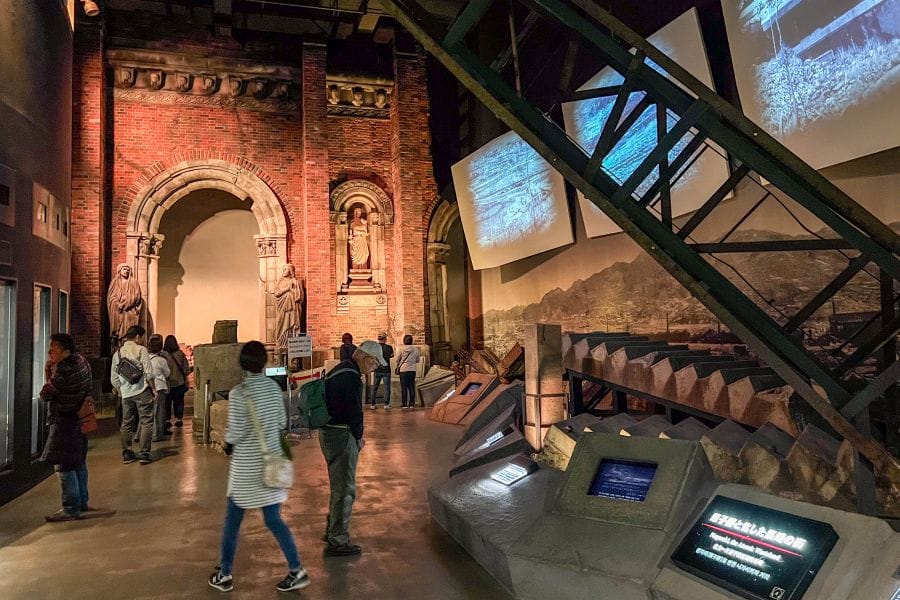
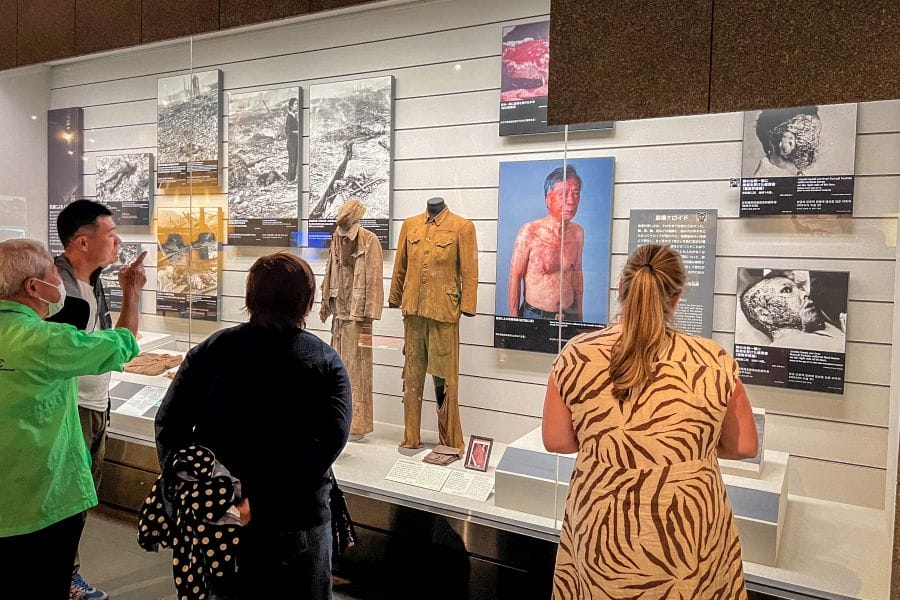
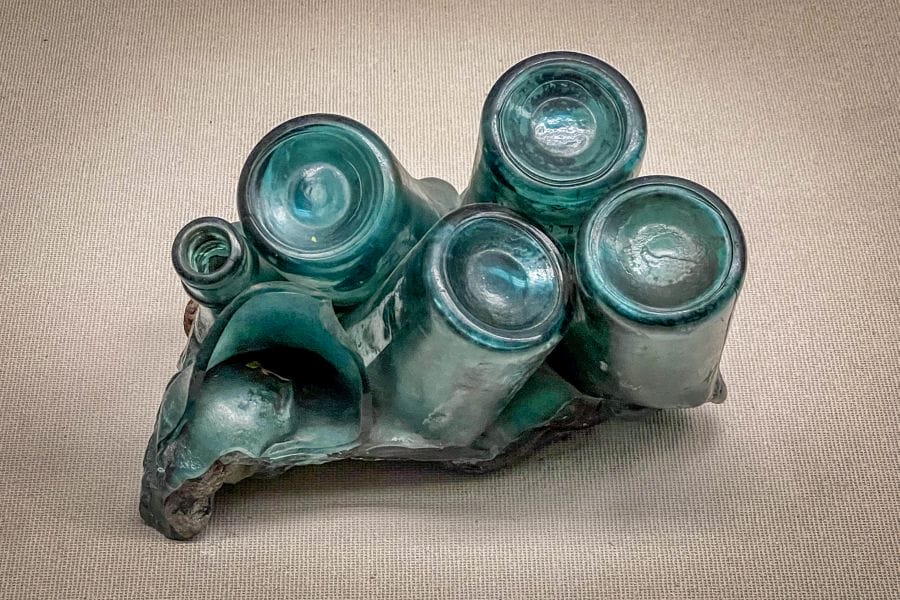
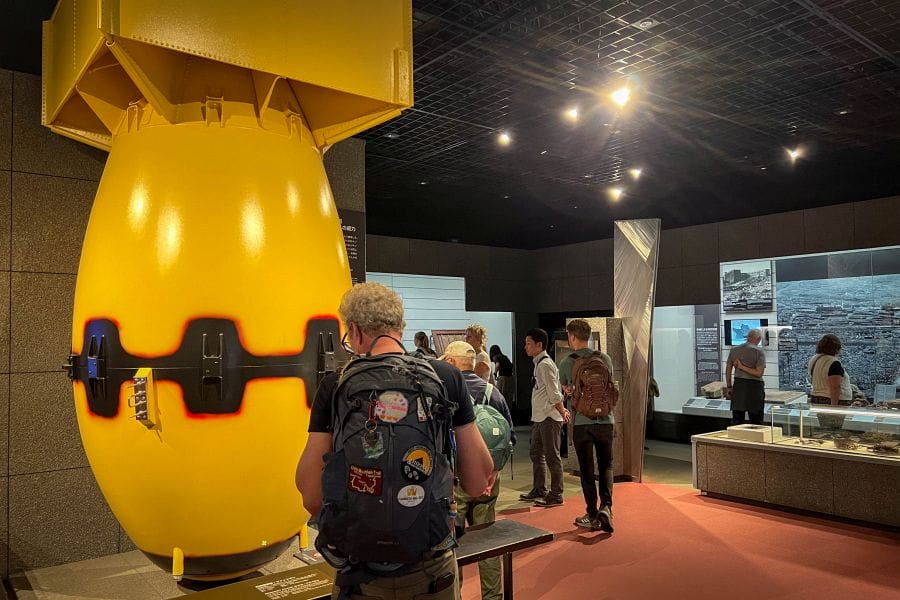
The Nagasaki Atomic Bomb Museum is the city’s principal institution documenting the bombing. Its exhibits explain the scientific principles of nuclear weapons, the sequence of events on August 9, and the human consequences of the explosion. Artifacts recovered from the ruins, photographs, survivor testimonies, and detailed models illustrate the scale of destruction in the Urakami area.
The museum also places the Nagasaki bombing within a broader historical and international context, addressing nuclear weapons development and postwar efforts toward disarmament. The presentation emphasizes factual documentation and the lived experience of civilians.
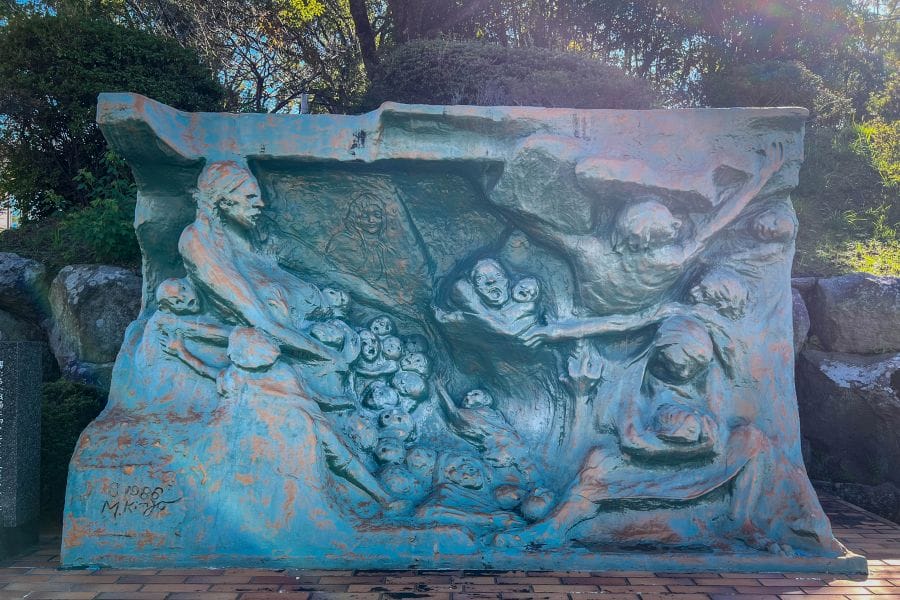
Nagasaki Peace Park and hypocentre area
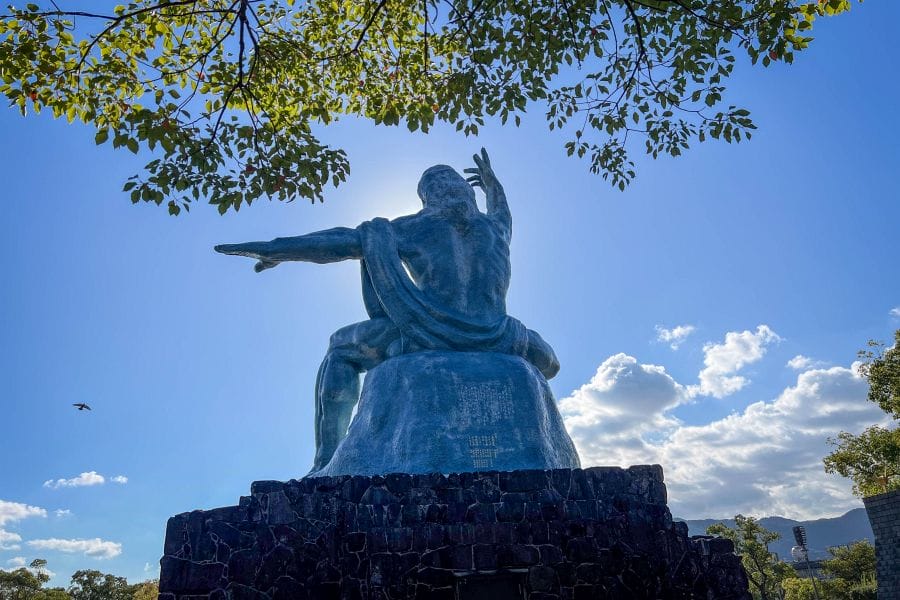
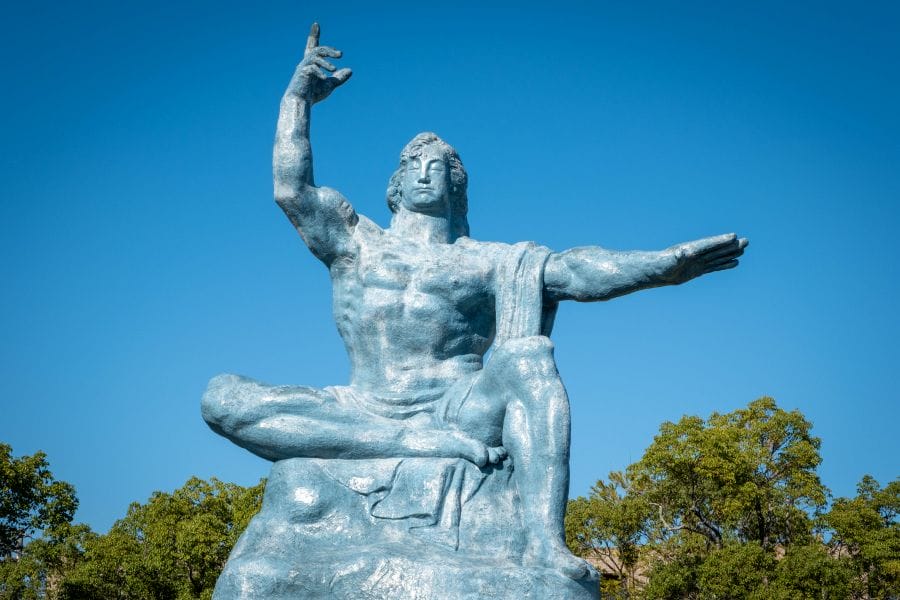
Nagasaki Peace Park is located near the hypocentre of the explosion in Urakami. The park incorporates several memorials and monuments donated by countries and organizations around the world. At its center is the Peace Statue, which symbolizes the destruction caused by the bomb and the aspiration for peace. It was created by the sculptor Kitamura Seibō, a native of Nagasaki Prefecture, and was unveiled in 1955. The statue’s raised right hand points to the sky, symbolizing nuclear threat, while its extended left hand signifies eternal world peace, with closed eyes praying for victims.
Nearby, the Hypocentre Monument marks the approximate point above which the bomb detonated. The surrounding area preserves the spatial relationship between the blast site and surviving structures, helping visitors understand the geography of the destruction.
Urakami Cathedral ruins and memorials
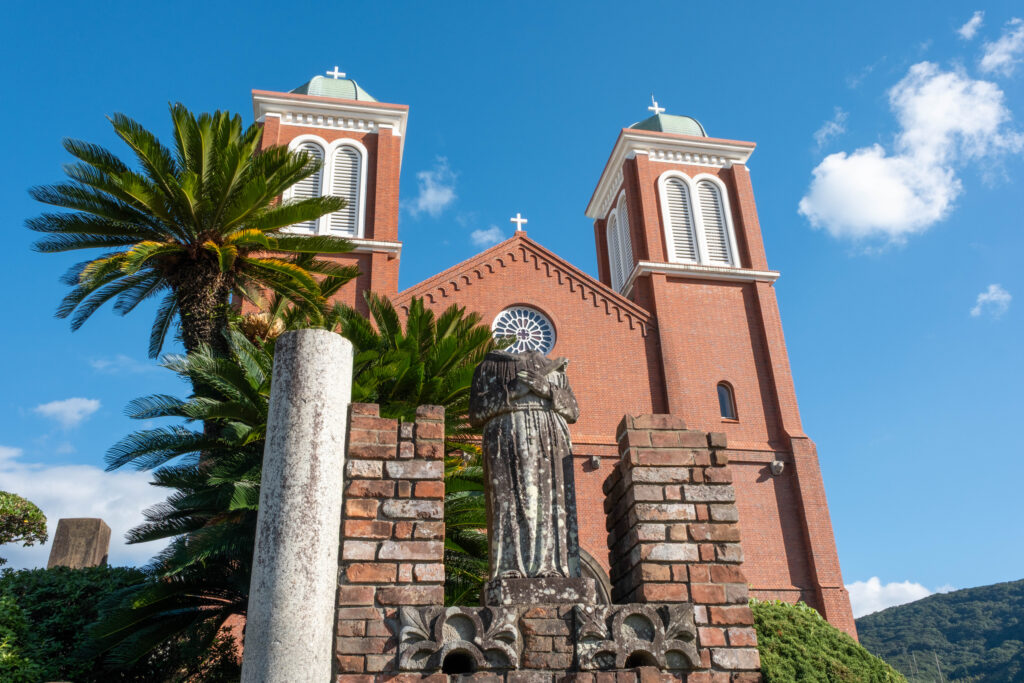
Urakami Cathedral stood close to the hypocenter and was almost completely destroyed by the blast. At the time, it was one of the largest Catholic cathedrals in East Asia and a spiritual center for Nagasaki’s Christian community.
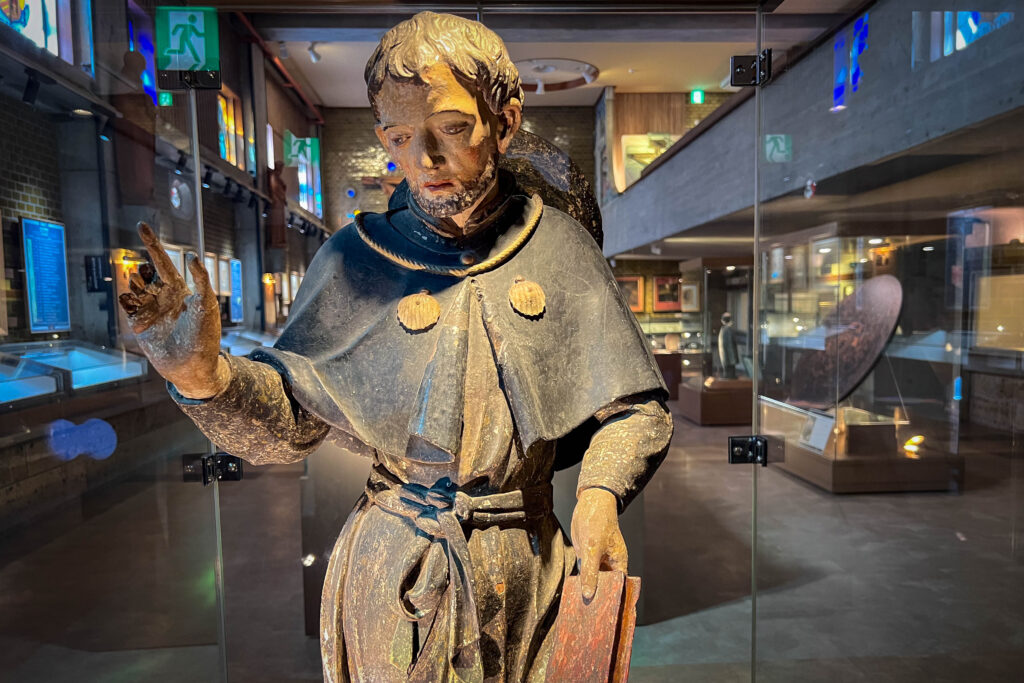
Statues, bells, and sections of wall recovered from the ruins are displayed near the rebuilt cathedral and in nearby memorial areas. These remnants serve as tangible evidence of the bomb’s impact on religious and civilian life in the district.
The one-legged torii of Sannō Shrine
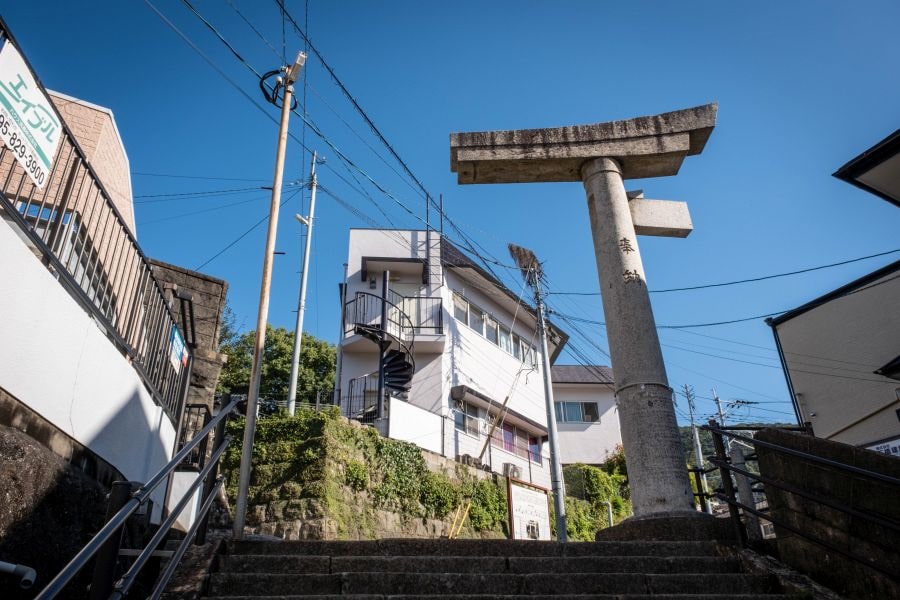
One of Nagasaki’s most distinctive atomic bomb landmarks is the one-legged torii gate at Sannō Shrine. The shrine was located less than a kilometer from the hypocentre. The blast destroyed half of the stone torii, yet the remaining half stayed upright.
The asymmetrical gate remains in its original position and is often cited as a striking example of the physical forces unleashed by the explosion.
Atomic bomb–surviving trees
Several trees within Nagasaki survived the atomic bombing and later resumed growth. These include camphor trees, ginkgo trees, and other common species found in Japan.
Many of these trees are marked with plaques explaining their location at the time of the blast and their subsequent recovery. They are studied as biological evidence of resilience and are preserved as living witnesses to the bombing.
Nagasaki National Peace Memorial Hall for the Atomic Bomb Victims
Located near Peace Park, this memorial hall is dedicated to commemorating the victims of the atomic bombing. It houses a registry of names, photographs, and personal records of those who died. A memorial space with water and subdued lighting reflects the city’s postwar emphasis on remembrance and mourning.
The hall complements the Atomic Bomb Museum by focusing specifically on individual victims rather than the broader historical narrative. Together, these sites document the immediate destruction caused by the atomic bomb, its long-term human and environmental effects, and Nagasaki’s efforts to preserve memory through physical remains, museums, and memorial landscapes. They form a concentrated historical record within the city.
Information
Name in Japanese: 平和公園
Pronunciation: heiwa-koh-en
Address: 6 Matsuyamamachi, Nagasaki, 852-8118