Ōura Cathedral
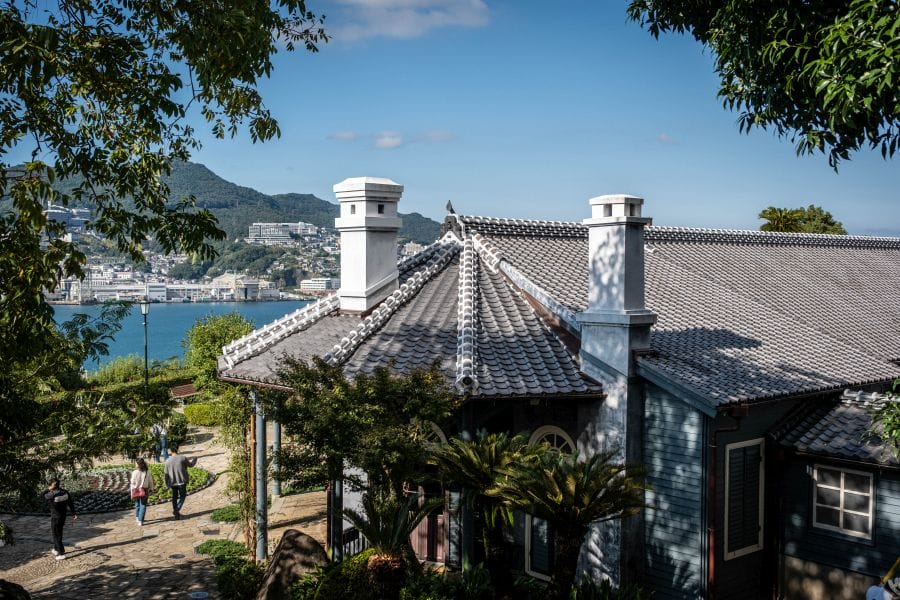
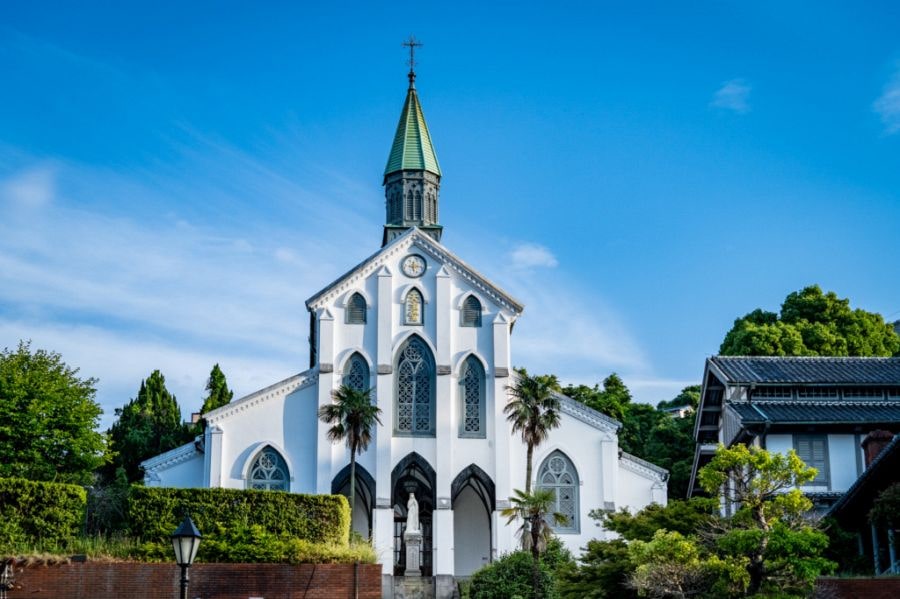
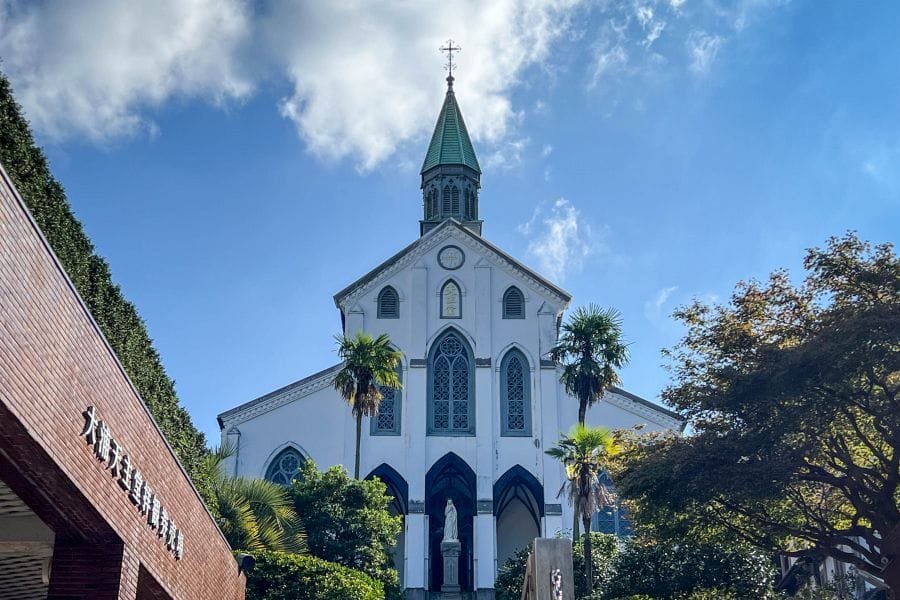
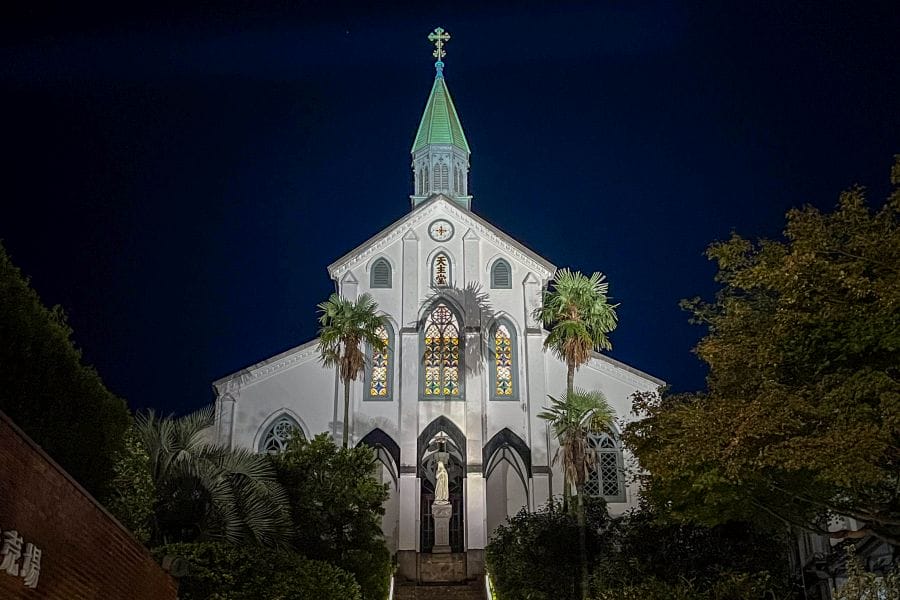
Ōura Cathedral is the oldest surviving Christian church in Japan and one of Nagasaki’s most important historical and religious landmarks. Located in the Minami-Yamate district overlooking Nagasaki Harbour, it’s formally known as the Basilica of the Twenty-Six Holy Martyrs of Japan and is closely connected to both the reintroduction of Christianity to Japan and the memory of earlier persecution.
The cathedral was completed in 1864 by French missionaries of the Paris Foreign Missions Society, shortly after Japan reopened to foreign residence and trade. It was built on land that had been set aside for foreign missionaries and dedicated to the Twenty-Six Martyrs who were executed in Nagasaki in 1597.
In 1865, Ōura Cathedral became the site of a historic event known as the “discovery of the Hidden Christians”. A group of local Japanese worshippers approached the resident priest, Bernard Petitjean, and revealed that their families had secretly preserved Christian belief for more than two centuries during the period when the faith was banned. This moment confirmed the survival of underground Christian communities and gave Nagasaki a central role in the modern history of Japanese Christianity.
The building has undergone several renovations and expansions, particularly in the late 19th century, but it retains its essential 19th-century character.
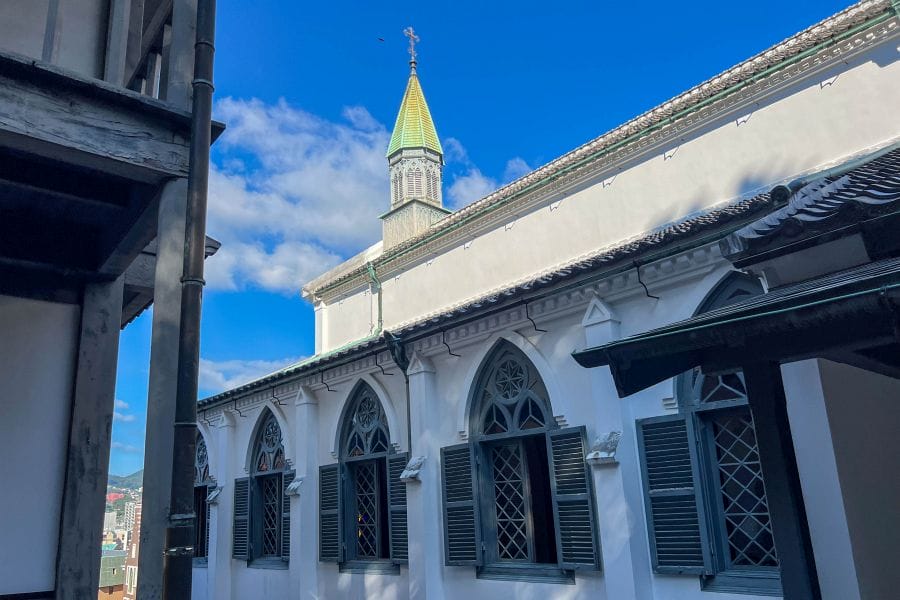
The main cathedral is constructed in a Gothic Revival style, unusual in Japan at the time of its construction. It features pointed arches, ribbed vaulting, and tall stained-glass windows imported from Europe. The exterior is faced in white plaster and later brickwork, with a bell tower rising above the nave.
Inside, the long central aisle leads to a high altar, and the light from the stained glass creates a subdued, reflective atmosphere. The windows depict saints and biblical scenes, some of which date from the original 19th-century installation.
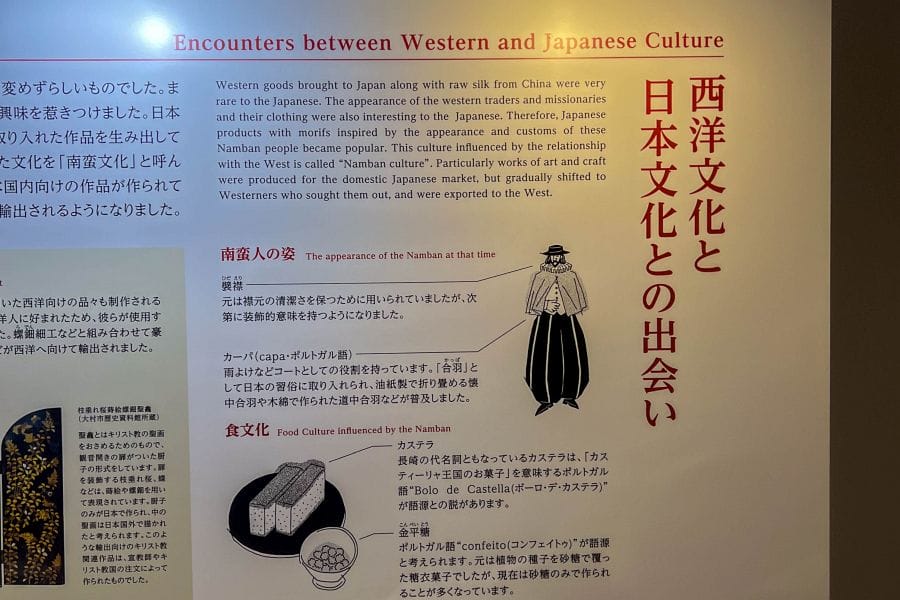
Adjacent to the cathedral is the Ōura Cathedral Christian Museum, housed in the old cathedral seminary. Exhibits include religious objects, documents, and artworks related to the history of Christianity in Japan. There are items used by Hidden Christians, early Japanese Christian texts, and materials connected to the period of persecution.
The museum complex includes former missionary residences and ancillary buildings that were part of the original church compound. These structures illustrate how the site functioned not only as a place of worship but also as a base for missionary activity, education, and the administration of the local Catholic community.
Information
Name in Japanese: 大浦天主堂
Pronunciation: oh-ura ten-shu-doh
Address:5-3 Minamiyamatemachi, Nagasaki, 850-0931