Snowshoeing in Hakuba
Enjoy exquisite snowy landscapes at a comfortable pace.
Hakuba is a mountain resort area in northern Nagano Prefecture, set in the Hida Mountains of the Japanese Alps. It lies roughly 250 kilometres northwest of Tokyo and is accessible by a combination of Shinkansen and local rail or by road from central Honshū. The village gained international recognition as one of the host areas for the 1998 Nagano Winter Olympics, and since then it has developed into a year-round destination while retaining a relatively compact, rural feel. Rather than a single resort, Hakuba is a valley containing several distinct ski areas, each with its own character, linked by shuttle buses and local roads.
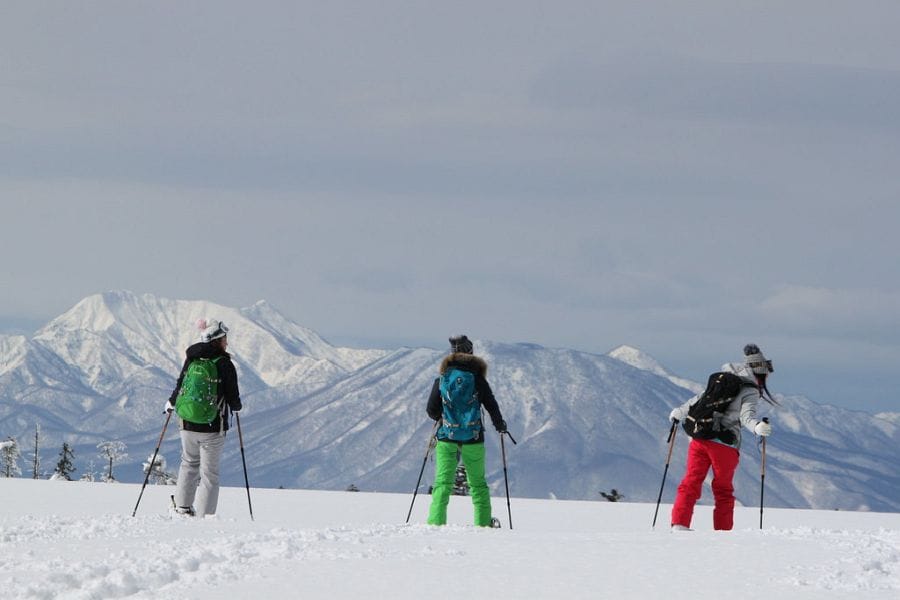
The area is known for reliable snowfall, varied terrain, and views of steep, forested peaks that rise directly from the valley floor. In winter, skiing and snowboarding dominate, with pistes ranging from gentle beginner slopes to long, sustained runs and off-piste areas. Outside the snow season, Hakuba attracts hikers, cyclists, and climbers, with trails leading into alpine wetlands, beech forests, and high mountain ridges. Hot springs are scattered throughout the valley, reflecting its long history as a rural mountain settlement, and provide a counterpoint to the more modern accommodation and dining options that have appeared in recent decades.
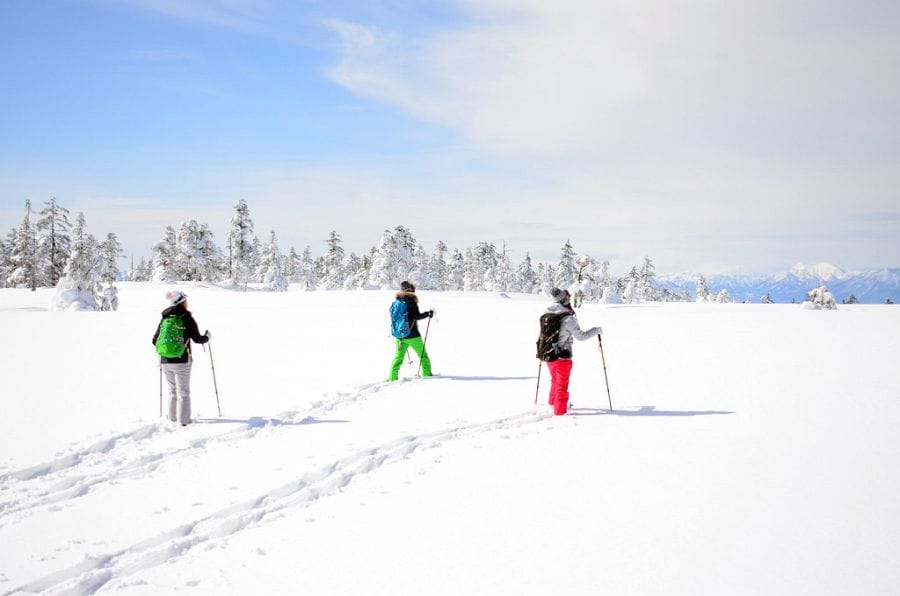
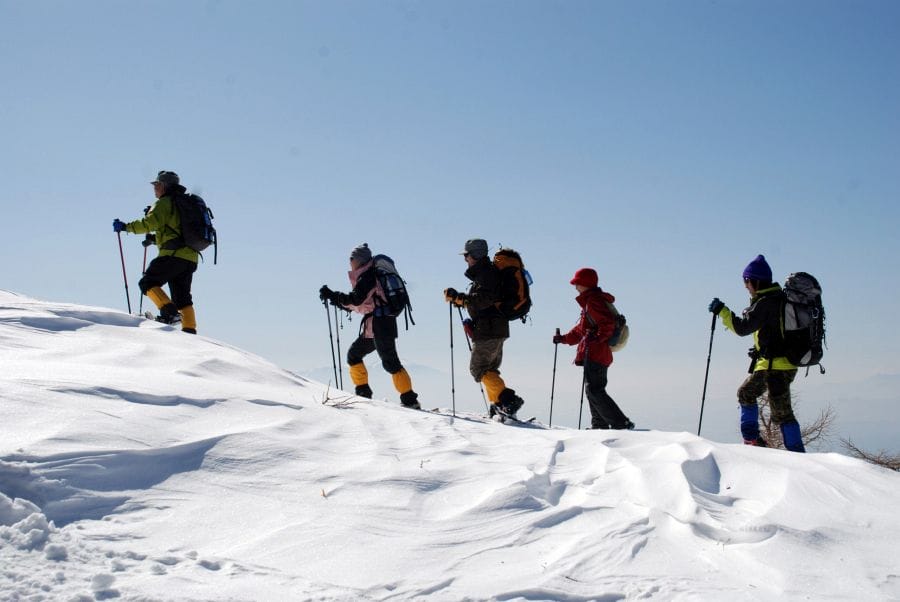
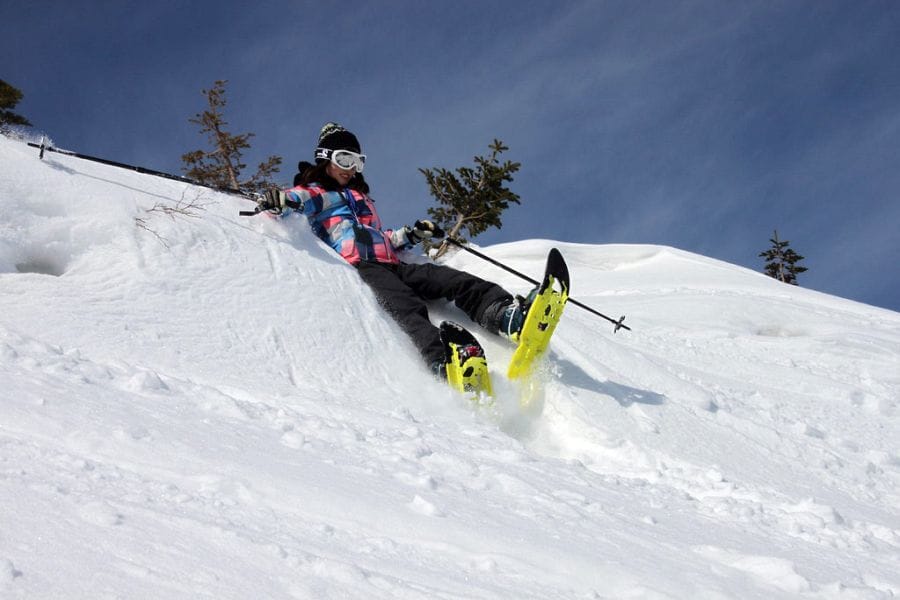
Beyond lift-served winter sports, Hakuba is well suited to snowshoeing, which allows access to quieter landscapes away from groomed runs and resort infrastructure. There are snowshoe routes throughout the valley, often beginning close to the villages and extending into forests and open fields that would otherwise be difficult to reach in deep snow. The terrain is generally moderate rather than extreme, making it accessible to people with limited winter mountain experience, particularly when accompanied by a local guide. No special skills or athleticism are required.
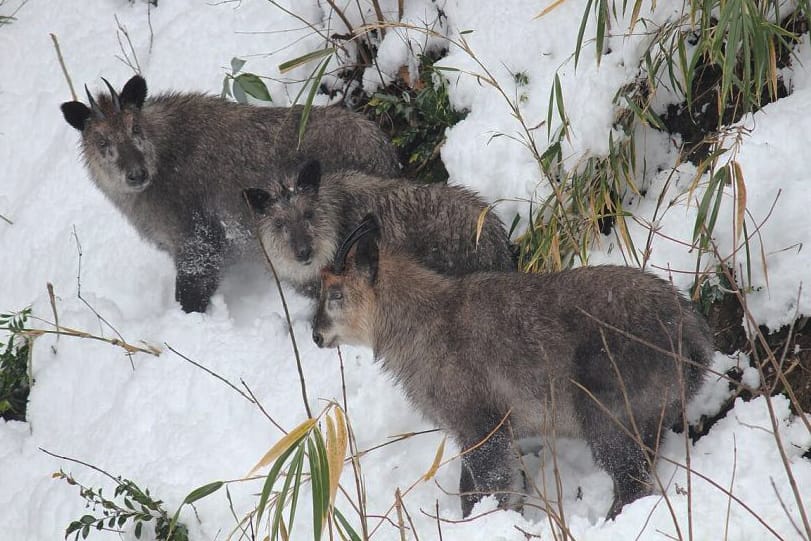
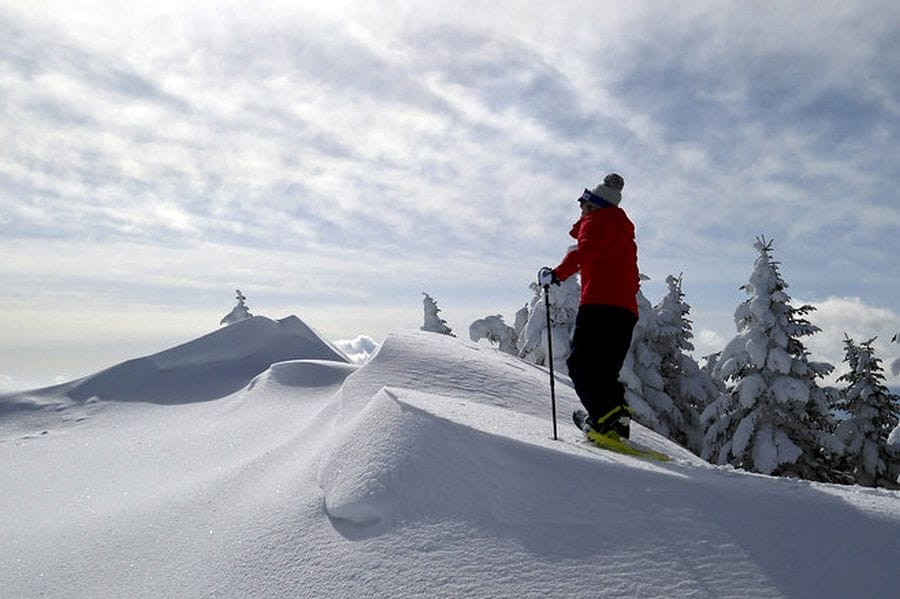
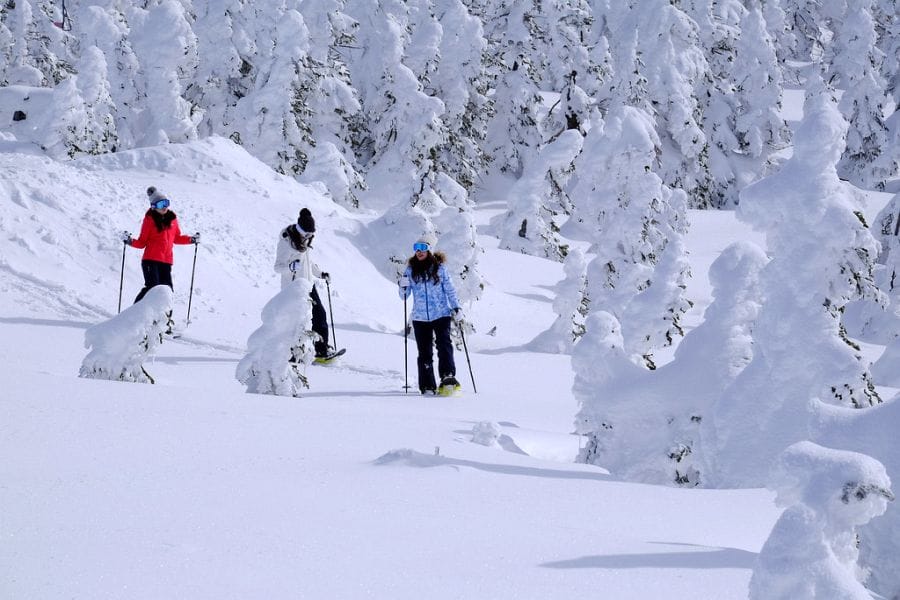
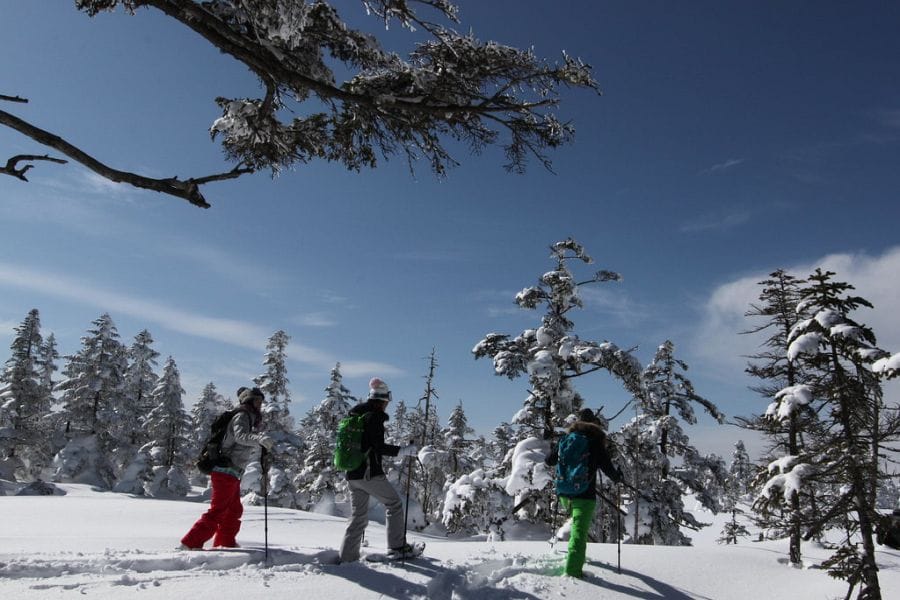
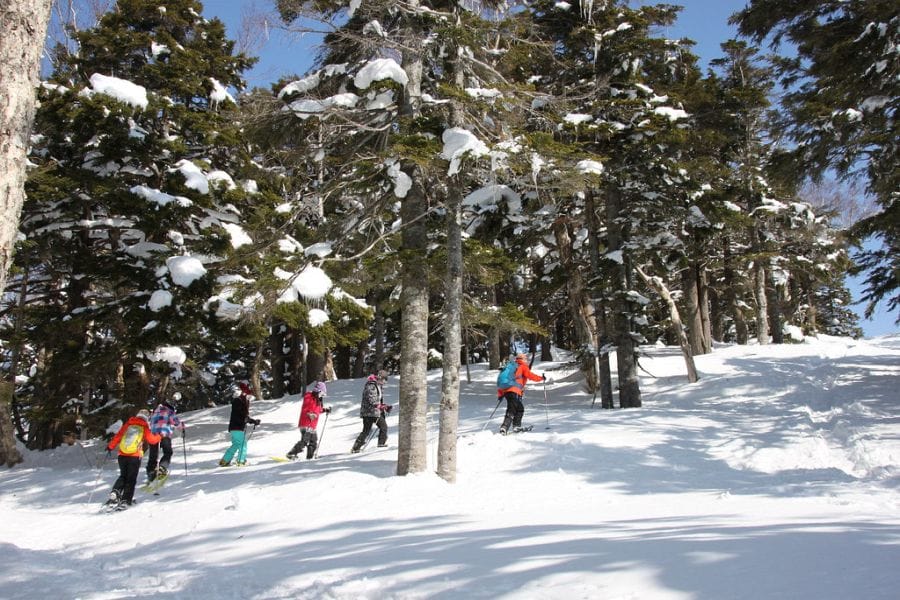
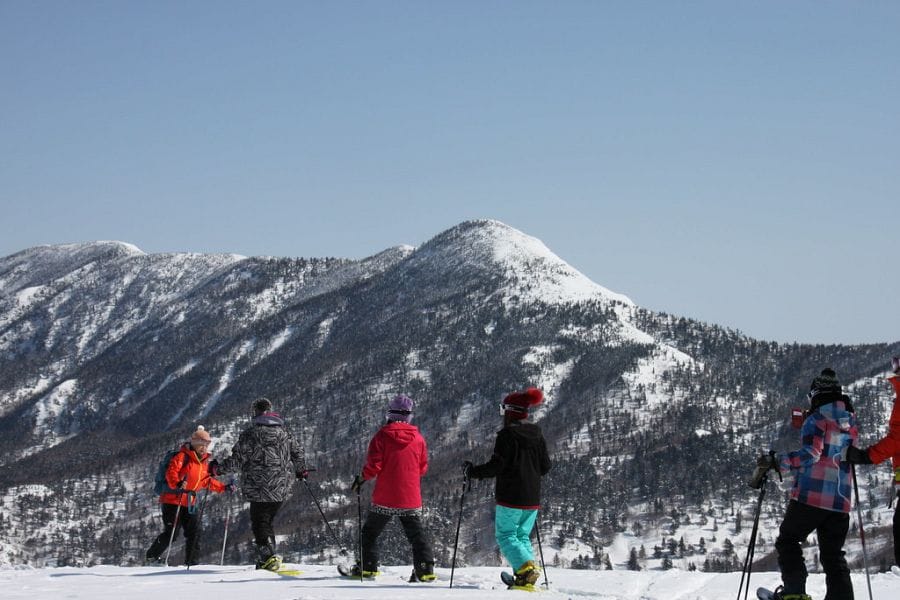
Snowshoeing areas include low-lying woodland near the valley floor, where broadleaf trees form natural corridors through the snow, as well as higher zones on the flanks of the surrounding mountains. In these areas, snow accumulates deeply and evenly, softening the contours of the land and muting sound. Wildlife tracks are commonly visible. If you’re lucky, you may see a Japanese serow (kamoshika), a kind of goat-antelope, as well as rabbits and hares. Kamoshika like to peer at you from a safe distance. On clear days the contrast between snow-covered ground and dark forest creates a distinctive winter landscape. Some routes lead to open viewpoints or frozen streams, while others remain enclosed and sheltered, offering protection from wind and changing weather.
Guided snowshoe tours are widely available and often include interpretation of the local environment, such as explanations of vegetation, animal behaviour, and traditional winter life in the region. Routes are chosen on the day according to conditions, which can change rapidly due to weather and snowfall. The main equipment is provided — boots, snowshoes, and poles. You’ll need to bring layers of winter clothing for all conditions, a hat, sunglasses or goggles, gloves, a backpack, water, and sunscreen, and your own snowboots if you prefer.
Snowshoeing in Hakuba provides a contrast to the faster pace of lift-based sports and offers a way to engage with the winter landscape at ground level. It suits visitors interested in scenery, quiet movement, and a broader understanding of the alpine environment that surrounds the resort villages.