Lake Nishi
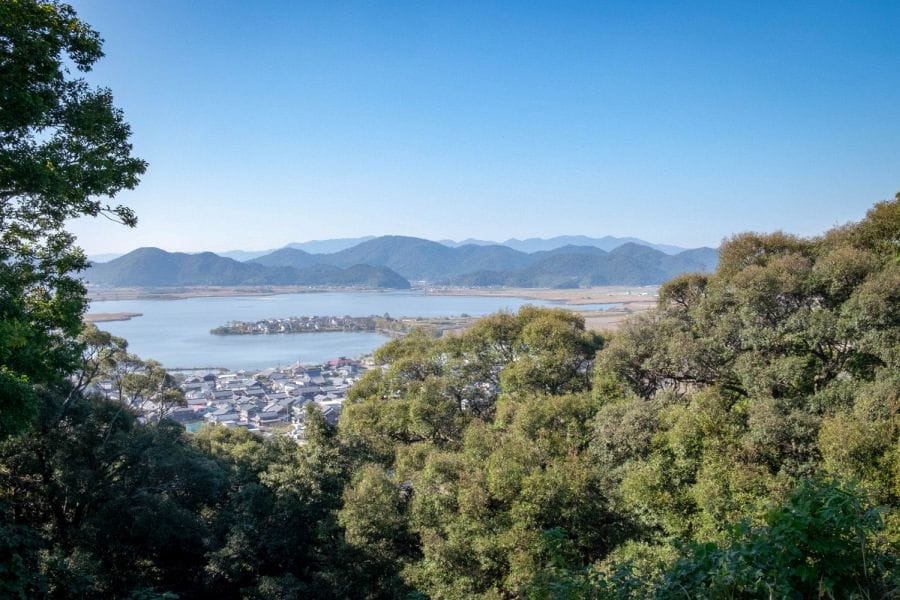
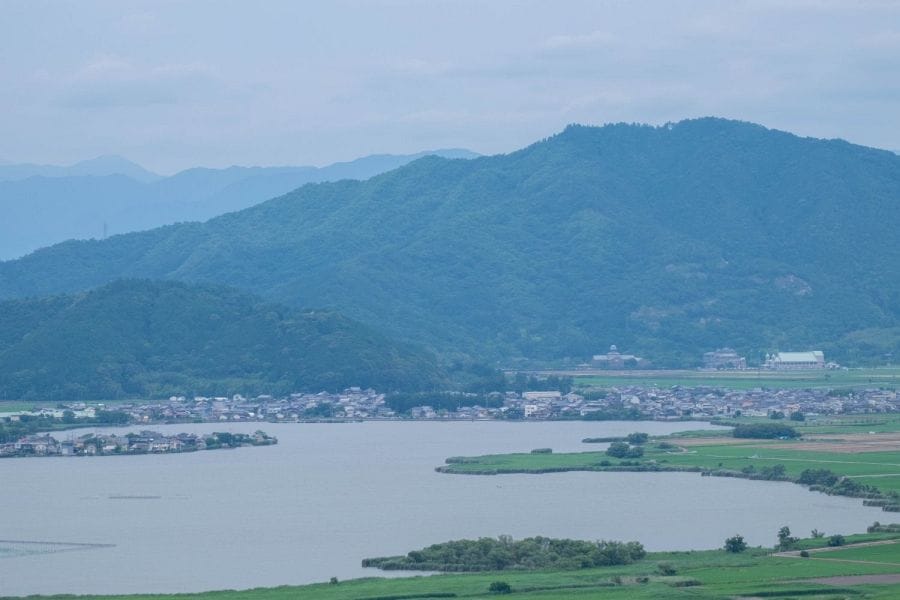
Lake Nishi, also known as Nishinoko, is one of the outlying lakes connected to Lake Biwa. Before the 1940s it was among the smaller of these satellite lakes, but many others were reclaimed for rice cultivation during the wartime years. As a result, Nishinoko is now one of the two largest remaining subsidiary lakes. A gentle boat cruise here offers a close-up look at its distinctive landscape and rich wetland ecology.
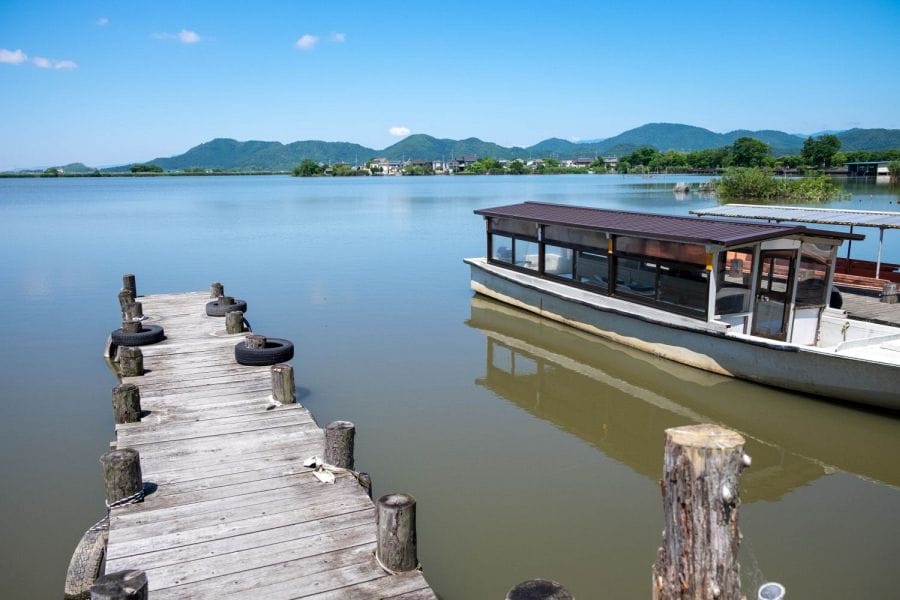
Cruises depart from a lakeside facility known as Nishinoko Station, located at the eastern end of the lake. The boats are long and slender, with enclosed cabins that provide shelter from the wind and sun. At the stern, the boatman operates a small outboard motor while offering commentary on the surrounding scenery, sounds, and wildlife.
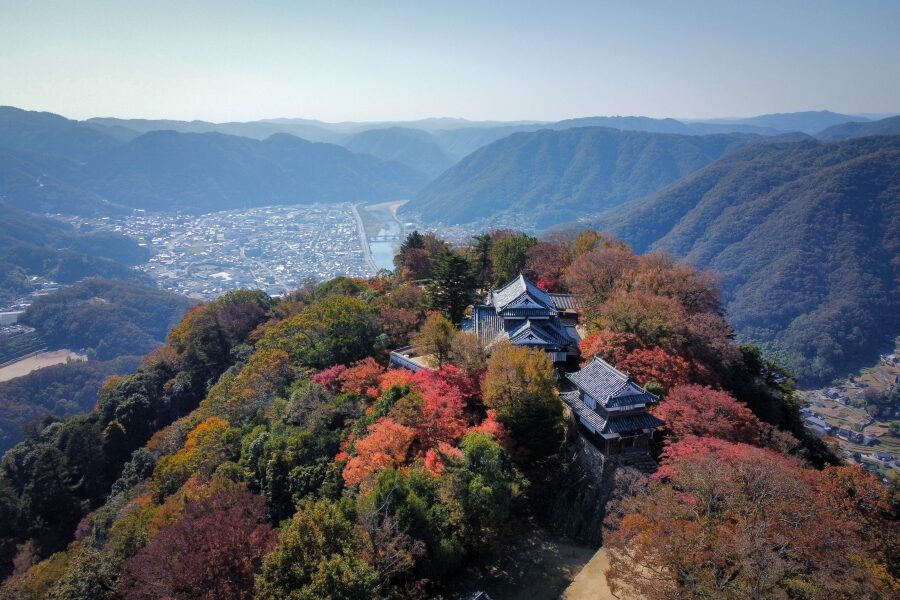
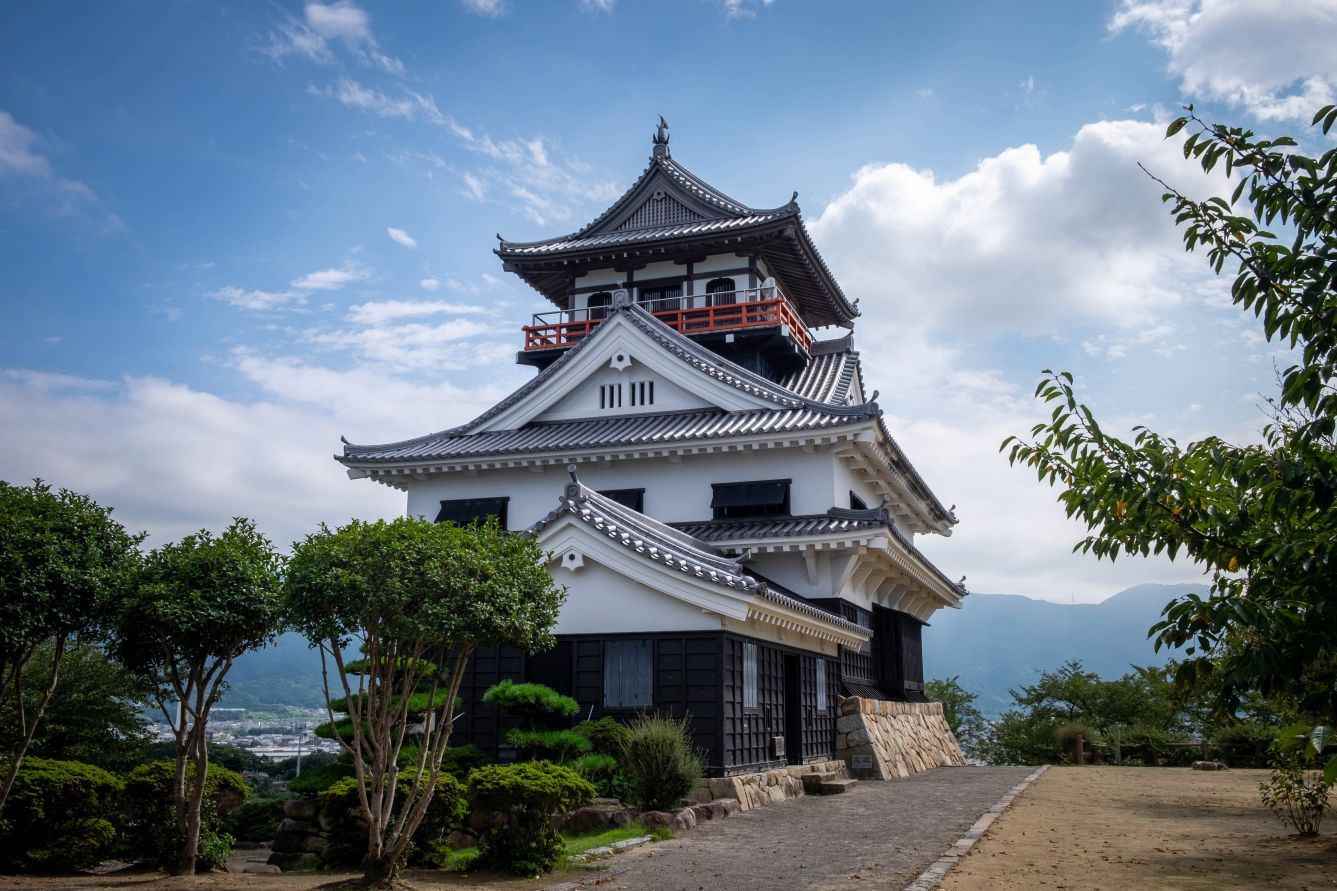
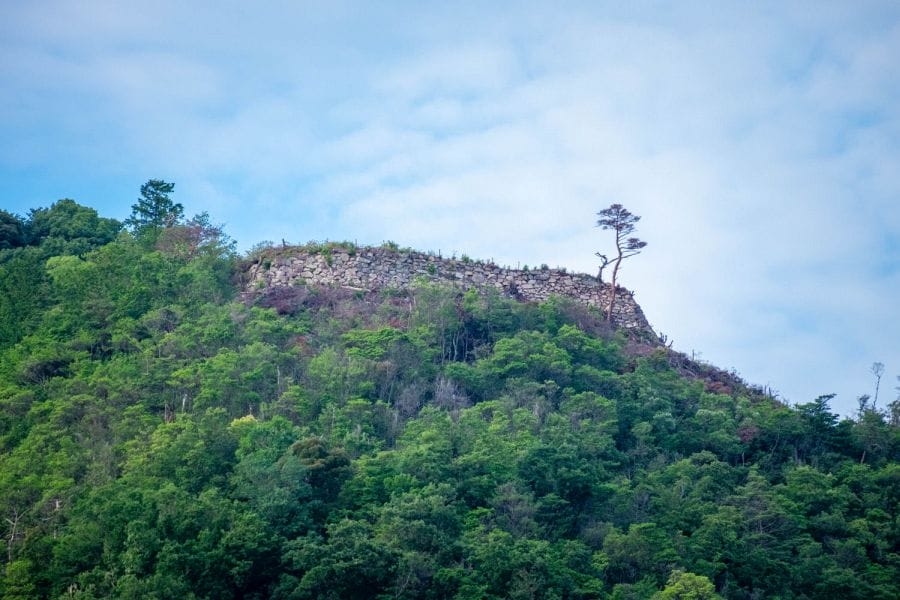
As the boat glides out onto the water, views open up towards Mt. Azuchi and Mt. Kinugasa in the distance, both of which were once crowned by castles during the Warring States period. In that era, the broad lakes that covered this area formed part of the natural defensive systems of Mt. Hachiman Castle, Azuchi Castle, and Kannonji Castle.
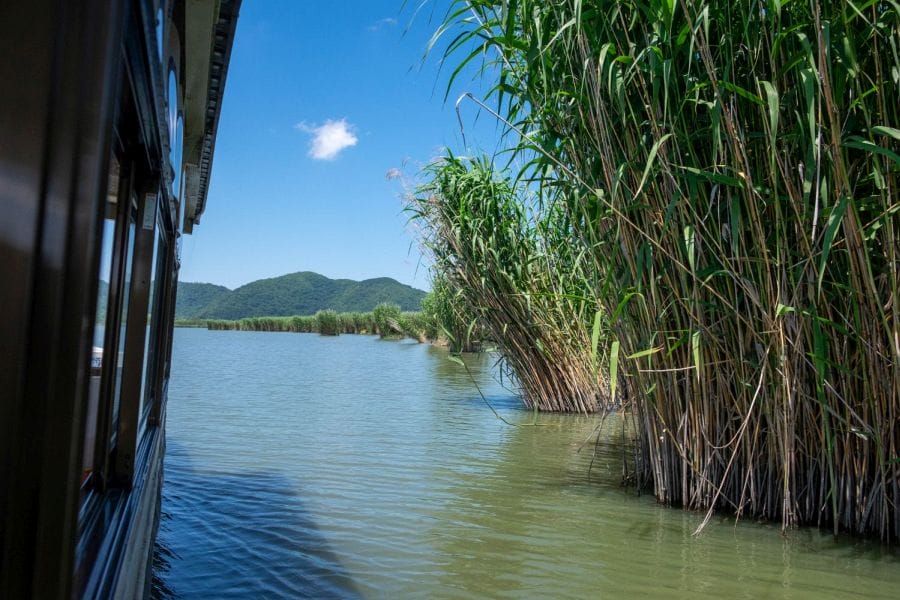
Lake Nishi is shallow, with an average depth of around 1.5 metres, and is fringed by thick stands of reeds that rise several metres high. These reed beds provide vital habitat for a wide range of birds and fish, which use them for nesting and breeding. The sweet, fluting call of the reed bunting can often be heard, though this shy bird tends to remain hidden among the stalks.
The reeds themselves play an important environmental role. They slow the flow of water and absorb pollutants, using them as nutrients. Historically, reeds were also a valuable building material in Japan, used for roofing, blinds, screens, and floor coverings. In winter, the dried upper stems are harvested, after which the remaining growth is burned back. When spring arrives, fresh green shoots emerge from the underground roots and grow with remarkable speed.
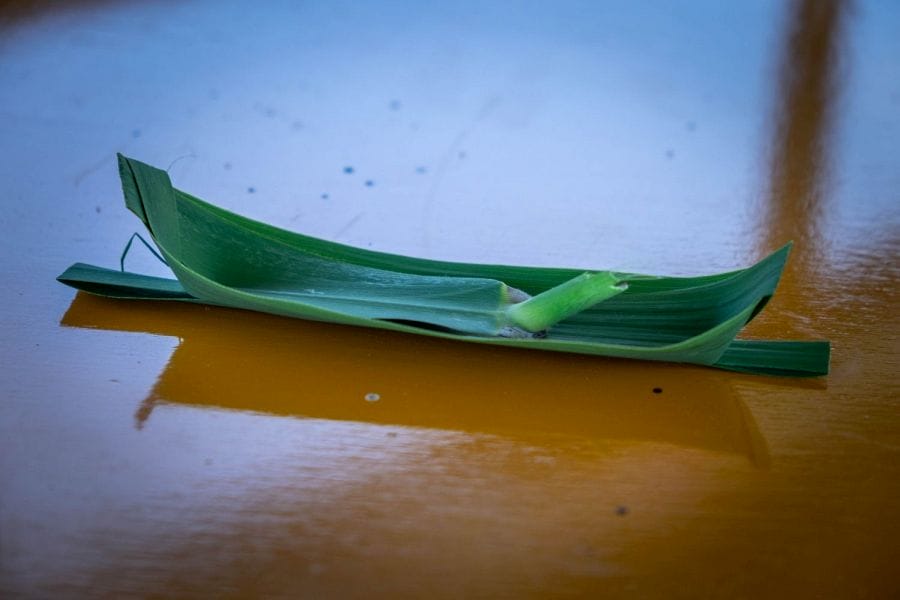
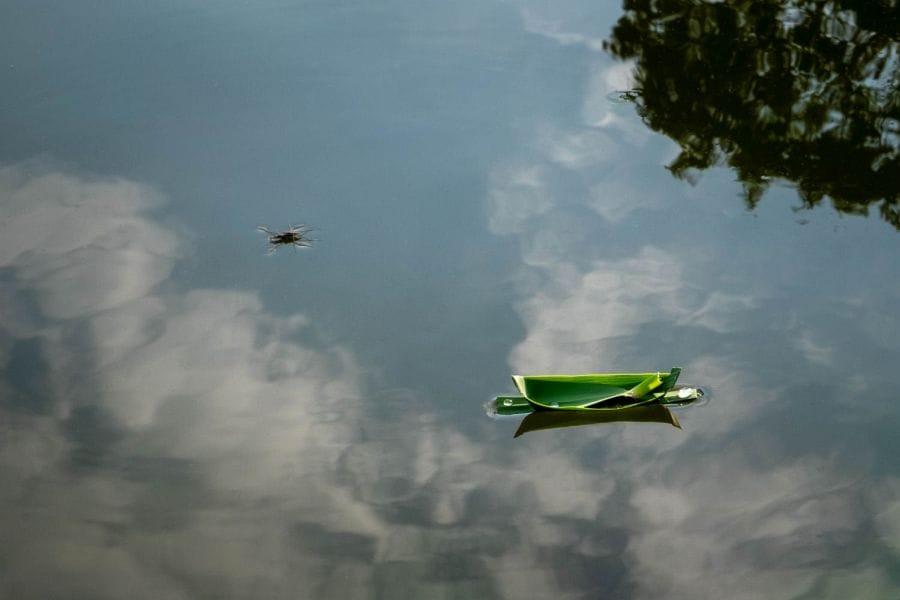
During the cruise, the boatman steers close to the reed beds and plucks a few of the long, supple leaves. With a few quick folds and tears, he fashions a small green boat and sets it gently on the water. To general amusement, it lands upright and drifts cheerfully across the ripples. He then invites passengers to try making one themselves, patiently demonstrating the technique. The little craft is known as a sasabune, or reed boat, and if it’s folded reasonably well, it should float the right way up.
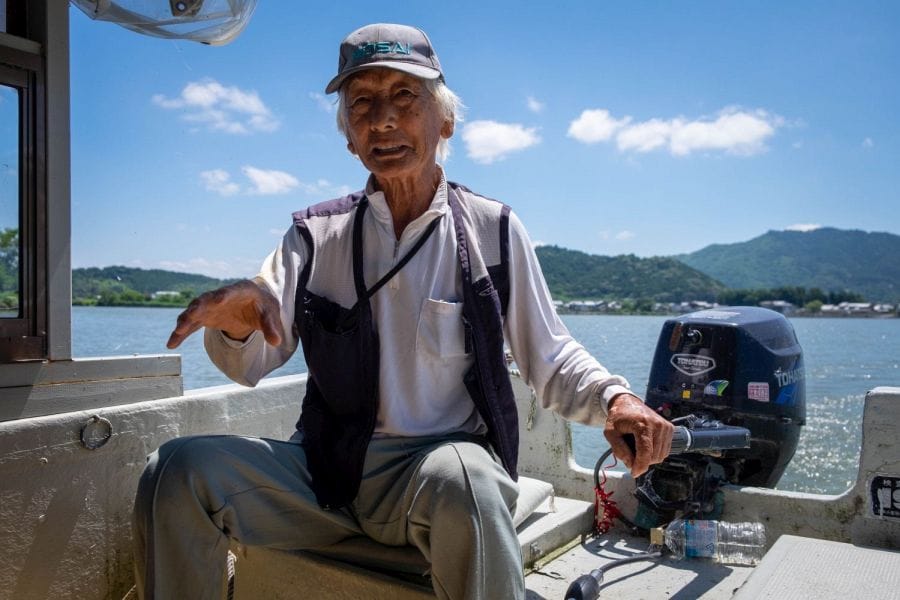
The boatman, Inoko-san, has lived beside the lake for his entire life. As a boy he swam here and caught fish, and later he would row out to his rice fields in a tabune, a traditional boat propelled with a long rear oar. When he first began guiding tours, he occasionally lost his way in the maze of reeds, which grow so fast that the shoreline is constantly shifting. Only fixed landmarks such as large trees or sheds could be relied upon for navigation.
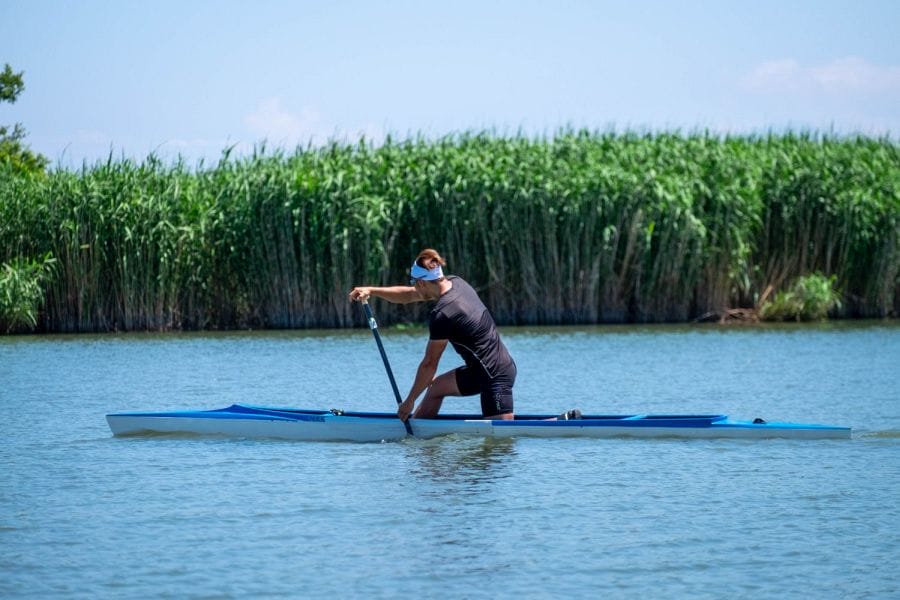
As the circuit continues, you may pass other visitors enjoying the water in canoes, paddleboards, or boats similar to your own. Some are fishing quietly, while others are simply out for fresh air and gentle exercise.
A variety of tour options are available on Lake Nishi and along the surrounding Suigō waterways. It’s also possible to charter a boat for a private group and enjoy a hearty hotpot meal on board, turning the cruise into a relaxed floating lunch.
Information
Name in Japanese: 西の湖
Pronunciation: nishee-no-ko
Address: Nishinoko, Ōmihachiman, Shiga