Ōmihachiman
Ōmihachiman sits on the eastern shore of Lake Biwa in central Shiga Prefecture and is closely associated with the rise of early modern Japan. The area is linked to Azuchi Castle, regarded as the first castle of the early modern period, and it’s one of the birthplaces of the influential Ōmi merchant tradition.
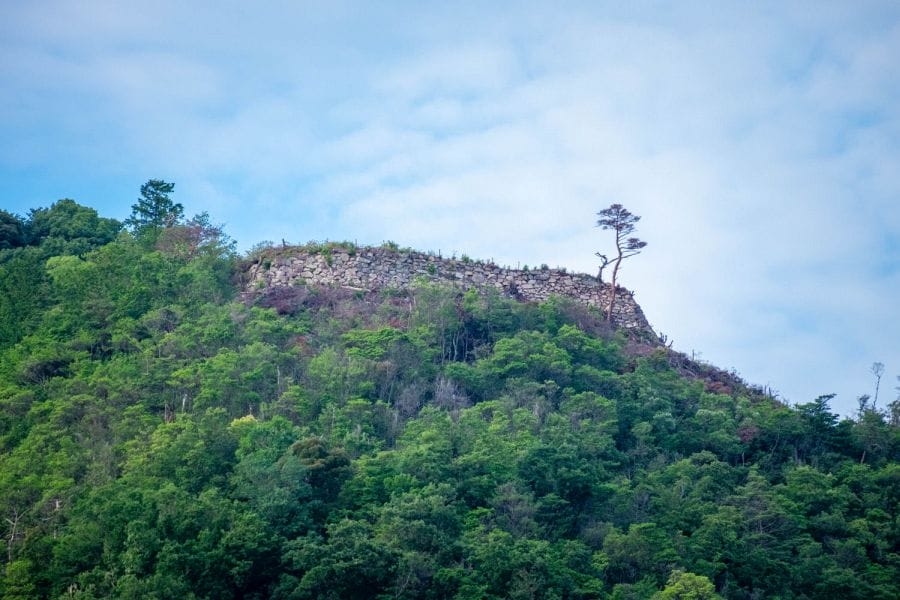
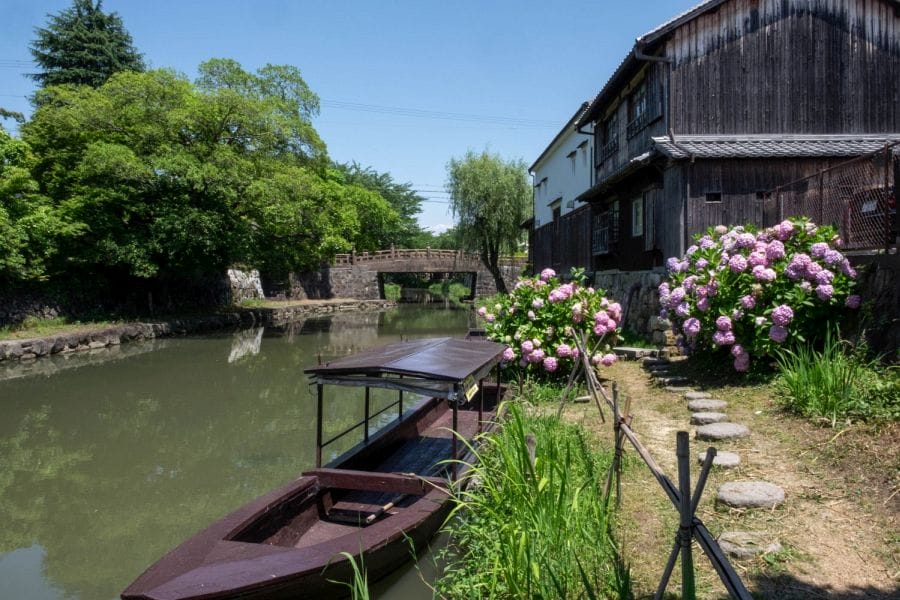
The city took shape as a centre of commerce during the late sixteenth century. Its origins lie in the castle town established at the foot of Mt. Hachiman in 1585 by Toyotomi Hidetsugu, nephew of Toyotomi Hideyoshi. Hidetsugu implemented market reforms that loosened restrictions on guilds and trade, creating favourable conditions for commercial growth. He also mandated that boats travelling across Lake Biwa enter the Hachimanbori canal and stop in the town, ensuring that goods and merchants passed directly through the settlement.
By the eighteenth century, merchants from Ōmihachiman were travelling widely, peddling local products in major cities and returning with luxury items for regional markets. Over time, these trading networks expanded far beyond Ōmi Province, and the business practices developed here laid the foundations for several companies that later grew into global enterprises.
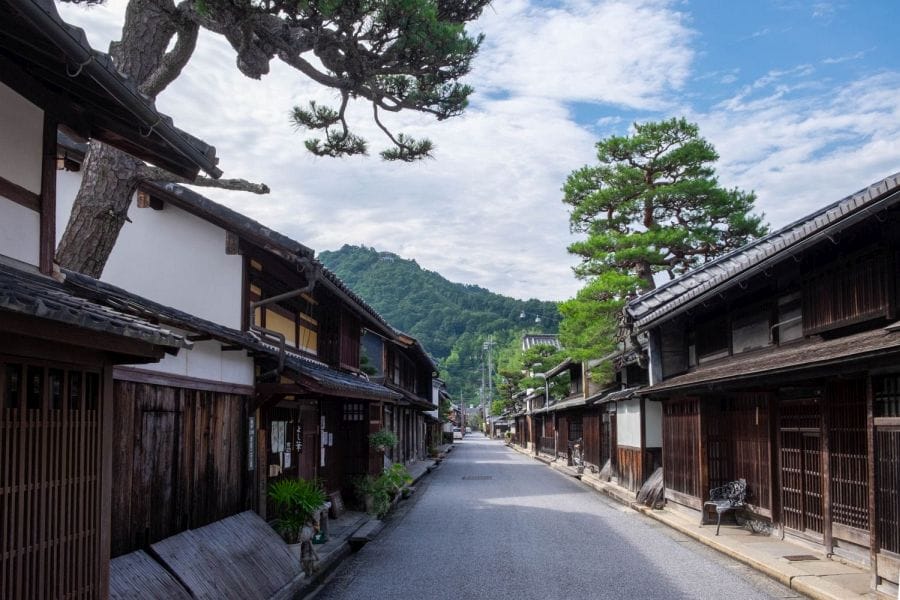
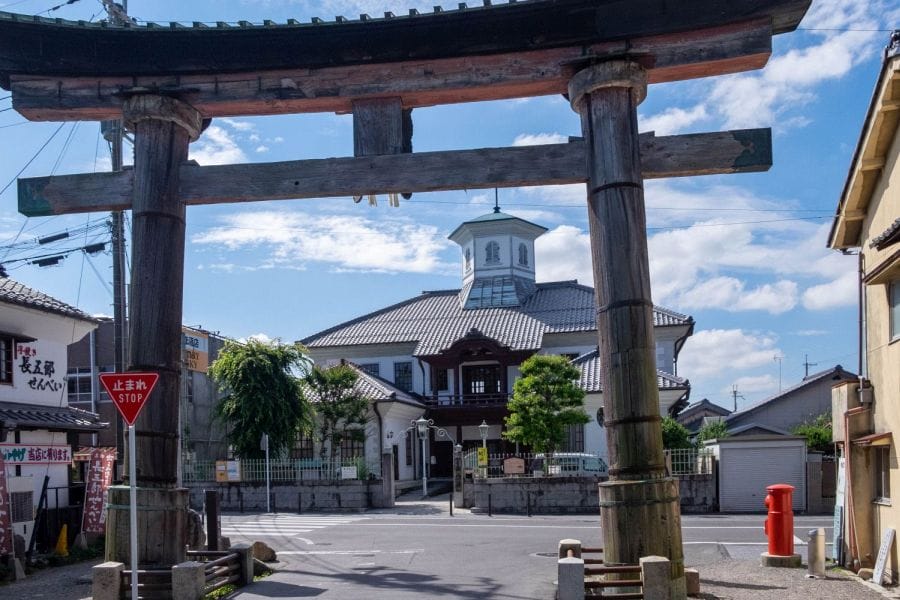
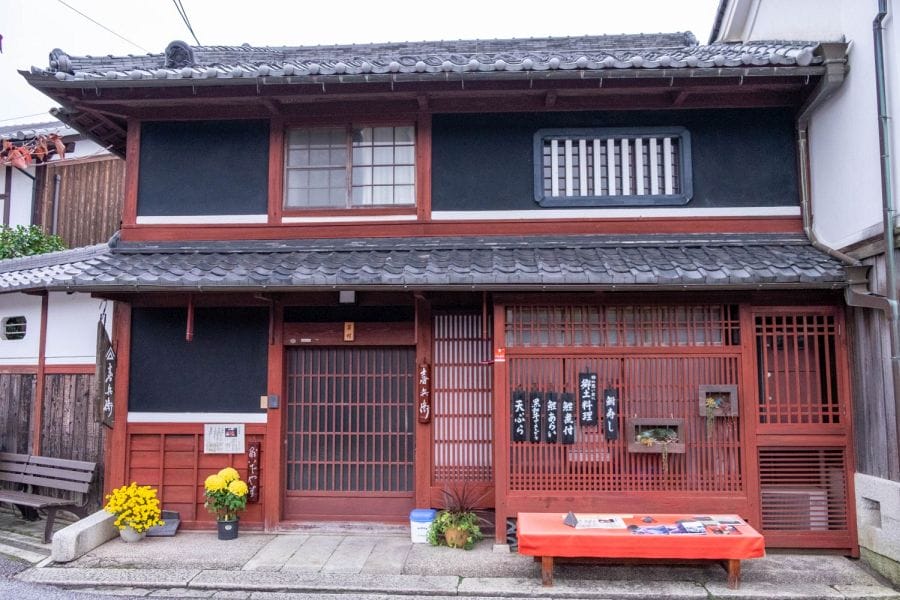
Ōmihachiman is notable for its well-preserved townscape, which retains a strong sense of ‘old Japan’. Several areas are designated as Important Preservation Districts for Groups of Traditional Buildings, giving the town a distinctive historical atmosphere. The city was also home to the American architect William Merrell Vories, whose Western-style buildings remain a prominent feature of the local landscape. Thanks to its authentic appearance, Ōmihachiman is frequently chosen as a filming location for historical television dramas.
The city’s name often causes confusion. While Hachiman refers to a Shintō deity, there is no shrine called “Ōmihachiman”. Instead, the place name derives from Himure Hachiman Shrine. Until the Meiji period, the town was simply known as Hachiman; the prefix “Ōmi” was later added to distinguish it from other towns with the same name.
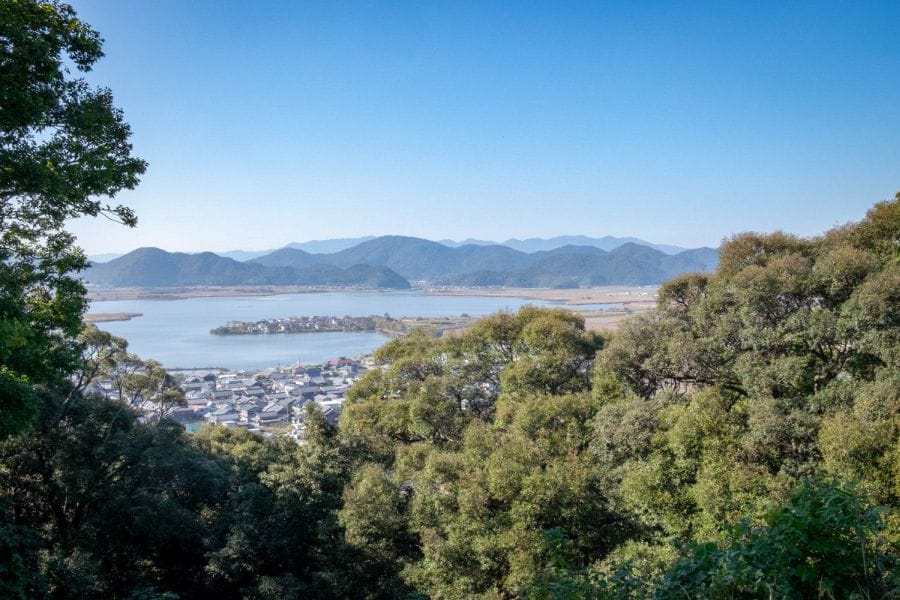
Geographically, Ōmihachiman lies on the Kotō Plain, formed by rivers flowing from the Suzuka Mountains. Although the urban area is largely flat, small mountains rise across the plain. Mt. Hachiman, where Hidetsugu’s castle once stood, is one such feature. Another notable landmark within the city boundaries is Okishima, the largest inhabited island in Lake Biwa, home to a community of around 250 residents.
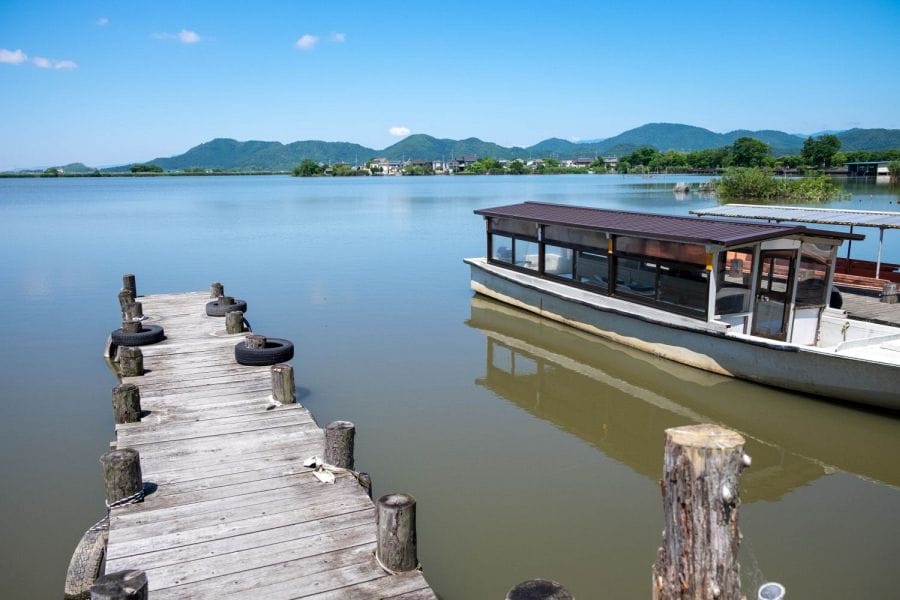
In the northeastern part of the city lies Lake Nishi, one of Lake Biwa’s satellite lakes and a site celebrated as one of the Eight Scenic Views of Biwako. Together with the Chōmyōji River, this wetland area is protected under the Ramsar Convention. Ōmihachiman is widely regarded as one of Japan’s most attractive waterside towns and is unique in having retained much of its historical landscape. It was designated Japan’s first Important Cultural Landscape, recognising the close relationship between the town, its waterways, and surrounding reed beds.
You can explore these wetlands by traditional covered boat, navigating narrow channels through dense reeds in an experience known as suigō meguri. This style of excursion dates back to the Warring States period, when figures such as Oda Nobunaga and Toyotomi Hidetsugu enjoyed recreating the refined leisure pursuits of the imperial court. The scenery continues to attract film and television productions today.
For elevated views, a ropeway leads to the summit of Mt. Hachiman, though walking trails also offer an enjoyable alternative. Within a short distance of the city are several other mountain-top castle ruins, including Kannonji, Chōkōji and Azuchi, each connected to dramatic episodes of regional history and accessible via rewarding hikes. Scattered across the surrounding hills are notable Buddhist temples as well, with Kannonshō-ji and Chōmei-ji being particularly admired for their settings and cultural significance.
Information
Name in Japanese: 近江八幡
Pronunciation: ohmee-hachee-man
Address: Ōmihachiman, Shiga