Fixed Net Fishing
In Hirado, Japan Adventurer offers a unique opportunity to see the work of Japan’s commercial fishermen up close.
The coastal waters surrounding Hirado are shaped by the Tsushima Current, which pushes warm, nutrient-rich water into the inlets and bays of western Kyūshū. To capture the seasonal migration of fish without the fuel costs of active trawling, fishers here rely on teiariami, or fixed net fishing. These massive, stationary structures function as passive traps, designed to intercept fish as they follow natural currents or flee predators. Unlike drift nets that move with the tide, these nets are anchored firmly to the seabed with heavy sandbags and concrete blocks. They stay in the same location for months or even years, becoming a semi-permanent part of the underwater topography.
The architecture of a fixed net consists of two primary sections: the lead net and the main bag. The lead net, which can stretch for several hundred metres, acts as a fence that extends from the shore or shallower water toward the open sea. When a school of fish encounters this barrier, their instinct is to turn toward deeper water to bypass it. This movement funnels them directly into the entrance of the main net, a large enclosure featuring a series of narrowing chambers. These chambers are designed with non-return openings, making it easy for the fish to enter but nearly impossible for them to find the exit once inside.
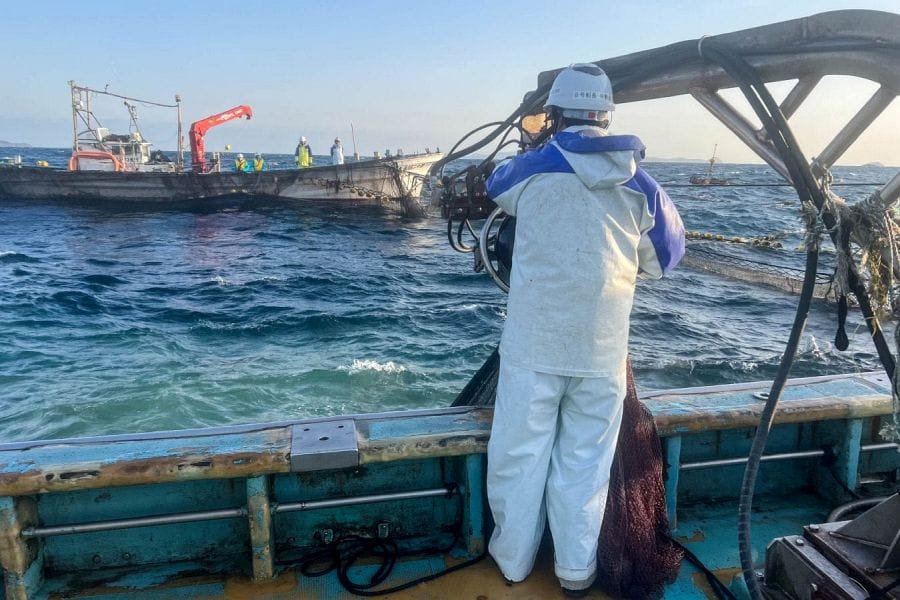
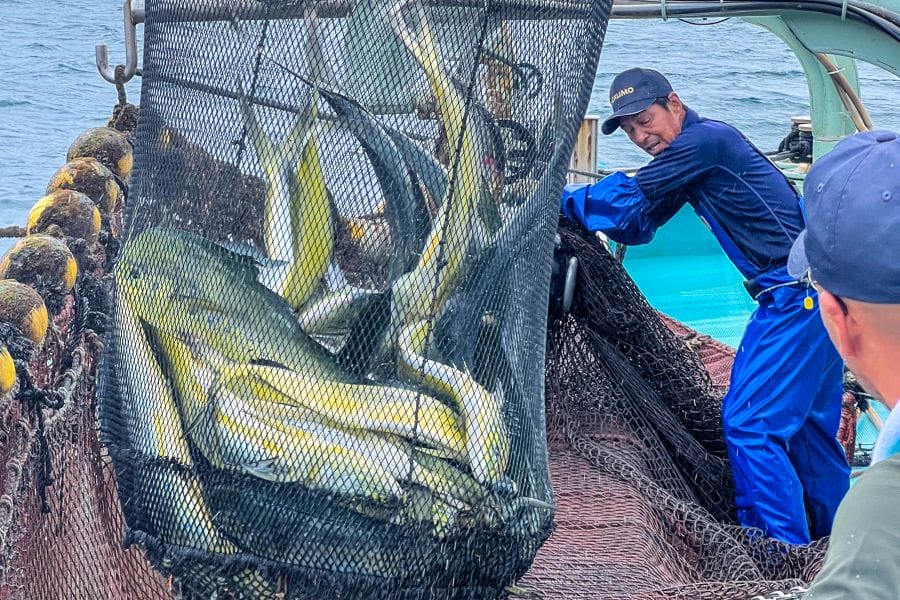
Every morning at dawn, crews of two or three boats head out to the offshore nets to begin the harvest. They work in unison to haul up the bottom of the main bag, gradually reducing the swimming space and forcing the fish toward the surface. This method is considered more sustainable than bottom trawling because it doesn’t damage the seafloor and allows for the release of undersized or non-target species while they’re still alive. Because the fish aren’t chased or stressed for long periods, the quality of the meat remains high, avoiding the lactic acid build-up that can occur during a struggle.
The catch varies significantly as the water temperature fluctuates throughout the year. During the colder winter months, the nets primarily yield buri (Japanese amberjack), which migrate south to find warmer spawning grounds. These winter fish are prized for their high fat content, developed to survive the chilly northern waters of the Sea of Japan. As spring arrives, the focus shifts to dai (red sea bream), which move into the shallower coastal reefs of Hirado to spawn. The arrival of these pink-scaled fish is a reliable indicator of the changing seasons for the local community.
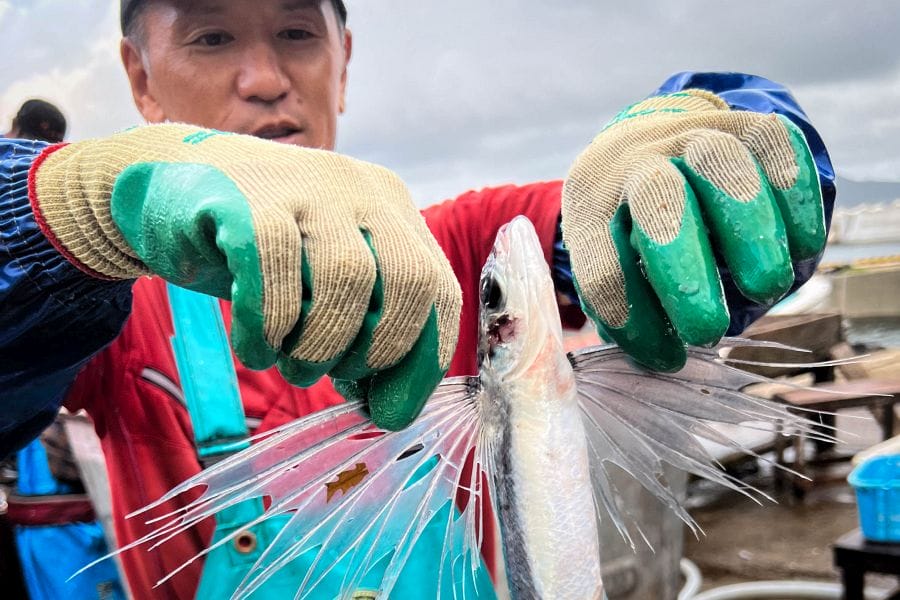
Summer brings a different variety of species into the traps, most notably tobiuo (flying fish). These fish are particularly significant in Hirado, where they’re often sun-dried or grilled to create the base for agoji dashi, a smoky, deep-flavoured soup stock. Alongside them, the nets frequently catch aji (horse mackerel) and isaki (chicken grunt), which thrive in the warm summer currents. Sometimes, big mahi-mahi and highly valuable groupers are caught. The diversity of the summer catch is high, but the individual volume of each species is often lower than the massive winter schools of amberjack.
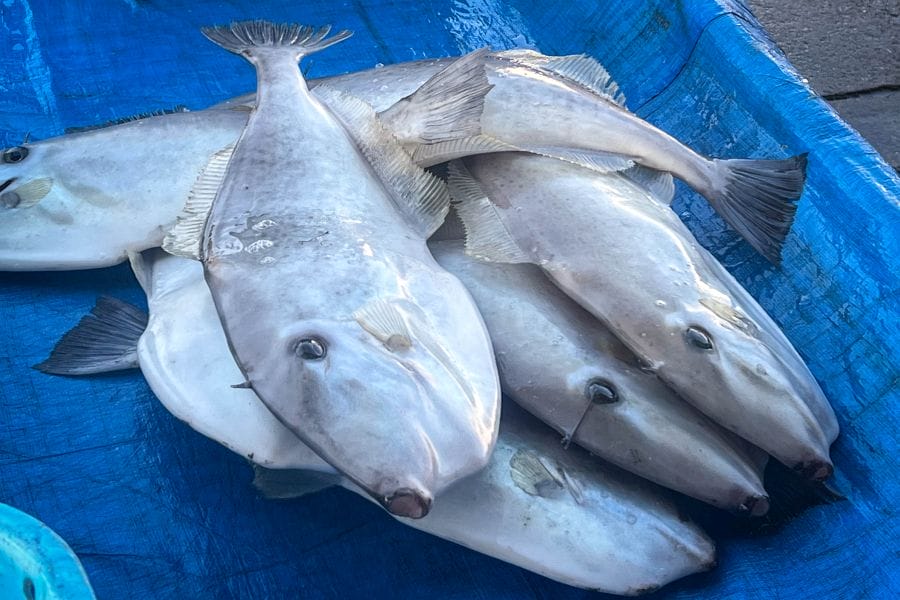
By autumn, the water begins to cool again, and the nets see an influx of kawahagi (threadsail filefish) and mizūka (bigfin reef squid). The filefish are often caught with their livers intact and enlarged, which is a local delicacy. Throughout these seasonal shifts, the fixed nets remain a constant fixture of the Hirado coastline, visible from the cliffs as long lines of orange and black buoys bobbing on the surface. These structures represent a sophisticated understanding of marine biology and fluid dynamics, allowing for a consistent harvest that aligns with the natural movements of the sea.
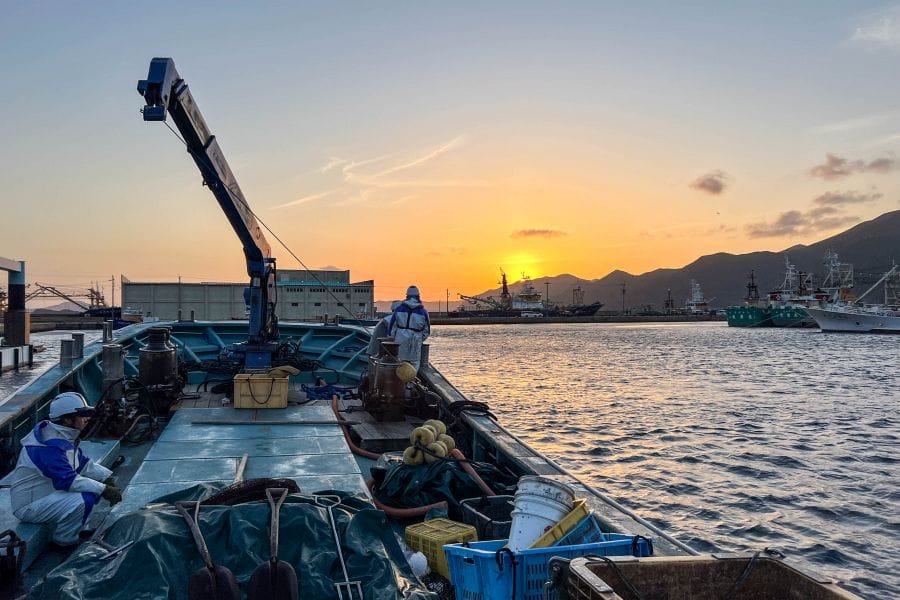
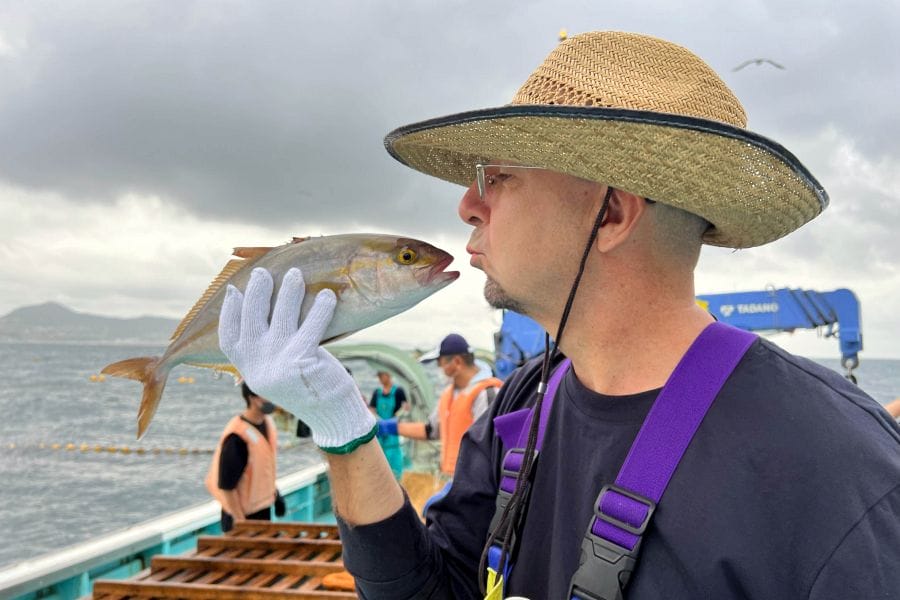
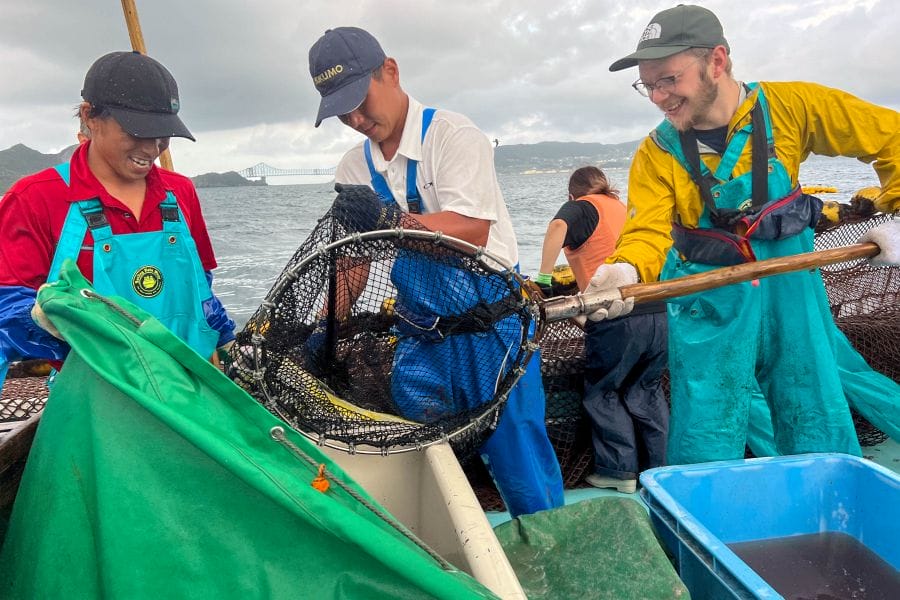
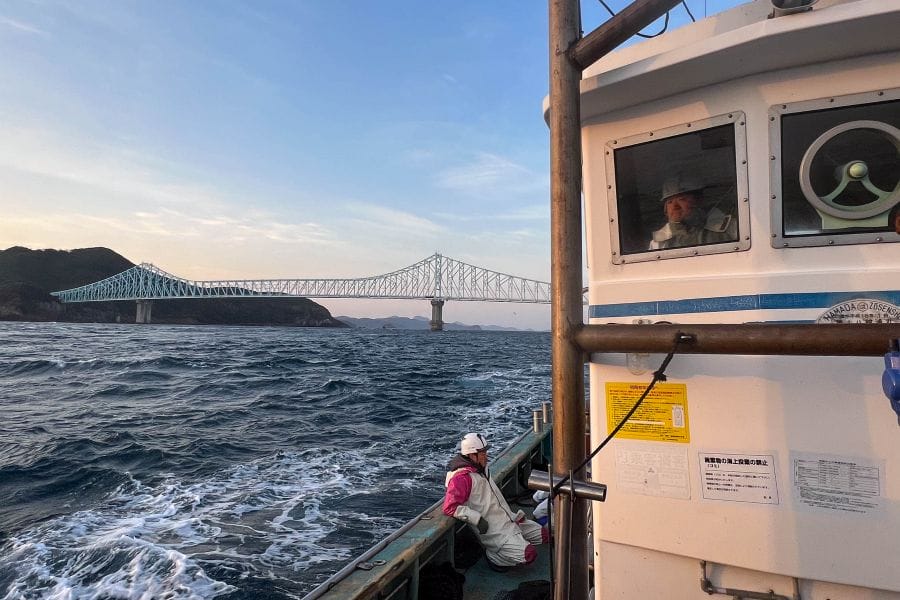
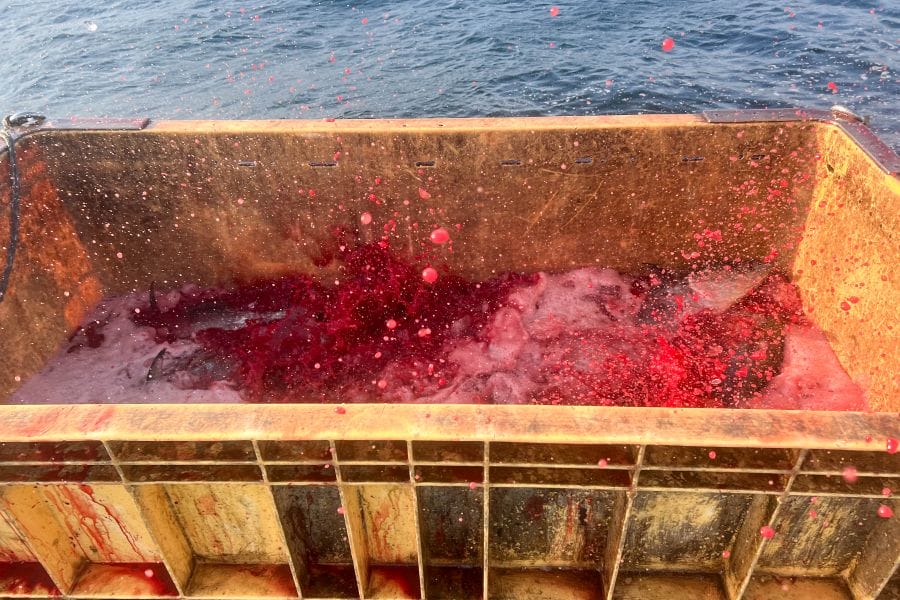
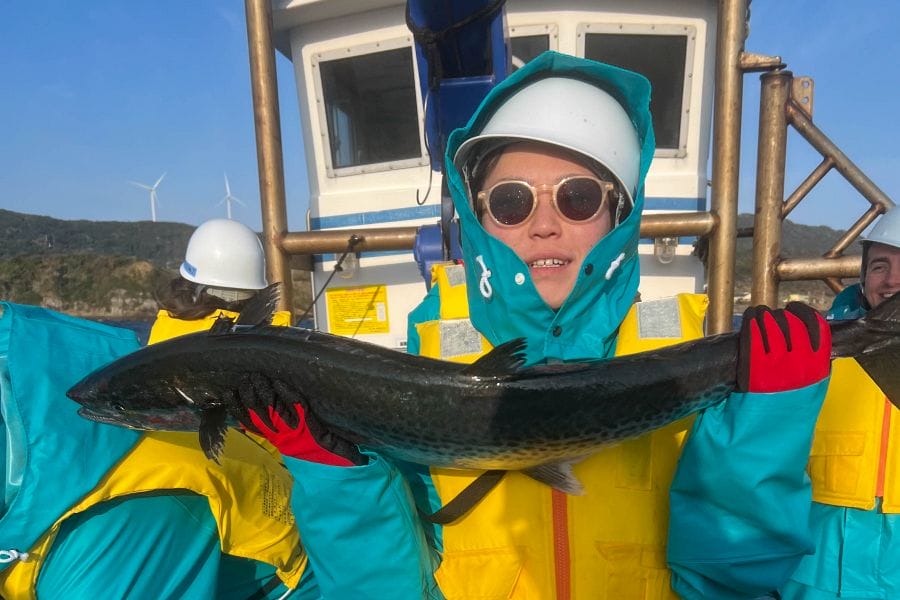
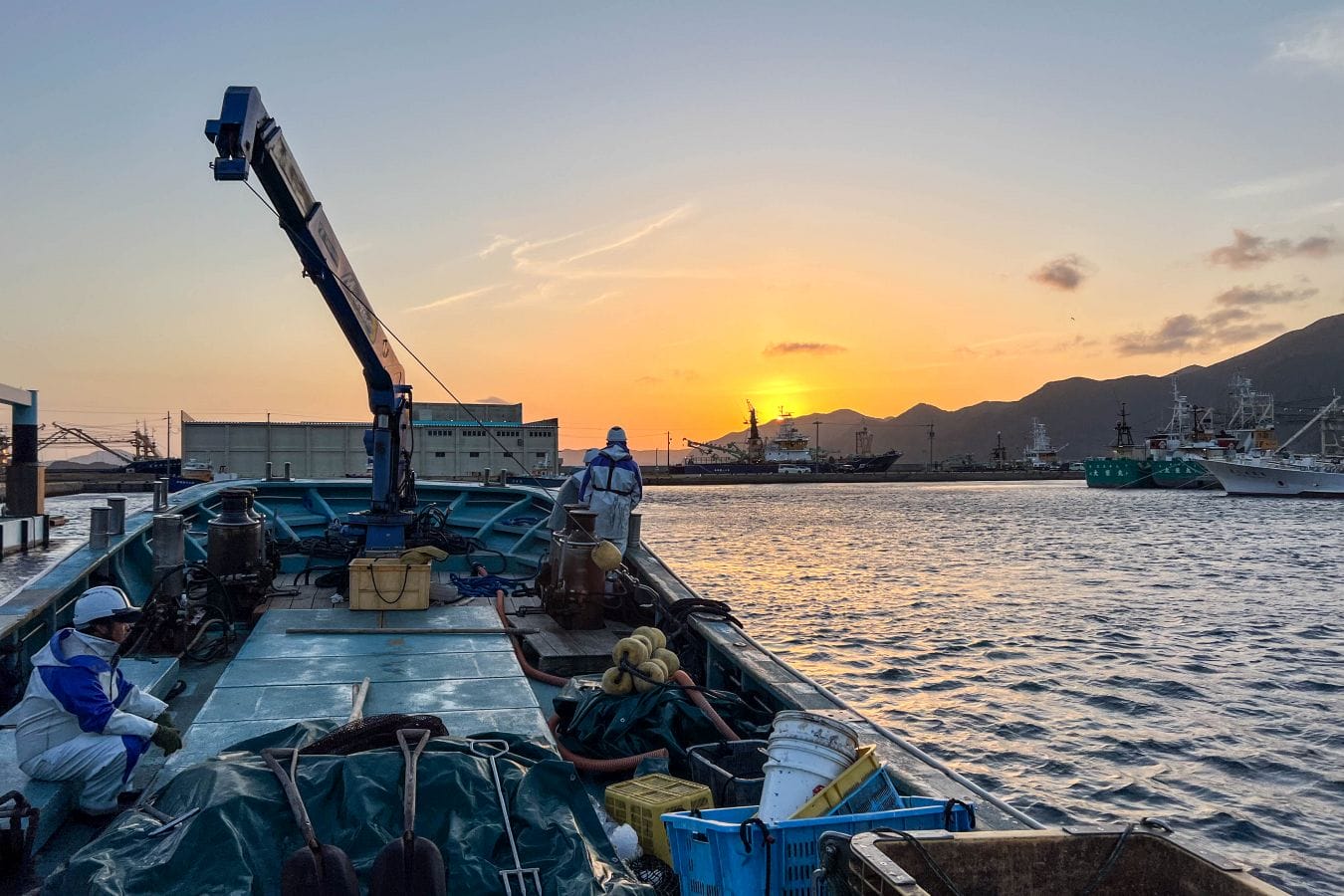
Most people never get the chance to see commercial fishermen at work, although they’re essential to Japanese culinary culture. But Japan Adventurer can arrange for you to join them at sea. You start before sunrise and change into fisherman’s waterproofs, then sail out to the fixed nets as the sun rises, accompanied by seagulls, ospreys, kites, and crows. As the main bag is hauled up, you may be invited to scoop out some fish with long-handled net. The fish are dispatched by being thrown into a basin of ice where they thrash about for a while. This soon turns into a literal bloodbath, so it’s not for the squeamish. If you do help, your waterproofs will become specked with fish blood.
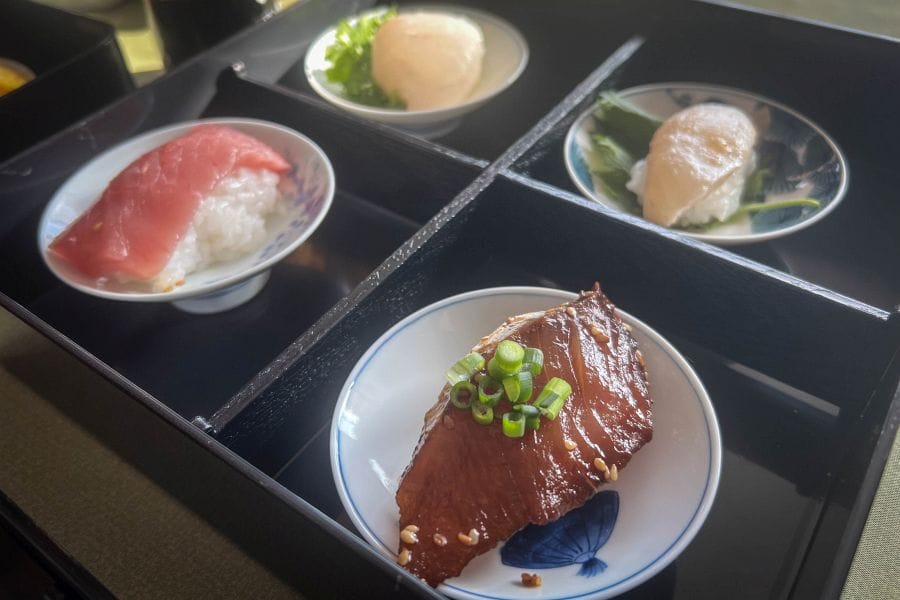
You sail back to harbour with the catch stowed in the hold. Back at the dock, the fish are sorted on large tables for packing in ice. Then it’s time for breakfast at a portside restaurant – a delicious repast of sushi served on elegant ceramic sake cups once used by the local aristocracy.