Kyōto Railway Museum
The Kyōto Railway Museum exhaustively documents every conceivable aspect of railways in Japan.
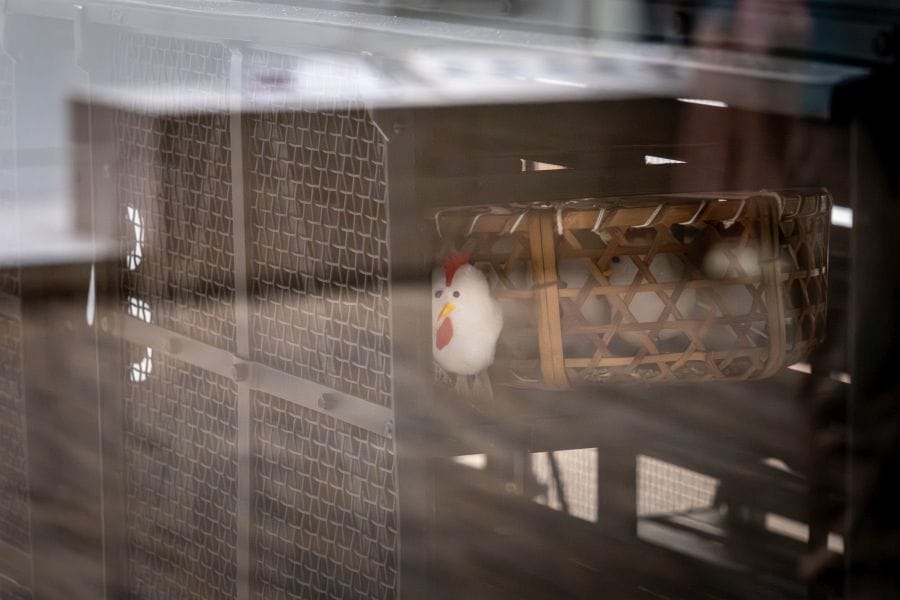
The Kyōto Railway Museum occupies a sprawling site in Umekōji Park, with indoor and outdoor sections. It exhaustively documents every conceivable aspect of railways in Japan, from steam, diesel, and electric locomotives, through ticketing, maintenance, signalling and catering, even down to the transport of live chickens.
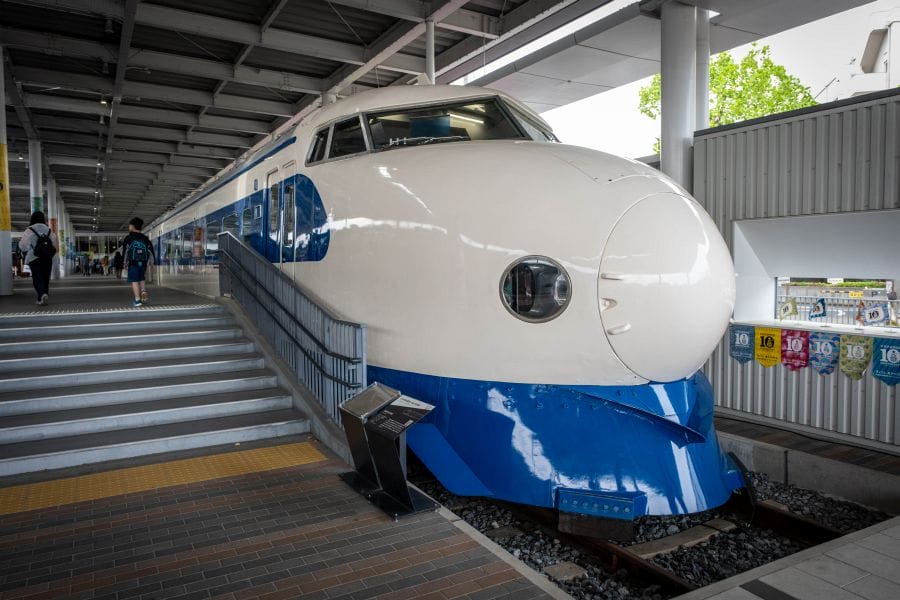
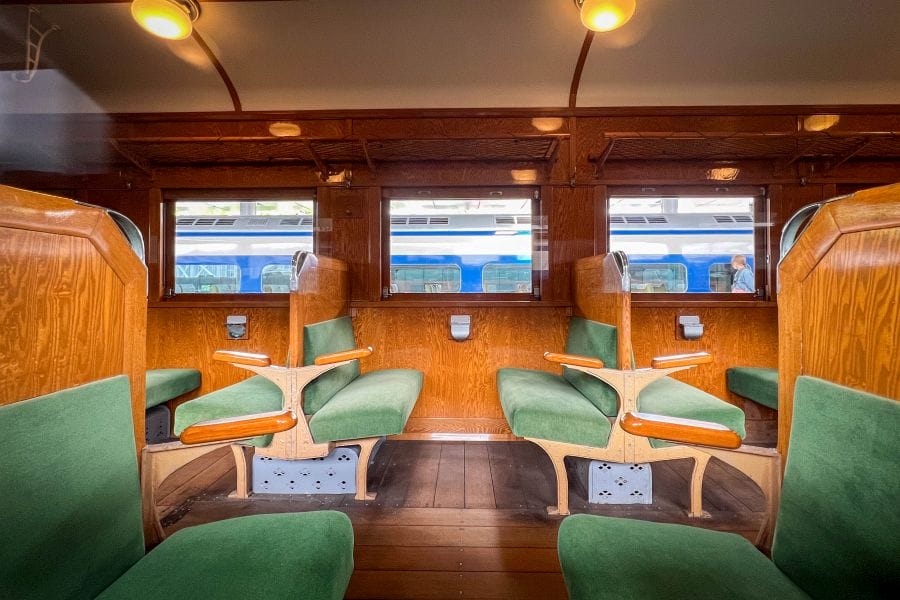
The entrance leads into the Promenade, an outdoor walkway resembling a station platform, where a series of historic engines and carriages are parked. The exhibits here include the C62 2 steam locomotive, the 0-series Shinkansen, and a Pullman carriage used by the Imperial family.
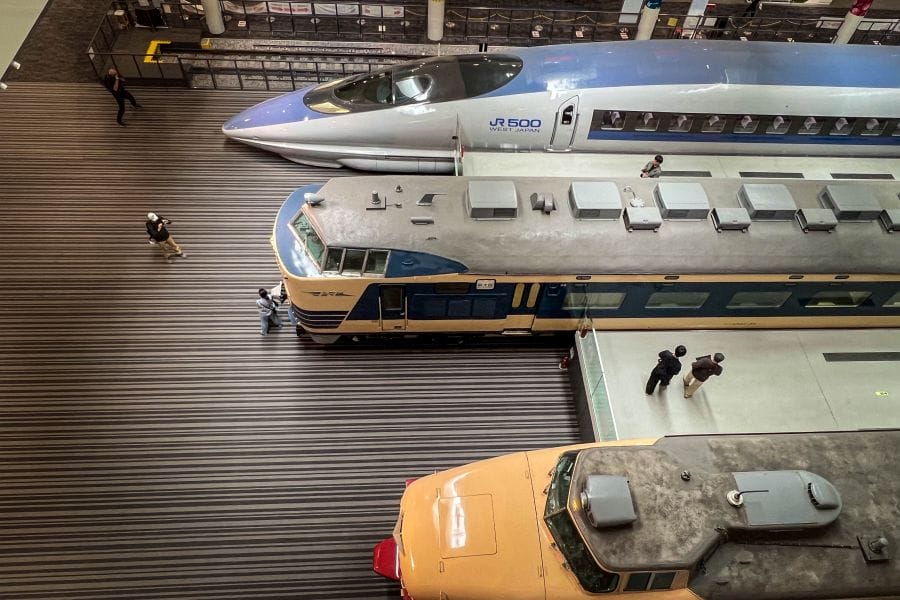
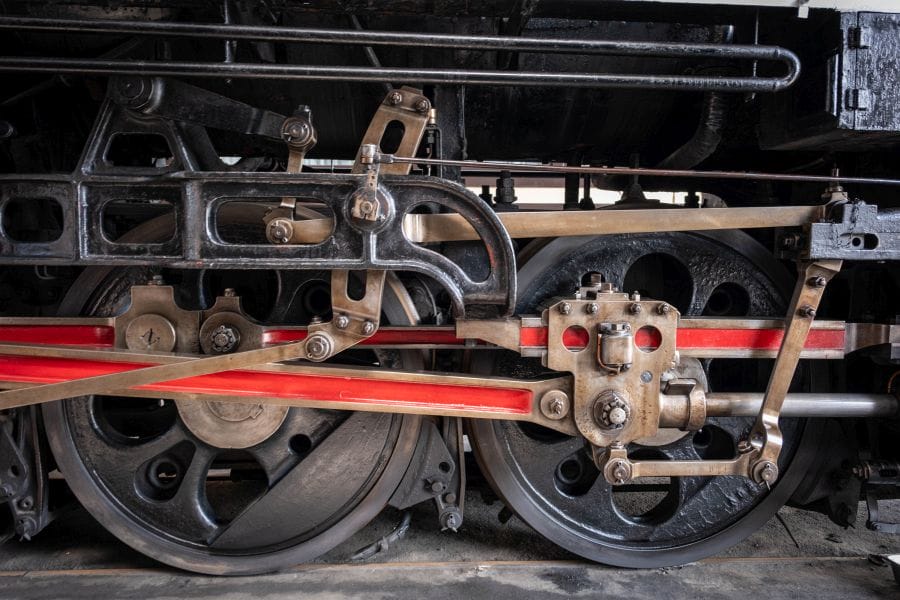
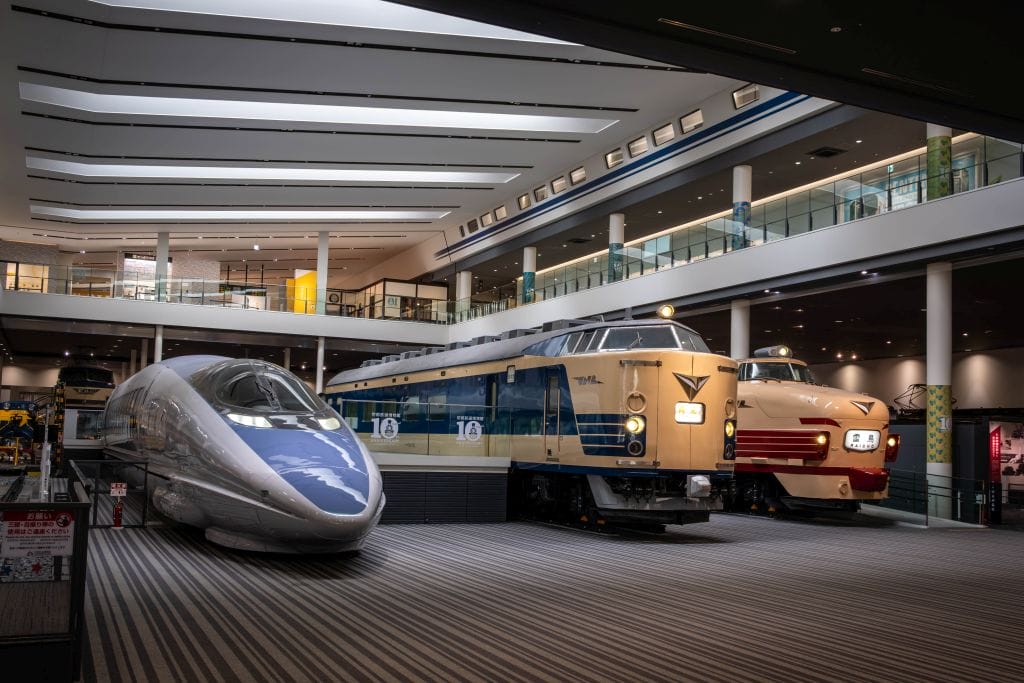
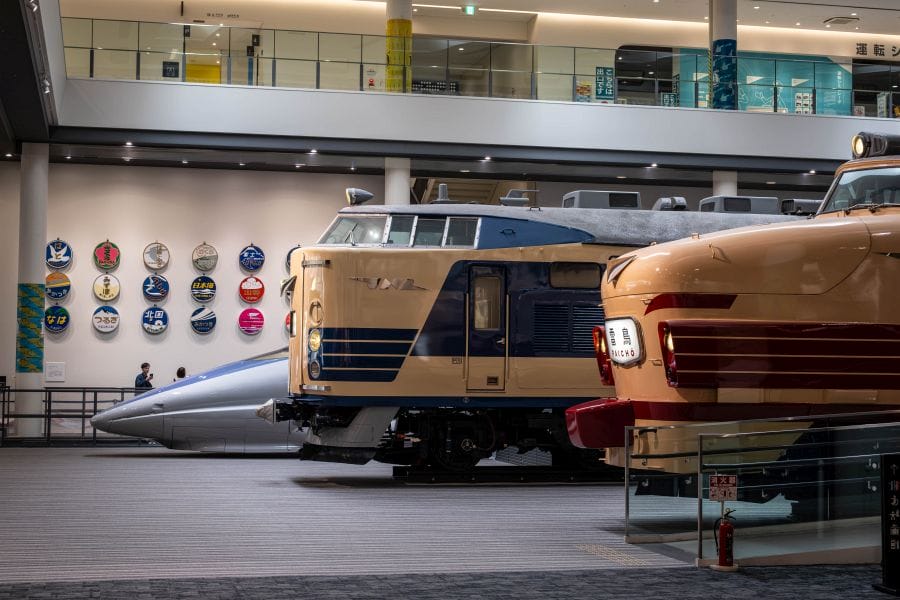
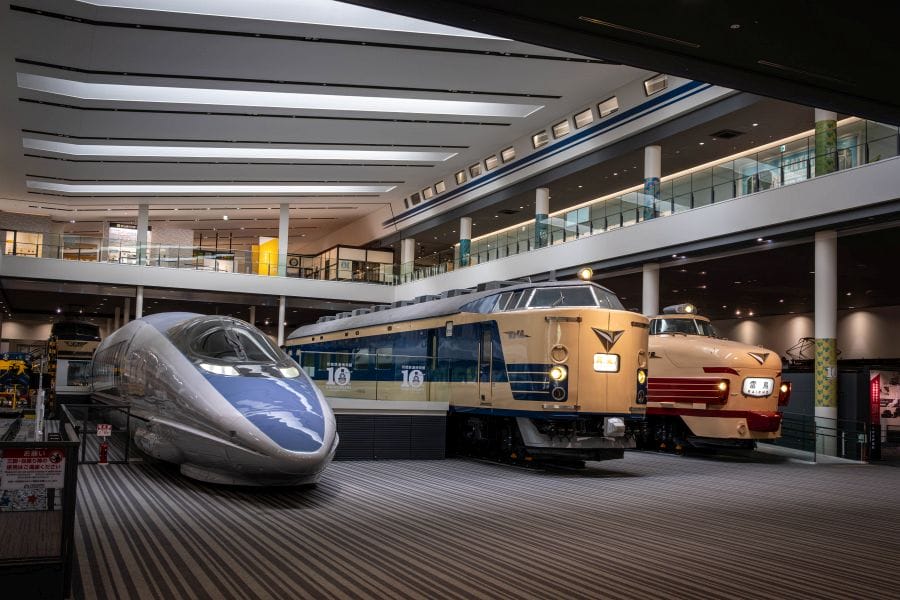
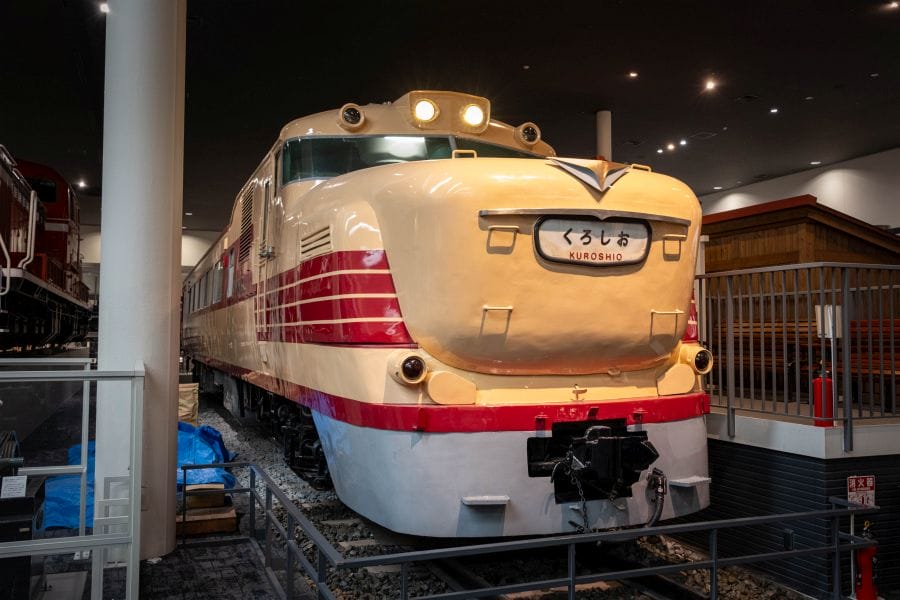
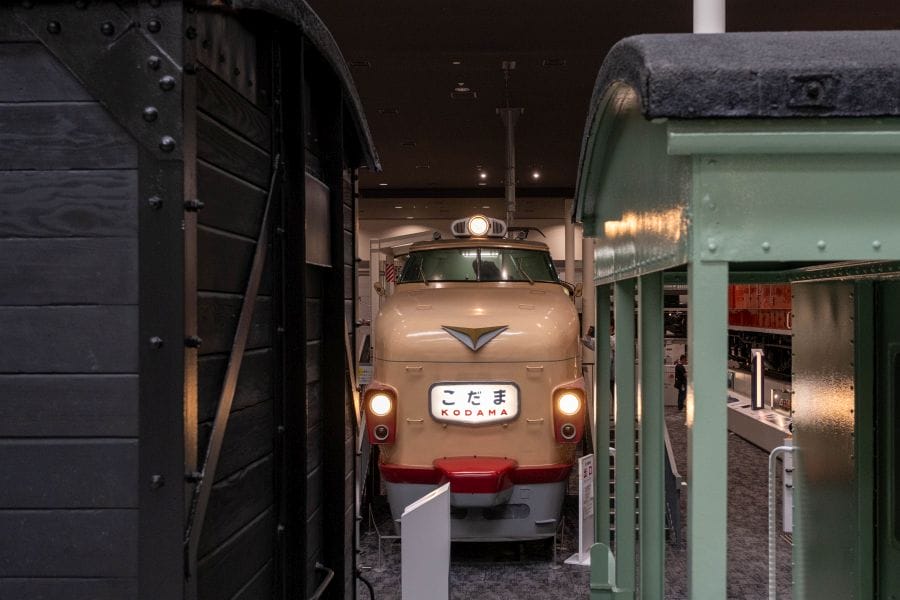
From the Promenade, you enter the vast main building. The ground floor houses the 500 Series Shinkansen, a train developed by JR West that entered service in 1997. Its long, pointed nose, inspired by the beak of a kingfisher to reduce noise when entering tunnels at high speeds, represents a peak in aerodynamic engineering. Next to it sits the KuHa 489, a bonnet-style express train used for the Hakusan service. Beneath these massive machines, you can access maintenance pits to inspect the undercarriage mechanisms, brake systems, and heavy steel wheelsets. The lighting in this section is stark, highlighting the industrial textures of the grease-coated joints and the sheer scale of the bogies that support the weight of the carriages.
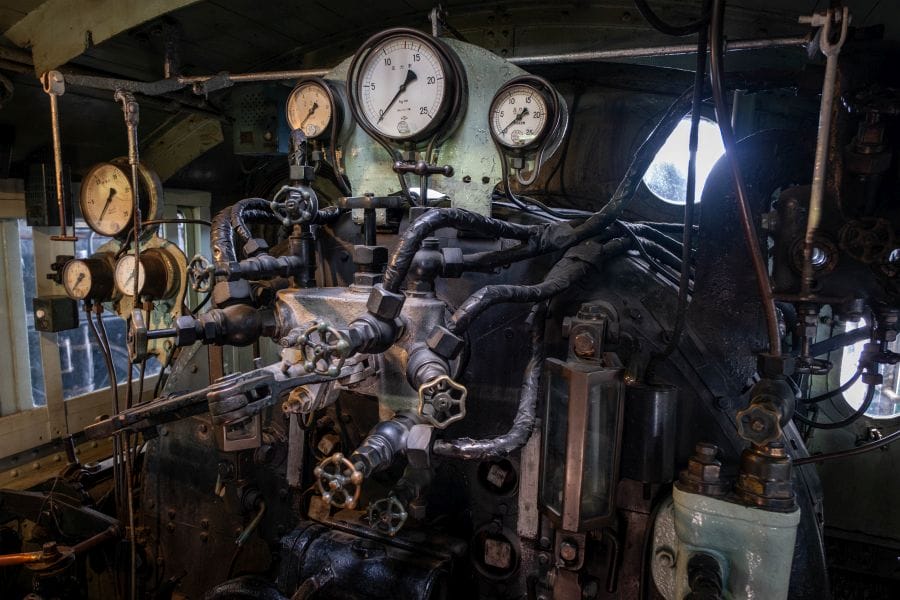
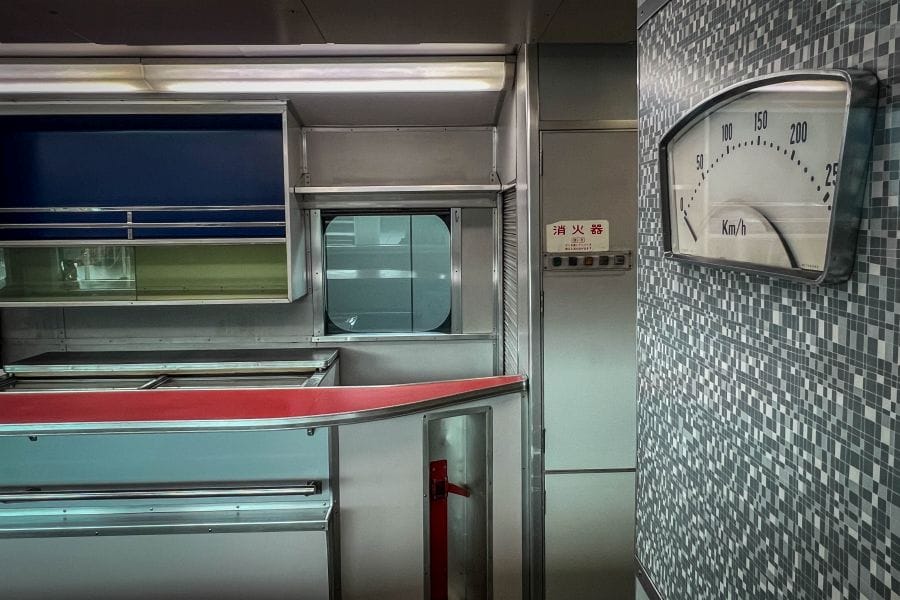
An evocative exhibit is the 100 Series Shinkansen’s double-decker dining car. While modern high-speed rail focuses on efficiency and throughput, these cars represented a brief era of luxury travel in the late 1980s. The original kitchen equipment and table layouts are preserved. A speedometer on the wall indicated the headlong rush of progress as much as the velocity of the train itself. The 100 Series was the first to implement private compartments on the Shinkansen in response to the growing demand for business privacy during the bubble economy. The interior uses a palette of muted browns and creams, reflecting the corporate aesthetic of the Shōwa era’s final years.
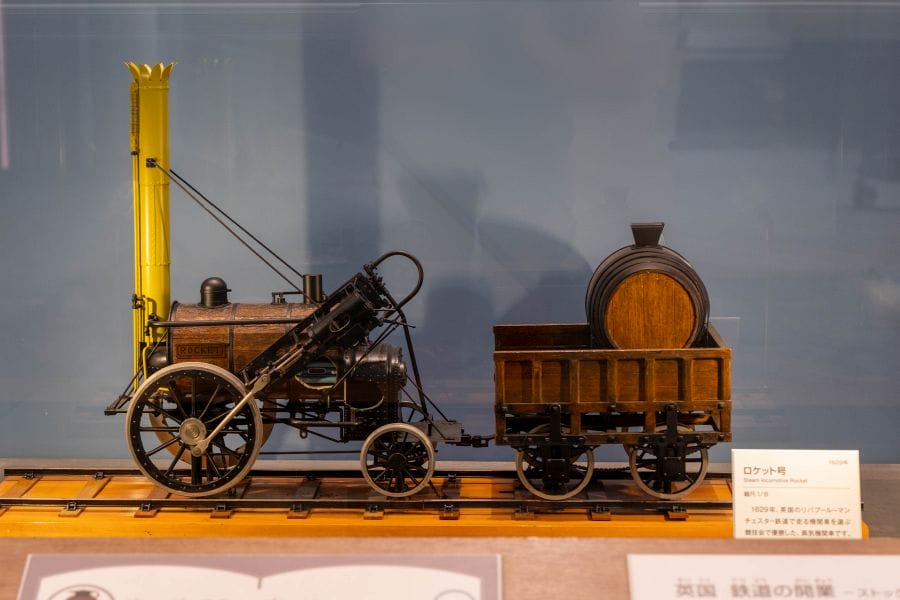
Amongst the massive stationary engines are many smaller exhibits that move with the push of a button. Pantographs spring up and down, gears engage and turn wheels, and a miniature Stephenson’s Rocket pumps its pistons.

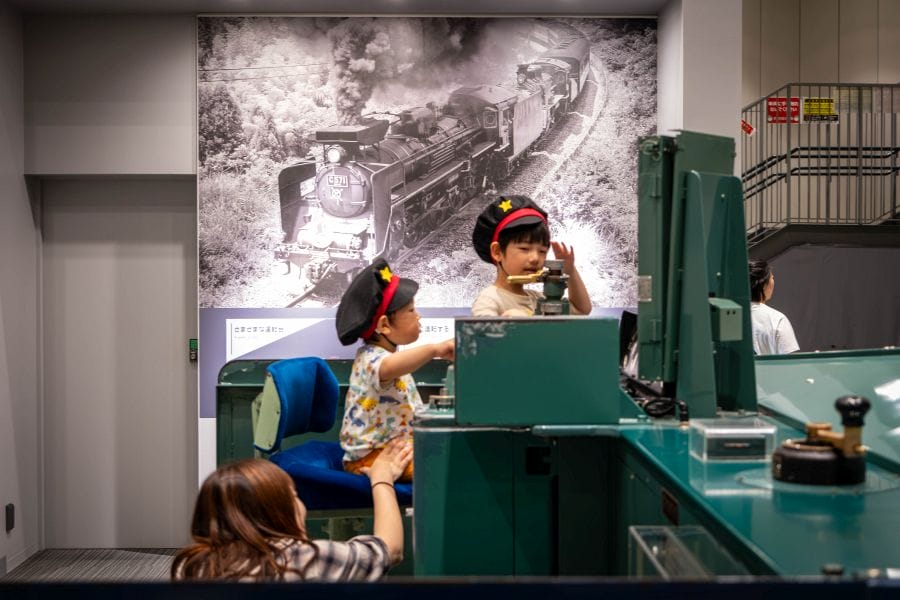
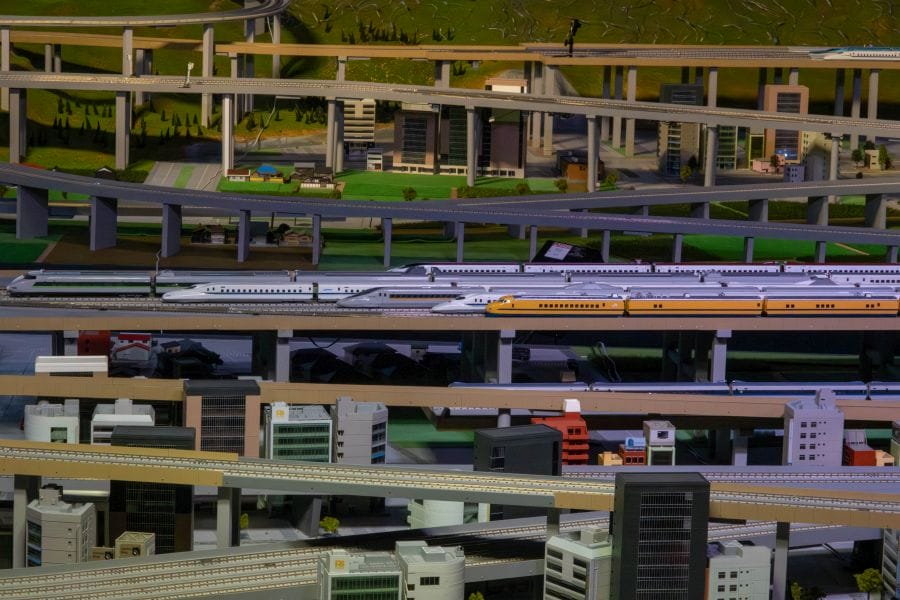
Moving to the second floor, the focus shifts to the logistical systems that keep the Japanese network punctual. There’s a massive diorama, one of the largest in Japan, measuring approximately thirty metres wide. This is demonstrated at intervals and lasts fifteen minutes. It comes with a rather tiresome commentary and isn’t as fun as it could be. Another smaller diorama allows you to drive the trains yourself. It serves as a technical demonstration of the Automatic Train Control systems used on the Shinkansen lines.
You can also pay extra to operate a driving simulator, which uses the same software and control hardware as those used for actual staff training. Track layouts and scenery in these simulators are mapped from real sections of the JR West network to ensure high levels of technical accuracy.
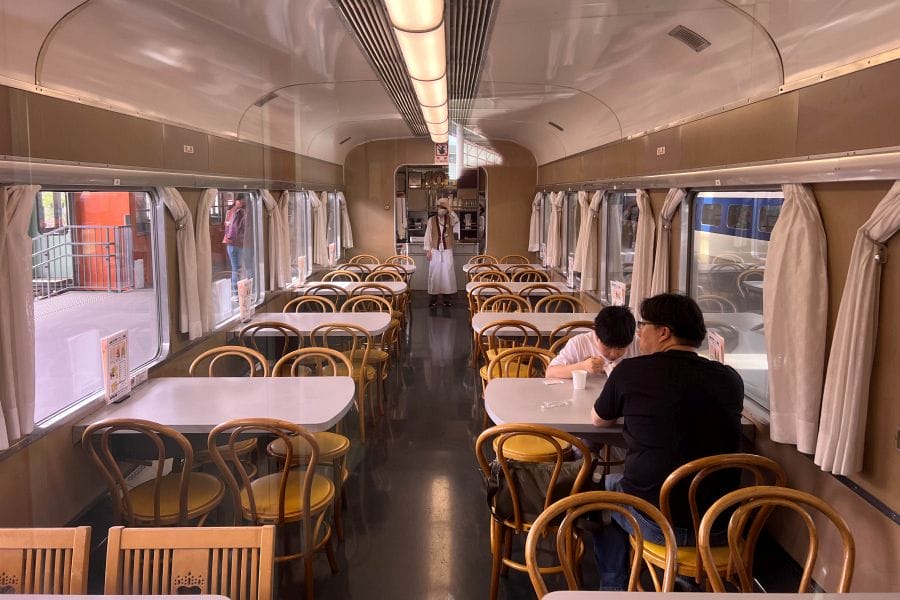
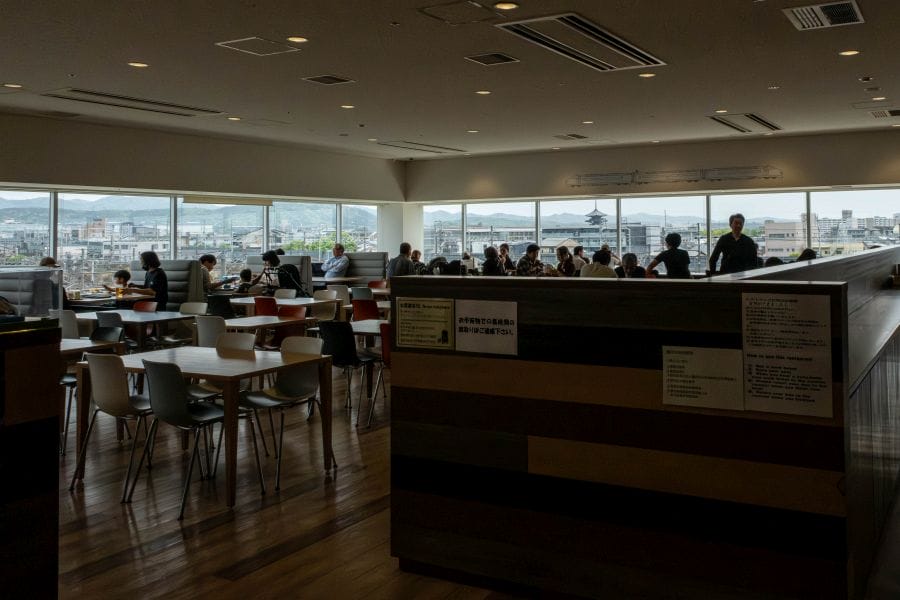
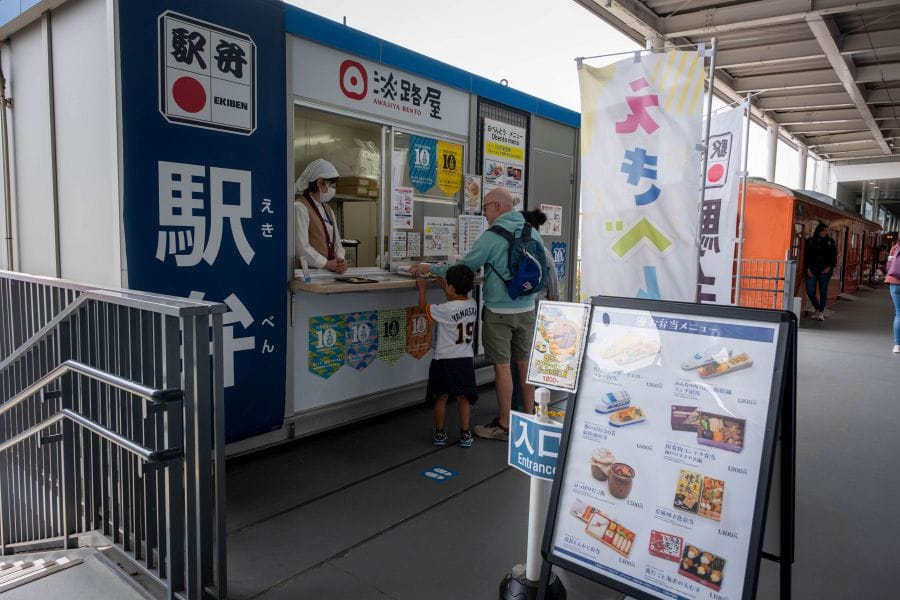
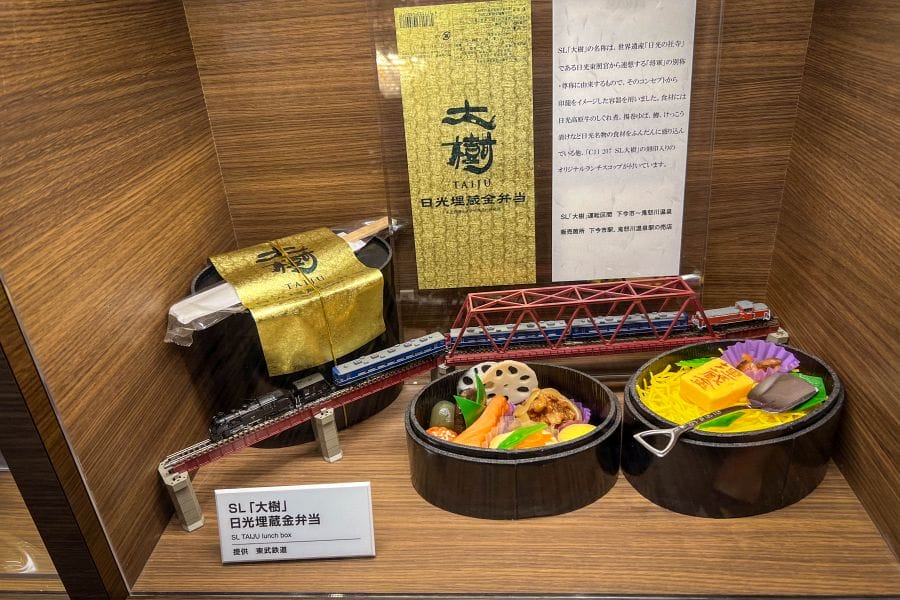
Since there’s so much to see, you’re likely to get hungry. Fortunately there’s an expansive restaurant on the second floor, and you can enjoy snacks and train-themed bento boxes in an authentic dining car on the Promenade.
Not surprisingly, the museum is popular with families of all nationalities. Small children run around in ecstasies of excitement, and cry loudly when it all becomes too much.
The third floor of the main building includes a corridor with windows looking down on the big engines below. From here, they look like little toys. The Sky Deck rooftop observation deck offers a panoramic view of the shunting yard of Kyōto Station with Kyoto Tower and the Tōji Temple Pagoda in the near distance.
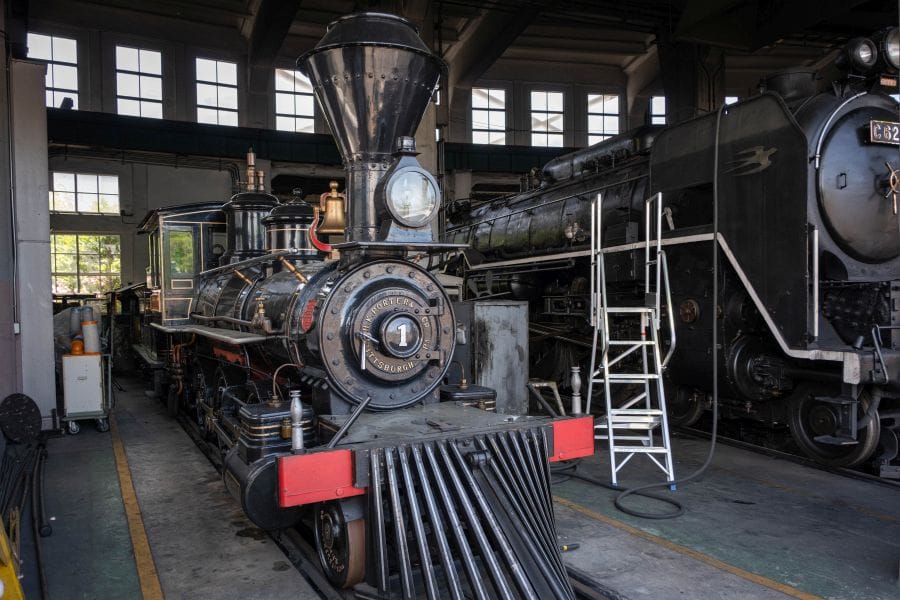
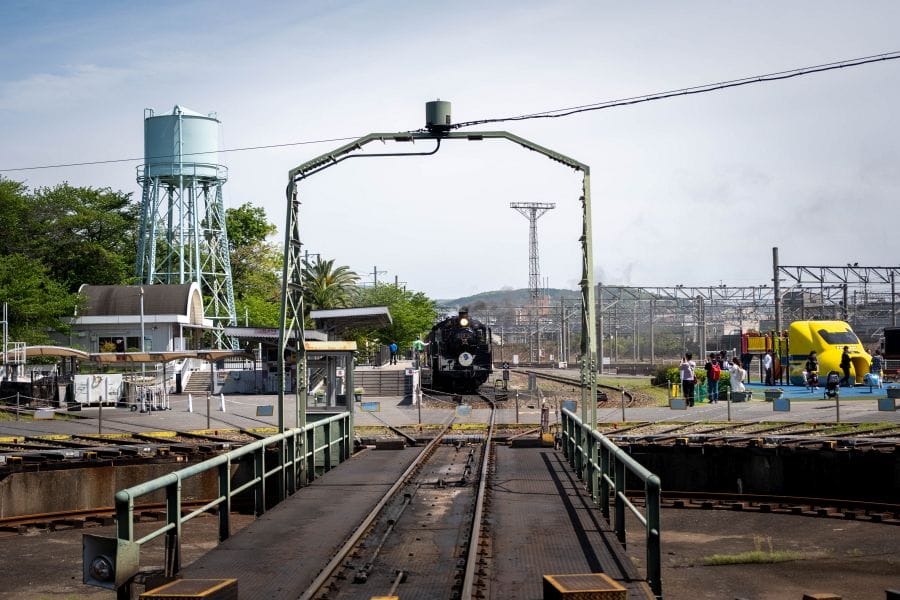
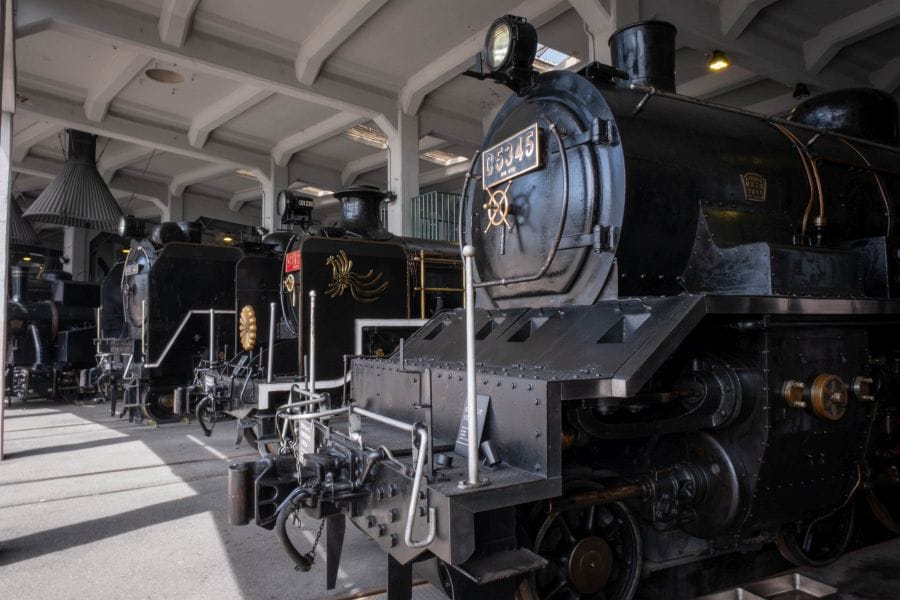
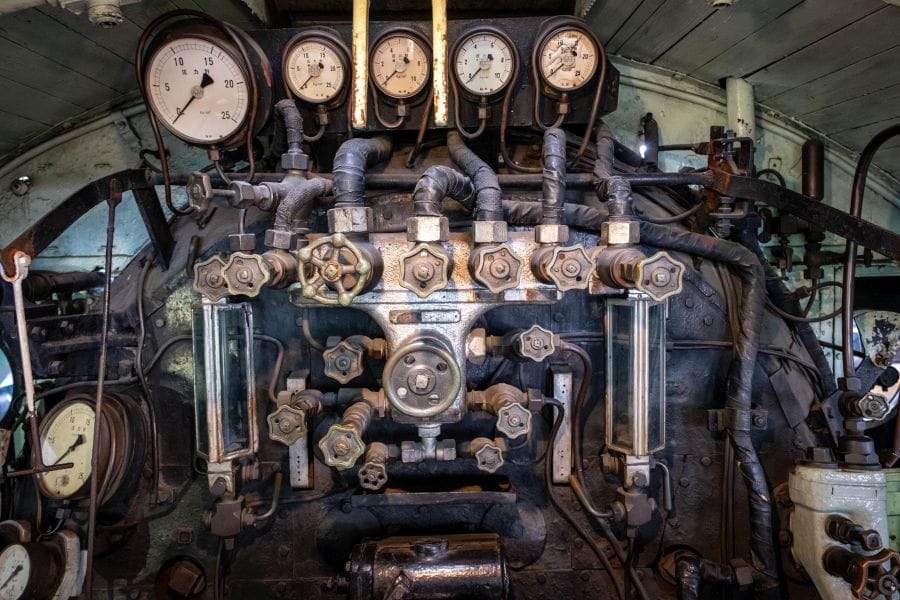
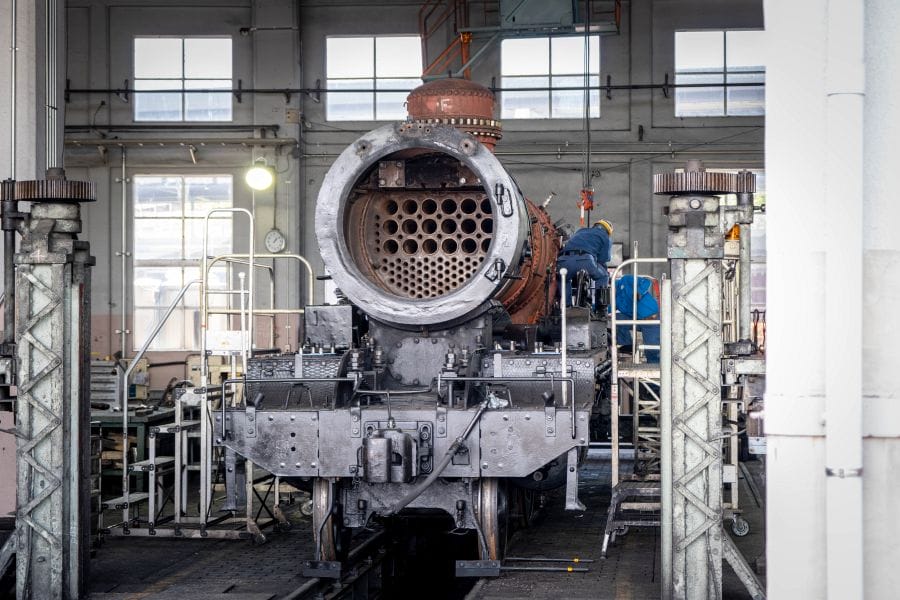
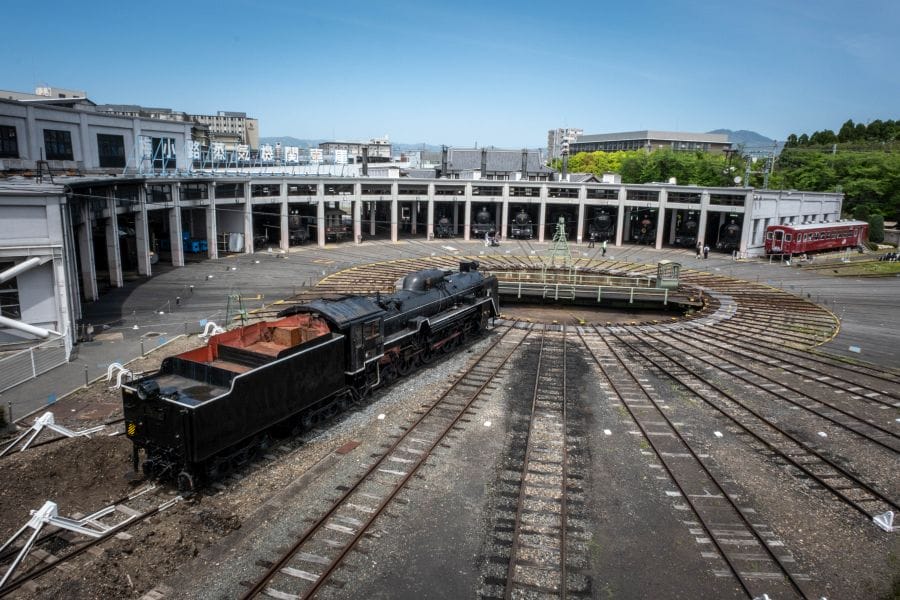
From the main building, the route takes you outside to the Umekōji Roundhouse. This is the most architecturally significant part of the complex, built in 1914. The reinforced concrete structure consists of 20 tracks fanning out from a central turntable. It’s the oldest existing concrete roundhouse in Japan and was designated an Important Cultural Property due to its early adoption of Western industrial building techniques. The turntable remains operational, rotating massive steam engines so they can be backed into their respective bays for maintenance. The museum’s technicians perform deep-cleaning and boiler inspections here, often visible to the public, providing a view of the labour-intensive reality of steam-era engineering.
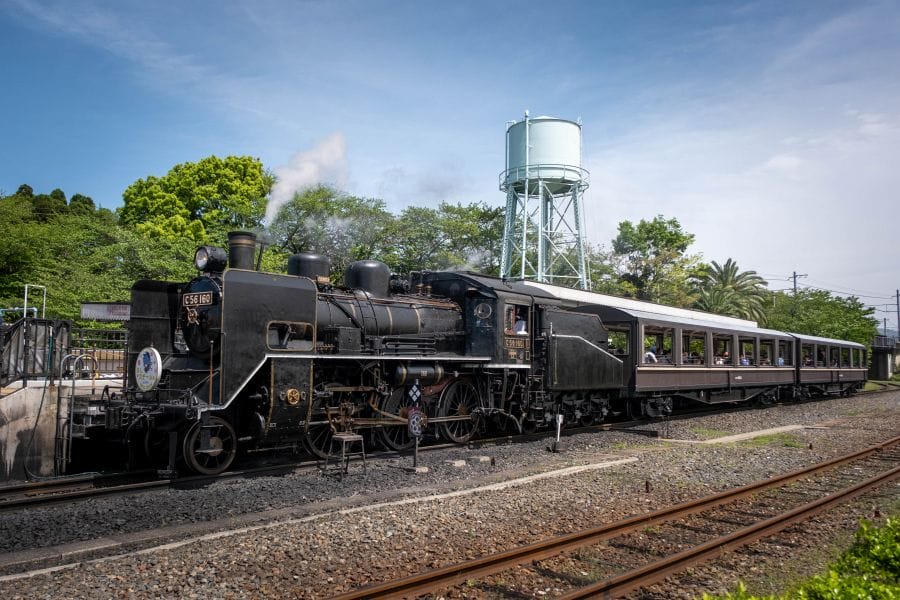
Unlike many train museums where the rolling stock sits immobile, all of the engines in the roundhouse are in functional condition. This includes the SL Steam excursion train which runs on a dedicated track. Fuelled by coal, it produces plumes of black smoke, spurts of white steam, and a lovely melancholic whistle tone.
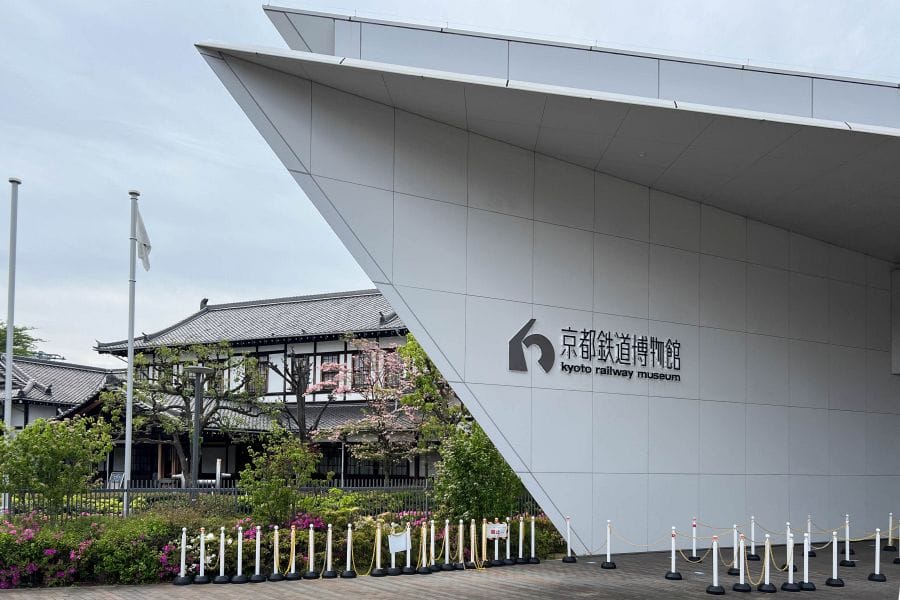
The route through the museum concludes at the former Nijō Station building, which was relocated and reconstructed on-site in 1997. Built in 1904 in the Meiji period, it’s the oldest wooden station building in Japan. Its traditional hip-and-gable roof and intricate woodwork contrast sharply with the glass and steel of the main museum hall. It houses a library and a gift shop with model trains and all manner of fancy goods for the delight of the train maniac.
The museum does an excellent job of documenting the history of rail from Japan’s late Industrial Revolution during the Meiji Period modernisation to the modern day. Besides the beauty of the engineering itself, the exhibits demonstrate the elegant design sensibility of the Japanese that has persisted over the centuries, adapting over time to the latest available materials and needs.
Japan Adventurer owns a traditional Japanese townhouse in the centre of Kyōto, just fifteen minutes’ walk from the museum.