Zhèng Chénggōng
Name In Japanese: 鄭成功
Pronunciation: zeng chen-gong
Period: 1624 to 1662
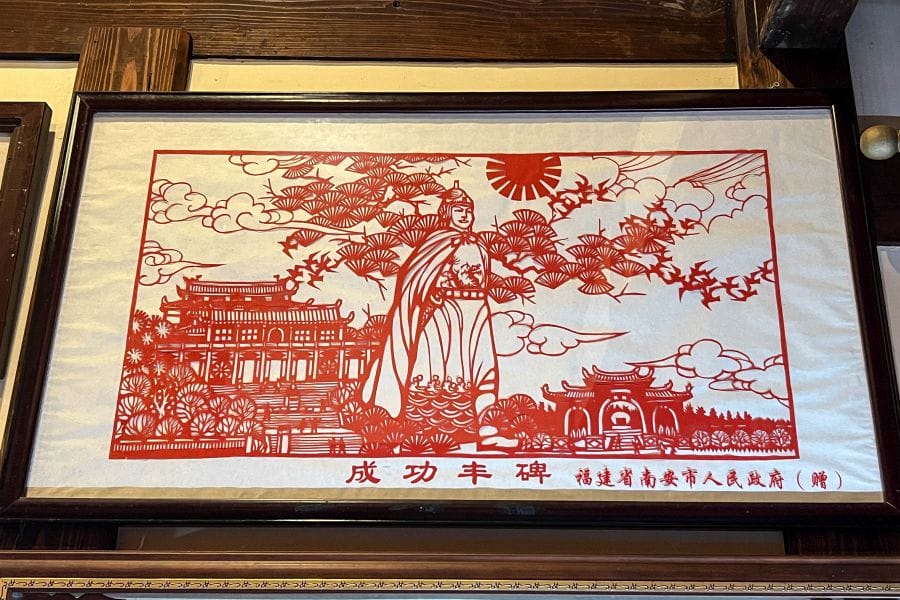
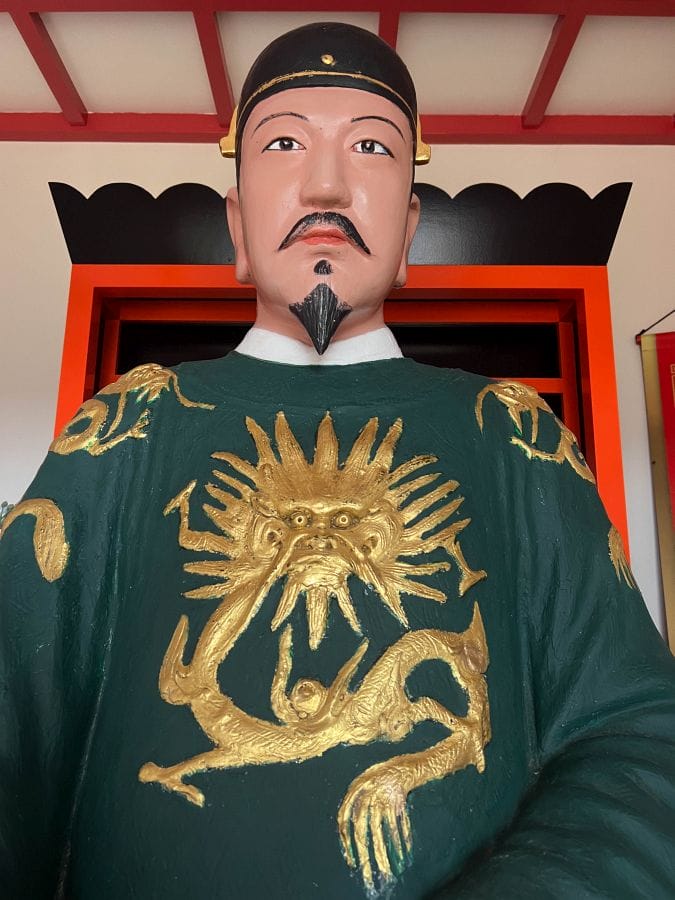
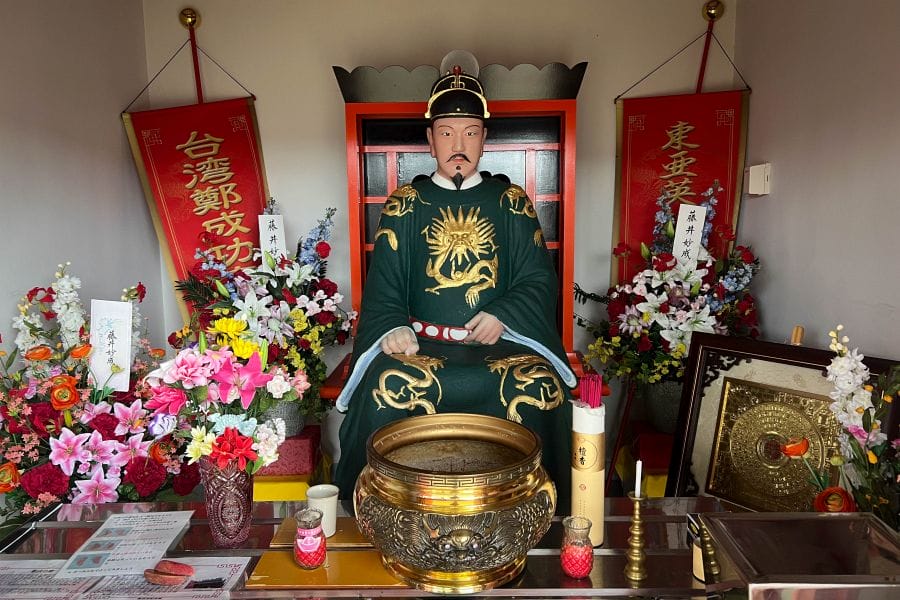
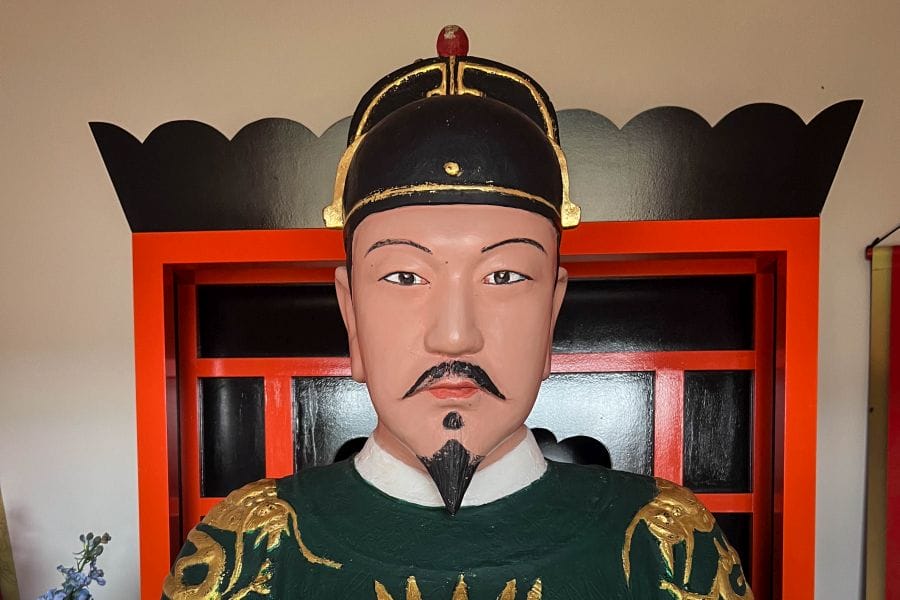
Zhèng Chénggōng, universally known in the West as Koxinga, was a 17th-century maritime military commander who led the loyalist resistance against the Qing conquest of China. While history records his eventual conquest of Taiwan and his status as a national hero across East Asia, his origin belongs entirely to the island of Hirado. Born to a Chinese merchant-pirate and a Japanese samurai daughter, Zhèng’s complex cross-cultural childhood shaped his worldview, providing him with the unique naval strategies, financial networks, and political backing that later enabled his massive military campaigns in mainland China.
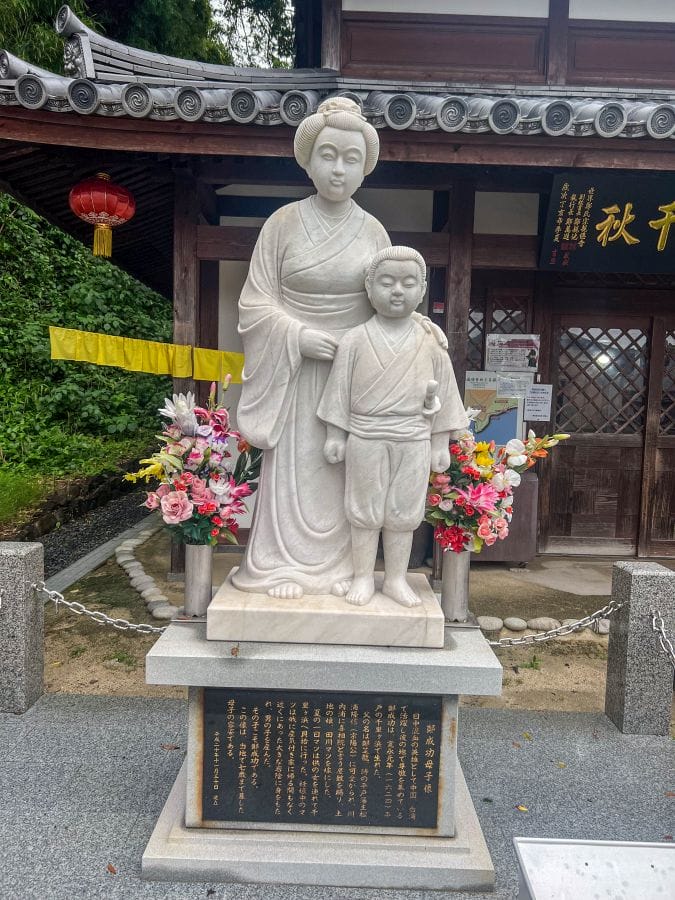
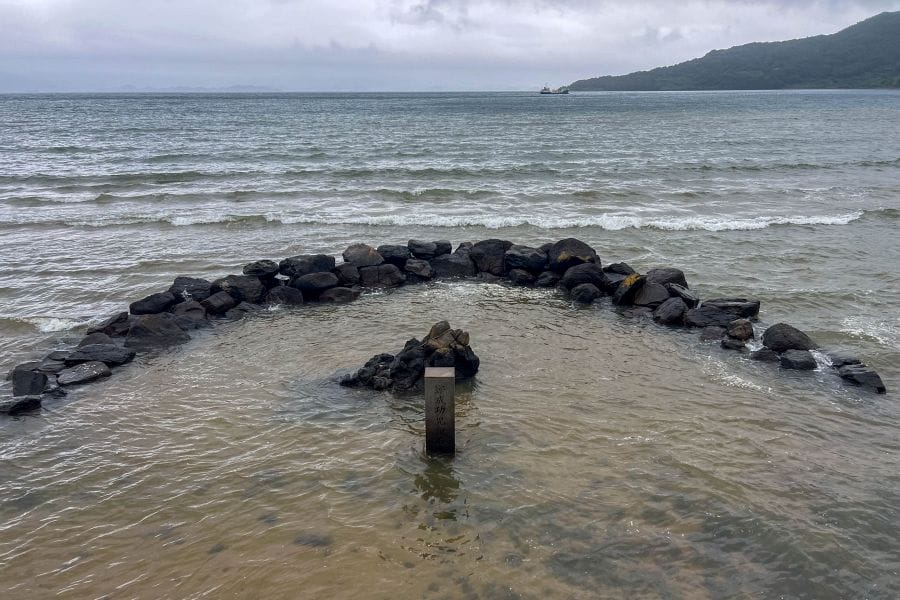
You can visit his birthplace along the southern coast of Hirado at Senrigahama Beach. Local archives record that in the summer of 1624, his mother, Tagawa Matsu, was gathering seashells along the shore when she suddenly went into labour. Unable to reach her home in time, she leaned against a small boulder on the beach to give birth. Today, this otherwise unremarkable rock is a designated historical monument known as the Birth Stone.
Zhèng spent the first seven years of his life in Hirado under his Japanese childhood name, Fukumatsu. He grew up speaking Japanese, learning local customs, and absorbing the maritime culture of his mother’s people, which later prompted contemporary Japanese writers to view his legendary military exploits not as purely Chinese history, but as the triumph of a Japanese-born warrior.
His path to becoming a global historical figure was paved by his father, Zhèng Zhīlóng, a powerful smuggler who operated out of Hirado with the blessing of the local Matsuura clan. When the elder Zhèng was summoned back to China to command the Ming Dynasty’s naval defences, the young Fukumatsu left Japan at age seven to join him in Fujian Province. He excelled in Confucian scholarship, but his world shattered when Beijing fell to northern Manchu invaders who established the Qing Dynasty. In a desperate bid to shore up loyalist resistance, the exiled Ming Emperor granted the young warrior the imperial surname “Zhū.” This extraordinary honour earned him the title Guóxìngyé (Lord of the Imperial Surname), which Dutch traders phonetically transcribed into European history books as Koxinga. In Japanese, this title is pronounced Kokusen’ya, a name that later captivated mainland Japan when the playwright Chikamatsu Monzaemon dramatised his life in the smash-hit 1715 puppet play, The Battles of Coxinga.
Tragedy struck the family when the Manchu forces invaded Fujian. Zhèng’s father surrendered to the enemy, but his mother, Tagawa Matsu, who had finally joined her family in China, refused to submit. When the Qing soldiers breached her city, she chose to commit suicide to preserve her honour rather than be captured—an act of defiance that Japanese chronicles deeply praised as an expression of true samurai spirit. Devastated by his father’s betrayal and his mother’s death, Koxinga took an army to his mother’s grave, burned his Confucian scholar robes, and swore an oath of eternal war against the Qing Dynasty. Operating from island bases along the Chinese coast, he raised a massive private navy that successfully resisted the imperial armies for nearly two decades.
When his continental strongholds finally began to falter, Koxinga looked eastward across the straits for a secure base to launch his counter-invasions. In 1661, he marshalled an armada of hundreds of warships and thousands of soldiers to besiege Fort Zeelandia, the primary stronghold of the Dutch East India Company on Taiwan. After a brutal nine-month siege, he forced the Dutch governor to surrender, ending decades of European colonial rule and establishing Taiwan’s first independent government. Though he died of sudden illness shortly after his victory in 1662 at the age of 37, his legacy remains permanently anchored in Hirado. Today, you can visit the reconstructed Zheng Chenggong Memorial Museum built on the site of his childhood home in Kawachi-chō, stand before his bronze monument overlooking Hirado Port, or join local residents every July 14th as they perform the traditional Jangara sword dances to celebrate the birthday of the island’s most famous son.
Zhèng’s exploits were paralleled centuries later by Chiǎng Kai-shek whose Nationalist (KMT) forces fled to Taiwan in 1949 after losing the Chinese Civil War to the Communists, and Chiǎng actively used Koxinga’s historical legacy to legitimise his own position.