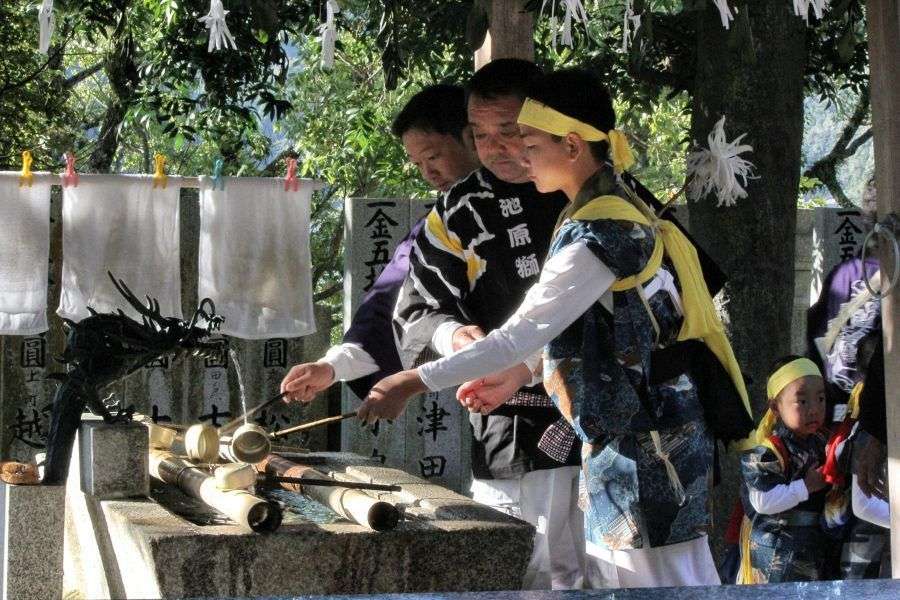
Kamo Shrine
This shrine is said to have been built in 1087 to protect the area of Kikuma. It’s intimately related to the Kamo Shrines in Kyōto.
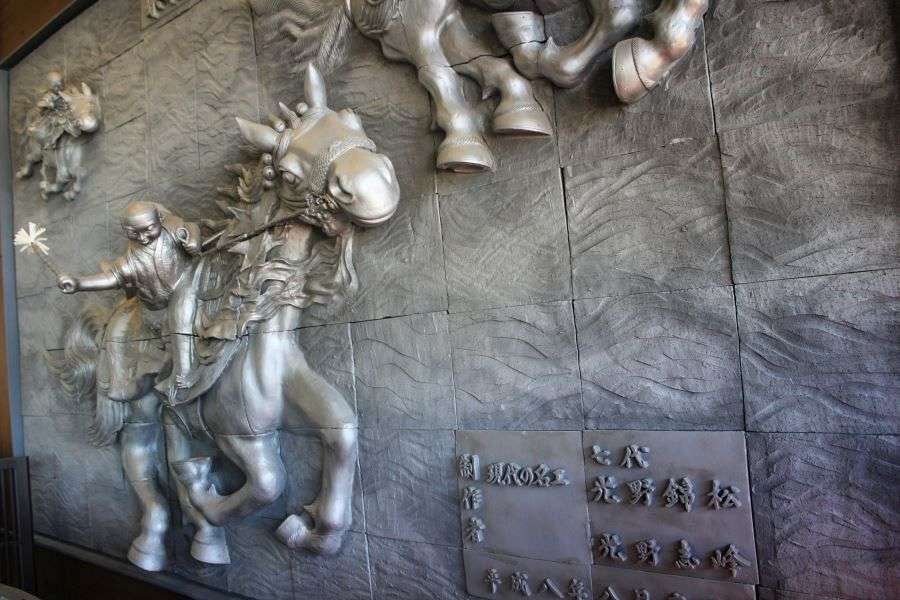
In Kyoto, then the capital of Japan, shrine horse races started in 540 as part of the Aoi Festival during the Heian Period. In 1093 in the Kamakura period, horse racing was established as an annual event taking place on May 5 in Kyōto’s Kamigamo Shrine. At that time, twenty manorial villages in Japan (owned by rich aristocrats or fields owned by a temple) were donated to Kamigamo Shrine in Kyōto to help pay for this important national ritual. Kamo shrine in Kikuma was in one of these twenty manors. In this way, Kamo Shrine became one of the manors selected to cover the cost of horse racing at the Aoi Festival, which was the forerunner of the modern big three Kyōto festivals. The names of the twenty manors are still featured in the ritual. The 17th of these is Kikuma Manor of Iyo Province. It’s believed that Kikuma Manor made contributions to the cost of the Kamo horse racing in Kyōto, and also sent horses. Even today, a horse called “Kikuma” contests in the grounds of Kyōto’s Kamigamo Shrine.
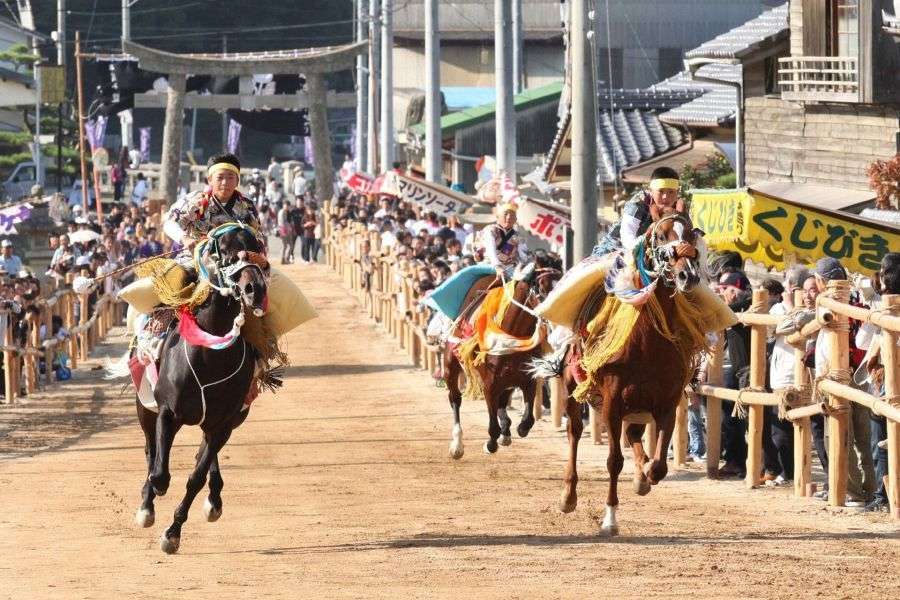
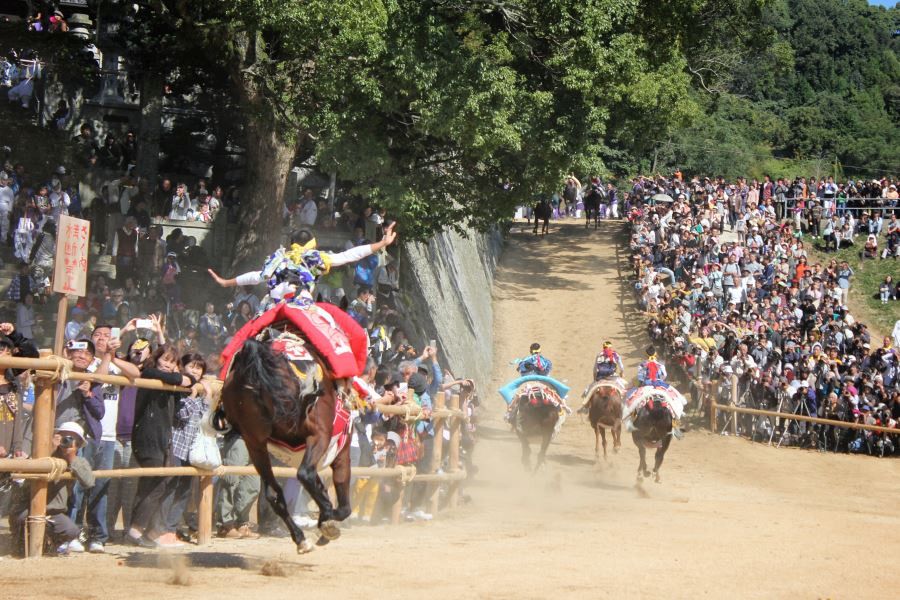
Horses are still kept in Kikuma, and Kamo Shrine is the site of the Otomouma Festival, where young boys gallop the horses, decked out in heraldic finery, along the approach to the shrine. The origin of the Shintō ritual of horse running in Ehime lies in the vassalage of the Kikuma Manor to Kamigamo Shrine in Kyōto which began long ago.
Information
Name in Japanese: 加茂神社
Pronunciation: kamo jinja
Address: 1989 Kikumachōhama, Imabari, Ehime 799-2303