A Cruise Among the Warships
Kure naval port is situated southeast of Hiroshima city. The urban part of Kure faces a natural harbour, which was a stronghold for a faction of the Murakami maritime clan in the medieval period. Since the Meiji era, it has served as a base for the Imperial Japanese Navy and its successor, the Japan Maritime Self-Defence Force (JMSDF). Despite their proximity, Hiroshima and Kure have a very different atmosphere. Hiroshima is all about peace, the tragedy of war, and making lots of paper cranes. Kure is more about “well, the boys were brave and the gear was good”, and lots of metal cranes.
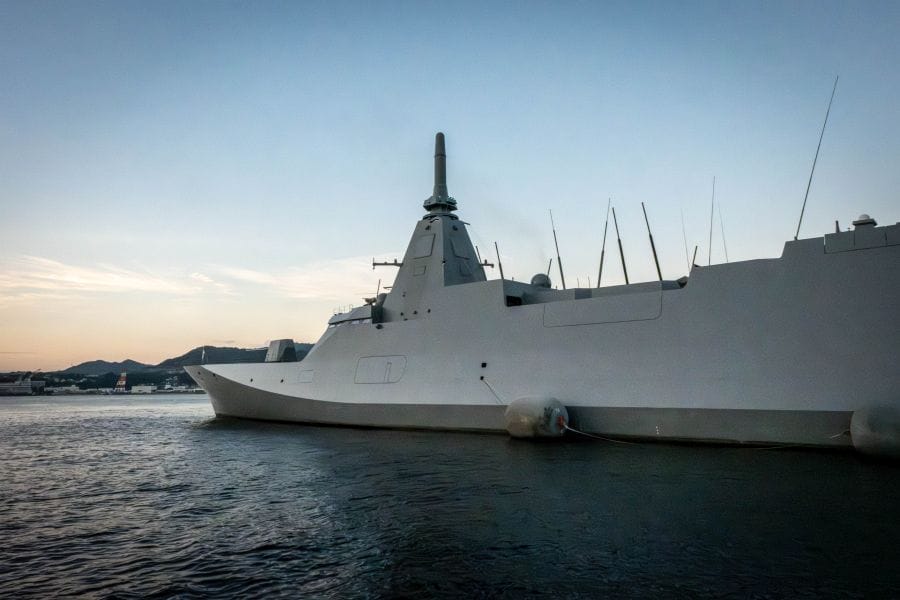
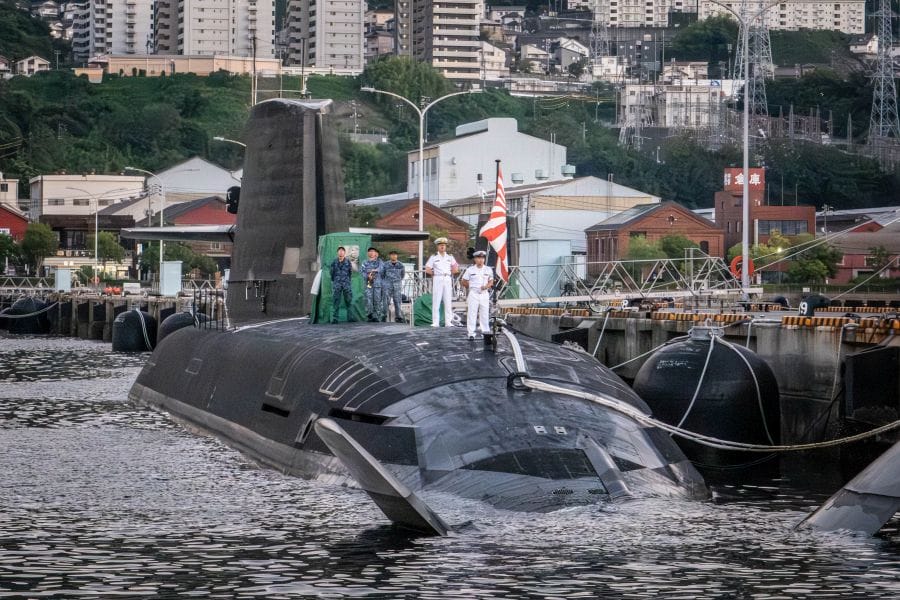
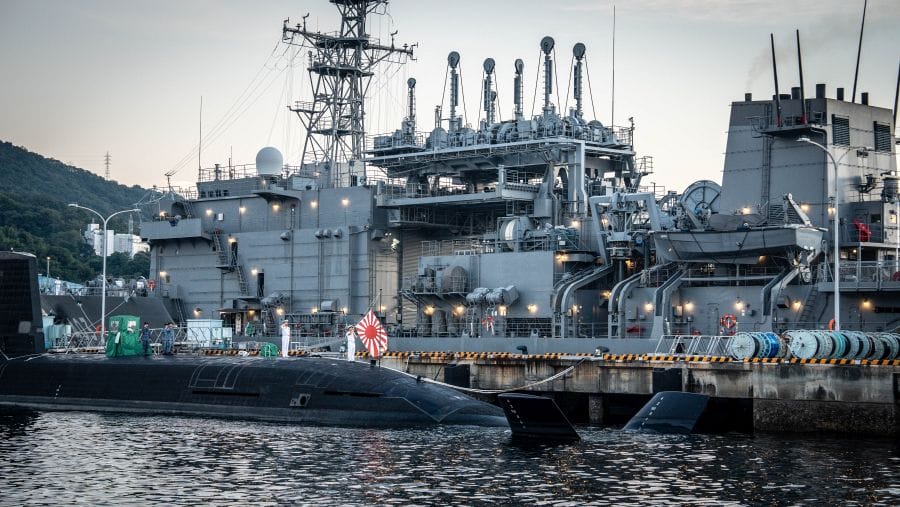
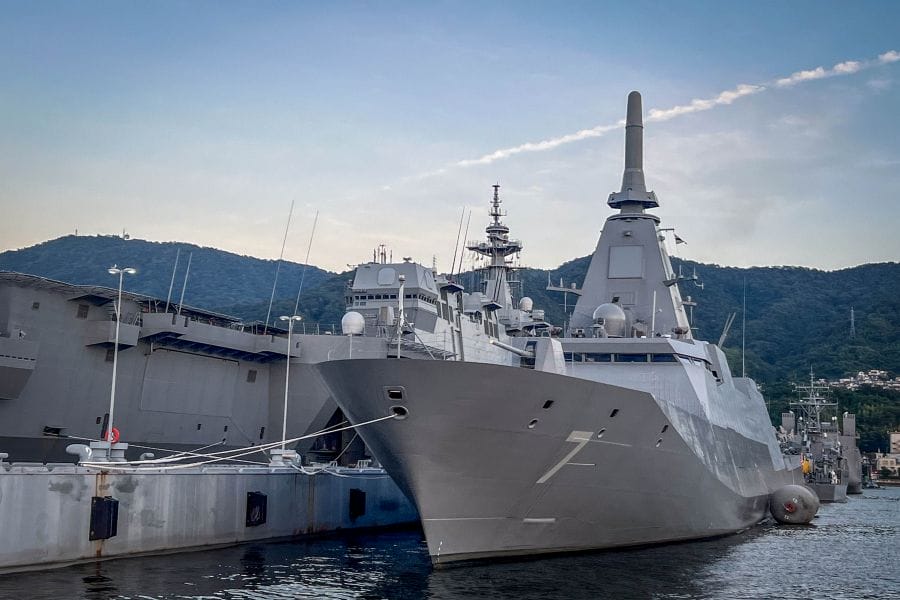
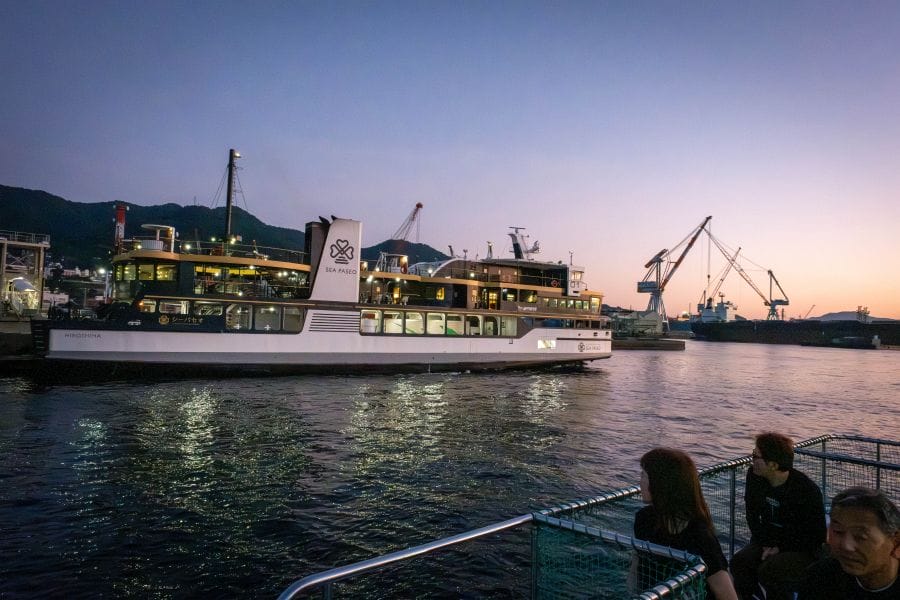
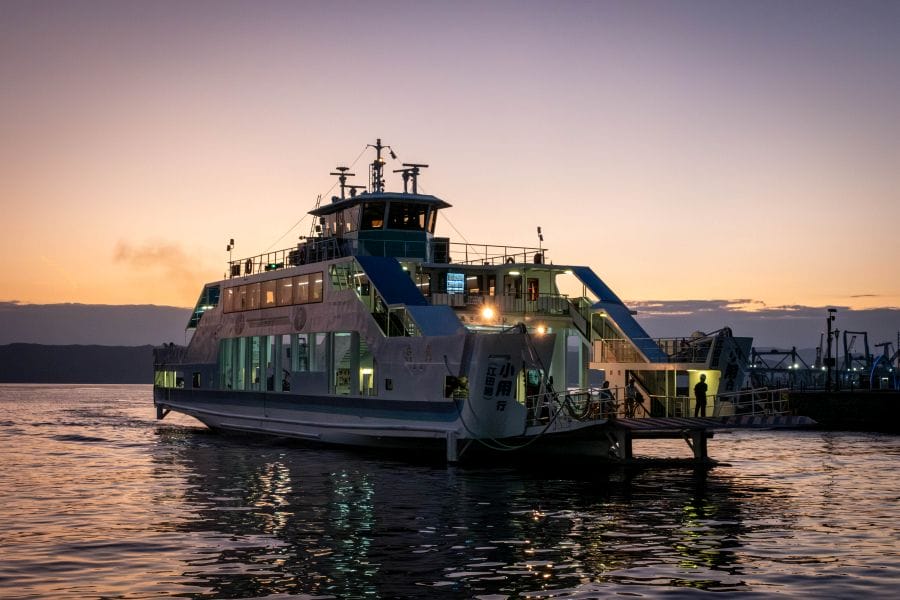
As you sail in and out of Kure on its ferries, you’ll notice a lot of grey ships docked on the east side of the bay. These are warships of the JMSDF, and they come in all shapes and sizes. In the port building, you’ll also notice a shop tucked away in the corner decked out with naval militaria, and people milling around. They’re waiting to board the Bunker Supply bay cruise that takes you out to see the warships.
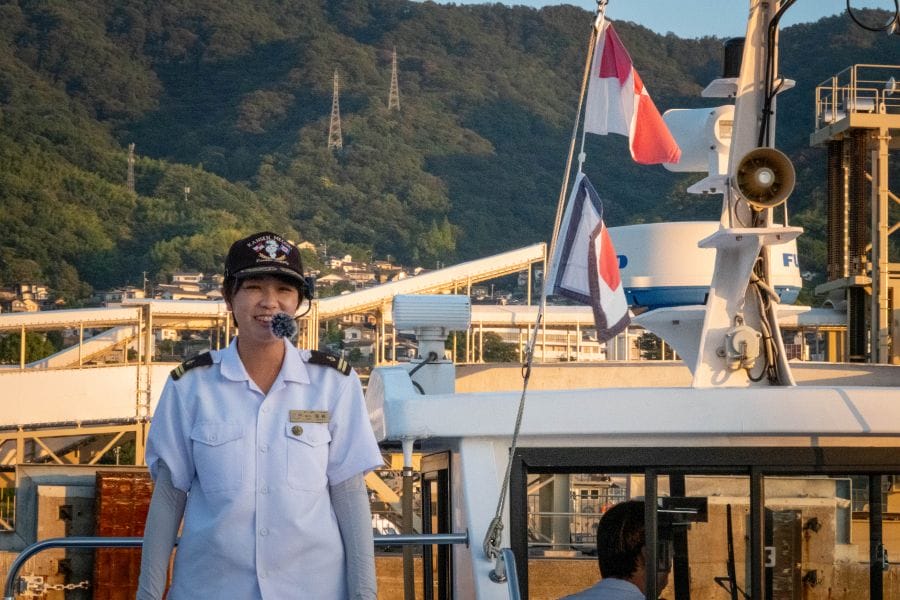
When you buy your tickets, you’re given a folder of laminated pages with photos and information in English about all the vessels currently docked in Kure. When the time comes to board, the guide puts everyone in line and gives do’s and don’ts. Don’t eat, drink, or lean over the side of the boat. Do have warm clothing, take lots of photos, and wave to the sailors. Then you troop out to the dock and board the little open-top boat.
The company offers sailings throughout the day, and the light differs greatly according to the time. In the bright morning sunlight, everything is sharp and high contrast. Towards noon, the ships look less distinct. There’s a sunset cruise too, where the ships may be illuminated by a sinking sunbeam, after which they become silhouettes.
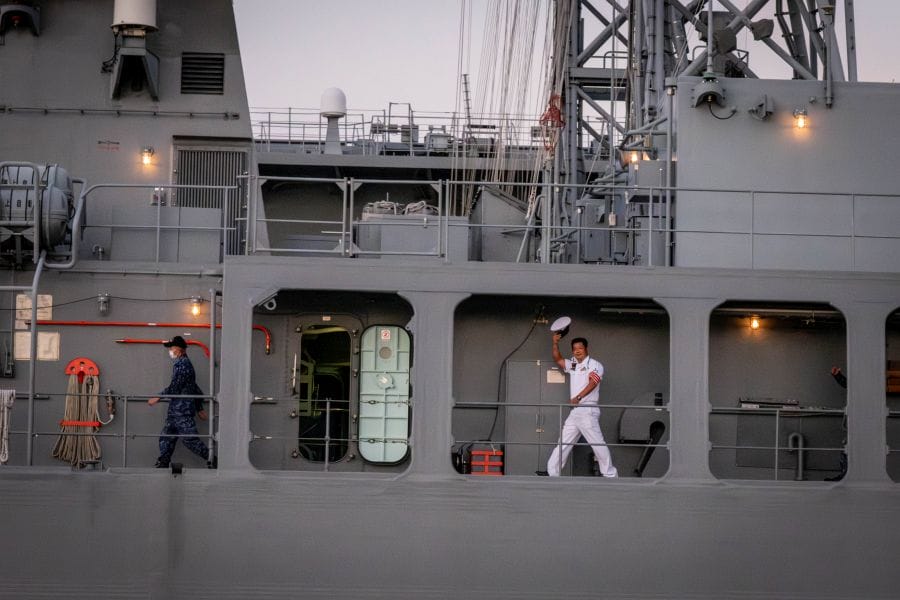
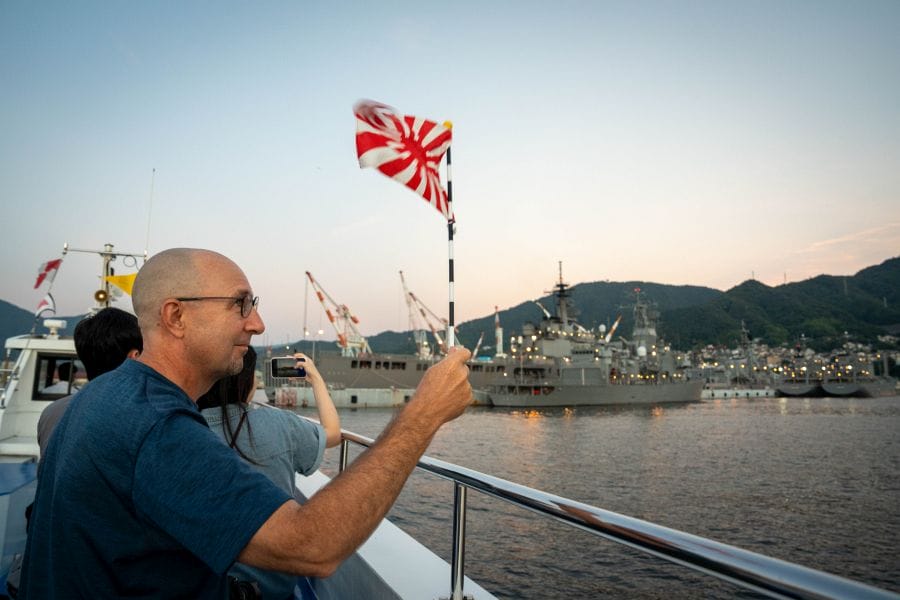
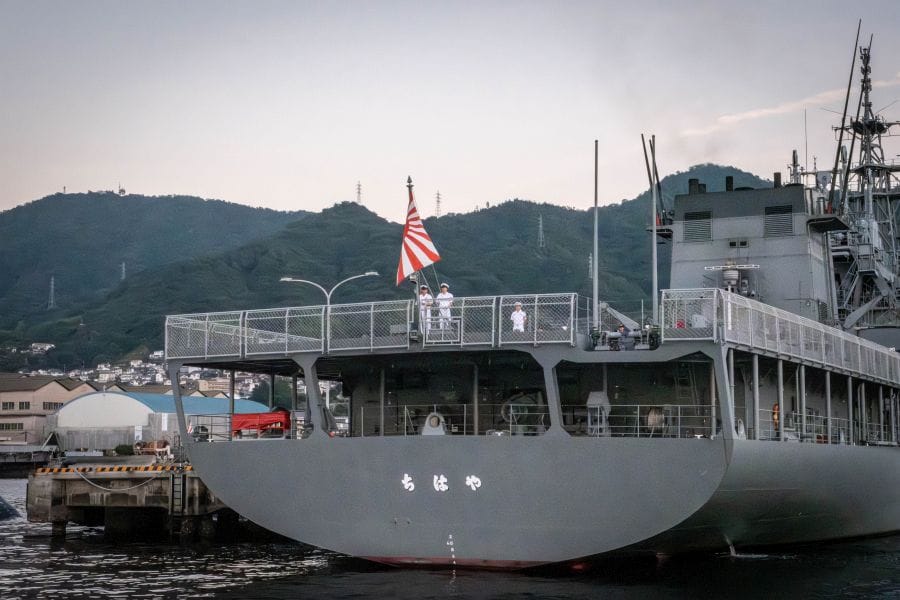
The guide provides a fascinating commentary on each of the vessels currently in dock, including its role, history, armament, and general scuttlebutt. You’ll see helicopter carriers, stealth destroyers, intelligence ships, cable laying ships, and sleek black submarines. Seamen aboard the vessels are likely to give the cruise boat a friendly wave, and Rising Sun flags are available for encouraging the swabbos. You can get a close look at the day-to-day activities of the ships, including lowering the ensign at dusk, accompanied by a comically bad bugle fanfare.
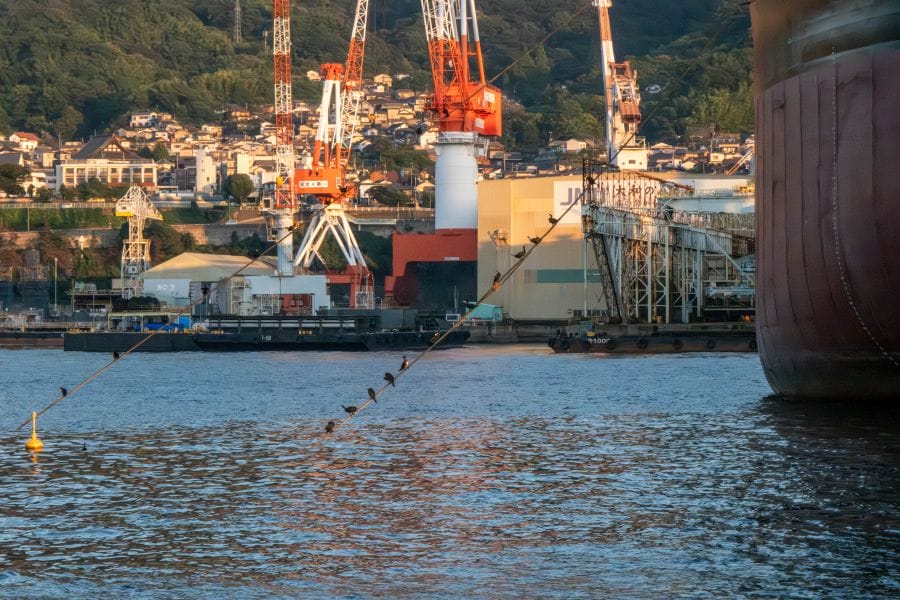
Although the guide doesn’t mention it, how the birdlife interacts with the ships is interesting too. Cormorants sit in rows on the anchor lines. Blue rock thrushes treat the great grey warships as any other rocky crags, and you can hear their beautiful song at intervals.
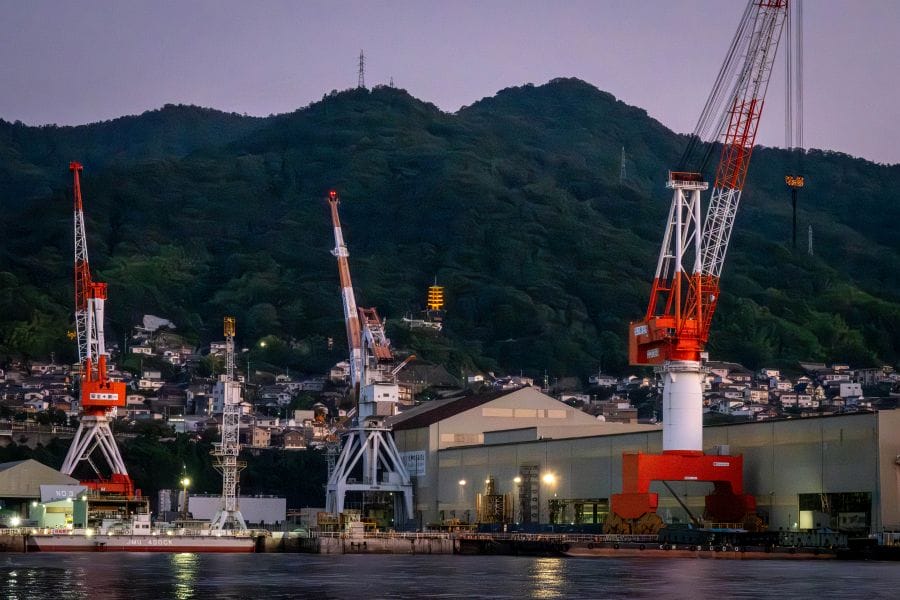
From the boat, you can see some of the other sights of Kure too. A huge banner on an even bigger shed announces it to be The Birthplace of the Battleship Yamato. High on the distant mountainside you can see the pagoda of Mangan-ji Temple, reminiscent of the pagoda masts of WWII-era Japanese battleships. On the twilight cruise, you can see Mangan-ji pagoda lit up.
At the end of the cruise, the guide takes pains to assure you that all the formidable weaponry you’ve just seen is NOT for waging war. It’s for protecting us, one and all. It’s very comforting.