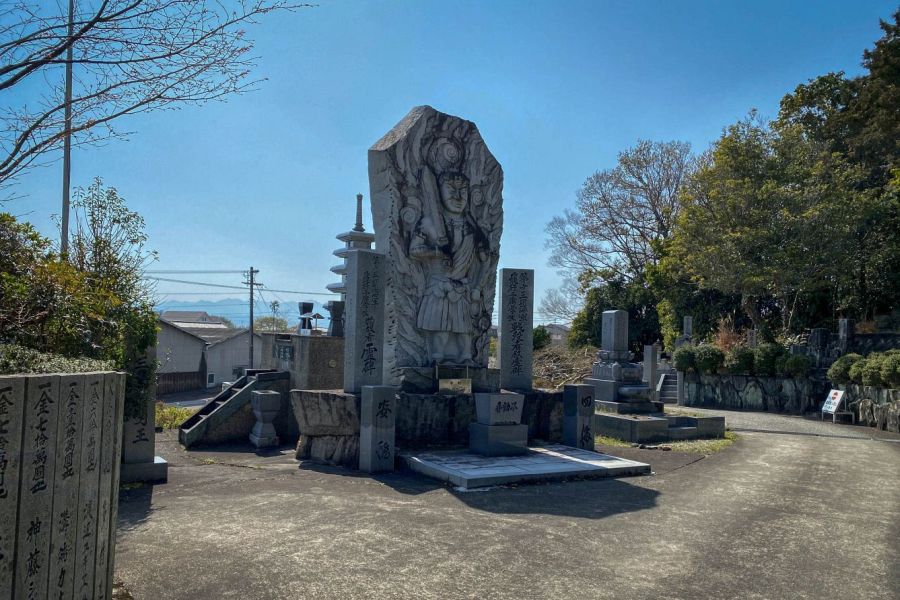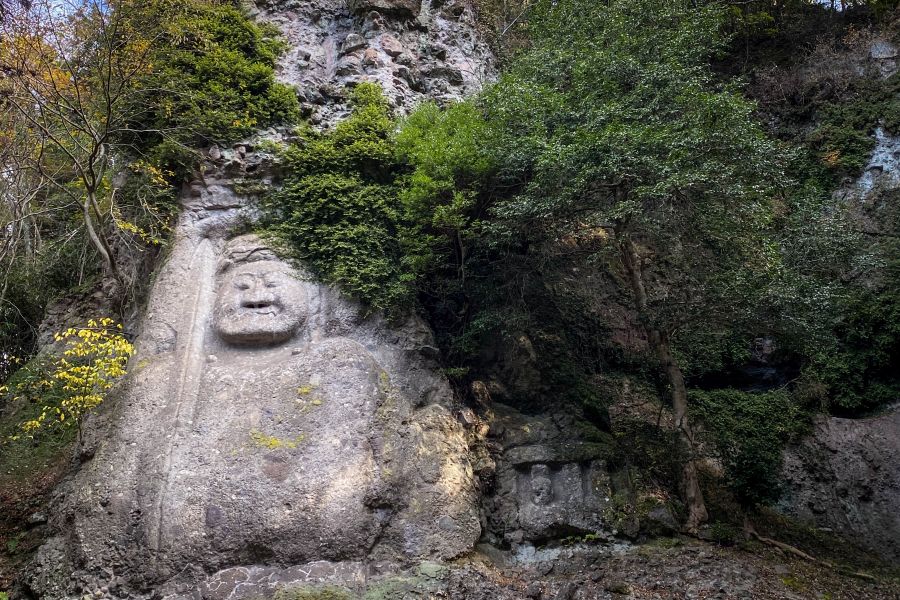
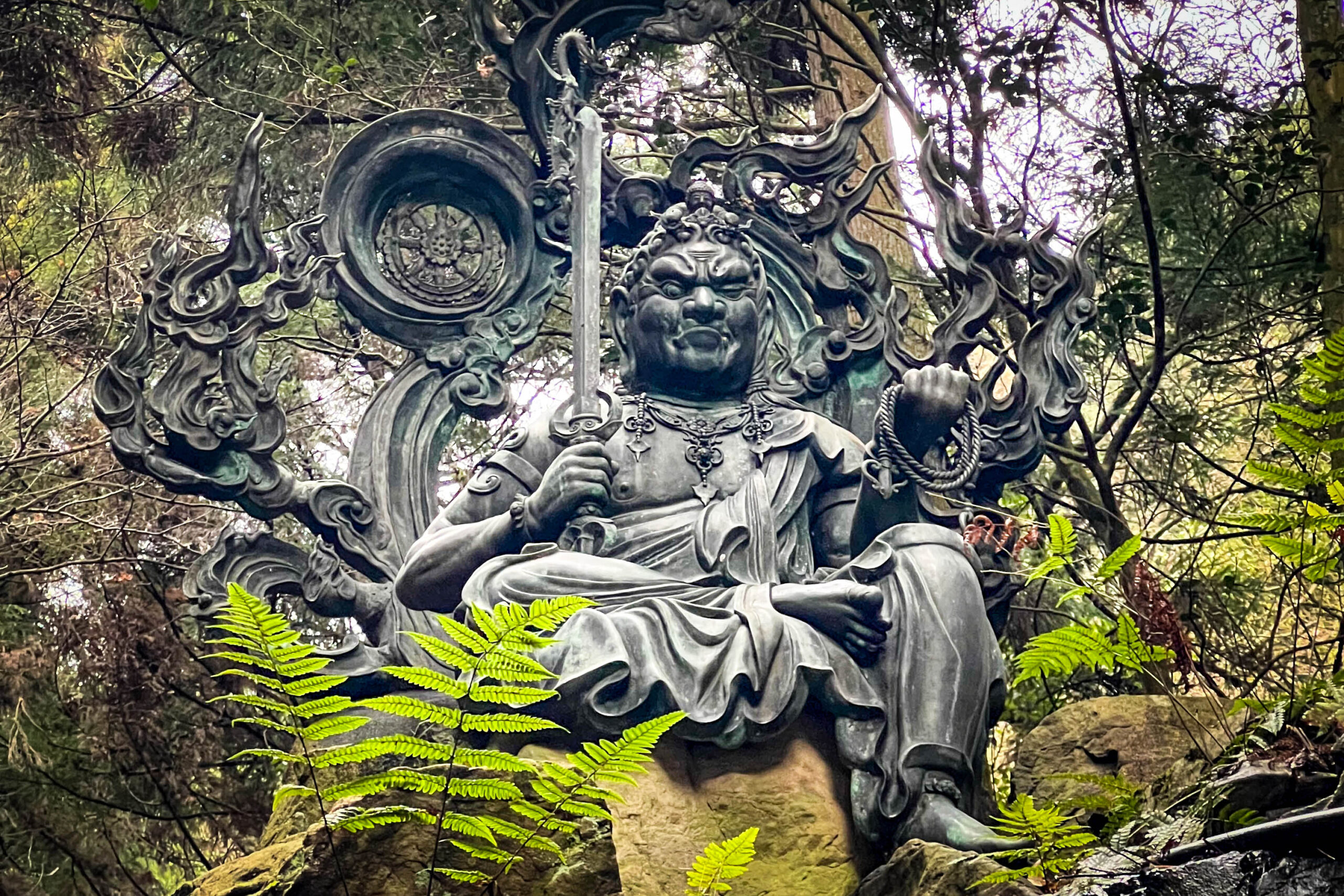
Fudō Myō-ō
Name In Japanese: 不動明王
Pronunciation: fudoh myoh-oh
Period: 806 to the present
Buddhist temples in Japan display a plethora of statues and painted images, but when you’ve visited a few temples, you’ll notice that the cast of characters is the same. One of the most noticeably characterful is Fudō Myō-ō, who looks more like a devil than a deity.
As simple, original Buddhism travelled from India to Japan, it took on much baggage from India’s other religions, in the form of deities who embody various aspects of spiritual progress. There are gentle, gender-fluid deities such as Kannon and Jizō who lead people by peaceful means to enlightenment. Then there are masculine, wrathful deities called Wisdom Kings, who drag people kicking and screaming to enlightenment. There are five Wisdom Kings, and Fudō Myō-ō is their chief. The Wisdom Kings are a particular feature of Esoteric Buddhism.
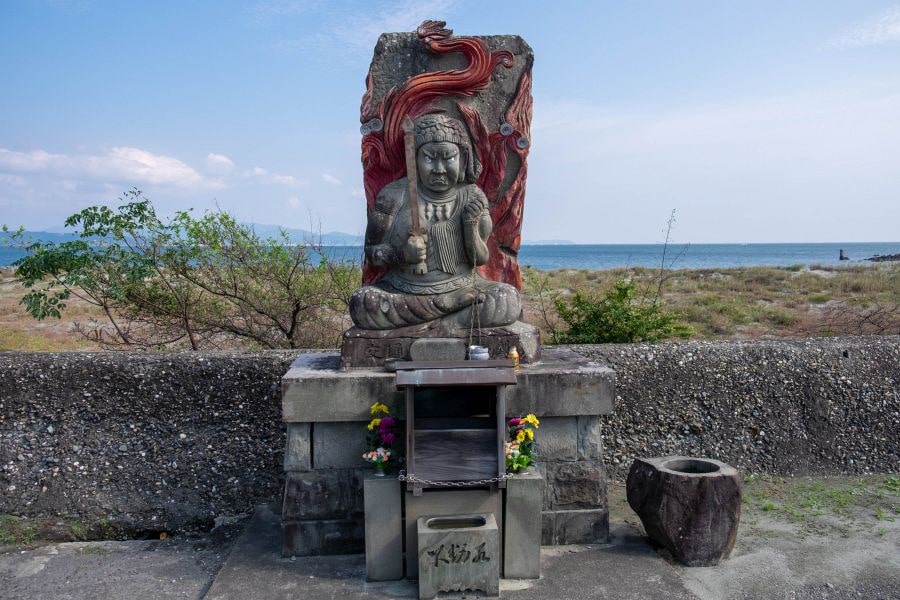
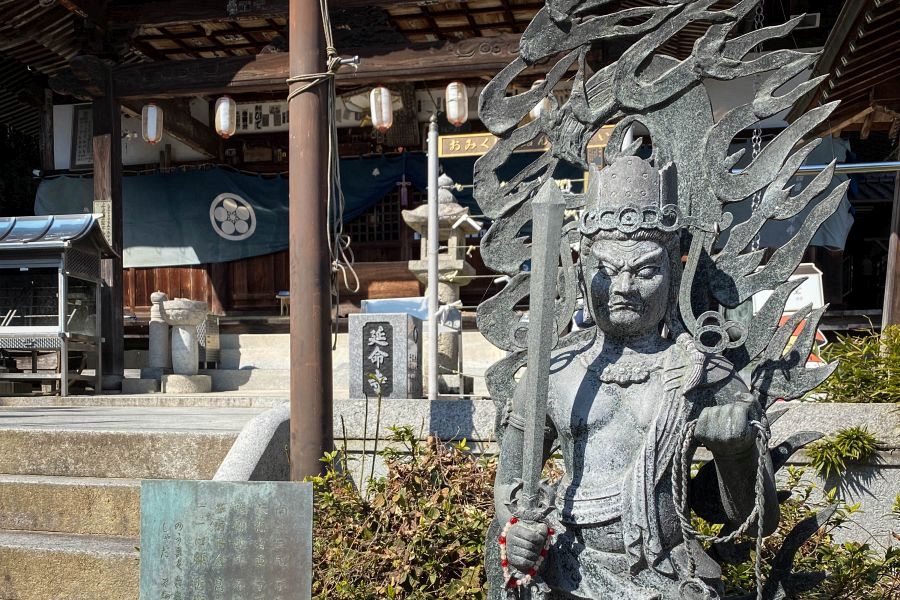
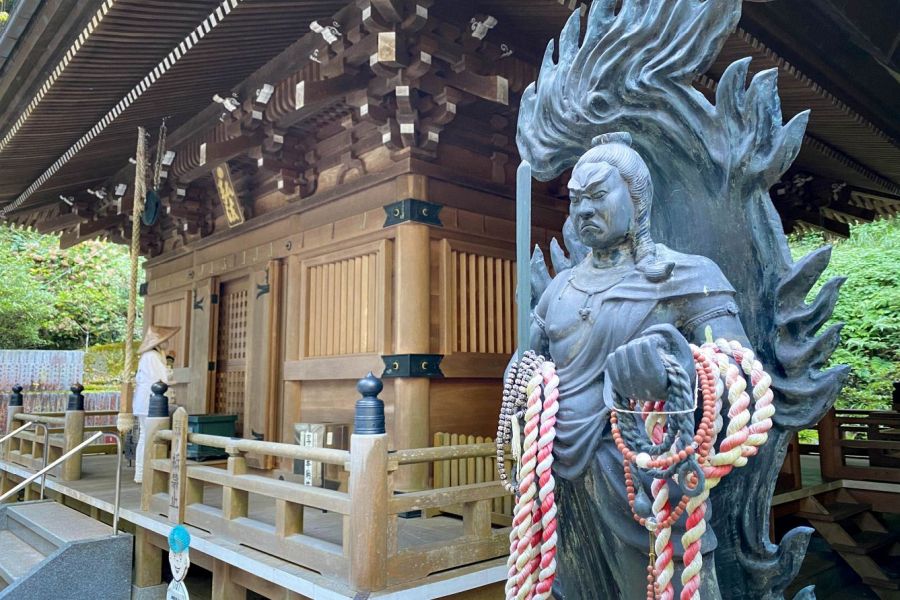
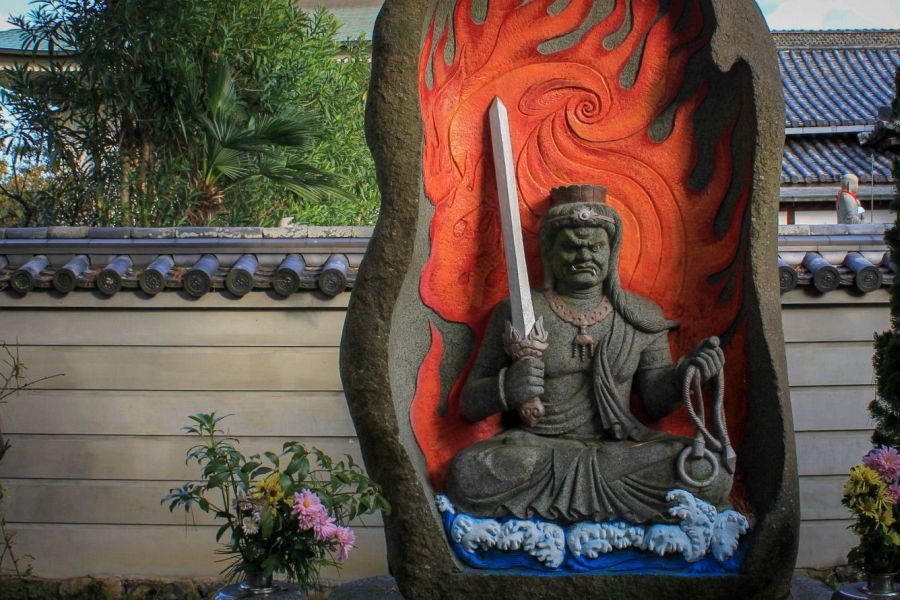
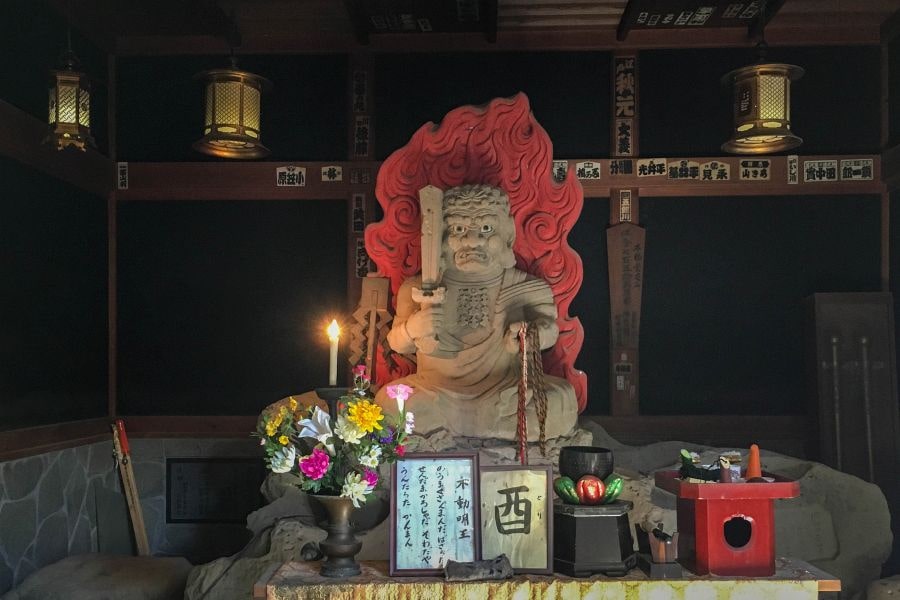
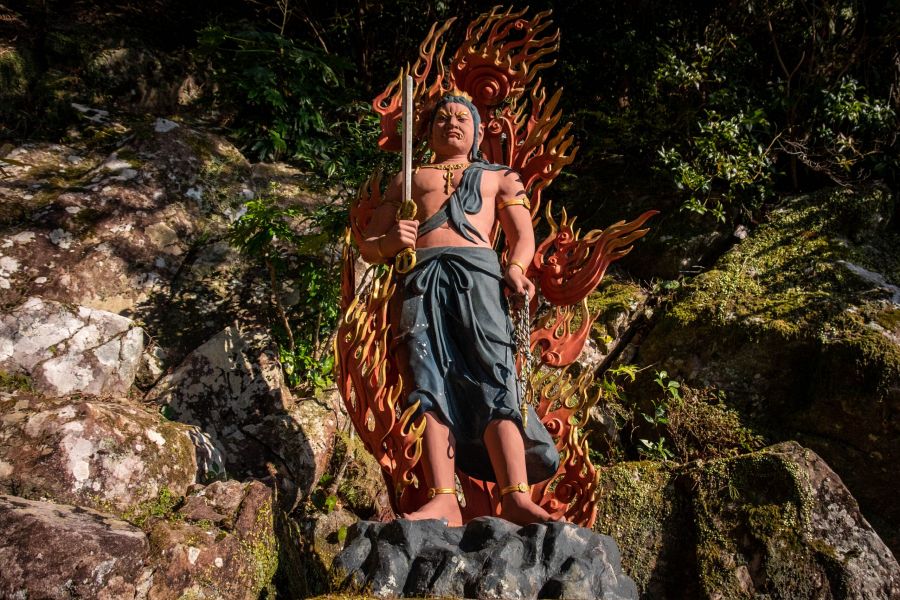
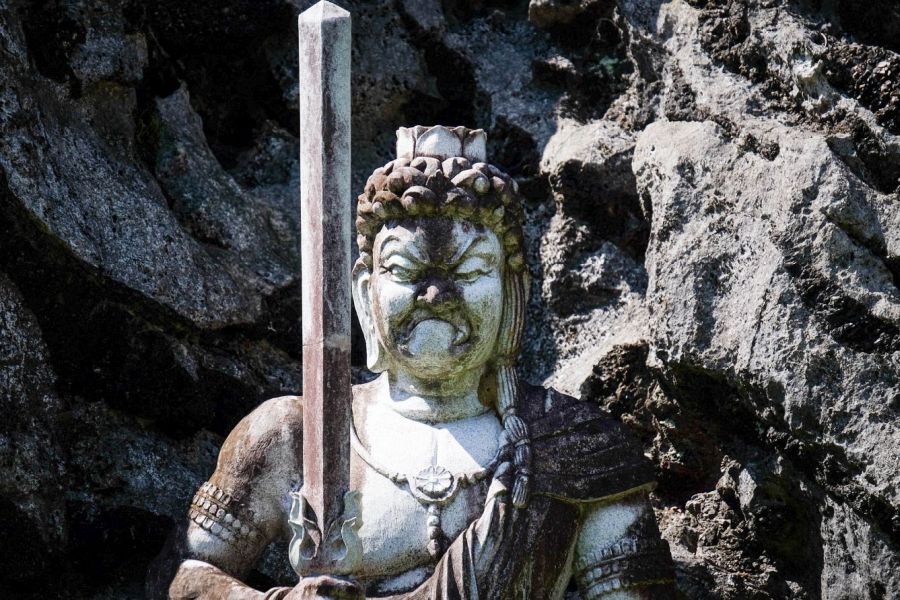
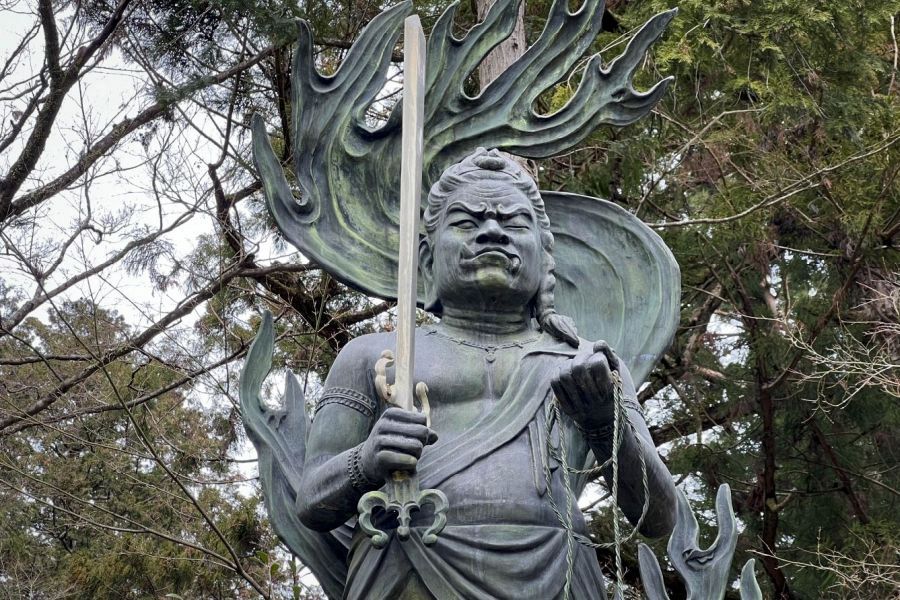
Fudō Myō-ō means “Immovable Wisdom King” and he symbolizes unwavering resolve, cutting through ignorance with his sword, binding demons and evil desires with his rope, and burning away worldly attachments with the flames that surround him. He’s often depicted with upward and downward facing fangs and mismatched eyes, allegorically interpreted to signify both the duality and nonduality of his nature and of all reality. He sits or stands on a rock, symbolizing his immovable nature. He may also be depicted with a lotus flower on his head, indicating enlightenment.
Fudō was introduced to Japan in the early 9th century, during the Heian period. The deity was brought back from Tang Dynasty China by Kūkai, founder of the Shingon sect of Esoteric Buddhism and also the Shikoku pilgrimage. Fudō Myō-ō came to be known in Japan around the year 806, when Kūkai returned from his studies in China.
Fudō’s fearsomeness doesn’t represent intimidation. Rather, he’s a protector whose power helps people overcome obstacles and achieve enlightenment. As such, Fudō is venerated by Yamabushi, ascetics who practice austerities in the mountains and need all the help they can get. Fudō has also been appropriated by the Yakuza, Japan’s mafia, who like to think of themselves as noble protectors of the weak. A full back tattoo of Fudō Myō-ō is naturally rather intimidating too of course.
As a great protector, Fudō Myō-ō was invoked by leading Buddhist priests at the state level at many times of national crisis in Heian Japan, whether to quell pirates or rebellions, or to fend off invasions of Mongols. In later periods, Fudō became popular among common people as an all-purpose defender against misfortune and for admonishing small children who wouldn’t go to bed when told to.
Today, Fudō is venerated across various Japanese Buddhist schools, including Shingon, Tendai, Zen, and Nichiren, as well as Shugendō.