Niō
Name In Japanese: 仁王
Pronunciation: nee-oh
Period: All eternity
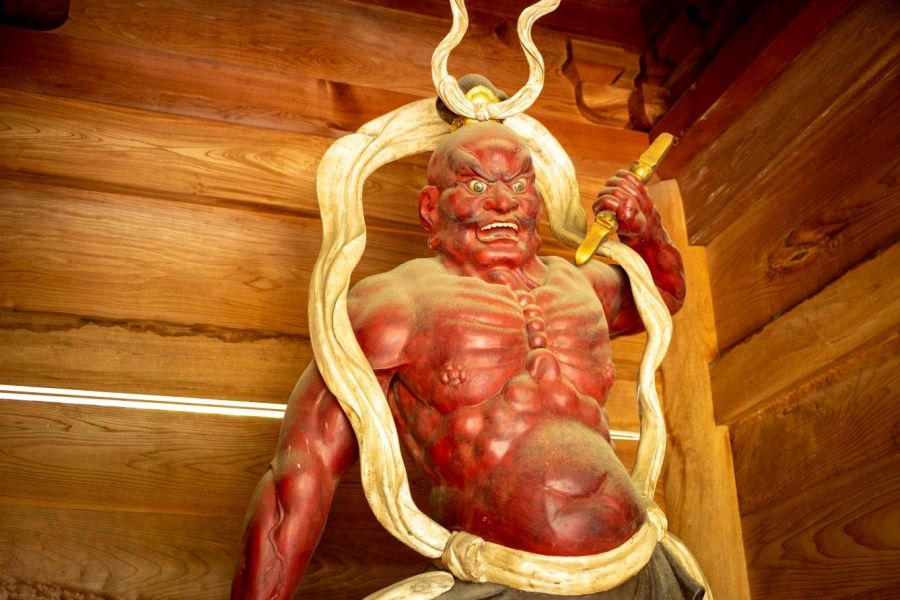
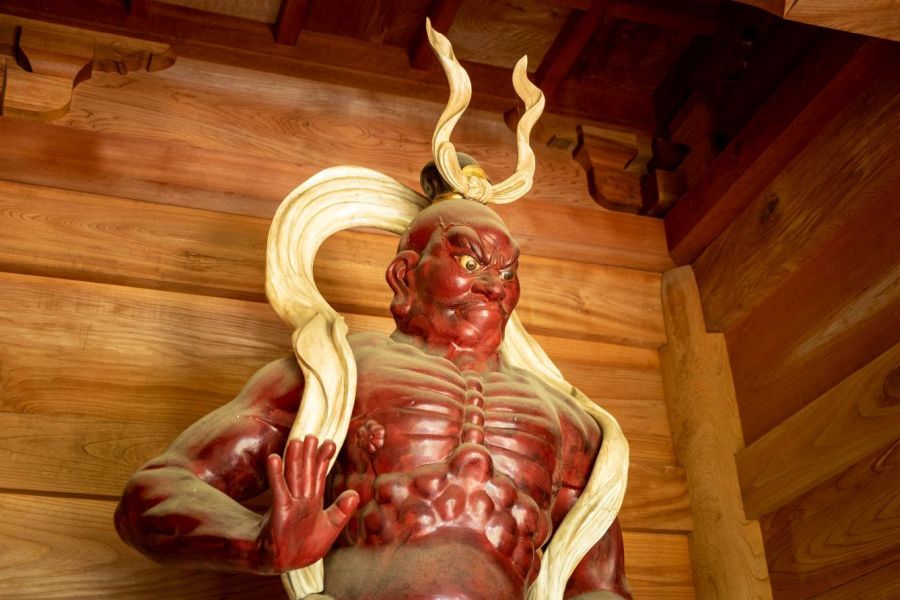
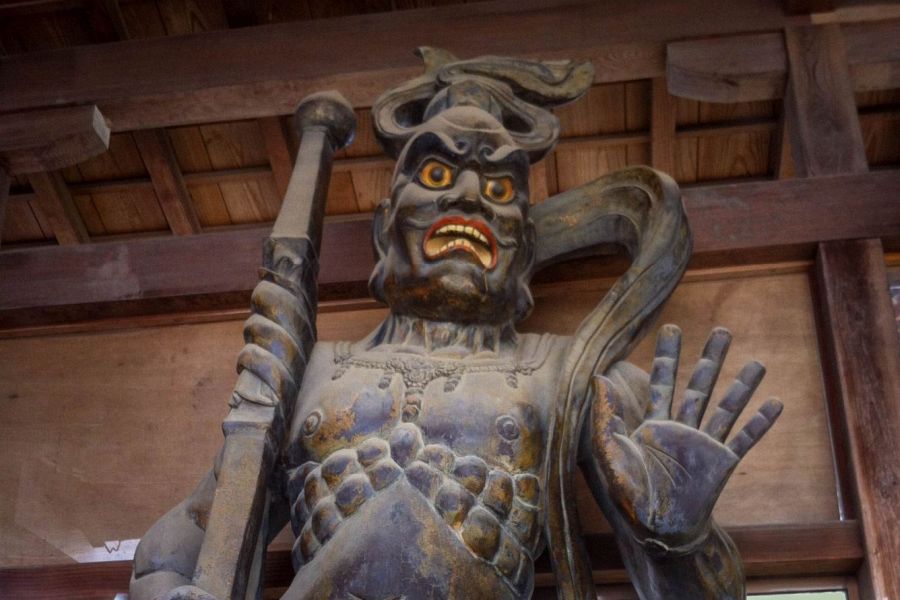
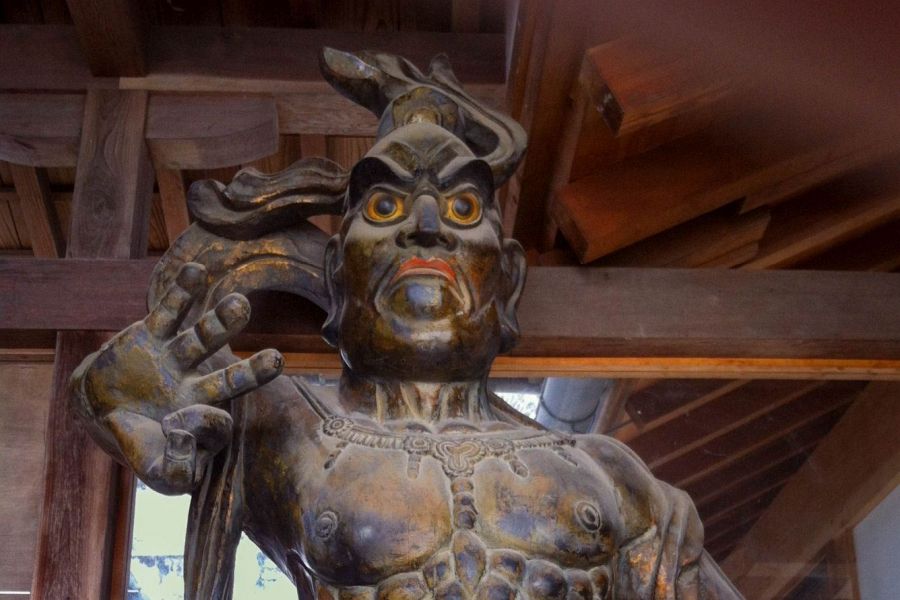
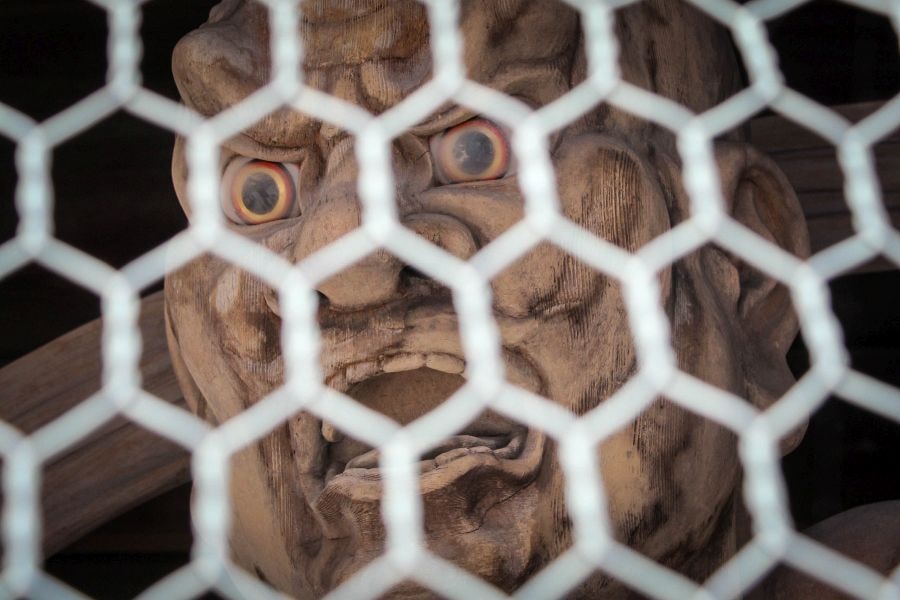
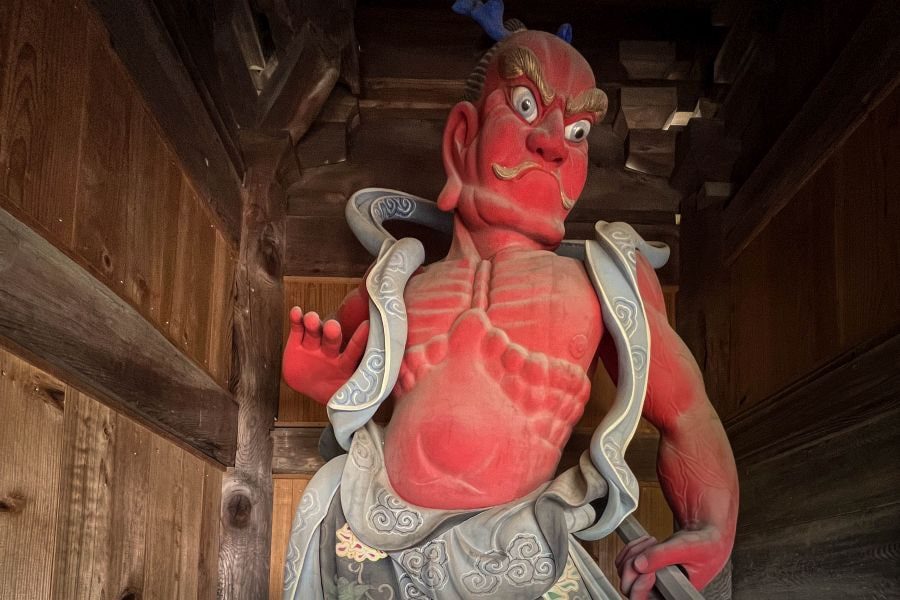
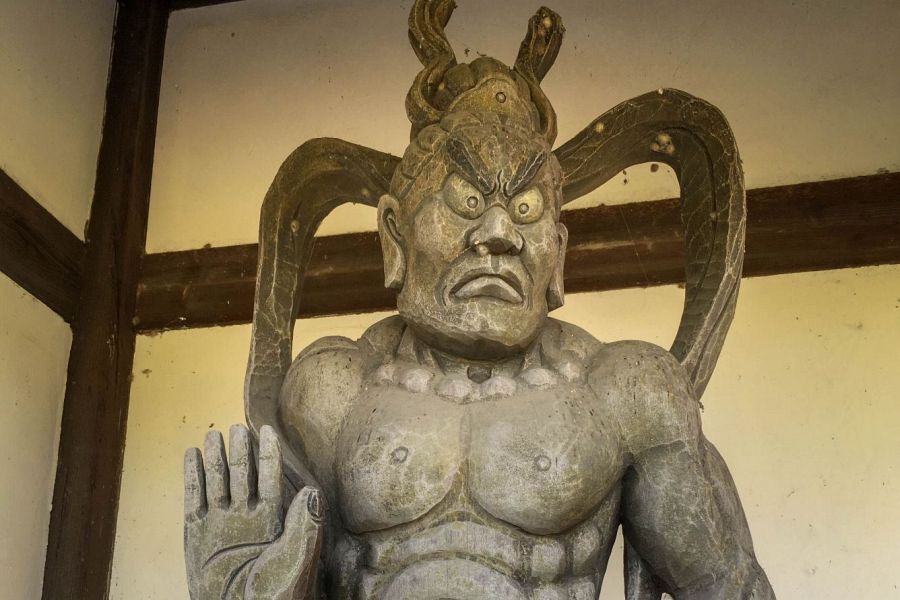
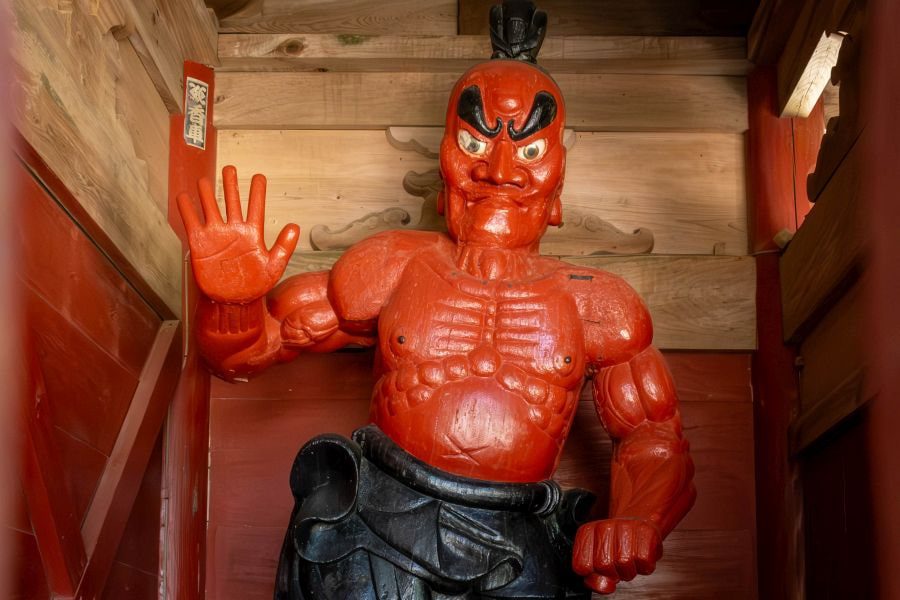
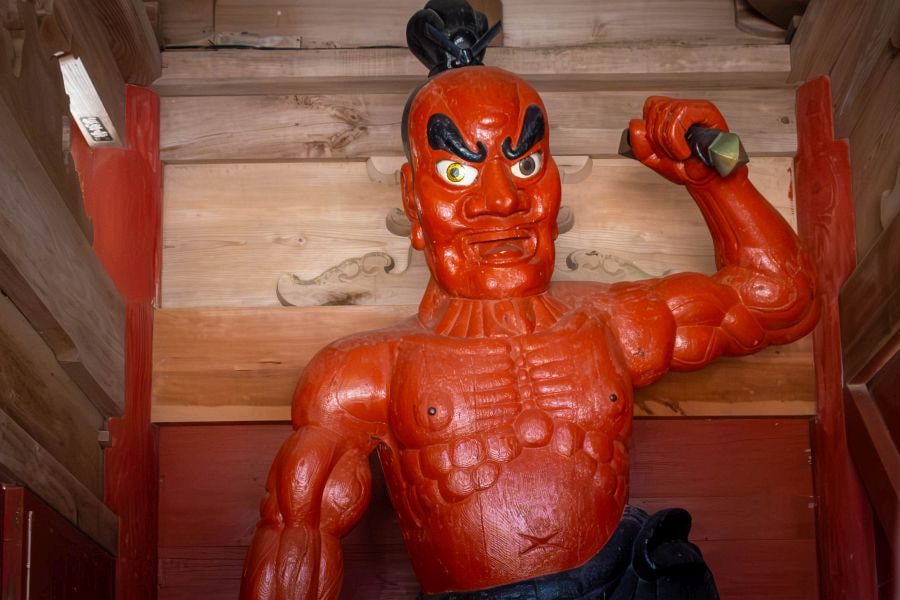
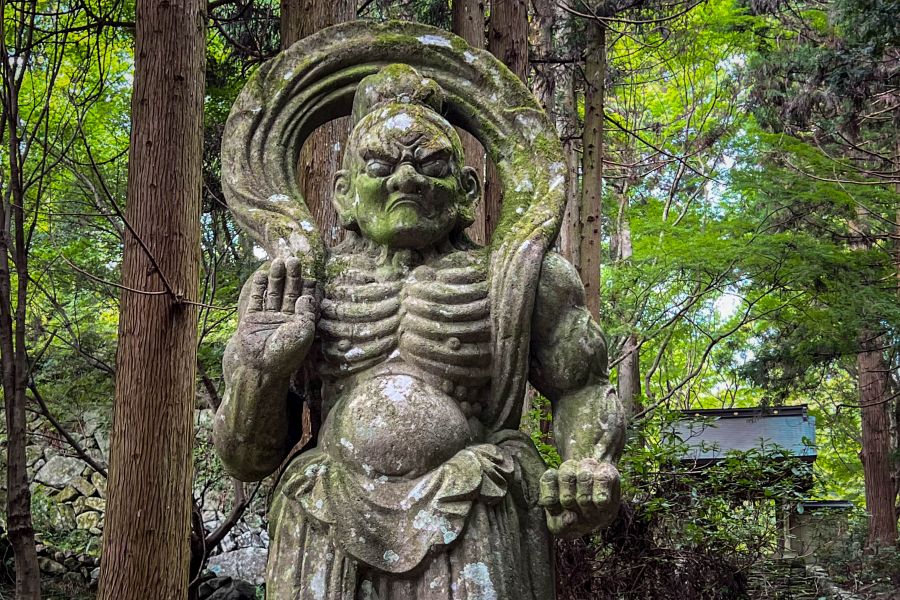
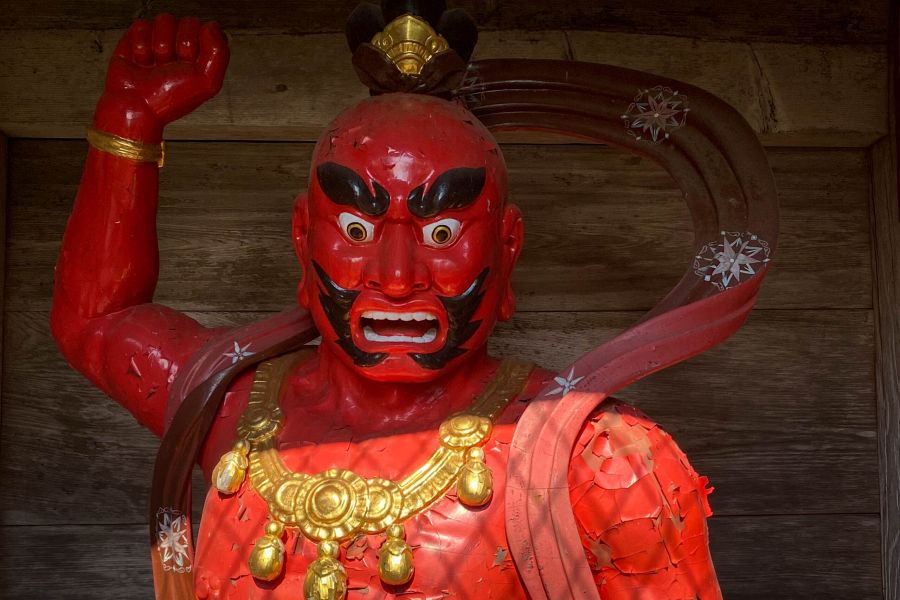
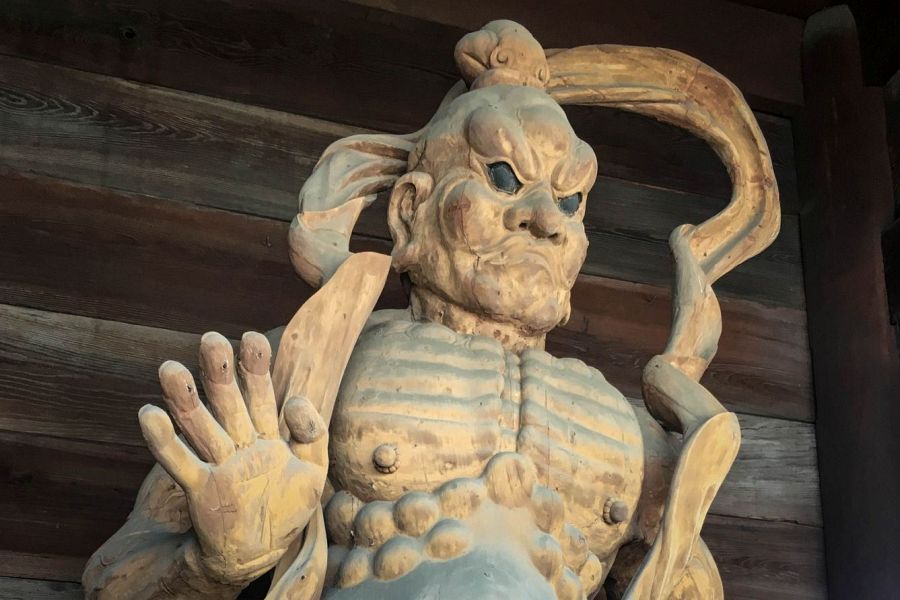
When you enter a Japanese temple, the first impression you typically receive is of the aggressive vigour of the Niō guardians standing in the niches of the main gate. You may be surprised to see such menacing figures in a Buddhist context.
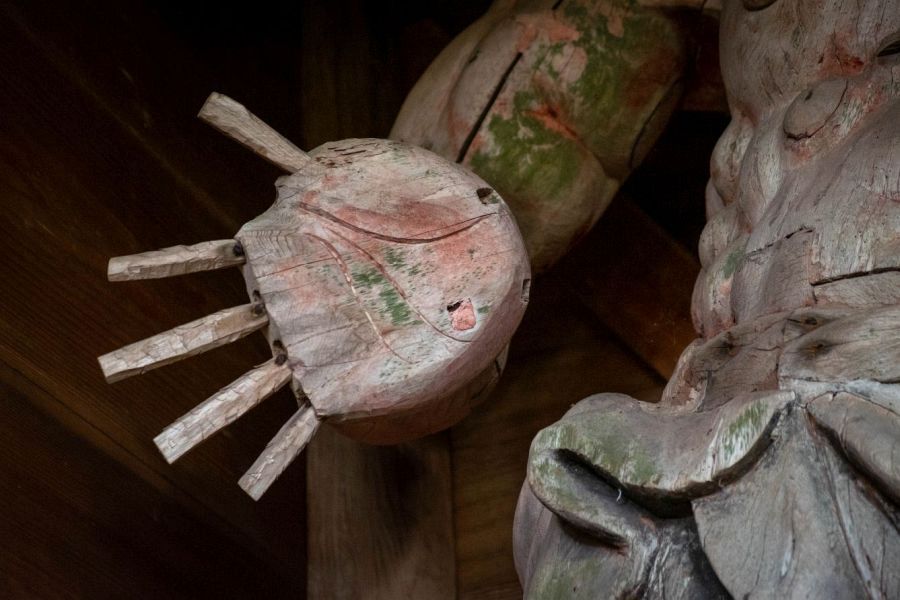
Niō are two wrathful and muscular guardians of the Buddha standing at the entrance of many Buddhist temples. They’re often likened to wrestlers. They belong to a category in the Buddhist pantheon known as Benevolent Kings. The Niō guardians are manifestations of the bodhisattva Vajrapāṇi, the oldest and most powerful of the Mahayana Buddhist pantheon. According to several Buddhist scriptures, they travelled with Gautama Buddha to protect him. Within the generally pacifist tradition of Buddhism, stories of the feats of guardian deities justified the use of physical force to protect Buddhist values and beliefs against evil. These figures are common to China, Korea, and Vietnam as well as Japan.
Niō guardians are usually a pair of figures that stand guarding the main temple entrance gates called niōmon. These two characters together symbolise the birth and death of all things, and by extension, the past and the future. Humans are said to be born speaking the “ah” sound with their mouth open and die saying “un” with their mouth closed. Similar to alpha and omega, they signify “everything” or “all creation”. The contraction of both is the mantra “om”, “aun”, or “aum”. As human visitors pass through the gate, they’re passing through the present between the past and future.
Misshaku Kongō
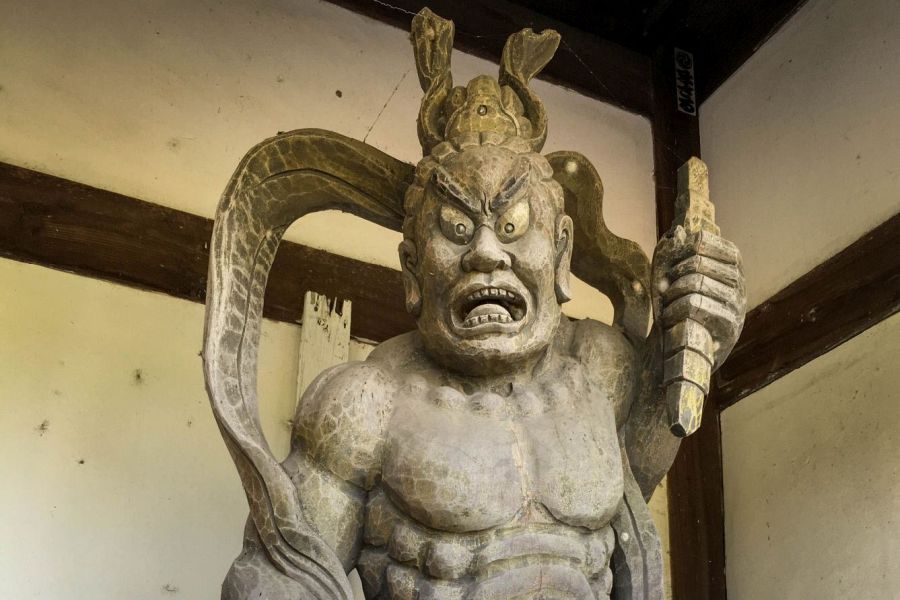
Misshaku Kongō stands on the right. He symbolises overt violence. He holds a vajra weapon, which may be a diamond club, thunderbolt stick, or sun symbol, and bares his teeth. He’s uttering the sound “ah”. Consequently, he’s also known as Agyō, literally “ah type”, a general term for the open-mouthed statue in aum pairings.
Naraen Kongō
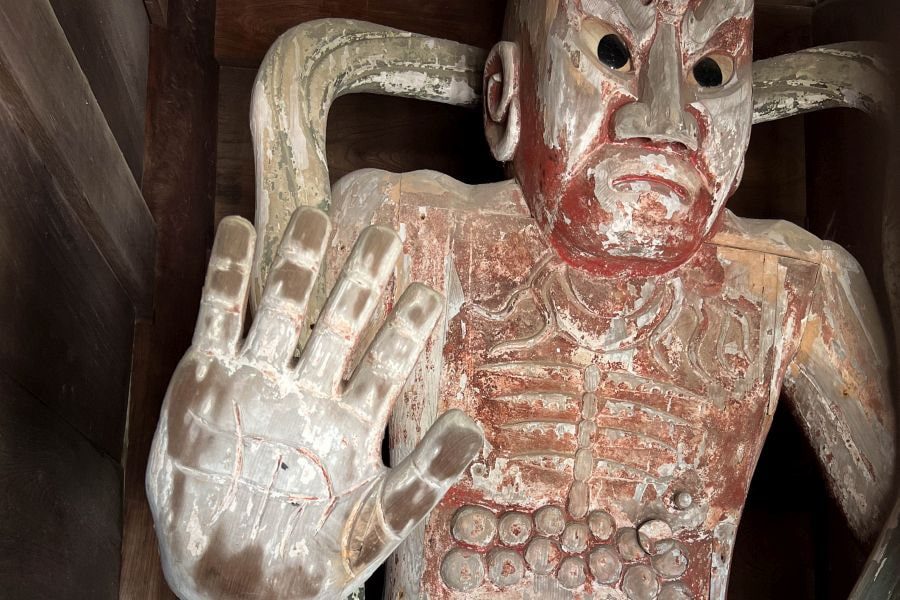
Naraen Kongō stands on the left. He’s depicted either bare-handed or holding a sword. He symbolizes latent strength, holding his mouth tightly shut. He’s uttering the sound “un” or “um” through his nose. Another name for him is Ungyō, literally “un type”, a general term for the closed-mouthed statues in aum pairings.
Niō Zen Buddhism
The Niō once became the focus of their own Buddhist practice. The Zen monk Suzuki Shōsan (1579–1655) advocated what’s called Niō Zen Buddhism as superior to Nyorai Zen Buddhism. He recommended that practitioners should meditate on Niō and even adopt their fierce expressions and martial stances in order to cultivate power, strength and courage when dealing with adversity. Suzuki described Niō as follows: “The Niō is a menacing God. He wields the kongōsho (vajra) and he can crush your enemies. Depend on him, pray to him that he will protect you as he protects the Buddha. He vibrates with energy and spiritual power which you can absorb from him in times of need.”
When you take a trip visiting numerous temples such as one of our Shikoku Pilgrimage tours, comparing the style and expressions of the Niō guardians is a very enjoyable pastime.