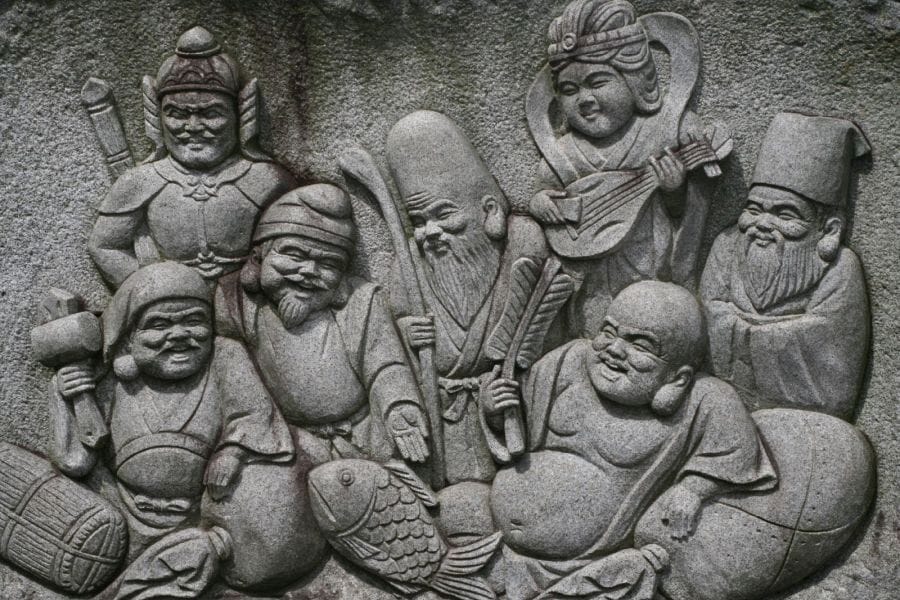
Seven Lucky Gods
Name In Japanese: 七福神
Pronunciation: shichee fuku-jin
Period: Muromachi to the present
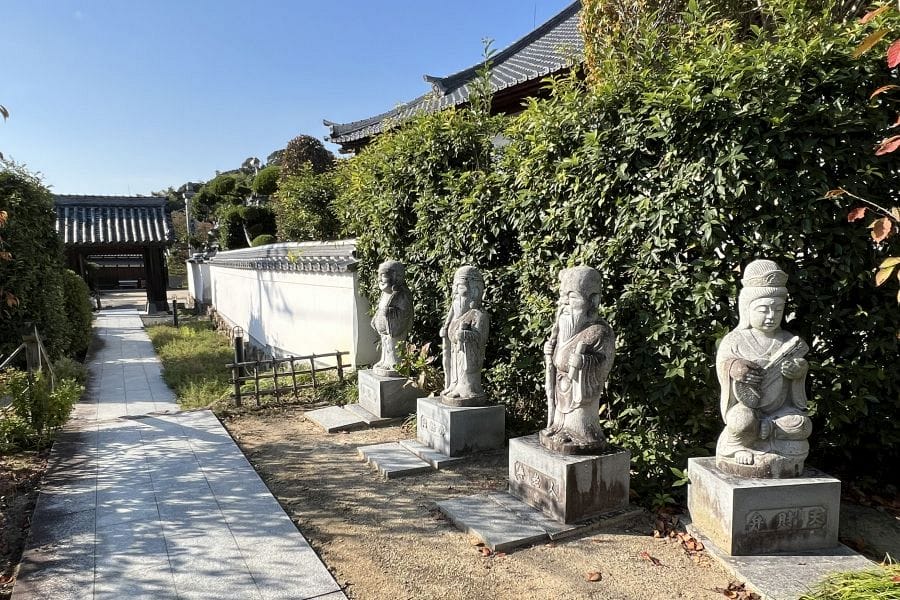
The Seven Gods of Good Fortune (Shichifukujin) are among the most familiar religious figures in Japan. You see them on New Year prints, at small neighbourhood shrines, on temple banners, and carved in stone along local pilgrimage routes. They aren’t a formal theological group but a popular combination that took shape in the Muromachi period. Their appeal lies in their practicality: each governs a recognisable aspect of life — trade, food, music, protection, longevity.
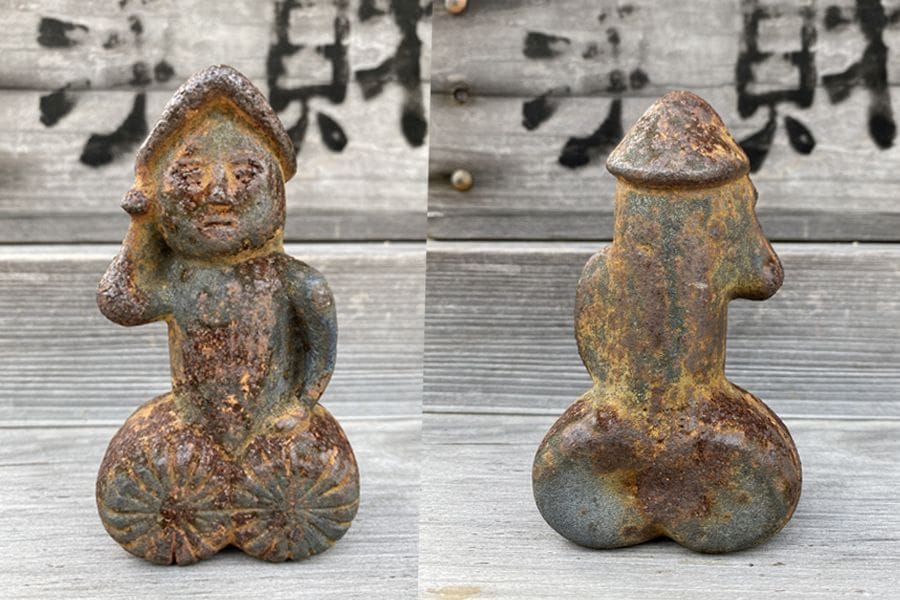
They’re depicted in a wide range of styles and formats, as statues, illustrations, and cartoon characters, in groups and singly. Sometimes they’re sexualised and used as phallic symbols.
The group brings together deities from different traditions. The blending of Shintō, esoteric Buddhism, Taoism and traces of Hinduism is typical of Japanese religious history.
Ebisu
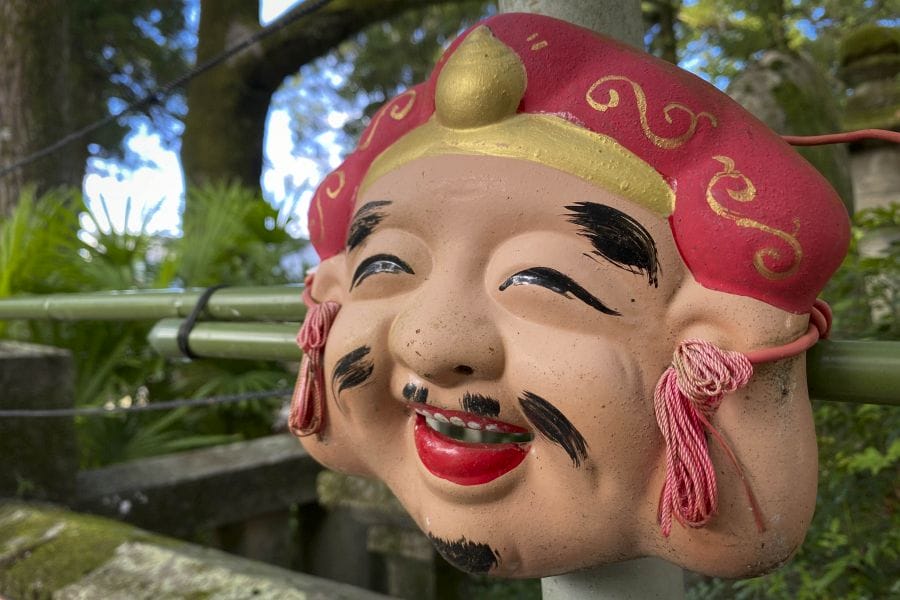
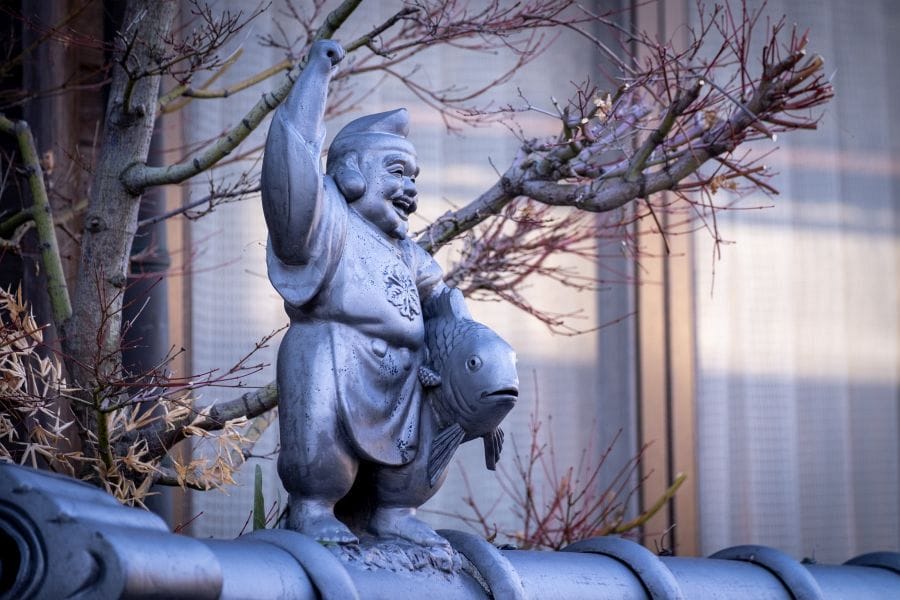
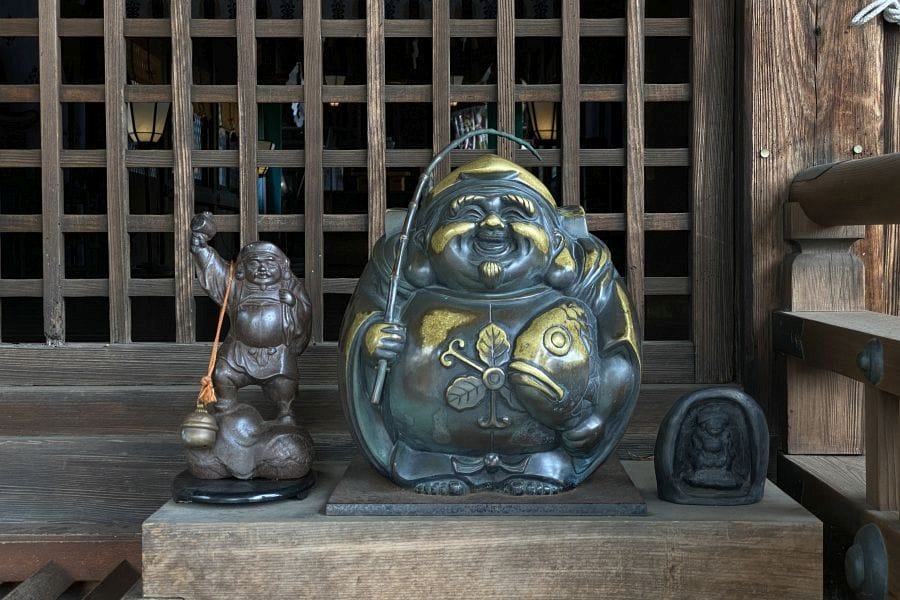
Ebisu is the only one considered native to Japan. He’s patron of fishermen and merchants, usually shown holding a fishing rod and a large red sea bream, a fish associated with celebration. In many fishing communities he’s still quietly venerated for safety and a good catch. Major shrines such as Nishinomiya Shrine in Hyōgo are dedicated to him, and the January Tōka Ebisu festival draws huge crowds of business owners buying lucky bamboo branches for prosperity. Unlike the others, Ebisu has a slightly rustic character — a working god for working people. He’s perhaps best known spelled as Yebisu, representative of a brand of Sapporo Beer.
Daikokuten
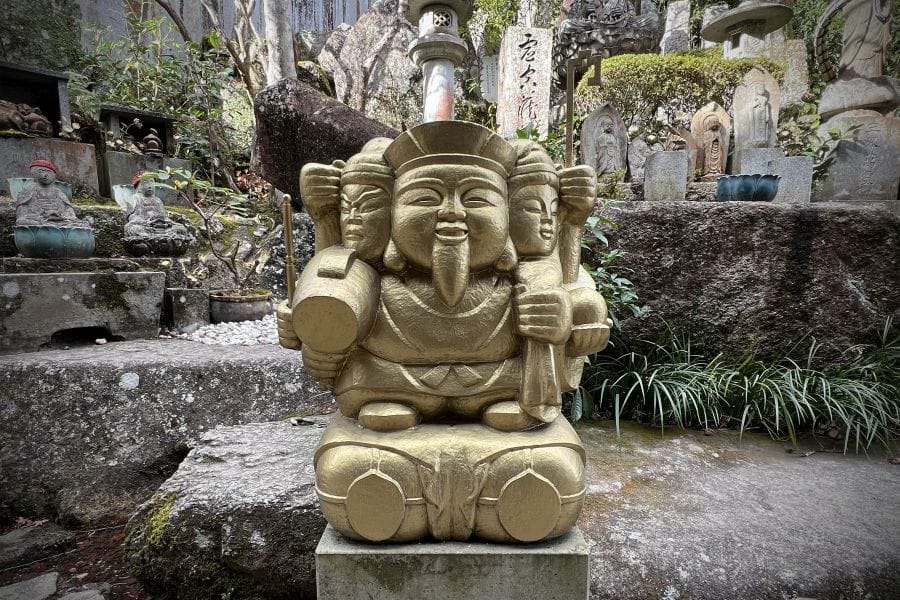
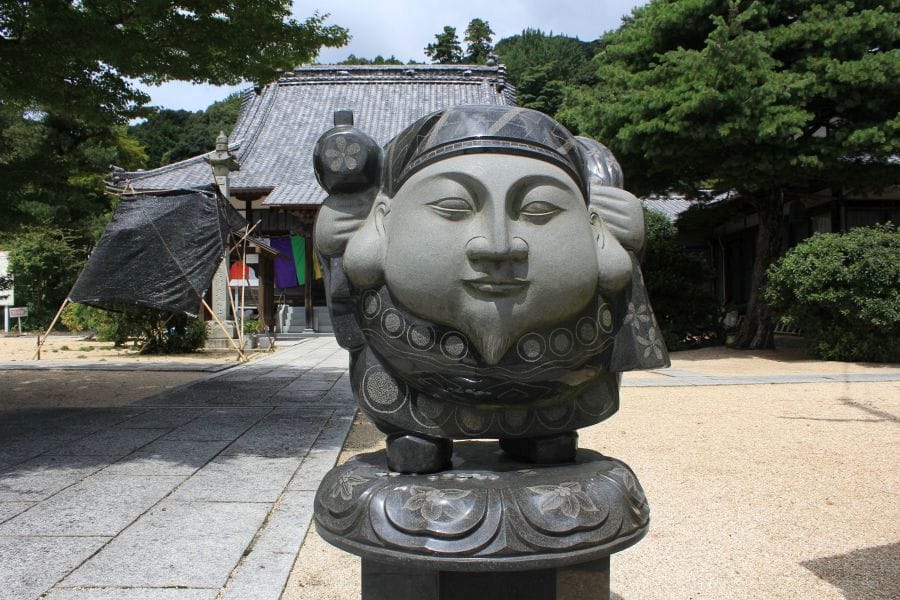
Daikokuten stands on rice bales, carrying a sack of treasure and a wooden mallet that grants wishes when shaken. His origins lie in the Hindu Mahākāla, transmitted through esoteric Buddhism, but in Japan he became associated with food, kitchens and household wealth. In some homes he was once enshrined near the pantry. He’s often paired with Ebisu in shops and shrines, forming a complementary duo of commerce and abundance. His shape lends itself to covert phallic symbolism.
Bishamonten
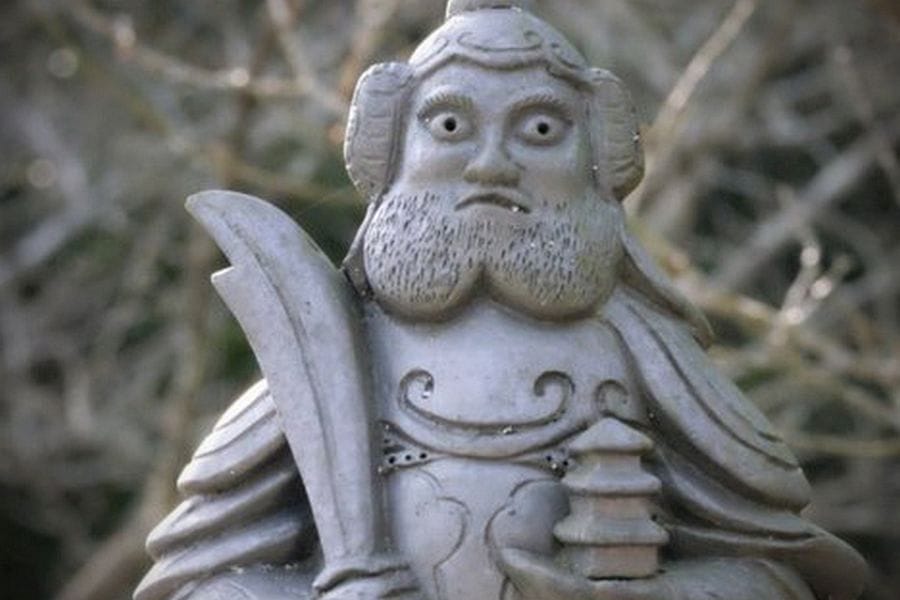
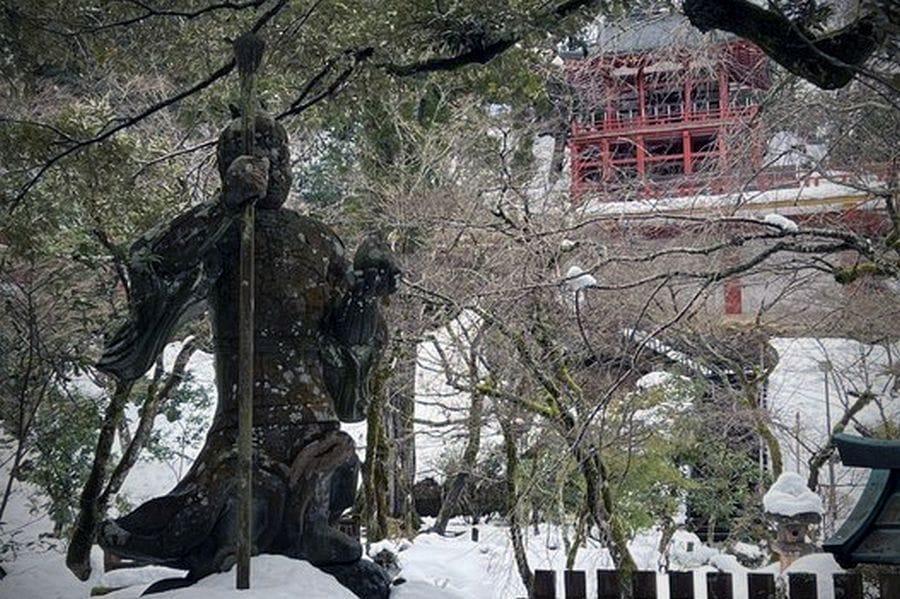
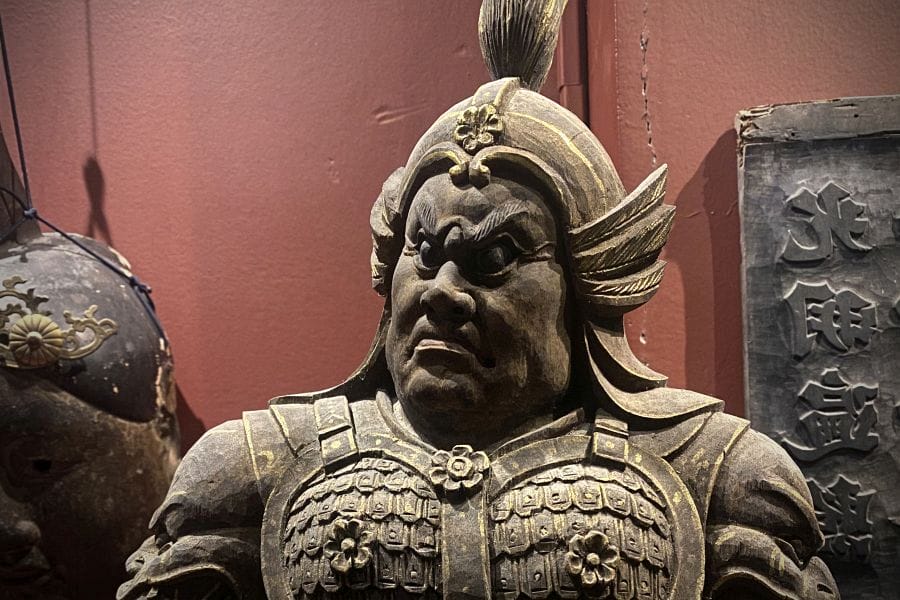
Bishamonten is visually distinct from the others: armoured, stern, holding a spear and a small pagoda symbolising a treasure house. He derives from the Buddhist guardian Vaiśravaṇa and is one of the Four Heavenly Kings. Samurai families revered him as a protector in battle. The powerful lord of Echigo Province, Uesugi Kenshin famously regarded himself as Bishamonten’s earthly incarnation. In the context of the Seven Gods, Bishamonten represents disciplined strength rather than easy fortune.
Benzaiten
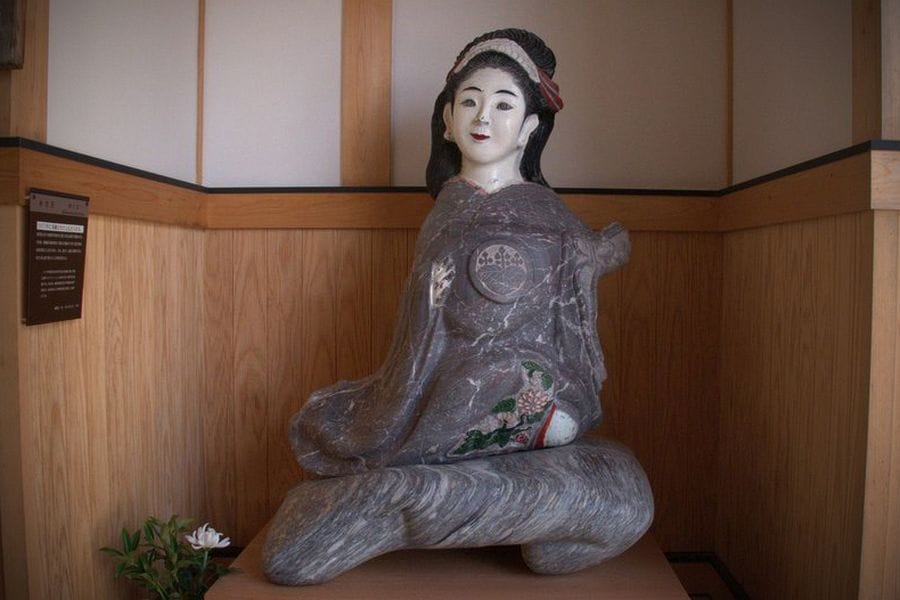
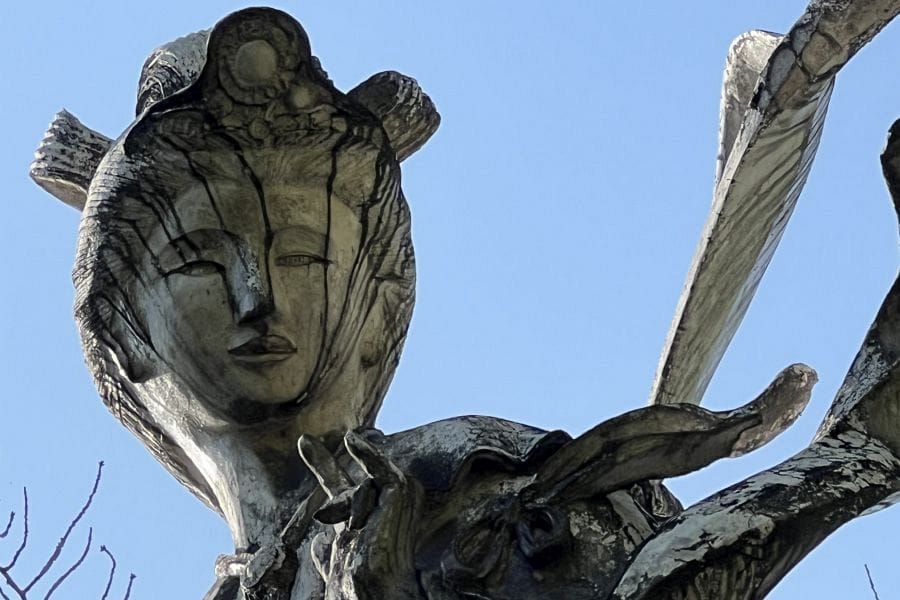
Benzaiten, the only woman in the group, originates from the Indian goddess Saraswati. In Japan she governs music, eloquence, learning and flowing things — especially water. For that reason many of her shrines stand on islands or beside lakes and ponds. Enoshima, Chikubushima on Lake Biwa, and Itsukushima are well-known Benzaiten sites. She’s usually shown holding a biwa lute. As the sole female aboard the treasure ship, she has long attracted earthy humour and lewd speculation in popular prints. Edo-period artists sometimes hinted at her being the focus of male attention among the other gods. At the same time, she was sincerely revered by artists and performers seeking skill and inspiration.
Fukurokuju
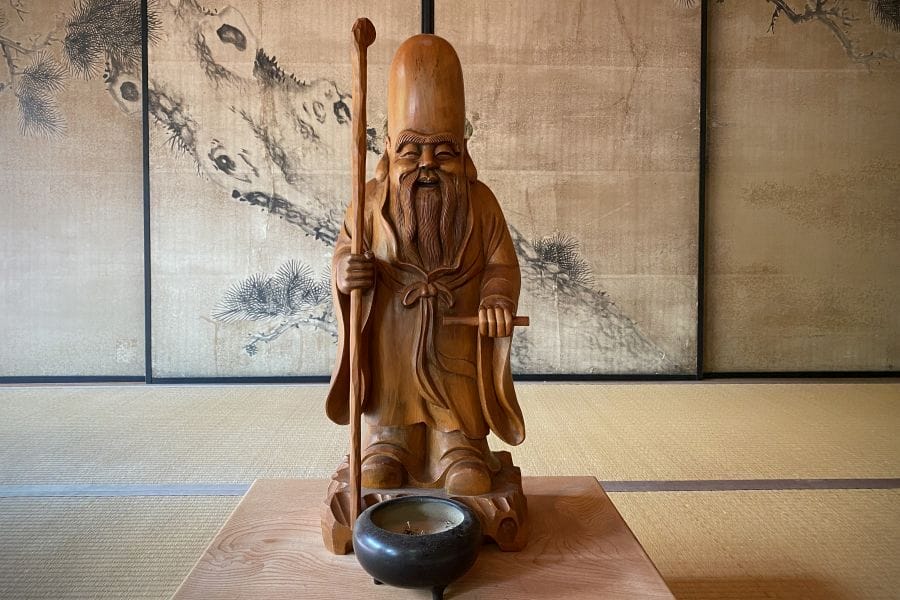
Fukurokuju, with his exaggeratedly long head, comes from Taoist tradition. His name combines happiness (fuku), wealth (roku) and longevity (ju). He’s often accompanied by a crane, turtle or deer — animals associated with long life. In iconography he carries a staff and scroll. He represents cultivated longevity: not just surviving, but ageing with status and good fortune intact. His big head is sometimes adorned with veins and other details that give it an unmistakably phallic appearance.
Jurōjin
Jurōjin is another longevity deity of Taoist origin and is sometimes confused with Fukurokuju. He’s depicted as an elderly scholar with a white beard, carrying a staff from which hangs a scroll said to record the lifespan of every living being. A deer often appears at his side. In some traditions the two are considered manifestations of the same star deity.
Hotei
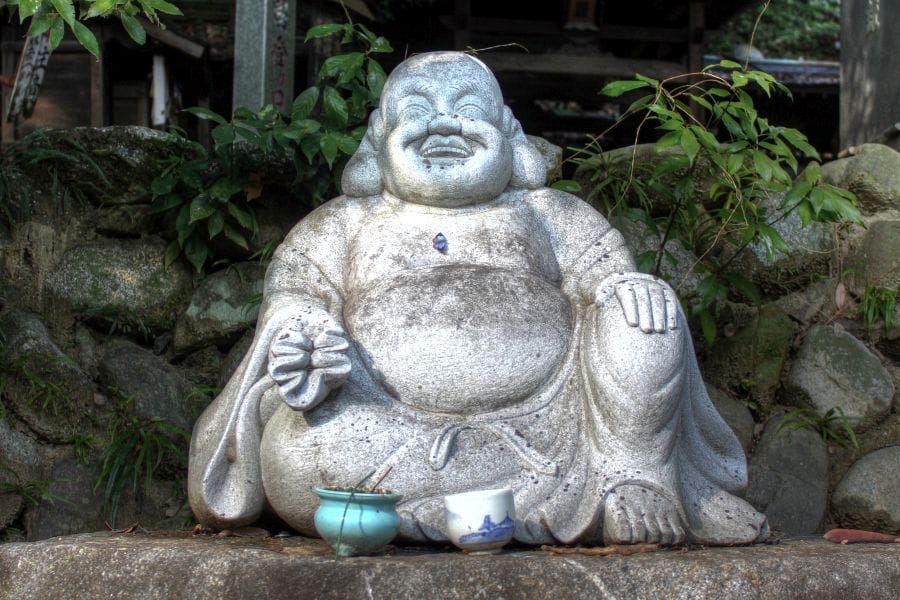
Hotei is based on a semi-legendary Chinese monk known for wandering with a cloth sack, giving sweets to children. In Japan he became a symbol of contentment and generosity. His large, exposed belly and broad grin make him one of the most recognisable figures in temple precincts. He represents abundance of spirit rather than wealth in coin. He’s sometimes referred to mistakenly as a ‘happy Buddha’.
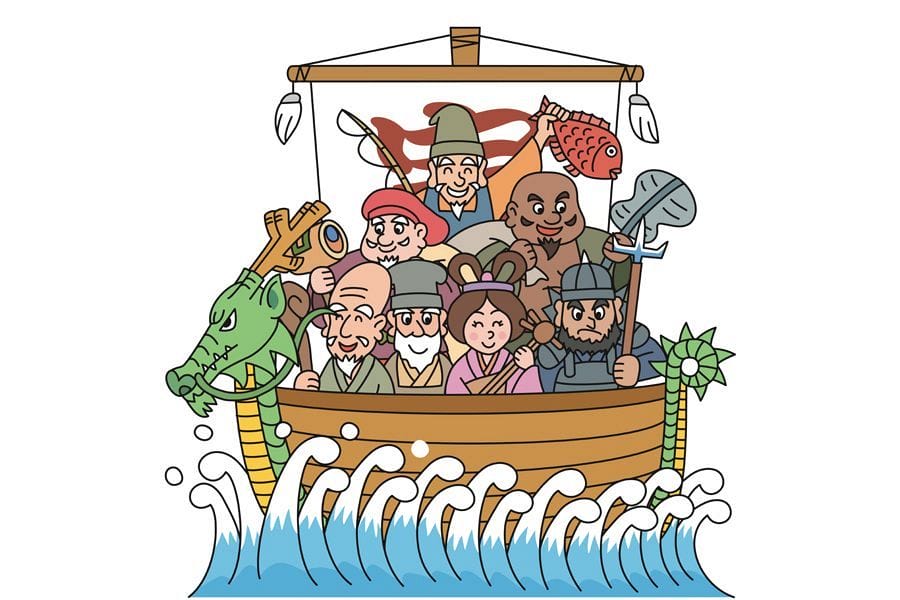
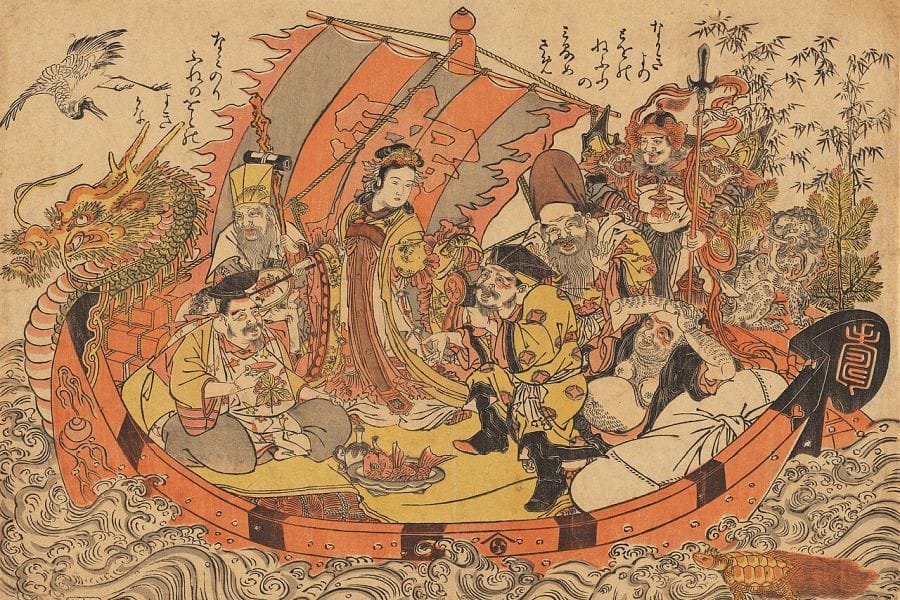
The seven are commonly shown together aboard the Takarabune, the treasure ship said to arrive on New Year’s Eve carrying riches, magic mallets, inexhaustible purses and other lucky objects. During the New Year period many people place a picture of the ship beneath their pillow to encourage an auspicious first dream.
Across Japan there are also Seven Gods pilgrimages linking seven temples or shrines, each dedicated to one deity. These routes are modest in scale — often urban and walkable in a few hours — and are especially popular in early January. They combine worship with seasonal outing, reinforcing the idea that good fortune is something sought through small, repeated acts rather than grand gestures. The gods are often found at the temples of the Shikoku Pilgrimage.
The Seven Gods endure because they address concrete hopes: a good catch, a thriving shop, artistic skill, protection from harm, a long life. Their mixed origins aren’t a concern. In Japan, usefulness has always mattered more than doctrinal consistency, and the Seven Gods remain useful.