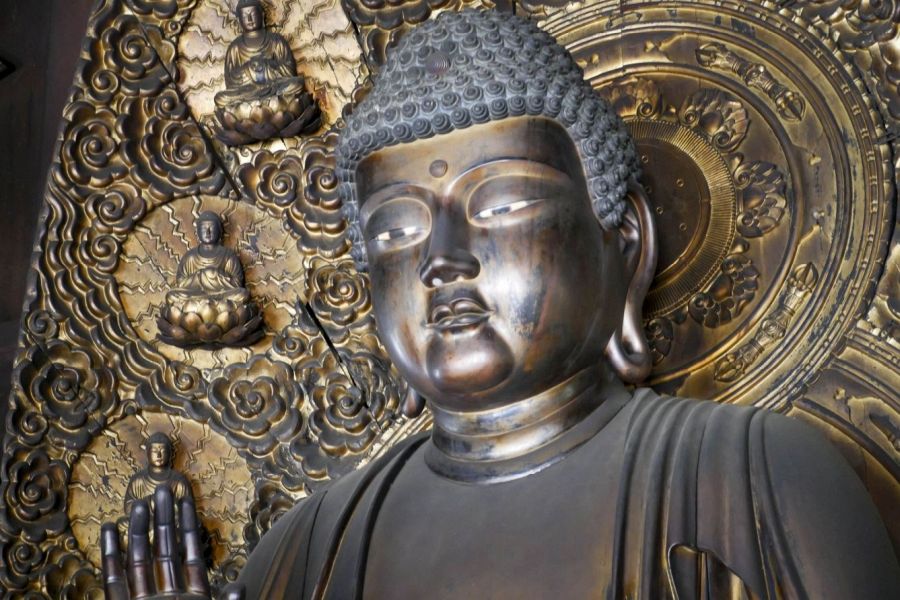
The Buddha, Shaka Nyorai
Name In Japanese: 釈迦如来
Pronunciation: shaka nyorai
Period: 563 BCE – 483 BCE
When you visit Buddhist temples in Japan, you may reasonably expect to see an image of the Buddha. But when you arrive at the temple, there are all sorts of images, some of monstrous demon-like figures, others of indeterminate sex, and many seated figures, but which one is ‘the’ Buddha?
In Japanese, the historical Buddha is called Shaka Nyorai. Shaka is the Japanese pronunciation of Shakya, the name of the clan into which he was born in northern India in the 6th century BCE. Nyorai (“Thus Come One”) is the Sino-Japanese translation of tathāgata, a term used in Buddhist texts for one who has attained complete awakening.
According to Buddhist tradition, Shaka Nyorai was born as Siddhartha Gautama, the son of a local ruler. At his birth, a seer predicted that he would become either a powerful king or a great spiritual teacher. Hoping to ensure the former outcome, his father shielded him from hardship and suffering, raising him within the confines of a palace and surrounding him with luxury.
Despite this protected upbringing, Siddhartha became increasingly aware of dissatisfaction and impermanence. After encountering sickness, old age, and death for the first time, he left his household life and became a wandering ascetic. He practiced extreme austerities for several years, nearly starving himself to death, before concluding that self-mortification was no more effective than indulgence. This insight led him to adopt what later came to be known as the Middle Way. A large statue of a half-skeletal Siddhartha at Ishite-ji Temple in Matsuyama offers a visceral representation of this phase of his life.
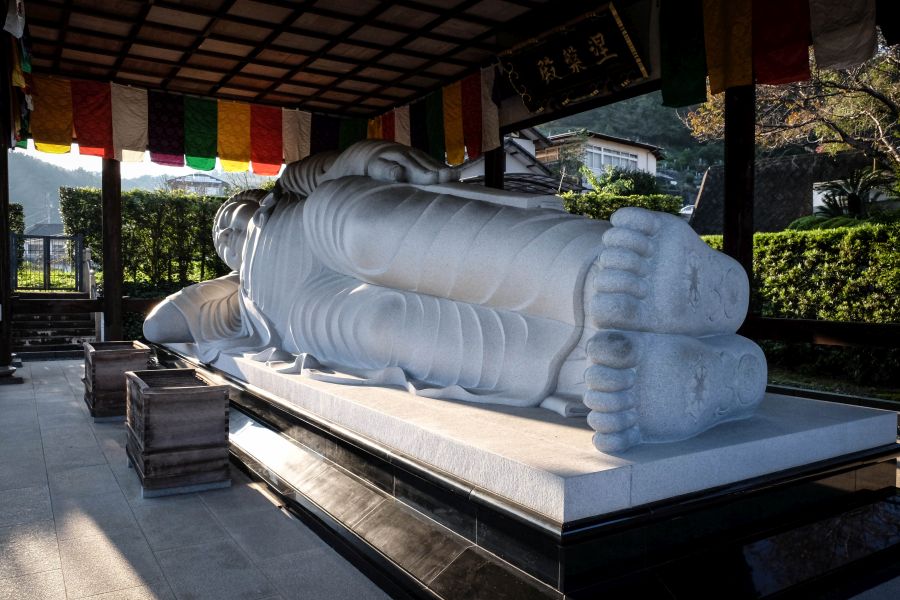
Siddhartha eventually sat in meditation beneath a tree—later called the Bodhi Tree—and resolved not to rise until he had resolved the problem of suffering. According to tradition, he attained awakening during this meditation, thereby becoming the Buddha. He then spent the remainder of his life teaching across northern India. In this role he is often called Shakyamuni, “the Sage of the Shakya Clan.” His death at around the age of eighty is described as his entry into nirvana, understood not as annihilation but as complete liberation from rebirth. Statues of the Buddha reclining before his death are quite rare in Japan, but an excellent example is found in Ehime at Uchiko.

Buddhist scriptures (sutras) are traditionally presented as records of the Buddha’s teachings. These texts vary widely in style and content, from concise ethical instructions to elaborate cosmological discourses. In Japanese Buddhism, this diversity is often explained through the concept of hōben (skillful means): the idea that the Buddha adapted his teachings to the abilities and circumstances of different audiences. As a result, Shaka Nyorai is understood both as a historical teacher and as a figure of broader cosmic significance.
Although the Shikoku Pilgrimage is associated with the Heian-period monk Kūkai, it is very much a Buddhist pilgrimage. A fairly modern mandalisation of the Shikoku pilgrimage links each of the island’s four prefectures to a stage in the Buddha’s life: awakening aspiration, ascetic practice, enlightenment, and nirvana.
Early Buddhist communities avoided portraying the Buddha in human form. Instead, they venerated relics—such as bones or teeth—enshrined in stupas. These structures later evolved into the pagodas found at Japanese temples. Some pagodas, including the one at Chikurin-ji in Kōchi Prefecture, are said to contain relics brought from South or Southeast Asia.
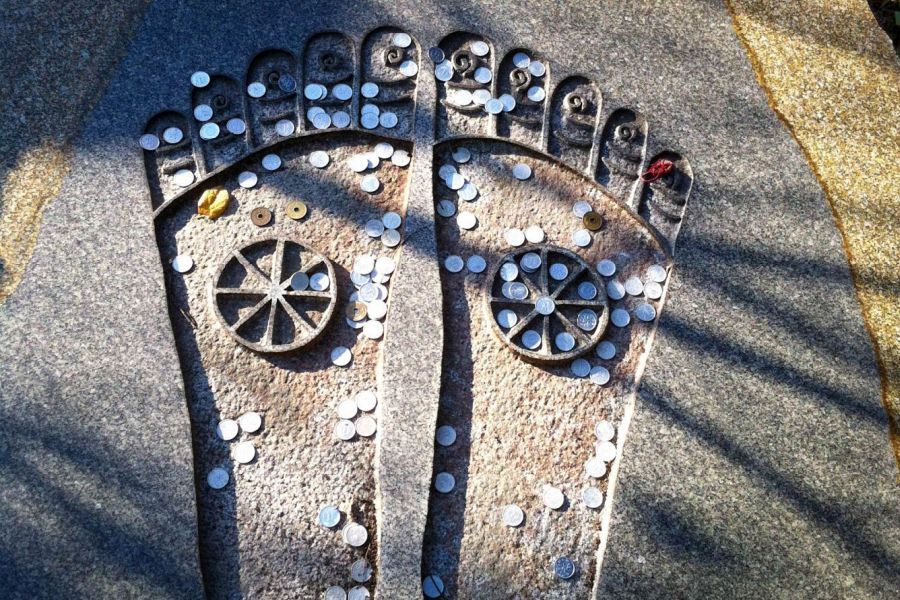
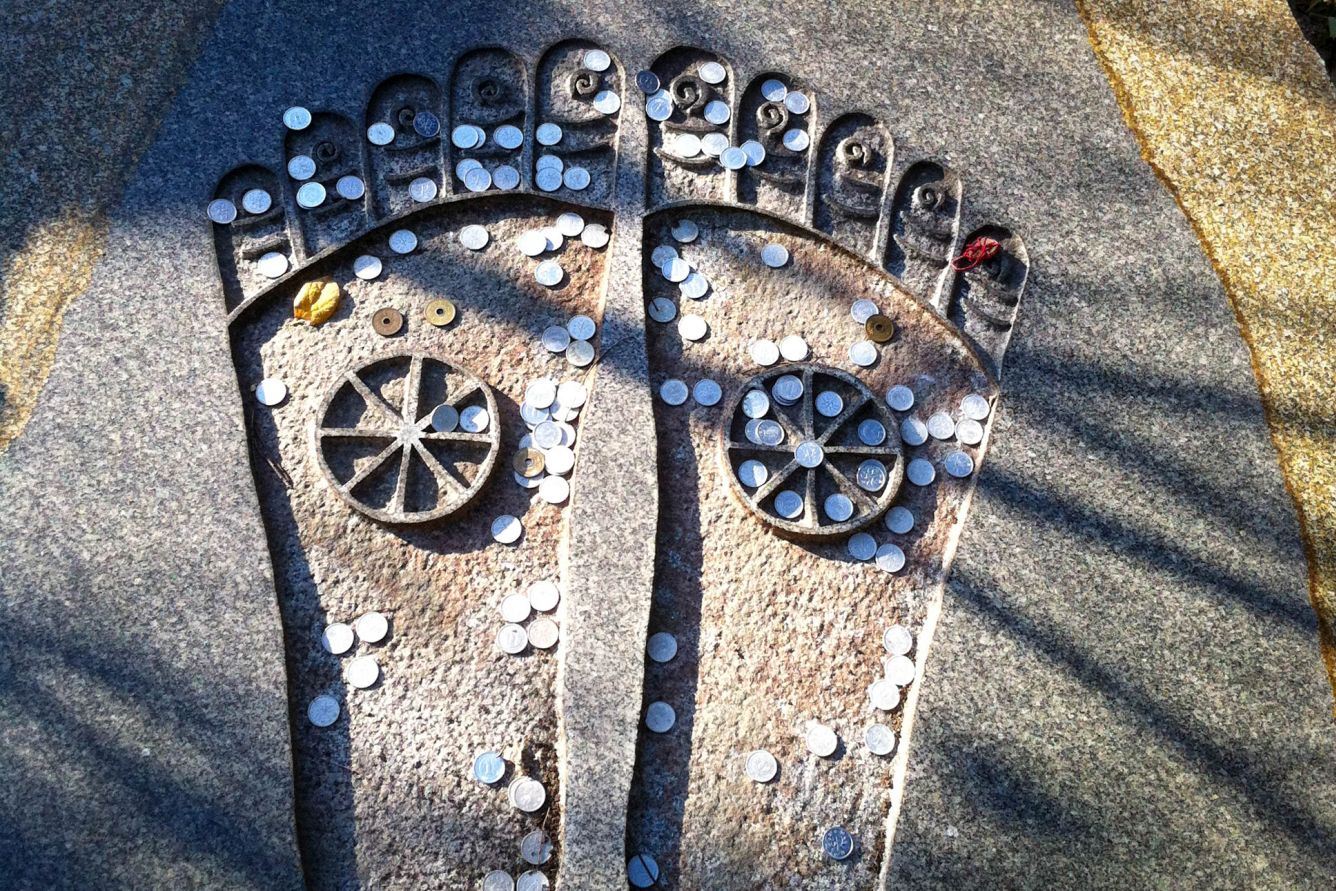
When the Buddha was symbolically represented in early art, it was often through absence rather than depiction: an empty seat beneath a tree, a parasol with no figure beneath it, or a pair of footprints. Footprint imagery remains common in parts of Southeast Asia and can also be found at Japanese temples.
From around the 1st century BCE, under the influence of Greco-Roman artistic traditions in northwestern India, sculptural images of the Buddha began to appear. These Buddhas look Nepalese and are quite realistic. As this statuary spread through Central Asia to China and eventually Japan via the Silk Road, the Buddha’s appearance became more East Asian and more stylised.
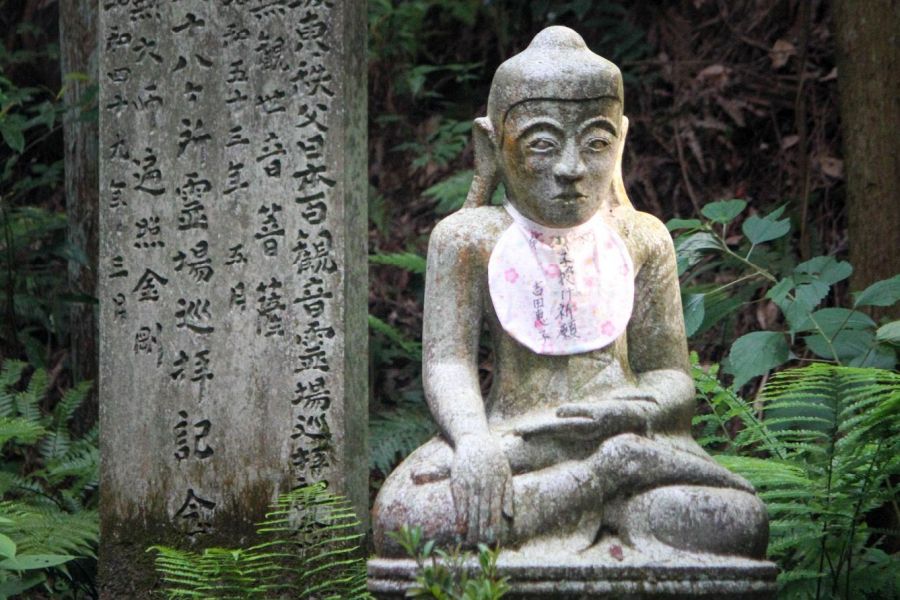
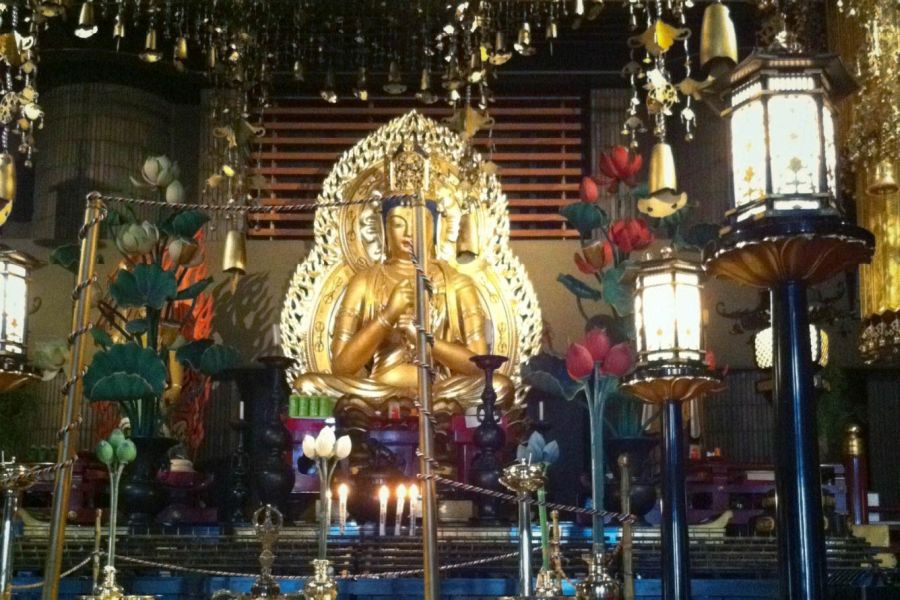
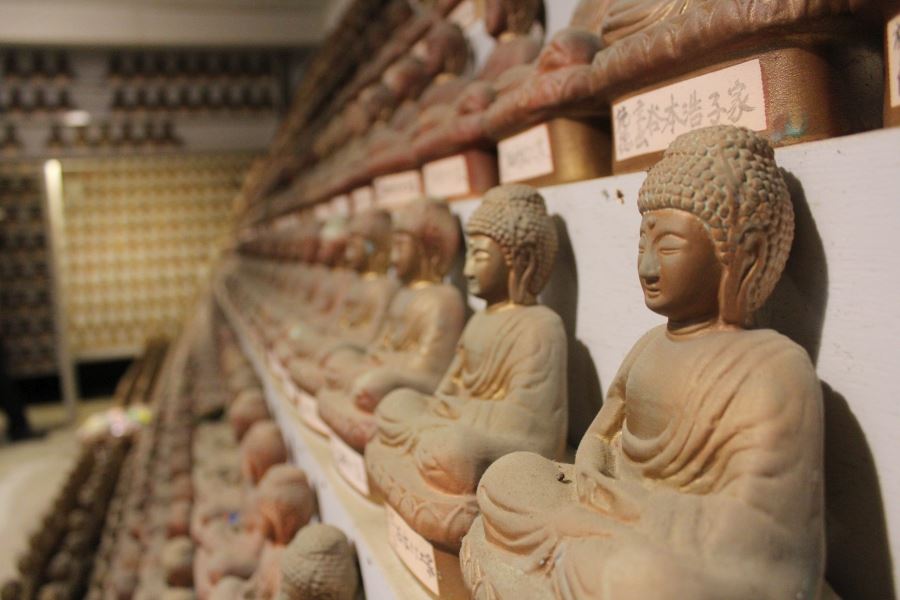
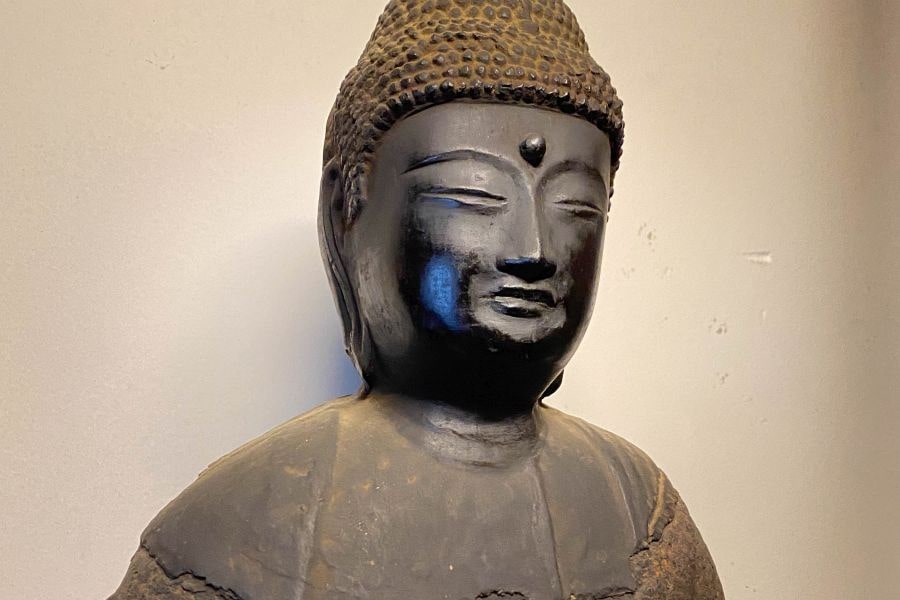
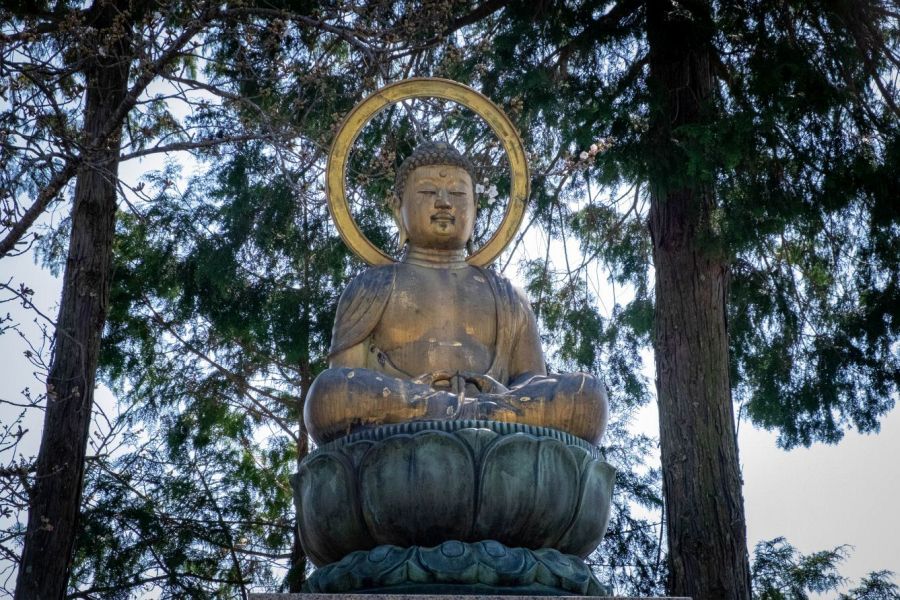
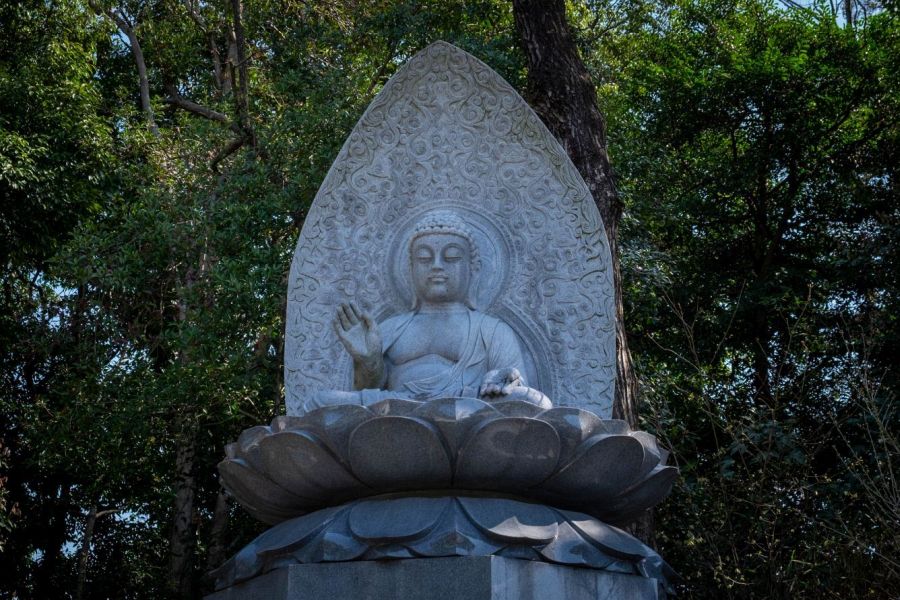
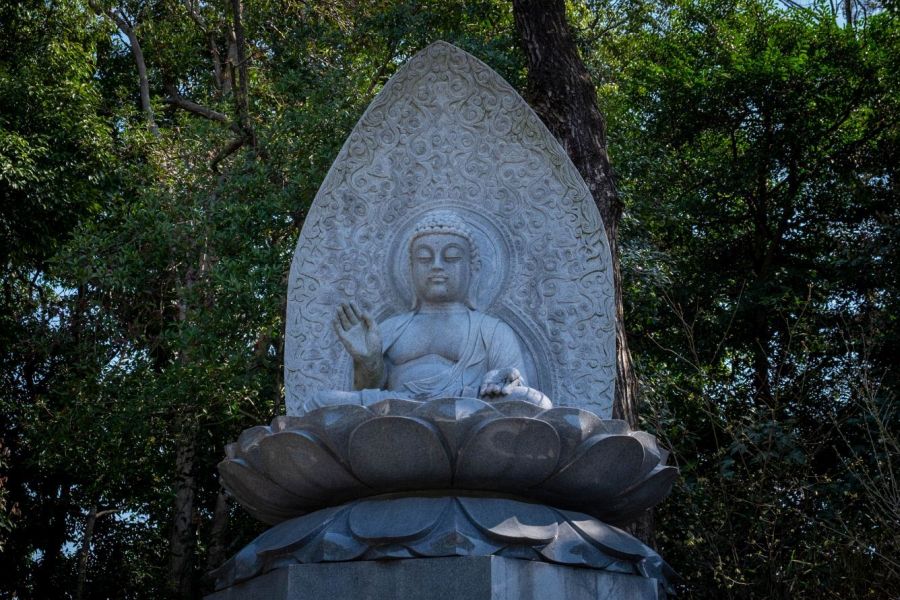
Japanese images of Shaka Nyorai typically show him seated, wearing monastic robes. Common hand gestures (mudrā) include the right hand raised with the palm facing outward, a gesture of reassurance, and the left hand resting in the lap. A small mark between the eyebrows (byakugō), sometimes inlaid with crystal, represents a tuft of hair that emits light, symbolising wisdom. The raised protuberance on the crown of the head (ushnīsha) signifies spiritual attainment.
How to distinguish seated Buddhas from other seated figures
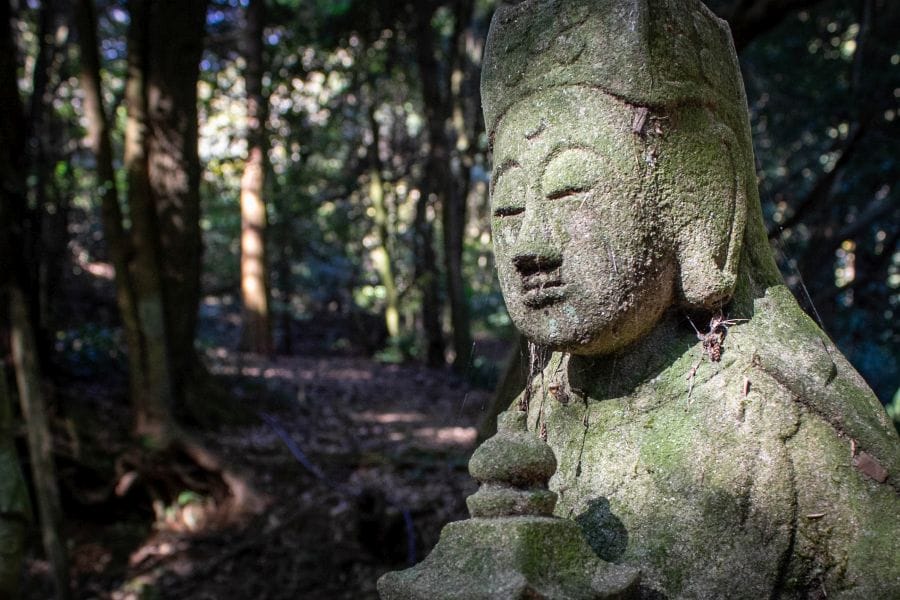
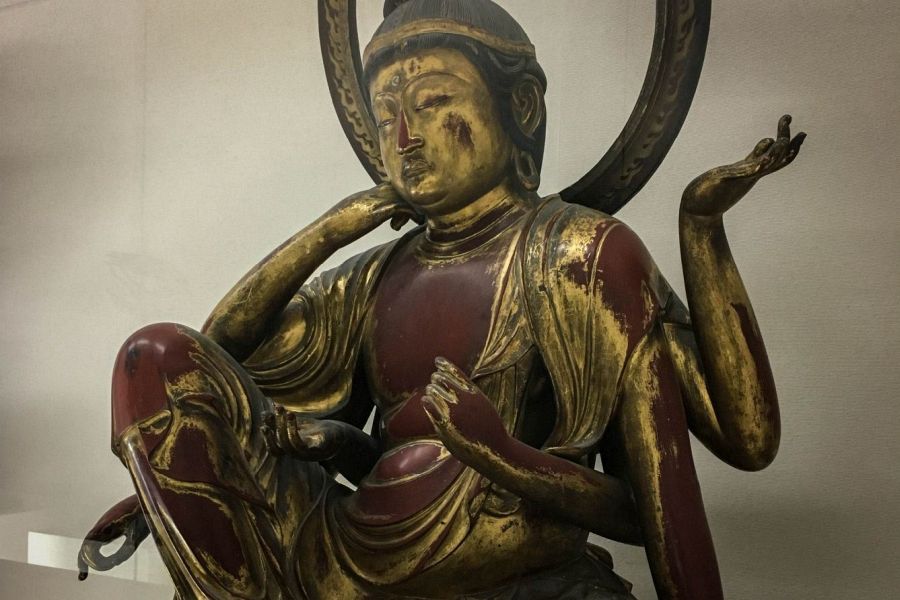
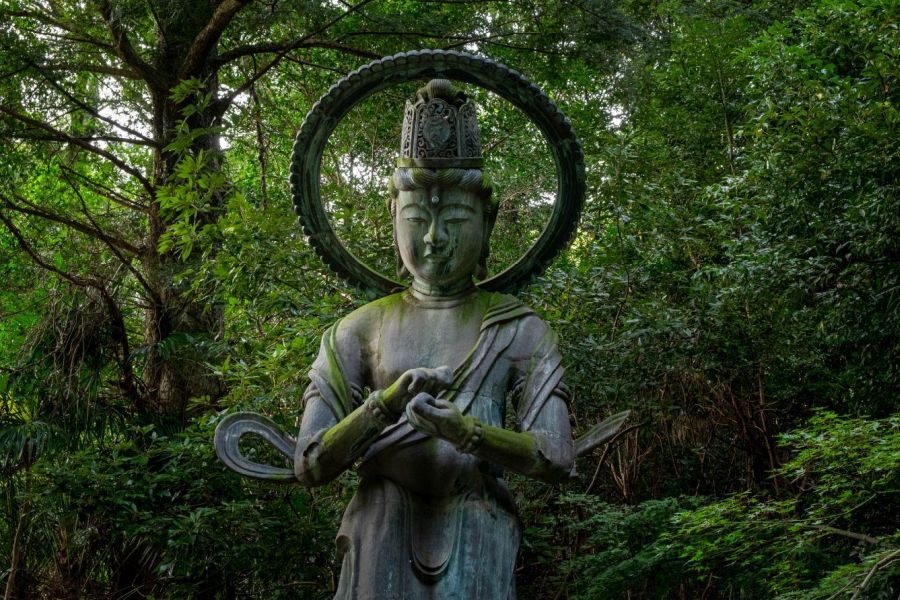
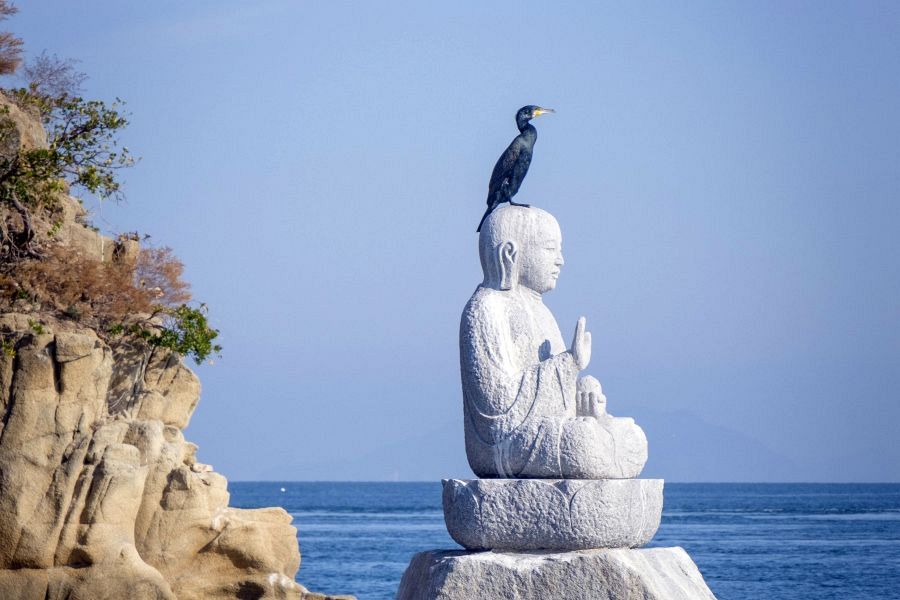
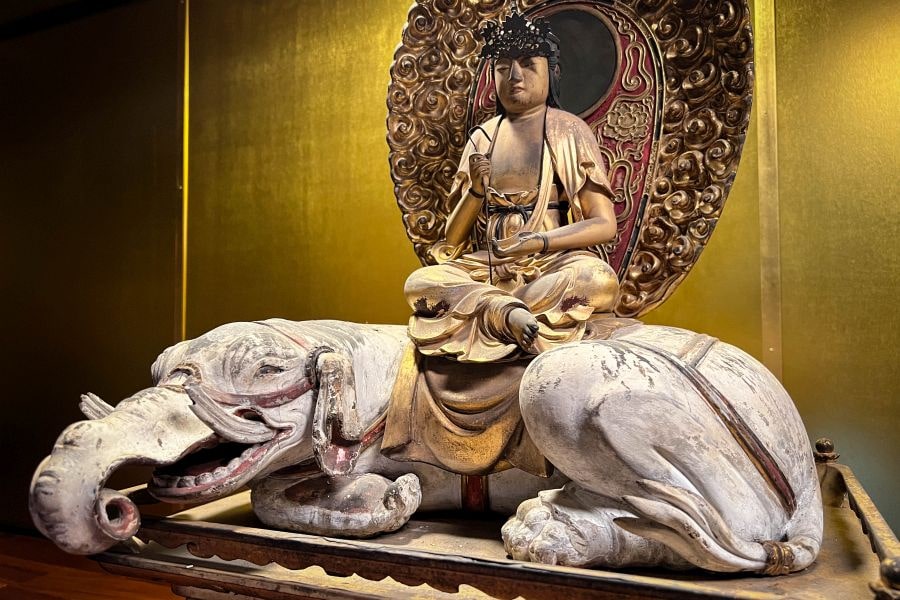
In Japanese temples, seated figures are not always Buddhas. Several visual cues can help distinguish Shaka Nyorai from Jizō and other bodhisattva, and monks such as Kūkai, or more recent personages.
1. Clothing
- Buddhas wear simplified monastic robes, often leaving one shoulder exposed. The robes lack seams or fastenings.
- Kūkai and other monks wear layered clerical robes with visible collars, folds, and sometimes decorative elements.
2. Head features
- Buddhas typically have stylized curled hair and a raised cranial bump.
- The Buddha may have elongated ears from wearing heavy earrings in his luxurious youth.
- Kūkai is shown with a shaved head or close-cropped hair, without a bump.
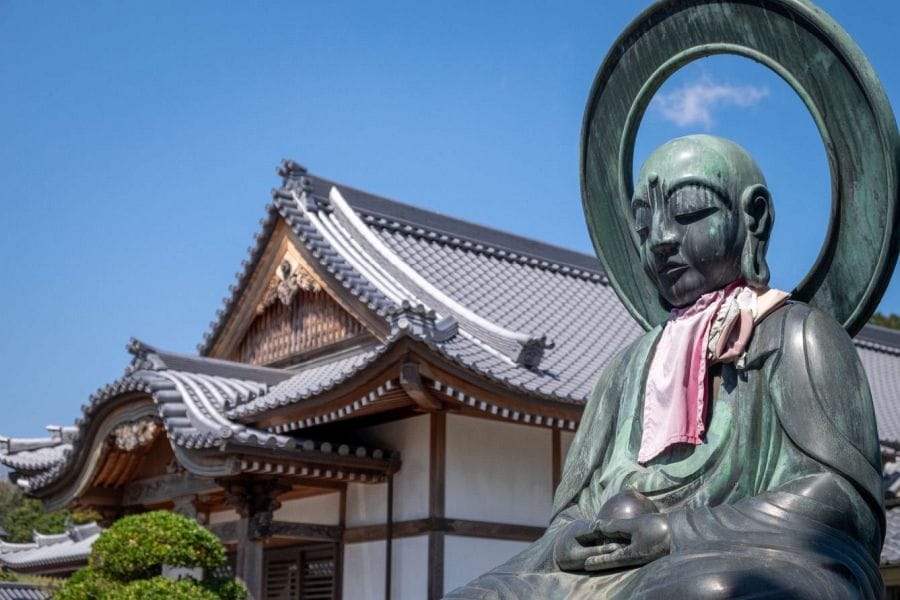
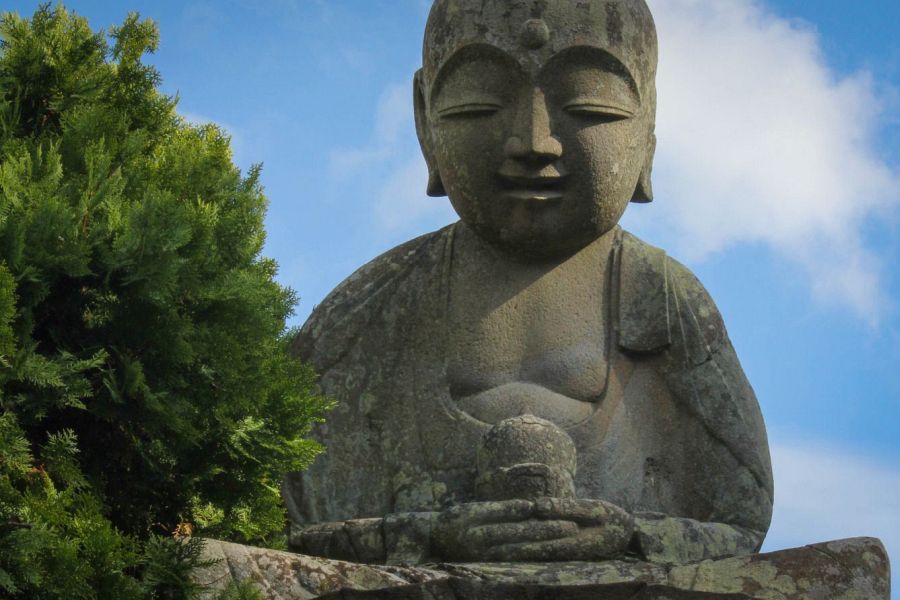
- Seated statues of the bodhisattva Jizō are easily confused with the Buddha, but Jizō has a shaved head and typically holds a jewel and staff topped with rings.
3. Facial expression
- Buddhas have idealized, timeless facial features with downcast eyes and a neutral, meditative expression.
- Kūkai and other monks are more individualized, with sharper facial features and a more alert gaze.
4. Hand gestures and objects
- Buddhas display symbolic hand gestures (mudrā) and do not hold objects.
- Kūkai commonly holds a vajra ritual implement and prayer beads, reflecting his role as an esoteric practitioner.
5. Seating and posture
- Buddhas usually sit on a lotus pedestal.
- Kūkai and other monks are typically seated on a plain platform or chair-like base.
Learning to read these visual conventions allows you to identify figures accurately and better understand the religious landscape of Japanese temples.