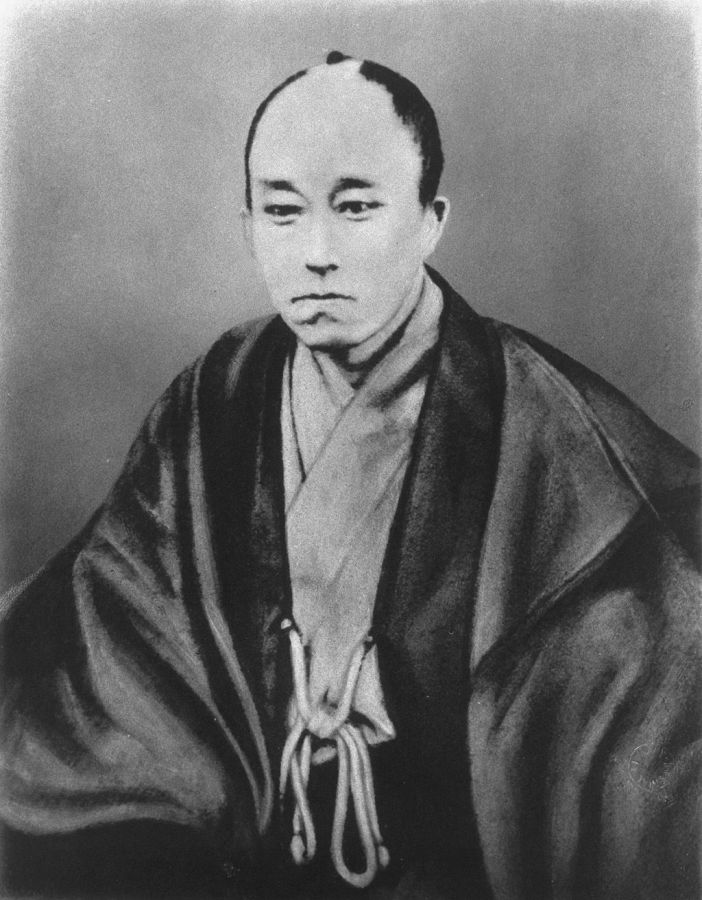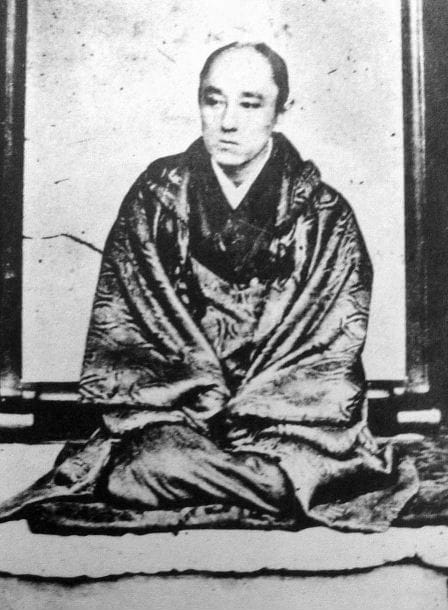
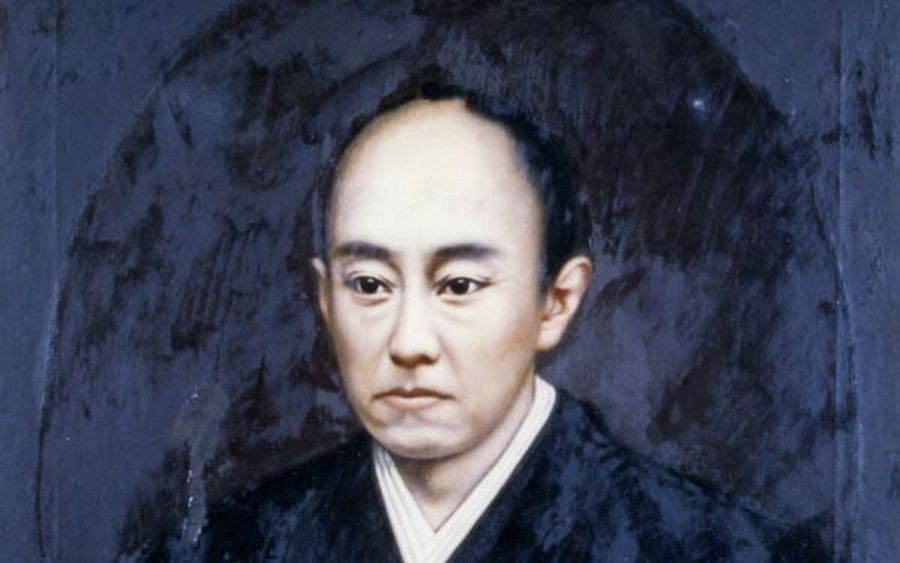
Yamauchi Yōdō
Name In Japanese: 山内容堂
Pronunciation: yama-oochi yō-dō
Period: 1827 to 1872
Yamauchi Toyoshige (later Yōdō) was the eldest son of a Yamauchi cadet family. In 1848, after the sudden death of the head of the main family without heir, Toyoshige unexpectedly became the 15th lord of Tosa.
In 1853, Commodore Perry appeared in Tōkyō Bay with overwhelmingly superior military power and demanded the opening of Japan. This event, which eventually led to the overthrow of the Shōgunate and the restoration of the Emperor, threw Japan into turmoil for decades, in which the people of Yamauchi’s Tosa domain played leading roles. While Tosa rebels such as Sakamoto Ryōma and Takechi Zuizan conspired to overthrow the shogunate, Yamauchi sought to unite the Shōgunal and imperial factions to strengthen the state against the predatory imperialist forces that were impinging on Asia and Japan at that time.
Initially Yamauchi opposed the trade treaties proposed by Perry, although he later changed his mind. He was influential in Shōgunal politics in Edo, but when he opposed Ii Naosuke, a power in the regime, Yamauchi was deposed in 1860. At this time, he changed his given name to Yōdō. However, when Ii was assassinated later that year, Yamauchi’s position and influence was restored.
Within Tosa, Yamauchi worked to reform and liberalise the government, but the radical conservative imperial faction led by Takechi opposed him. However, after a failed coup attempt in Kyōto, Yamauchi had his opponents arrested, and Takechi was forced to commit seppuku.
As the power of the Shōgunate waned, the Satsuma and Chōshū clans, who aimed to overthrow the Shōgunate by force, gained power. Yamauchi realised that continuing to support the Shōgunate would jeopardise Tosa’s position after the imperial restoration, and so he petitioned the shogun to resign in order to ensure a peaceful handover of authority.
At the beginning of the Bōshin Civil War in 1868, forces from Tosa fought alongside the Satsuma-Chōshū troops against the Shōgunate in defiance of Yamauchi’s orders. It was said of Yamauchi that when he was drunk he favoured the Emperor and the Shōgun when he sobered up.
After the restoration of imperial rule, Yamauchi was appointed to a series of major posts in the new Meiji government, and received a significant stipend for his services to the Emperor.
Like many people of Tosa, Yamauchi loved sake and indulged heavily. He referred to himself as “the drunken whale”, and today he’s remembered in the name of the Suigei Brewery which means the same thing. He declared that no feudal lord had ever bankrupted his domain through drinking, but he intended to try. His favourite sake was reportedly the Kenbishi brand from Nada, Kōbe, which is still popular today. Notwithstanding his drunkenness, Yamauchi was very adept at the martial arts and was known as one of the four wise lords at the close of the Shōgunate. He was also an accomplished poet, painter, and calligrapher.
He died aged 46 of cerebral haemorrhage from drinking.