Karihama Kabuki Festival
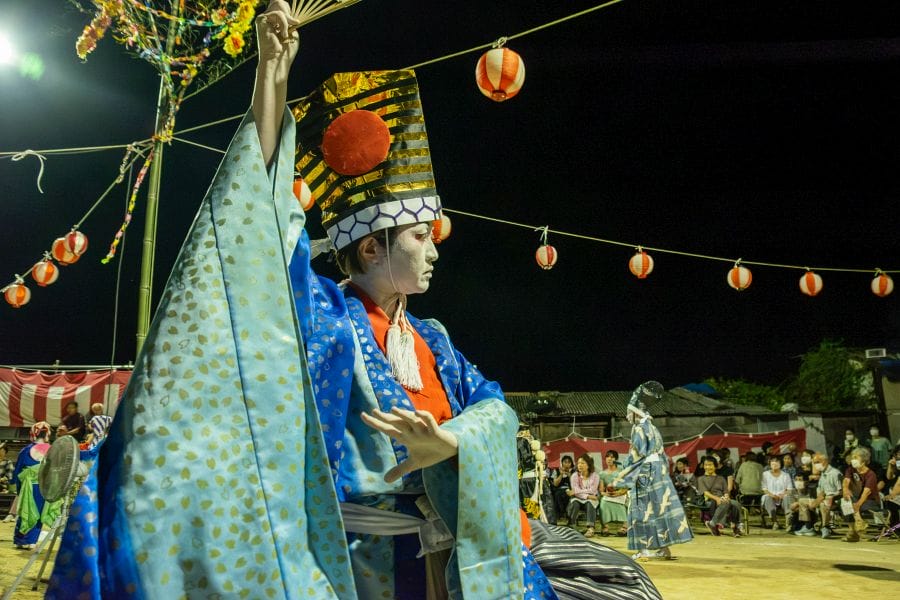
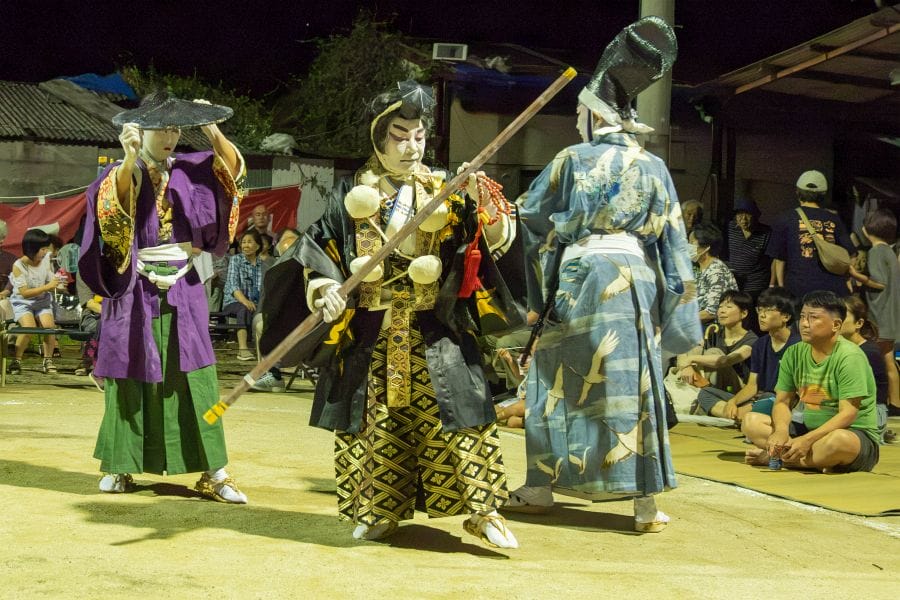
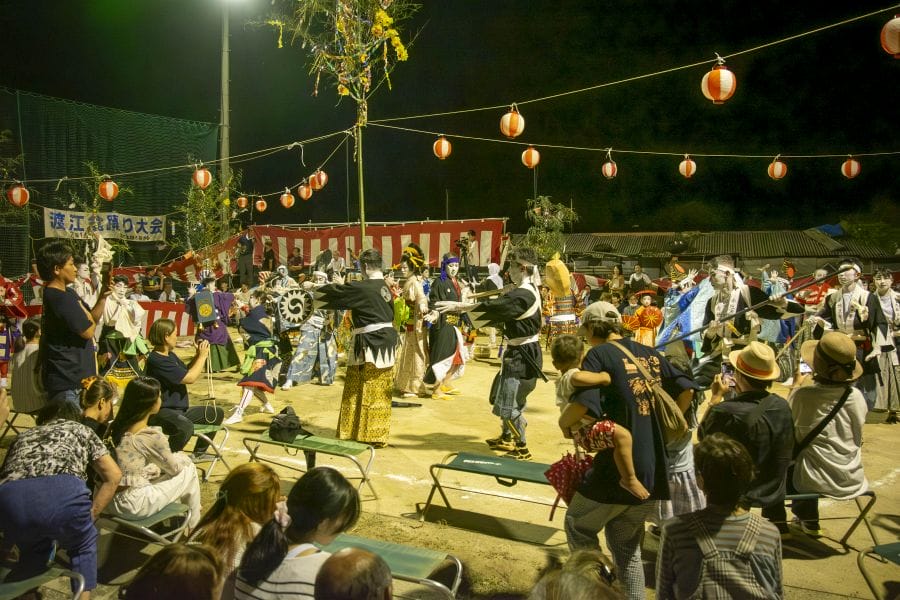
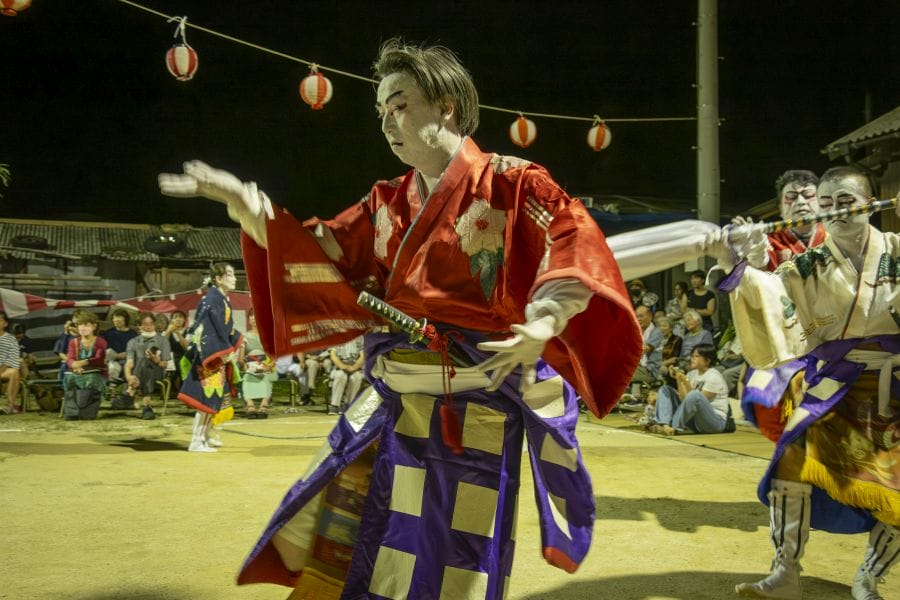
The Karihama Kabuki Festival — known locally as Kabuki-kuzushi, or “deconstructed Kabuki” — is a midsummer theatrical ritual and ancestral memorial dance, combining classical Japanese drama with coastal Obon traditions. Held annually on 14 August in the coastal hamlets of Karihama, Tonoe, and Minae in Akehama, Seiyo, the event brings village residents together to perform adapted Kabuki plays as an offering to departed spirits. Performers apply dramatic face paint, don elaborate historic costumes, and perform stylised dances in a village square facing the Uwa Sea. Rather than staging full theatrical productions, the performance extracts key dramatic climaxes from classical plays and translates them into group dances set to vocal chanting and hand-played drums.
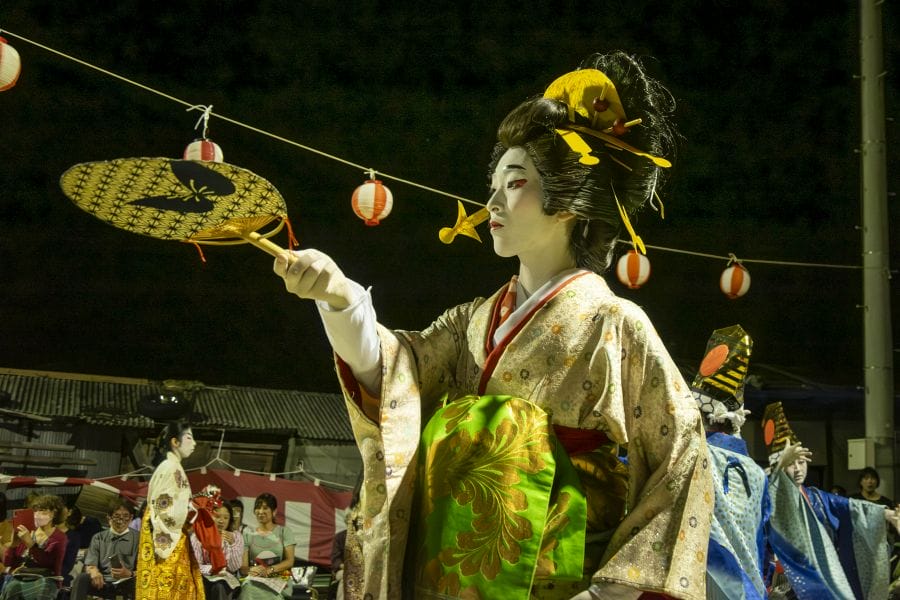
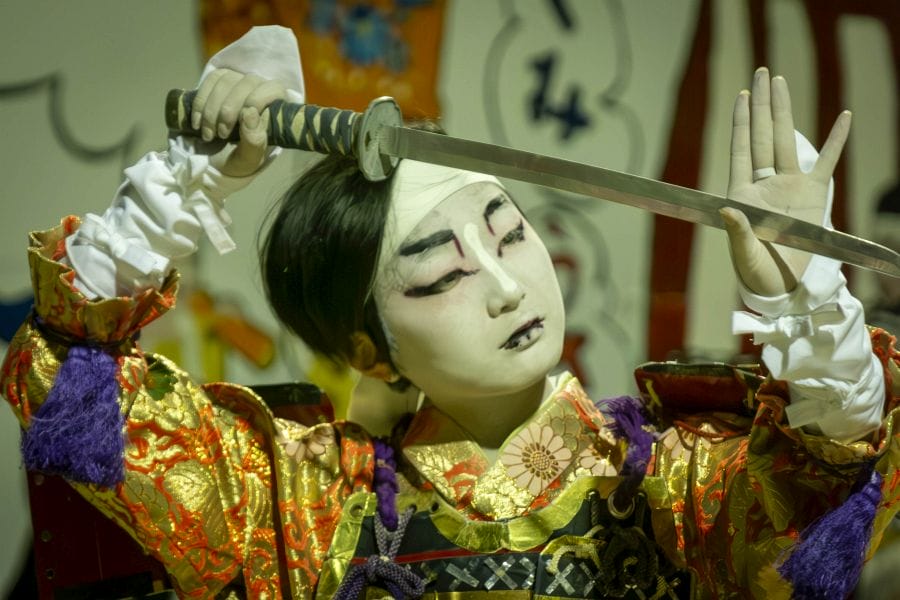
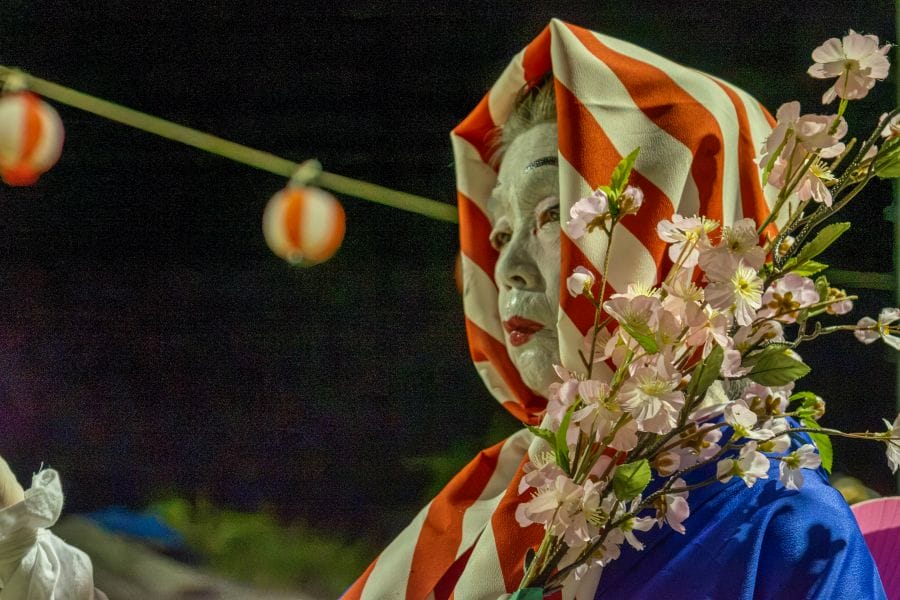
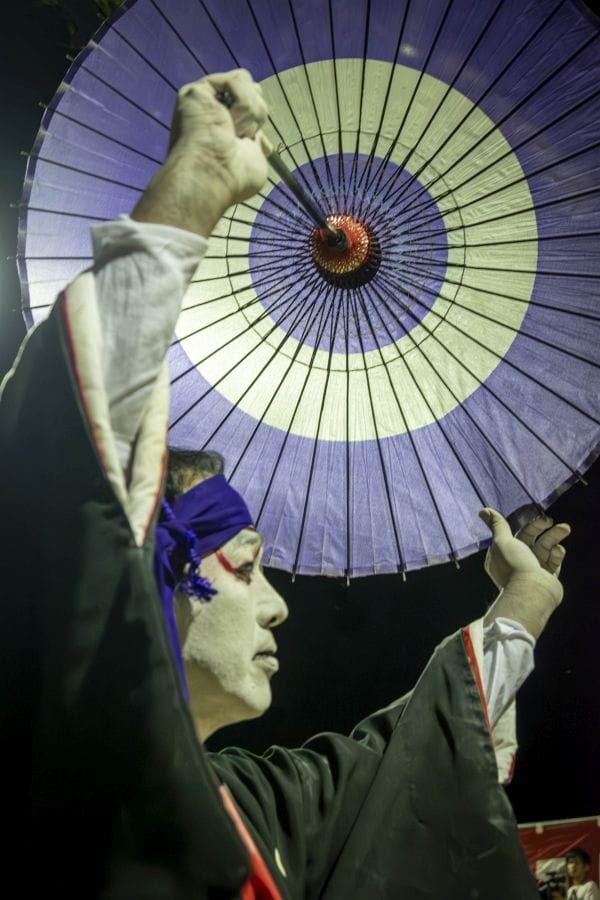
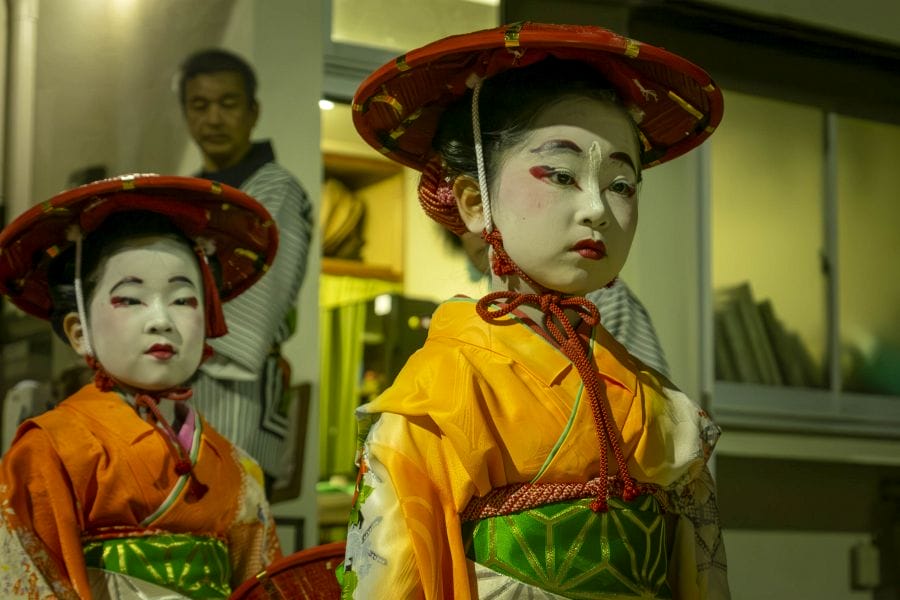
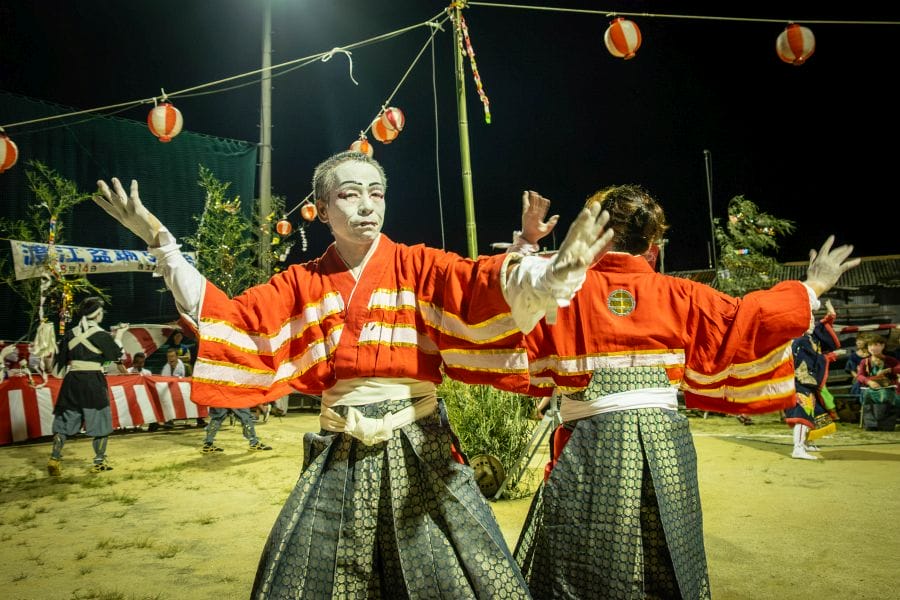
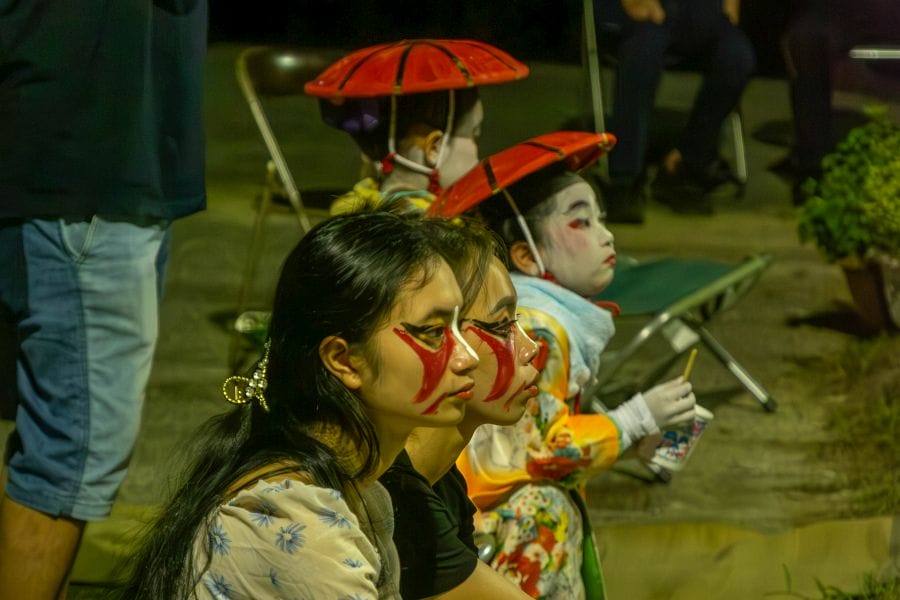
Performers ranging from elementary school children to elderly fishermen take part in the event, wearing heavy silk kimono, brocade robes, wide hakama trousers, and classical wigs. Face paint follows the tradition of Kabuki, with bold red, black, or blue lines drawn over white powder. Depending on the narrative scene, dancers carry martial props such as wooden swords, long spears or halberds, paper parasols, or small hand drums. The performance proceeds at a deliberate, unhurried pace. A lead singer delivers narrative accompaniment with a chanting style that recounts dramatic plots, backed by the steady beat of taiko drums. The repertoire includes famous theatrical tales such as The Treasury of Loyal Retainers, Yoshitsune and the Thousand Cherry Trees, and The Whirlpools of Awa.
The tradition originated during the late Edo period as an evolution of isa-odori, a local folk dance performed by fishing communities along the southern coastline of former Iyo Province. In the mid-nineteenth century, an itinerant Kabuki actor named Tanimoto Sennosuke settled in the region after travelling with wandering theatre troupes. Tanimoto taught local villagers how to adapt intricate theatrical movements into repetitive, accessible dance patterns that entire communities could learn. The practice allowed remote coastal villages without permanent theatre buildings to participate in popular theatrical culture. After economic shifts and rural depopulation caused interest to decline during the mid-twentieth century, local residents formed preservation societies in 1973 to document the choreography, maintain the costumes, and pass the vocal melodies down to younger generations.
Beyond its theatrical elements, the performance retains its original function as a solemn memorial rite for deceased community members. Dancers who lost a family member during the preceding twelve months carry a small wooden ancestral tablet or a framed photograph tucked into their sash or strapped to their back, carrying their ancestors through the performance so they may symbolically participate. The performers for each ‘act’ are often relatives — a father and daughter, a brother and sister — adding a further dimension to the family theme.
The theatrical style of Kabuki-kuzushi also extends into the region’s autumn festival traditions. During the October festival at Kasuga Shrine in Karihama, costumed dancers perform theatrical excerpts aboard lacquered ceremonial barges during the Ofune-neri procession, where decorated boats parade across the cove. Today, the event stands as a rare surviving example of classical Kabuki drama integrated into rural Obon ancestor veneration along the Shikoku coastline.
Information
Name in Japanese: 狩浜歌舞伎崩し
Pronunciation: karee-hama kaboo-kee kuzoo-shee
Address: Akehama-chō Karihama, Seiyo, Ehime 797-0113