Temple 49, Jōdo-ji
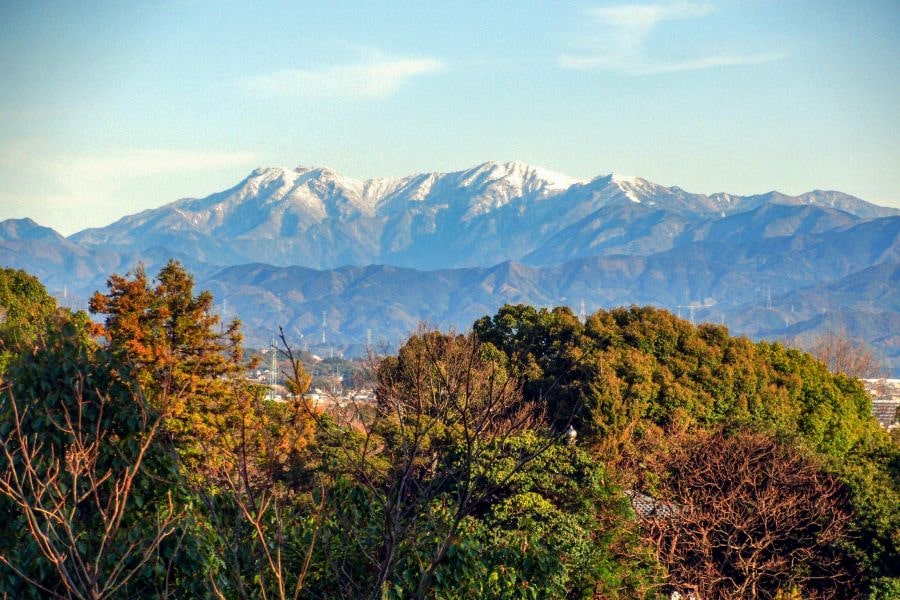
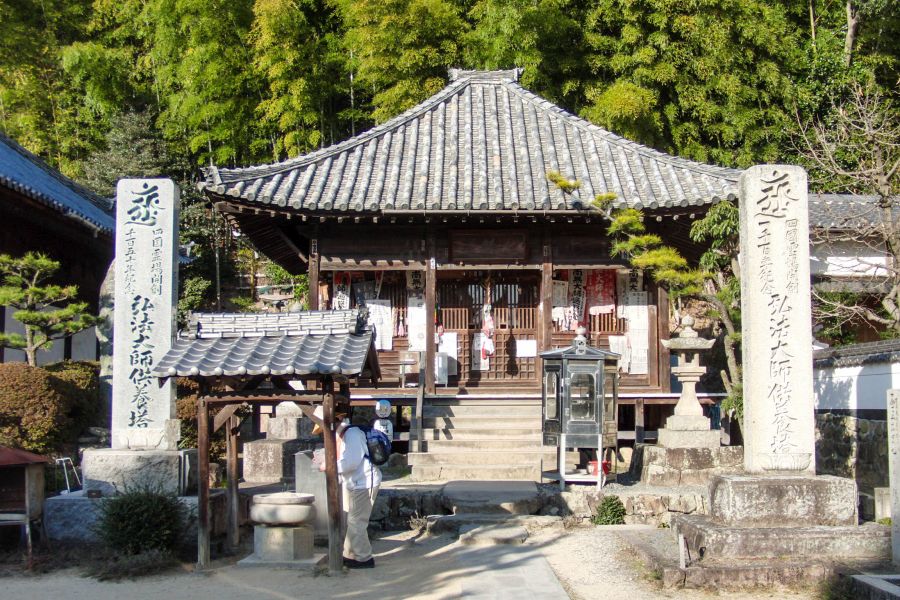
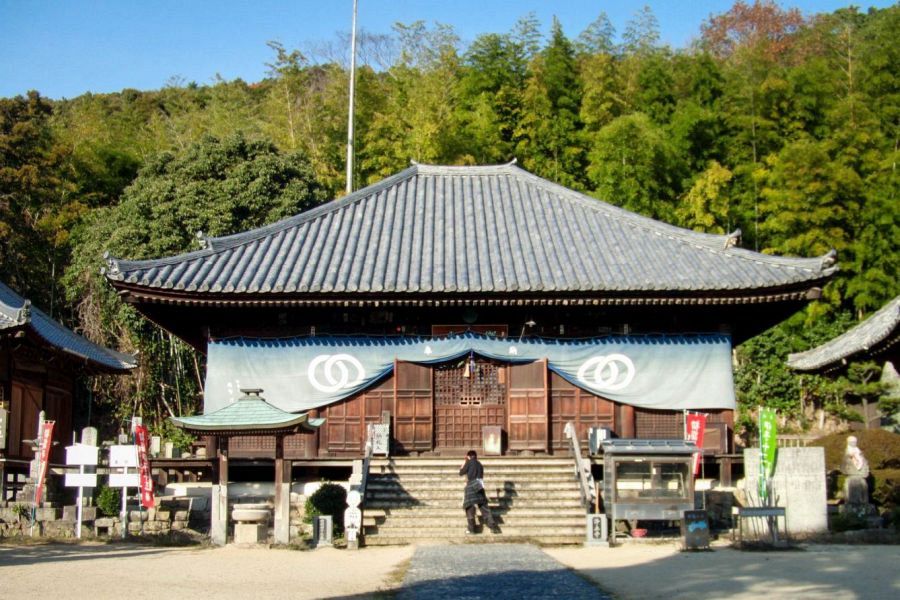
Jōdo-ji, The Temple of the Pure Land, is No. 49 on the Shikoku Pilgrimage, or Henro. It’s located in a residential area at the foot of a hill that faces to the south offering a view of Mt. Ishizuchi. The main building is built in the Chinese style of architecture, with a rustic and weathered air.
What to see
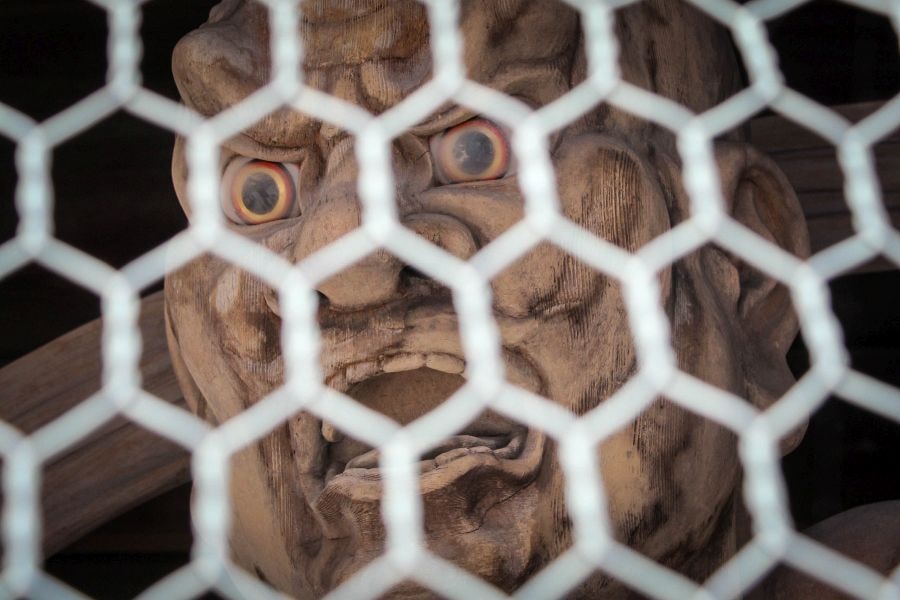
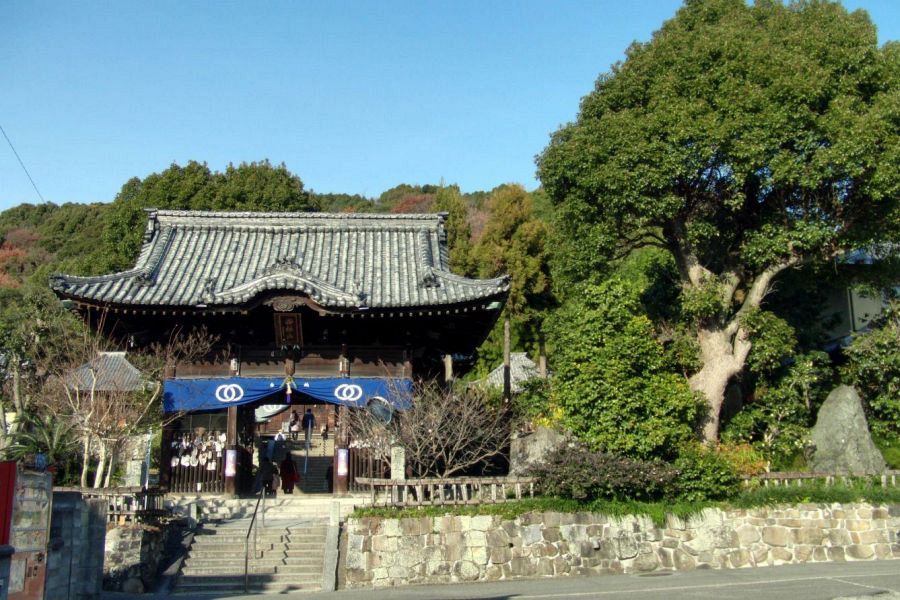
The imposing main gate with its fearsome Niō guardians stands atop a short flight of steps. There’s a water basin on the right, with little shrine to Benzaiten behind it. Further stone steps lead up to the bell tower on the right, with the main hall standing directly ahead. To the left of the main hall are the Amida Hall with a statue of Binzuru and the Aizen Hall, while the Daishi Hall is to the right. The temple office is located deep within the grounds to the right, accessed through the gate behind the bell tower. There’s a row of seven lucky gods lining the path to the temple office.
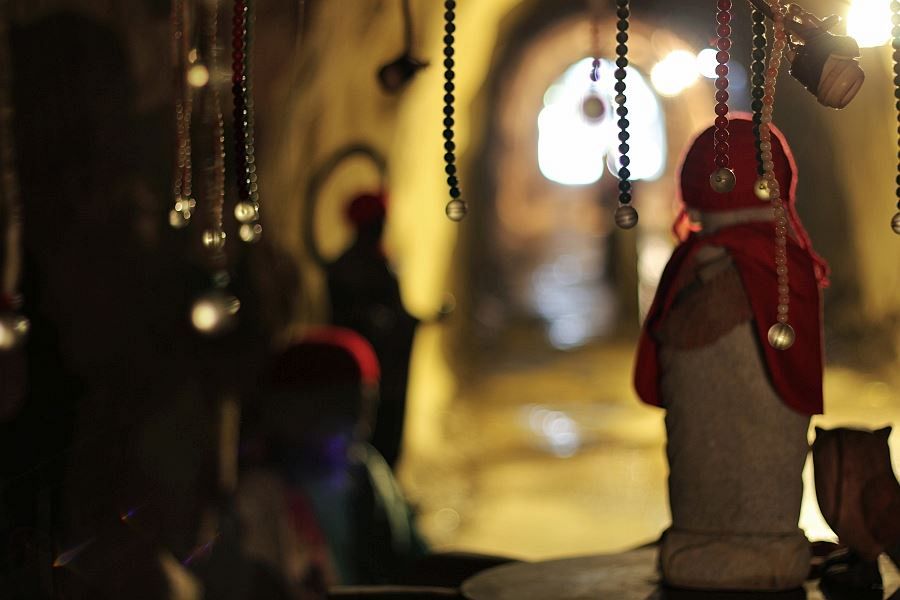
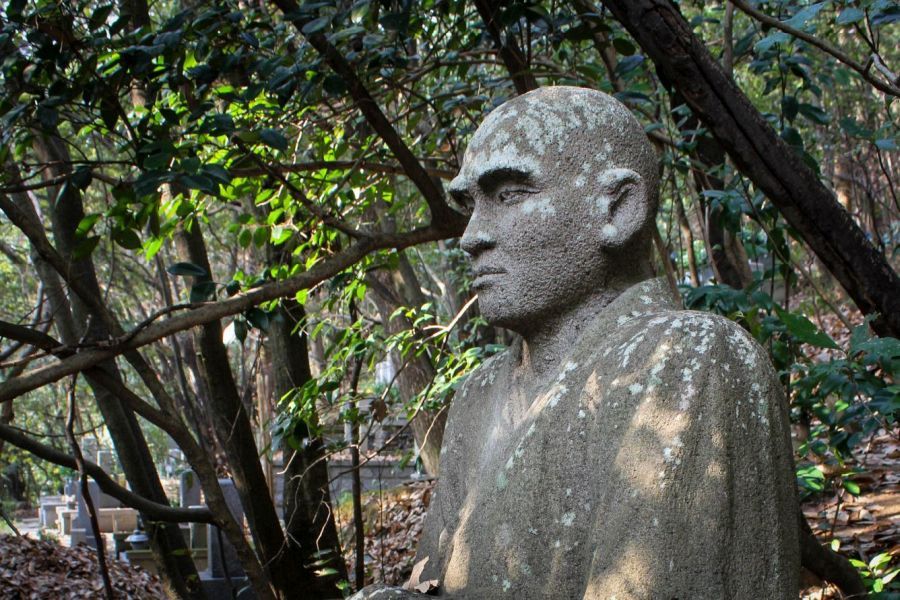
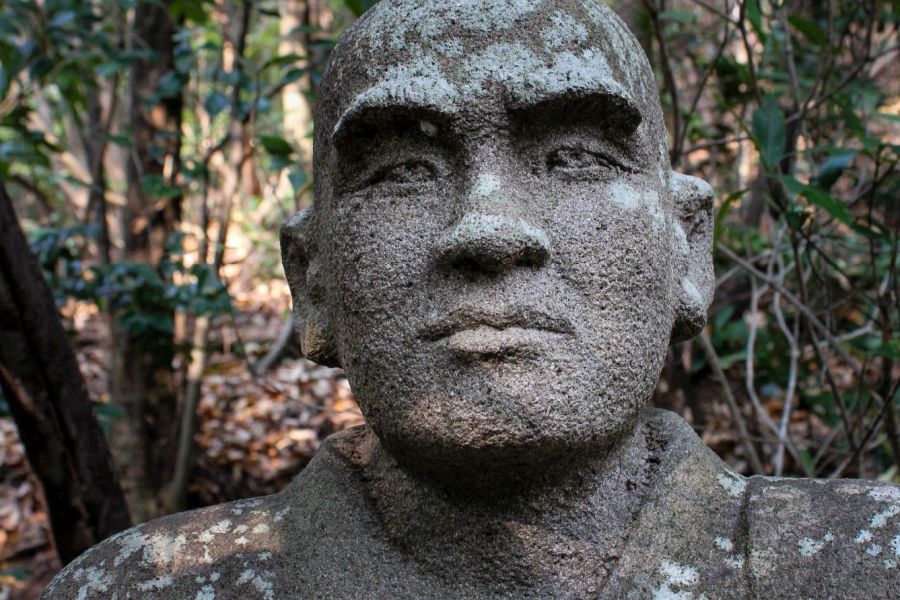
A path from the left the main hall leads up through a graveyard in the bamboo grove behind the temple which has some interesting statuary. Beyond is a Jizō Hall in a clearing with a miniature 88-temple pilgrimage site behind it. The observation platform on top of the hill offers a panoramic view of the southern part of Matsuyama to the Seto Inland Sea. There’s also a fine view of Mt. Ishizuchi.
History
The temple, originally of the Hōsso sect, was founded by Gyōki who carved a Buddha statue. At that time, it was a place of worship for Empress Kōken. Later, Kūkai is said to have restored the temple and converted it to the Shingon sect. Thereafter, it prospered and controlled some 66 subsidiary temples.
Jōdo-ji is associated with an itinerant monk, Kūya Shōnin who lived from 903 to 972 in the Heian period. He practised austerities in Awa and Tosa provinces in Shikoku and stayed at Jōdo-ji from 957 to 961 performing good works. There’s a statue of him in the main hall. Thin and with a bent back, he holds a staff topped with a deer antler in one hand and in the other, a hammer for the gong hanging on his chest. Attached by a wire from his open mouth are six little Buddha figures, representing his constant chanting of the phrase “Namu Amida Buddha”. Kūya spent his life repairing roads, building bridges, digging wells, and cremating the dead abandoned by roadsides in the turbulent times.
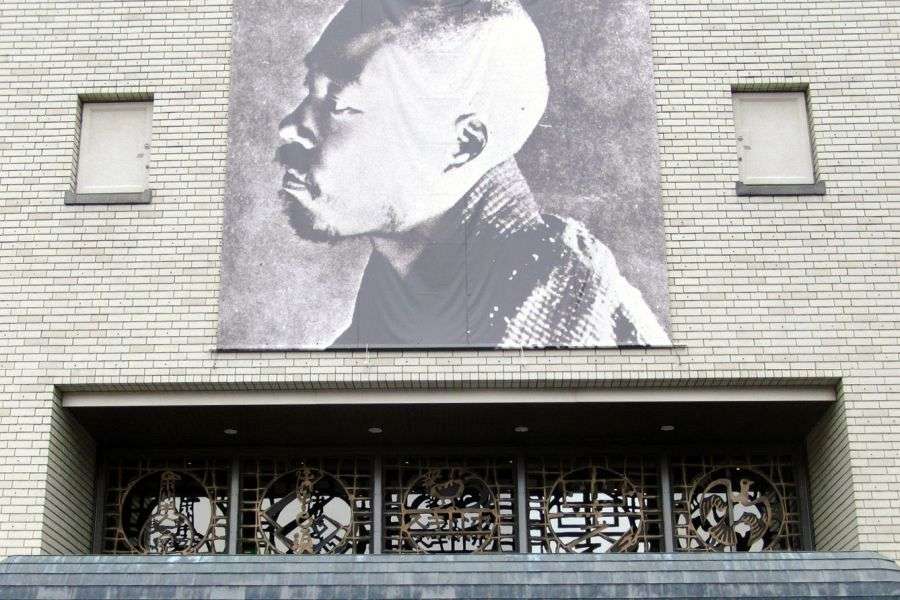
A haiku by Matsuyama poet Masaoka Shiki is posted at the entrance to the temple.
In frosty November, Kūya was only skin and bones
This poem calls to mind the entity of Kūya made physically vulnerable by a lifetime of asceticism and service.
In 1192 in the Kamakura period, Yoritomo Minamoto prayed for the prosperity of his clan and restored the temple. However, it burned down in 1416, and the Main Hall and the inner sanctum were rebuilt by the local lord, Kōno Michinobu around 1469. The buildings combine Japanese and Tang Chinese features. They were repaired extensively in 1965 and are designated an important national cultural property.
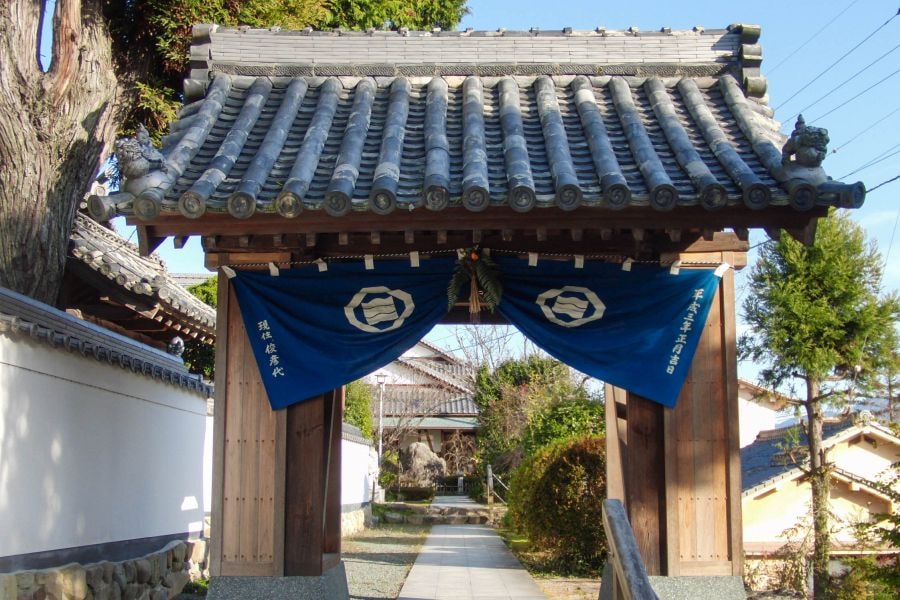
The symbol of two rings interlinked on the curtain is the crest of the Wakisaka clan, who were awarded land in this area for their services at the Battle of Sekigahara in 1600.
Information
Name in Japanese: 浄土寺
Pronunciation: jō-do-jee
Address: 1198 Takanokomachi, Matsuyama-shi, Ehime-ken 790-0925