Temple 54, Enmei-ji
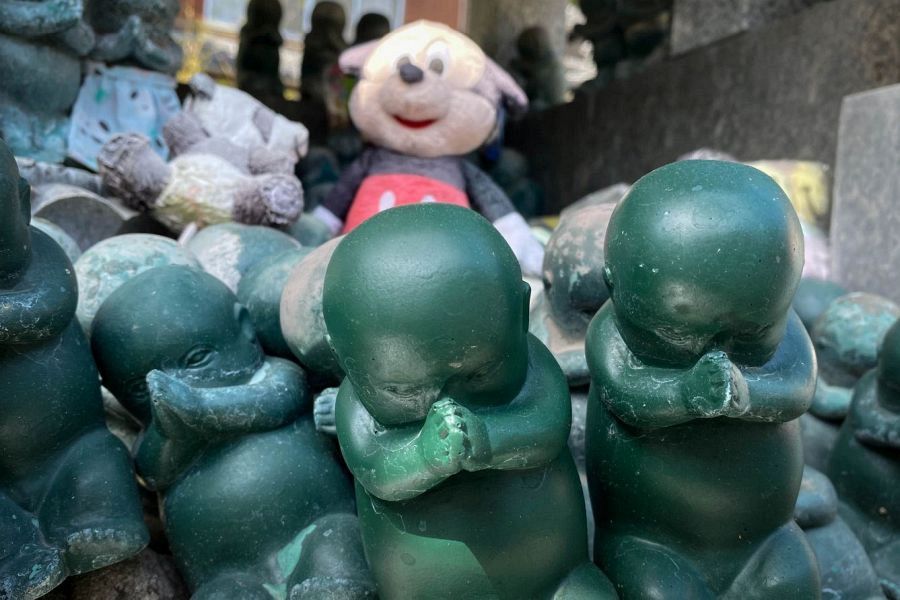
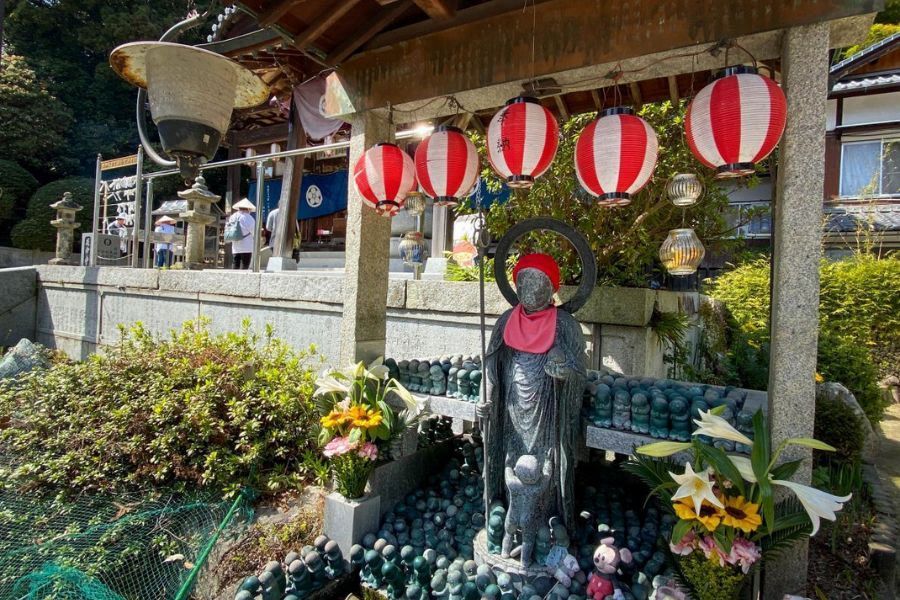
Enmei-ji is temple No. 54 on the Shikoku pilgrimage, or Henro. Located in the outskirts of Imabari, it’s dedicated to children lost in childbirth (or aborted).
What to see
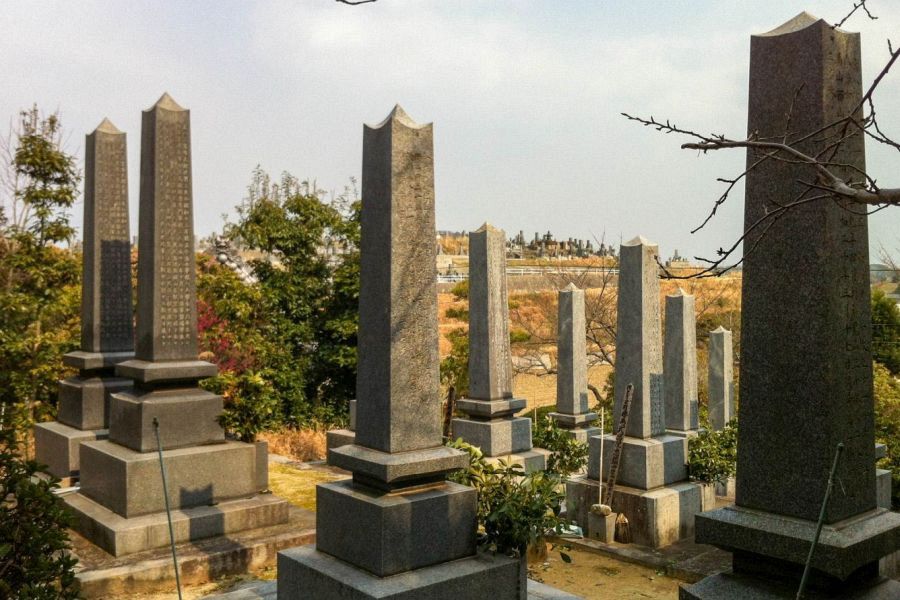
When you enter the temple from the main road, an agricultural pond and the temple graveyard make a strong impression. The graveyard has many of the pointed obelisk stones that define WWII graves from all over the Pacific theatre.
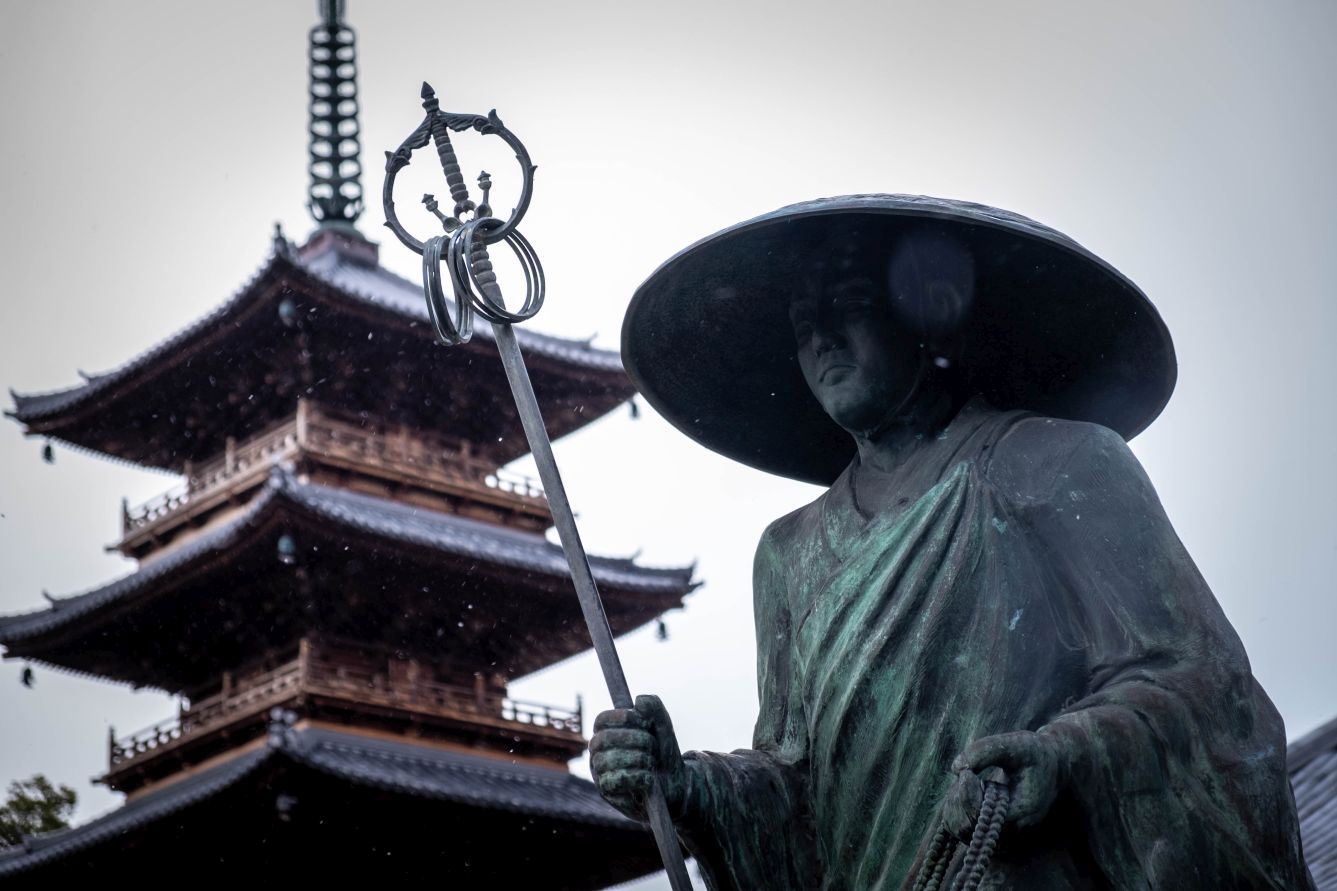
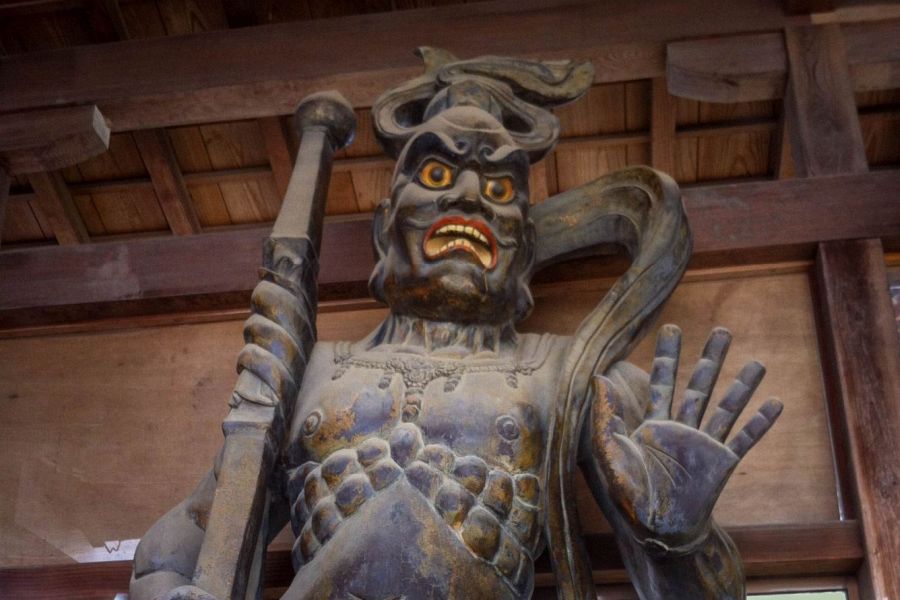
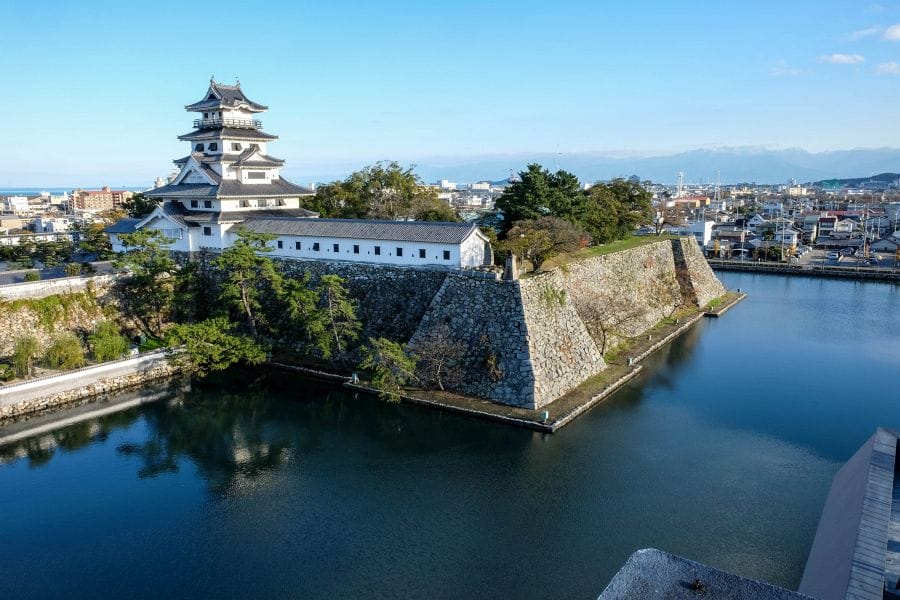
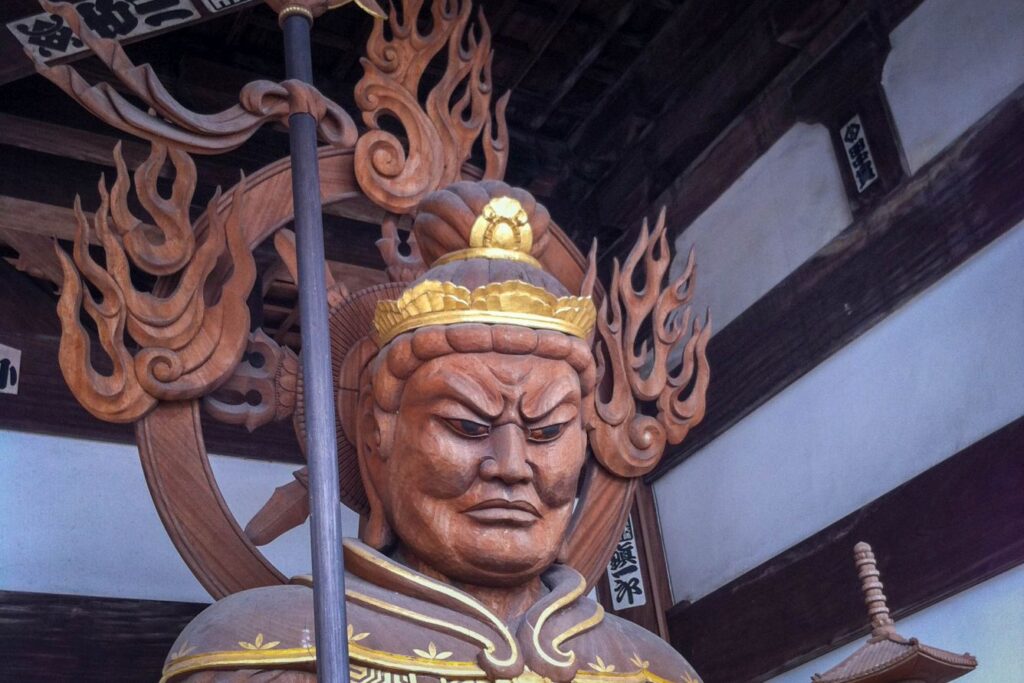
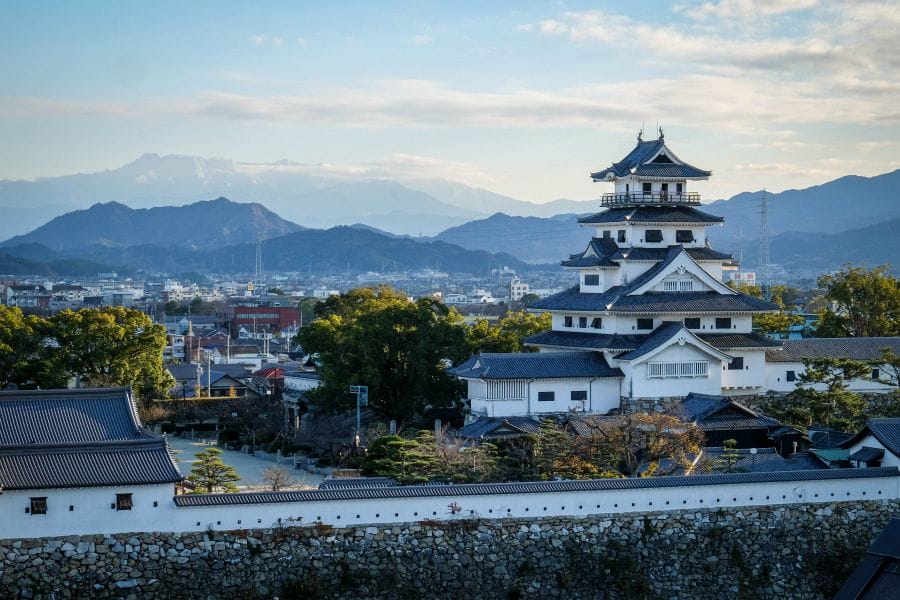
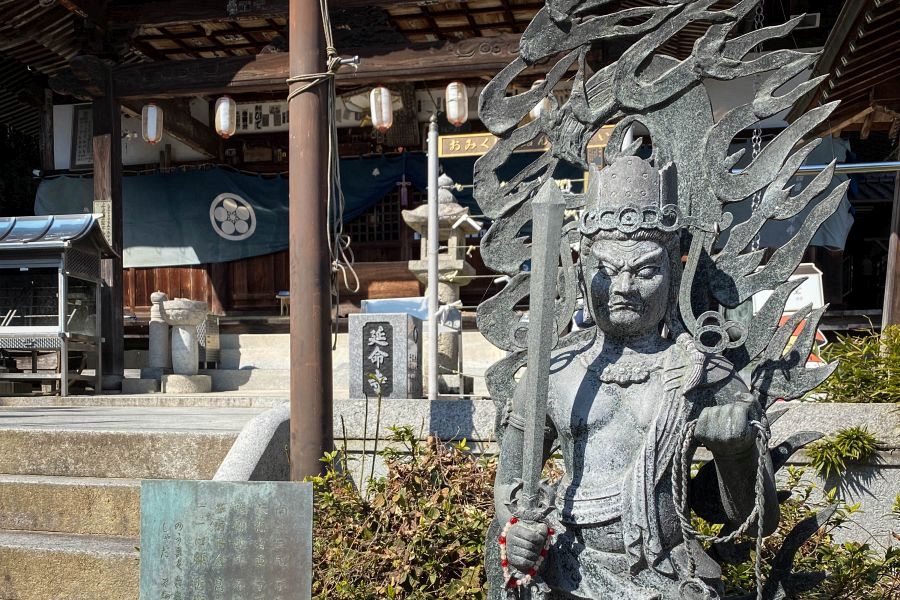
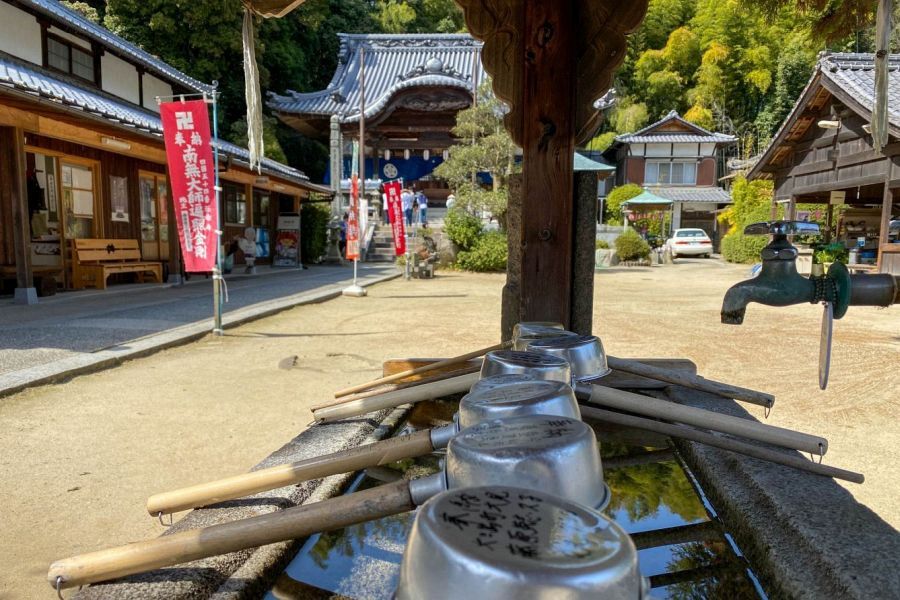
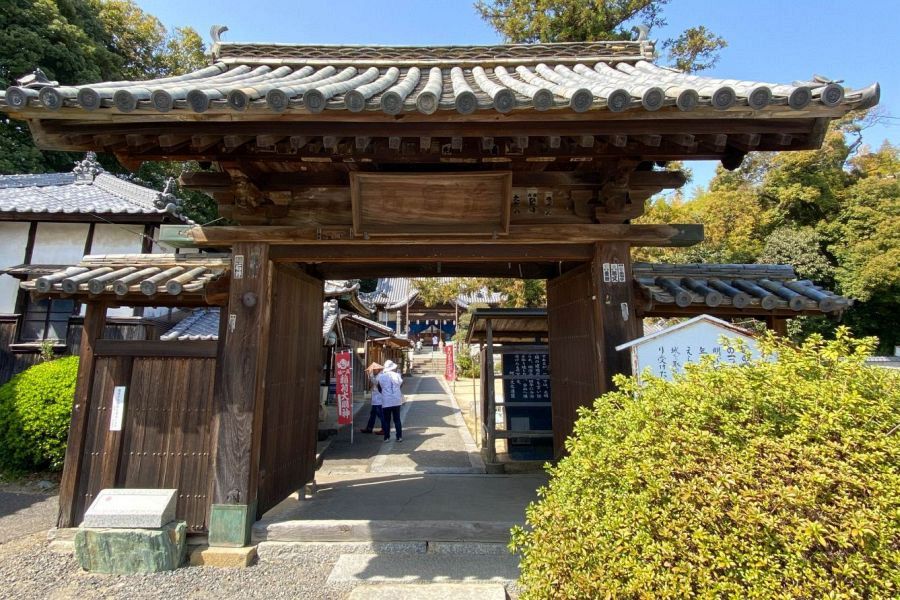
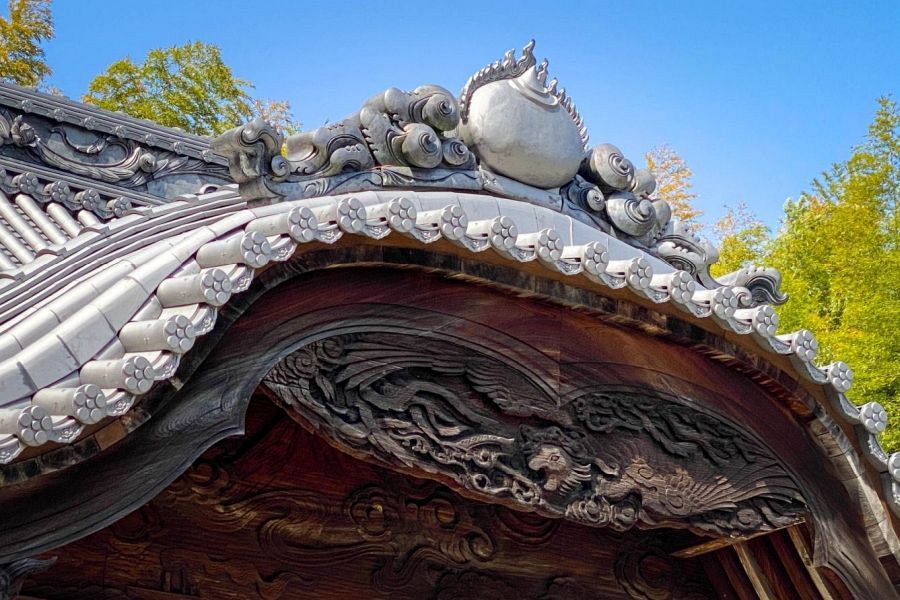
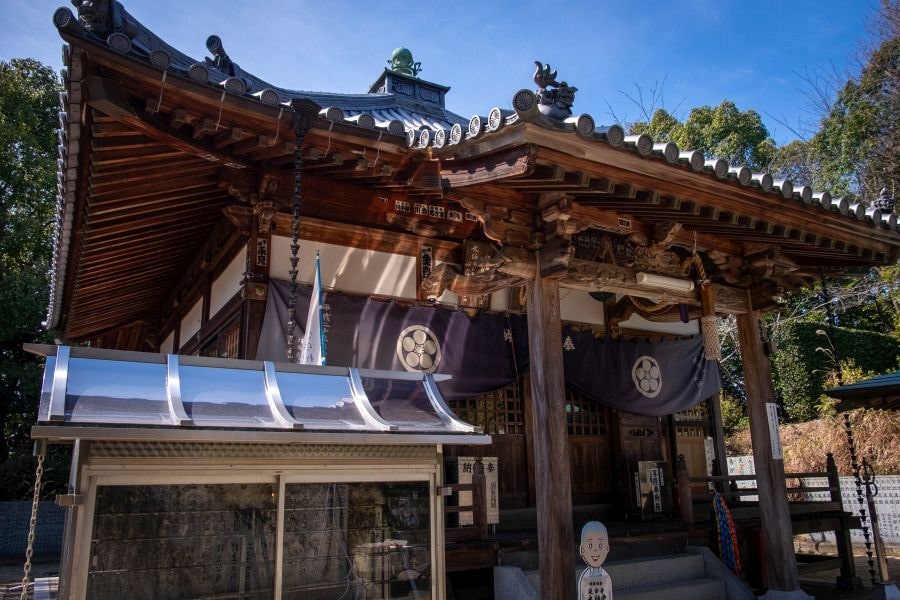
There’s a small main gate with Niō guardian statues that guards the car park of the temple. To the left is a hill with one of two belfries. From the car park, you pass through another small middle gate made entirely of zelkova wood. At its four corners are tiles in the shape of cranes and turtles symbolizing longevity. It was originally one of the gates of Imabari Castle and dates from around 1780. Through the middle gate there’s another belfry to the right and a small washbasin. To the left is the Yakushi Hall and temple office. The stone stellae on the right are memorials to the Chinese priest Ganjin (688-763) who visited Japan to impart the latest Buddhist advances, and Ochi Magobei, a village headman who saved farmers from starvation during the great famine in the early 1700s. Straight ahead up some steps is the main hall, in front of which is a statue of Fudō Myō-ō and another of Jizō surrounded by babies.
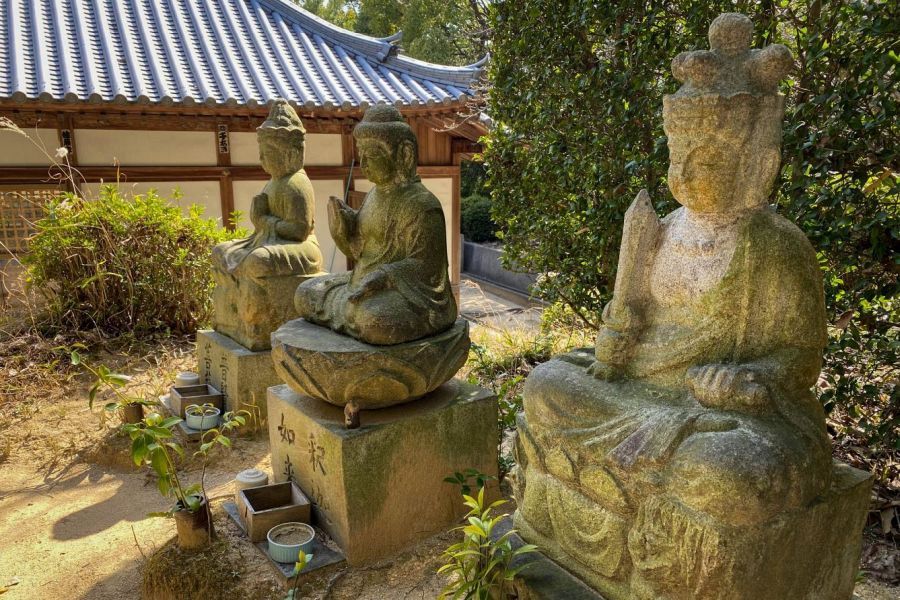
Climbing the stone steps to the left leads to the Daishi Hall. You can see a statue of Kūkai and to the right a statue of Kakuban, a Shingon reformer. A time capsule buried in 1992 is located under the hall and is scheduled to be opened in 2042.
The temple grounds are dotted with many Japanese andromeda trees, which bloom from around the spring equinox. Cherry blossoms and azaleas are also planted here, and the temple is known as a temple of flowers.
History
The temple once had some one hundred buildings in the valleys around, and it was a major centre of faith and learning. In 1268, during the Kamakura period, Gonen (Shikan Kokusi), a monk renowned for his extensive writings and profound knowledge of both Japanese and foreign scholarship, was deeply revered by Emperor Go-Toba. He is famous for having written the Eight Schools of Buddhism at the temple’s Nishitani temple, and there’s a memorial to him within the temple grounds.
The temple was repeatedly destroyed in war and relocated, finally being moved to its current location in 1727. At that time, a Japanese zelkova tree was planted as an ornamental tree when the temple garden was created, and it still exists today.
Before the separation of Shintō and Buddhism in the early Meiji period, pilgrims visited Shintō shrines on the Shikoku Pilgrimage, including Ōyamazumi Shrine, the main shrine of this temple. At that time, the temple was named “Enmyō-ji”, suggestive of a navigational beacon. As a result of the separation of Shintō there was no longer a reason to cross to Ōmishima Island, and the temple lost its significance as a “beacon”, and to avoid confusion with the similarly named Temple 53, Temple 54 adopted the moniker “Enmei-ji” as its official name.
Legends
According to temple tradition, in 720, Gyōki carved a statue of Fudo Myo-o at the behest of Emperor Shomu and built a temple on the summit of Mt. Chikami north of the current site. From 810–824, Kūkai rebuilt the temple at the behest of Emperor Saga and named it Fudō-in Enmyō-ji.
Enmei-ji has two bells, named Jirō and Saburō. Legend has it that a third bell, Tarō, drowned itself in the sea rather than be taken away by the army of the Chōsokabe clan which invaded from today’s Kōchi to unify Shikoku under their authority.
Information
Name in Japanese: 延命寺
Pronunciation: en-mei-jee
Address: 636 Agata, Imabari, Ehime 794-0081