Temple 64, Maegami-ji
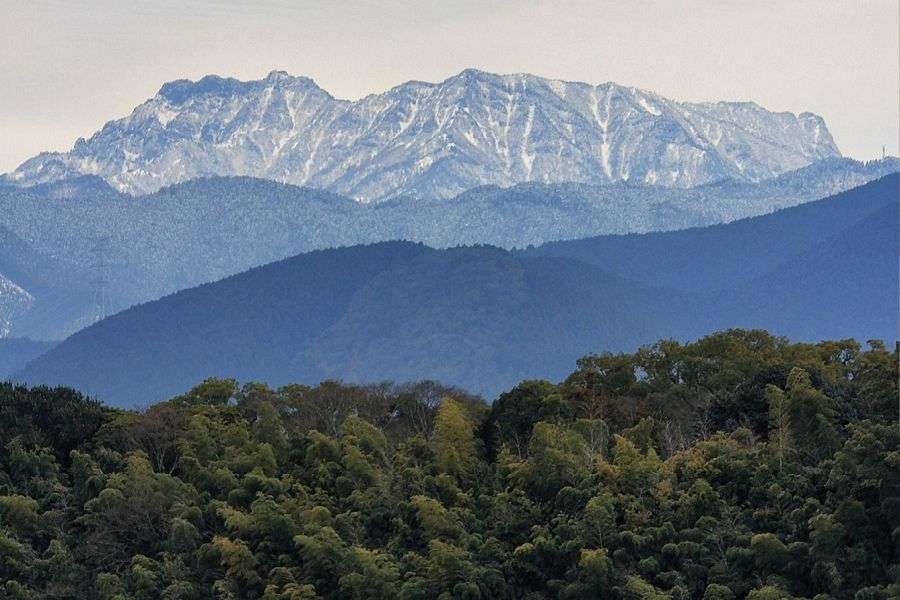
Maegami-ji is temple No. 64 on the Shikoku pilgrimage, or Henro. The temple is located in the foothills of Mt. Ishizuchi, the highest mountain in western Japan, which dominates the scenery of Saijō.
What to see
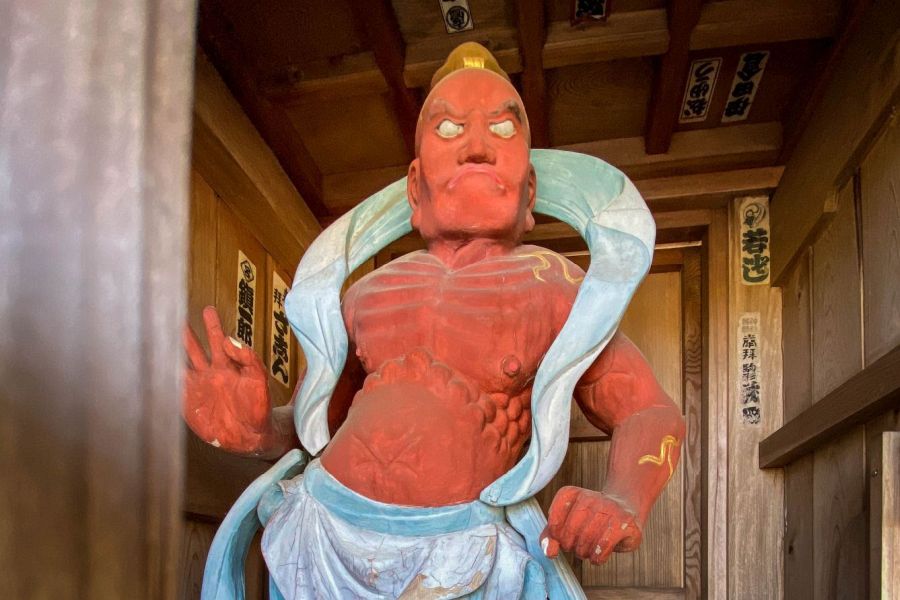
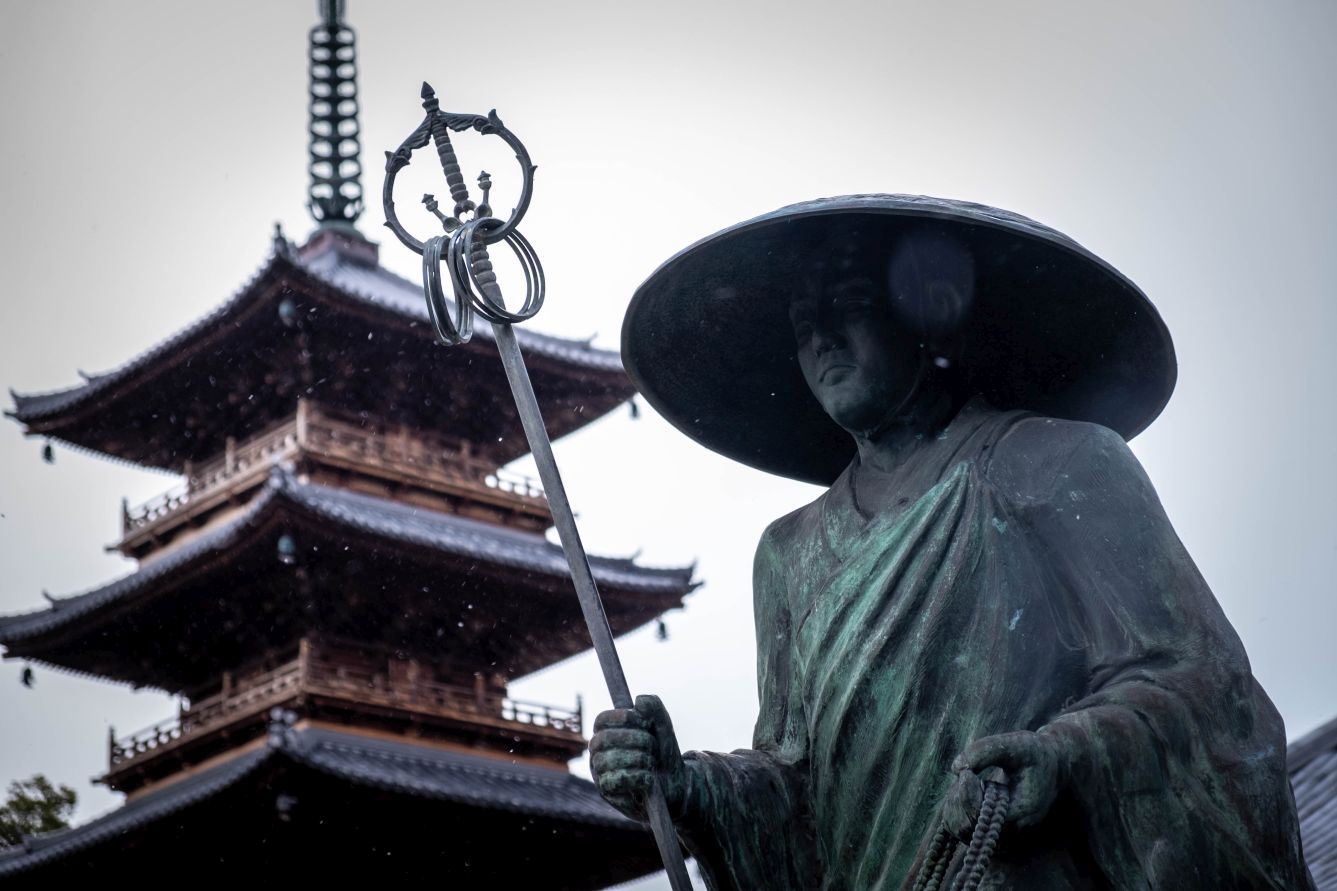
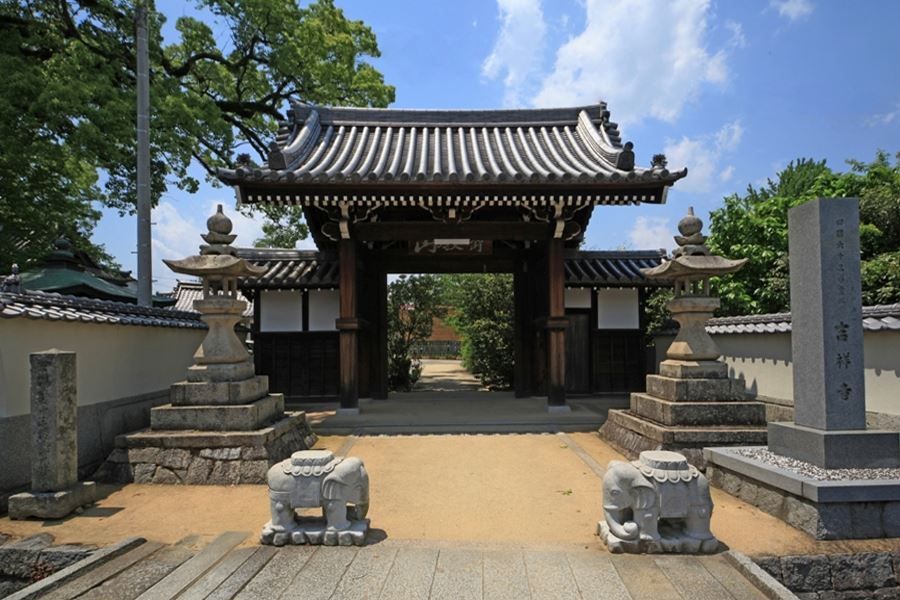
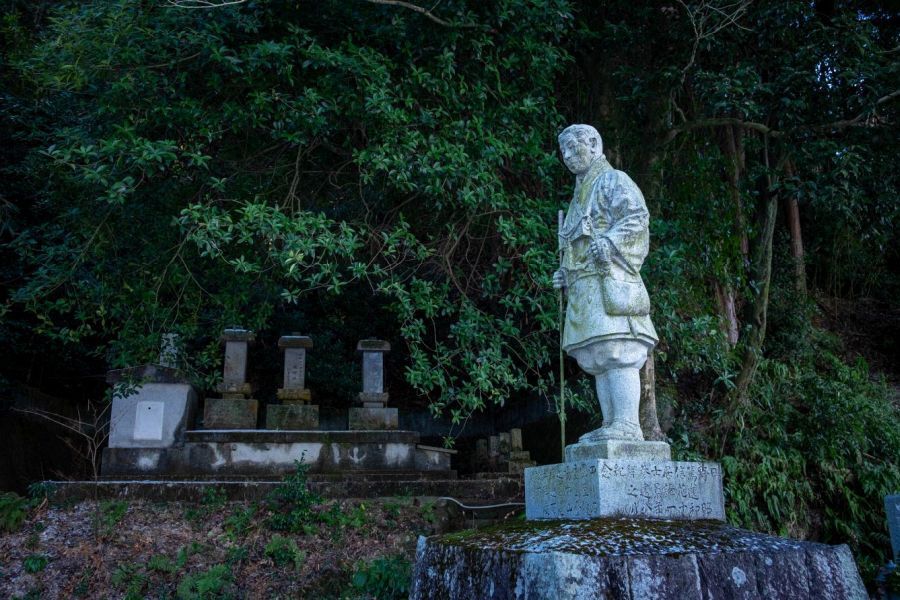
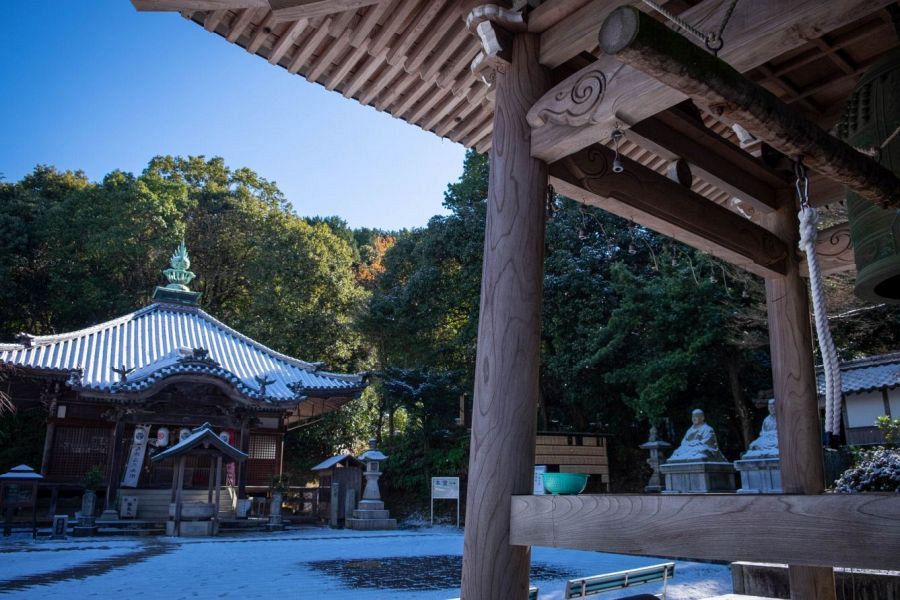
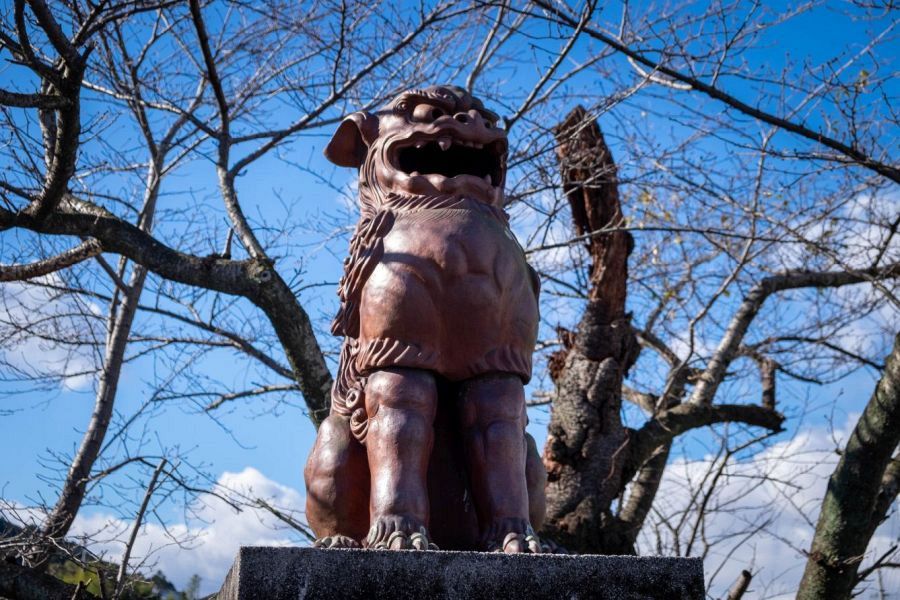
The temple itself is invisible from its entrance. All you can see is a gate flanked by ceramic lion dogs and a large graveyard. The path up through the graveyard is lined with cherry trees which blossom in early April. The temple precincts are laid out along the valley, and you pass through several distinct areas. The first area has a bell tower, two impressive statues of meditating priests, and the Daishi Hall. Its roof is bedecked with lion dogs and birds.
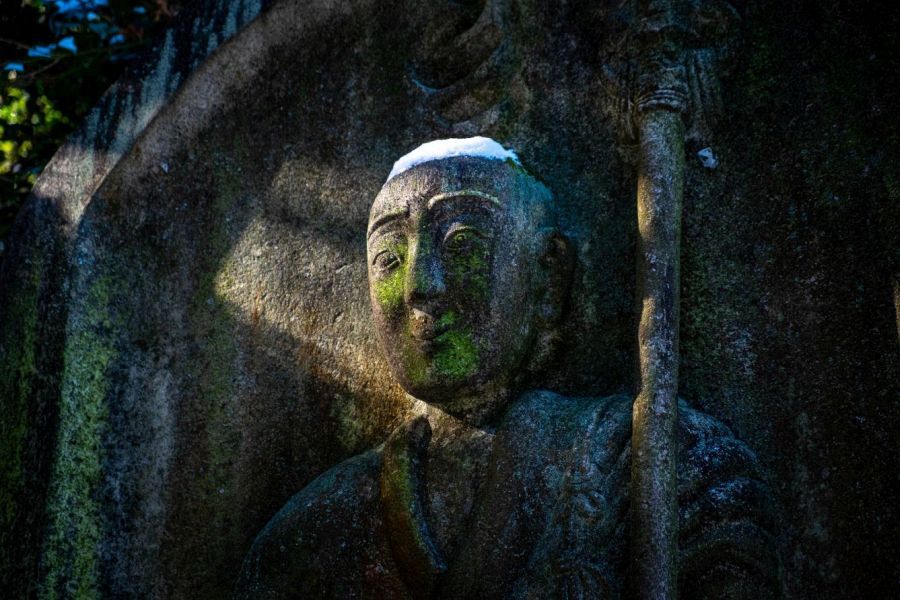
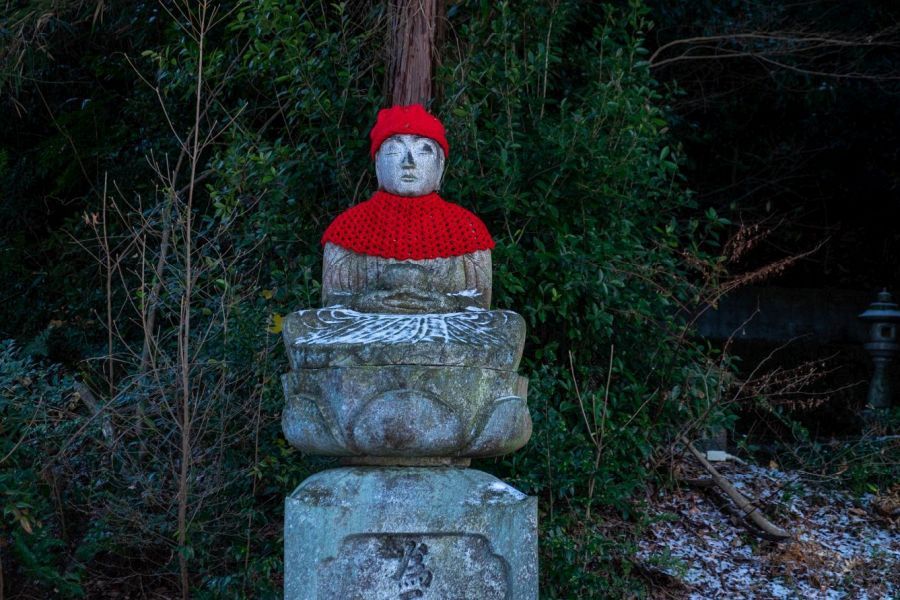
From here, a path leads through the trees past various statuary, including a very characterful Kūkai in training, and Fudō Myō-ō in a waterfall. Somebody made the discovery that 1-yen coins adhere to this fountain, and consequently, the lower reaches of it are plastered with these little coins.
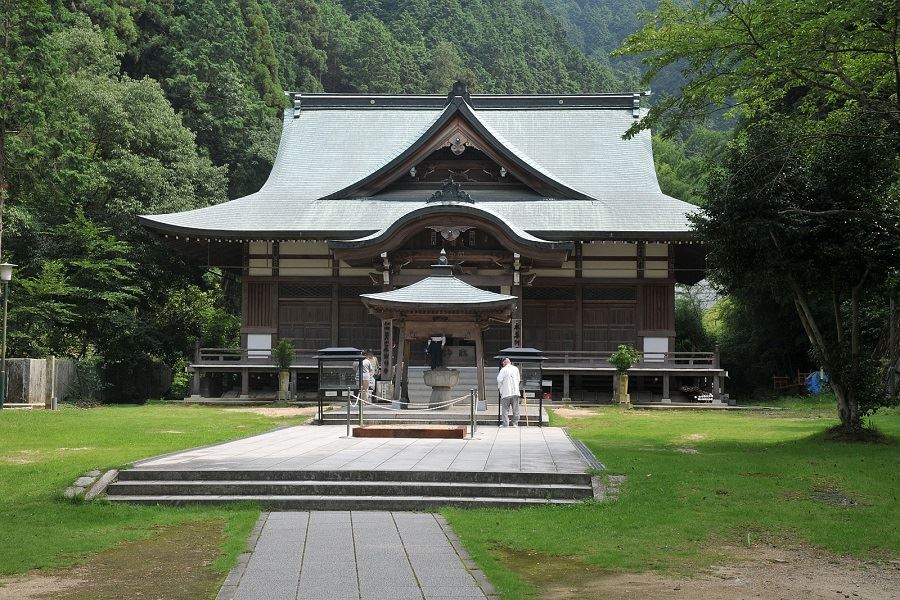
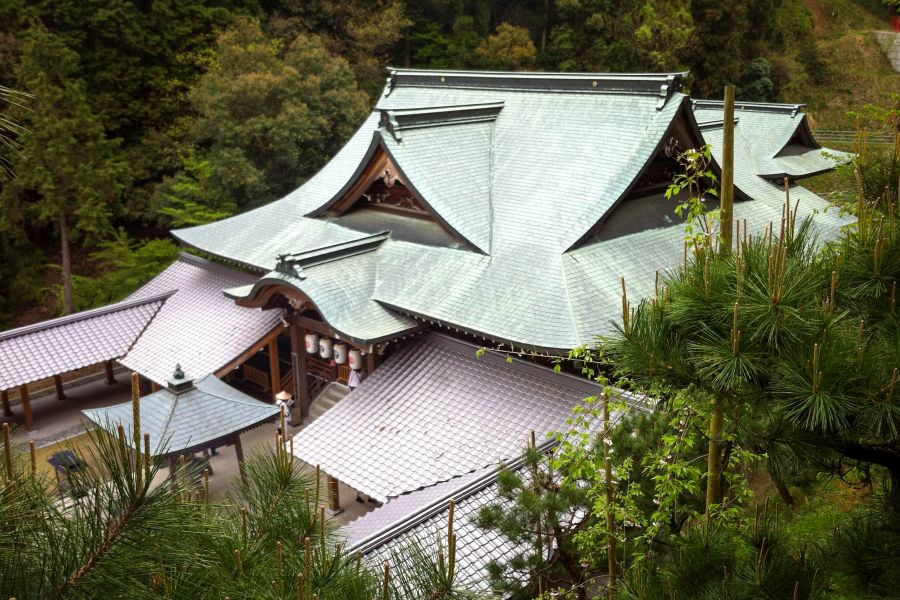
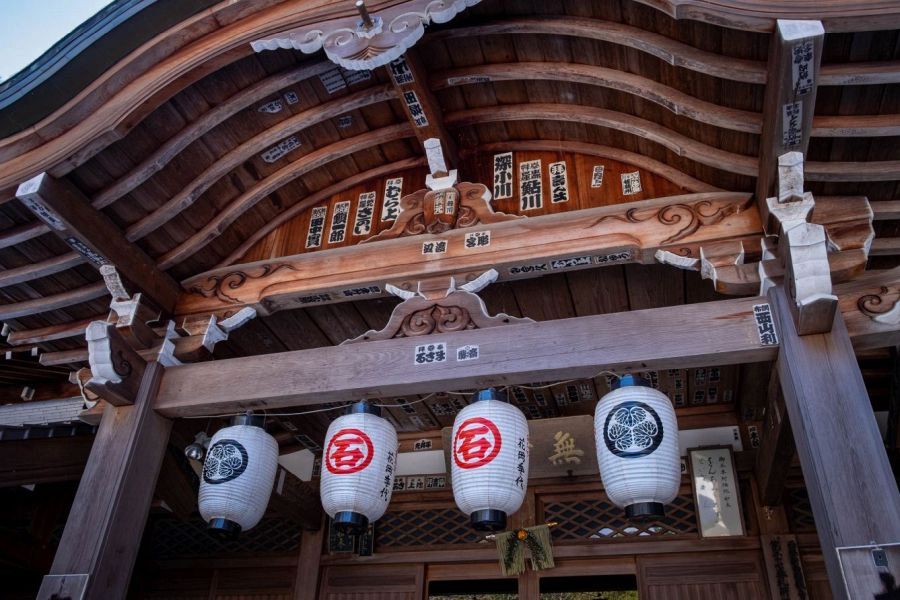
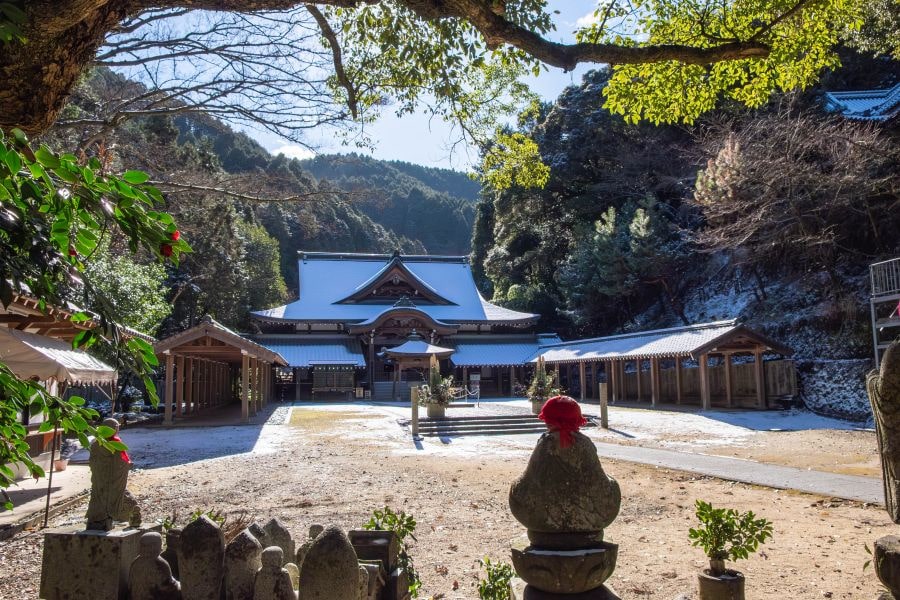
Another stage holds the dramatic main hall at the end of a long plaza. It’s built in the style of a Shintō shrine, reflecting the origins of this Buddhist temple. To the right of the plaza, steps beneath a torii gate lead to another platform with a shrine. The view down from here on the convoluted roof of the main hall is worth the short climb. The grounds of the temple are home to many varieties of trees and the birds and insects that they attract in each season.
History
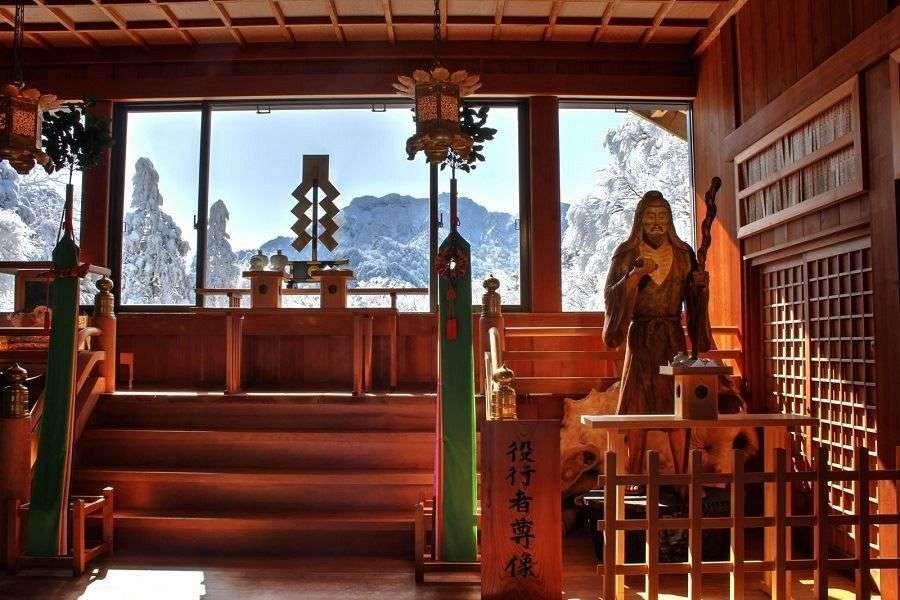
The temple was founded on the mountainside an altitude of 1,400 meters in 678 by En no Gyōja who was pursuing ascetic training on the summit of the mountain. Later, Kūkai at the age of nineteen, spent twenty-one days on the top of Mt. Ishizuchi performing fire rituals.
Mt. Ishizuchi itself is revered as a god or kami, and Maegami-ji means “the temple in front of the god”. The approach to the temple is marked with a large red torii gate, which is a Shintō symbol. Buddhism and Shintō have been closely interrelated over the centuries, and in the layout of the grounds and architectural appearance of its main hall, this temple has a lot in common with Shintō shrines. In fact, Maegami-ji used to be the headquarters of the Shintō cult of Mt. Ishizuchi before Ishizuchi Shrine was formed in the Meiji period. In the Edo period, the temple was a place of prayer for the Matsudaira family, the lords of Saijō, who gave the temple its three-leaved crest. It was reconsecrated as Maegami-ji in 1882, in the Meiji period when it was made the headquarters of the Shingon sect.
Legends
When En no Gyōja attempted to climb to the summit of Ishizuchi Mountain but gave up due to the extreme difficulty and began to descend, he encountered an old man sharpening an axe with a whetstone. When En no Gyōja asked him about it, the old man replied, “I am sharpening it into a needle.” These words inspired the ascetic to persevere, and he returned to the summit, where he continued his training. Eventually, he reached the summit and sensed that Shakyamuni Buddha and Amida Buddha had merged to save sentient beings from suffering, appearing as Ishizuchi Zao Gongen. Later, when the ascetic descended to this location he declared, “My wish has been fulfilled”. Hence the current name of the shrine, the Shrine of the Wish Fulfilled.



Information
Name in Japanese: 前神寺
Pronunciation: maigami-jee
Address: 1426 Sunouchi, Saijo, Ehime 793-0053