Kanazawa Station
Kanazawa Station serves as the principal rail gateway to Ishikawa Prefecture and is widely regarded as one of the most architecturally distinctive stations in Japan. Opened in its present form in 2005 to coincide with the extension of the Hokuriku Shinkansen (later completed through to Tōkyō), the station combines contemporary engineering with references to local performing arts and craft traditions.
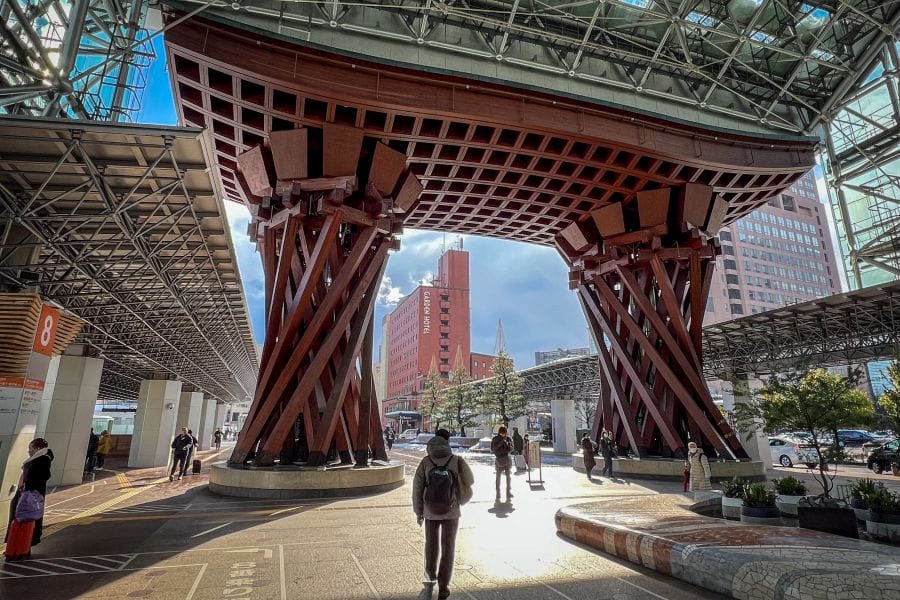
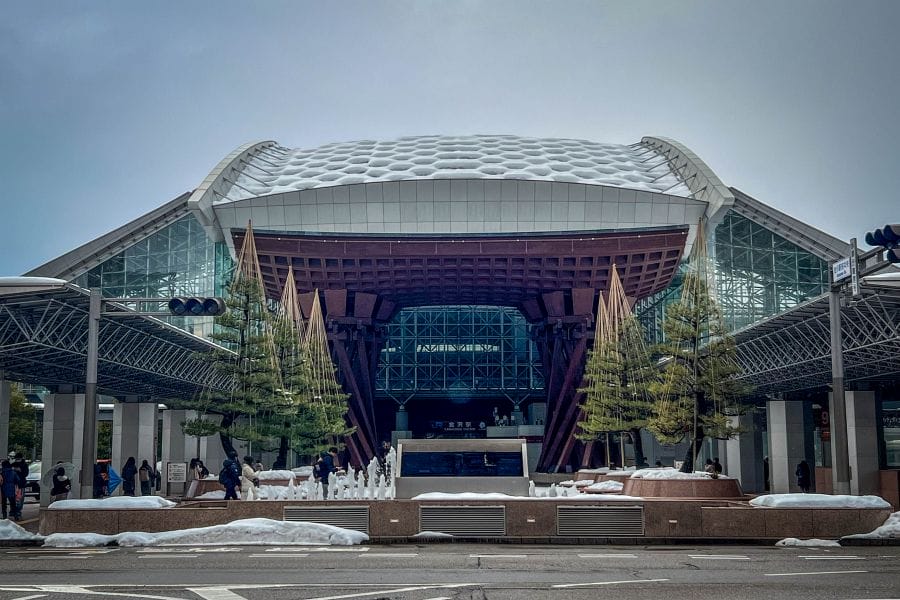
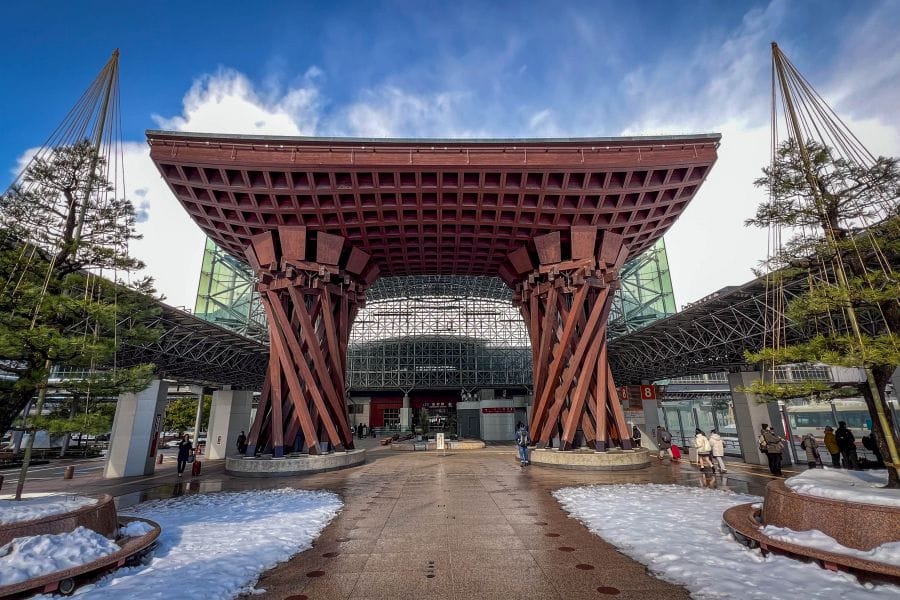
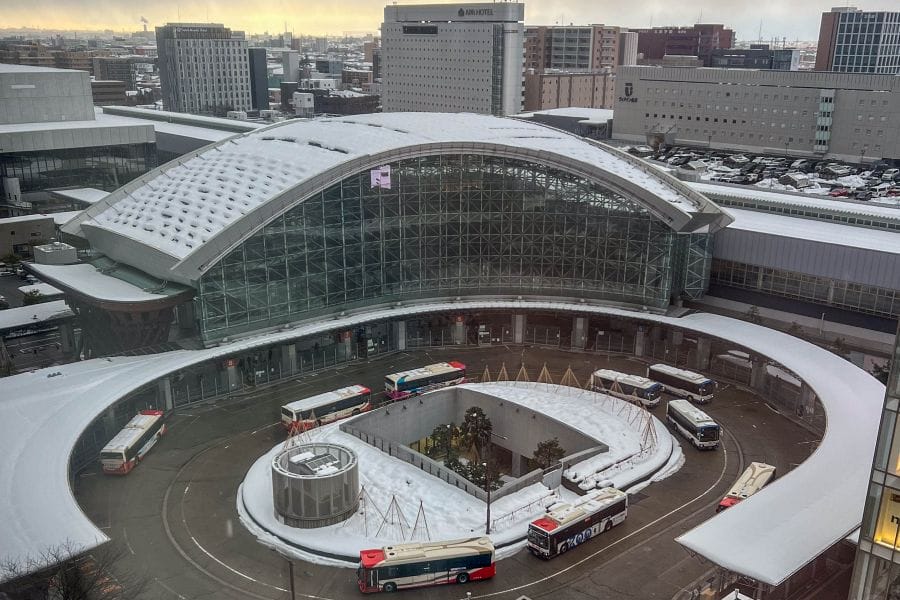
The most recognisable feature is the Tsuzumi Gate at the east entrance. Constructed in laminated wood and rising approximately 13.7 metres, the twin pillars and curved crosspieces evoke the shape of the tsuzumi hand drum used in Noh theatre, particularly the Kaga Hōshō tradition associated with the former Maeda domain. Behind it stretches the Motenashi Dome, a vast glazed canopy of steel and glass that covers the forecourt. The name refers to hospitality, and the structure also serves a practical function, sheltering visitors from Kanazawa’s frequent rain and winter snow. The interplay between the warm-toned timber gate and the cool, geometric transparency of the dome has become an established visual symbol of the city.
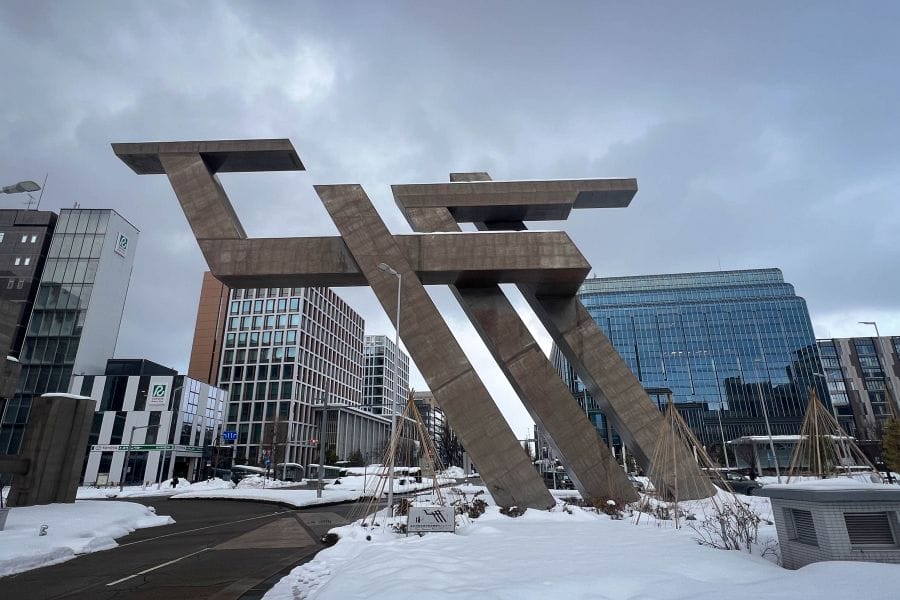
On the east side of the station plaza stands a large and somewhat enigmatic concrete sculpture titled “Yakan tai, korobu” (“Kettle Form, Falling Over”) by the sculptor Yasuda Kan. The smooth, pale form is claimed to resemble an oversized teapot or kettle tipped onto its side, although it doesn’t. Its surface is highly polished despite its monumental scale, inviting tactile interaction. Interpretations vary, but the reference to a domestic object rendered in monumental form is often understood as a quiet commentary on scale, balance and everyday life.
Within the station building, traditional materials and motifs are incorporated into otherwise modern interiors. Decorative panels reference Kaga Yuzen silk dyeing and gold leaf production, both long associated with Kanazawa. The adjoining Kanazawa Hyakubangai complex is divided into areas specialising in food, crafts and fashion. The Anto section focuses on regional produce and souvenirs, including wagashi confectionery, Kutani porcelain and gold leaf items, while Rinto houses contemporary retail outlets and cafés. Dining options range from sushi counters featuring seafood landed at the Sea of Japan ports to restaurants serving Kanazawa-style curry and local noodles.
Sake from across Ishikawa Prefecture is prominently represented in the station’s retail areas. Shops such as Kanazawa Jizakegura stock bottles from breweries in Kaga, Kanazawa, and the Noto Peninsula, allowing you to compare stylistic differences shaped by local rice varieties and soft mountain water. Tasting counters and small bars are a good place to sample regional labels before departure, and many bottles are packaged for transport as gifts.
As a transport hub, Kanazawa Station offers direct Hokuriku Shinkansen services to Tōkyō, placing the city within roughly two and a half hours of the capital. Limited express trains connect south-west to Kyōto and Ōsaka on the Thunderbird service, while regional lines provide access to Toyama and the coastal areas of the Noto Peninsula. Bus services in front of the east and west exits link the station with Kenroku-en, Ōmi-chō Market and other urban sites within minutes.
Although primarily a transport facility, Kanazawa Station functions as an introduction to the city’s characteristic blend of contemporary design and established craft traditions. Its architecture, public art and retail spaces together present a concise overview of the cultural and commercial identity of Kanazawa before you’ve even left the station.
Information
Name in Japanese: 金沢駅
Pronunciation: kana-zawa-ekee
Address: 1-1 Kinoshinbomachi, Kanazawa, Ishikawa 920-0858