Kenroku-en Garden
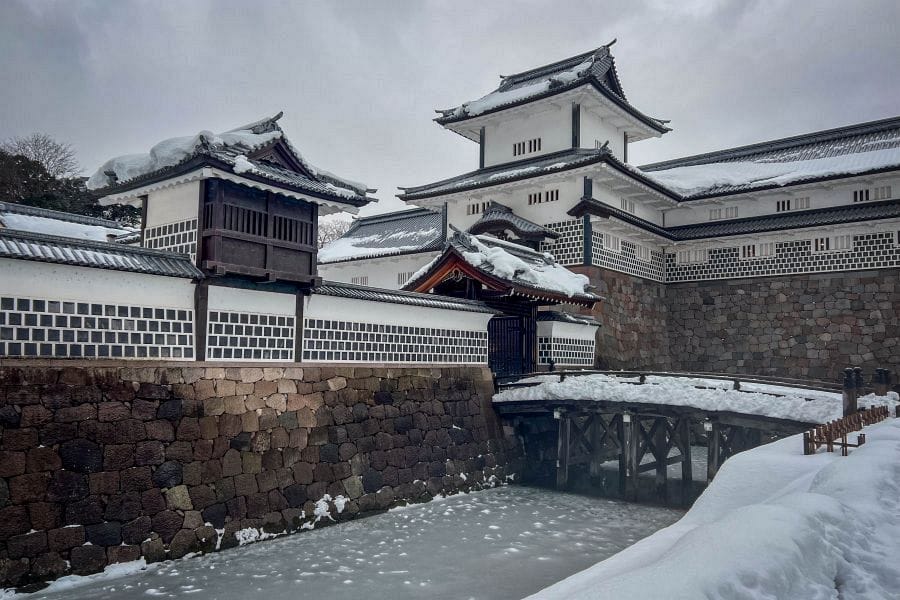
Kenroku-en is a traditional garden located on a plateau in the centre of Kanazawa, linked by a bridge to Kanazawa Castle. It’s regarded as one of Japan’s three great gardens and is characterised by its carefully composed landscapes, its ponds and brooks, and views that change subtly as you walk through it.
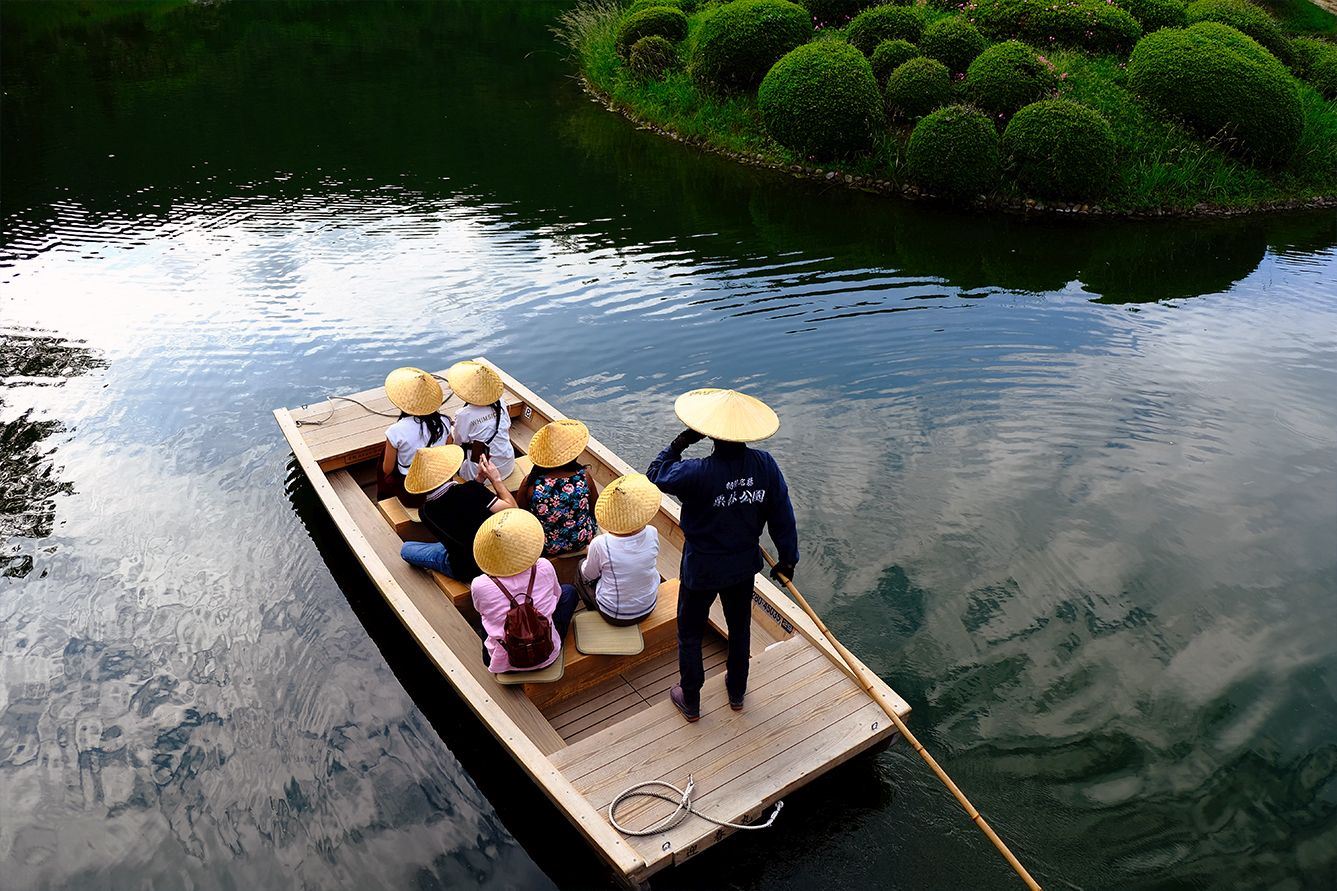
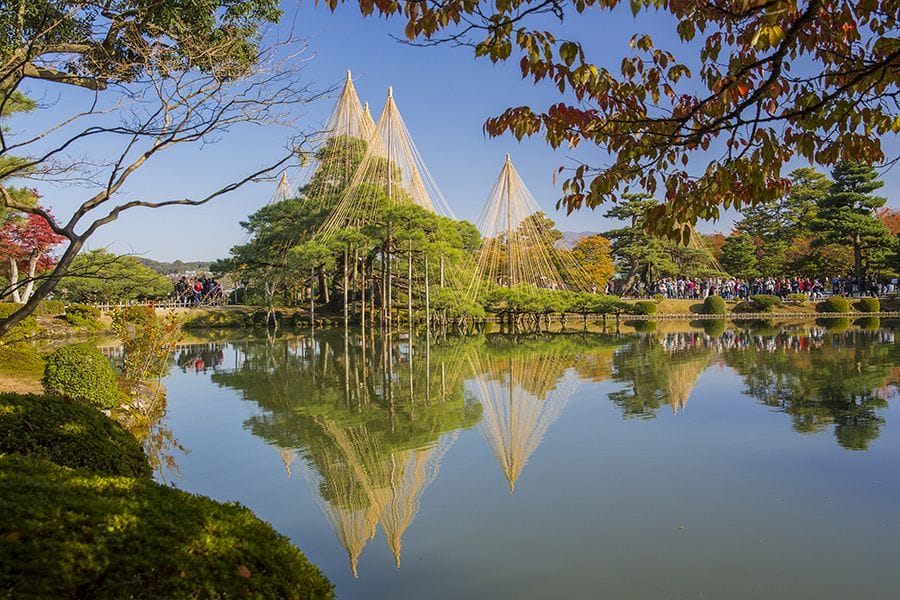
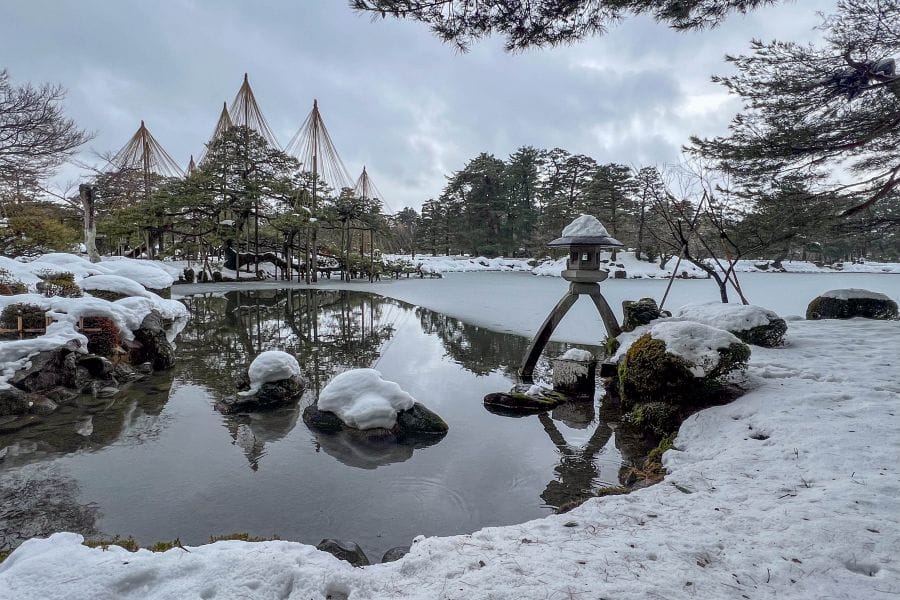
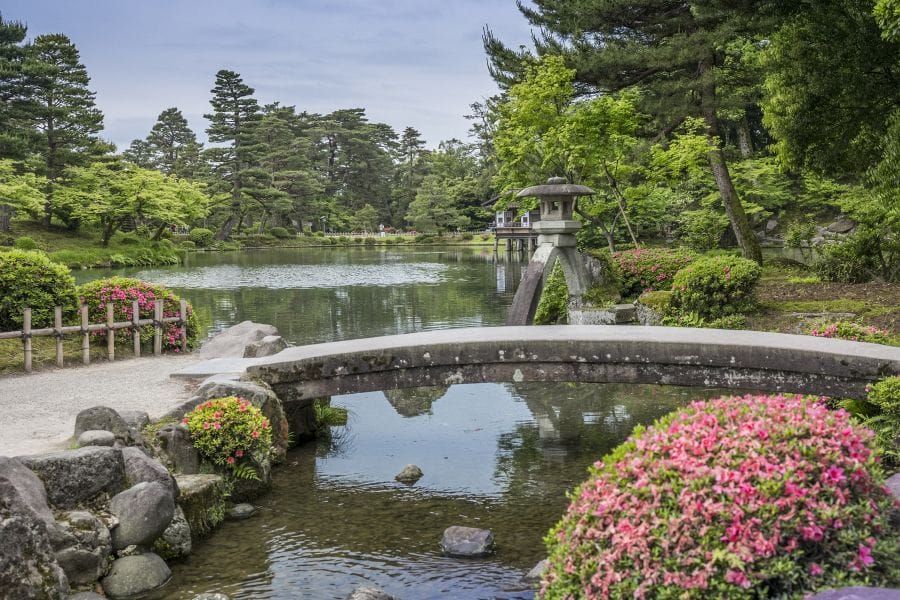
The garden is designed around large ponds, winding paths, streams and gentle hills, creating a sequence of contrasting scenes. One of its best-known features is the Kotoji-tōrō, a distinctive stone lantern with two legs set at the edge of Kasumigaike Pond. The pond itself forms the heart of the garden, with small islands, bridges and carefully pruned pine trees arranged to create a sense of depth and distance.
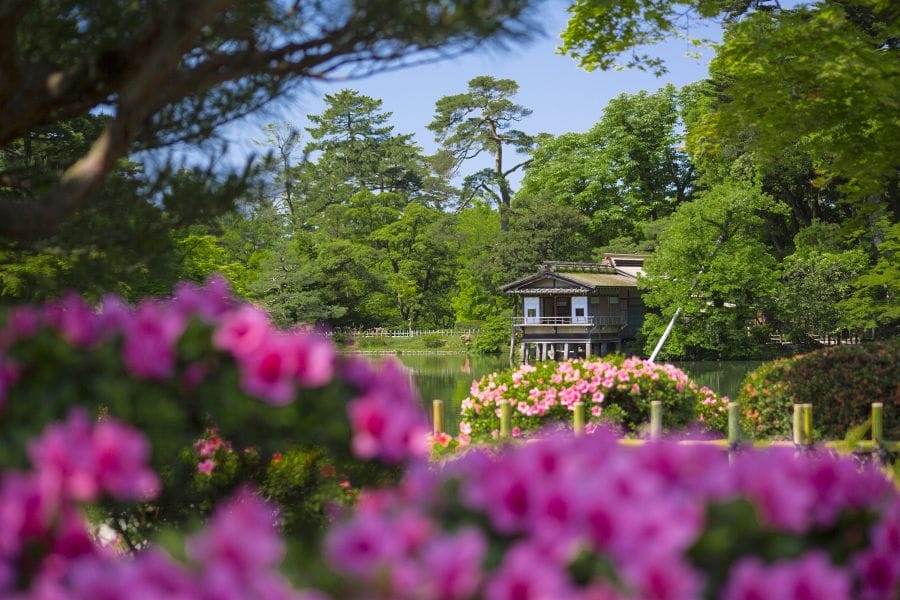
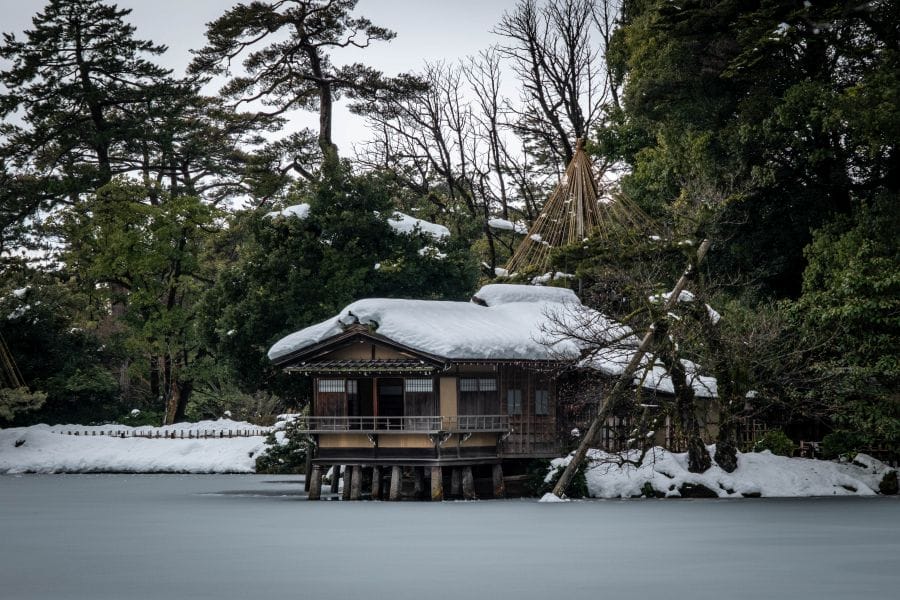
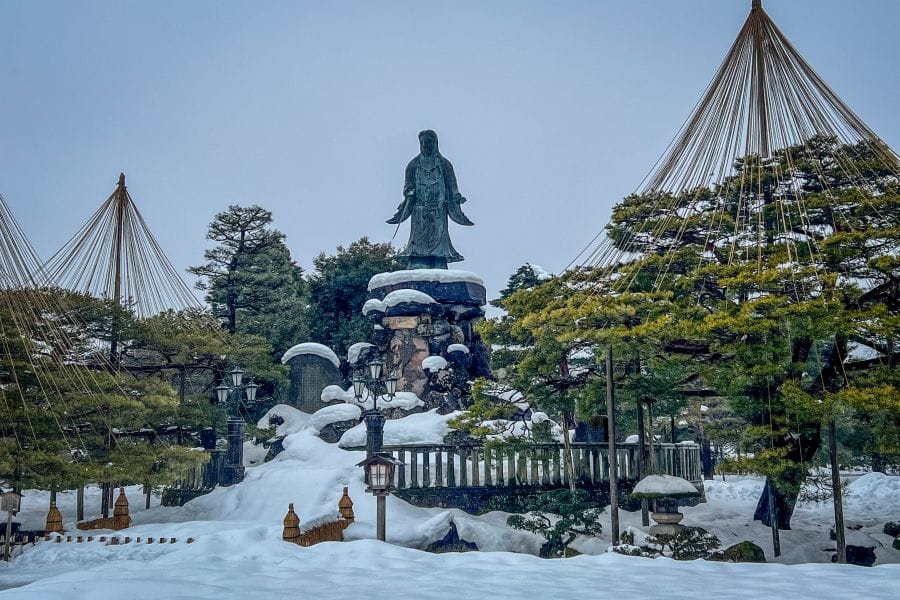
Other notable sights include Japan’s oldest surviving fountain, which operates using natural water pressure, and several historic teahouses where the architecture is closely integrated with the surrounding landscape. Here you can enjoy traditional Japanese matcha and sweets while looking out over the garden. There’s also a bronze statue of Yamato Takeru No Mikoto, a legendary ancient Japanese prince known for suppressing rebellions. Erected in 1880, it serves as the Meiji Memorial for the 400 soldiers from Ishikawa Prefecture who died in the 1877 Satsuma Rebellion, and it’s considered the first outdoor portrait bronze statue in Japan.
Kenroku-en was developed over more than two centuries by the Maeda clan, the feudal lords of the Kaga Domain during the Edo period. It began as an outer garden for Kanazawa Castle and was gradually expanded and refined by successive generations. The name “Kenroku-en” means “Garden of Six Attributes”, referring to a classical Chinese concept of the six ideal qualities of a perfect garden: spaciousness, seclusion, artistry, antiquity, abundant water and expansive views. The garden was opened to the public in the late nineteenth century.
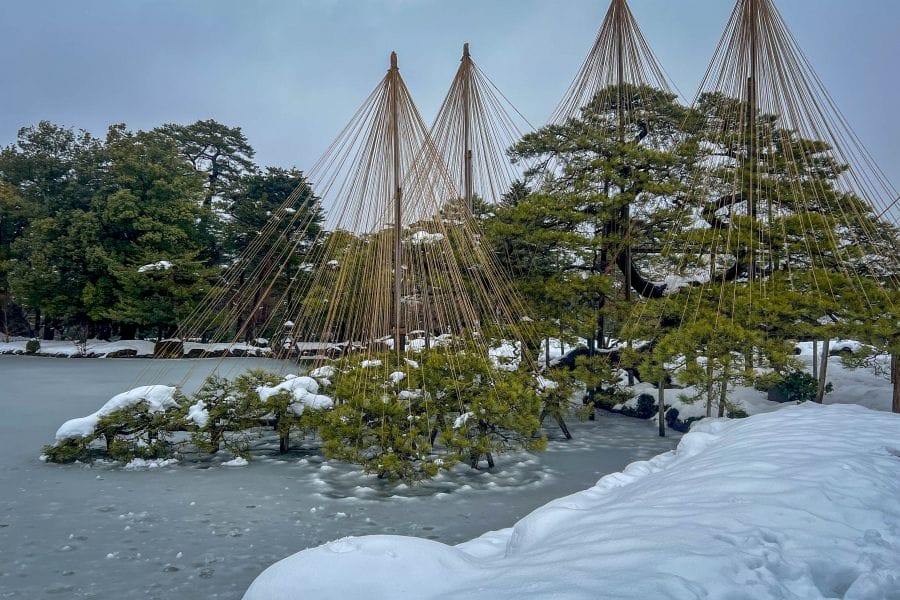
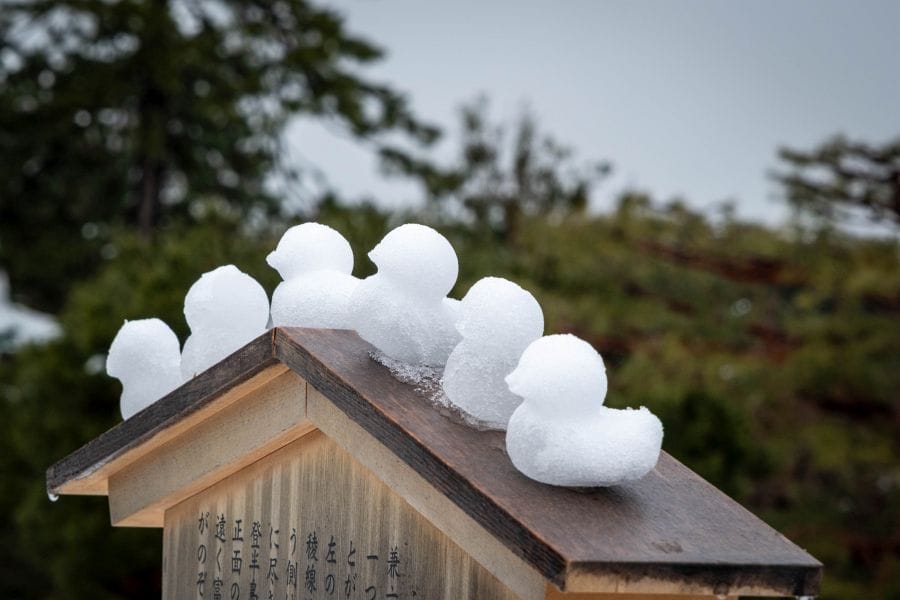
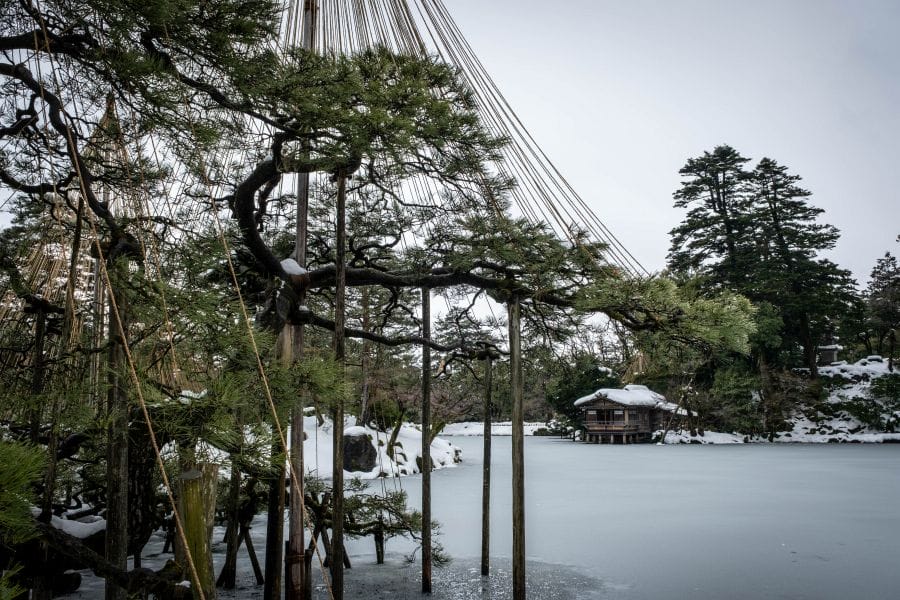
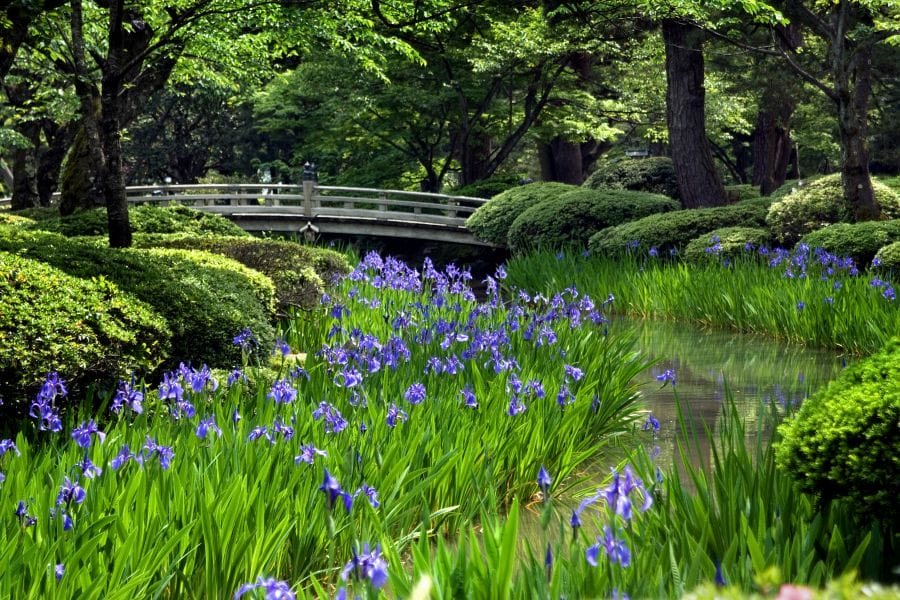
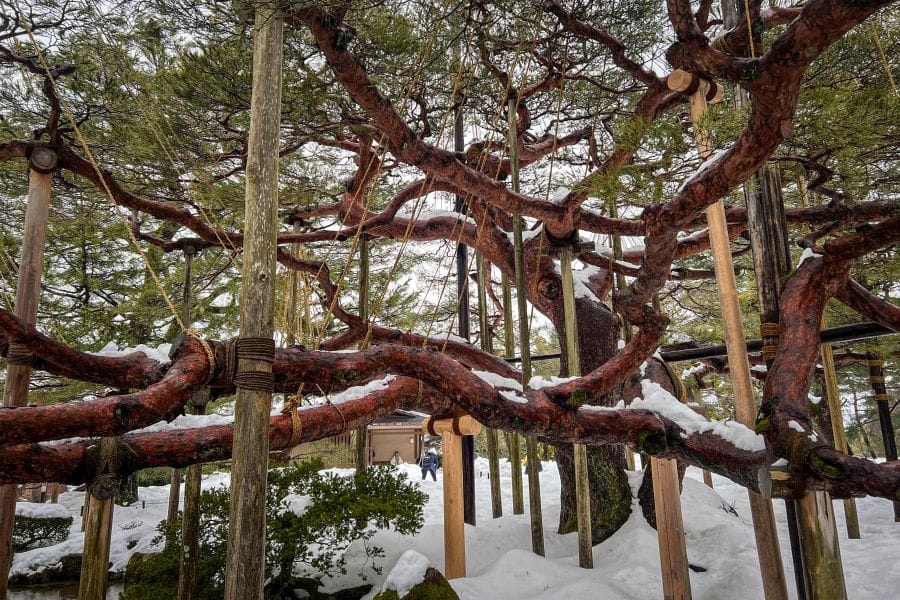
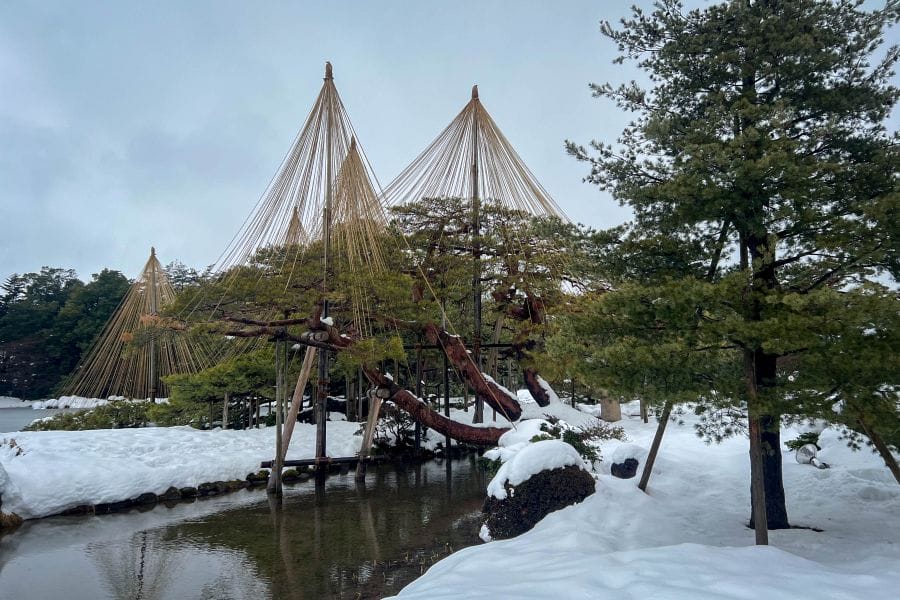
Seasonal change is a key part of the garden’s character. In spring, cherry and plum trees bloom around the ponds and paths, creating soft colours that contrast with the stonework and water. Summer brings dense green foliage and iris flowers along the streams, giving the garden a cooler, shaded atmosphere. Autumn is marked by vivid red and gold leaves, particularly from maple trees, which reflect strongly in the ponds. In winter, snowfall transforms the garden into a quiet, monochrome landscape. The ponds may be full of snow or even crusted with ice. During this season, the trees are protected with yukitsuri, a tepee-like structure of a central pole with straw ropes that supports branches against heavy snow. It’s become a distinctive visual feature of Kenroku-en and an icon of Kanazawa. In winter, some visitors purchase plastic moulds sold in nearby souvenir shops to make little ‘snow ducks’ to place in Instagrammable spots.
Information
Name in Japanese: 兼六園
Pronunciation: ken-roku-en
Address: 1 Kenrokumachi, Kanazawa, Ishikawa 920-0936