Komatsu Castle
Komatsu Castle once stood in what is now central Komatsu city. It was built in 1585 by Murakami Yorikatsu, a retainer of Maeda Toshiie. At the time, the Maeda clan had consolidated control over Kaga Province, one of the richest in Japan. Under the Maeda, Komatsu Castle served as a secondary stronghold to Kanazawa Castle. While Kanazawa functioned as the domain’s principal seat, Komatsu was strategically important for administration and defence in the southern part of Kaga.
During the Edo period, the castle remained under Maeda control, governed by senior retainers. The castle underwent repairs and modifications during this time, reflecting evolving defensive and administrative needs.
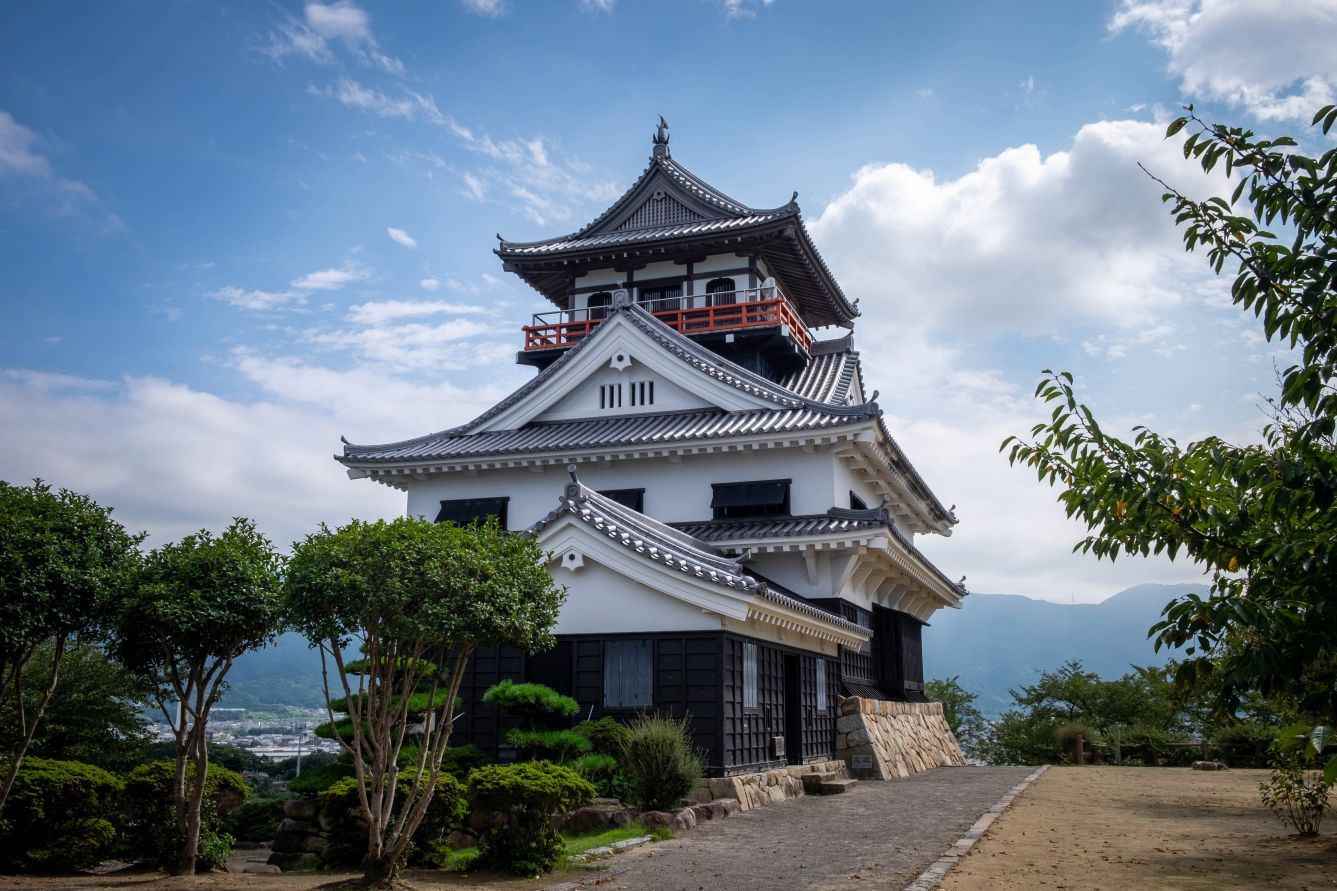
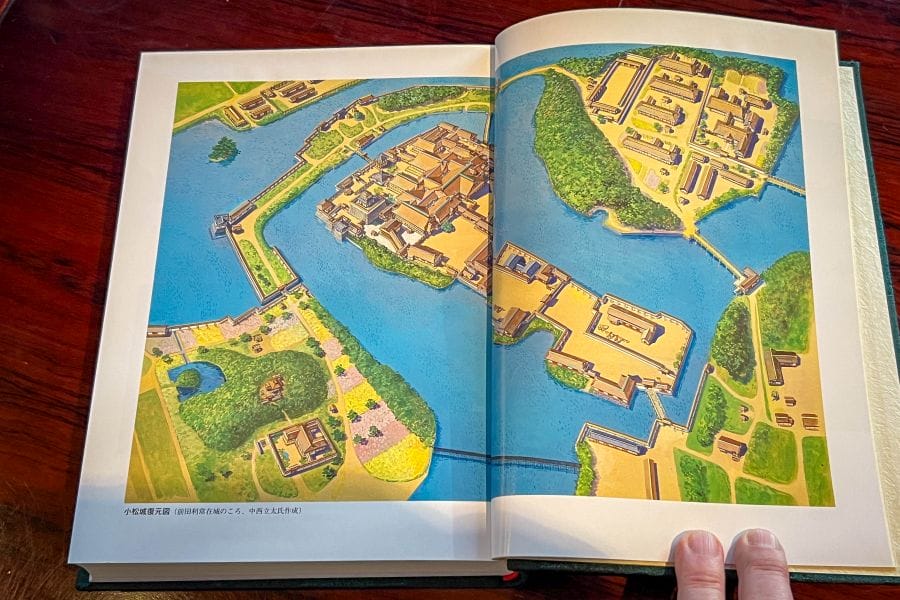
Komatsu Castle was a flatland castle, constructed on relatively level ground rather than atop a mountain. It was organised into a series of enclosures surrounded by stone ramparts and huge moats that resembled lakes. At its centre stood the main keep on a raised stone foundation. Unlike the large multi-storied keeps of major castles such as Himeji or Kanazawa, Komatsu’s keep was more modest in scale but still served as a visible symbol of authority. The complex included the usual watchtowers, gates, and residential structures for officials and retainers.
Following the Meiji Restoration in 1868 and the abolition of the feudal domain system, Komatsu Castle was dismantled, using prisoners from Komatsu Prison as labour. As with many former castles across Japan, buildings were removed and materials repurposed, and much of the site was redeveloped for civic use.
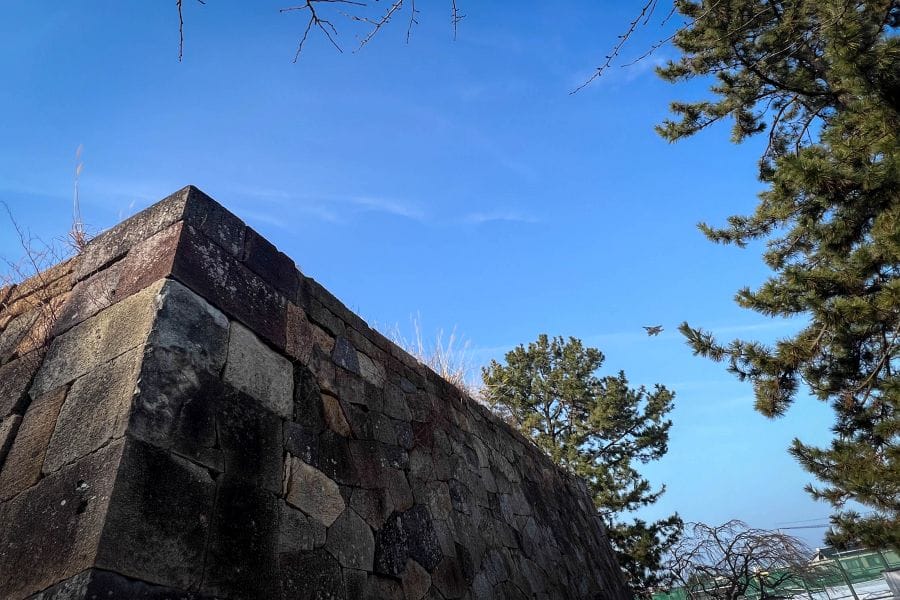
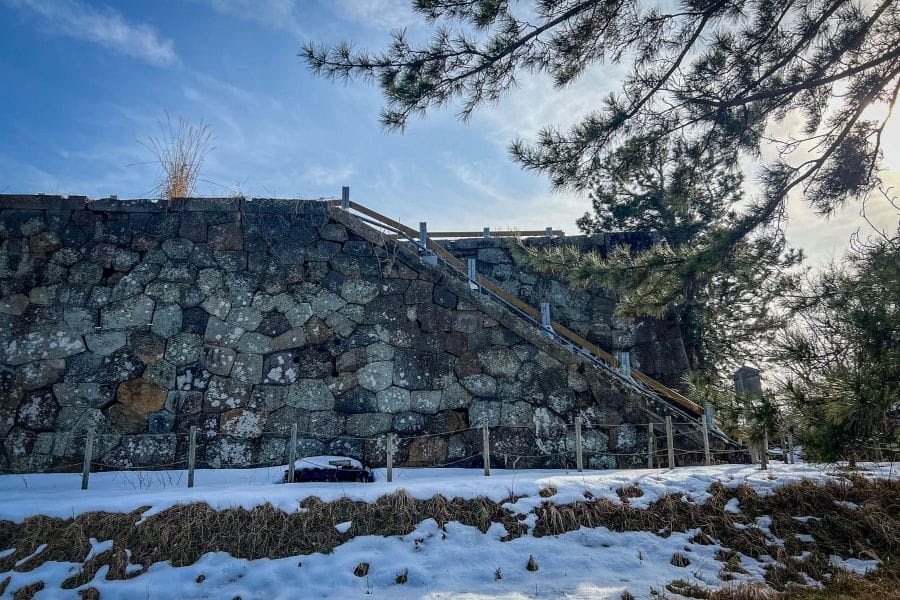
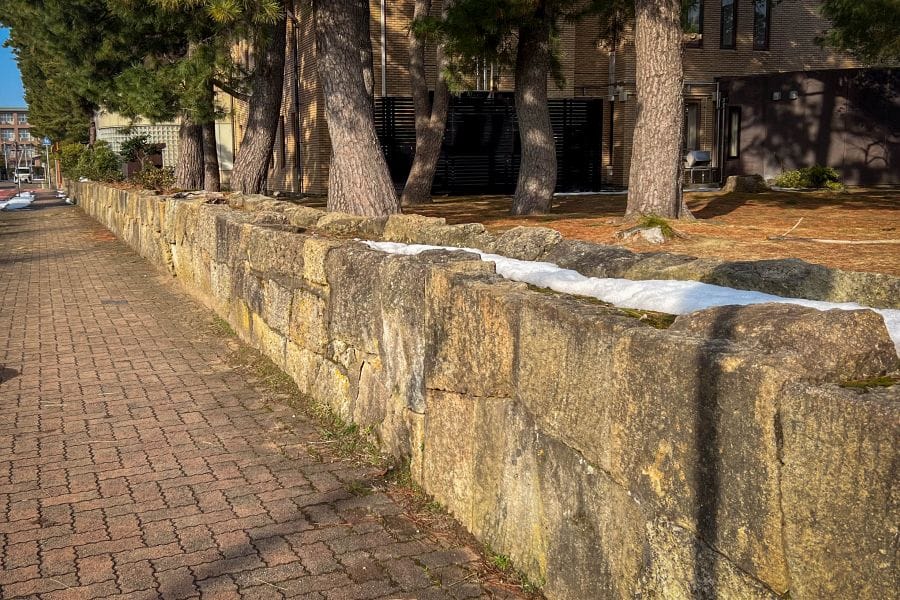
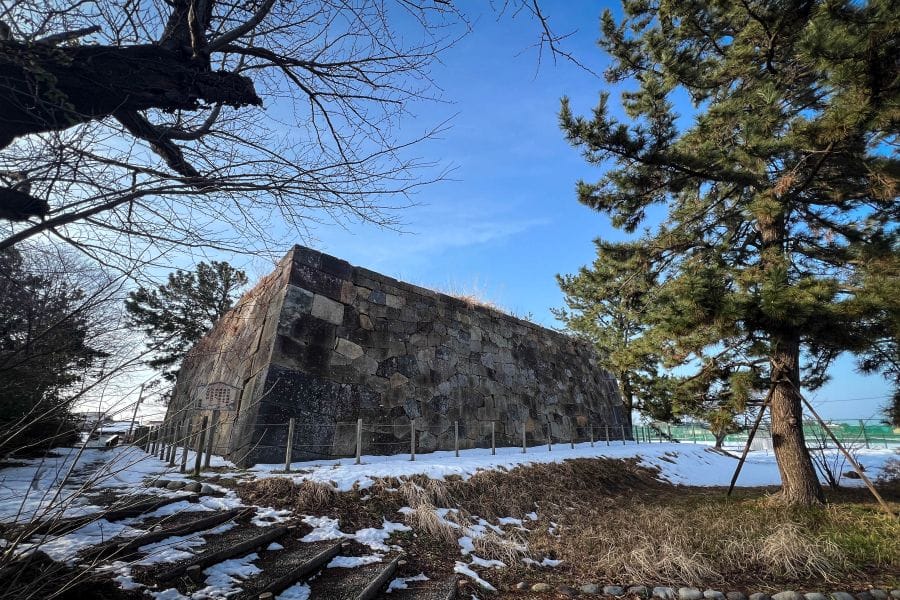
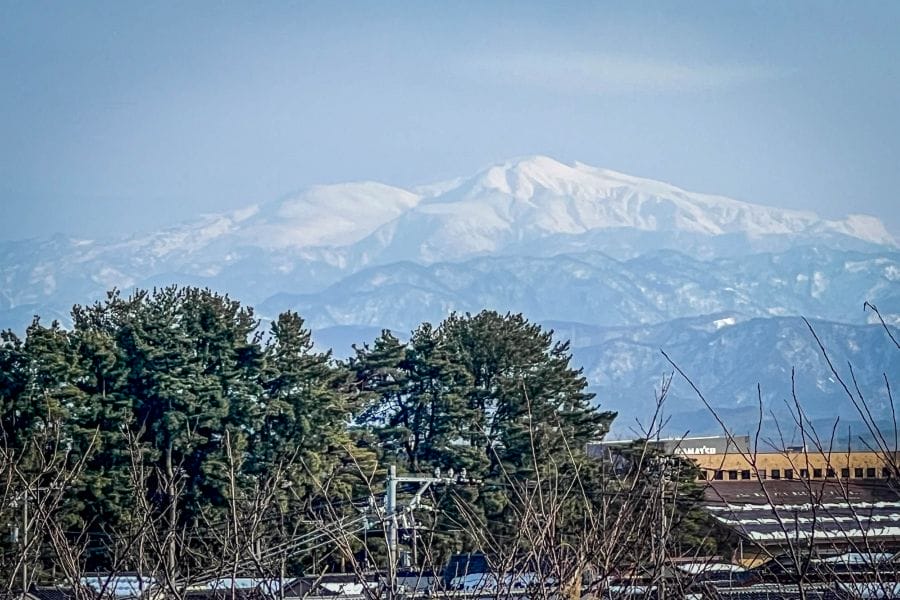
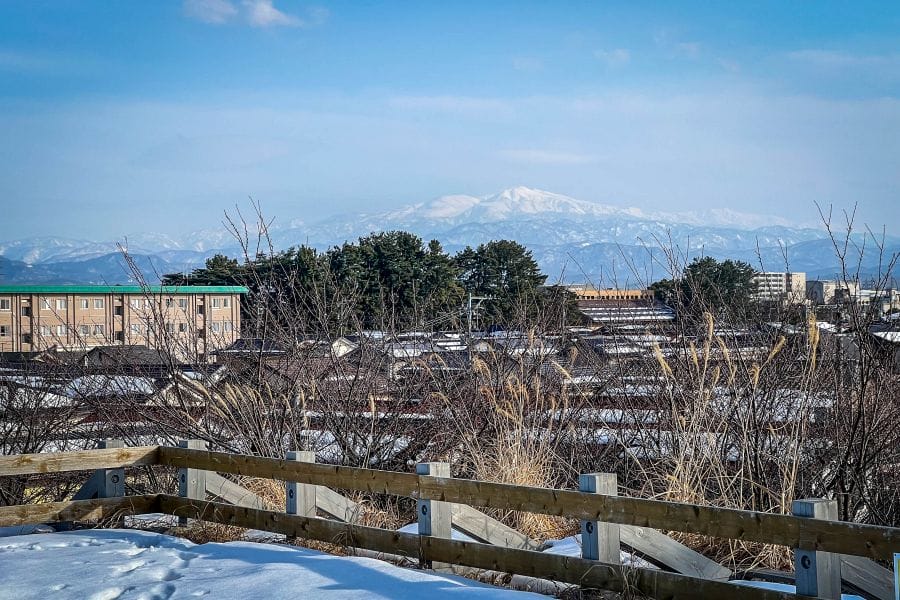
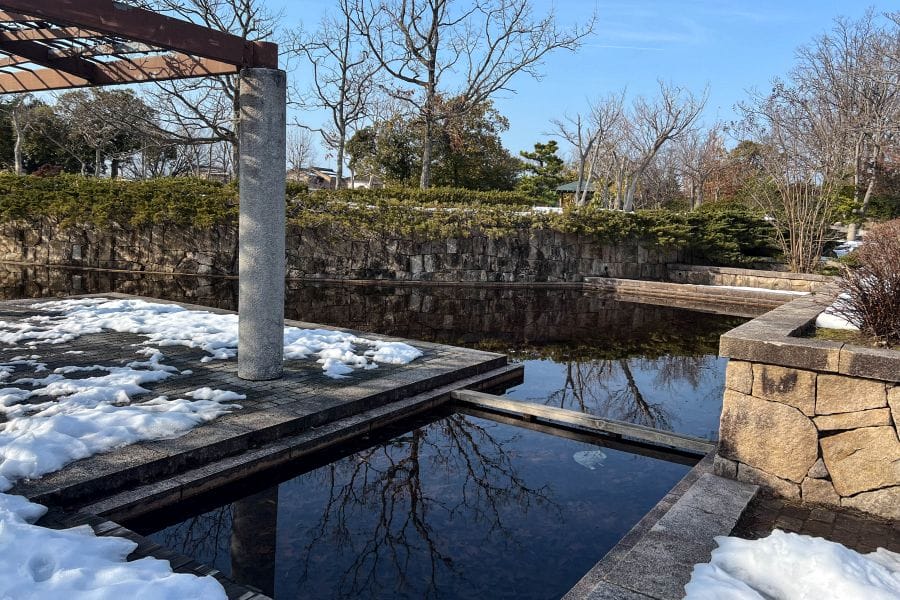
Although no original wooden buildings survive, parts of the stone ramparts and sections of the moat remain visible. The most prominent feature today is the stone foundation of the keep. A short flight of steps takes you to the top rewarding you with a surprisingly panoramic view, extending all the way to the impressive Mt. Haku, weather permitting. The castle is overflown by Mitsubishi F-15J/DJ Eagle fighter bombers operated by the Japan Air Self-Defense Force at nearby Komatsu Airport.
In addition to the physical remains, the castle’s legacy continues through place names and the urban layout of central Komatsu, which still reflects aspects of the former castle town.
Information
Name in Japanese: 小松城跡
Pronunciation: komatsu joh ato
Address: Ninomaru 1-5, Marunouchimachi, Komatsu, Ishikawa 923-0903