Nata-dera Temple
Nata-dera Temple is a Tendai Buddhist temple located in Kaga, Ishikawa. The temple complex extends across a wooded hillside with large rock formations, caves, moss-covered ground and seasonal foliage. Buildings are arranged at multiple elevations and connected by stone paths and stairways.
What to see
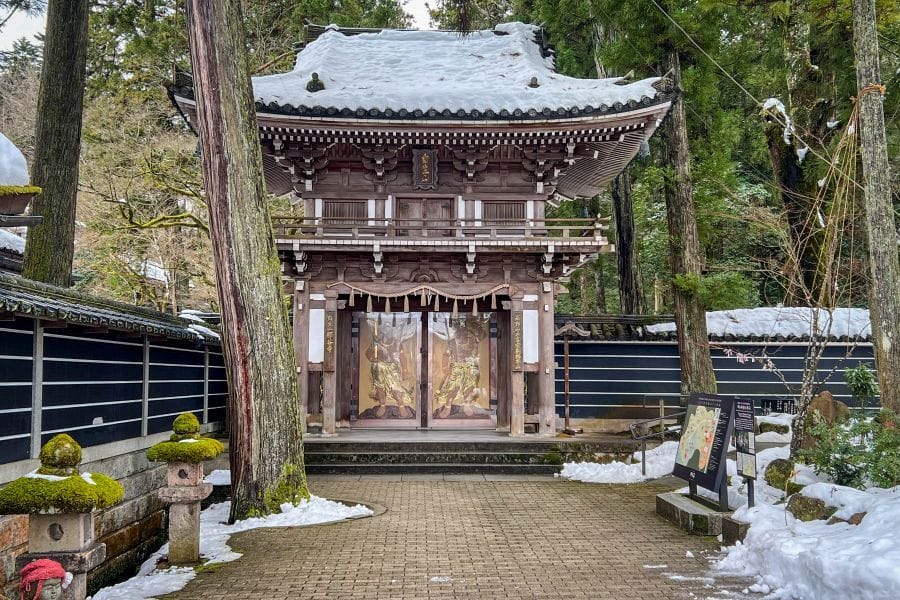
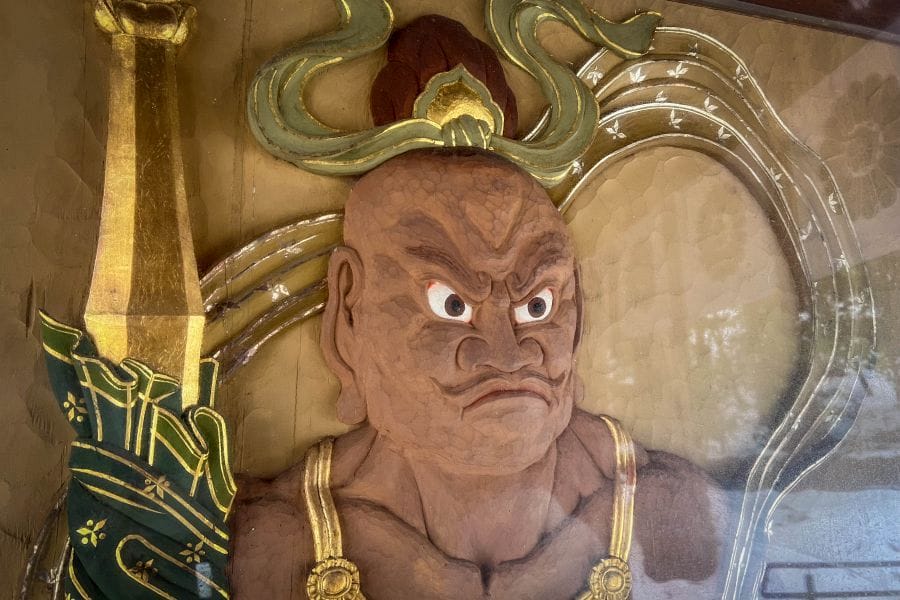
The huge temple complex is hidden by tall trees and the narrow main gate. The gate is unusual in having Niō guardians carved in relief into the gates themselves. You enter through the main gate and proceed along a stone approach. Immediately on the left are two large buildings.
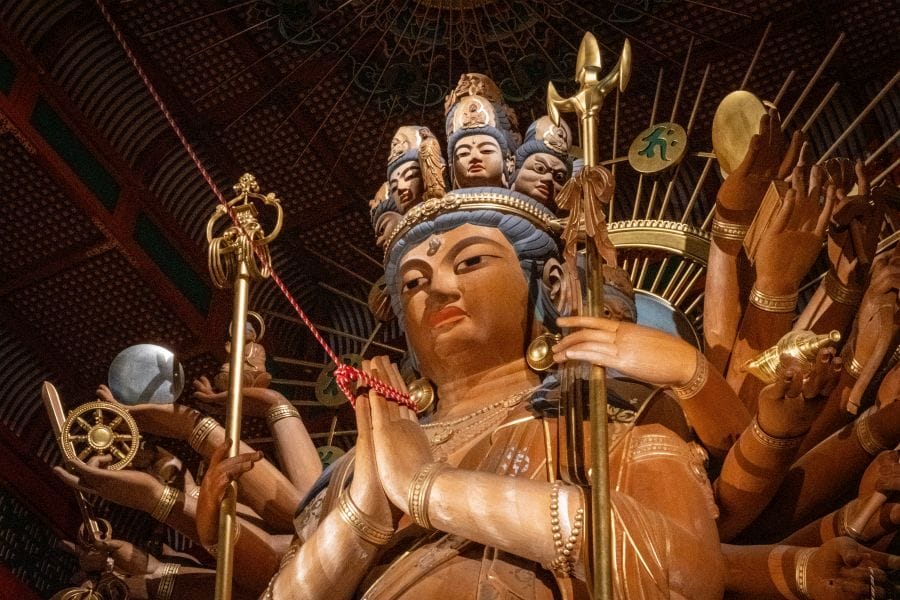
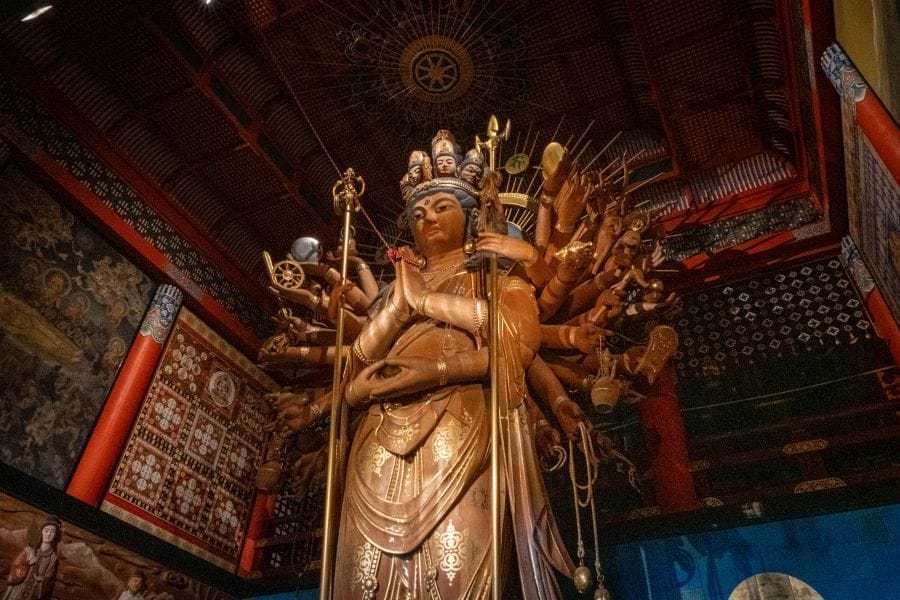
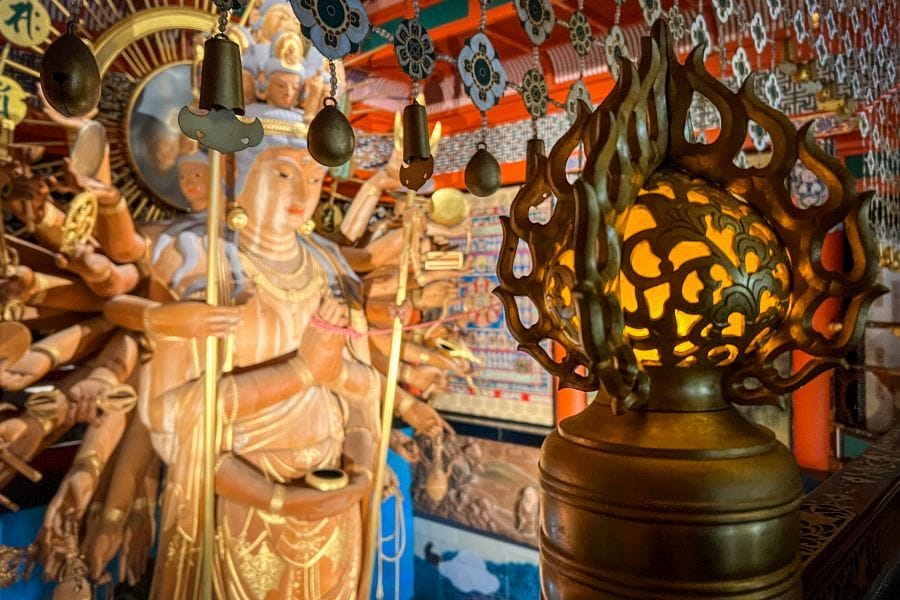
Passing through the main gate, the large red Kondō Keōden Hall stands on the left. Destroyed during the wars of the Northern and Southern Courts period, it was rebuilt in 1990 in the Kamakura-period Japanese style, entirely from cypress wood. It houses the principal image, a huge Eleven-Faced Thousand-Armed Kannon. The walls are adorned with works by prominent local artists depicting the Hakusan faith, a fusion of Shintō and Buddhist elements. Adjacent to it on the right stands a second large hall, the Fumonkaku, sometimes used to display temple treasures during special openings. To its left is the Study Hall. Behind the Kondō Keōden Hall is the Ryūbi-en Garden for which admission is charged. It’s closed in winter. It features a large, fissured rock said to resemble the Amida Trinity.
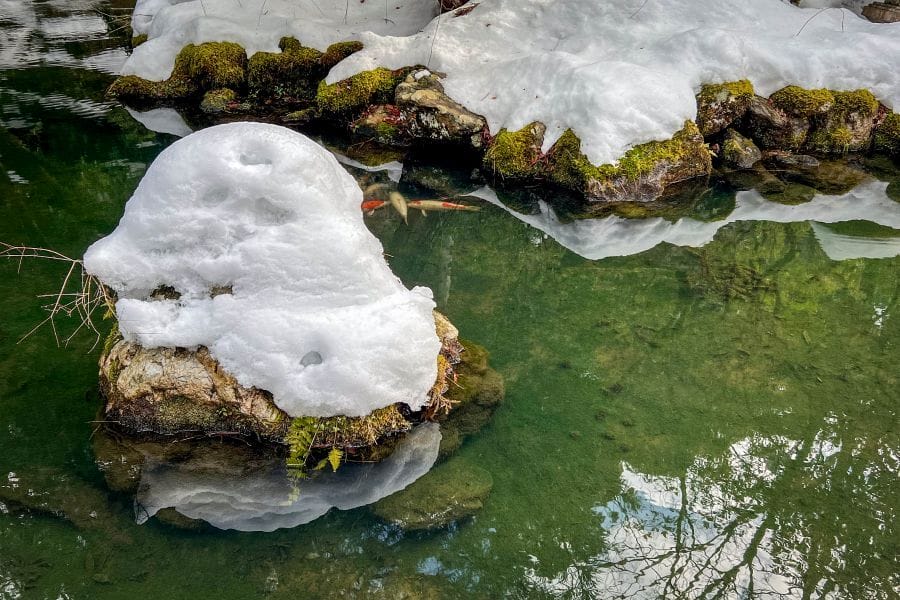
Strolling back down to the main path, you pass along a valley of immense cypress trees and a carpet of moss, arriving at a pond with carp on your left. The trees here are protected with the straw ropes typical of the region. At the end of the pond is a rock formation called Kigan Yūsenkyō. This unique towering rock pocked with numerous holes is said to be the remnant of an ancient undersea eruption. Matsuo Basho stopped by and composed a poem here. As this is a temple of the Hakusan faith, which combines Shintō and Buddhist beliefs, vermilion torii gates and Inari shrines are dotted around the rock. Access is currently restricted for safety and conservation reasons.
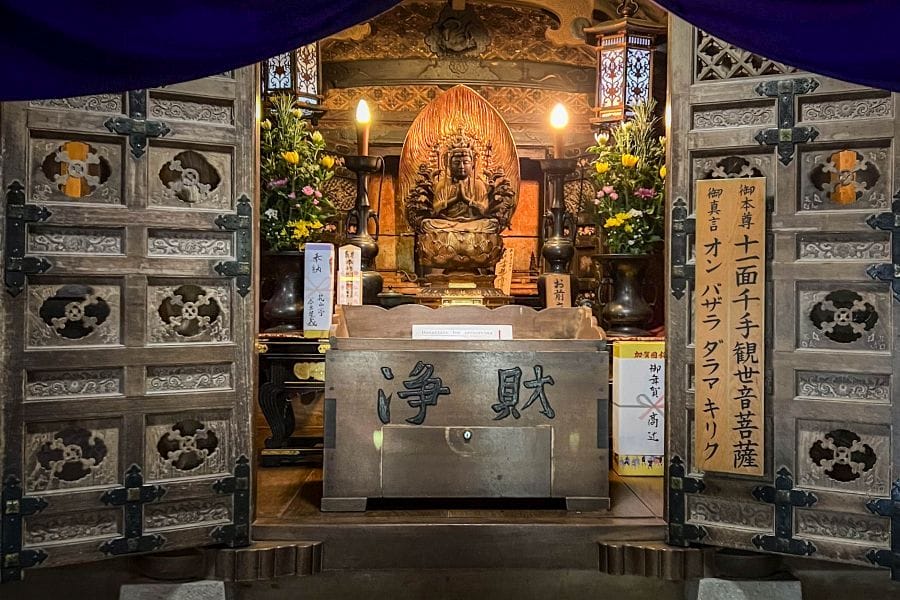
The main hall, known as Daihikaku Hall, is a wooden structure built on stilts against a rock face. The transoms on all four sides are adorned with openwork wood carvings. The principal image, the Eleven-Faced Thousand-Armed Kannon Bodhisattva, is displayed in an open altar.
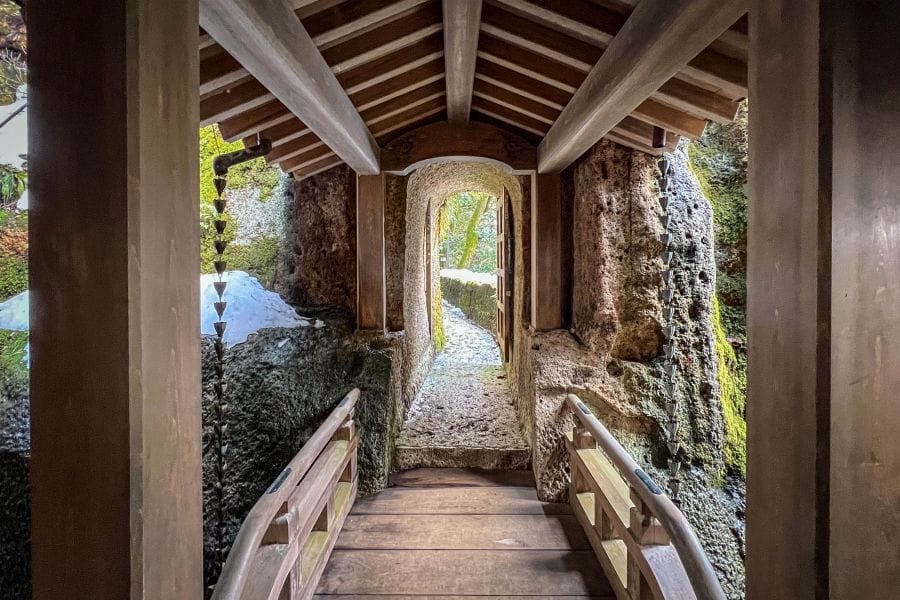
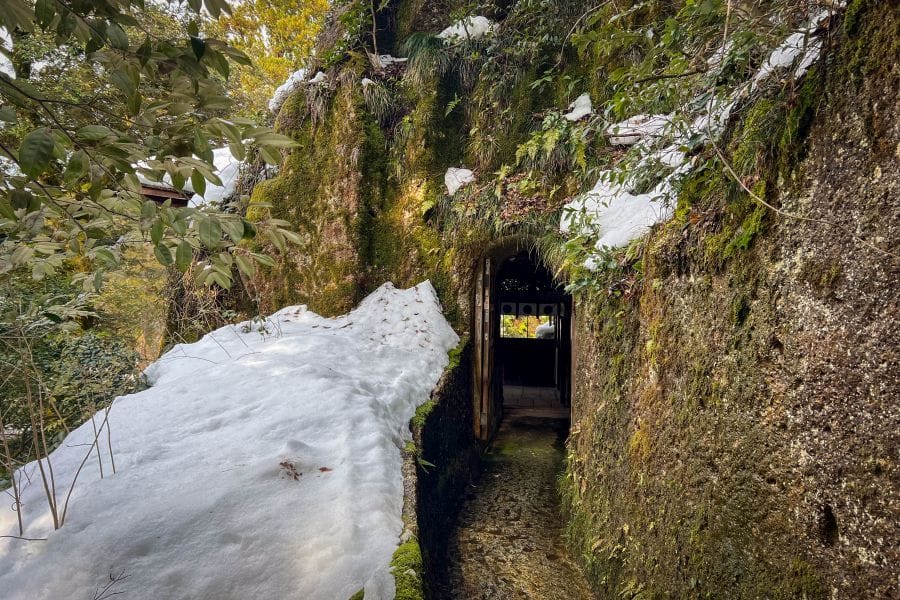
The Main Hall is situated within a cave, called the Iwaya. Passing through the Iwaya symbolises passing through the womb again, an experience believed to wash away the sins of this world, allowing the soul to be reborn anew from the mother’s womb.
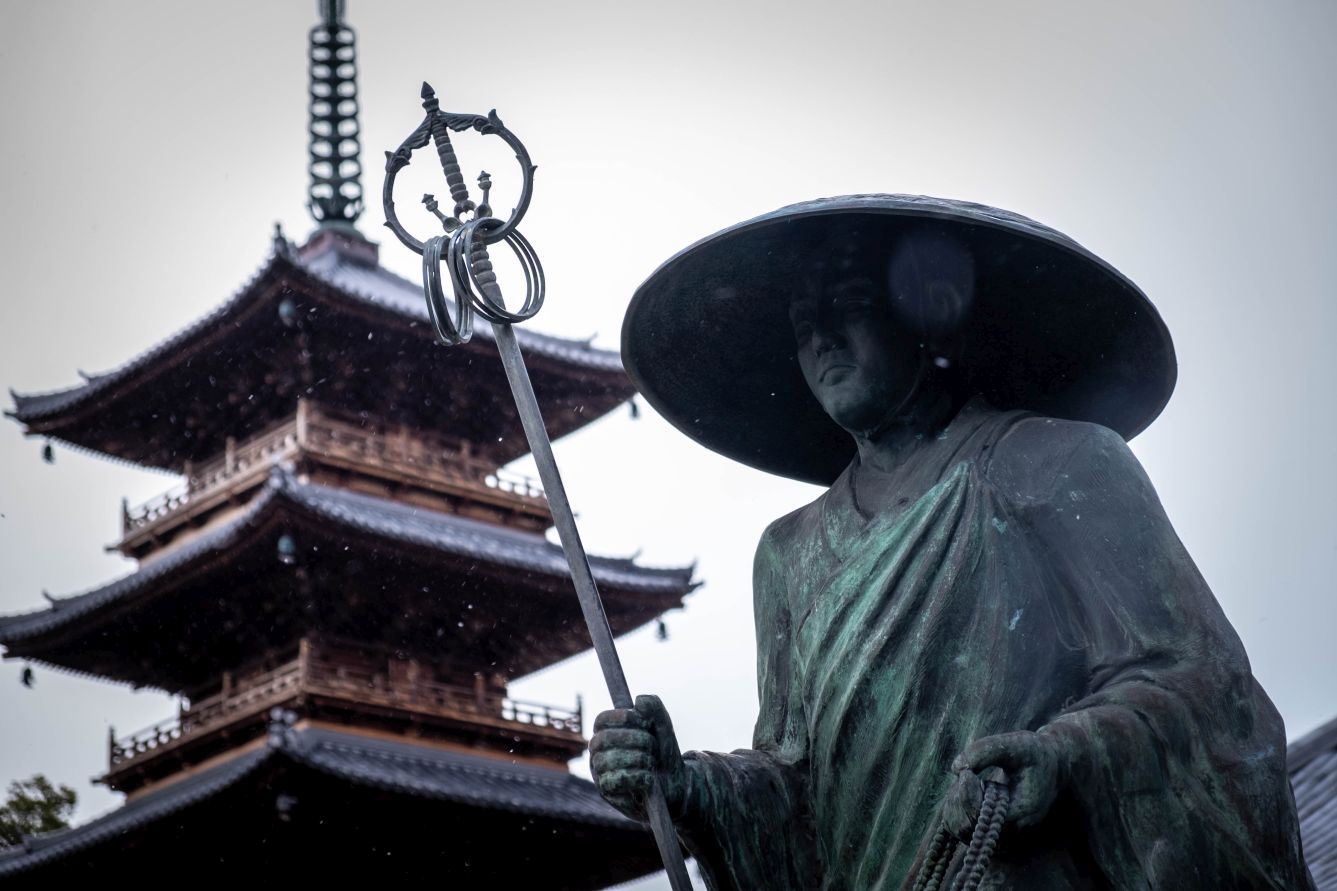
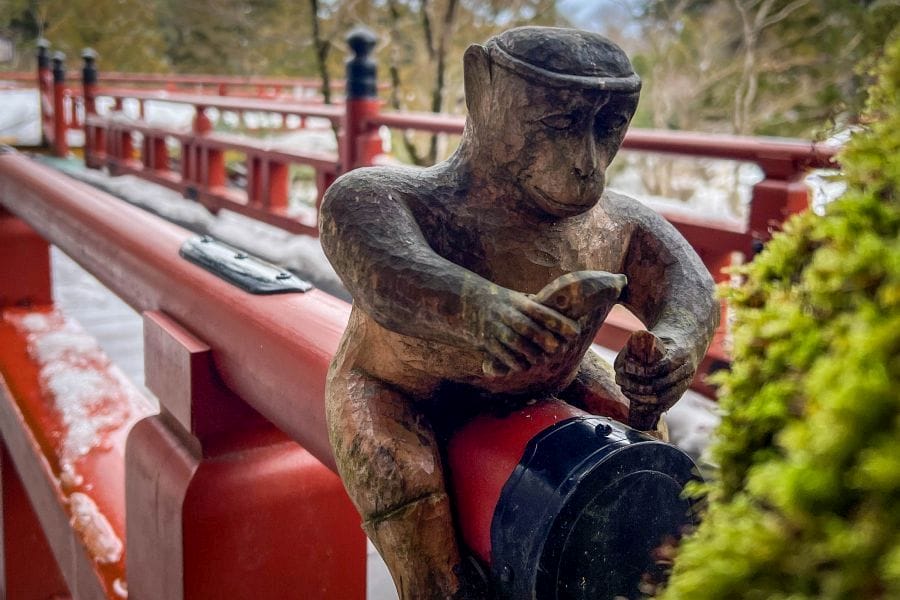
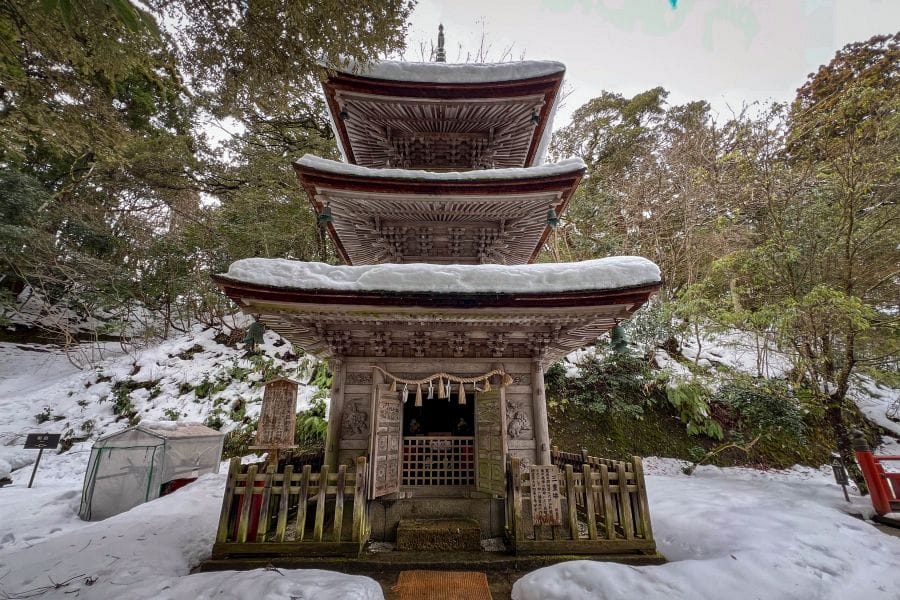
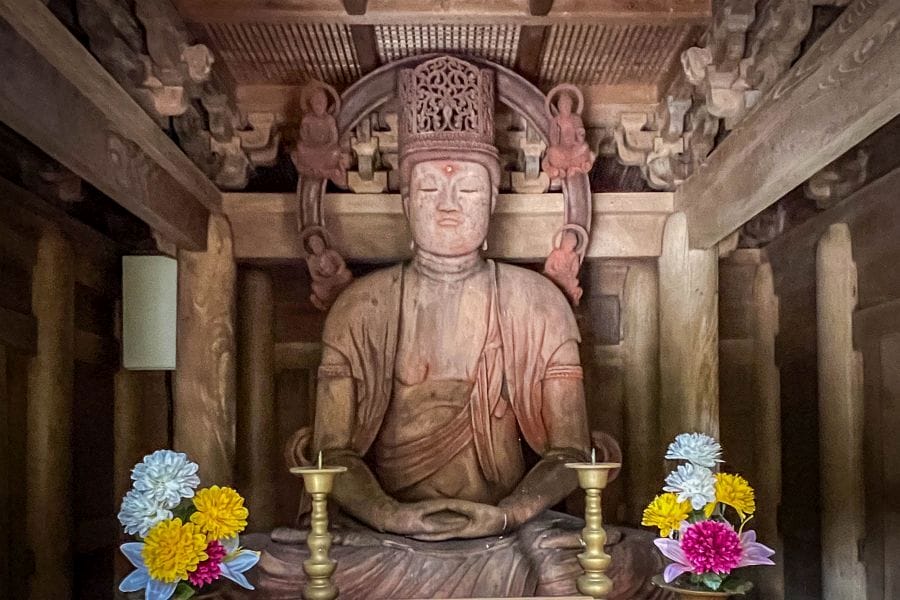
From here you pass through another stone tunnel and walk beside a large lake before reaching the Three-Storied Pagoda which houses a fine statue of Dainichi Nyorai. From here you cross a red bridge to the observation platform. On the left railing of the bridge, look for the monkey carpenter hammering away with bananas. From the observation platform, you get a panoramic view of the complex.
In the north-west corner stands the tearoom Jōji-an. Though based on the style of a small, rustic tea hut, it stands out for its lack of a crawl-in entrance and its large round window.
History
Nata-dera experienced destruction during late medieval conflicts, including warfare associated with the Sengoku period. In the early Edo period, the Maeda clan undertook extensive restoration of major religious sites within Kaga Domain.
In 1642, Maeda Toshitsune sponsored reconstruction work at Nata-dera, including the building of the three-storied pagoda. The restoration was carried out under the authority of Retired Emperor Go-Mizunoo.
Several existing buildings date from this early Edo reconstruction phase. The temple has continued to function as a Tendai Buddhist institution from the early modern period to the present.
Legends
Temple tradition attributes the founding of Nata-dera to the monk Taichō in 717. According to this account, Taichō enshrined Kannon within the rock caves after receiving a spiritual revelation connected to Mount Hakusan worship.
Some regional and secondary historical sources associate the temple with other prominent monks, including Gyōki or the ascetic Shōbō (also known posthumously as Kakusan Daishi). These associations do not form part of the temple’s official institutional narrative.
The rock formations and caves are also said to have been regarded as sacred prior to the establishment of a formal temple, reflecting early mountain and nature worship traditions.


Information
Name in Japanese: 那谷寺
Pronunciation: nata-de-ra
Address: Yu-122 Natamachi, Komatsu, Ishikawa 923-0336