Chichibugahama Beach
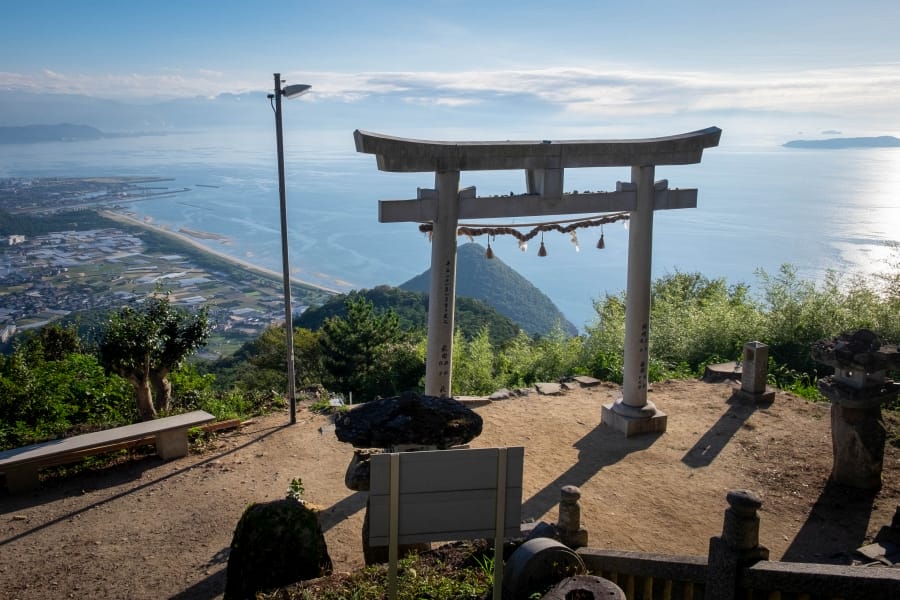
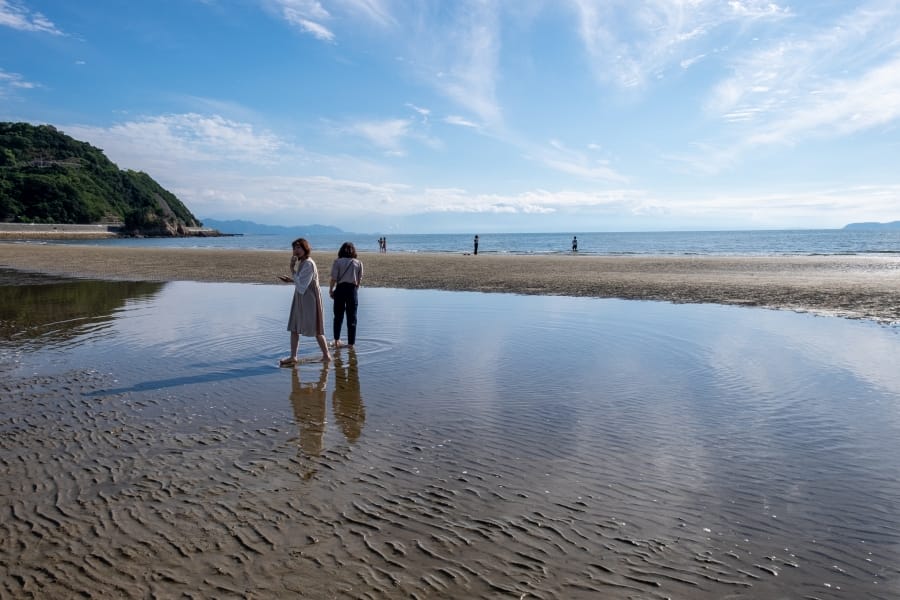
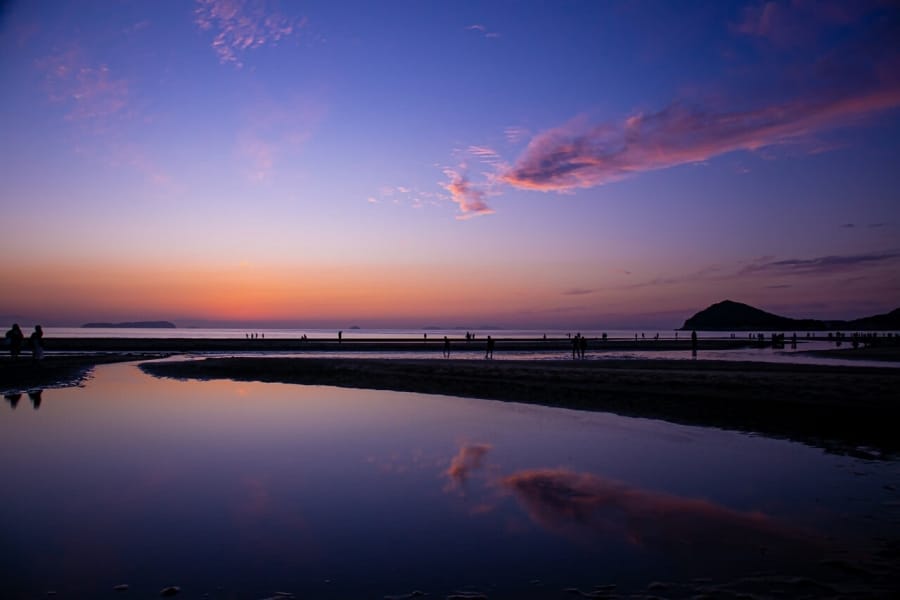
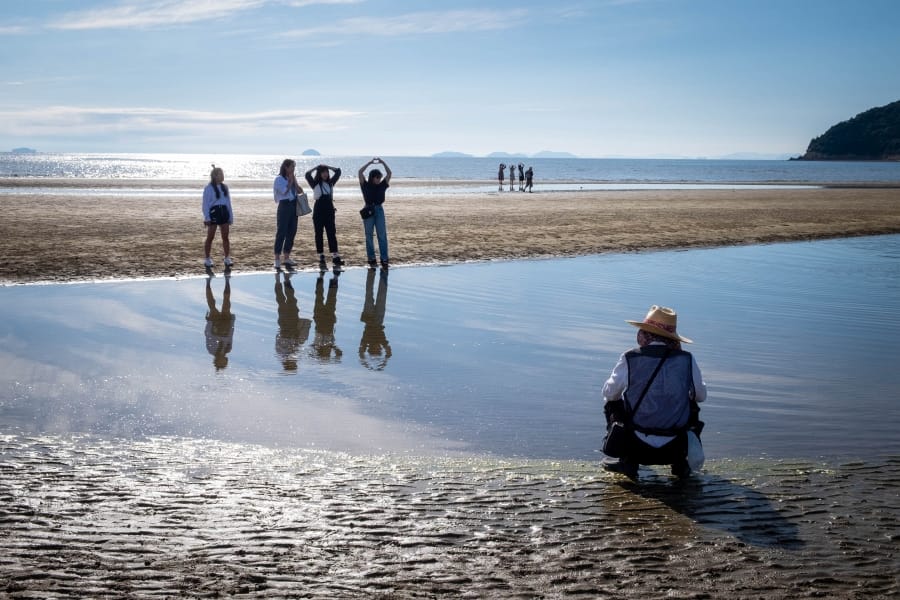
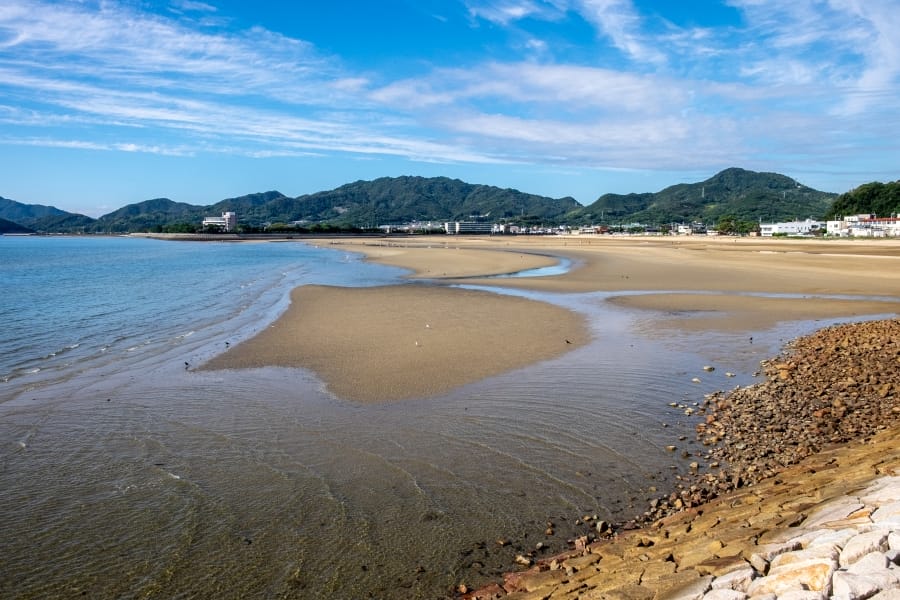
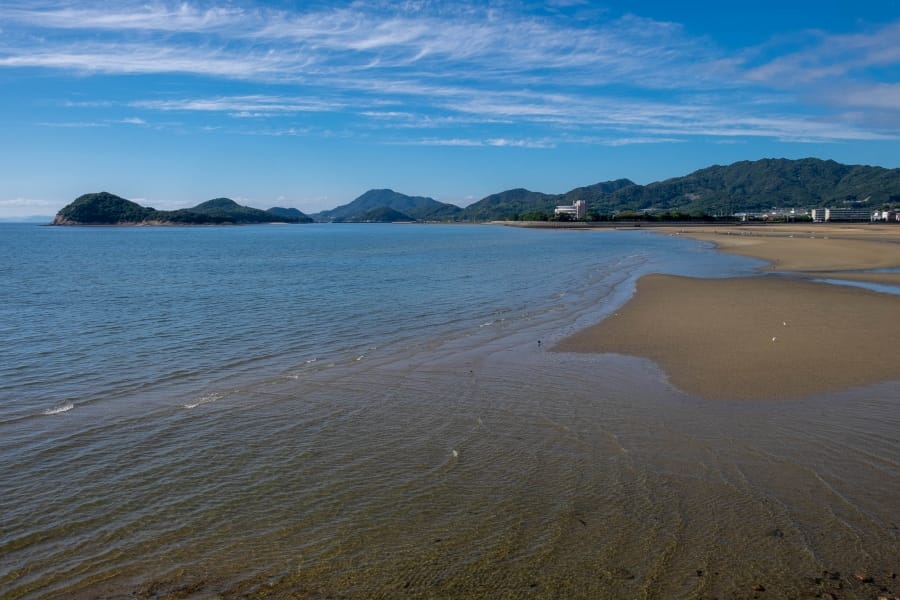
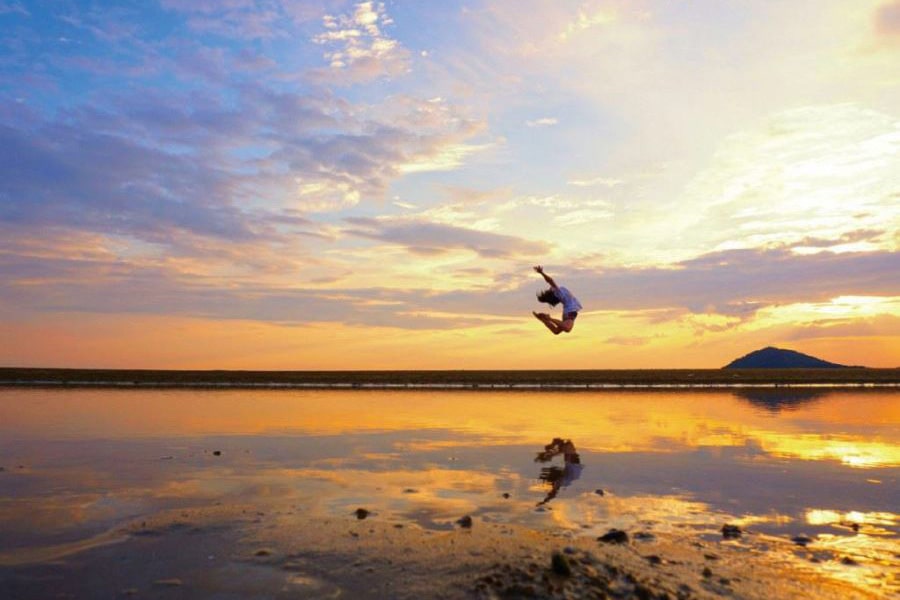
Chichibugahama is a shallow, one-kilometre stretch of sandy coastline in Mitoyo, facing the western waters of the Seto Inland Sea. The beach sits along the Nio district shoreline, where tidal movement exposes vast sandbanks extending up to 500 metres outward during low tide. Water collects in the undulating depressions of the exposed sand bed, forming expansive, stagnant tide pools across the flat intertidal zone. When atmospheric conditions align, these shallow bodies of water produce a sharp mirror image of the sky, drawing flocks of Instagrammers to the coastal flat during the evening hours.
The primary feature of the landscape is the physical interaction between the tides, wind patterns, and light. The surrounding hills of the Shōnai Peninsula buffer the shoreline from strong coastal breezes, creating periods of stillness known locally as Seto no yūnagi (the evening calm of the Seto Sea). During these windless windows at low tide, the ripples on the surface of the tide pools settle entirely. Because the wet sand beneath the shallow water consists of fine, compact silt and sand washed down from local river basins, the pool bottoms present a dark, uniform base. This dark substratum enhances the reflectivity of the water layer, turning each pool into a mirror that reflects the sky, clouds, and the variegated hues of the sun descending behind the islands of the inland sea.
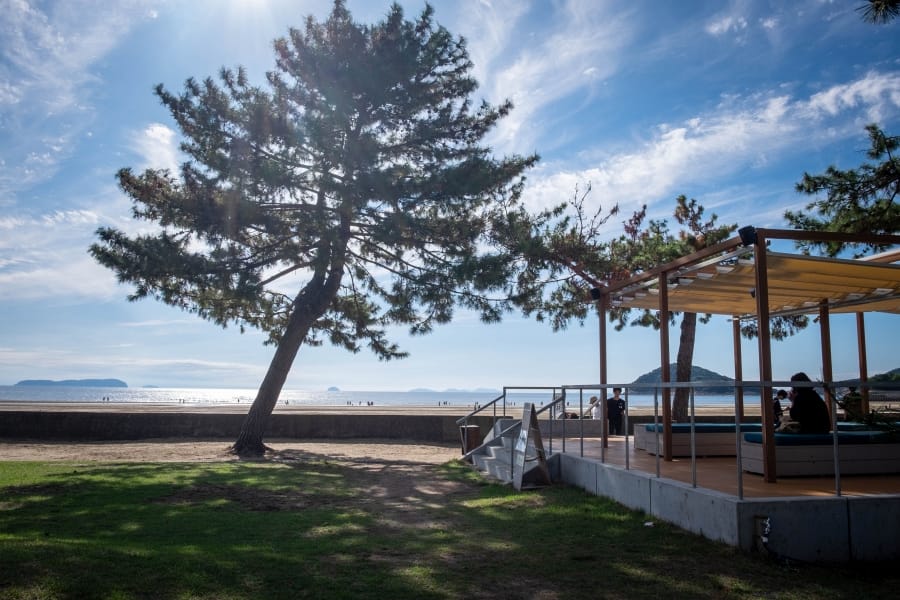
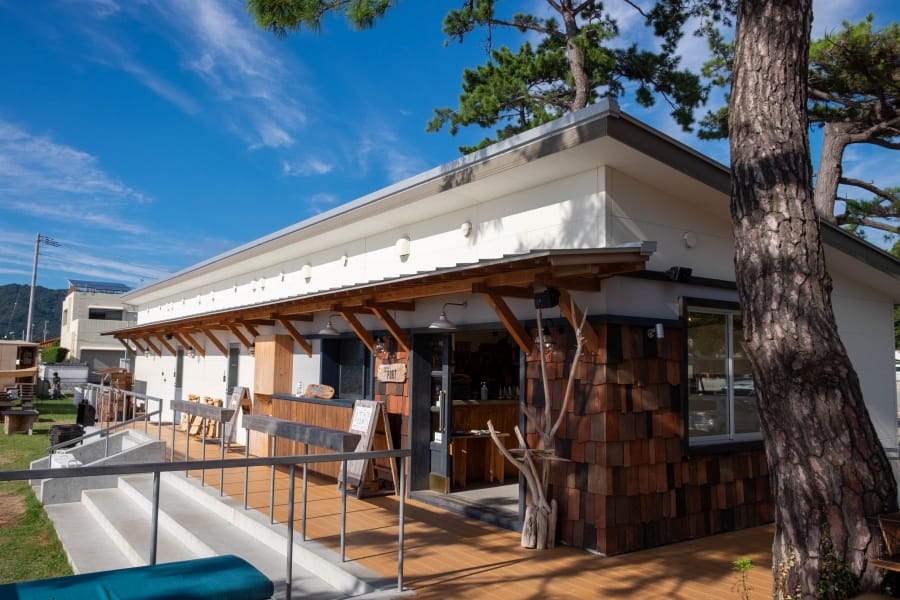
Chichibugahama was once a quiet coastal spot primarily used by residents of Nio town for gathering clams and summer swimming. In the late twentieth century, coastal erosion and drift waste threatened the condition of the shoreline. In response, local volunteers established daily beach-cleaning initiatives in the 1990s, maintaining the purity of the sand without large-scale concrete seawalls or artificial sand barriers. The shoreline remained largely unvisited by non-residents until 2016, when photographs highlighting the reflective optical properties of the tide pools altered public perception of the site. The transformation from a working rural foreshore to a recognized geographical site led to the development of low-rise timber coastal amenities and small eateries along the road directly behind the seawall, designed to accommodate visitors without obstructing the line of sight toward the sea.
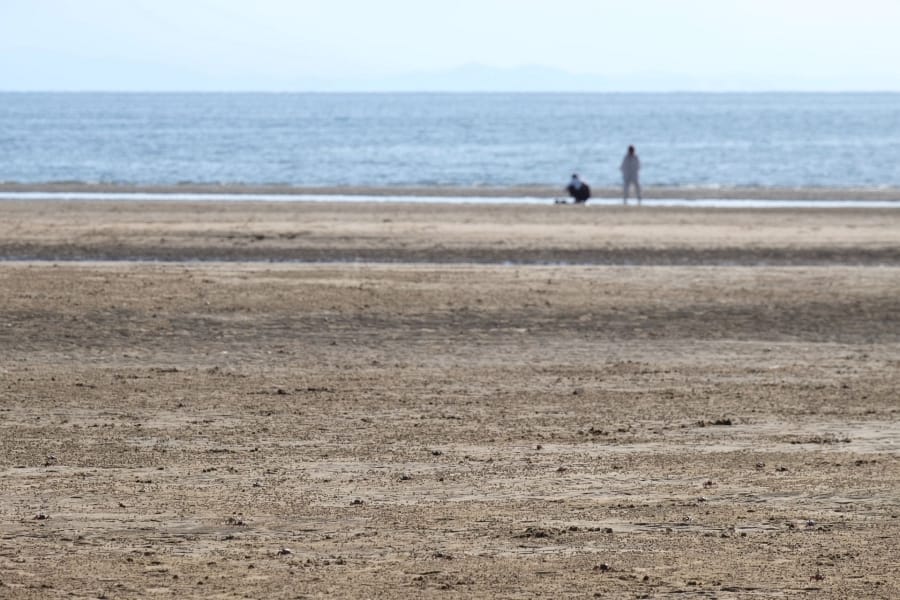
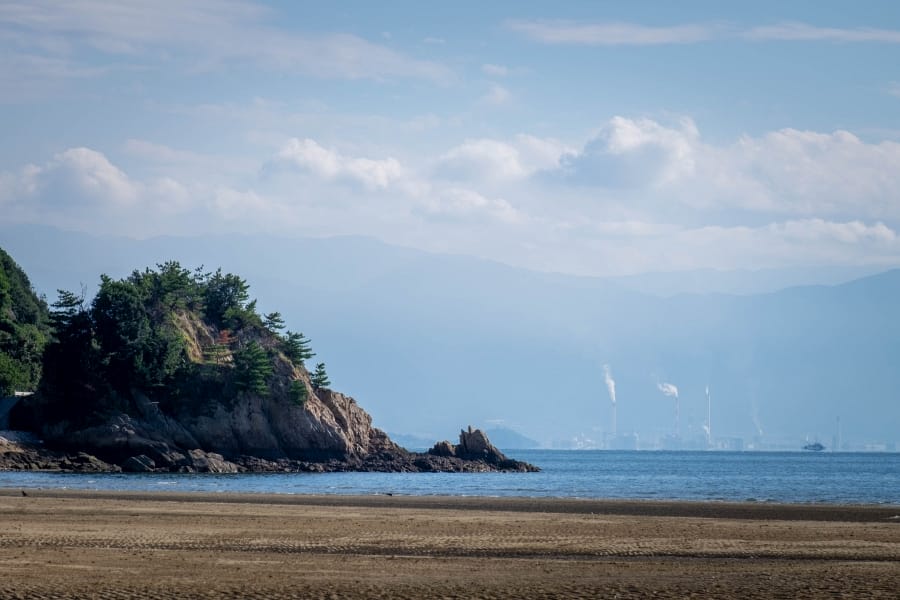
The layout of the beach changes constantly with the lunar cycle. Spring tides produce the widest exposure of flat sand, leaving behind dozens of distinct pools ranging from two to twenty metres in width. Walking across the wet sand bed requires navigating these shallow water basins, which remain only a few centimetres deep until the incoming tide reclaims the flat. Small ridges of sand, formed by the action of gentle waves, create parallel linear patterns across the exposed seabed between the pools. During clear autumn and summer evenings, the sun drops directly between the distant silhouettes of Ibuki Island and the higher peaks of the Chūgoku region across the water. From here you can see the tall smoking chimneys of Shikokuchūō with Mt. Ishizuchi rising like a wall behind. The lack of tall coastal structures along this segment of the Mitoyo coast leaves the horizon unbroken from the edge of the sandbanks.
Note: To get a good jumping shot, the key is not to jump really high. Instead, you must throw your feet up behind you, creating the illusion of height.
Information
Name in Japanese: 父母ヶ浜
Pronunciation: chi-chi-bu ga hama
Address: Otsu-273-1 Nio-chō Nio, Mitoyo, Kagawa 769-1404