Confucius Shrine and Historical Museum of China
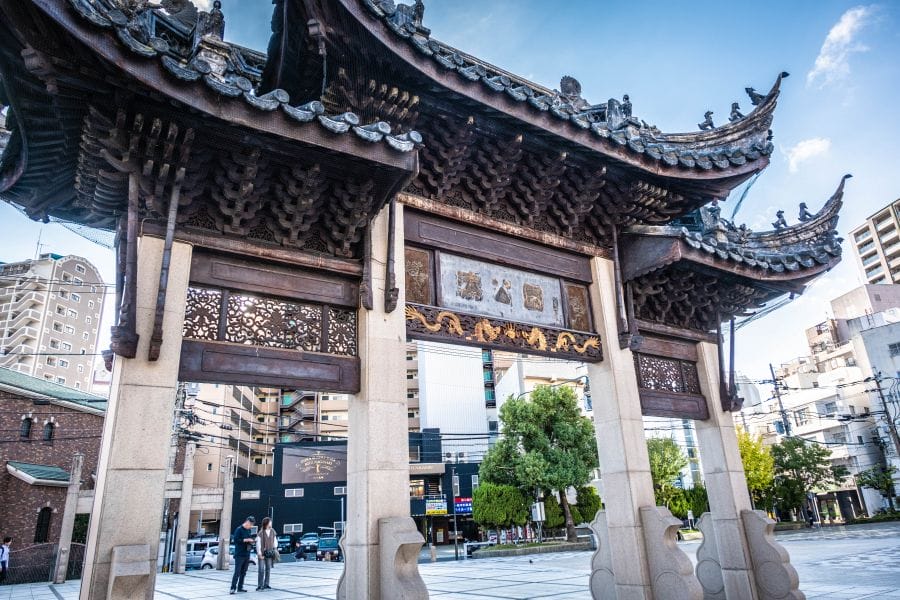
The Nagasaki Kōshibyō is a Confucian shrine and museum complex located in the Ōura district of Nagasaki, near the former foreign settlement. It’s one of the most distinctive Chinese heritage sites in the city, reflecting Nagasaki’s long-standing cultural and commercial connections with China.
The shrine was founded in 1893 by members of Nagasaki’s Chinese community. Its establishment came during a period when Chinese residents were reaffirming their cultural identity following the reopening of Japan and the end of the Tokugawa-era restrictions on foreign residence. Unlike Japan’s much older Chinese temples, which date from the Edo period, Kōshibyō represents a later phase of organized Chinese community life in modern Nagasaki.
The complex is dedicated to Confucius, the Chinese philosopher whose teachings on ethics, social harmony, and learning shaped East Asian thought for more than two millennia. The shrine also served as a place for ceremonies, education, and community gatherings among Nagasaki’s Chinese residents.
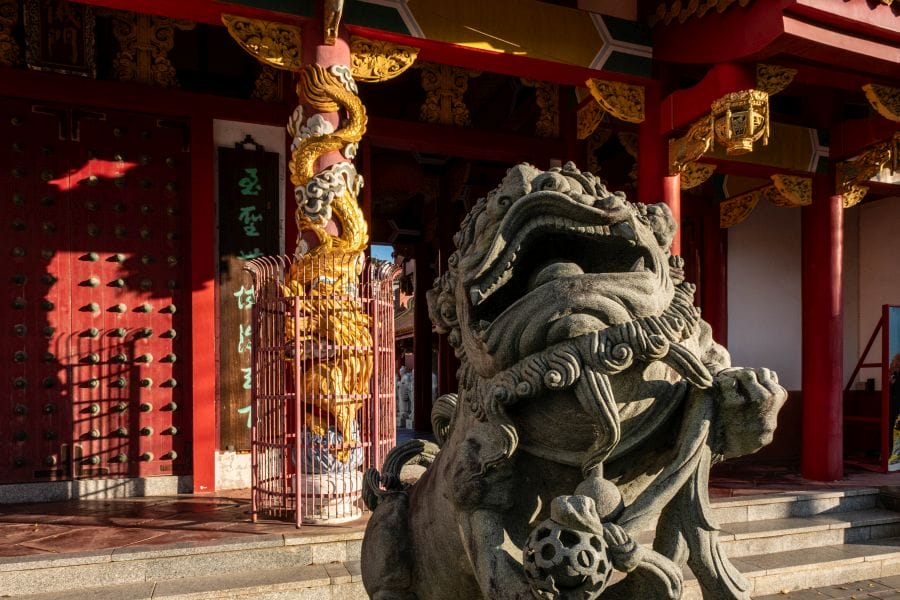
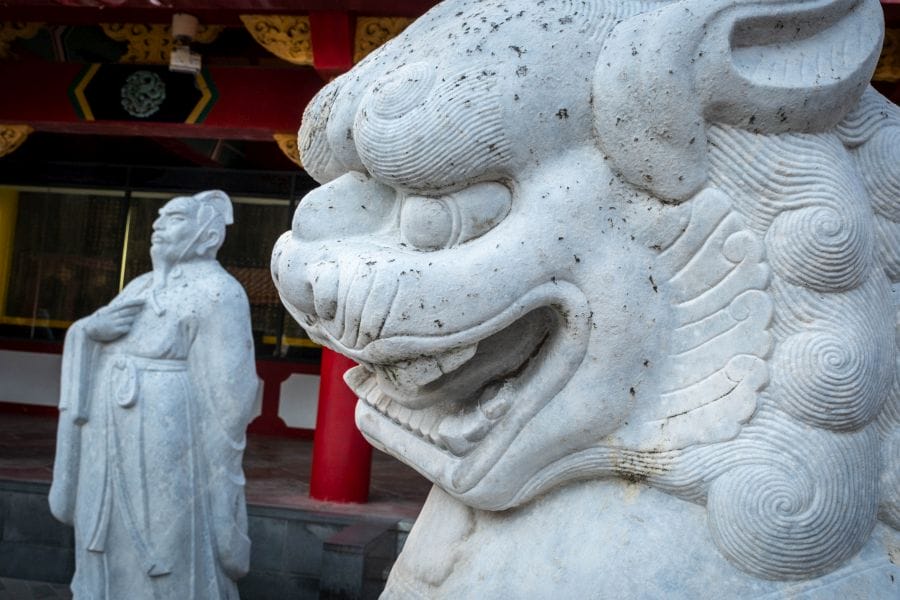
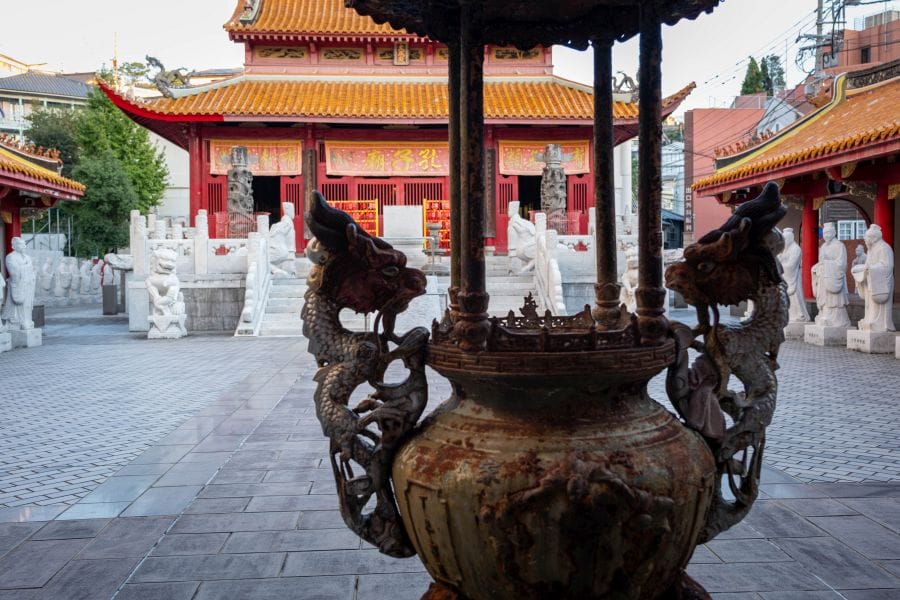
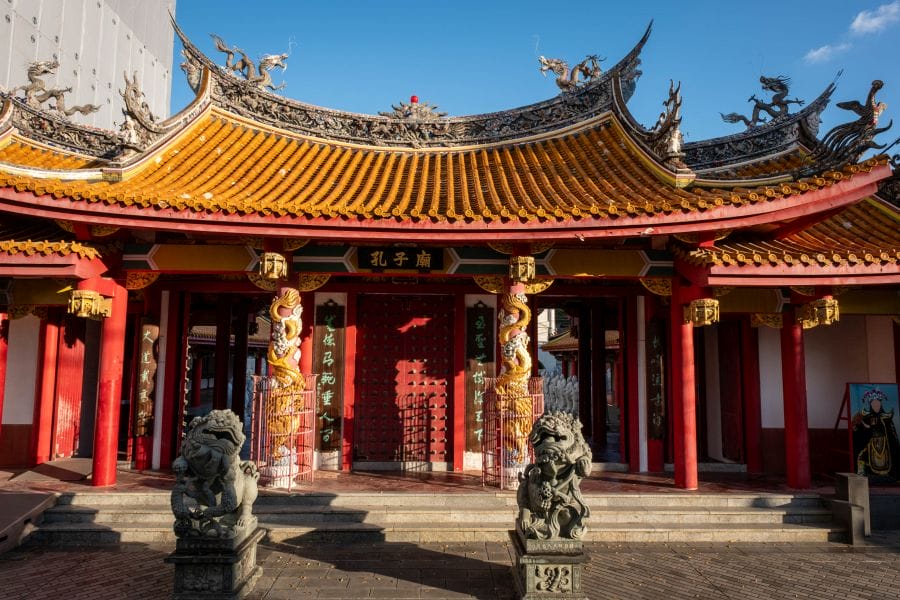
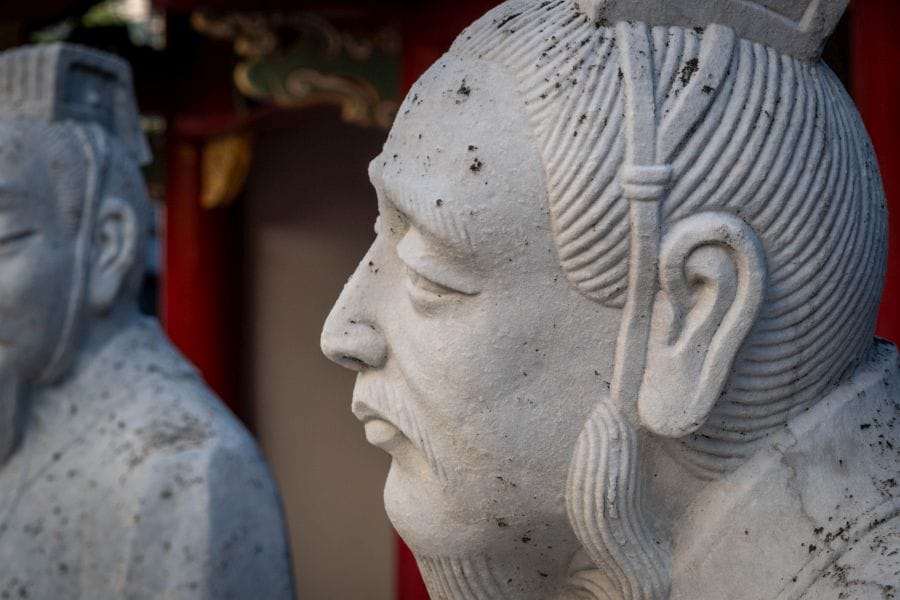
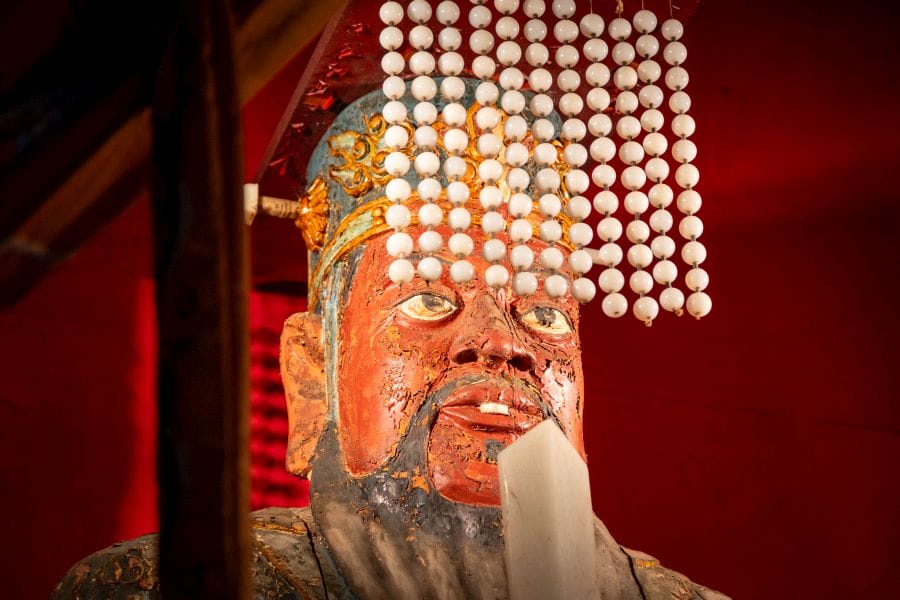
The Confucius Shrine is designed in a vividly Chinese style, distinct from Japanese religious architecture. You enter the walled compound through a bright red gate into a courtyard lined with stone statues of Confucius’s disciples. The main hall, with its richly decorated roof, carved beams, and gilded ornamentation, enshrines a seated image of Confucius. He’s depicted with large, protruding teeth. Historical texts recorded that he had this physical feature, along with an oddly shaped head and exceptional height. In traditional Chinese culture, unusual physical characteristics were often attributed to extraordinary, even superhuman, individuals.
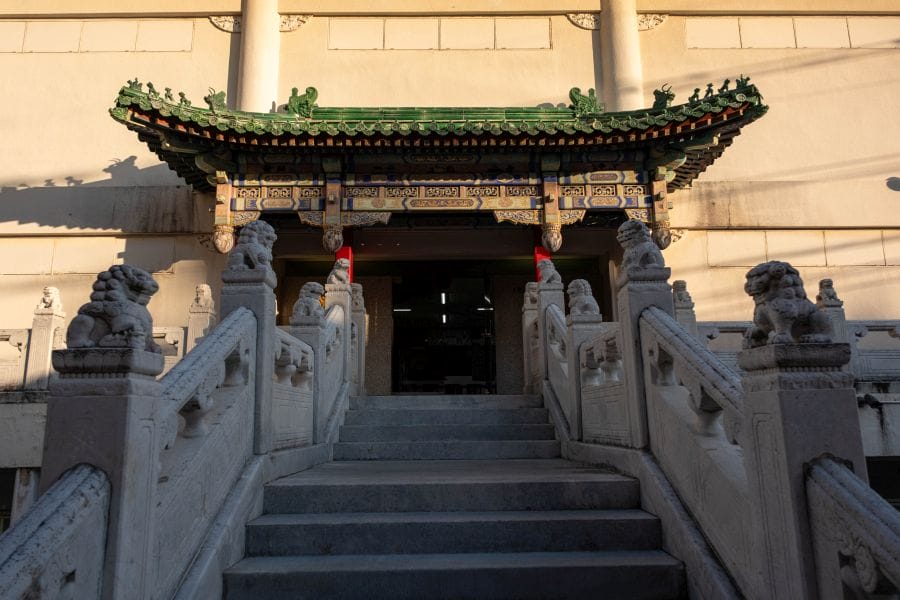
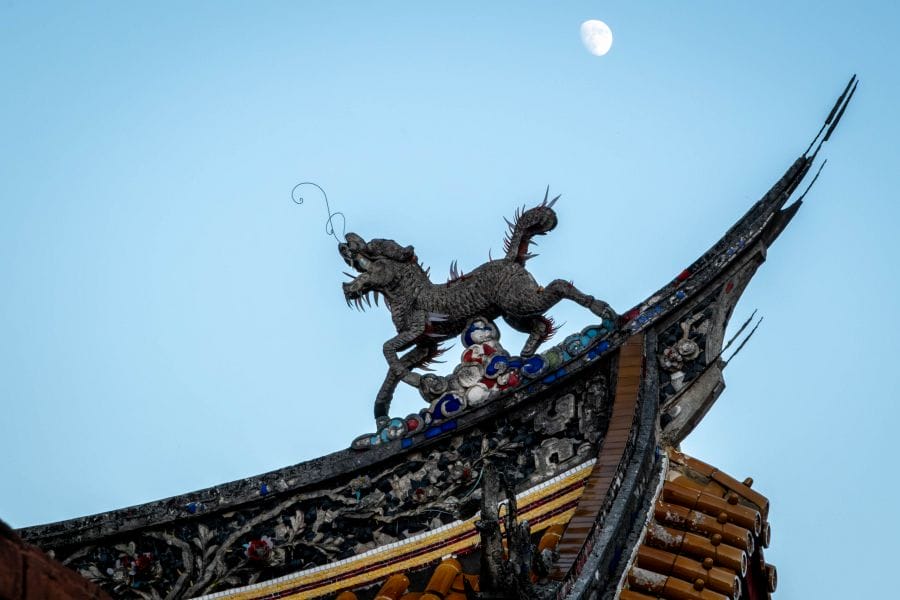
The use of red, green, and gold, along with glazed roof tiles and elaborate woodwork, reflects late Qing dynasty architectural styles. The layout of the compound, with its axial alignment and enclosed courtyards, follows traditional Chinese temple planning principles.
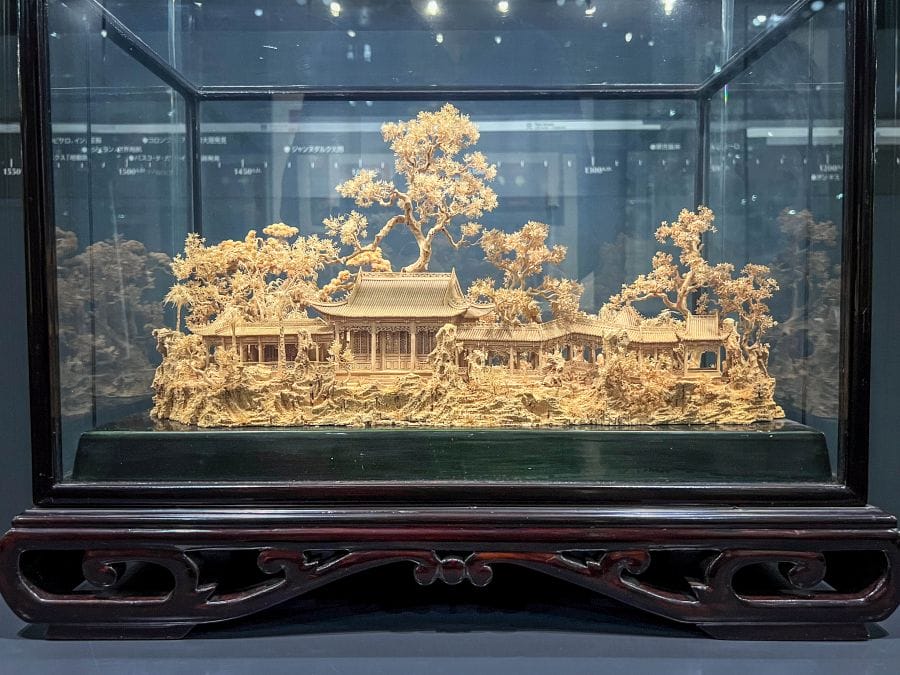
Attached to the shrine is the Historical Museum of China, which presents exhibits on the history of Chinese civilization and on the relationship between China and Nagasaki. The museum includes displays on Chinese dynasties, traditional arts, philosophy, and technology, as well as materials related to Chinese merchants, migrants, and students who lived in Nagasaki.
Artifacts, models, and visual displays illustrate how Chinese culture influenced Nagasaki’s development, from trade and religion to food and urban life. The museum provides a broader context for the shrine by situating it within the long arc of Sino-Japanese exchange.
The Confucius Shrine stands as a symbol of the modern Chinese community in Nagasaki and of the city’s role as Japan’s primary gateway to China for centuries. Together with nearby Chinese temples and Chinatown, the shrine and museum form part of a wider network of sites that document the depth and continuity of Chinese cultural presence in Nagasaki.
Information
Name in Japanese: 長崎孔子廟中国歴代博物館
Pronunciation: naga-sakee koh-shee-byoh choogoku rekishee haku-butsu-kan
Address: 10-36 Ouramachi, Nagasaki, 850-0918