Nagasaki Chinatown
Nagasaki Chinatown, commonly known as Shinchi Chinatown, is one of the oldest and most compact Chinatowns in Japan. Located near Nagasaki Port, it reflects the city’s long-standing connections with China, which predate Japan’s period of national isolation. It continued, in regulated form, throughout the Edo period. The district remains a visible expression of Chinese cultural influence in Nagasaki through its architecture, cuisine, and festivals.
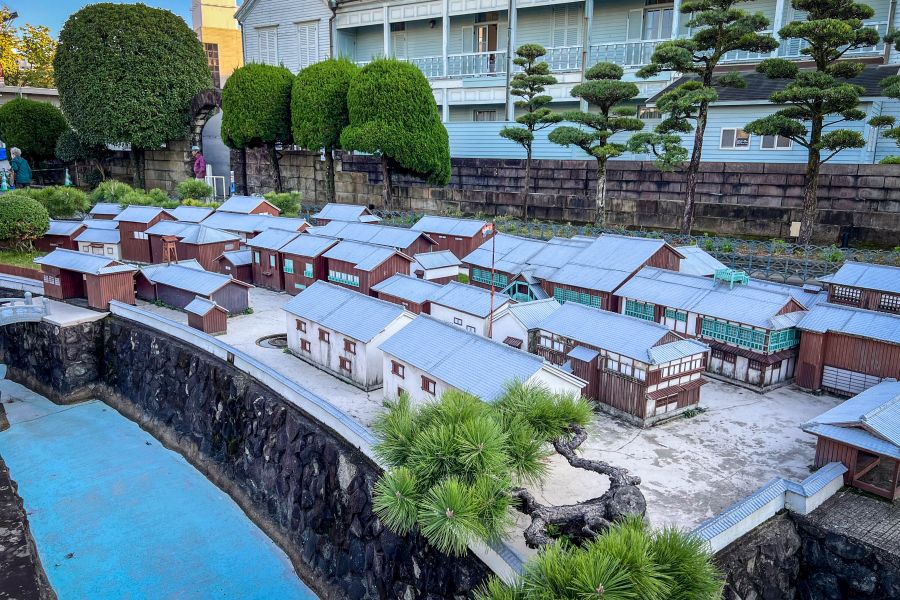
Chinese merchants and sailors were active in Nagasaki from the late medieval period, but the foundations of today’s Chinatown date to the early 17th century. In 1689, the Tokugawa shogunate designated an area of reclaimed land known as Shinchi as a residence and warehouse district for Chinese traders. While European trade was restricted to Dejima, Chinese commerce continued under close supervision, and Nagasaki became Japan’s primary point of contact with the Chinese world.
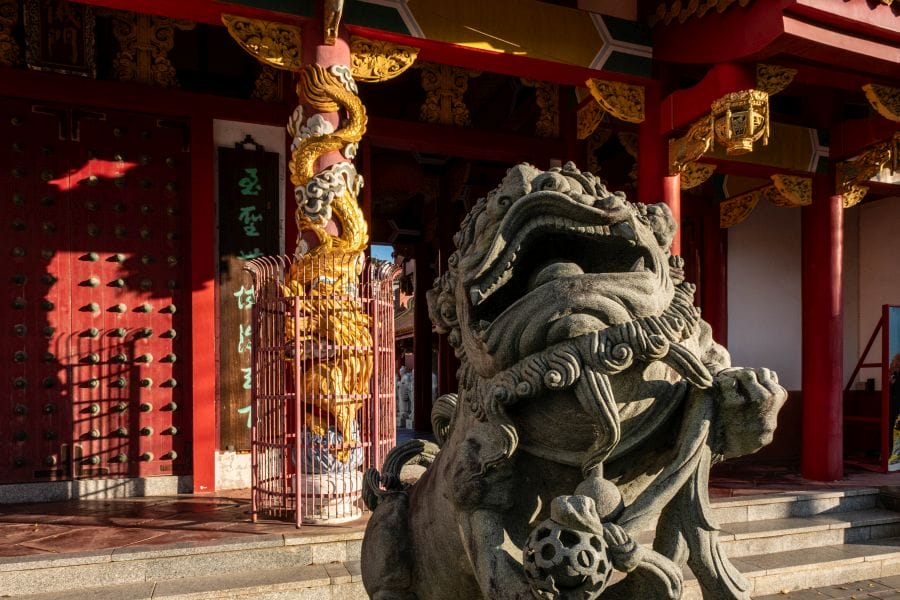
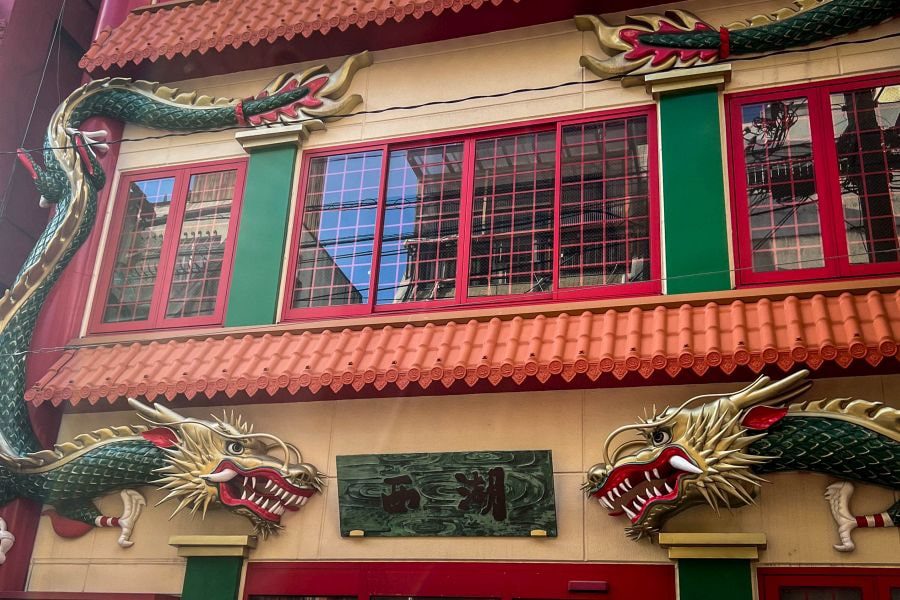
Over time, Chinese residents established temples, guilds, and community organizations, and their customs blended with local Japanese culture. Although the original residential character of Shinchi declined in the modern period, the area was later redeveloped as a commercial and dining district that emphasizes its Chinese heritage. There are lots of fancy dragons to be seen.
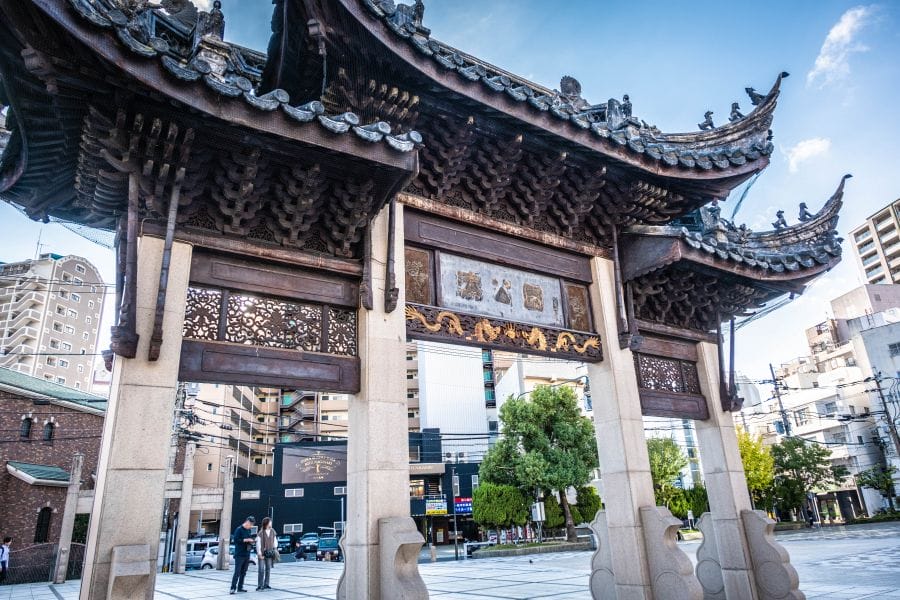
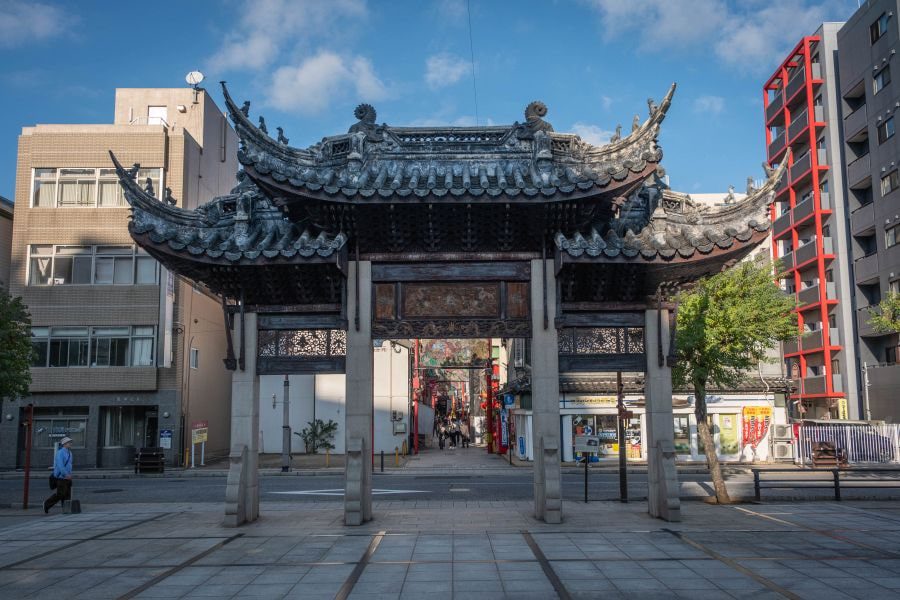
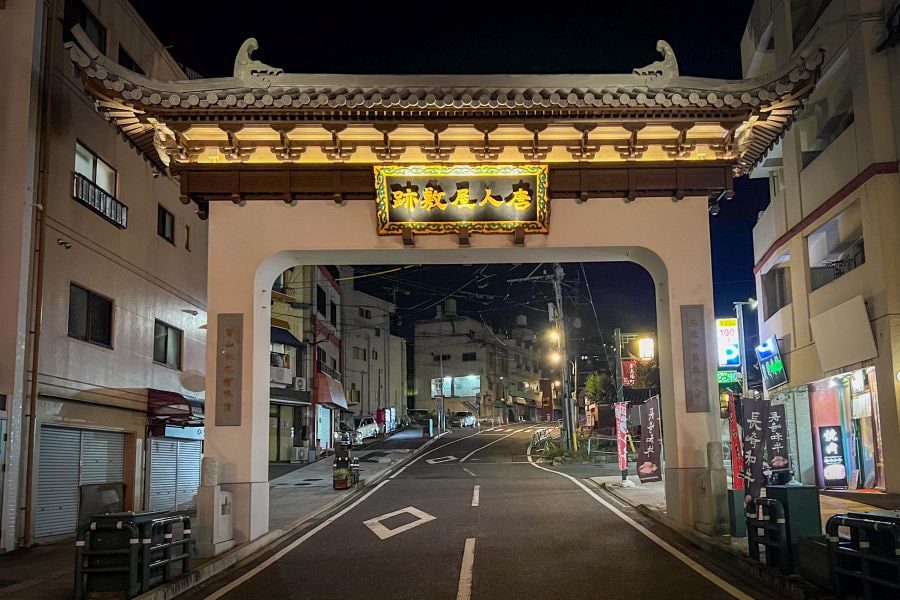
Nagasaki Chinatown is defined by four impressive, decorated gates, each aligned with a cardinal direction and symbolically guarding the district.
- The East Gate is the largest and most prominent, featuring elaborate ornamentation and Chinese-style roof elements.
- The West Gate faces toward the harbour and historically represented the direction of overseas travel.
- The South Gate and North Gate complete the enclosure, each distinguished by color schemes and decorative motifs associated with traditional Chinese cosmology.
Together, the gates clearly demarcate the boundaries of Chinatown and contribute to its visual identity.
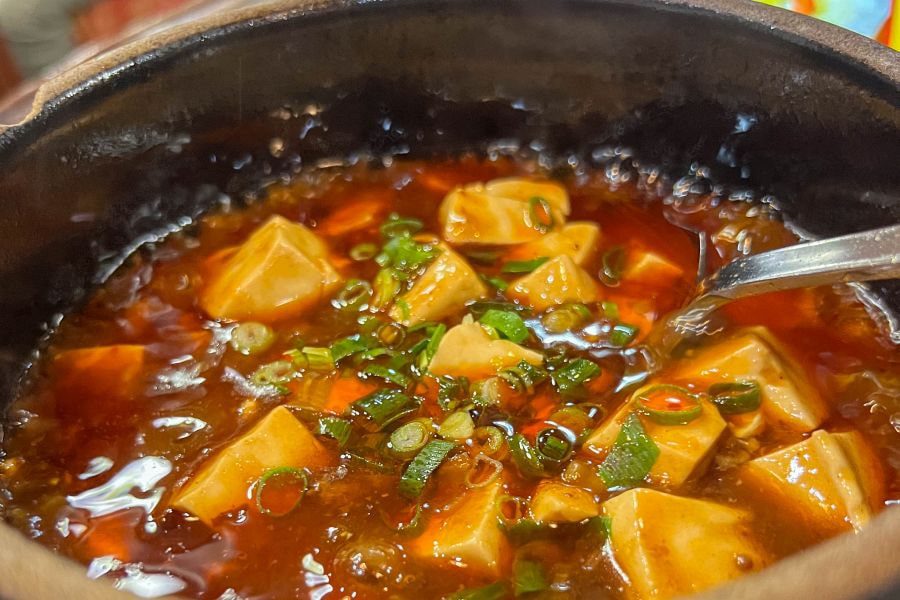
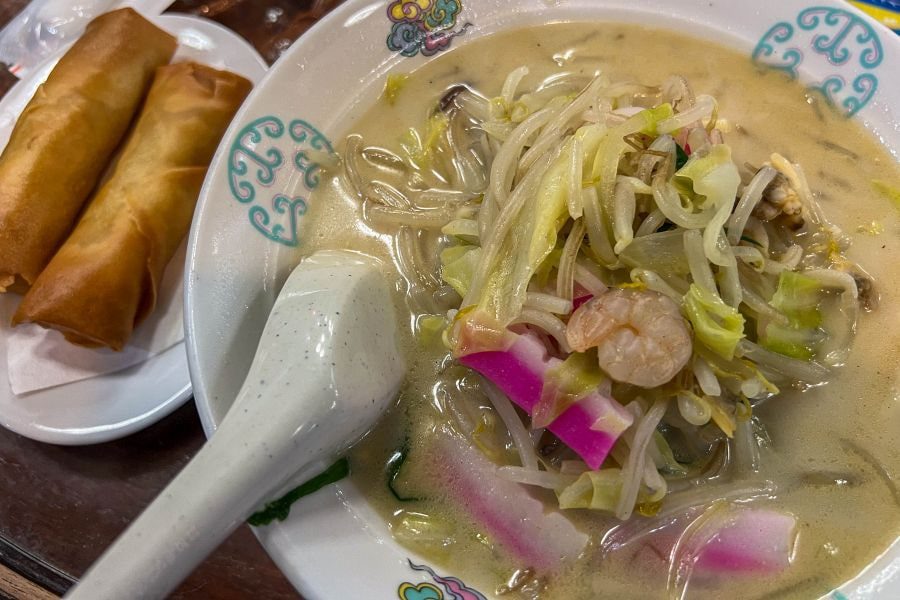
Chinatown is best known for its concentration of Chinese restaurants, many specializing in dishes adapted to local tastes. One of Nagasaki’s signature foods, chanpon, originated in this area in the late 19th century as a hearty noodle dish combining Chinese cooking techniques with Japanese ingredients. Another local noodle specialty, sara udon, is also closely associated with Chinatown.
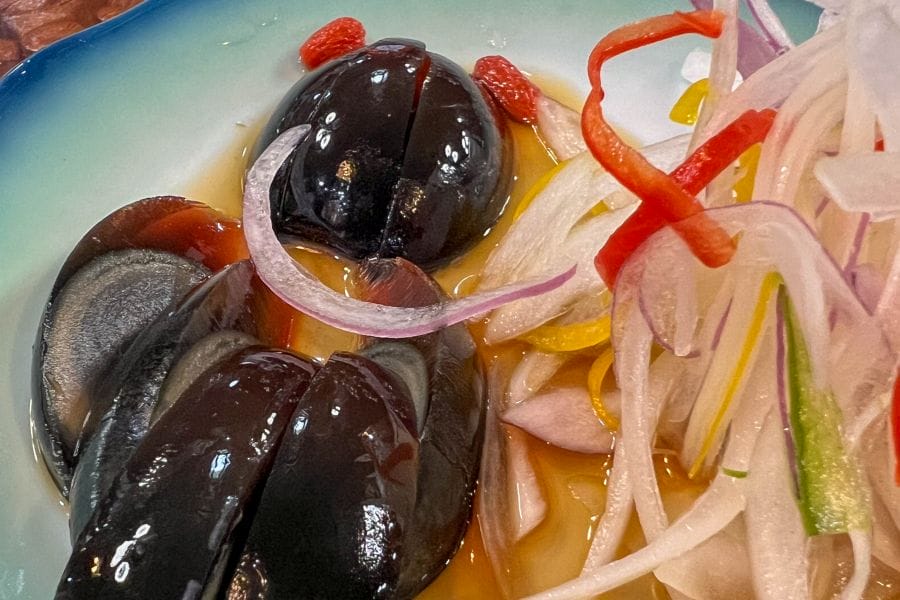
In addition to these regional dishes, restaurants serve a range of Chinese cuisines, including Cantonese-style seafood, dumplings, and steamed buns. The density of eateries within a small area gives the district a distinctly culinary character.
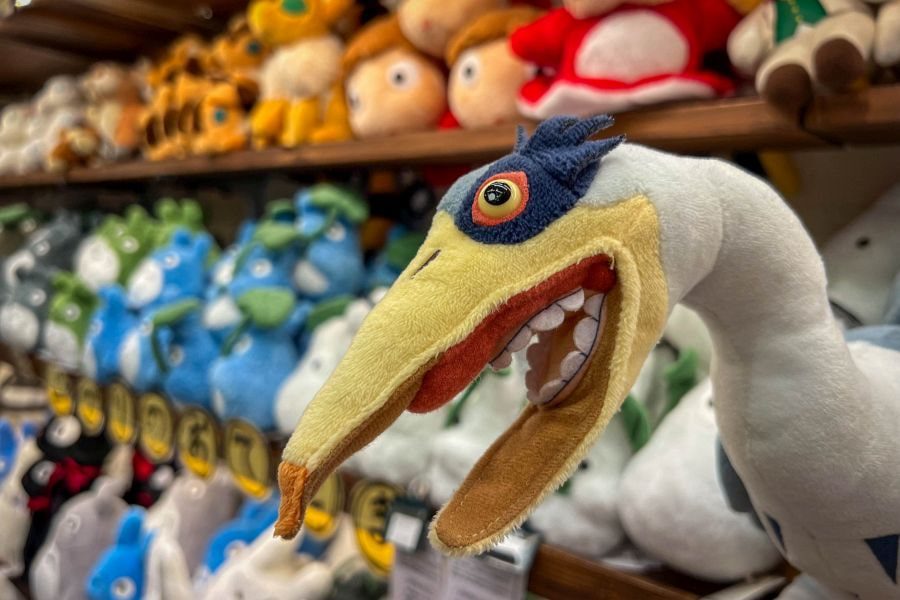
Along the narrow streets are shops selling Chinese sweets, tea, spices, ceramics, and souvenirs. The shop specialising in Ghibli Studio goods is particularly popular. During festivals, especially the Nagasaki Lantern Festival held around Lunar New Year, the area is decorated with lanterns and temporary stalls, highlighting its role as a cultural as well as commercial space.
Information
Name in Japanese: 長崎新地中華街
Pronunciation: naga-sakee shin-chee chooka-gai
Address: 10-13 Shinchimachi, Nagasaki, 850-0842