Urakami Cathedral
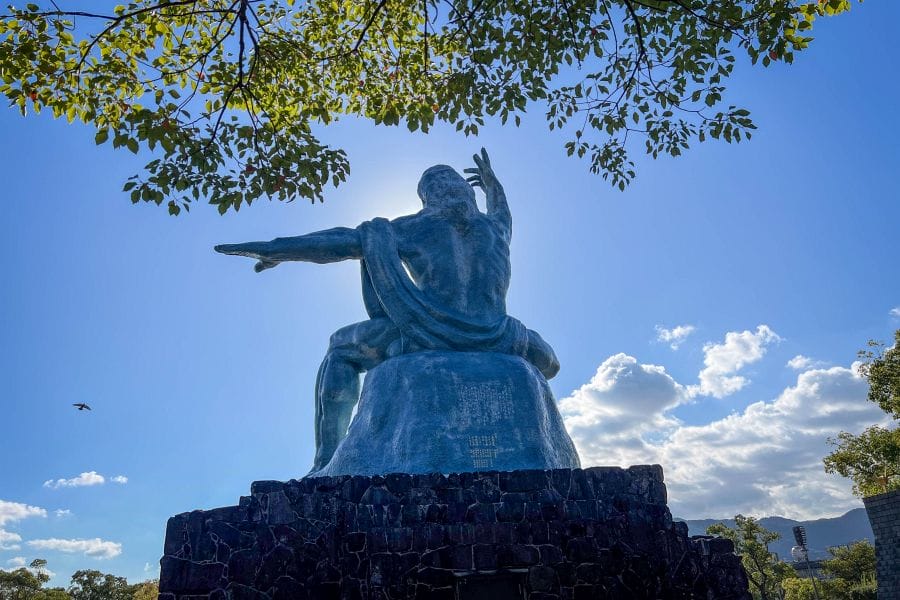
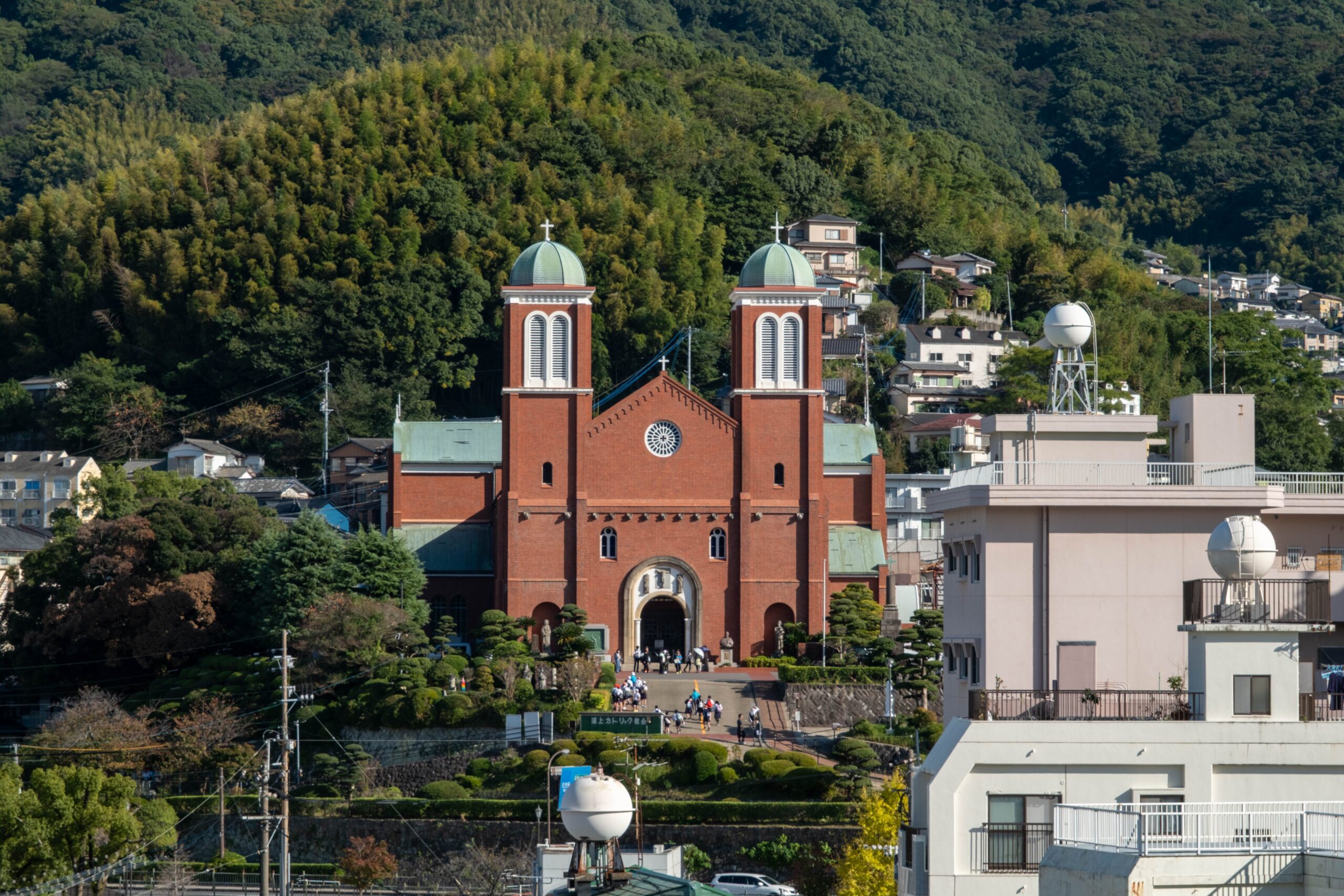
Urakami Cathedral stands in the Urakami district of Nagasaki, an area historically associated with some of the largest Christian communities in Japan. The church is both a place of worship and a major historical monument, closely connected to the persecution of Christians in the Edo period and to the atomic bombing of 1945. The building is visible from the hill on which the Nagasaki Peace Park stands.
The Urakami area was home to thousands of Hidden Christians (Kakure Kirishitan) who preserved their faith in secret after Christianity was banned in the early 17th century. Even after the Meiji government lifted the ban in 1873, local believers faced periods of exile and repression before full religious freedom was established.
With the legalization of Christianity, the Urakami community began constructing a large cathedral as a symbol of their return to open worship. The original Urakami Cathedral was completed in 1925. Built in red brick and designed in a Romanesque style, it was at the time the largest Catholic church in East Asia.
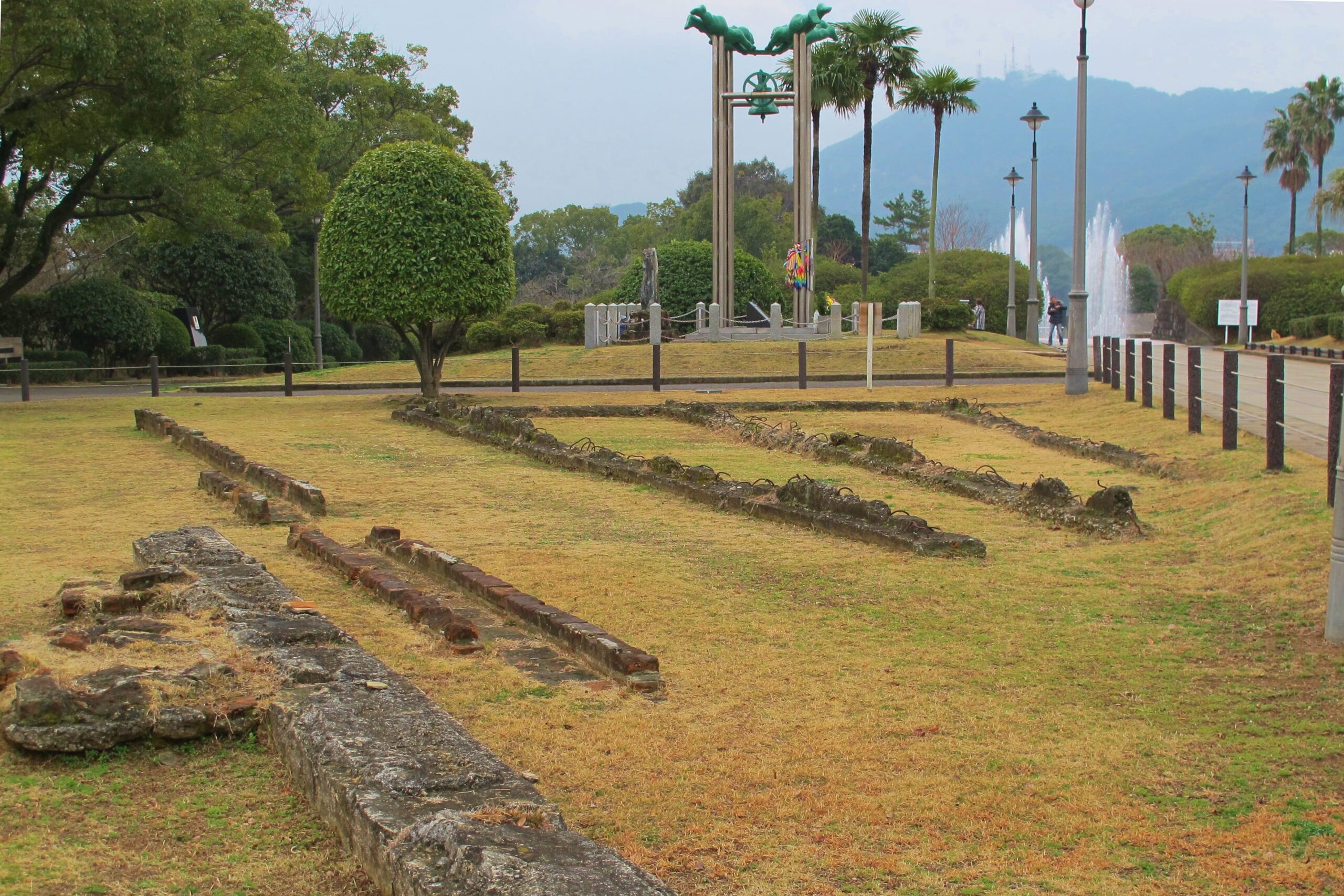
On August 9, 1945, the US detonated an atomic bomb almost directly above the cathedral. The building was destroyed, and many members of the congregation were killed. For years after the war, the ruins remained as a stark reminder of the devastation before the church was rebuilt.
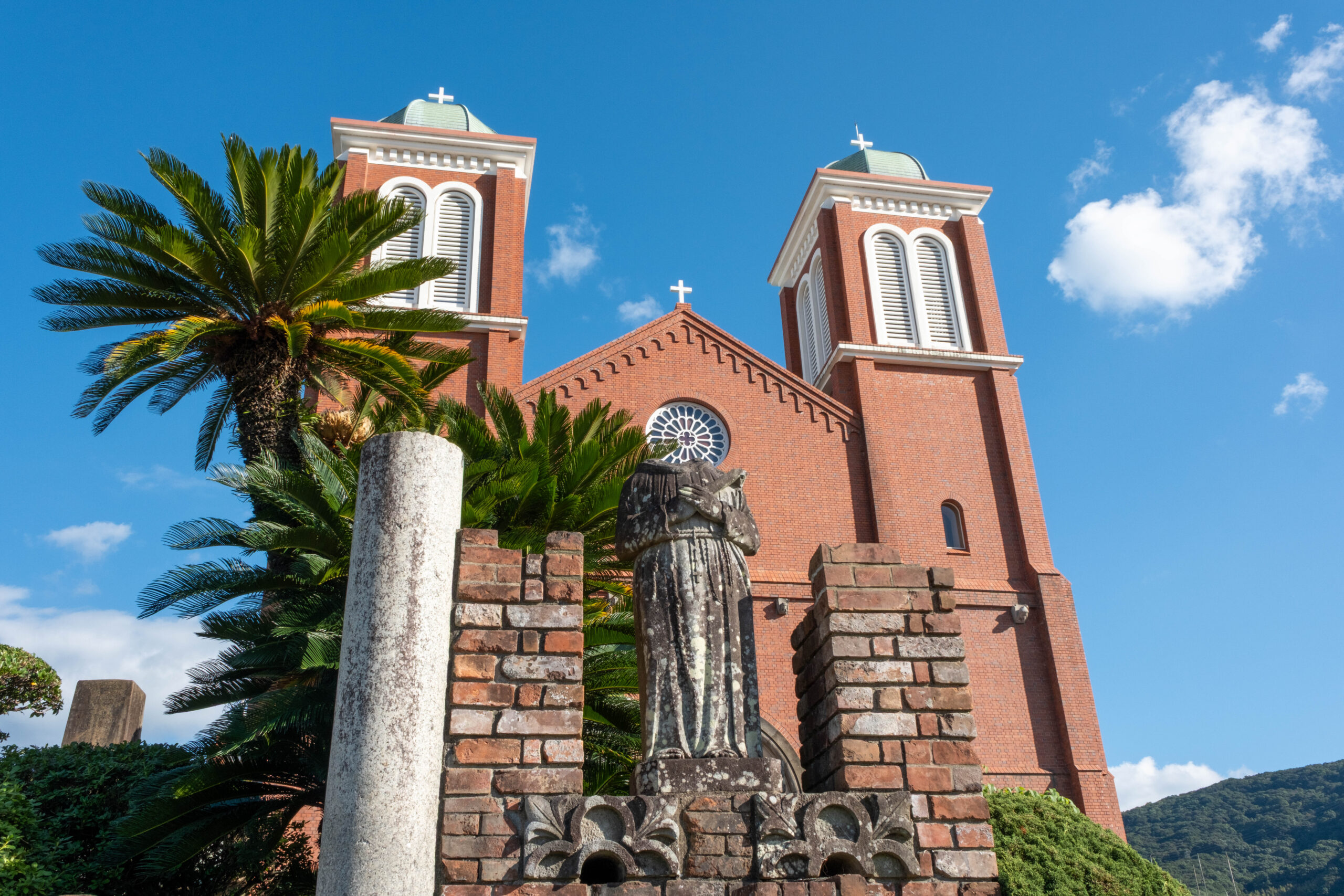
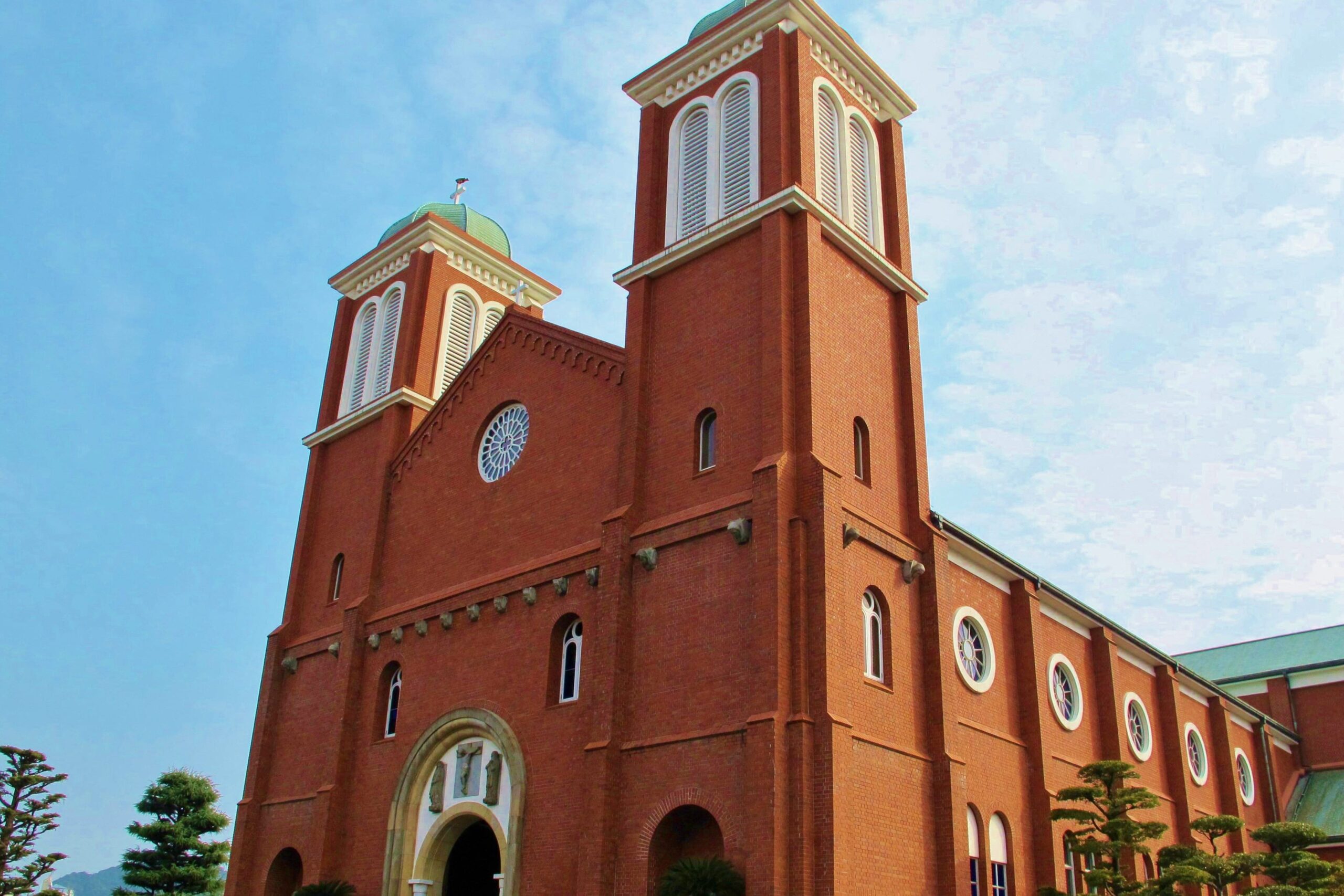
The current Urakami Cathedral was completed in 1959 on the same site. It incorporates red brick construction and Romanesque-inspired arches, recalling the design of the original building. Twin bell towers dominate the façade, and the interior is spacious and relatively restrained, reflecting postwar architectural sensibilities.
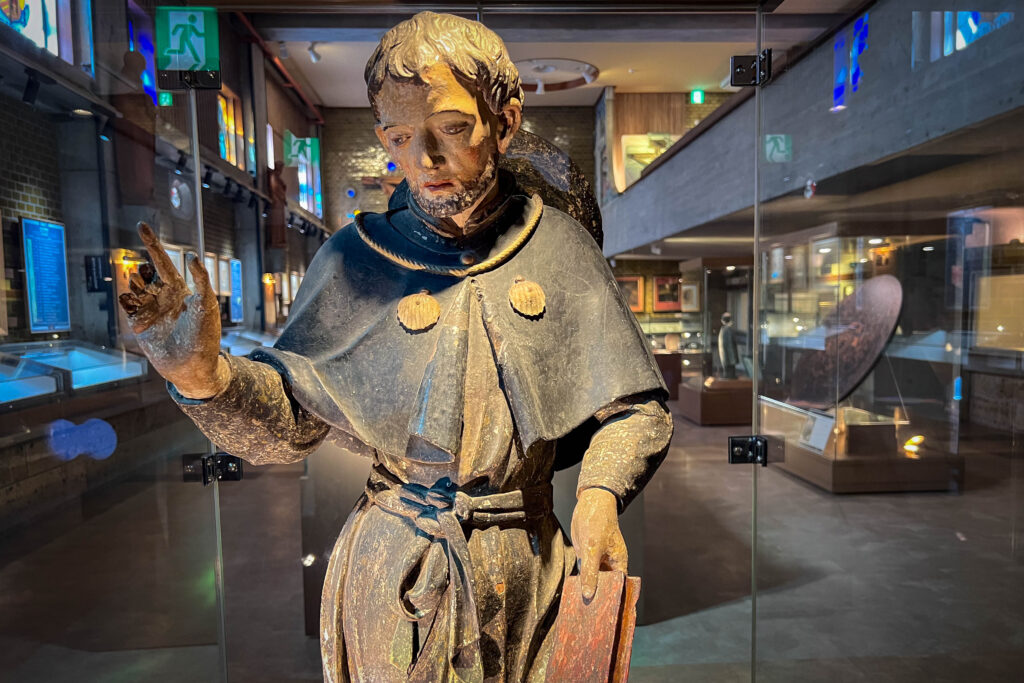
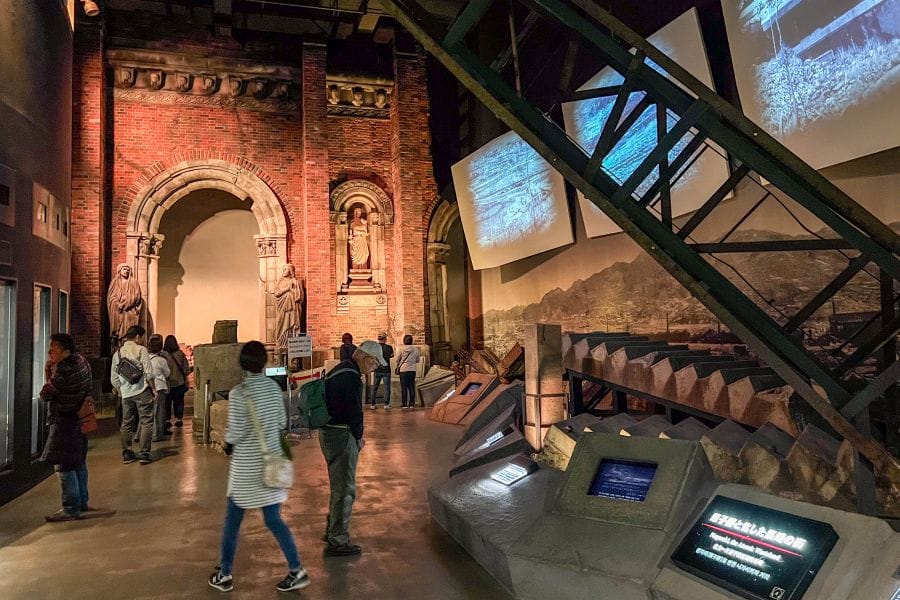
While the main structure is modern, the cathedral grounds preserve fragments of the original church. Sections of damaged walls, statues, and bells recovered from the ruins are displayed as memorials, providing a direct physical link to the 1945 destruction.
Several religious and historical objects associated with the bombing are kept at or near the cathedral. These include a damaged statue of the Virgin Mary, often referred to as the “A-Bombed Madonna,” and other artifacts that survived the blast. They are presented as reminders of both the suffering of the Urakami Christian community and the broader impact of the atomic bomb on Nagasaki.
Urakami Cathedral represents two defining aspects of Nagasaki’s history. It’s rooted in the long struggle of Hidden Christians to preserve their faith under persecution, and it stands at the epicentre of one of the most destructive events of the 20th century. The rebuilt church, together with the preserved ruins and memorials, forms a layered historical site that links early modern religious repression with the experience of modern warfare and reconstruction.
Information
Name in Japanese: 浦上天主堂
Pronunciation: ura-kamee ten-shu-doh
Address: 1-79 Motoomachi, Nagasaki, 852-8112