Azuchi Castle
The Ōmi region is rich in historic castle sites, ranging from well-preserved originals like Hikone to reconstructions such as Nagahama and atmospheric ruins like Sawayama, where the fortress was deliberately dismantled. Among them all, Azuchi stands out as uniquely significant. Although only fragments remain today, the site marks a turning point in Japanese castle design and the political ambitions of one of the country’s most powerful warlords.
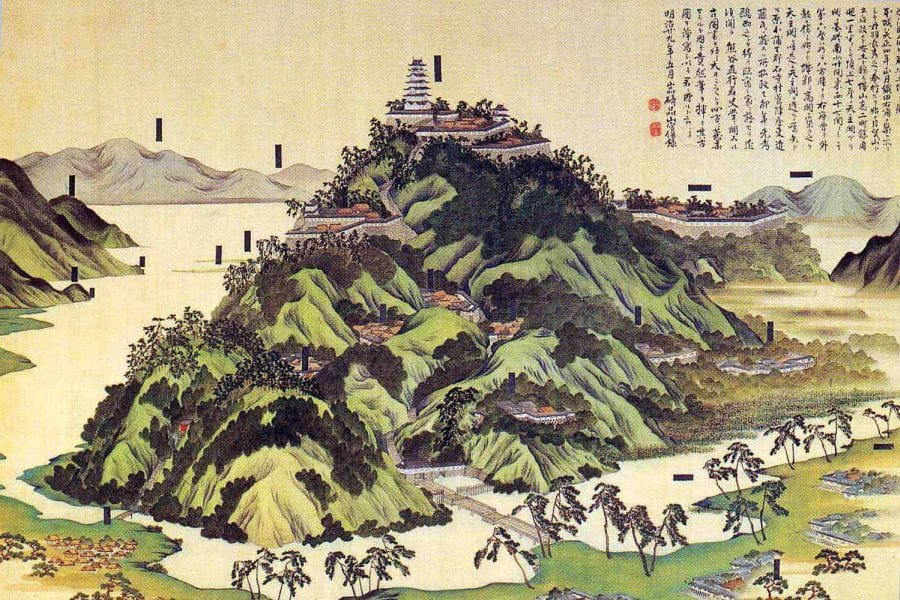
Azuchi Castle was built by Oda Nobunaga on Mt. Azuchi, overlooking the eastern shore of Lake Biwa. At the time of its completion, it was an architectural marvel. It introduced the first truly monumental keep, conceived not just as a military structure but as a statement of prestige and authority. Set atop massive stone walls, the design established a model that later castles across Japan would follow.
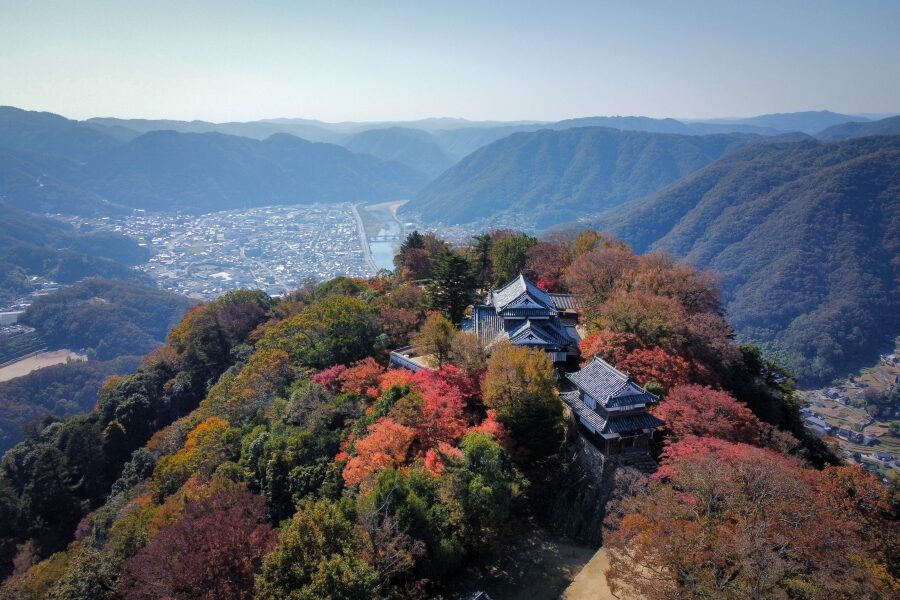
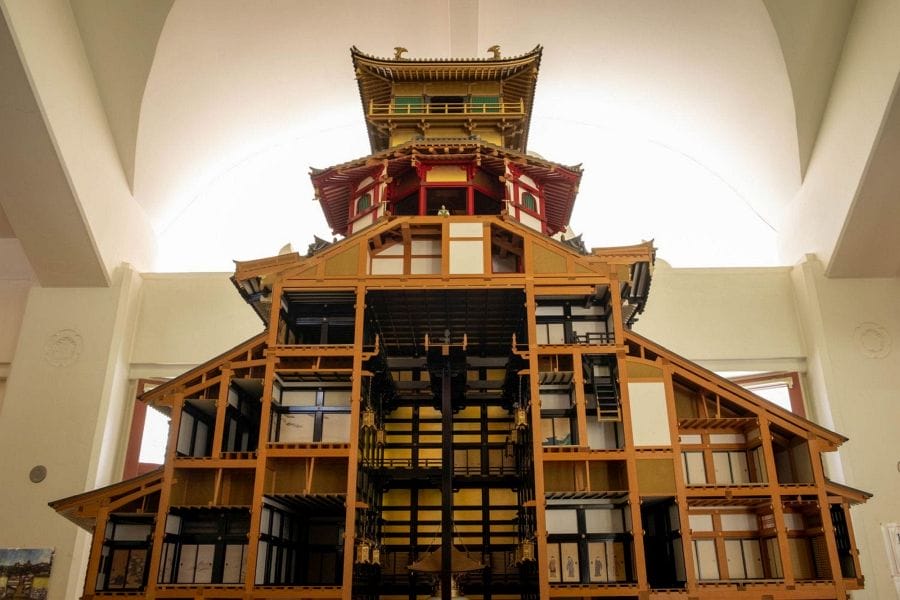
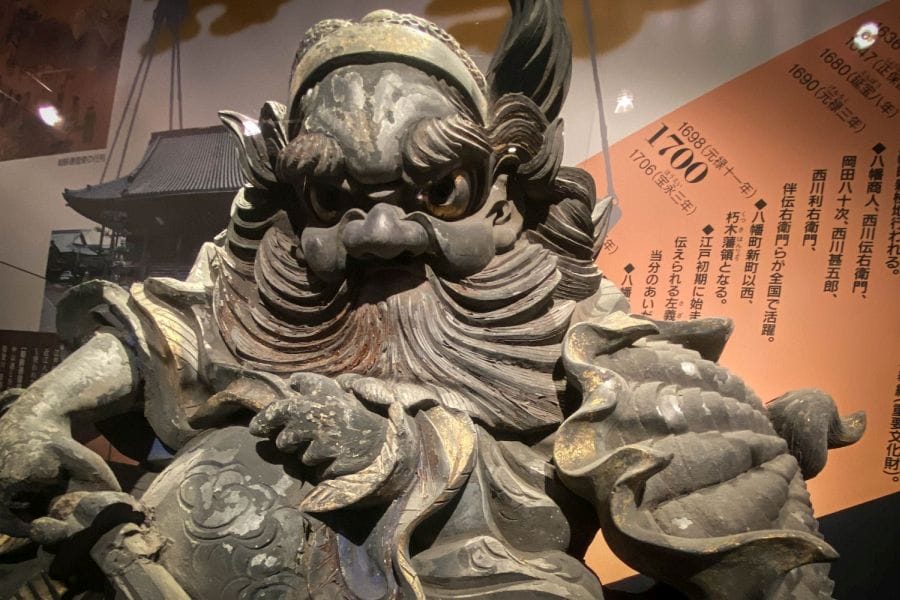
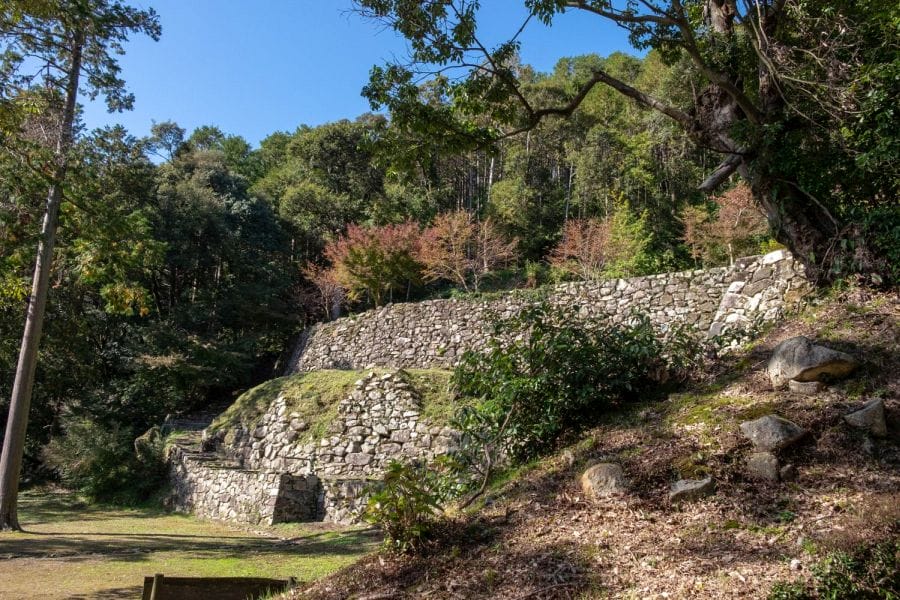
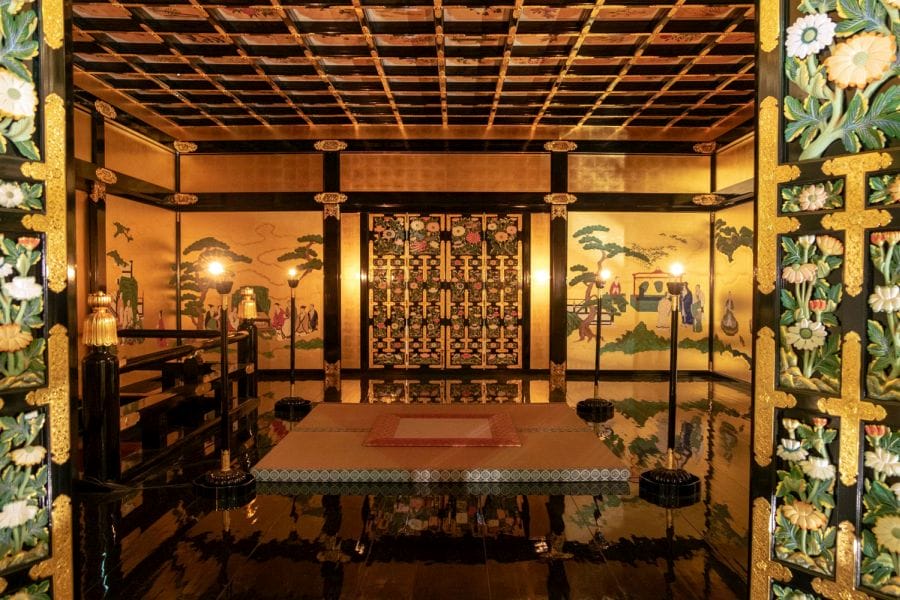
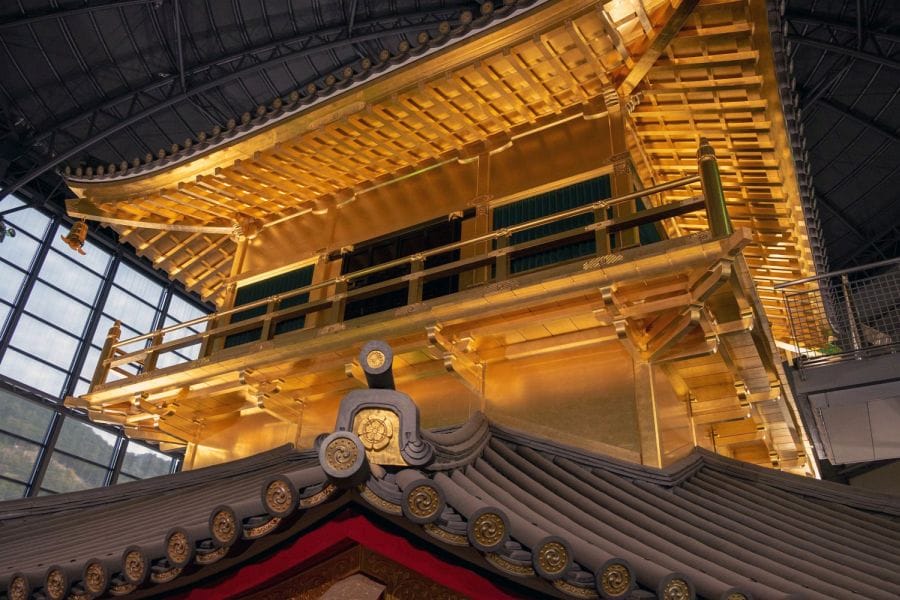
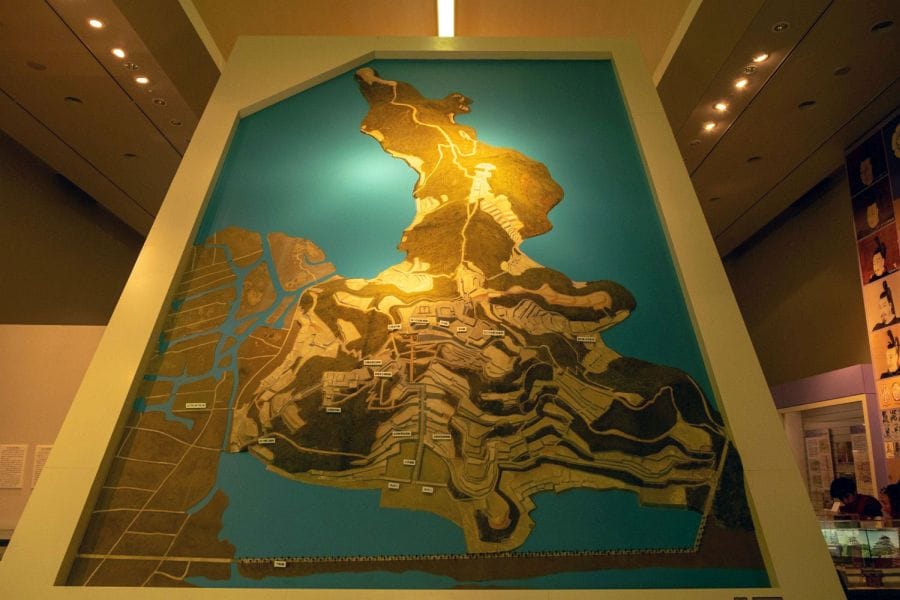
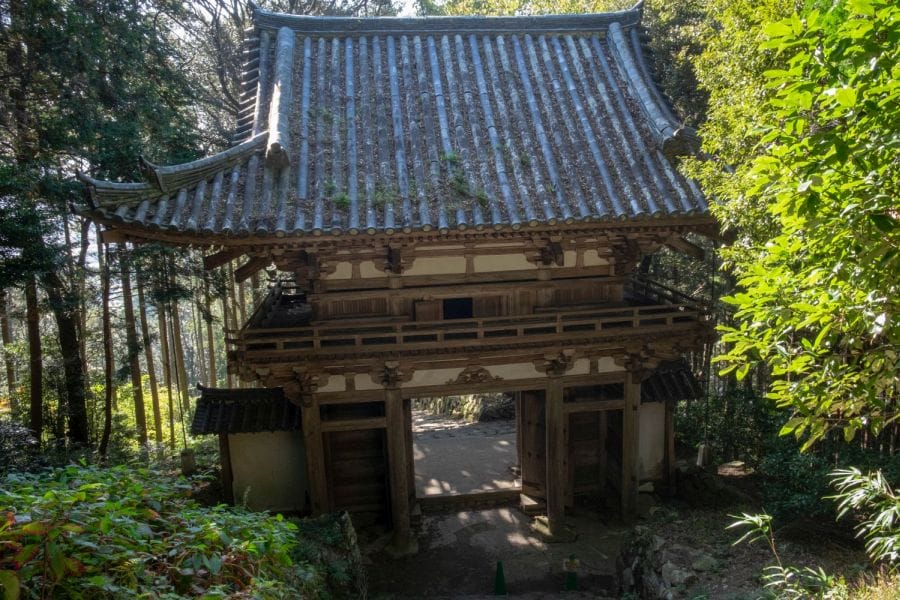
Only portions of the original complex survive today, most notably the extensive stone walls, along with the Niō gate and three-storey pagoda of Sōken-ji Temple and a mausoleum dedicated to Nobunaga. Even in ruin, the mountaintop setting and scale of the remains give a strong impression of the former grandeur. To gain a fuller picture, it is well worth visiting the nearby Azuchi Castle Archaeological Museum and Nobunaga’s Castle Museum, both of which provide detailed visual reconstructions and historical context.
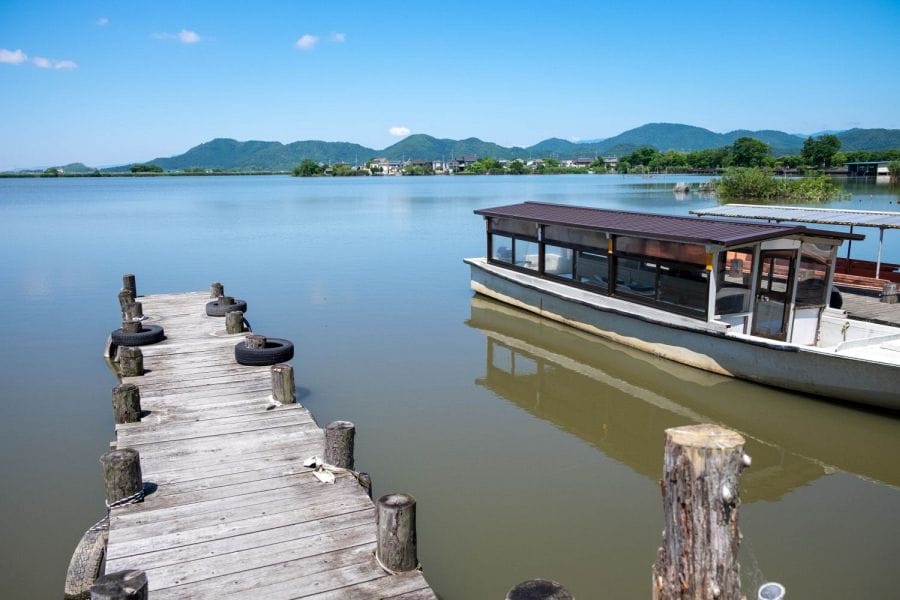
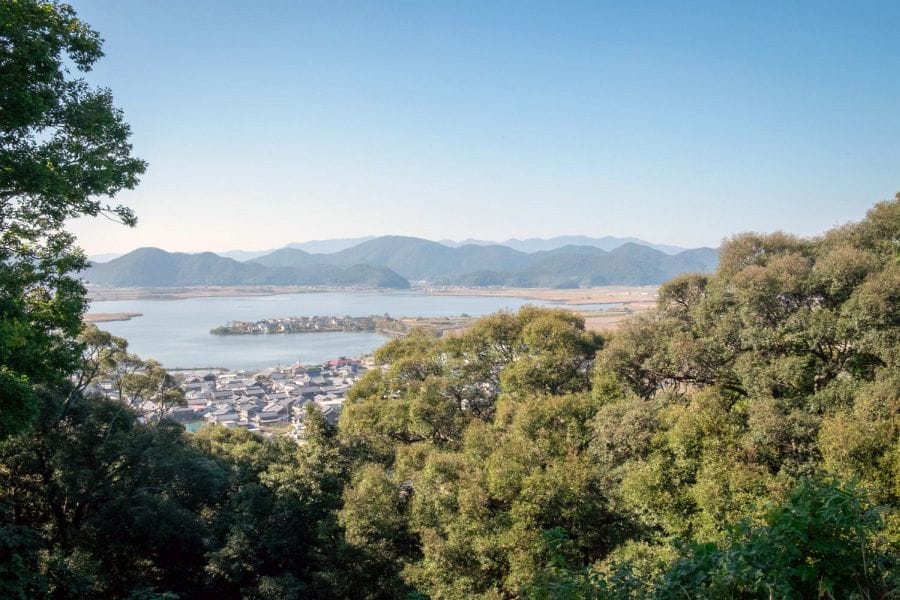
When it was built, the castle stood beside a large subsidiary lake connected to Lake Biwa, which formed part of its natural defences. The keep rose six storeys above ground with one additional level below, reaching a height of roughly 32 metres. Its location was strategically chosen: close enough to Kyōto for Nobunaga to exert political influence, yet far enough to avoid the intrigues and disasters that frequently struck the capital. Lake Biwa also offered a vital transport route, linking Azuchi directly to Kyōto by water.
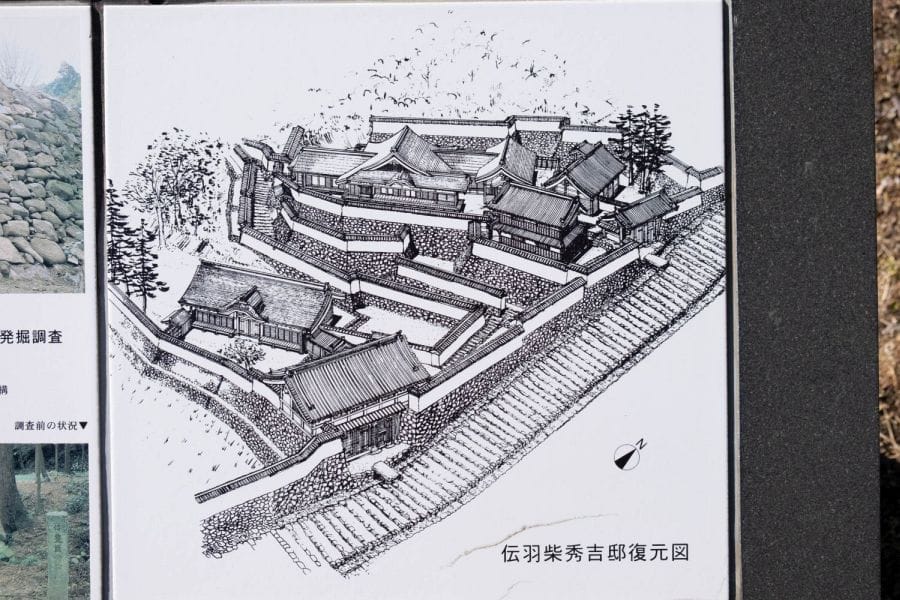
Contemporary descriptions emphasise the castle’s immense scale and lavish appearance, which reflected Nobunaga’s ambition to unify Japan. Nobunaga himself lived in the keep at the summit, while his family resided near the main enclosure. His senior retainers occupied residences partway up the hillside, with lower-ranking vassals settled at the base of the mountain.
Nearby Kannonji Castle, built by the Rokkaku clan, had already demonstrated the advantages of extensive stone fortifications, but Azuchi took this concept further by placing every major structure on stone foundations. One of its most important innovations was the central keep itself, built on a massive stone base. The Portuguese Jesuit missionary Luís Fróis left a vivid account of it in his History of Japan, describing a seven-storey tower adorned with painted interiors, multi-coloured exterior walls, blue-tinted roof tiles, and a dazzling gold top floor crowned by an elaborate decorative crest. His description underlines how radically different Azuchi was from earlier fortresses.
The construction techniques used here became the blueprint for castles across Japan from the Azuchi–Momoyama period into the early Edo era. This was partly because the same guild of stone masons who built Azuchi’s walls later worked on major castles throughout the country, spreading this new style nationwide.
The ruins are scattered across Mt. Azuchi, now known as Azuchiyama. Within the grounds of Sōken-ji Temple on the hillside, a gate and three-storey pagoda from the original complex are still standing. The site of the secondary enclosure also contains Nobunaga’s mausoleum.
Since 1989, Shiga Prefecture has carried out extensive archaeological excavations at Azuchi. These have uncovered a broad road running from the southern foot of the mountain to the main enclosure, residences for prominent retainers such as Hashiba Hideyoshi and Maeda Toshiie, and the remains of a palace built in imitation of the Imperial Palace in Kyōto, prepared in anticipation of a possible imperial visit.
Another notable innovation concerned the structure of the keep itself. Traditional tall wooden buildings in Japan, such as pagodas, usually rely on a central supporting pillar. At Azuchi, however, excavations found no trace of a foundation stone for such a pillar. This suggests that the keep contained a vast central atrium extending through several floors, an unprecedented design for the time.
In later castles, impressive keeps served mainly as symbols of power and as final defensive refuges rather than as living quarters. At Azuchi, however, it is believed that Nobunaga actually resided in the keep. Contemporary accounts of its opulent interiors support this idea, reinforcing the impression that the structure was intended as both a palace and a political stage.
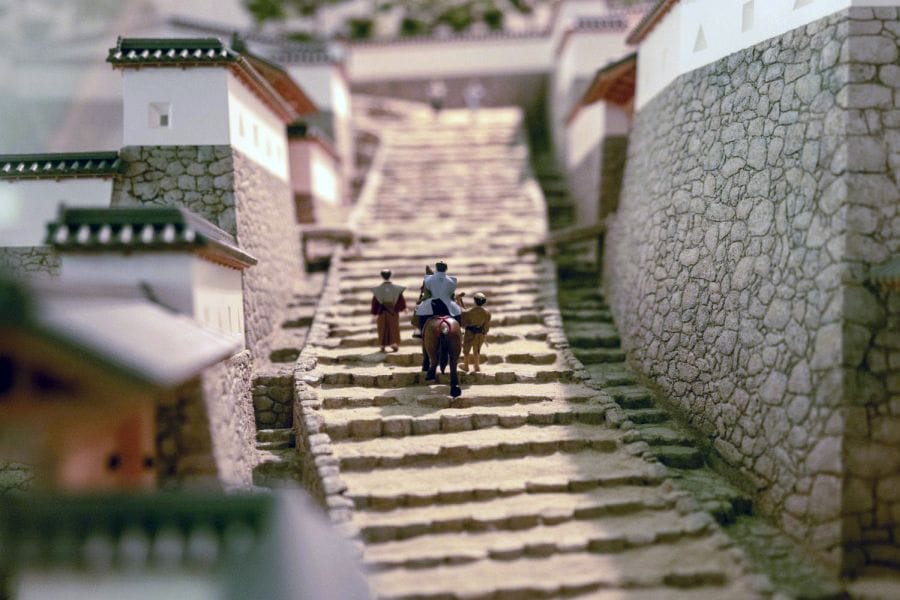
Despite its imposing appearance and defensible location, Azuchi’s military features were surprisingly limited. There were few wells or other facilities needed to withstand a prolonged siege, and relatively few battlements or weapon ports. Instead of narrow, winding internal paths designed to slow attackers, the castle had a straight, six-metre-wide avenue running some 180 metres from the main gate into the heart of the complex. These choices suggest that political display took precedence over strict military practicality. The central atrium, believed to have housed a stupa rising through multiple floors, added a religious dimension to this expression of power.
Although Nobunaga was not known for deep religious devotion, Azuchi is unusual in that it incorporated a substantial Buddhist temple, Sōken-ji, within its precincts. The main approach from the southwestern entrance passed directly through the temple grounds. At the same time, several Buddhist statues were reportedly reused as building material for the stone steps along the main path, a striking and controversial decision that hints at Nobunaga’s irreverent attitude towards established religious institutions.
Construction of Azuchi Castle began in 1576, with Oda Nobunaga appointing Niwa Nagahide as chief commissioner of works and mobilising his vassals to assist. By May 1579, the keep was complete, and Nobunaga moved in. Luís Fróis recorded that lightning struck the main enclosure around this time, an incident that later writers interpreted as an ominous sign.
To advertise his power and sophistication, Nobunaga presented a gilded folding screen depicting Azuchi Castle, painted by Kanō Eitoku, to the Jesuit missionary Alessandro Valignano. It was sent to Europe with the Japanese mission to the West and reportedly kept in the Vatican. If rediscovered, it would provide invaluable evidence of the castle’s original appearance, but its whereabouts remain unknown.
In 1582, Azuchi hosted a grand reception for Tokugawa Ieyasu, with Akechi Mitsuhide responsible for hospitality. Shortly afterwards, Nobunaga committed suicide at Honnō-ji in Kyōto during Mitsuhide’s rebellion on 21 June. At the time, Gamō Katahide was in charge of Azuchi Castle. Following Nobunaga’s death, Katahide and his son Ujisato evacuated Nobunaga’s family to their own stronghold at Hino Castle. Not long after, the keep and main enclosure at Azuchi were destroyed by fire.
The exact cause of the blaze remains uncertain. Some records claim that Akechi Hidemitsu set the castle alight while retreating after the Battle of Yamazaki. Others attribute it to looters, to Nobunaga’s son Oda Nobukatsu, or even to another lightning strike. No single explanation has been conclusively proven.
The secondary enclosure continued to be used for a short time by Nobunaga’s descendants, but the site was ultimately abandoned in 1585 when Toyotomi Hidetsugu, the adopted son of Toyotomi Hideyoshi, built Hachimanyama Castle nearby.
Exploring the castle ruins together with Nobunaga’s Castle Museum, the Azuchi Castle Archaeological Museum, and the Azuchi Castle Museum near JR Azuchi Station makes for a rewarding and informative day trip.
Information
Name in Japanese: 安土城
Pronunciation: azoochee-joh
Address: Azuchi-chō Shimotoira, Ōmihachiman, Shiga 521-1311