Mt. Hachiman Castle
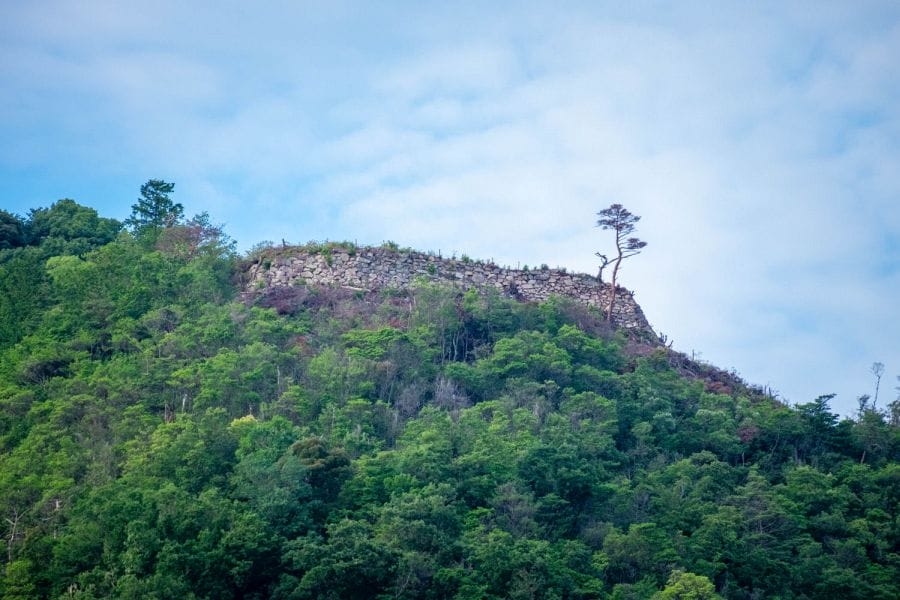
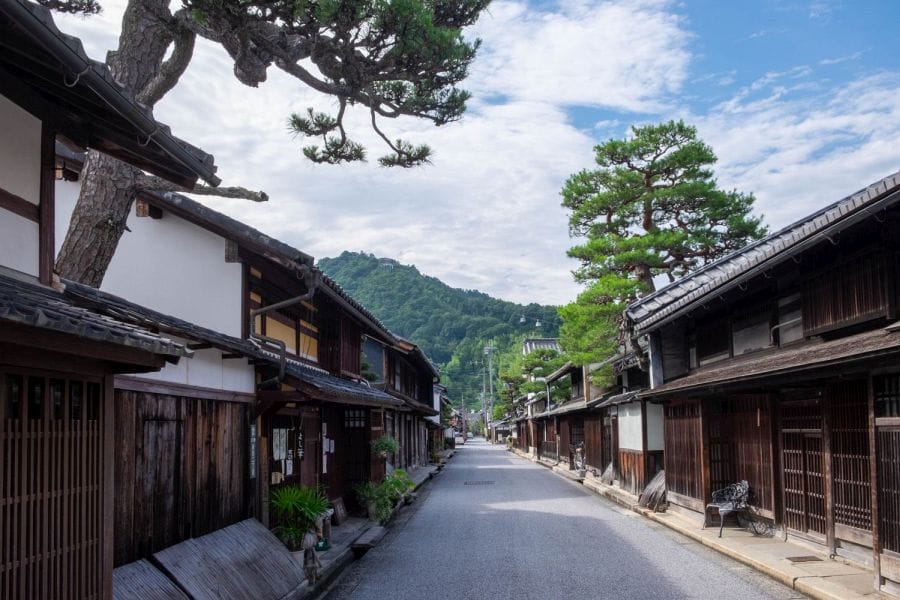
The town of Ōmihachiman spreads south from a long, narrow mountain ridge known as Mt. Hachiman. For a brief but important period during the Sengoku era, this ridge was crowned by a major fortress. Today, the summit can be reached either by cable car or by a well-maintained hiking path. If you explore the historic canal that once formed part of the castle’s defences, you can look up and spot the stone walls of the main enclosure high above the town.
Mt. Hachiman Castle, otherwise known as Hachimanyama Castle, was constructed for Toyotomi Hidetsugu, the nephew of Toyotomi Hideyoshi, shortly after the dramatic death of Oda Nobunaga. With nearby Azuchi Castle having burned down not long after its completion, this new stronghold was intended to replace it as the principal castle in the area. Like its predecessor, however, it proved to be short-lived.
The site occupies Mt. Hachiman, a steep-sided peak rising to 283 m, one of several small mountains scattered across the surrounding plain. When it was built, the castle’s layout echoed that of Azuchi, with natural protection from subsidiary lakes of Lake Biwa to the east and west and a castle town spreading out across the flat land to the south. A broad moat known as Hachimanbori was dug around the base, fed by water from Lake Biwa. It functioned both as a defensive barrier and as a transport canal. In the 1970s there were plans to fill it in for development, but local opposition halted the project. Today, the canal is one of Ōmihachiman’s most recognisable features and is frequently used as a location for historical dramas.
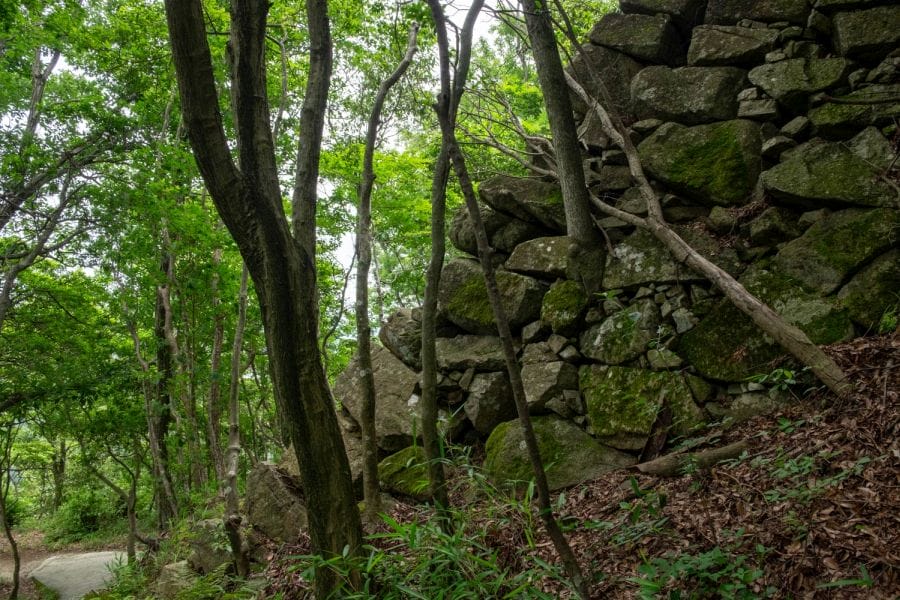
Hideyoshi designated Hachimanyama Castle as the provincial headquarters of Ōmi, replacing Azuchi in that role, and personally oversaw its construction. Evidence suggests it was built in haste: stonework from several Buddhist temples was reused in the walls. The fortress formed part of a wider strategy to establish a network of castle towns across Ōmi Province, each governed by loyal retainers. The aim was to secure both military strength and economic control in a region long considered strategically vital. From medieval times, the saying “Whoever controls Ōmi controls the world” reflected the province’s importance as a crossroads of central Japan.
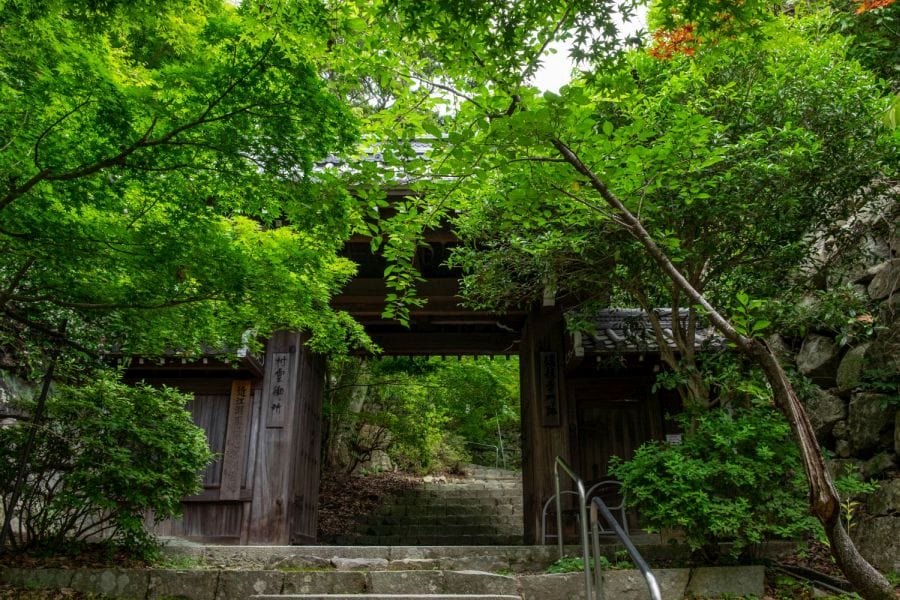
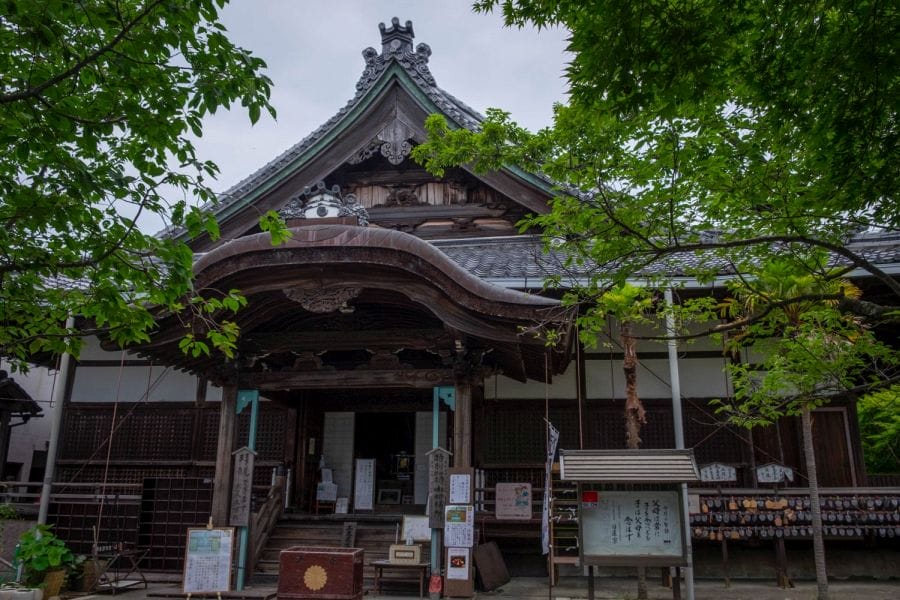
Toyotomi Hidetsugu took up residence in the castle in 1586, when he was just 18. Four years later he was reassigned to Kiyosu Castle. In 1595, however, Hideyoshi accused him of treason and ordered him to take his own life. His entire family was also executed. Because the fortress was so closely associated with him, Hachimanyama Castle was dismantled only a decade after it had been completed. Hidetsugu’s mother, Nisshū, later founded Zuiryū-ji Temple in Kyōto to mourn her son, and in 1963 the surviving gate from that temple was relocated to the former castle site.
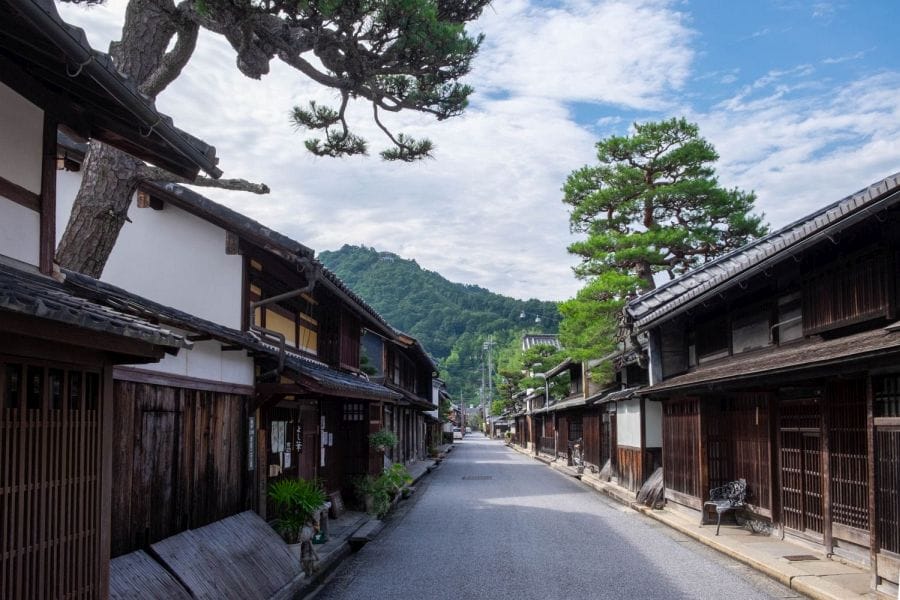
Despite his tragic end, Hidetsugu is remembered as an able administrator whose forward-looking policies helped lay the foundations for Ōmihachiman’s prosperity. He required boats travelling across Lake Biwa to pass through the castle moat, effectively turning the town into a key commercial gateway. This was reinforced by reforms that loosened restrictions on markets and guilds, helping Ōmihachiman become the home of the Hachiman Merchants, one of the most prominent groups within the wider Ōmi merchant tradition.
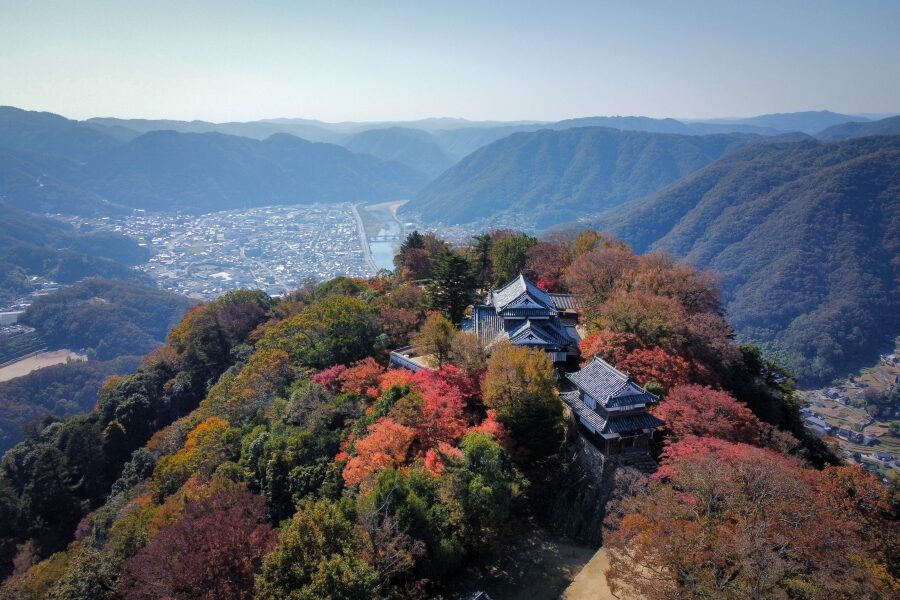
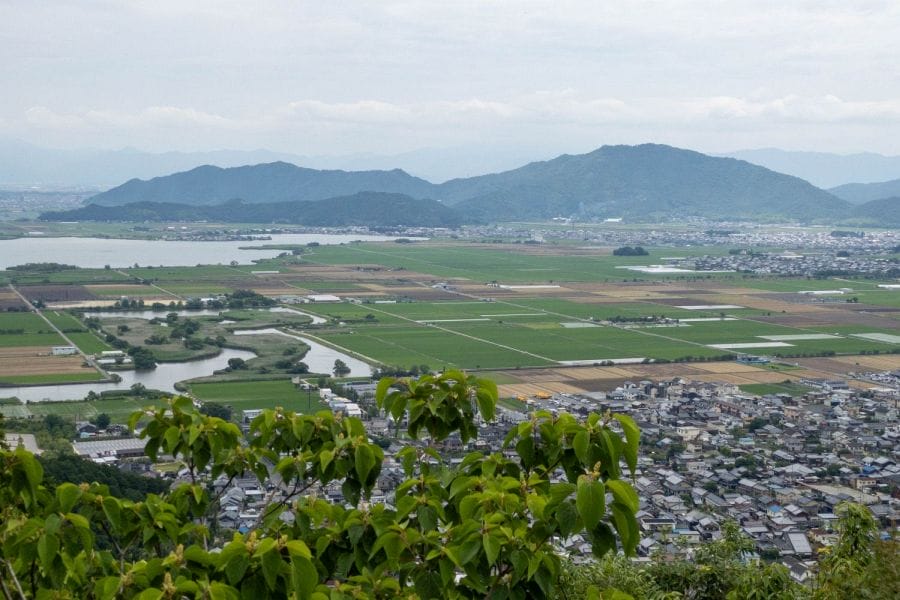
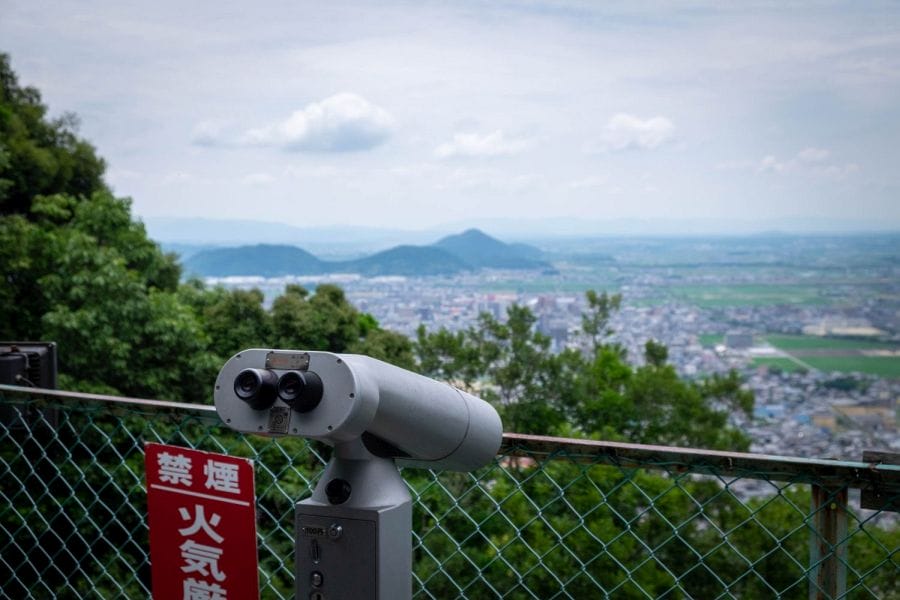
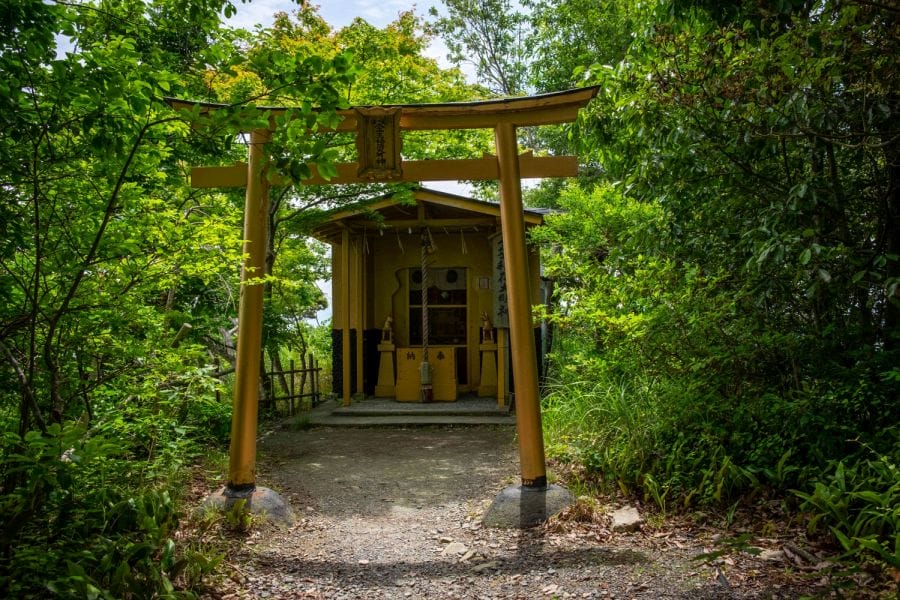
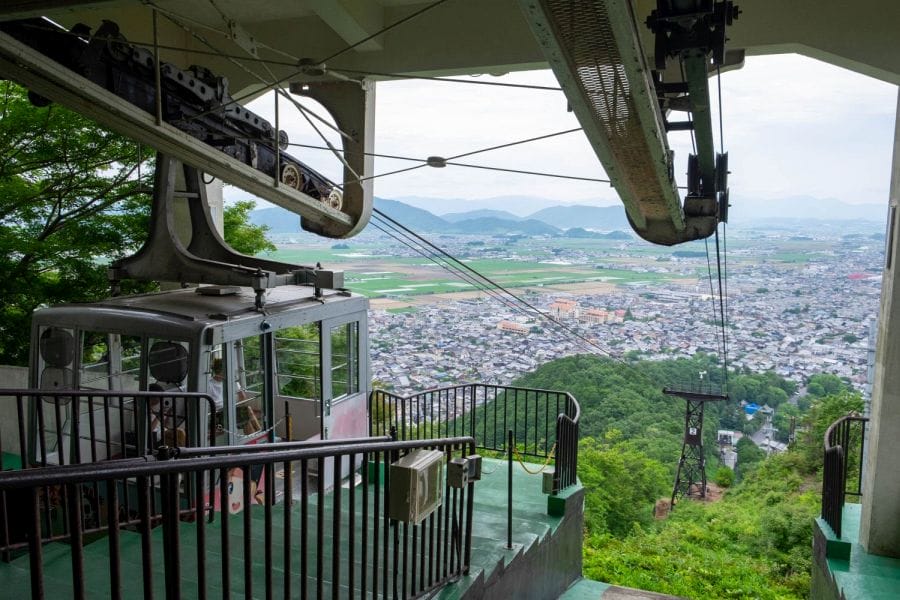
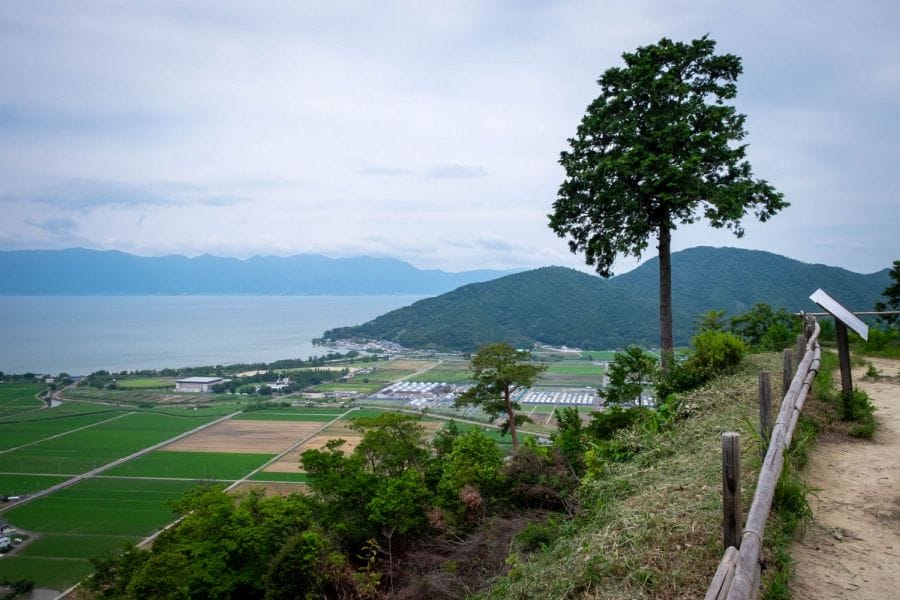
Although the buildings are long gone, the remaining stone walls are still striking. You can reach the summit by taking the cable car from the station beside Himure Hachiman Shrine or by following the hiking trail behind it. Near the cable car station is an observation deck with sweeping views towards Mt. Azuchi and Mt. Kinugasa, both known for their own historic castles. The summit area also includes Zuiryū-ji Temple and a small Shintō shrine. Paths wind among the ruins, opening up vistas of Lake Biwa, the Suigō waterways, and the surrounding mountains.
A clearly signposted footpath runs along the crest of Mt. Hachiman, making it easy to continue across the ridge and walk back to the starting point. On the return route, it’s also possible to detour via La Collina, adding a relaxed finish to the circuit.
Information
Name in Japanese: 八幡山城
Pronunciation: ha-chee-man-yama-joh
Address: 19-9 Miyauchi-chō, Ōmihachiman, Shiga 523-0085