Tile Museum
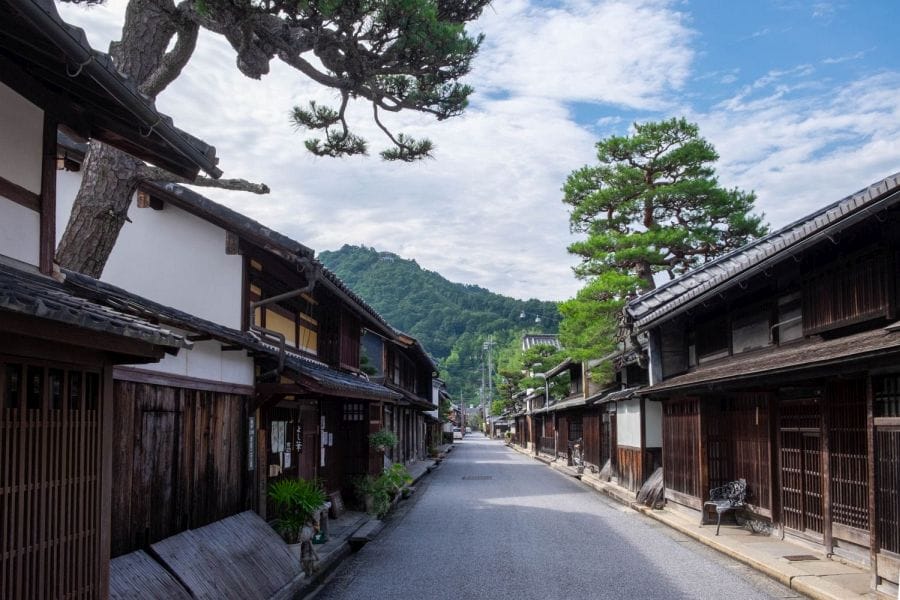
Much of Ōmihachiman’s distinctive charm comes from its roof tiles, which lend a refined and atmospheric character to the town’s streetscape. These tiles are not just decorative features but the legacy of a once-thriving local industry.
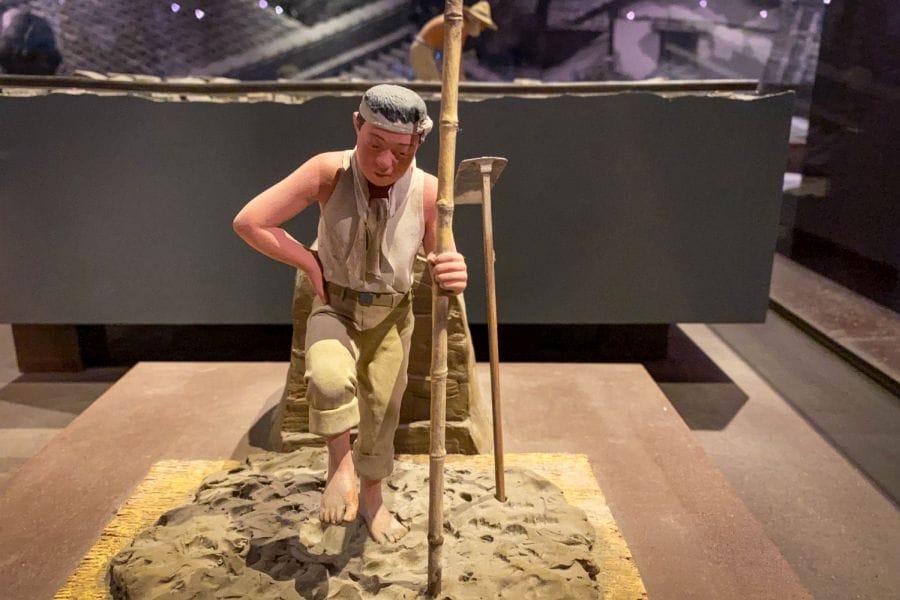
Until relatively recent times, Ōmihachiman was an important centre for tile production. One visible reminder of this past is the tall brick chimney that still stands as a town landmark. The industry developed almost by accident, thanks to the town’s moat, which also functioned as a working canal. To keep the waterway open to boat traffic, it was regularly dredged, and the removed silt was spread on nearby farmland as fertiliser. Over time, the soil in these fields became rich in fine clay mixed with organic matter from decaying reeds, creating ideal conditions for making roof tiles. With easy access to Lake Biwa for transport, Ōmihachiman grew into a major regional supplier.
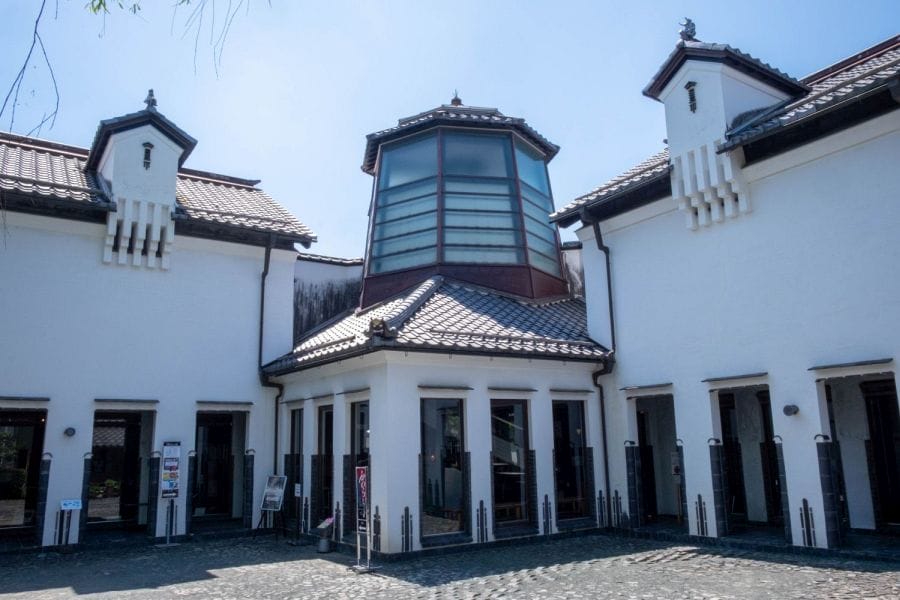
The Tile Museum itself is a contemporary structure, but it has been carefully designed to blend in with its historic surroundings. Grey tiles feature prominently across its layered roofs and are also set into the exterior walls. Reclaimed old tiles have been reused to form the pathways that wind through the museum grounds. The complex includes several auxiliary buildings, among them a workshop where decorative tiles are still crafted using traditional methods.
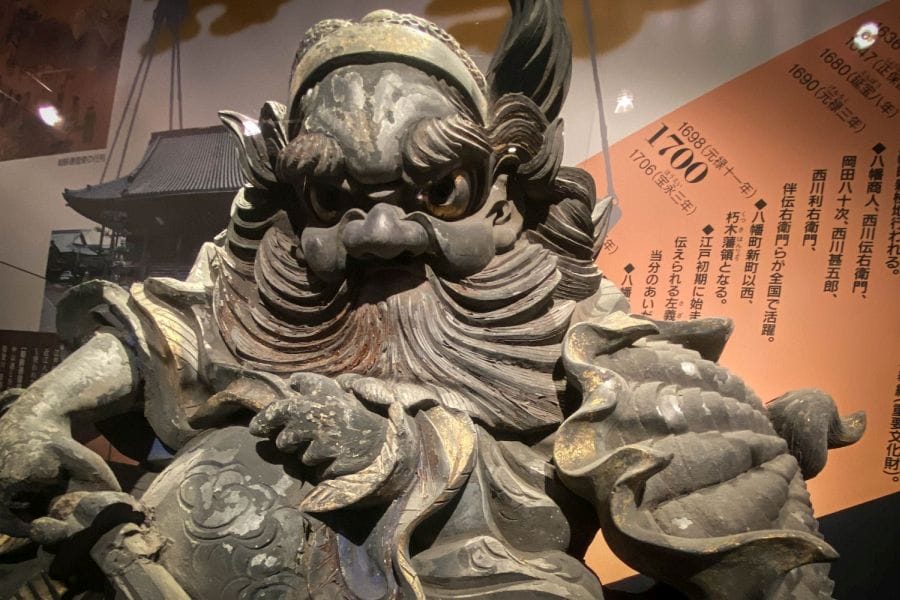
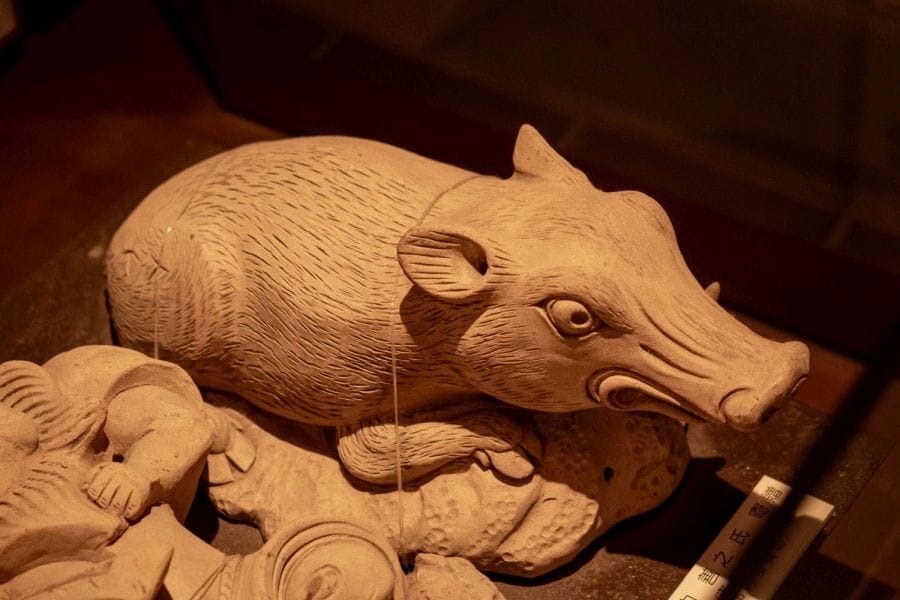
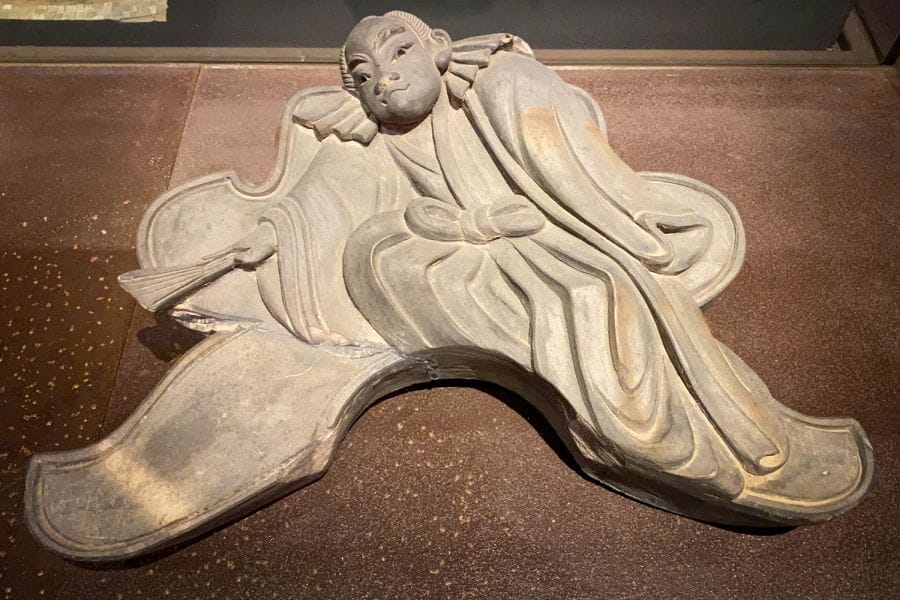
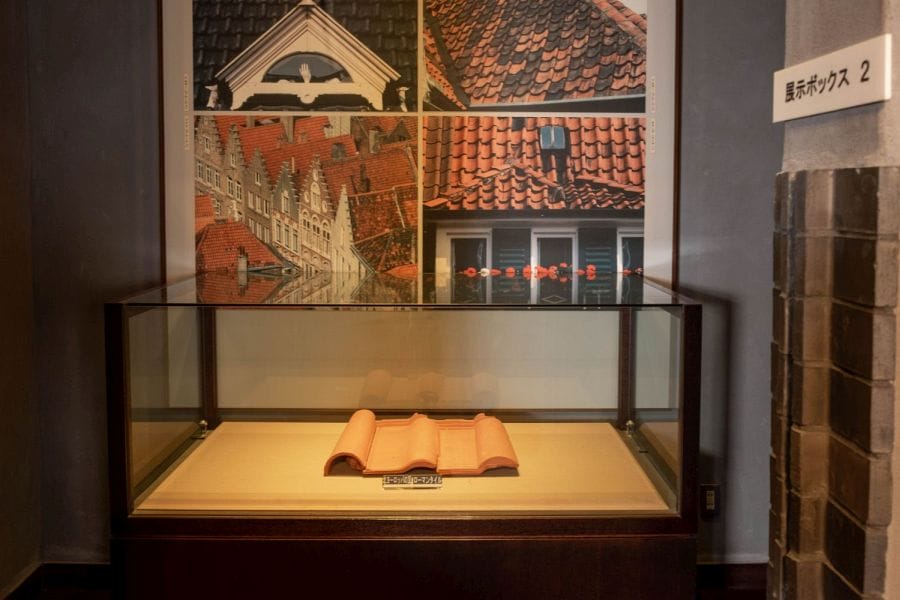
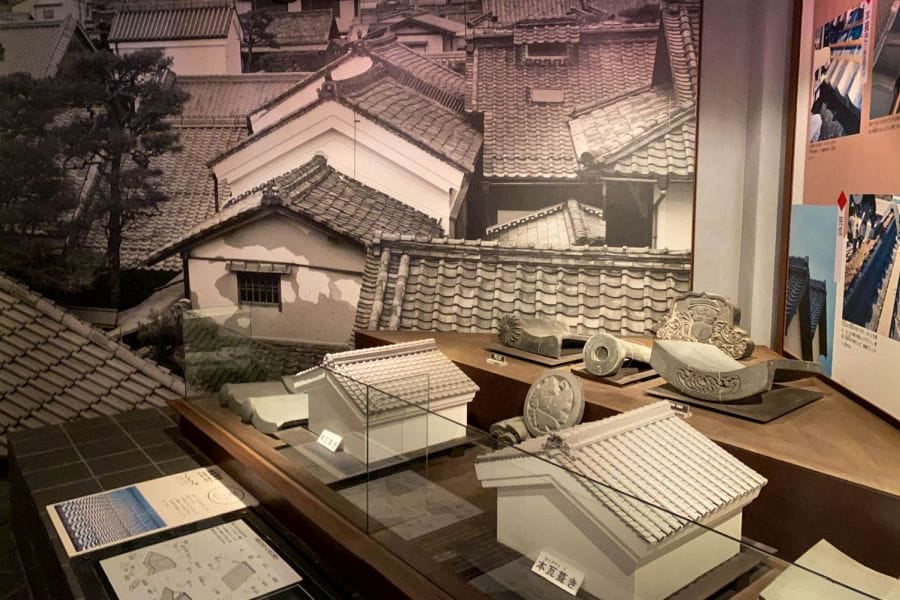
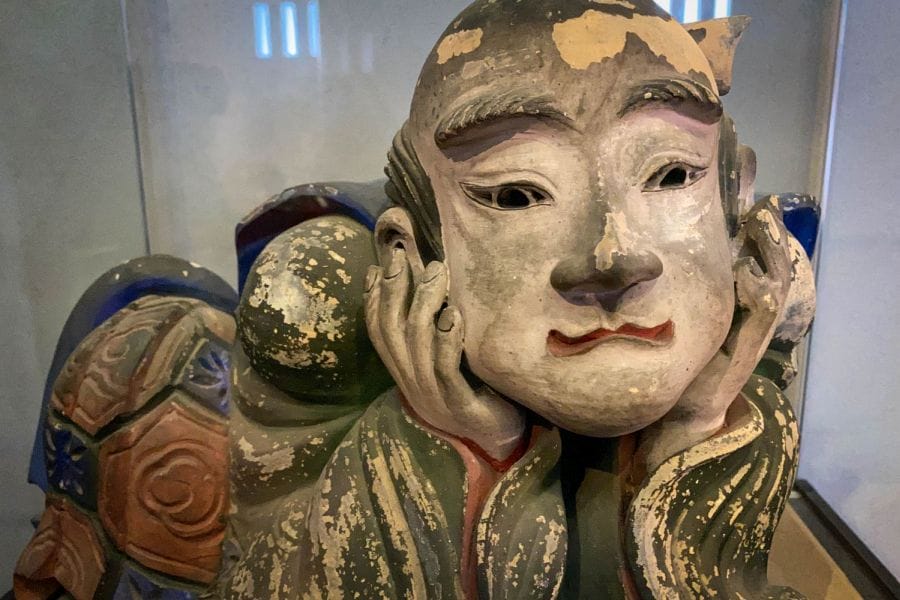
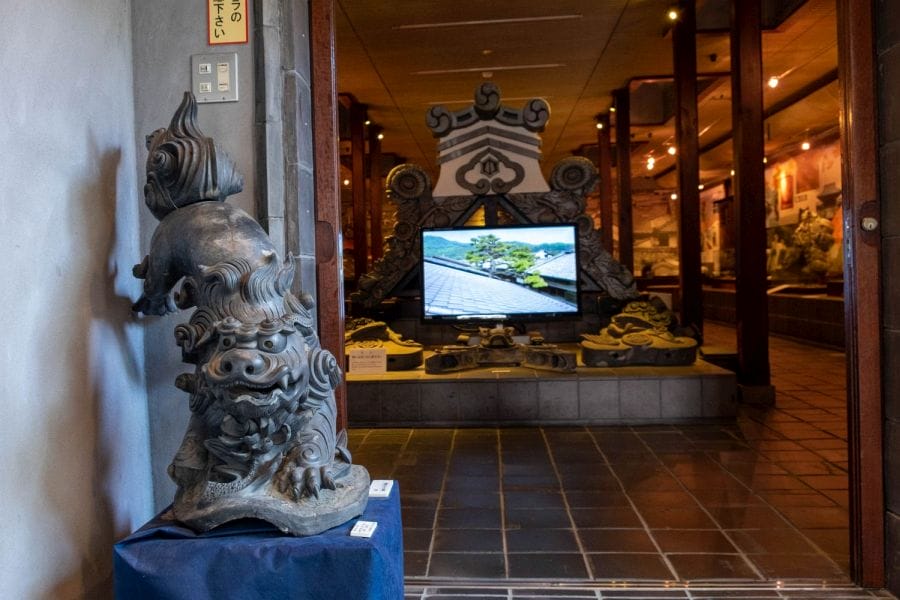
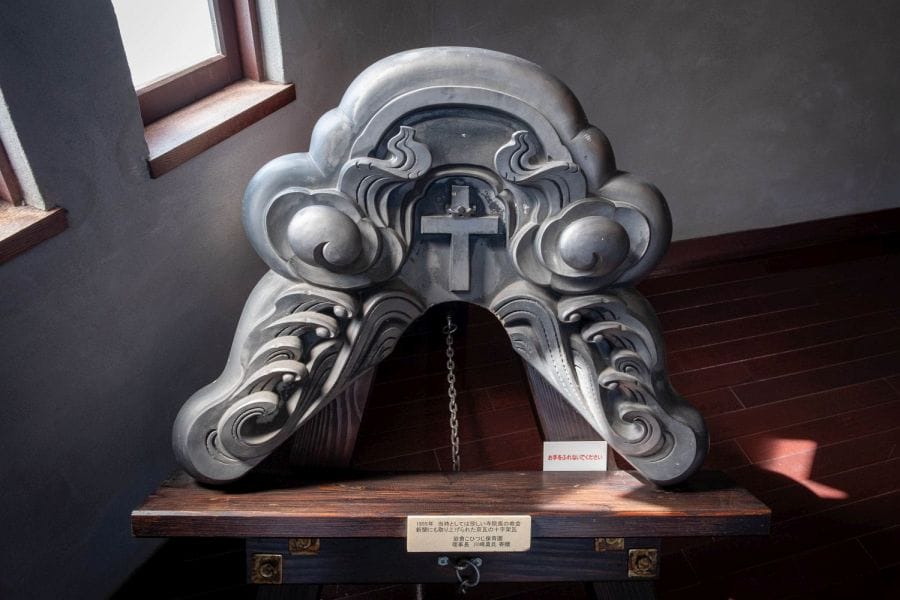
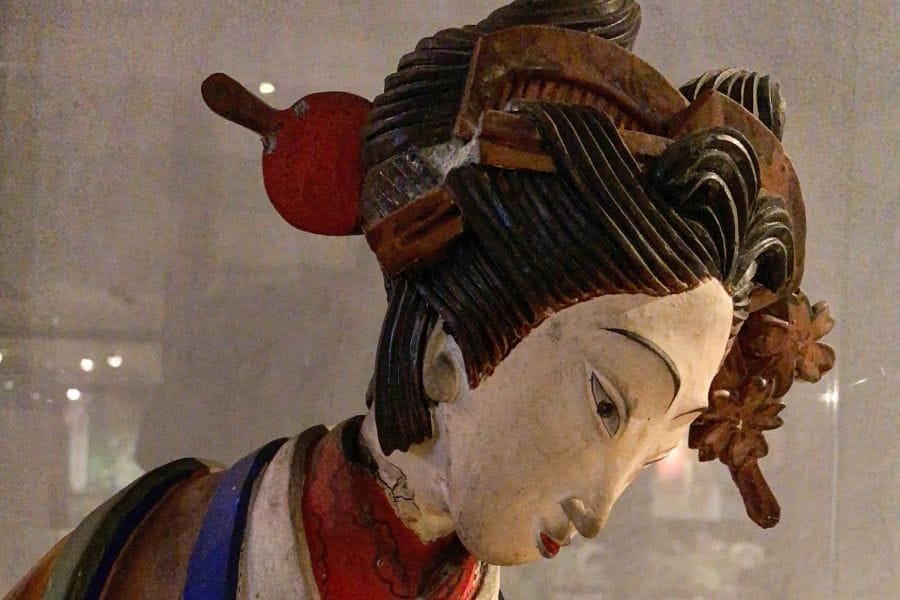
Inside, the exhibits trace the story of tile-making in Ōmihachiman, explaining the tools, techniques, and production processes involved, as well as the role of tiles in traditional Japanese architecture. Displays of ornamental tiles highlight the high level of artistry and craftsmanship that local makers achieved. Beyond roof fittings, artisans also produced free-standing artworks to showcase their skills, using the same materials in more experimental ways. One gallery is devoted to a comparison of roof tiles from different parts of Japan and from overseas.
From the museum’s second floor, you can look out across the surrounding rooftops and appreciate the subtle beauty of their weathered tiles, seen in the context for which they were originally made.

Information
Name in Japanese: かわらミュージアム
Pronunciation: kawara myu-jee-amu
Address: 738-2 Taga-chō, Ōmihachiman, Shiga 523-0821