Sadamitsu
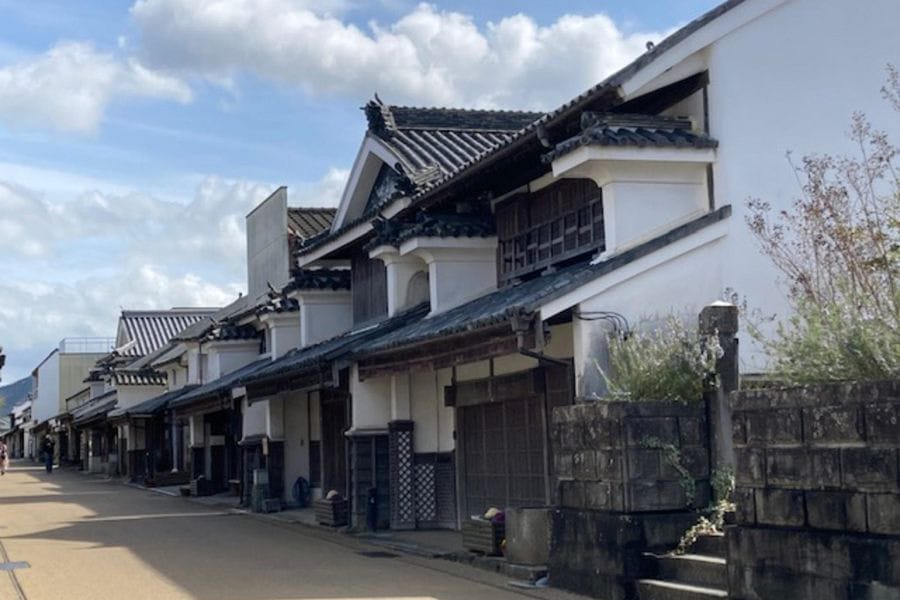
Like the nearby town of Wakimachi, Sadamitsu flourished as a vital point of commerce and transportation after the middle Edo period. Until around 1955, Sadamitsu was crowded with people who purchased agricultural tools, everyday items, medicines and so on in exchange for leaf tobacco and vegetables from villages in the mountains.
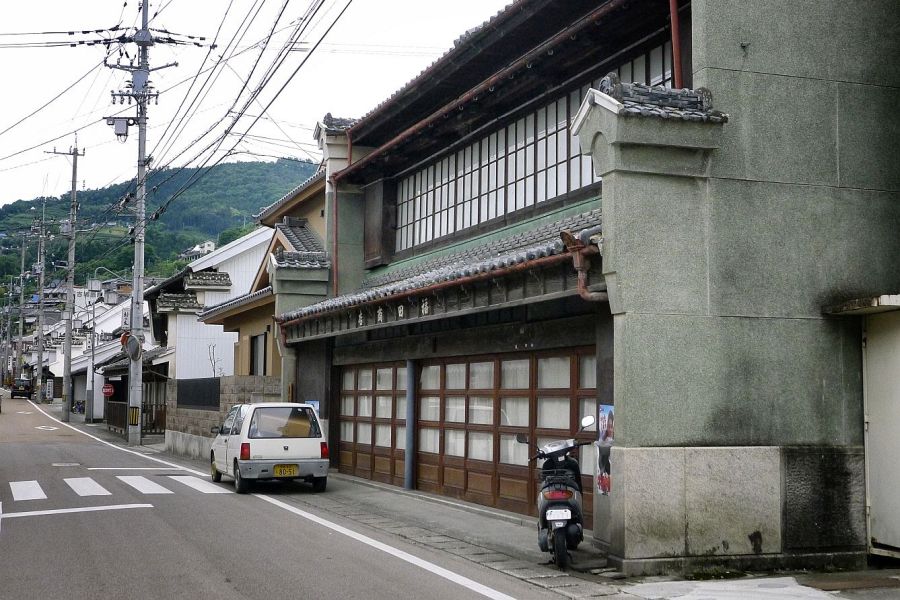
As in Wakimachi, wealthy merchants delighted in decorating their homes with udatsu. These are little walls, topped with tiles, which extend vertically from the ends of the first roof of the building. Originally, they were intended as firewalls to prevent fires spreading one building to the next. Gradually however, they became elaborately decorative and ultimately, they evolved into symbols of status and wealth. In Sadamitsu, there’s a similar street where the udatsu became even more baroque. They took on a second level with even more elaborate tiles on each level, and a decorative panel on the front of each, featuring fine plasterwork relief. Some of the finer houses have become museums where you can see how the merchants lived. Others are now home to cafés and shops selling local produce.
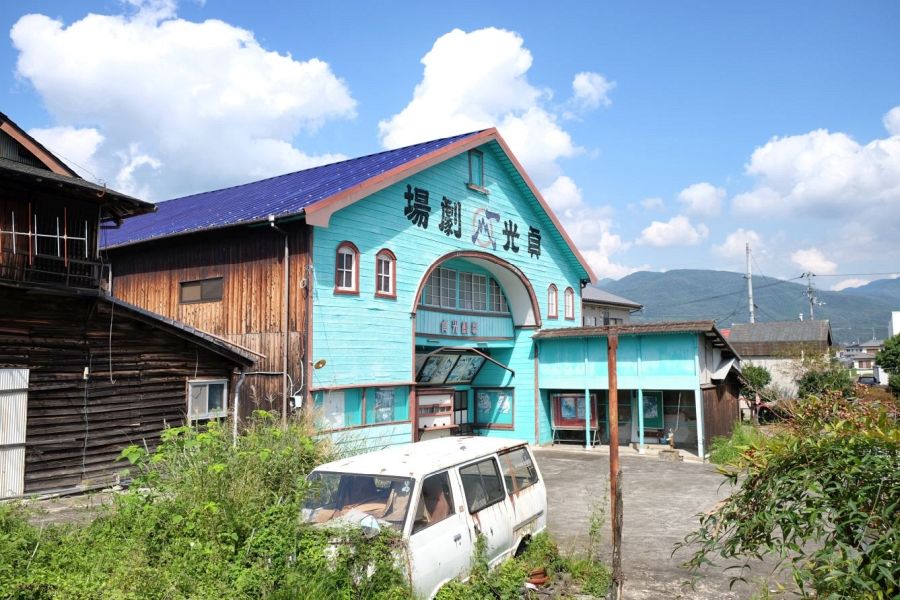
The wooden Sadamitsu Theatre, with its turquoise frontage makes at strong impression. Two other buildings in Sadamitsu are particularly noteworthy, and you can enter them free of charge. Orimotoya located on Ichiu Kaidō was once a sake brewery. It probably dates from 1772. Nagai Merchant House was built in 1791. Compared with the homes of other merchants, it has a unique layout.
Information
Name in Japanese: 貞光
Pronunciation: sada-mitsu
Address: Umadashi Sadamitsu, Tsurugi, Mima District, Tokushima Prefecture 779-4100