Kure
The port of Kure in Hiroshima Prefecture has a long history as one of Japan’s major naval shipbuilding cities. Its maritime heritage is reflected in several museums, historic buildings, and coastal viewpoints, while its dining and entertainment districts cater to the large civilian and military workforce.
Kure is located a short distance to the southwest of Hiroshima. It faces the Seto Inland Sea, and a large part of the municipality encompasses Kurahashi Island and the island chain of the Tobishima Kaidō, known as an attractive cycling route. The urban part of Kure faces a natural harbour, which was a stronghold for a faction of the Murakami maritime clan in the medieval period. Since the Meiji era, it’s served as a base for the Imperial Japanese Navy and its successor, the Japan Maritime Self-Defence Force (JMSDF).
Kure developed as a coastal industrial city with heavy industries such as shipbuilding, steel, pulp, machinery, and metals. The Kure Naval Arsenal was renowned both for its exceptional shipbuilding technology and as a centre for advanced military steel research. This included early recognition of the potential of Japanese steel from Izumo and Yasugi. Consequently, during the final stages of the Pacific War, the Kure military port suffered significant damage from US air raids.
Ferries leave from Kure Port to Hiroshima, Miyajima, Etajima, and Matsuyama.
Here we look at some of the attractions that Kure has to offer. Kure is an essential port of call for those with an interest in military history and militaria.
Yamato Museum
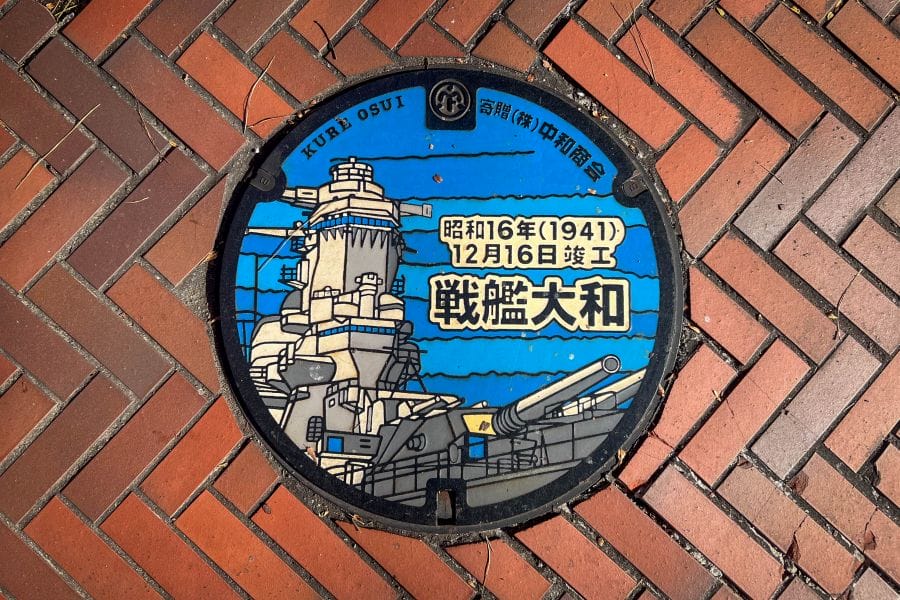
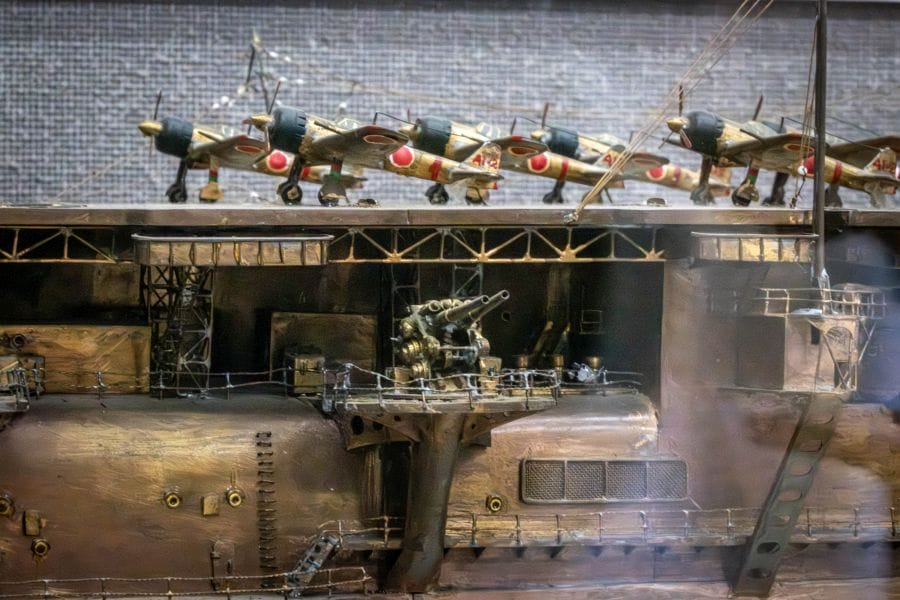
The Yamato Museum focuses on Kure’s naval engineering history, with particular attention to the battleship Yamato, which was laid down in the city’s shipyards in 1937. Exhibits include a detailed 1:10 scale model of the ship, documents related to wartime shipbuilding, and displays explaining the science and technology behind naval engineering. The museum also covers the broader development of Kure as a naval base and industrial city.
JMSDF Kure Museum
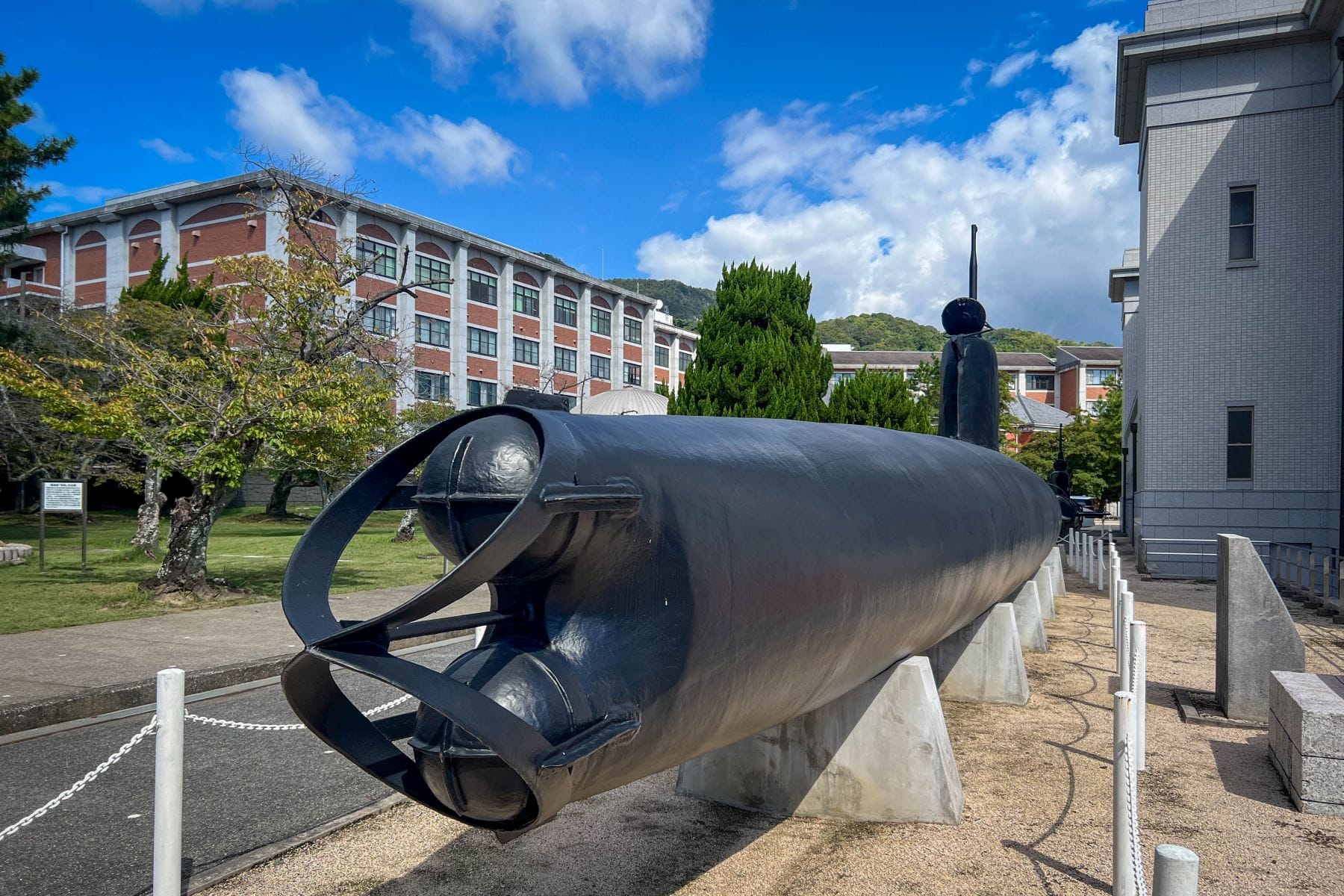
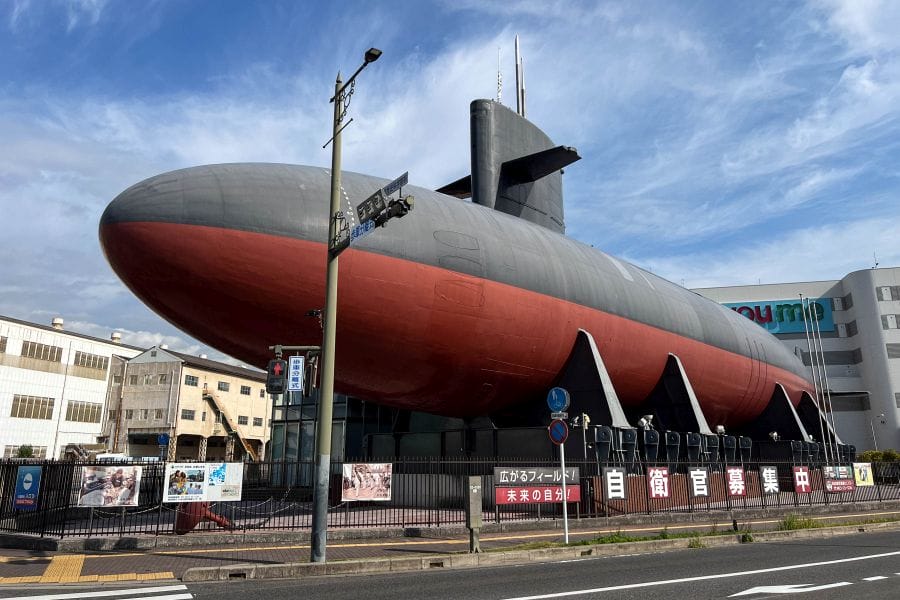
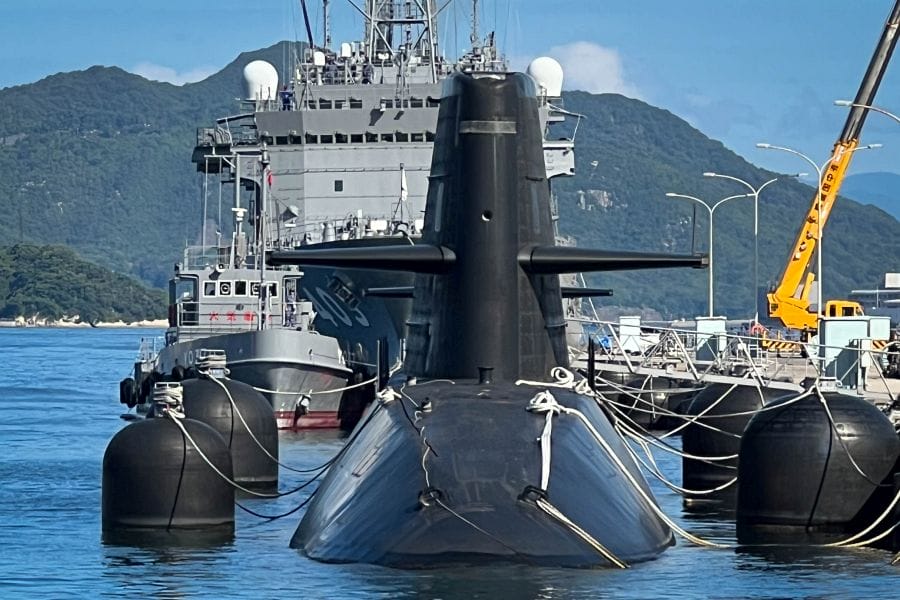
Located across from the Yamato Museum is a huge submarine, painted in grey and red. This submarine, the Akishio, forms part of the JMSDF Kure Museum—often called the Iron Whale Museum—which showcases the history and operations of the Japan Maritime Self-Defense Force, especially its submarine fleet. Exhibits explain submarine technology, postwar maritime defence tasks, and daily life aboard submarines. You can enter the Akishio submarine itself from inside the museum, an unforgettable experience.
Alley Karasukojima
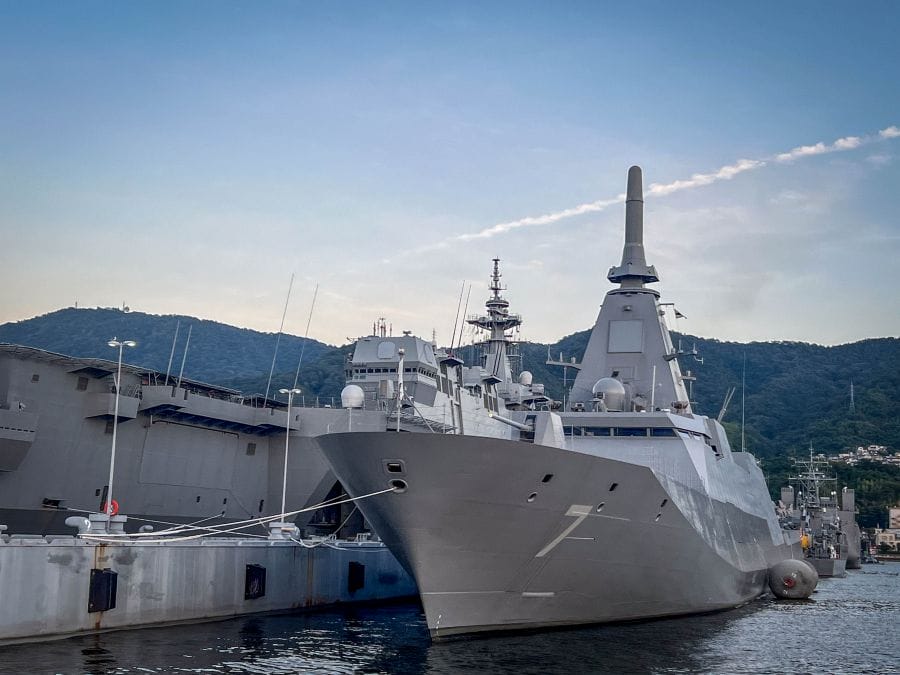
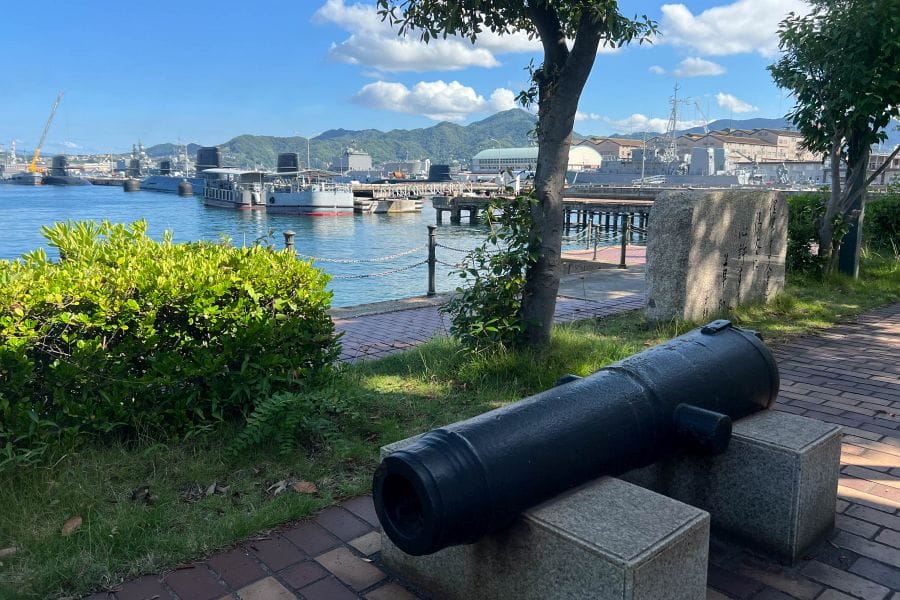
Alley Karasukojima is a waterfront promenade near Kure Port. It offers close-up views of the JMSDF base, and the many active-duty warships and submarines anchored there. Simple seating areas and walkways run alongside the water, and there are several antique naval guns on outdoor display. Signboards explain the sights and heritage in the area. The cranes of active shipyards tower nearby.
Kure Bay Ship Tour
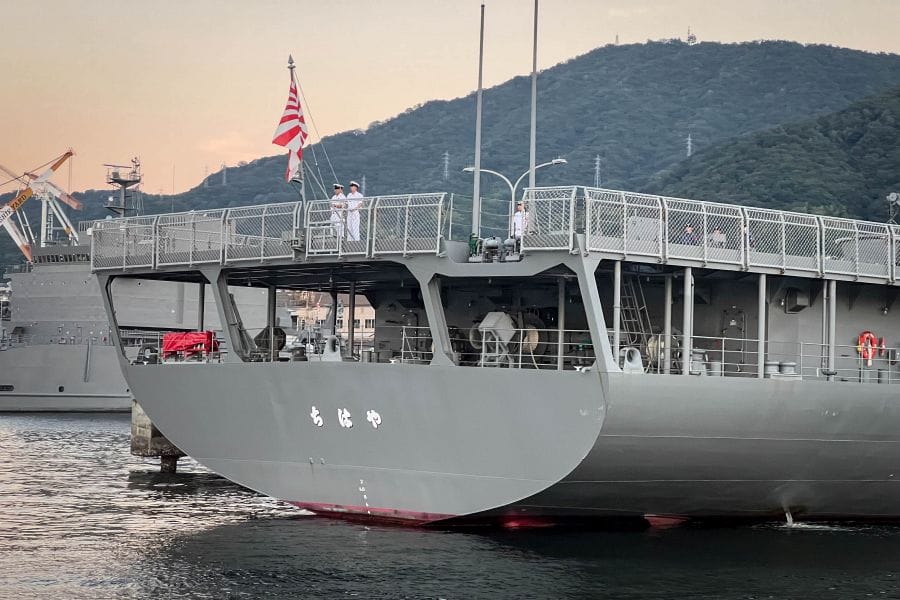
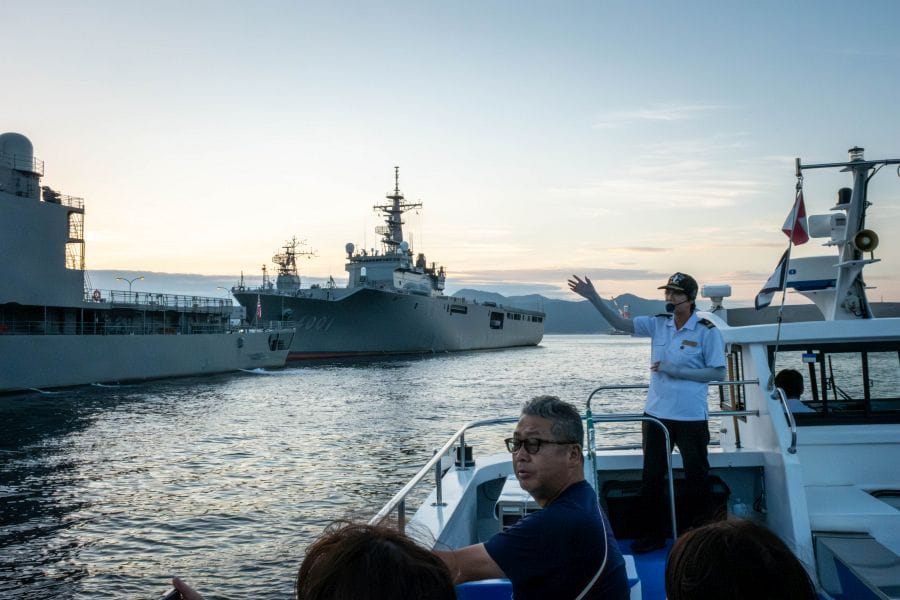
To get a view of the naval vessels from the sea side, you can take a cruise on an open-top boat from Kure Port. The company offers sailings throughout the day, and you can get a close look at the day to day activities of the ships, including lowering the ensign at dusk, with a bugle fanfare. The guide provides a fascinating commentary on the vessels currently in dock, including its role, history, and general scuttlebutt. Seamen aboard the vessels are likely to give the cruise boat a friendly wave, and Rising Sun flags are available for encouraging the swabbos. Please note that eating and drinking isn’t allowed on the boat.
Irifuneyama Memorial Hall
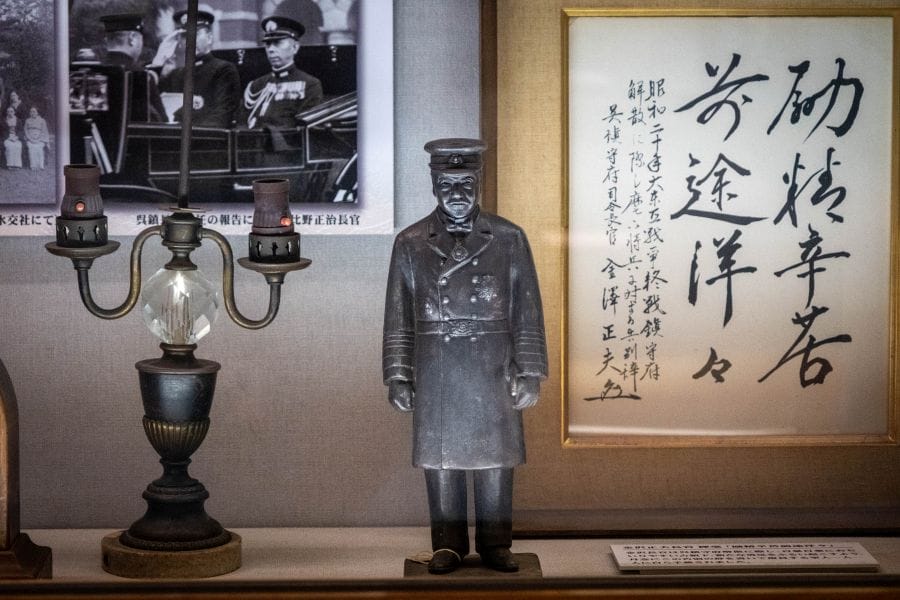
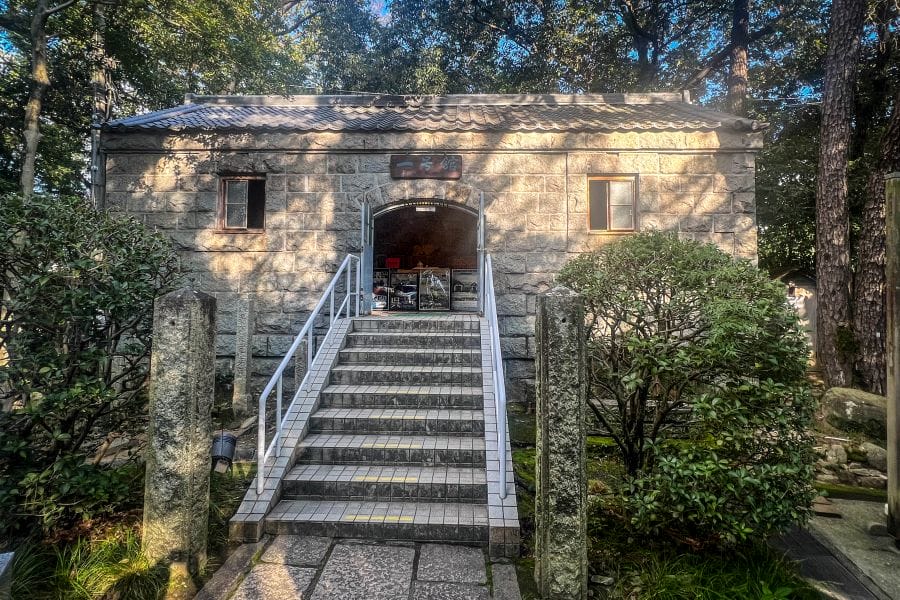
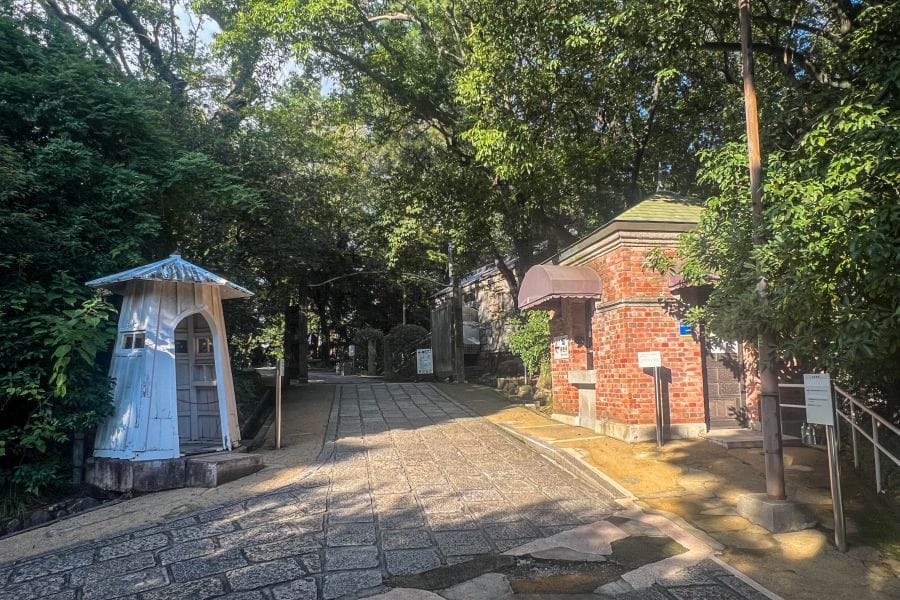
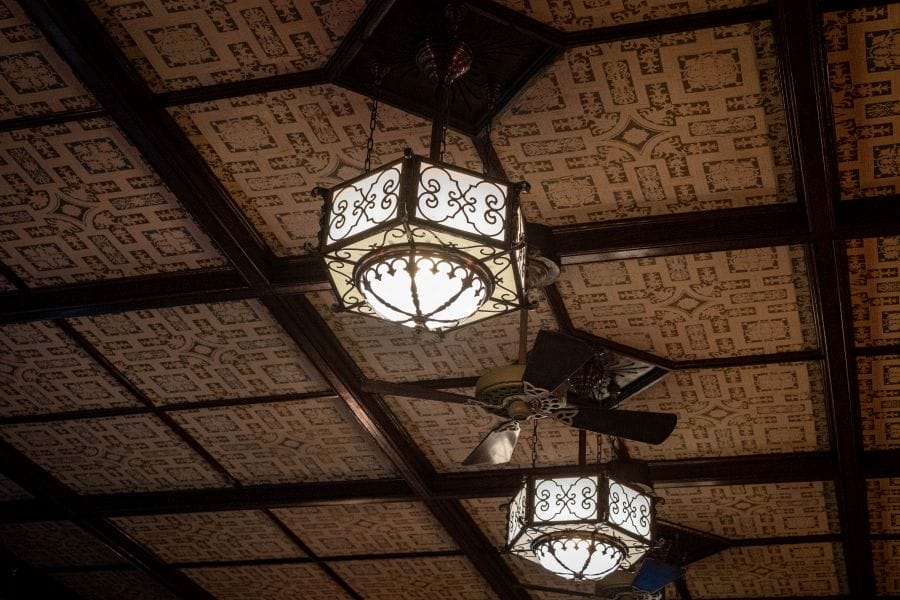
Irifuneyama escaped destruction during the bombing of Kure, and consequently it retains its prewar charm. The Memorial Hall occupies the former residence of the Commander-in-Chief of the Kure Naval Station, built in the early 1900s. This Western-style house with Japanese aesthetic elements displays furniture, military uniforms, and everyday items from the Meiji to early Shōwa periods. The garden, outbuildings, and preserved interiors reflect how high-ranking military officers and their families lived during Kure’s peak naval era. In the grounds you can see a sentry box, a large clock tower, and several naval guns.

Curry Rice
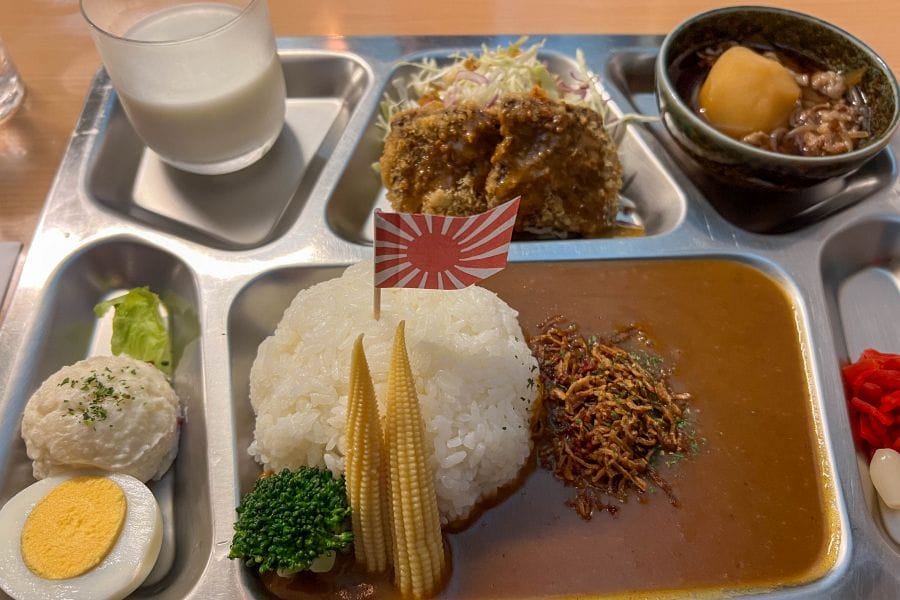
Karei raisu (curry and rice) has become associated with Kure through its naval connections. It’s said that the Imperial Japanese Navy learned of curry from their peers in the British Navy, and adapted it to Japanese taste. It came to be served on ships every Friday to allow the seamen to keep track of days of the week while at sea. The Friday curry served on JMSDF ships has inspired local restaurants to offer their own versions, sometimes based on recipes provided by actual naval personnel. Each establishment may interpret the dish differently, but it generally features a mild curry sauce with rice and sides such as salad, pickles, and a glass of milk. Kure also claims to be the birthplace of nikujaga (meat and potato stew), touting it as originating from the Imperial Japanese Navy.
Hondōri Shopping Street
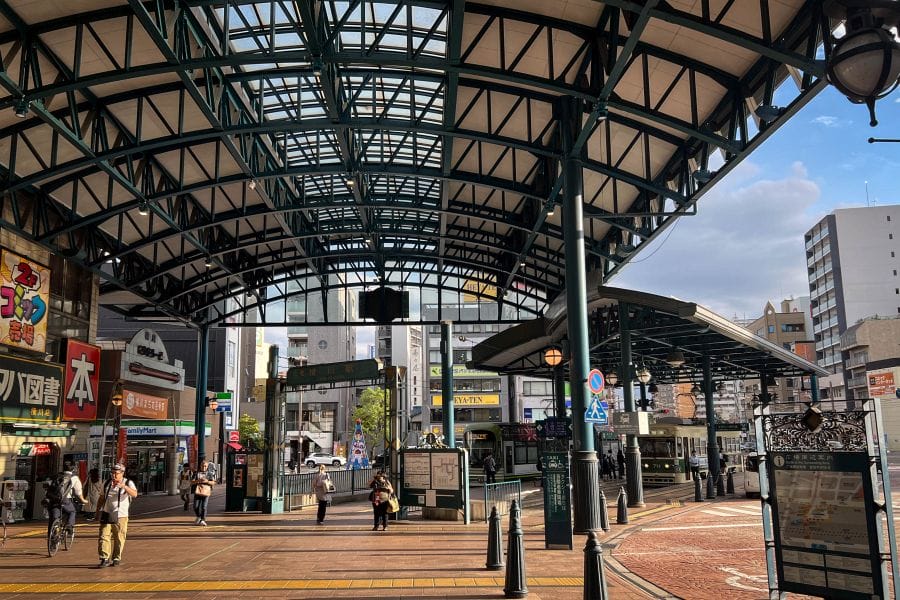
Hondōri Shopping Street is a covered arcade near Kure Station with a distinct atmosphere of the Shōwa period, thanks to the original signage and architecture that remains from the period. It reflects the commercial life of the city and caters mainly to locals, with small shops, bakeries, clothing stores, and everyday services, though a few shops sell maritime-themed products and souvenirs. The atmosphere varies across the day as shoppers, students, and commuters pass through. The grid of streets around Hondōri is home to many excellent bars and restaurants.
Mangan-ji Temple
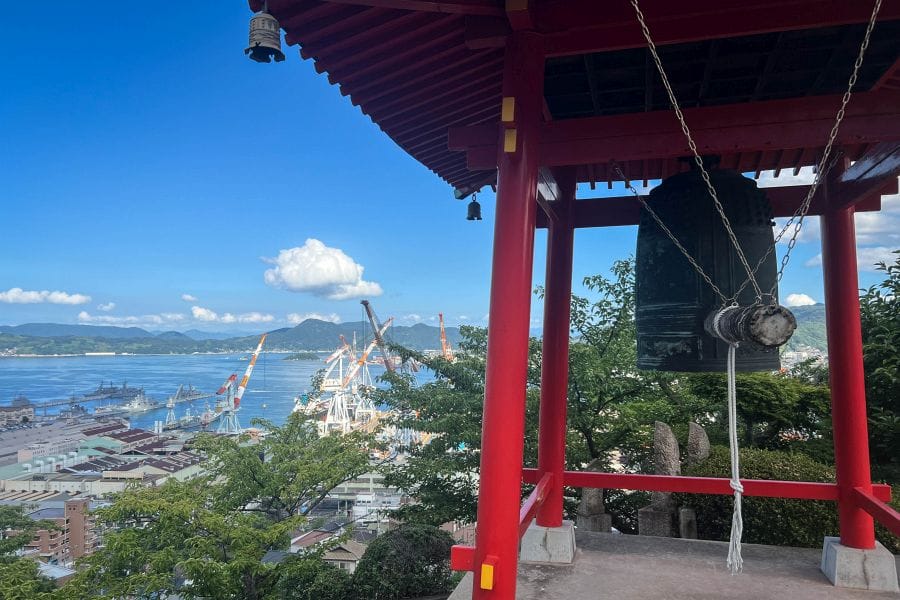
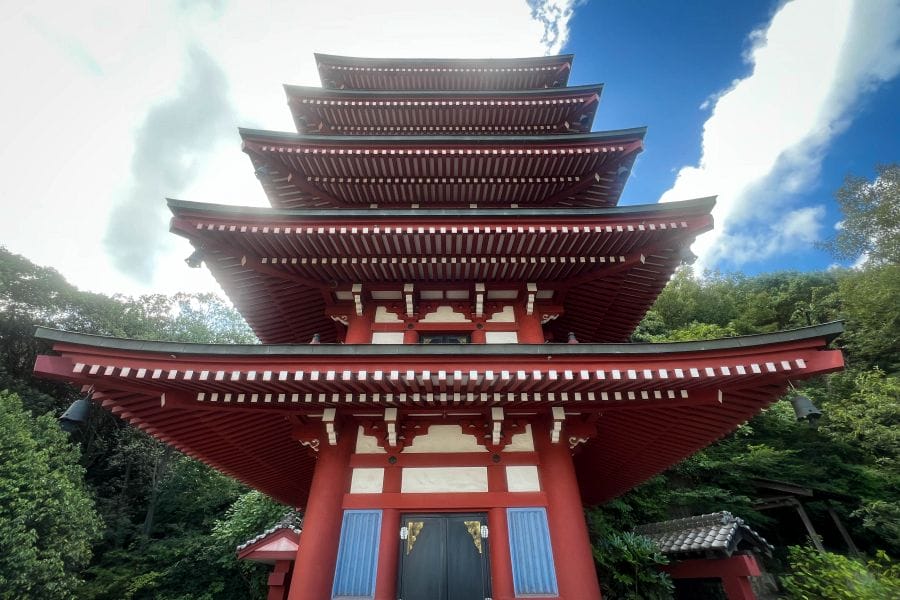
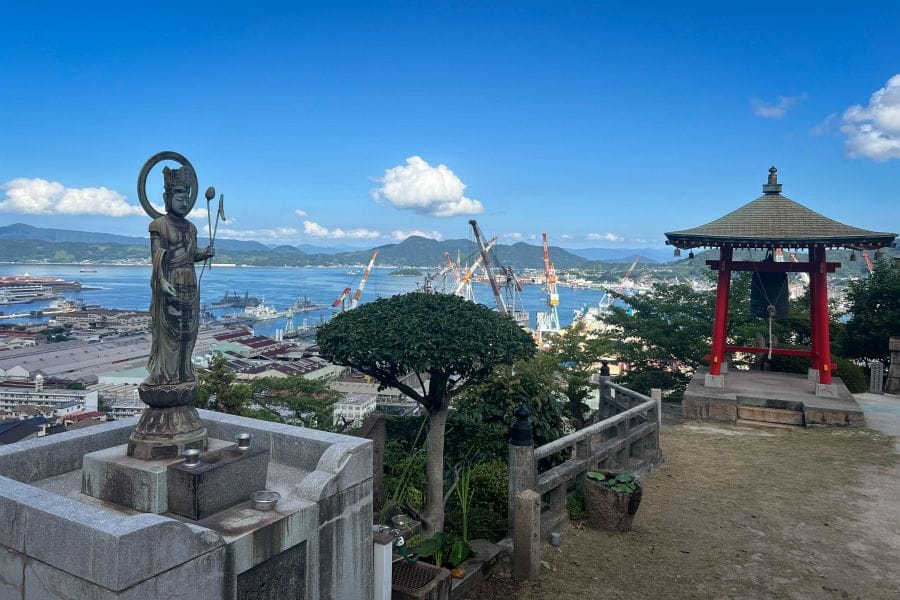
Mangan-ji is a Buddhist temple dedicated to Kannon located on the side of Mitosan overlooking Kure Bay. The temple grounds include a main hall, smaller structures, and stone statues among trees and paths. At the highest point of the complex stands a five-story pagoda. The pagoda was built in 1992, but the temple dates to before 1600, making it one of Kure’s oldest temples.
Restaurants and food stalls
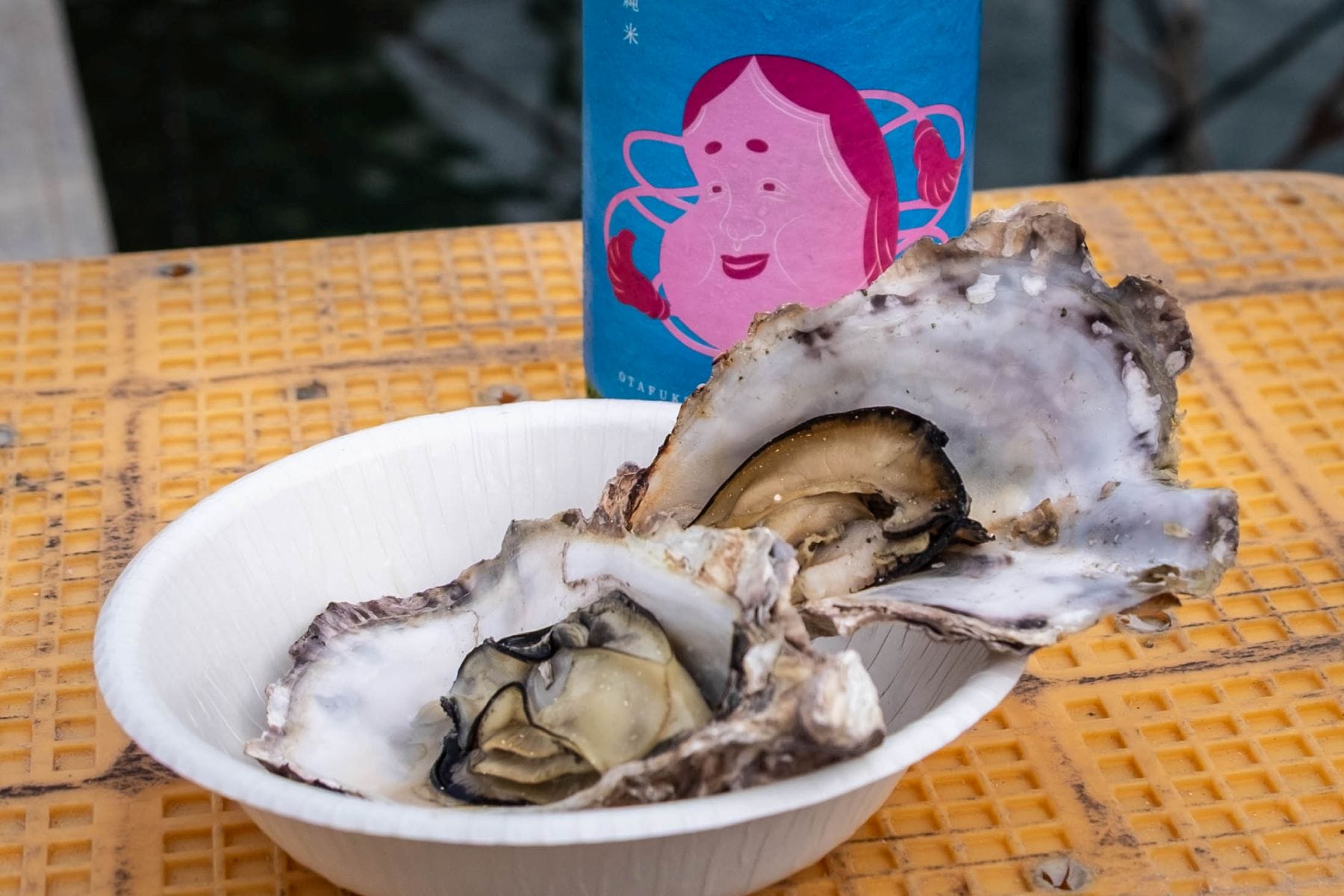
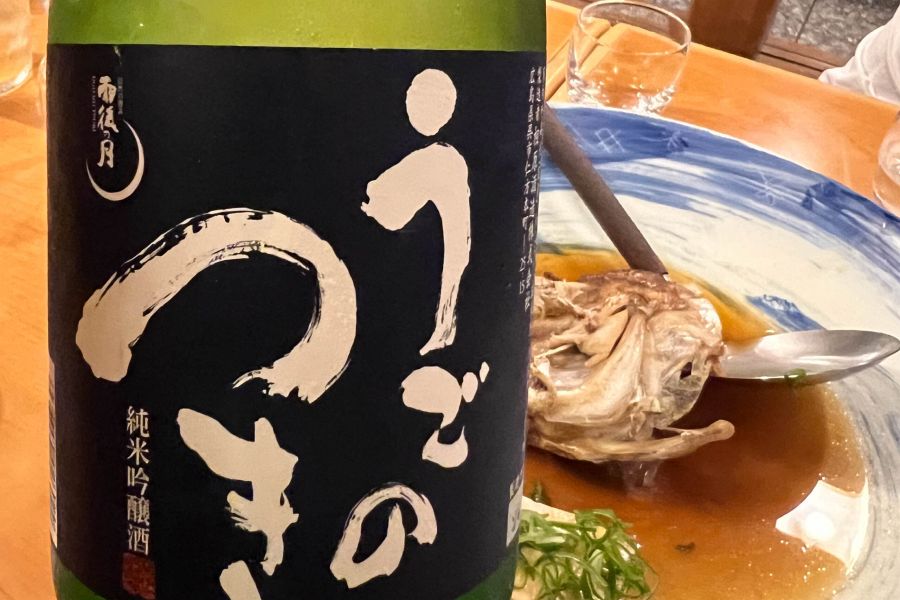
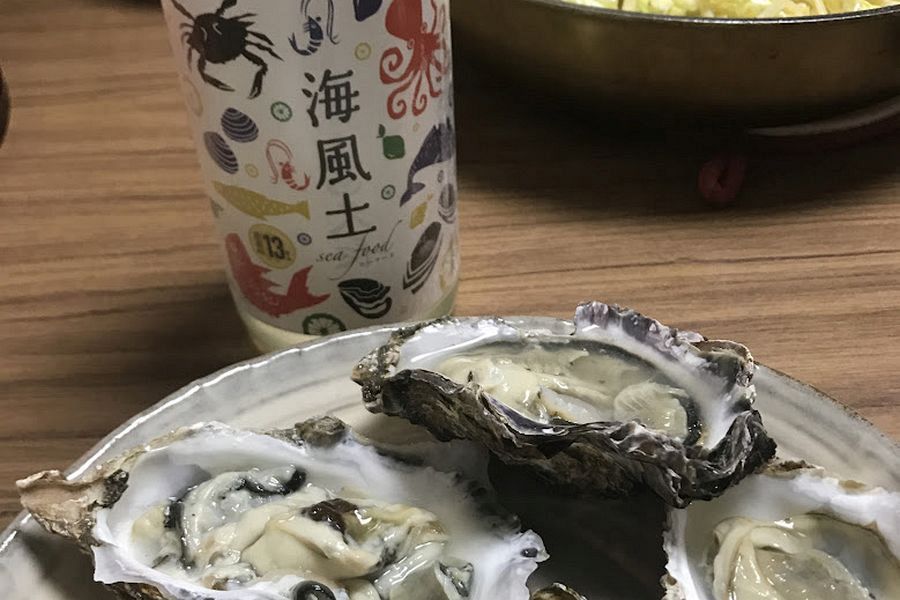
Kure has a range of small eateries, including yatai (street food stalls) that appear in certain areas during evenings. These temporary or small-scale establishments serve dishes such as yakitori, oden, or noodles. Permanent restaurants offer regional seafood, set meals, and dishes linked to the city’s naval traditions. Dining settings range from counter-style shops to family-run establishments. Many serve the excellent local sake of the Hiroshima region.
Tobishima Kaidō
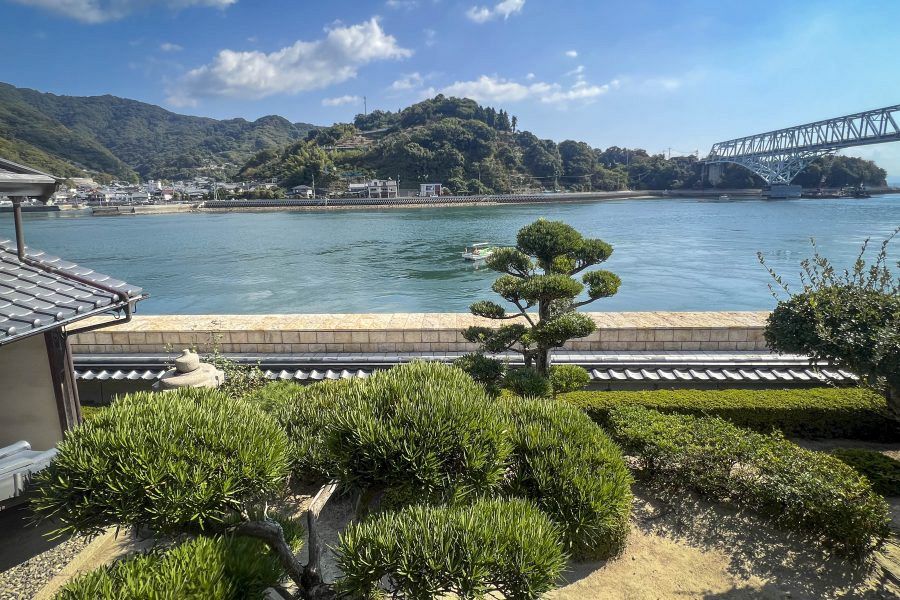
The Tobishima Kaidō is a network of bridges and roads connecting Kure to a series of islands in the Seto Inland Sea, including Shimokamagari and Okamura. The route allows for travel by car or bicycle between fishing villages, coastal scenery, and historical sites such as old checkpoints and maritime trade facilities. Tides, weather, and seasonal fishing activity influence the atmosphere along the route.
Ondo no Seto Park
Ondo no Seto Park overlooks the Ondo Strait, where ships pass through a narrow channel between the mainland and Kurahashi Island. The park includes paths, stone steps, and viewing areas facing the red Ondo Bridge. It’s known for seasonal flowers and its vantage point over the strait, which has historically been a key maritime passage.
Hiyama
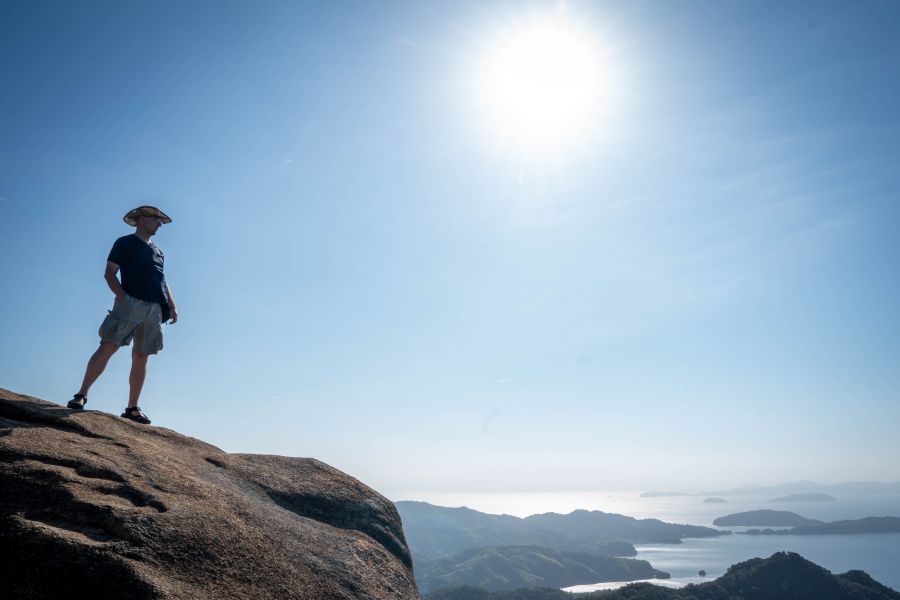
Hiyama is a mountain located on the island of Kurahashi. Its name means ‘Fire Mountain’ because in medieval times, a fire would be lit on its summit as a beacon. Today, the mountain is a popular destination for hikers. Although the mountain is only 408 m high, it’s a steep climb and the picturesque rocky outcrops dotted around the mountainside require hikers to avail themselves of the ropes and chains provided. The panoramic views over the Inland Sea from the rocky peak make the climb very rewarding.

Information
Name in Japanese: 呉
Pronunciation: ku-rei