Saba Daishi Temple
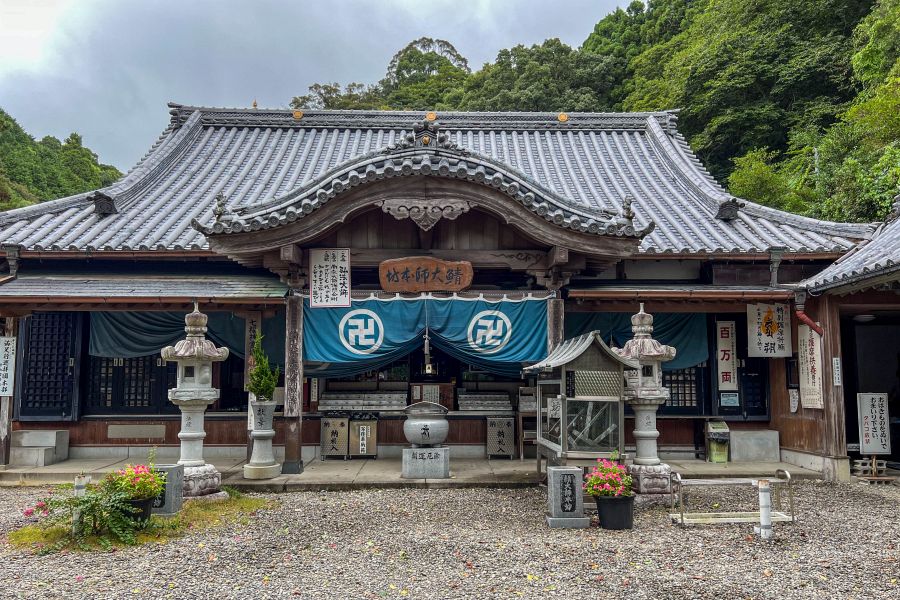
Saba Daishi Temple is Bangai No. 4 of the twenty Shikoku Bekkaku temples, one of the extra sacred sites associated with Kōbō Daishi that pilgrims visit to deepen the journey beyond the formal route. It stands near the coast in Kaiyō, southeastern Tokushima, along the old pilgrimage road known as Yasaka Yahama, “eight slopes, eight beaches”.
Things to See
The grounds are compact but unexpectedly varied.
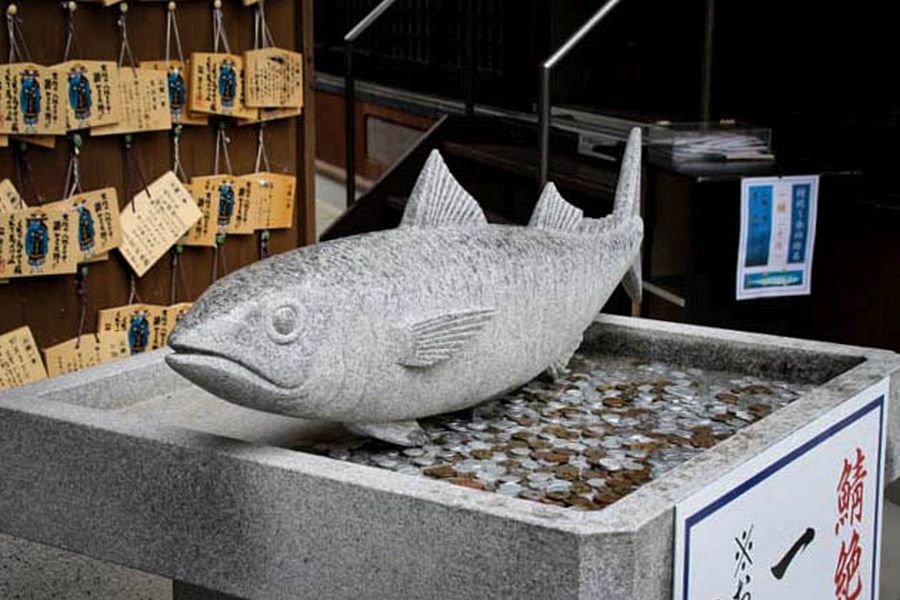
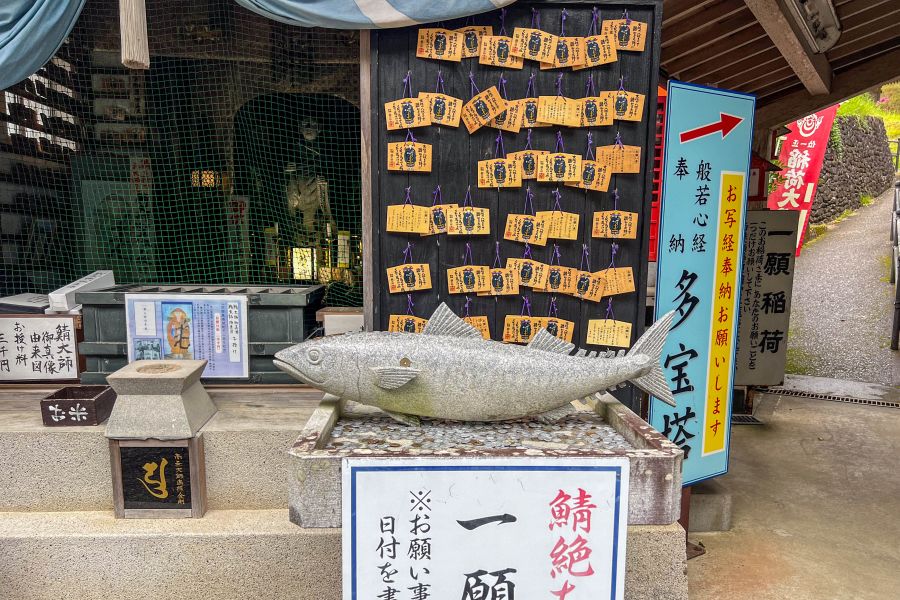
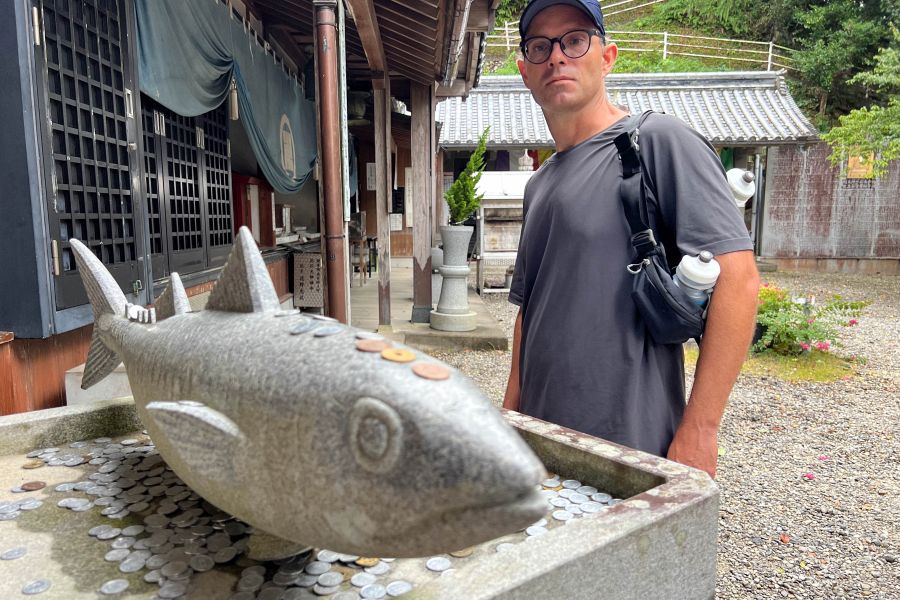
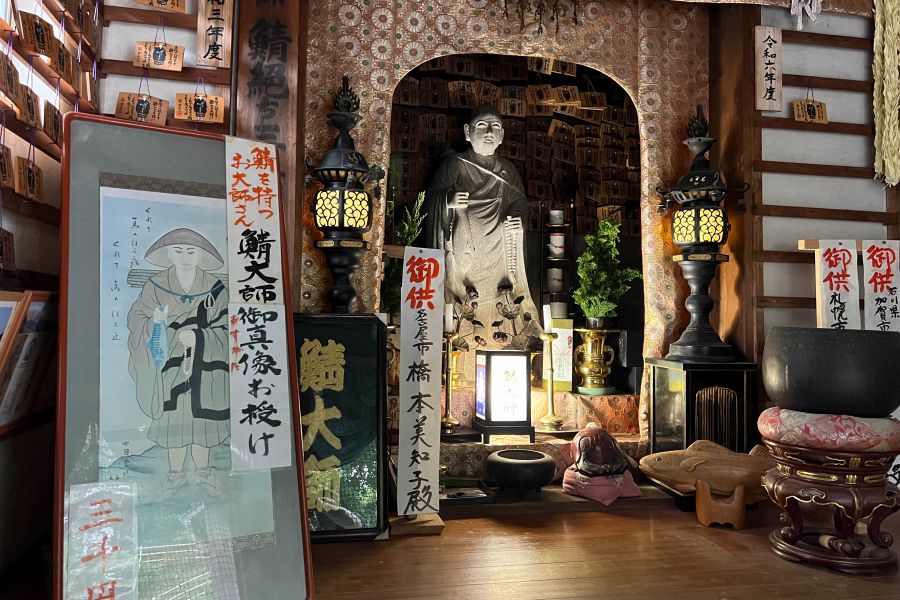
The central focus is the statue of Kūkai holding a mackerel, located within the Daishi Hall. You should look for the various mackerel-themed carvings and offerings scattered throughout the precinct, including a large stone replica of the fish.
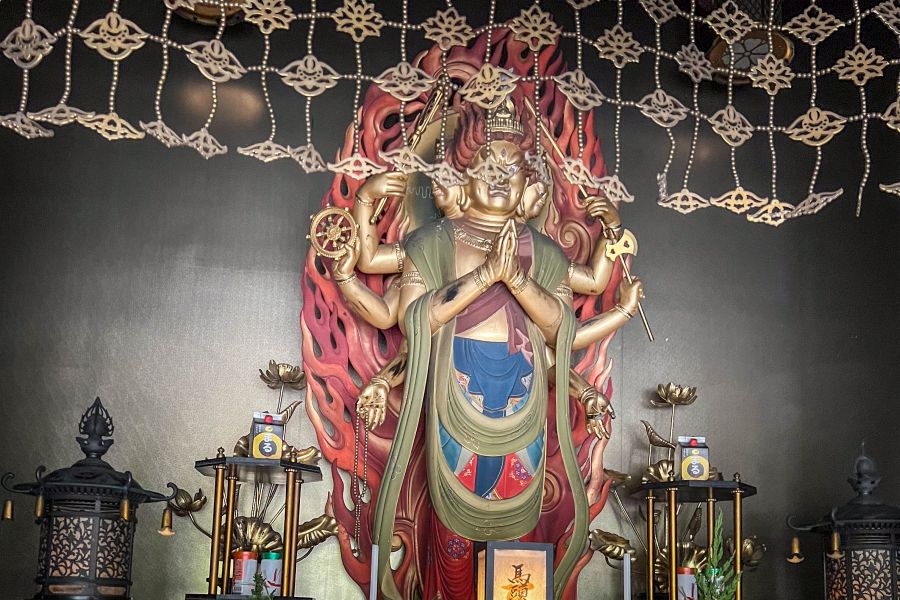
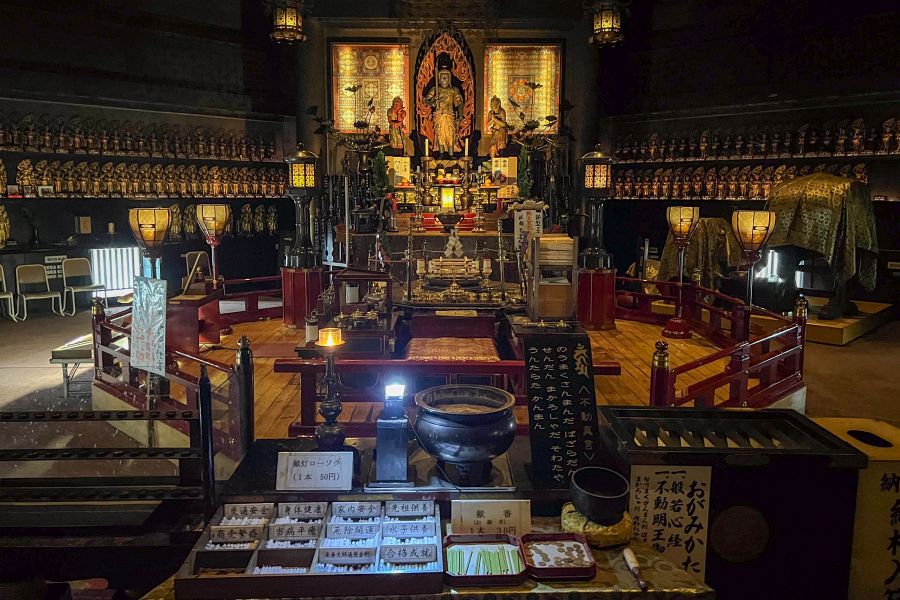
The main hall sits above the temple’s most distinctive feature, an underground passage lined with 88 Buddhist figures, each representing one of the principal deities of the main Shikoku pilgrimage. Walking this dim corridor beneath the main hall creates a miniature version of the full circuit, and the descent into the subterranean worship space has a deliberate, cave-like atmosphere that echoes older ascetic practice. At the end is the principal image, Fudō Myōō, enshrined below ground in a setting that feels unusually intimate and powerful.
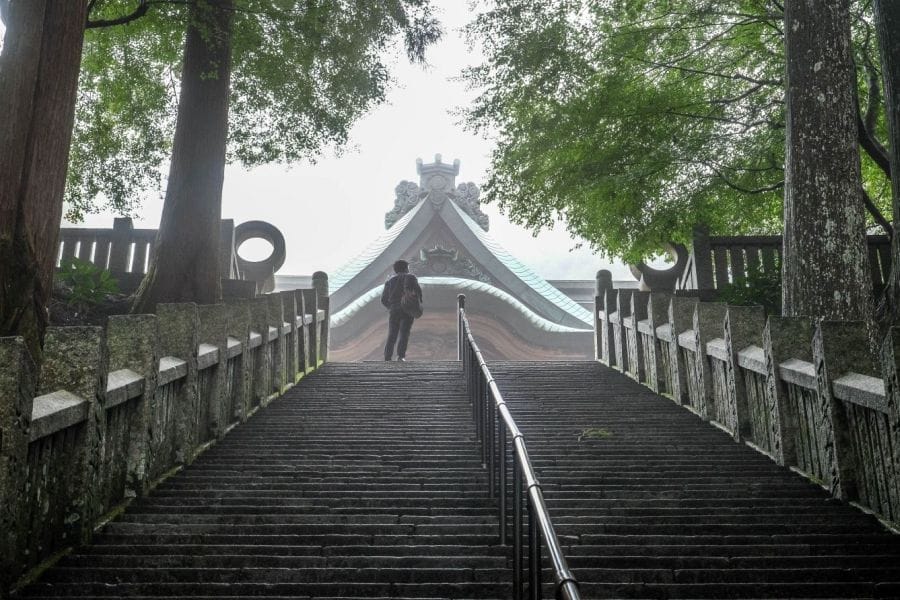
In the precinct above, there’s a modern pagoda, which rises clearly above the lower temple buildings, as well as several small subsidiary halls. There’s also a small Inari shrine tucked within the grounds.
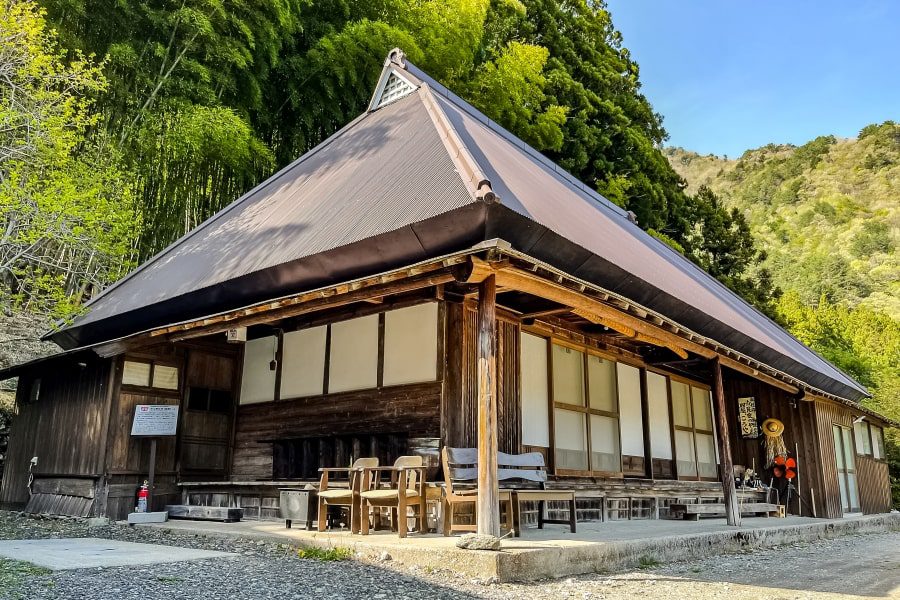
The temple is also known for its henro lodgings and rest facilities.
History
Local records and temple documents indicate that the site’s origin dates back to 741, though it was largely formalised during the early Heian period. The temple served as a vital sanctuary for coastal travellers during the Edo period. It provided one of the few safe havens on the treacherous seaside road where the cliffs left no room for escape during high tides. The temple also houses a collection of ancient maritime safety charms, which were historically sought by sailors navigating the dangerous waters of the Kii Channel, highlighting its role as a guardian site for the local fishing industry.
Before becoming a recognised pilgrimage temple, the site was a small hermitage. In the postwar period it was formally developed into a temple and incorporated as the fourth temple of the Shikoku Bekkaku 20, the recognised group of extra pilgrimage temples linked to Kōbō Daishi outside the official 88.
Its location is important. The surrounding Yasaka Yahama coast was traditionally one of the more testing parts of the Tokushima route, where pilgrims faced repeated climbs and exposed seaside walking. Sabadaishi became a natural place of prayer, lodging and psychological reset before or after this section.
Legends
The temple’s name, Saba Daishi, literally translates to “mackerel master,” reflecting a specific encounter from 815. According to traditional accounts, Kūkai met a salt merchant who refused to share a fish. After the merchant’s horse suddenly fell ill, he begged Kūkai to restore the horse in exchange for a fish. Kūkai healed the horse and returned the salted mackerel to life, prompting the merchant to convert. This story created a deep-seated cultural taboo in the region. Even today, many local residents and pilgrims observe a tradition of abstaining from eating mackerel for three years—or even a lifetime—after praying here for health or success.
The underground 88-statue passage also carries a symbolic legend among pilgrims, that completing the miniature circuit with sincerity can concentrate the merit of the wider henro route, especially for those unable to walk the full island.
Information
Name in Japanese: 鯖大師本坊
Pronunciation: saba daishi honboh
Address: Nakaai-15 Asakawa, Kaiyō, Kaifu District, Tokushima 775-01010