Luís Fróis
Name In Japanese: ルイス・フロイス
Pronunciation: roo-isu fu-roisu
Period: 1532 to 1597
Luís Fróis was born in Lisbon in 1532. His early education took place within the sophisticated environment of the Portuguese Royal Court under King João III, where he worked in the Royal Secretary’s office. This early exposure to administrative precision and formal documentation likely sharpened the observational skills that would later define his historical records of Japan. At the age of sixteen, he joined the Society of Jesus and almost immediately departed for the East to begin his formal missionary training.
His primary training as a Jesuit took place in Portuguese India, specifically at Saint Paul’s College in Goa. Arriving in 1548, he spent fifteen years in the region, where he studied theology and languages alongside a diverse student body from across Asia and Africa. It was during this period in Goa that he first encountered early Japanese converts, which provided him with his initial introduction to the culture he would eventually document so extensively. He was ordained as a priest in Goa in 1561, shortly before his assignment to the mission in Japan.
The initial presence of Christians in Japan prior to Luís Fróis’s arrival in 1563 was the result of the pioneering work of Francis Xavier, who landed in Kagoshima in 1549. Xavier was accompanied by Anjirō, a Japanese man he had met in Malacca who had fled Japan to escape a murder charge. Anjirō became the first Japanese convert and provided the Jesuits with their first linguistic and cultural entry point. By the time Fróis arrived fourteen years later, a small but dedicated network of converts had already formed in Kyūshū and around the capital, largely because the Jesuits had successfully framed their faith as a superior form of “celestial law” that brought with it the promise of Portuguese trade and advanced technology.
Fróis arrived in Japan in 1563, landing at Yokoseura in Hizen Province, today’s Nagasaki, during a period of intense social upheaval. Unlike many of his contemporaries who remained confined to the coastal trading ports, Fróis sought direct engagement with the country’s political heart. His linguistic aptitude allowed him to navigate the complex social hierarchies of the Warring States period, eventually leading him to Kyōto. It was here that he began documenting the minutiae of Japanese life, from dietary habits and architectural styles to the specific nuances of gender roles, creating a record that often contradicted the assumptions held by his superiors in Goa and Lisbon.
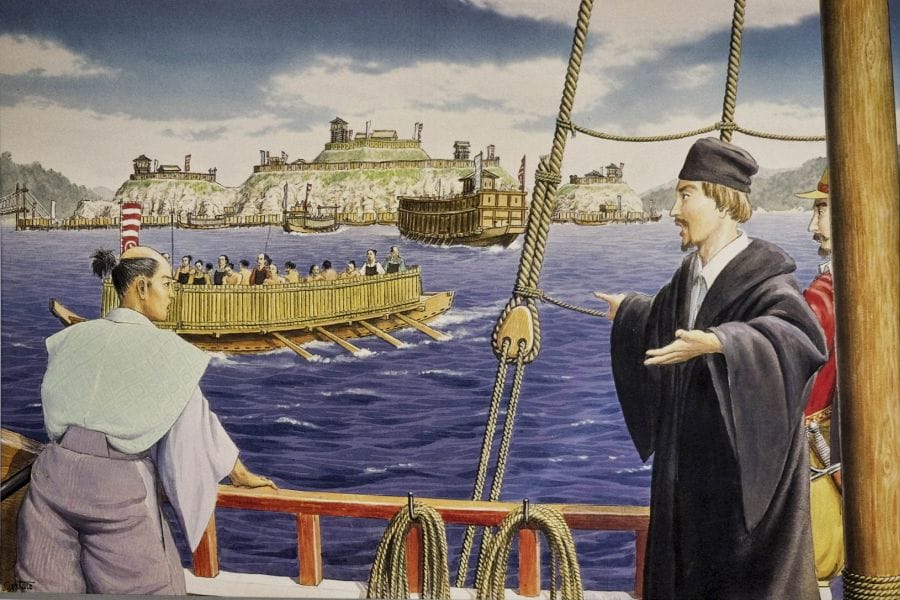
On his way through the Seto Inland Sea from Nagasaki to see Oda Nobunaga at the seat of his power in Kansai, Fróis encountered the maritime power of the Murakami Kaizoku, the seafaring clans who controlled the Seto Inland Sea. While often described as pirates in later accounts, Fróis recognised them as a sophisticated naval bureaucracy that issued permits and provided armed escorts for a fee. He documented the technical superiority of their light, manoeuvrable vessels and their ability to navigate the treacherous currents of the Shimonoseki Strait. These interactions were essential for the survival of the mission, as the Jesuits relied on the Murakami to guarantee the safe passage of their ships and letters between the southern islands and the political centres of Honshū. Today, there are many Hidden Christian relics in Ehime, the home of the Murakami, suggesting that Fróis converted some of his seafaring protectors.
His relationship with Oda Nobunaga, the pre-eminent warlord of the era, provided Fróis with unprecedented access to the ruling elite. Nobunaga, known for his pragmatism and occasional hostility toward Buddhist institutions, found the Jesuit’s technical knowledge and foreign perspective useful. During their meetings at the newly constructed Azuchi Castle in today’s Shiga, Nobunaga frequently questioned Fróis on European science and geography. Fróis observed that Nobunaga possessed a restless intellect and a disdain for traditional Japanese ceremony, noting that the ruler would often discard formal etiquette to speak candidly. This protection ensured that the Jesuit mission could establish a presence in the capital, shielding the priests from the immediate interference of local rival factions.
Initially, Toyotomi Hideyoshi had followed Oda Nobunaga’s policy towards the Jesuits; however, as Christian influence grew, he began to feel a sense of crisis regarding the accompanying attacks on Buddhism and Shintō, as well as the trafficking of Japanese slaves. Consequently, in 1587, he issued an edict expelling the Christians. Fróis left the Kinai region, passed through Katsusa, and eventually settled in Nagasaki, which was under the control of the Ōmura clan.
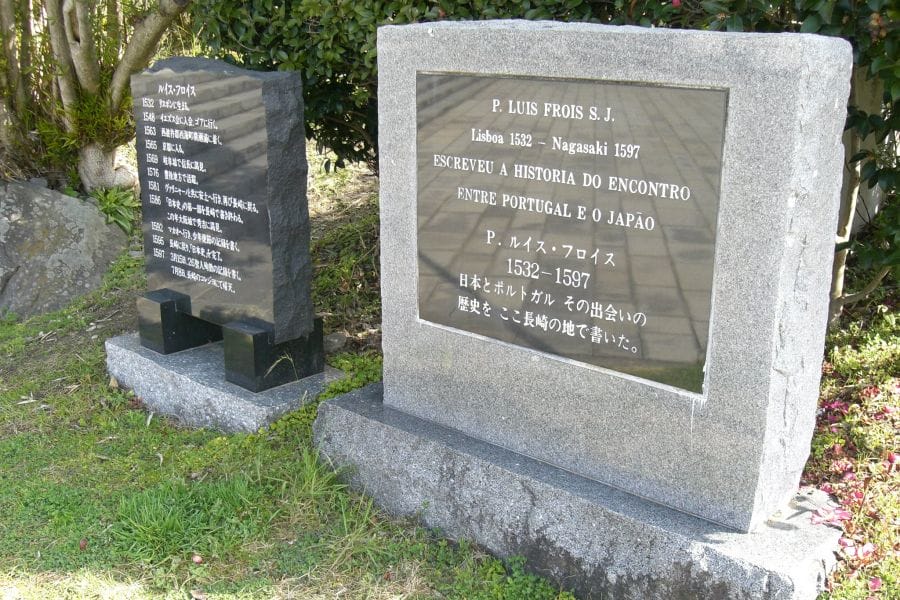
In 1590, when Valignano returned to Japan accompanied by the Tenshō Embassy, Fróis accompanied him and met Hideyoshi at Jurakudai. In 1592, he temporarily travelled to Macao with Alessandro Valignano, but returned to Nagasaki in 1595. In 1597, he finished The Record of the Martyrdom of the Twenty-Six Saints as the final work of his literary career, and died at the College in Nagasaki, within the Ōmura domain. He was 65 years old. Fróis witnessed first-hand the glory and tragedy, the rise and decline of Christian missionary work in Japan, and left behind a valuable record of these events.
The influence Fróis exerted on the growth of the Christian community was rooted in his systematic approach to cultural exchange. He didn’t merely preach, he acted as a bridge for European medicine and printing technology, which appealed to the professional classes. His writings indicate that the early success of the mission wasn’t solely due to spiritual conviction, but also to the perceived modernity of the Jesuit order. By establishing schools and hospitals, Fróis helped create a foundation for what would become a significant minority population, particularly among the ruling families of Kyūshū who sought both spiritual novelty and trade advantages with the Portuguese.
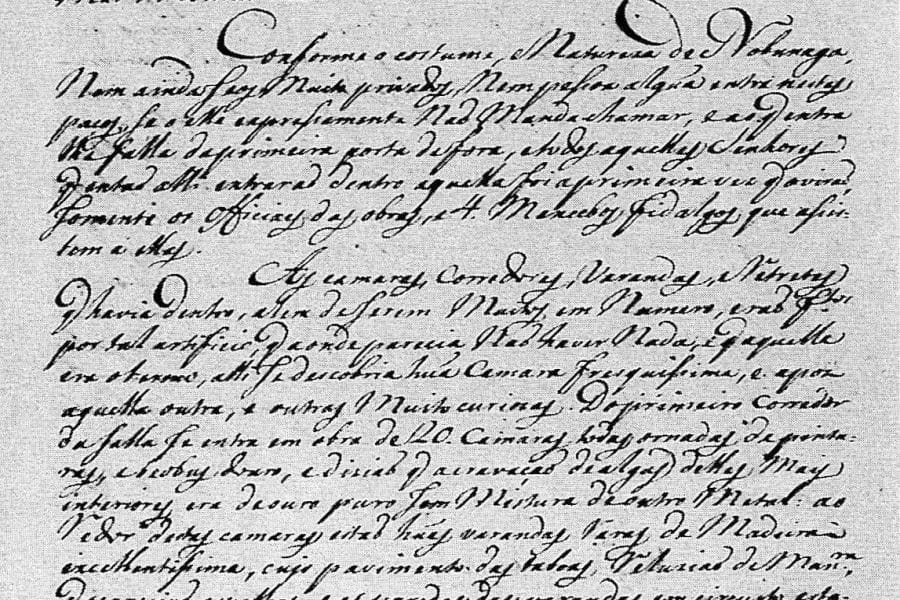
Fróis’s observations were often startlingly objective, stripped of the moralising tone common in 16th-century clerical writing. He famously noted that “the Japanese have a culture so different from our own that it’s as if we’re looking at a world in reverse.” He wrote extensively on the independence of Japanese women, recording with surprise that they “often manage the household finances and travel unaccompanied,” a stark contrast to the social restrictions he had observed in Europe. He also admired the cleanliness of Japanese dwellings, describing the wooden floors as being kept so polished that they reflected the light like a mirror, and noting that the people bathed daily, a habit he found both remarkable and hygienic.
The legacy of Fróis’s tenure is preserved in his monumental work, the Historia de Japam, which remains one of the most detailed primary sources for the late 16th century. He didn’t shy away from describing the physical brutality of the era, including the scorched-earth tactics used in regional sieges or the specific methods of execution employed by the authorities. His death in Nagasaki in 1597 occurred just as the political climate began to turn sharply against foreign influence. By then, he had spent over three decades in the country, leaving behind a body of work that serves as a vital ethnographic map of a society on the cusp of total unification.
In his “Treatise containing in very succinct and abbreviated form some contrasts and differences in the customs of the people of Europe and this province of Japan”, Fróis made this general observation; “Many of their customs are so distant, foreign, and far removed from our own that it is difficult to believe that one can find such stark contrasts in customs among us and people who are so civilized, have such lively genius, and are as naturally intelligent as the Japanese.” He compared the education of children (boys) in Japan with European education; “Our instructors teach our children the catechism, the lives of the saints, and virtuous habits; the bonzes teach the children to play music, sing, play games, fence, and carry out their abominations with them.” This was a time when homosexuality was common among priests and samurai. Fróis also wrote; “Among us, one subsequently professes vows to be pure of soul and chaste of body; the bonzes profess vows to all manner of inner filth and all the nefarious sins of the flesh.” This was undoubtably an exaggeration. Valuable though Fróis’ unique testimony is, it’s important to remember that his was the only voice recording those times, and he wasn’t unbiased or wholly objective.