Akehama
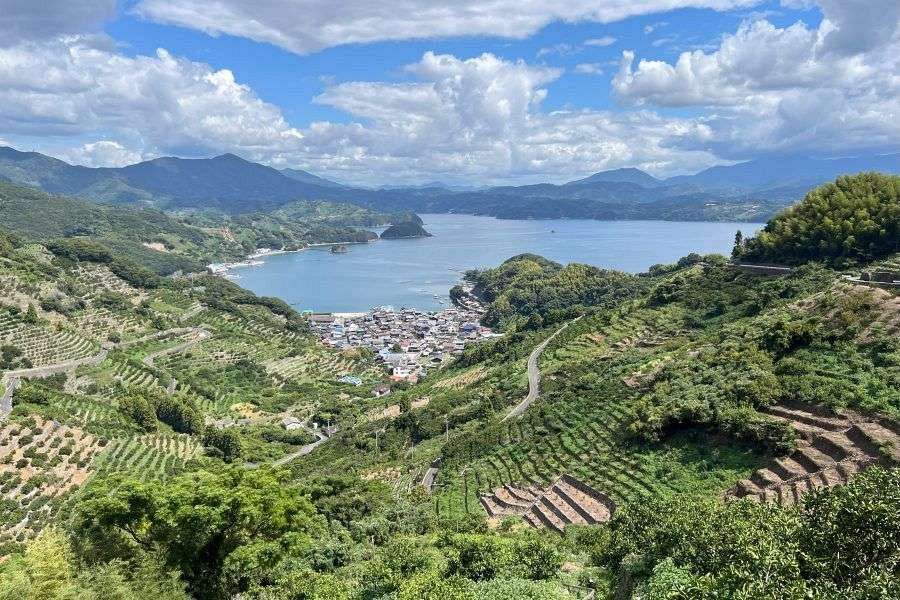
Akehama is a coastal district of steep limestone hills and sheltered inlets, stretching along the eastern shore of the Uwa Sea. Limestone agricultural terraces climb up the hillsides capturing sunlight reflected off the water, in a landscape where the residents engage in both citrus farming and marine industries in tandem. Mandarin groves dot the hillsides, supported by retaining walls built from locally quarried rock. Small fishing settlements are clustered in coves at intervals along the indented rias coastline.
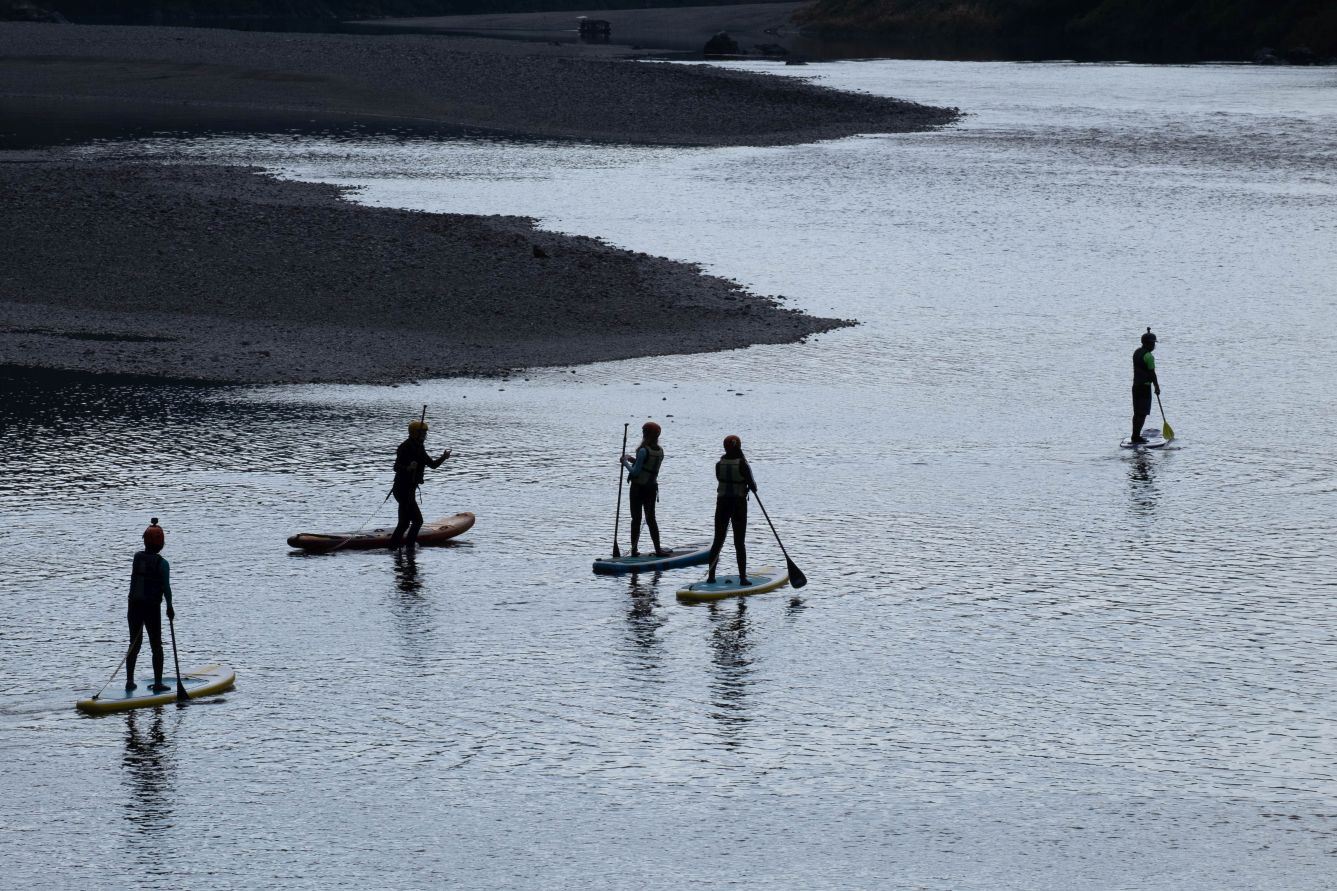
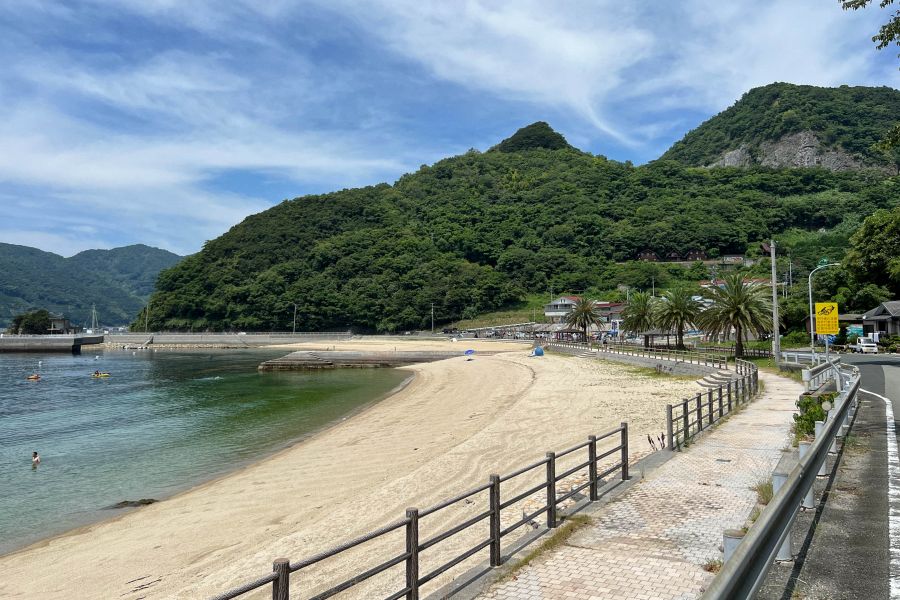
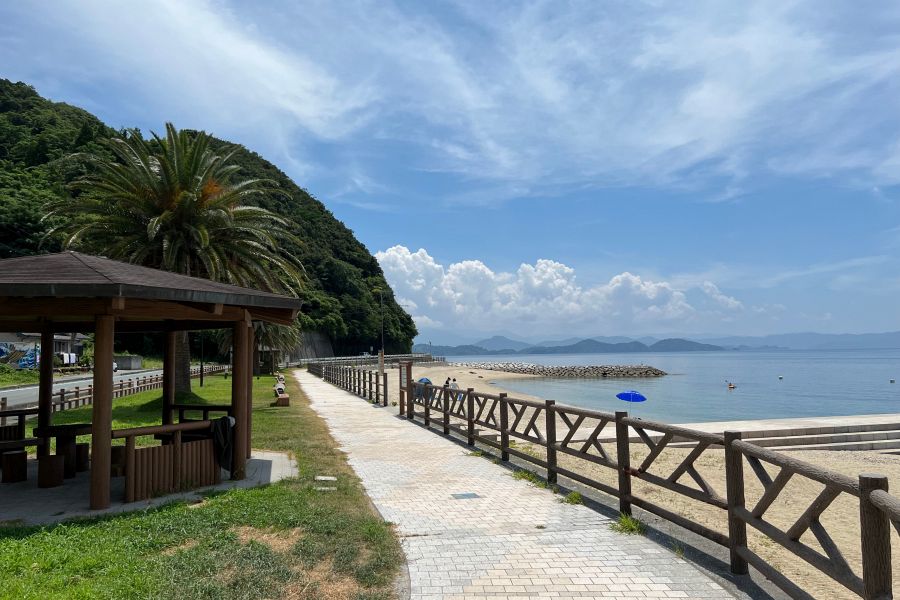
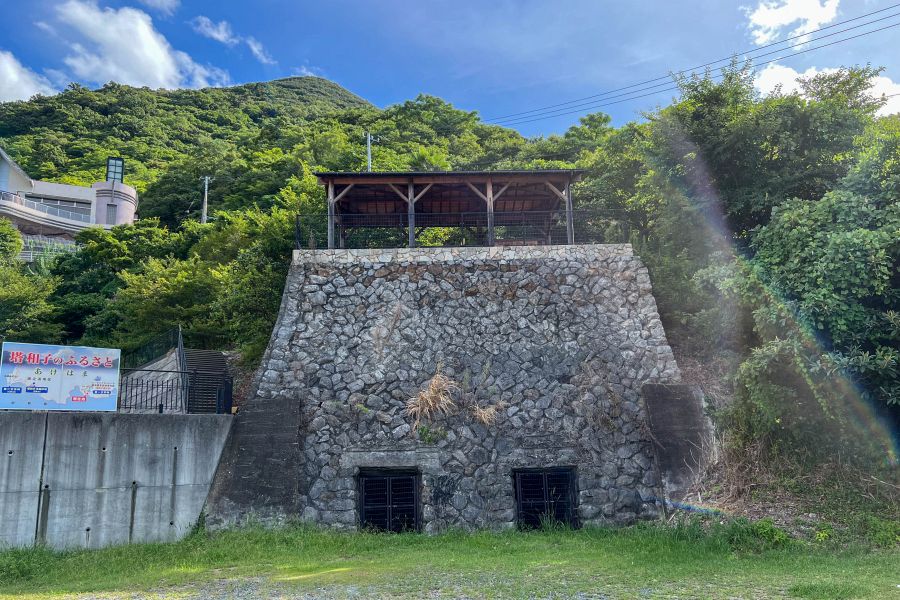
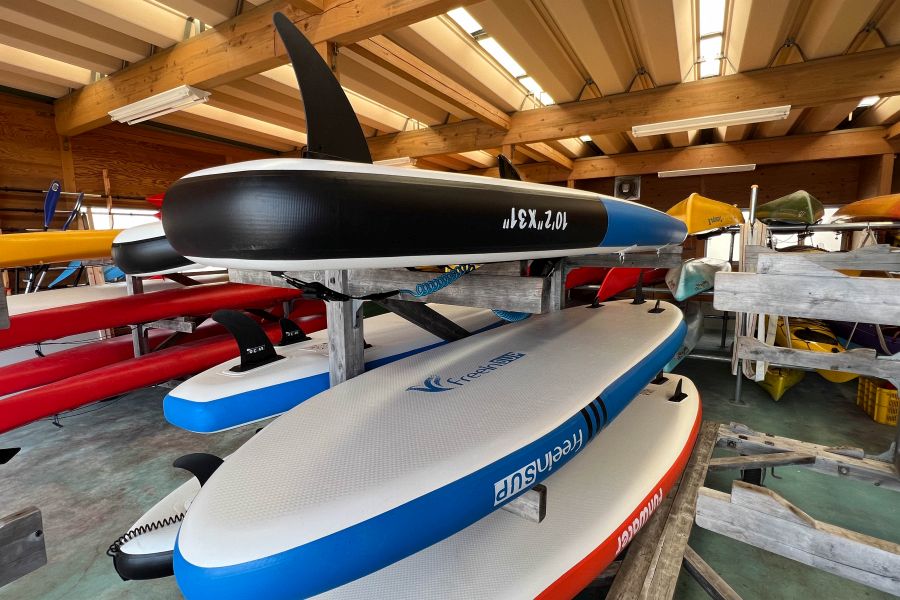
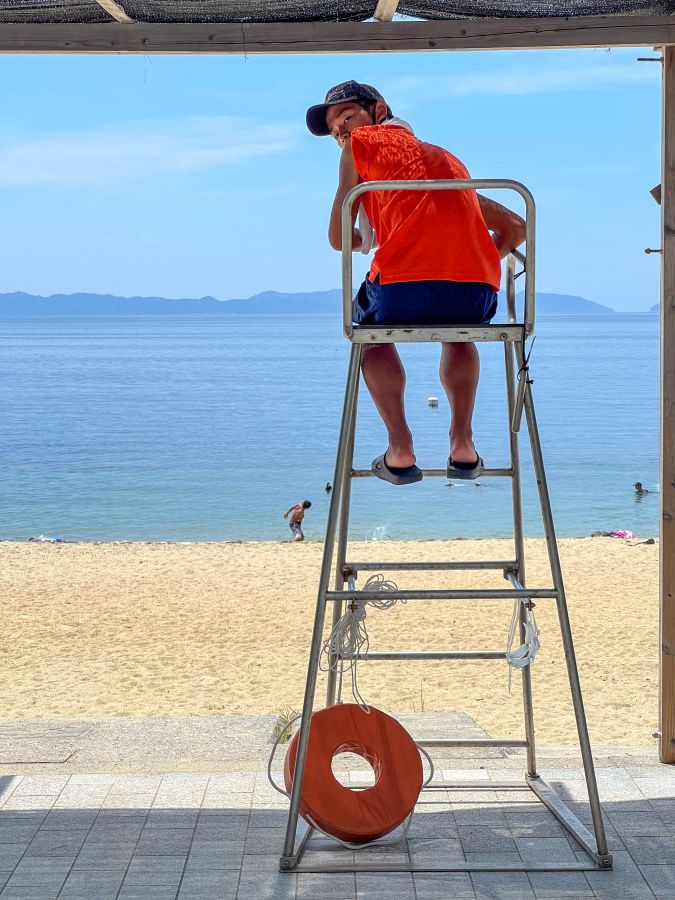
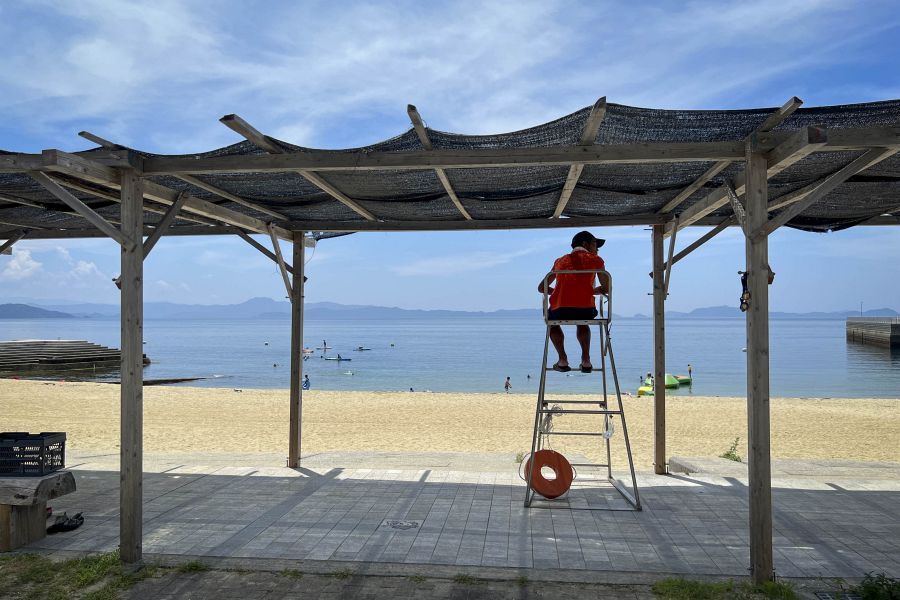
The calm bays and clear waters are suited to both aquaculture and water sports. At Ōsazu Beach, a long strip of sand is flanked by stone promenades and recreational facilities. At the bases of cliffs around Miyanoura and Takayama, the remains of nineteenth-century stone and brick kilns stand near the water’s edge. Above the coast, the terraced orchards of Karihama feature dry-stone walls made of white limestone, constructed to retain soil on slopes of over thirty degrees while absorbing heat during the day.
Industrial lime production began here in the early 19th century, driven by the region’s limestone geology. Local manufacturers built vertical kilns—such as the six-chambered Iwai kilns in Miyanoura, fuelled by charcoal and wood—to burn raw limestone into quicklime and slaked lime. The product was shipped across Japan for agricultural soil treatment until land-based quarrying waned in the mid-twentieth century. As lime processing declined, attention turned to the sea, where mineral runoff from the surrounding limestone hills enriches the sheltered bays with calcium carbonate. This water quality enabled the growth of pearl aquaculture, with oysters cultivated on floating wooden rafts anchored in the coves.
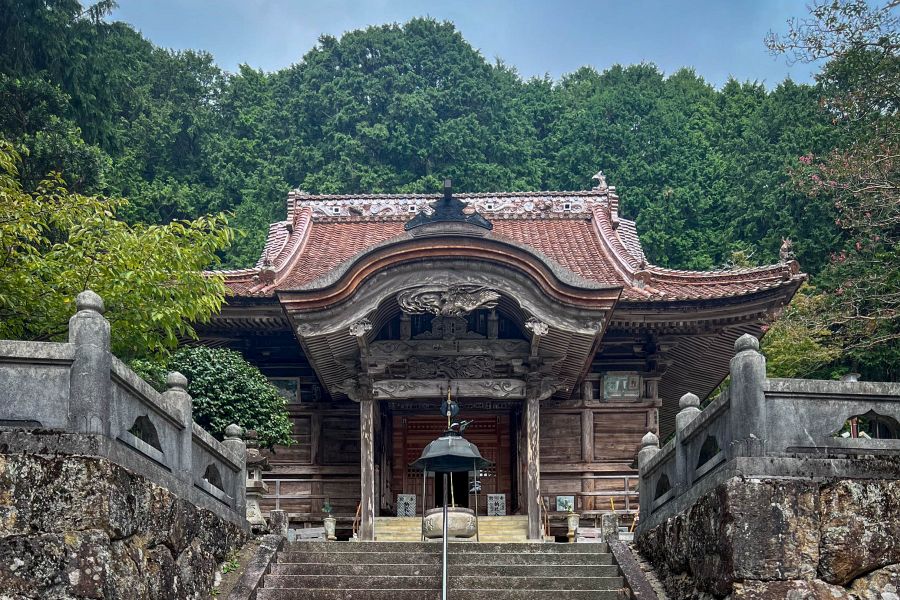
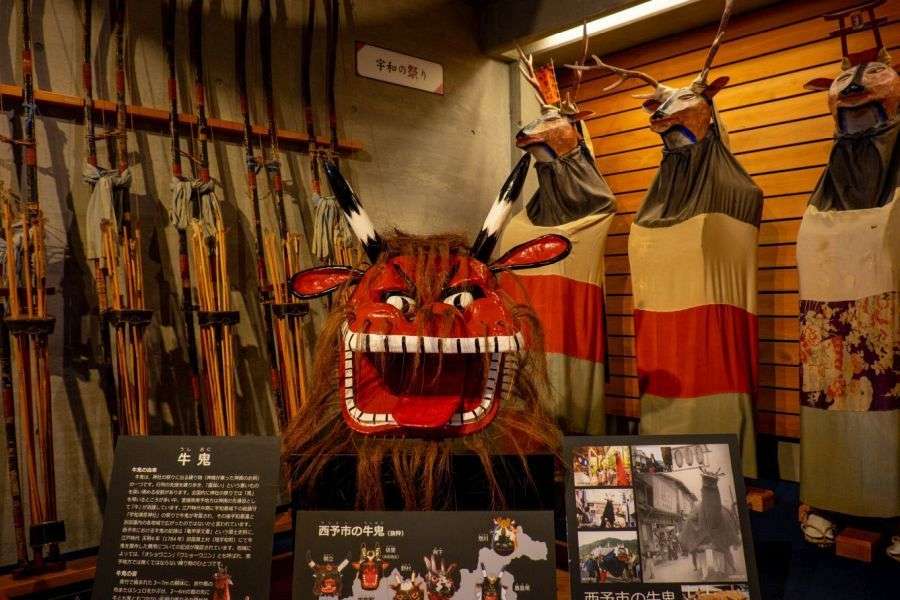
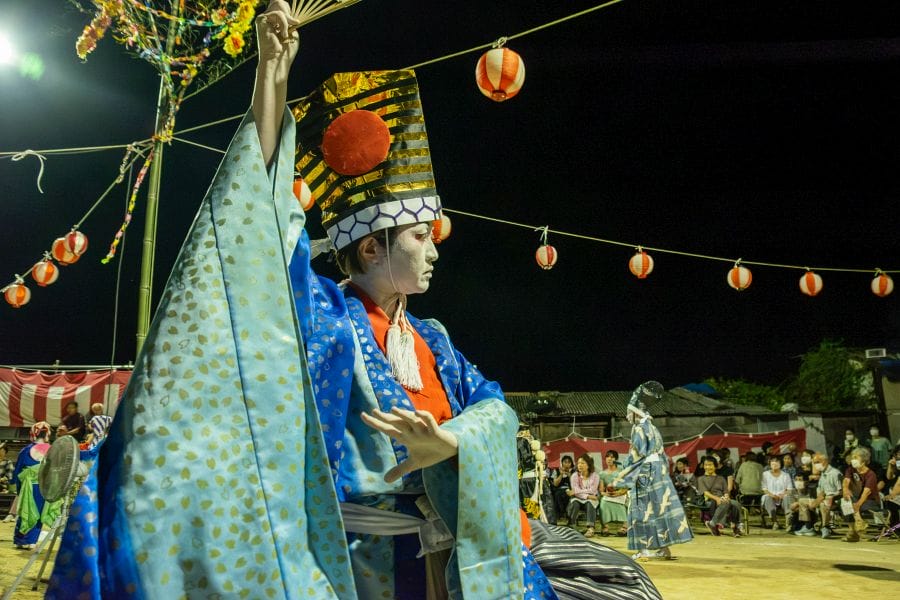
Community life has strong ties to the sea, highlighted during the annual autumn rituals in late October. At Kamo Shrine in Takayama, the eve of the festival features shio-gori, a purification rite in which palanquin bearers wearing loincloths carry portable shrines into the night sea. During celebrations at Kasuga Shrine in Karihama, festival processions feature ushioni—large, wooden bull-headed demon figures covered in woven straw mats—along with five-deer dances (itsushika-odori). These ceremonial floats and costumed performers are transferred onto fishing boats and pearl-farming vessels for a maritime parade across the bay. At Karihama, residents of all ages dress in elaborate Kabuki costumes and perform dances beside the sea.
Information
Name in Japanese: 明浜
Pronunciation: akei-hama
Address: Akehama, Seiyo, Ehime