Temple 36, Shōryū-ji
Shōryū-ji, The Blue Dragon Temple, is temple No. 36 on the Shikoku pilgrimage, or Henro. It stands near the tip of the Yokonami Peninsula which juts out into the Pacific Ocean parallel to the shore of Tosa city, creating a deep inlet called Uranouchi Bay.
What to See
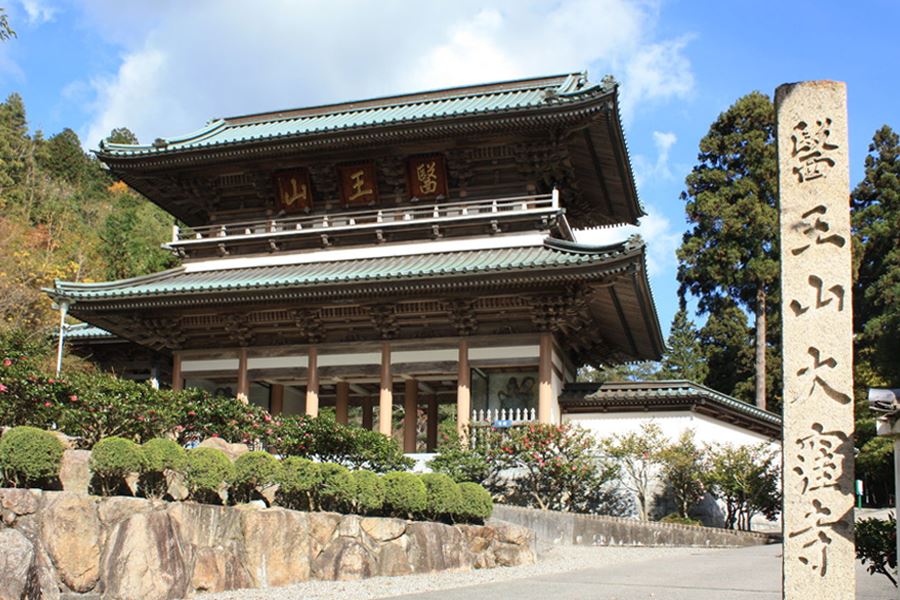
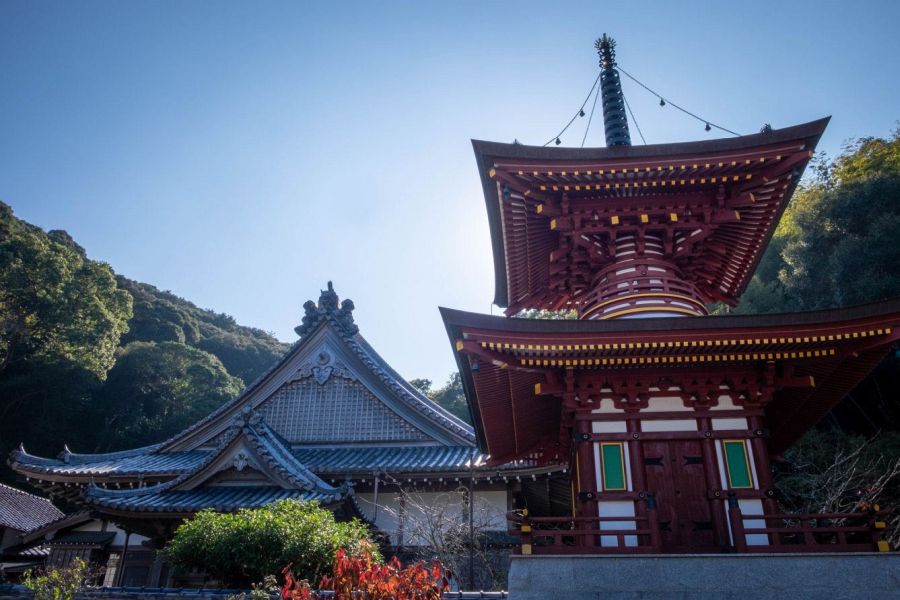
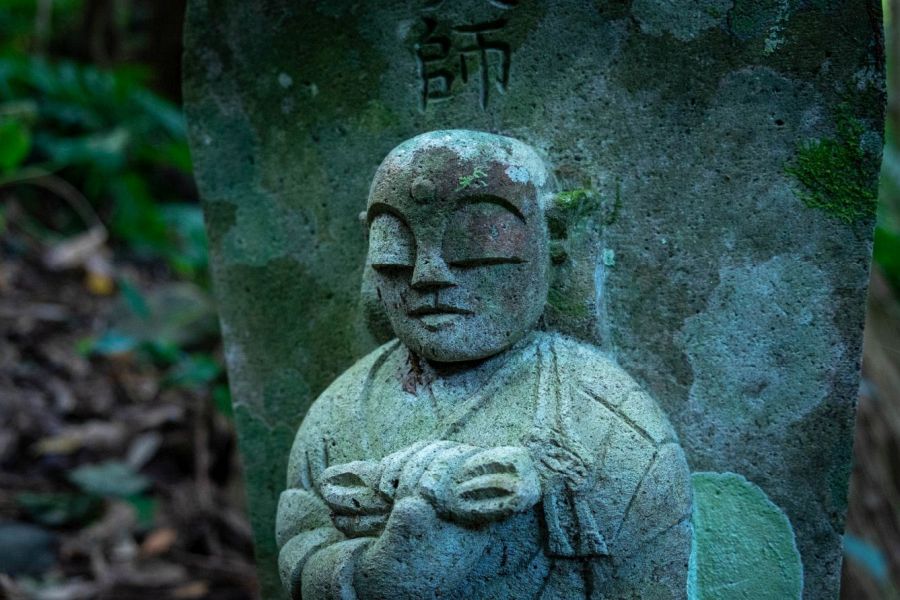
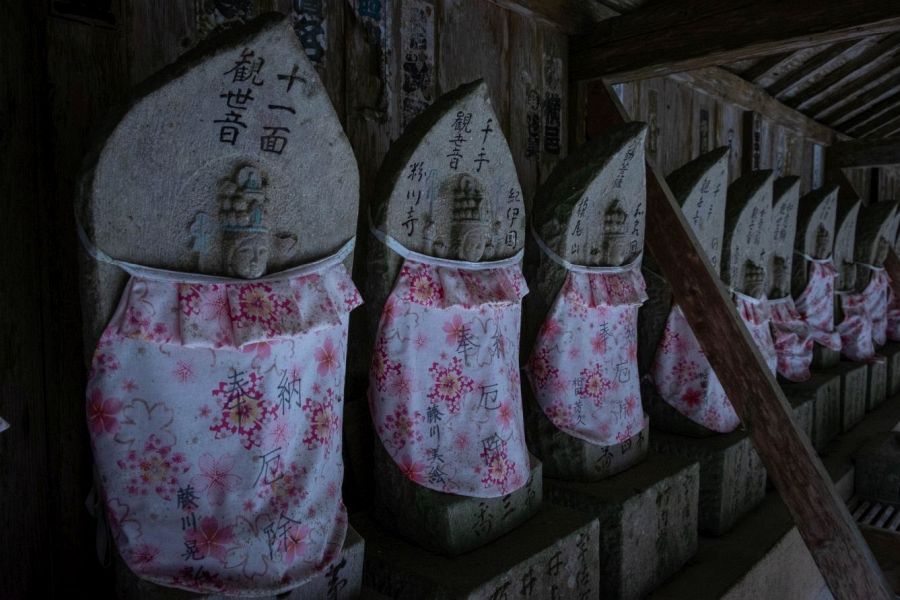
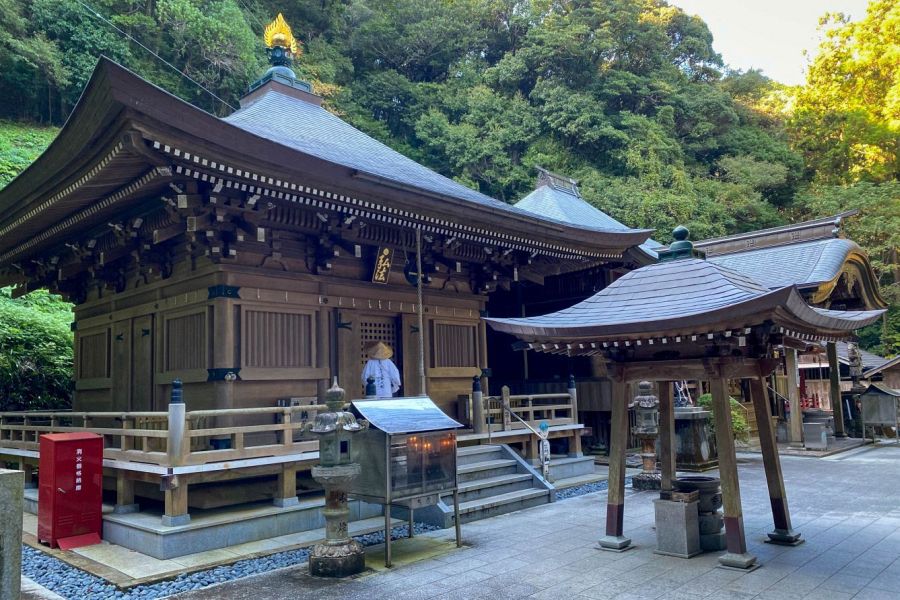
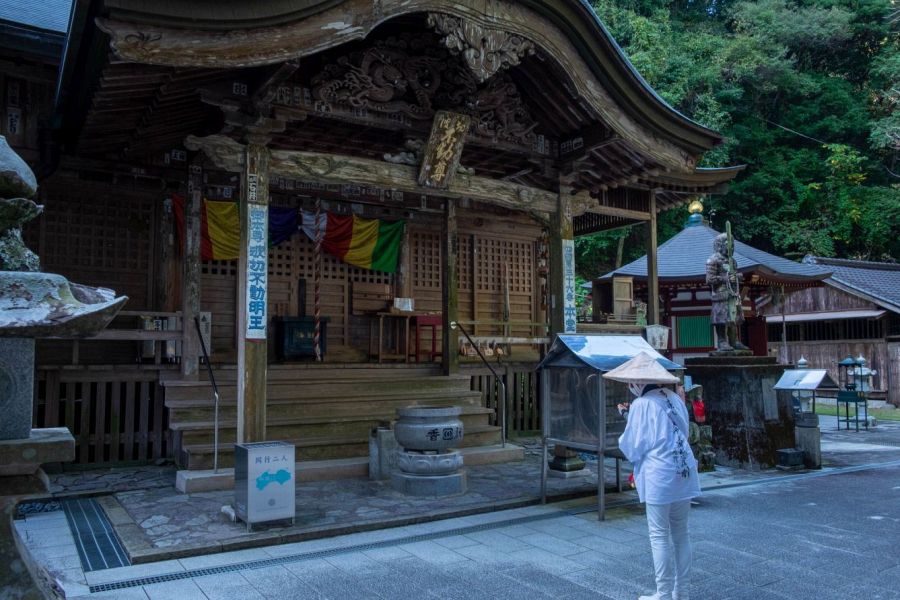
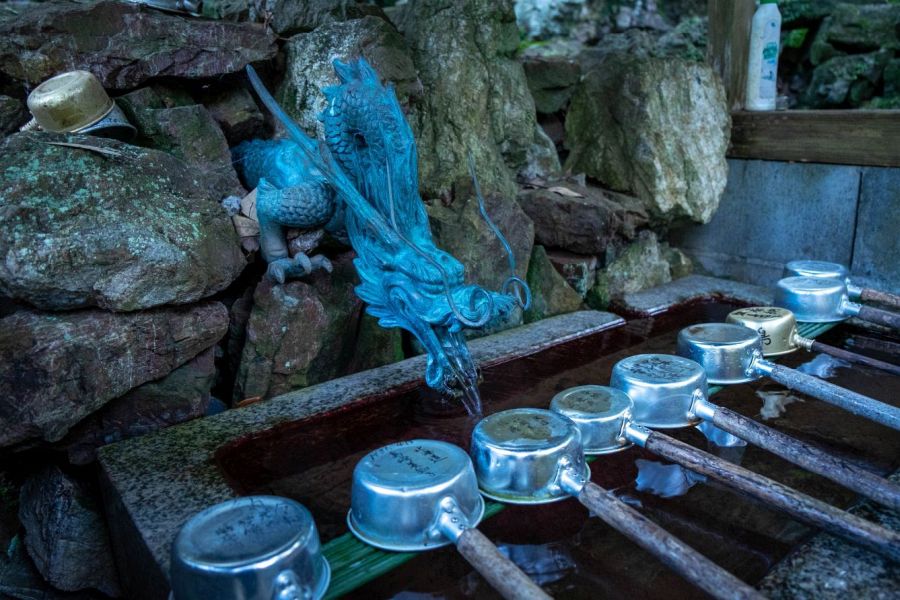
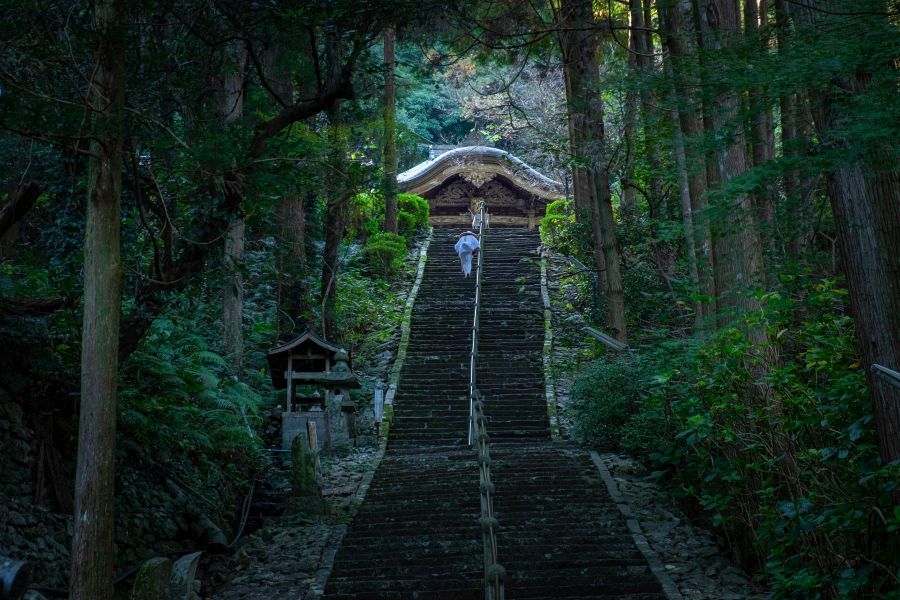
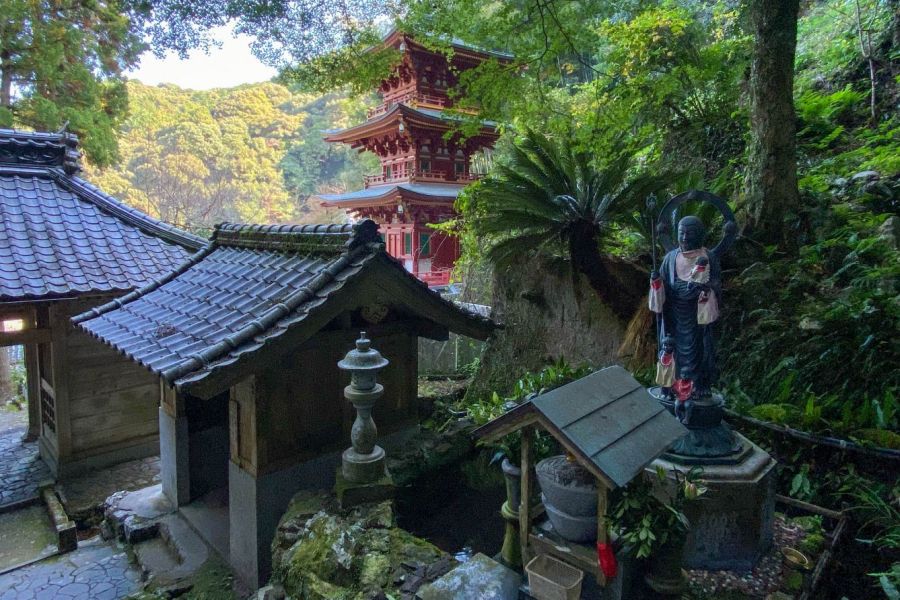
The temple is hidden in a valley recessed from the coastline of the peninsula. A road lined with small Buddhist statues winds into the valley. At the bottom of the valley is a small two-storey red and white pagoda behind which is a large hall, which appears to be the main part of the temple. But to the right, is a much larger three-storey red pagoda. Next to it is the main gate with a steep flight of stone steps leading up to the main hall and Daishi Hall. Beside the steps is a small waterfall used for personal purification rituals, and various statues.
History
The official foundation of the temple is based on the legend explained below. However, it’s likely that a Shugendō temple was first established higher up the mountain, and was then amalgamated with a later Buddhist temple below. A Daishi Hall was built bringing it into the cult of Kūkai.
Though fallen into ruin by the early Edo period, it was restored in the 1640s by Yamauchi Tadayoshi, the second lord of the Tosa domain. However, it suffered severe damage from an earthquake and tsunami in 1707 and was rebuilt in the late Edo period.
Until fairly recently, pilgrims would take a ferry across the mouth of the inlet. Today, a bridge makes the short crossing easier.
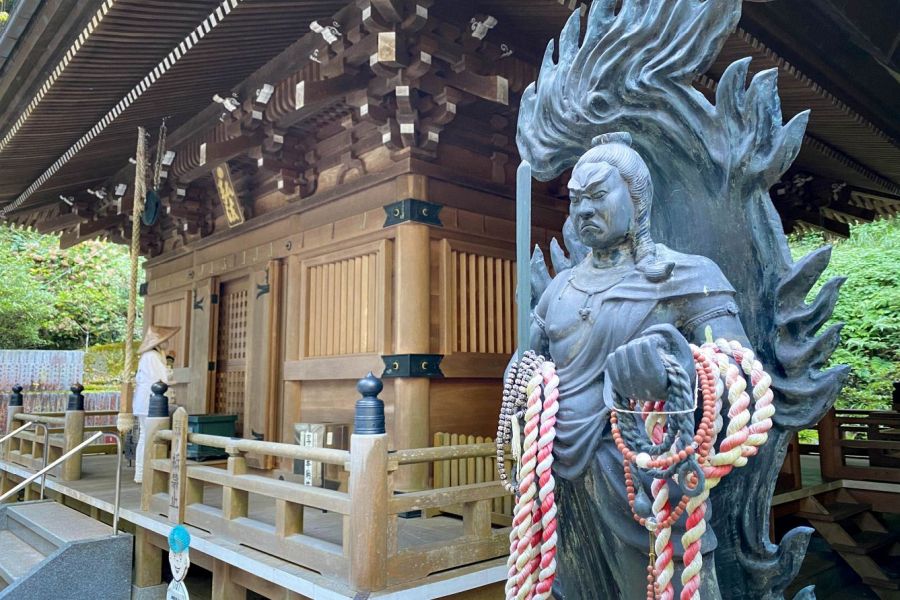
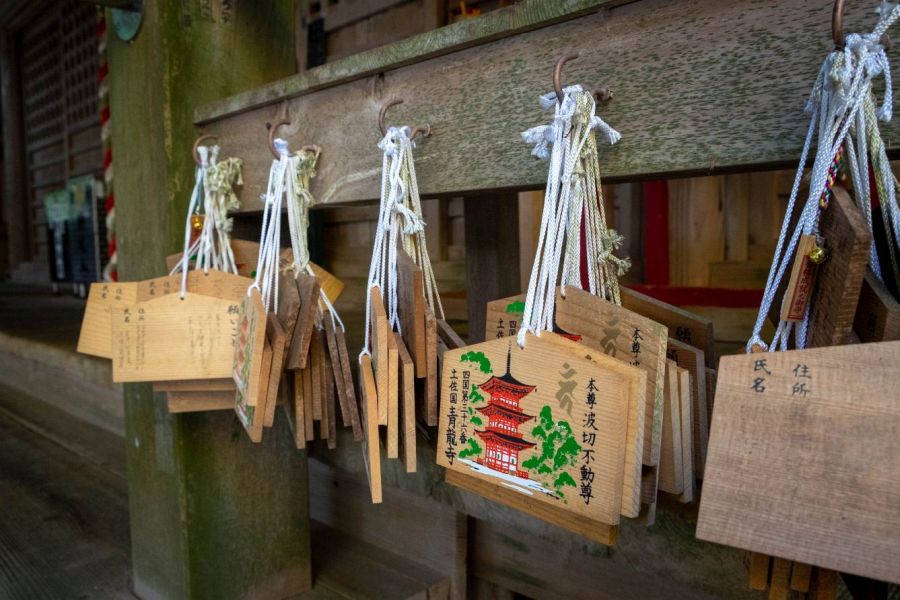
The main statue is of Wave-Cutting Fudō, an angry faced but well-meaning deity who holds ropes to bind people to good. Usa harbour near the temple once prospered as a tuna fishery, and the temple was a place of worship for fishermen who prayed to Fudō for safety at sea and a good catch.
Legends
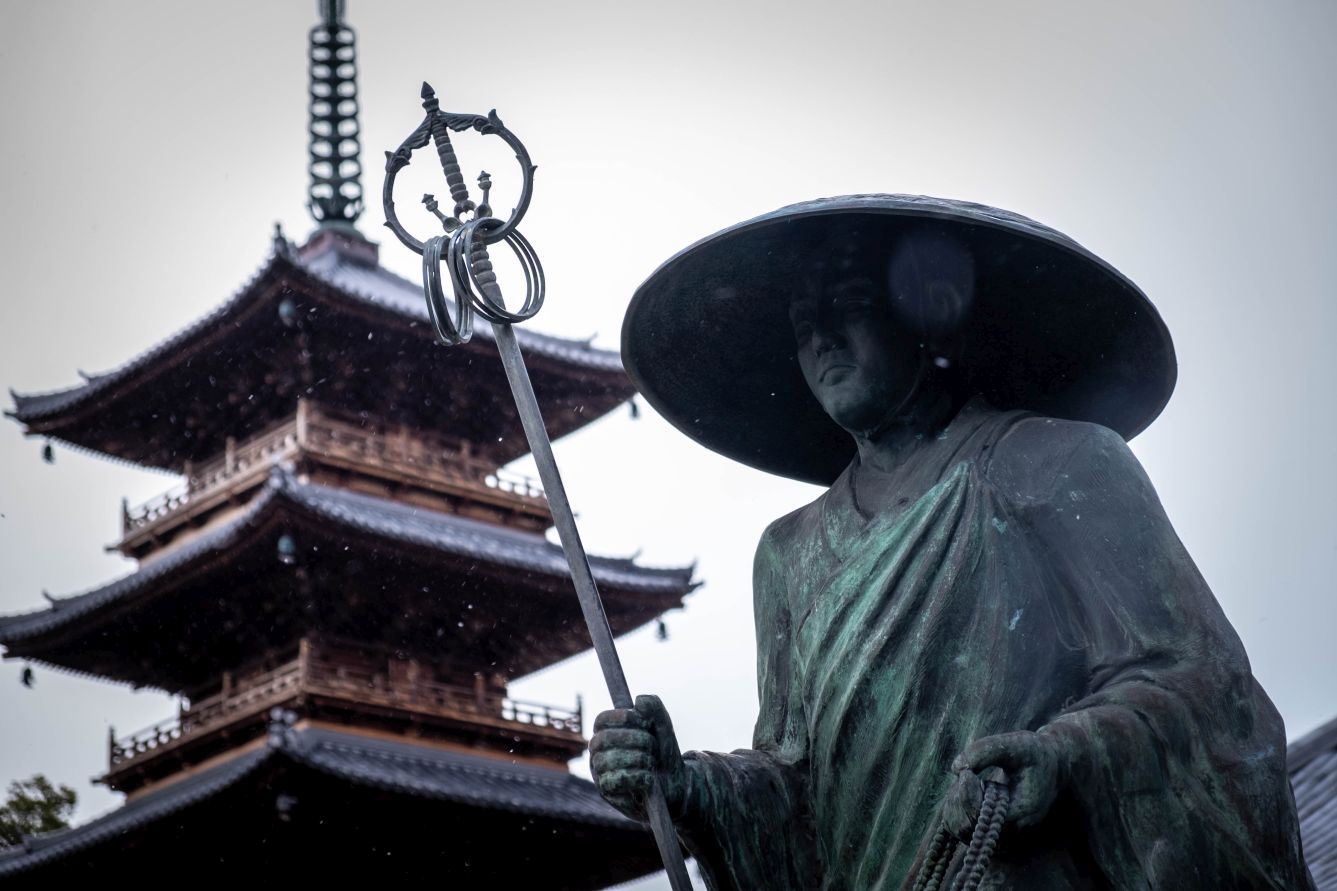
In 804 when Kūkai was studying in China, he wanted to build a temple in Japan to honour his teacher, Keika. Traditional images of Kūkai show him holding a pronged instrument called a tokkosho or vajra, a symbol of spiritual power. He threw a tokkosho in the direction of Japan. It flew high in the air and was carried eastward in the sky under a purple cloud, a sure sign of divine intervention. When Kūkai returned to Japan in 806, he found the tokkosho snagged in the branches of a pine tree on the Yokonami Peninsula. He reported the miracle to the Emperor Saga, and built a temple, arranged in a style similar to a temple with the same name in China.
Information
Name in Japanese: 青竜寺
Pronunciation: shoh-ryoo-jee
Address: Usachoryu 163, Tosa, Kōchi 781-1165