Temple 42, Butsumoku-ji
Butsumoku-ji, the Temple of the Buddha’s Tree, is temple No. 42 on the Shikoku pilgrimage or Henro. The temple is located in the countryside between Uwajima and Seiyo. The temple buildings are interesting mixture of architectural styles, including an unusual thatched belfry. There are many attractive trees within the temple precincts.
What to see
Along the road leading to the temple, local residents cultivate tulips in spring, portulaca in summer, and cosmos in autumn as a welcome to visitors.
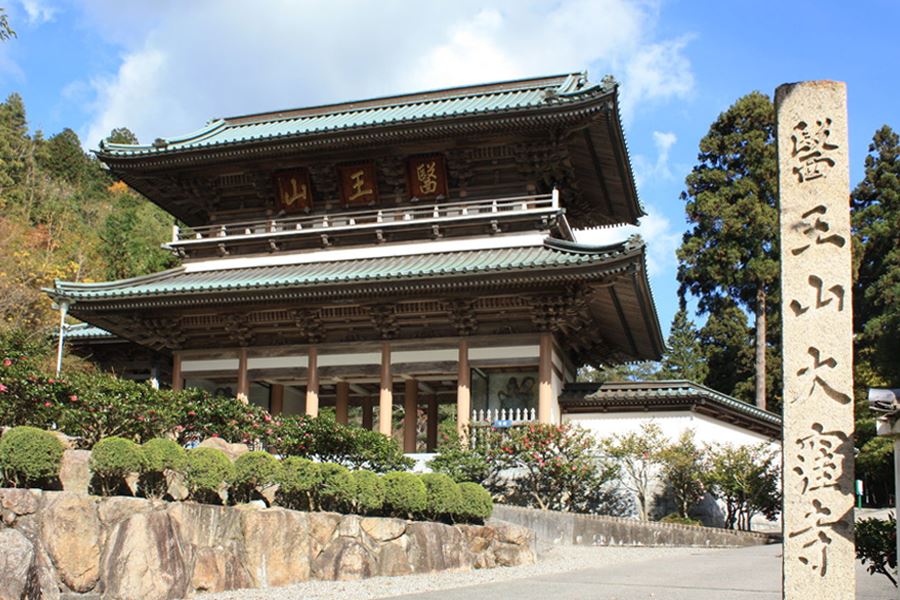
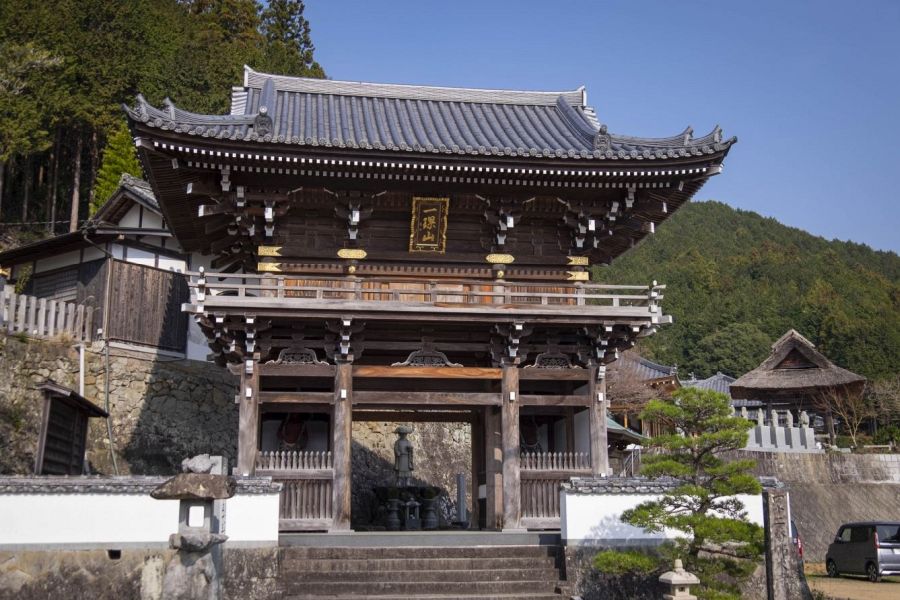
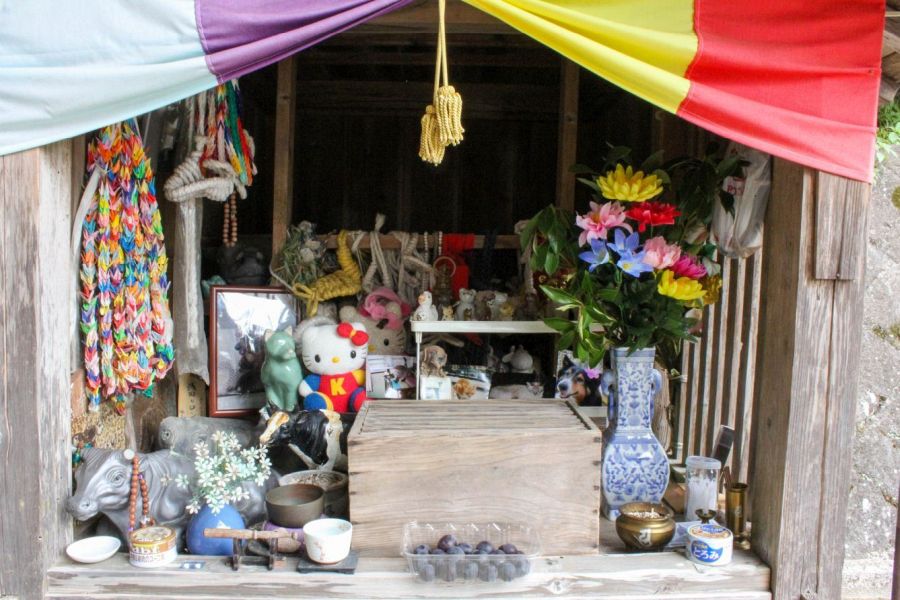
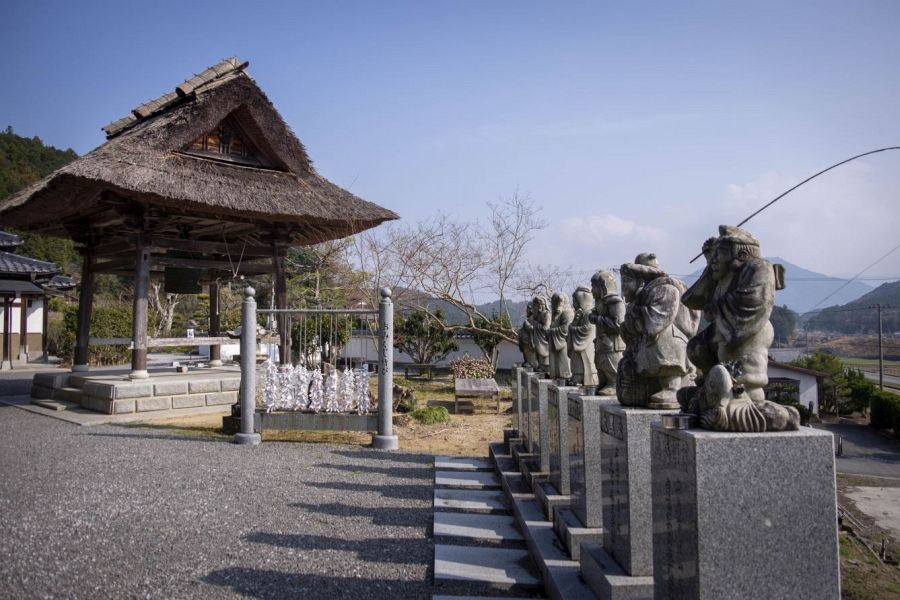
From the road, stone steps lead up to the magnificent two-storey main gate with Niō guardians, which was rebuilt in 2011. After passing the washbasin, steps lead up to a low platform where you’ll find the thatched bell tower, built in the late 1600s, and the priest’s quarters. Beyond are the temple office on the left, the Fudō Hall on the right. Here, fire rituals are performed. Further ahead is the Prince Shōtoku Hall further ahead. Continuing along the approach path, you pass a Kannon statue on the left, with the main hall directly ahead and the Daishi Hall to the left. To the right of the main hall is a shrine to livestock, and behind the main hall is the Guardian Shrine, enshrining Amaterasu Omikami, Emperor Jimmu, and Sugawara no Michizane. Behind the Daishi Hall is a shrine to the Heike clan whose members were buried in this area about 600 years ago. Located to the left of the Daishi Hall is a shrine holding the remaining wood from which the principal image was carved, reflecting the name of the temple.
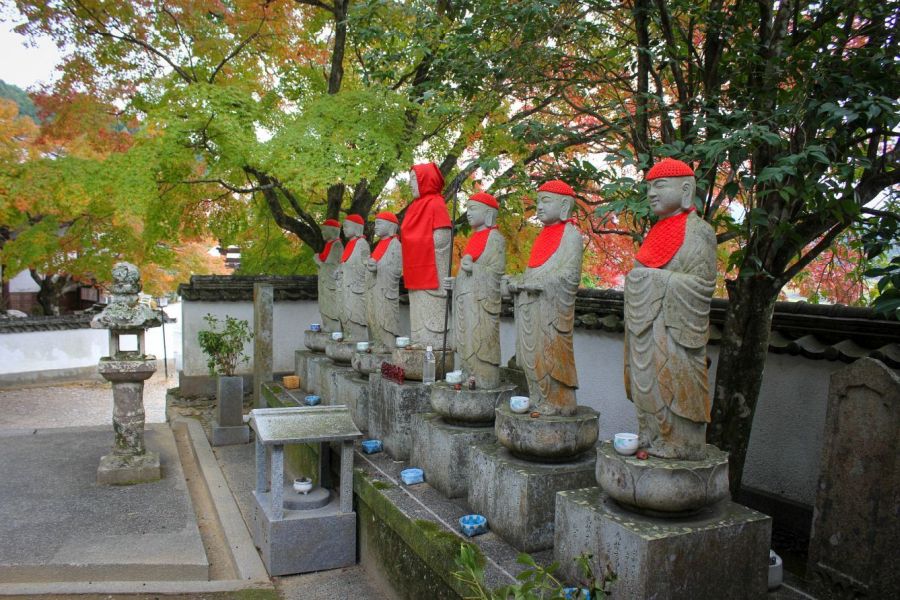
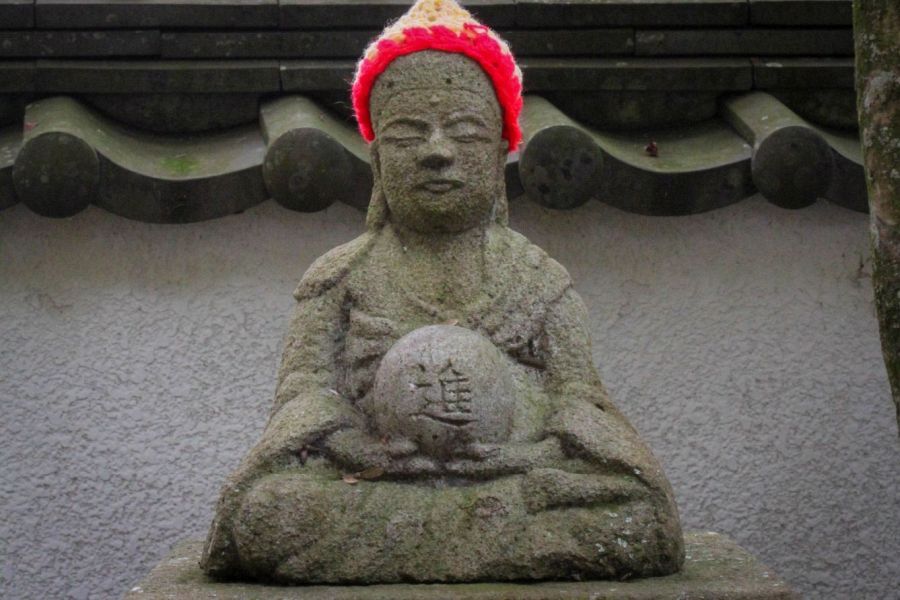
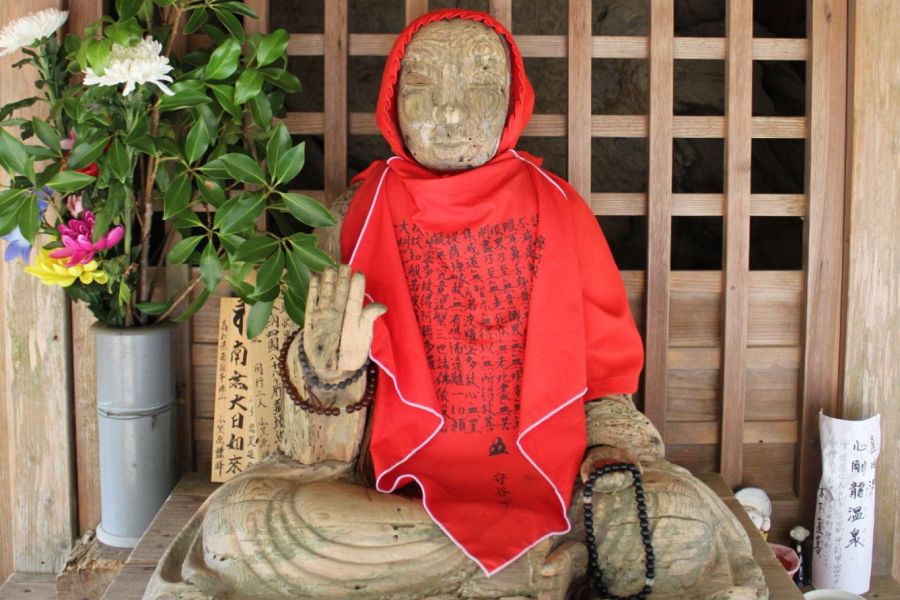
Stone Buddhas in the precincts include the Seven Lucky Gods and symbols of the 33 Kannon Pilgrimage Sites in Western Japan.
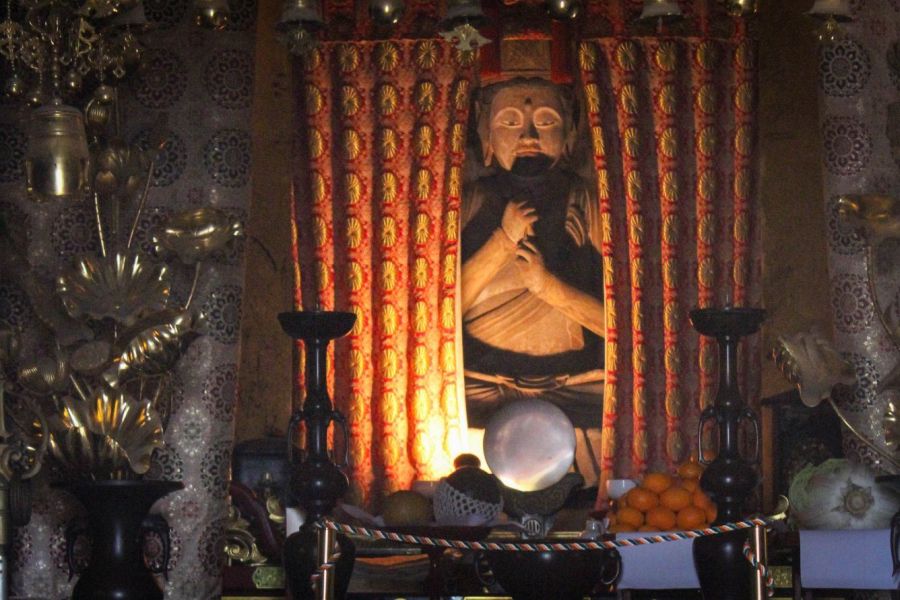
Every year on April 19, the temple holds a festival, when the main statue of Kūkai is displayed.
History
During the Kamakura period, Butsumoku-ji flourished as the family temple of the Iyo Saionji clan, the feudal lords of Uwajima. The statue of Kūkai has an inscription inside it stating that it was consecrated on October 5, 1315, making it the oldest statue of Kūkai with an inscription in Japan. The main hall was built in 1728 by Date Murayasu, the lord of the Yoshida domain.
The legends regarding sacred wood and an ox were probably devised in the medieval period.
Legends
Before he left Tang in China, Kūkai threw a jewel into the air. Later when he travelled in this area, he was offered a ride by an old man with an ox. Kūkai spotted the jewel lodged in a large camphor tree. Realizing that this was a sacred place, he carved a statue of Dainichi Nyorai from camphor wood, embedded the jewel between its eyebrows, and established a temple. The temple is known as a temple for the protection of livestock because Kūkai arrived at this place riding on the back of an ox.
Information
Name in Japanese: 佛木寺
Pronunciation: butsoo-moku-jee
Address: 1683 Mimacho, Uwajima, Ehime 798-1102