Temple 55, Nankōbō
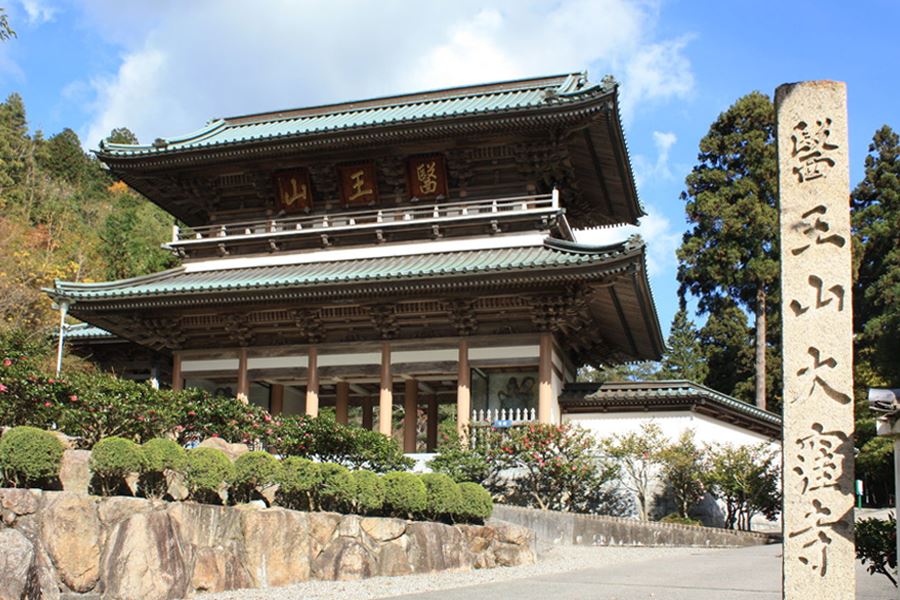
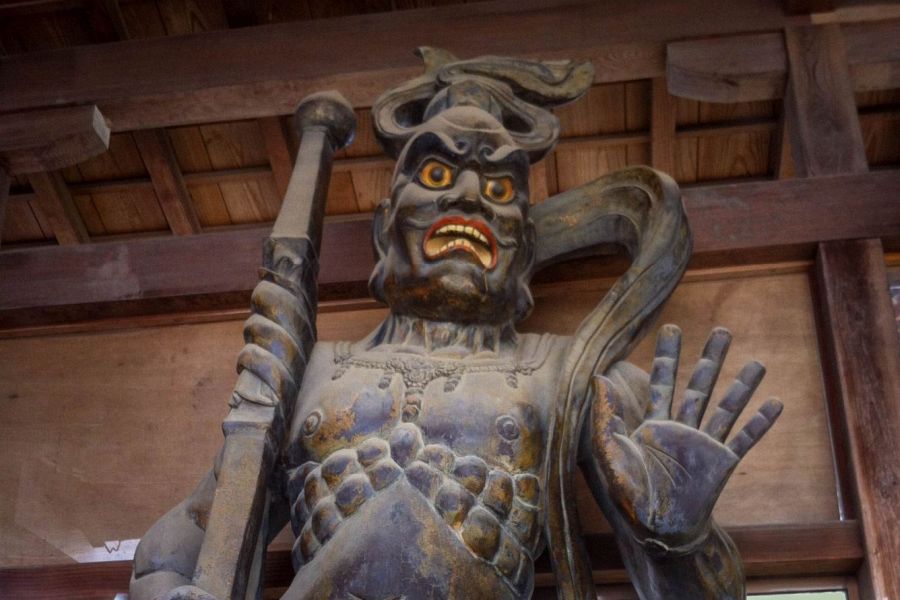
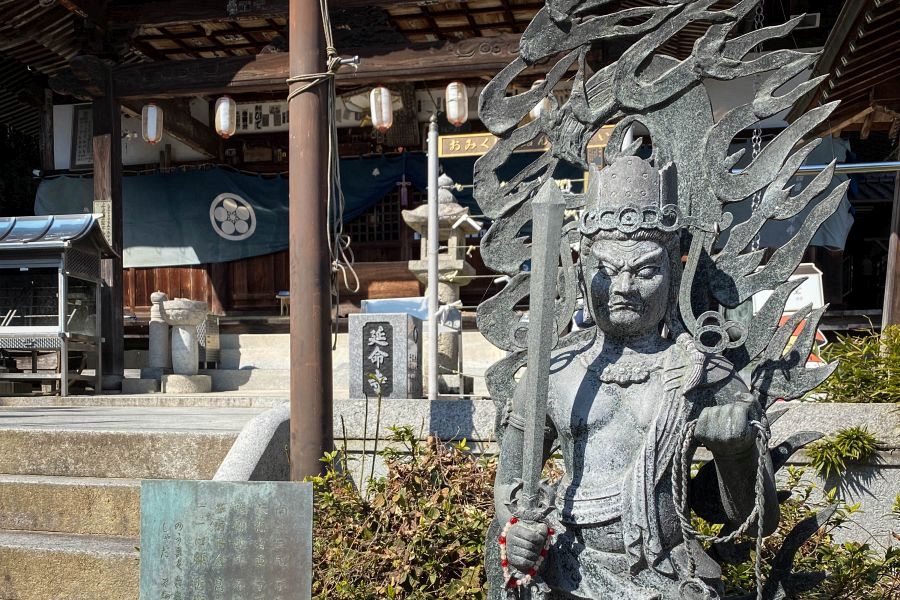
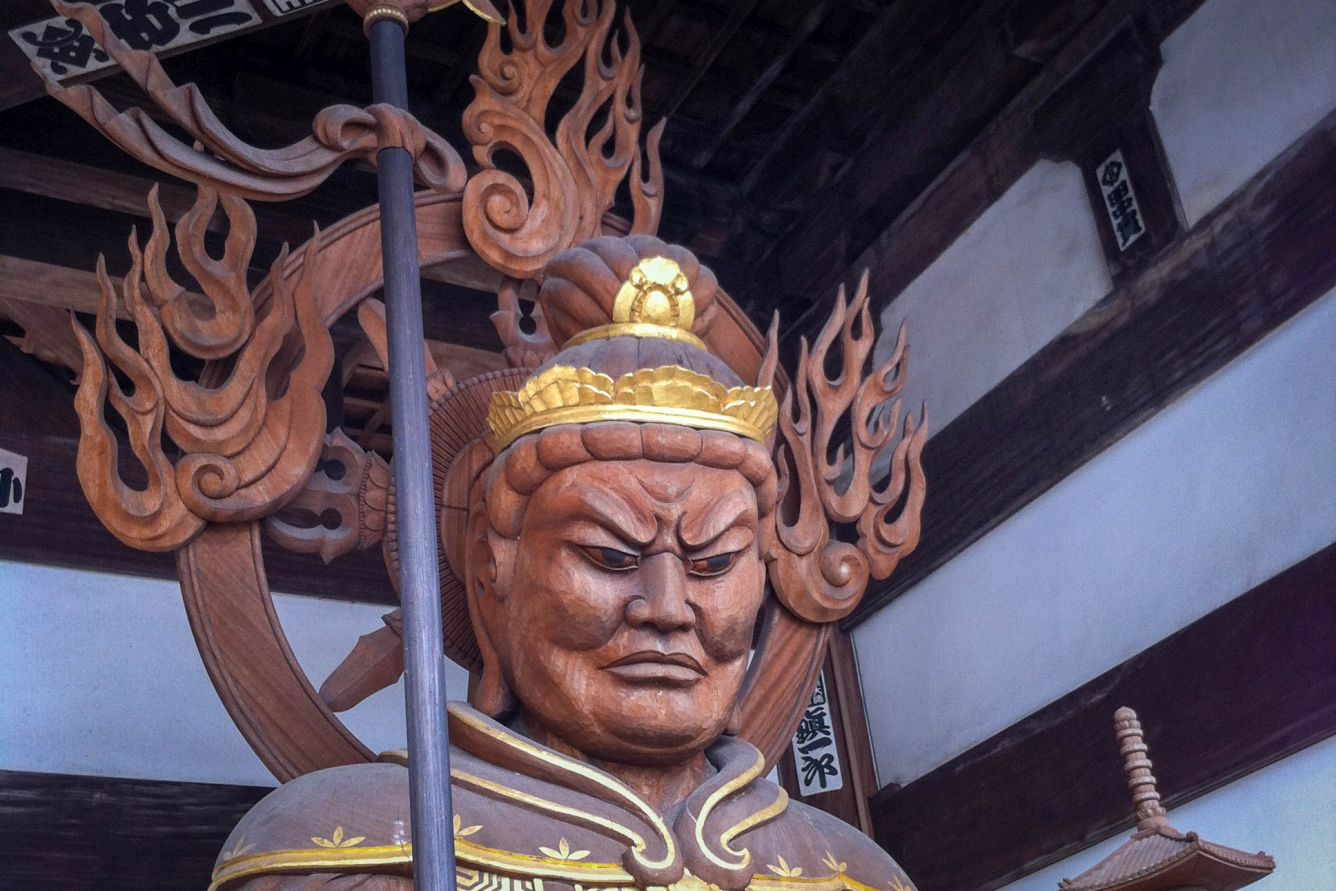
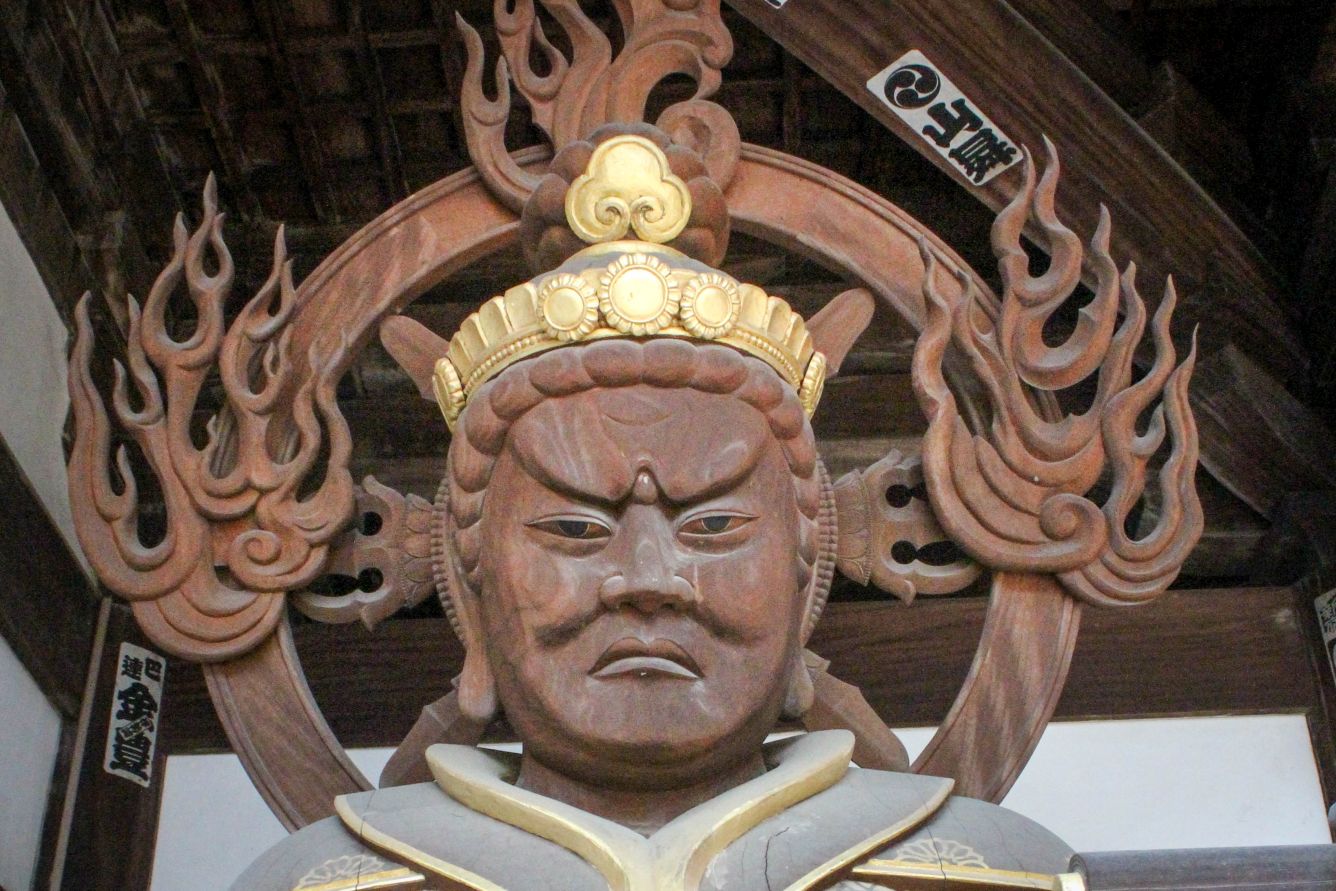
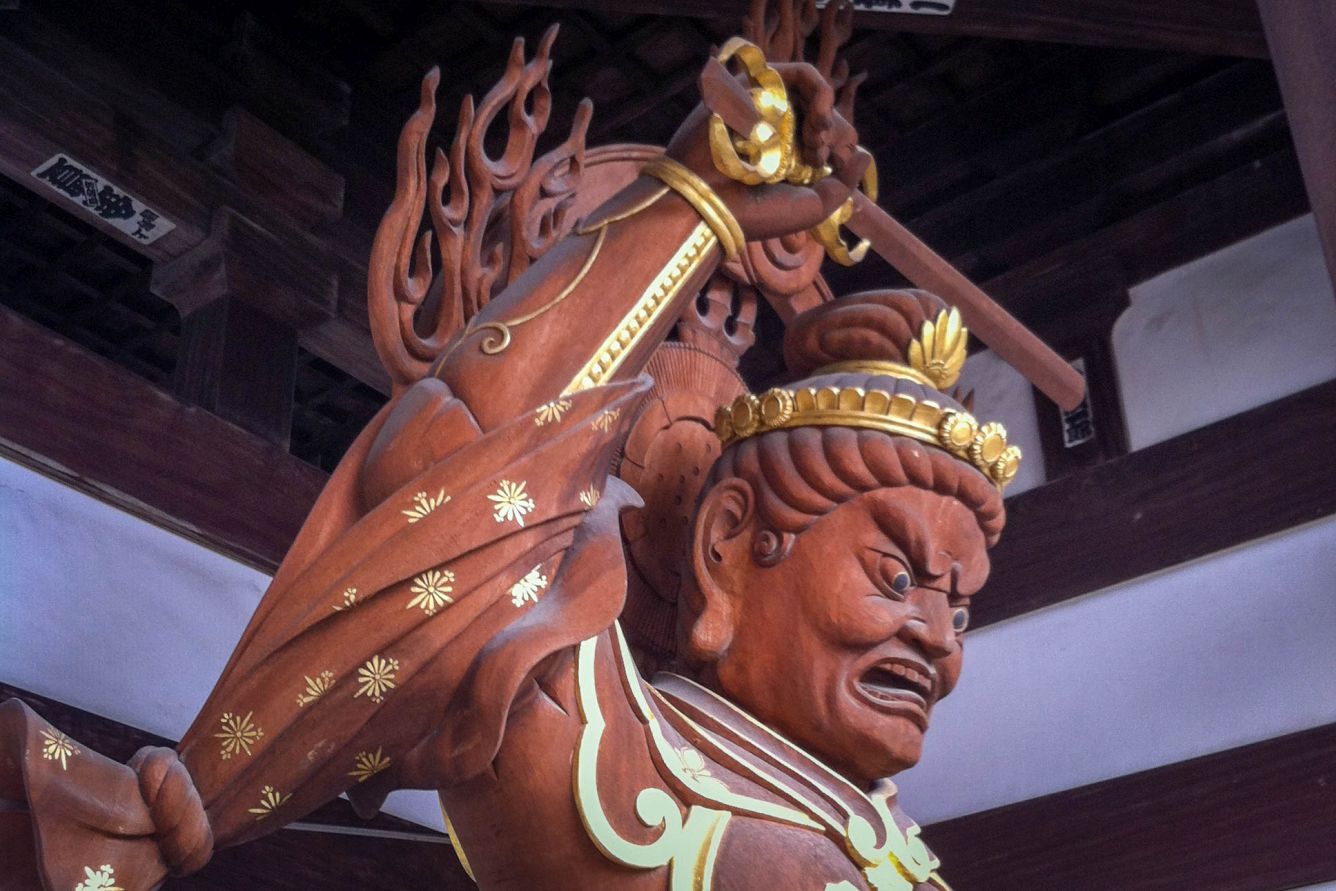
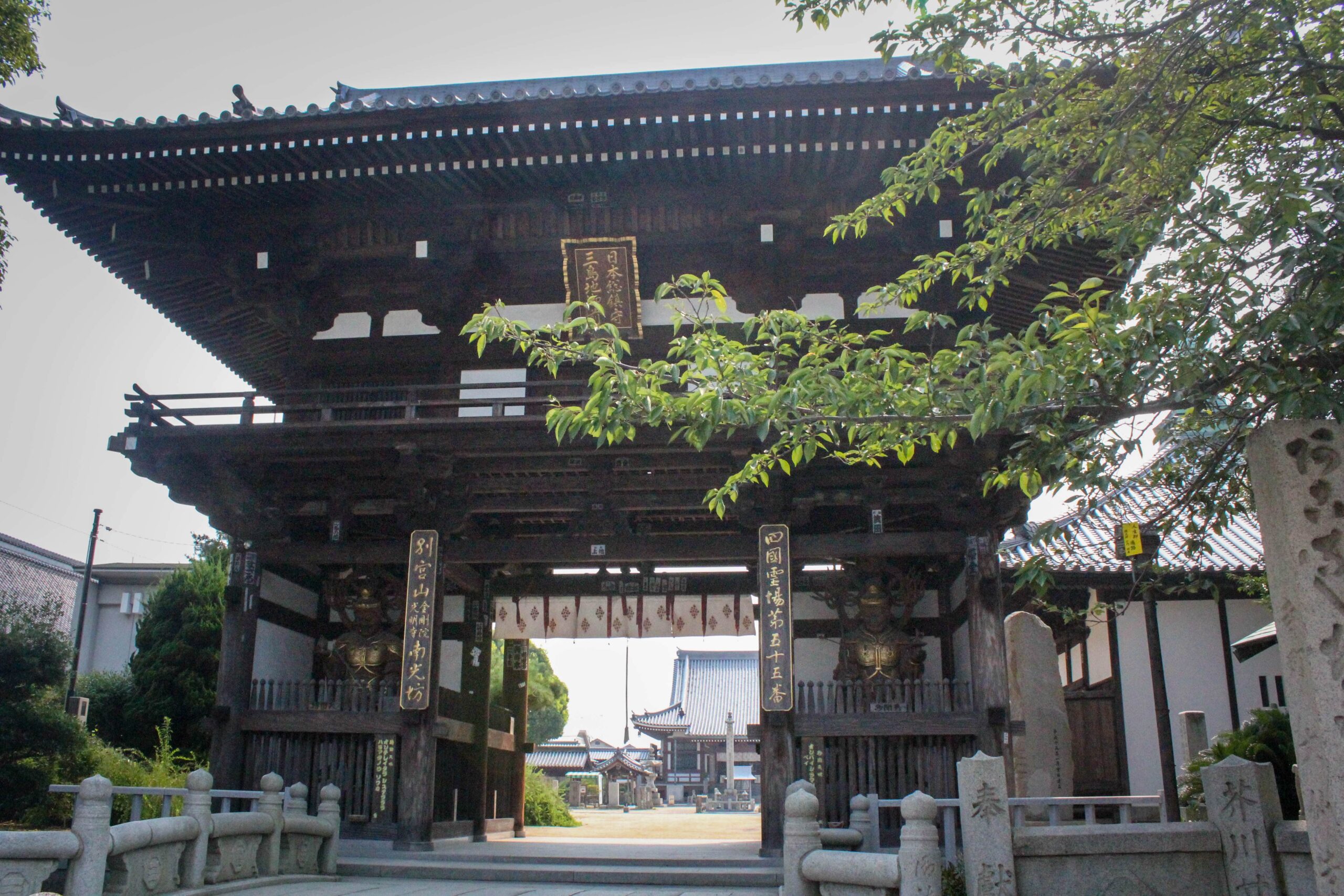
Nankōbō, The Temple of the Southern Light, is temple No. 55 on the Shikoku pilgrimage or Henro. Located in Imabari, it has a magnificent gate facing the main road, with four fierce guardians decorated with gold leaf.
What to see
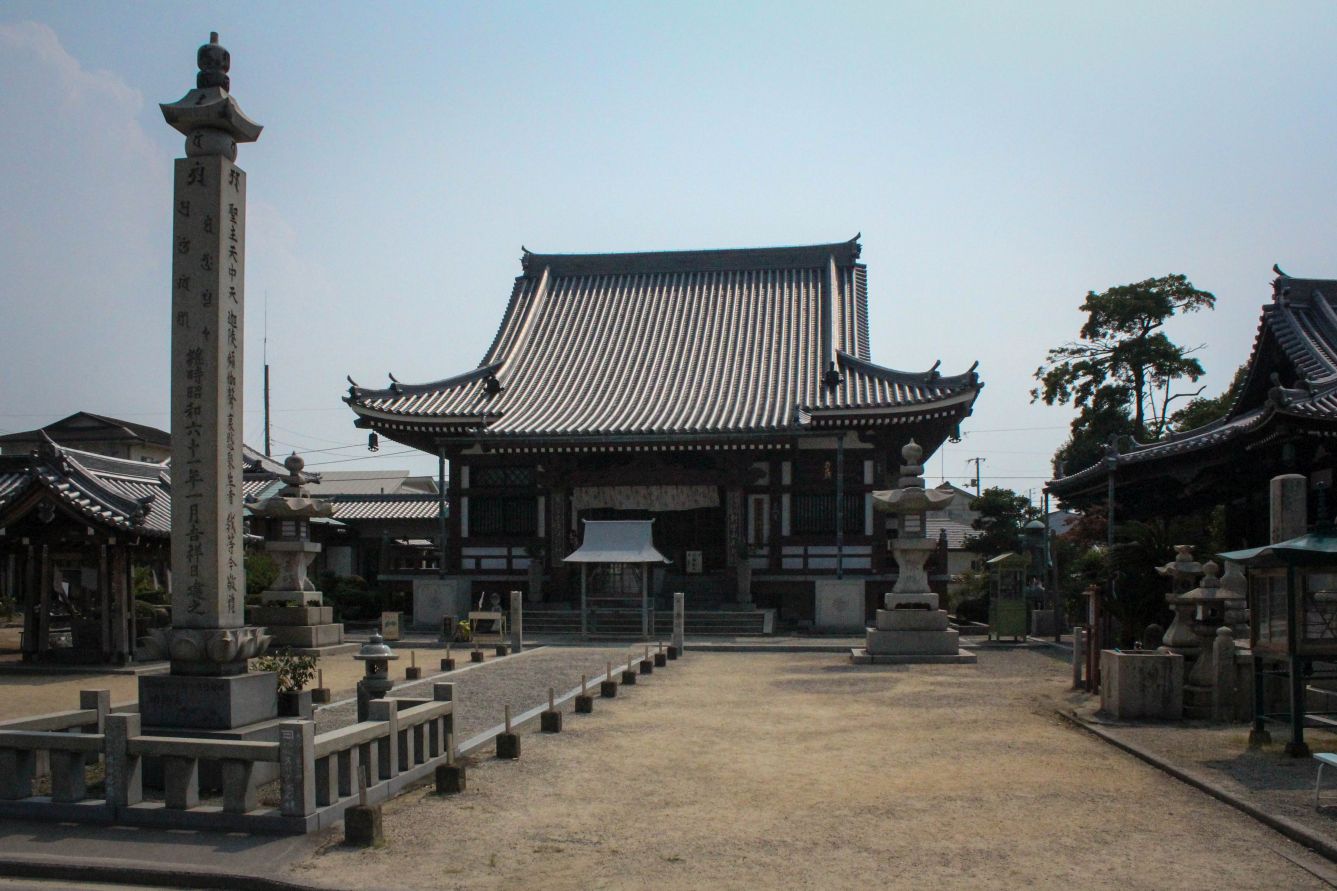
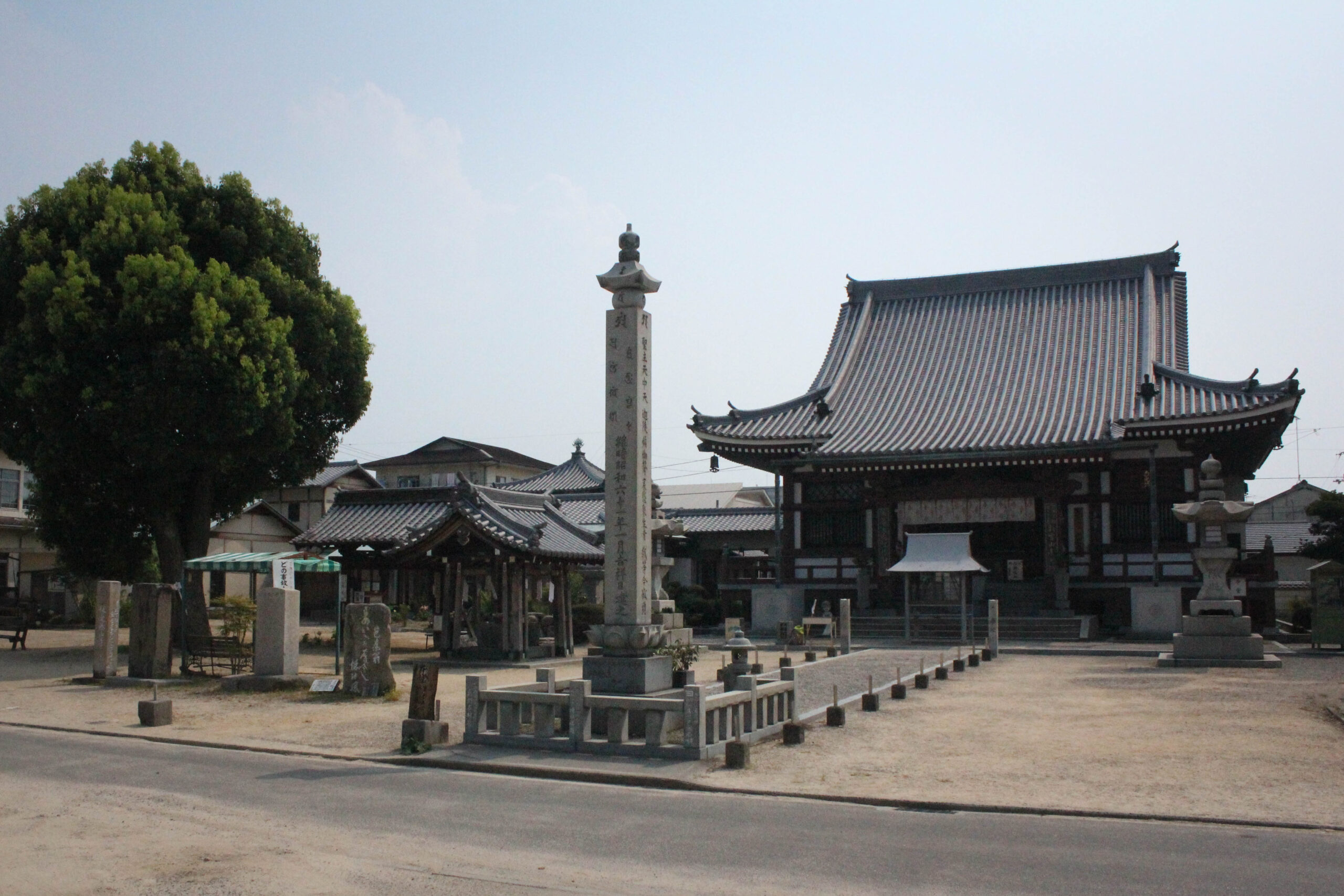
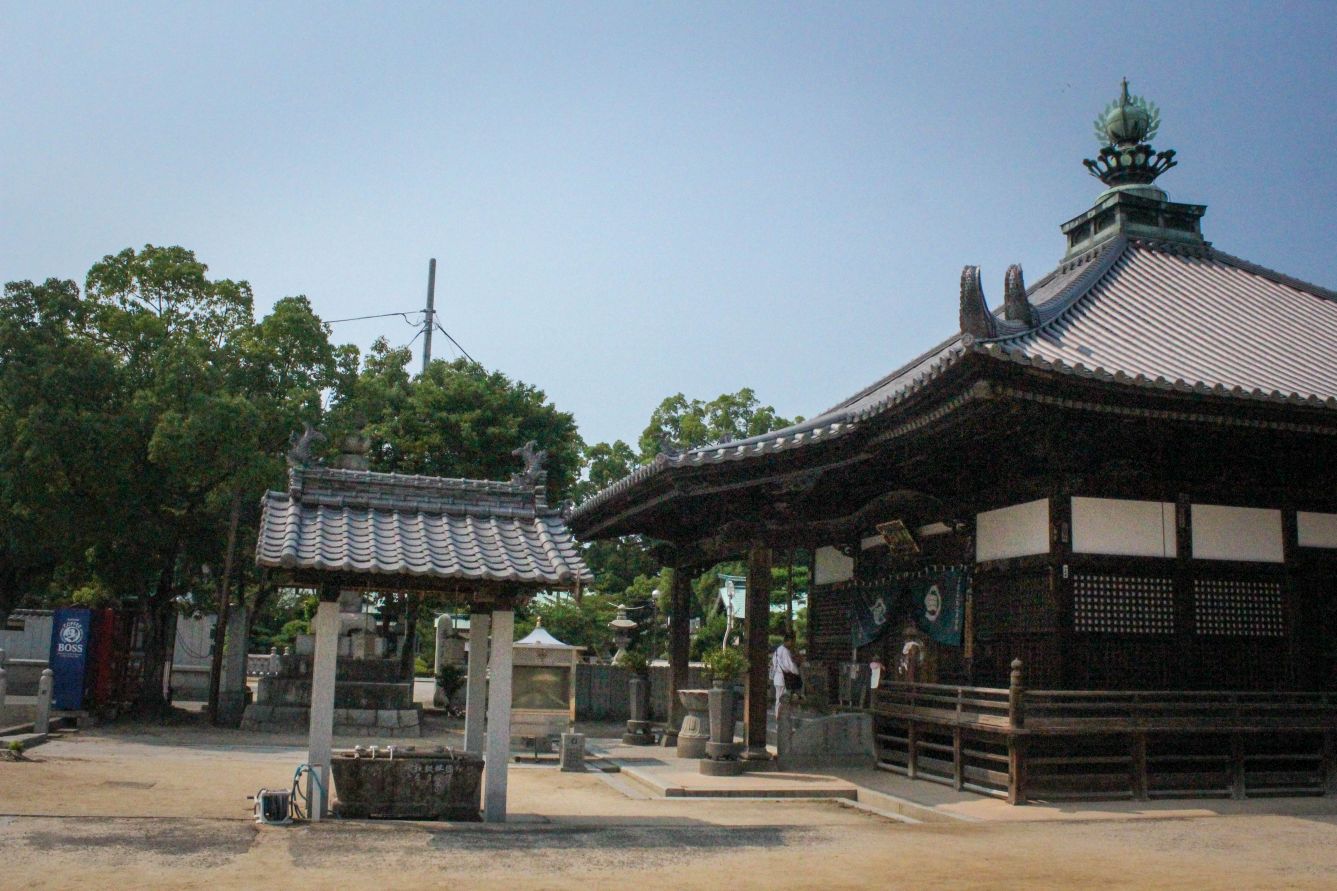
Nankōbō stands beside a main road through Imabari city. Its buildings are distributed around an expansive sandy enclosure that serves as a car park.
From the road, you cross over a small arched bridge in front of the magnificent two-storey main gate with its Niō guardian statues. To the right of the gate is a shrine to Benten, goddess of music and islands in a pond.
Heading further in a concrete brush memorial. In 1954, calligrapher Kawamura Kishan visited the temple and struck up a friendship with the priest who gave him a straw hat. Later the memorial was built.
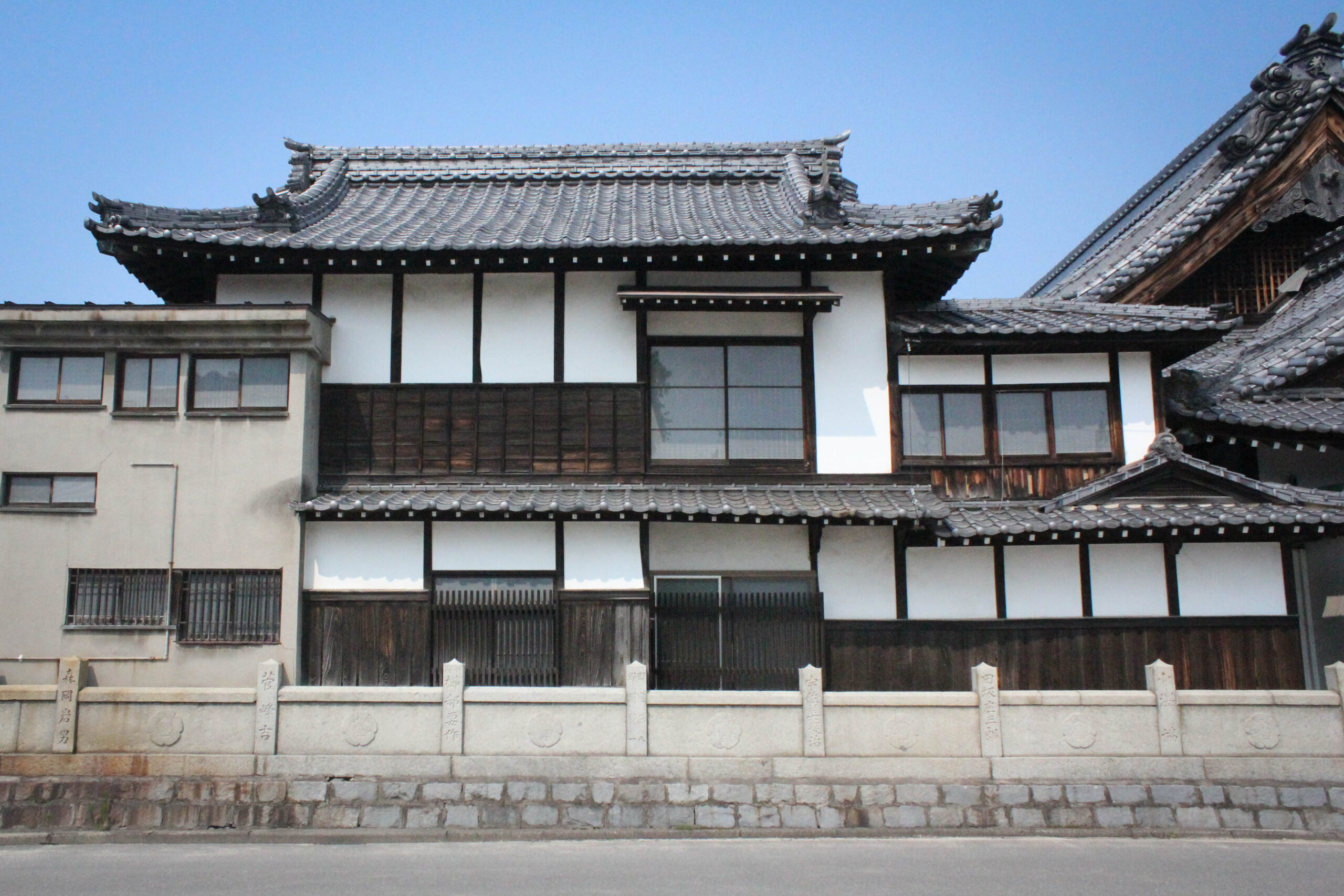
The Daishi Hall stands opposite the brush memorial. It escaped damage during the air raids of World War II. It was built in 1916 by the then head priest, Tenno Kaidō. The building uses architectural techniques of Chōshū carpenters of today’s Yamaguchi and is highly regarded for its cultural value.
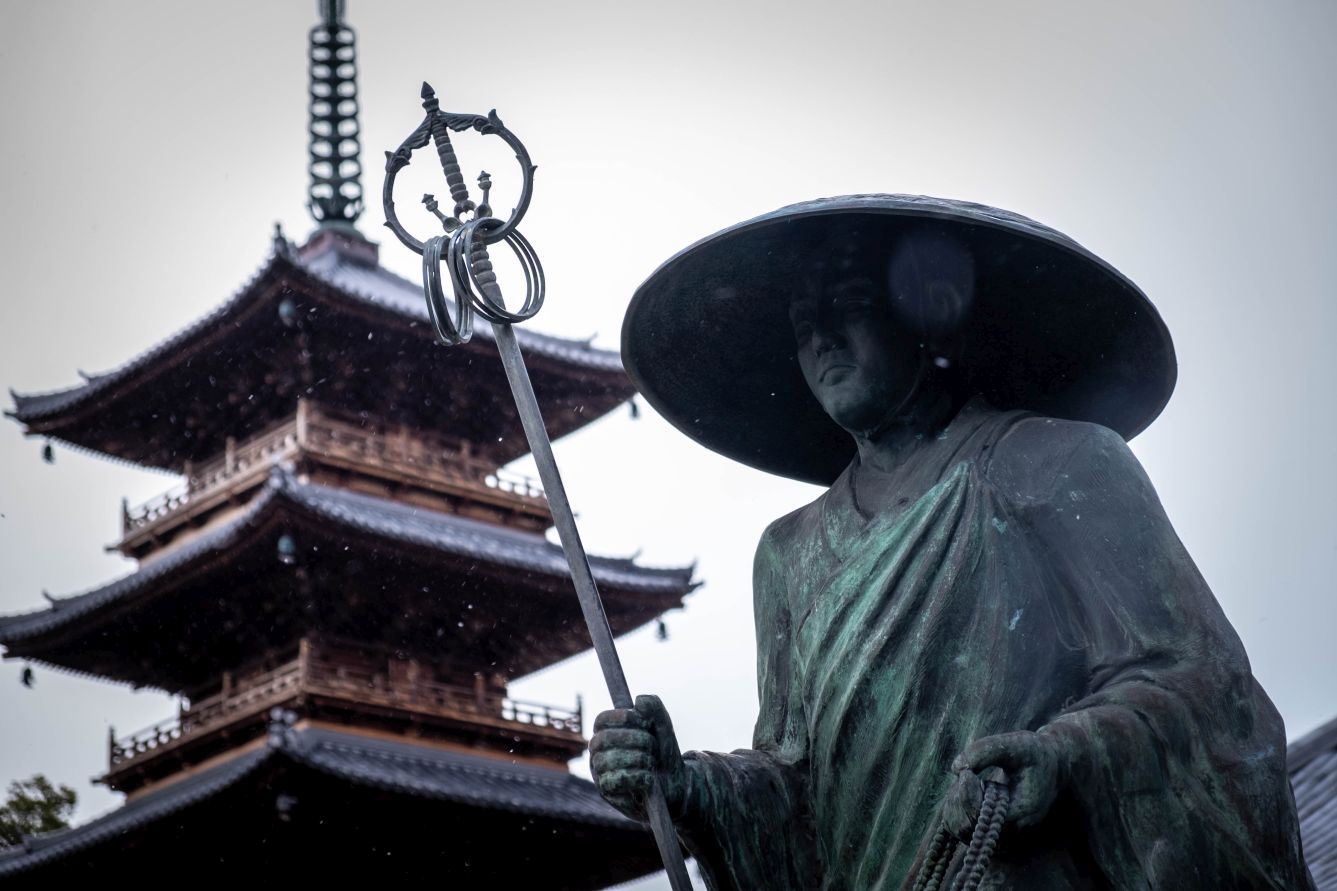
Further ahead, the Konpira Hall and Yakushi Hall stand side by side on the right. Between the Kannon Hall and Yakushi Hall are a Five-Story Pagoda Tomb, Mizuko Jizō, the Thirteen Buddha Stone Statues, and a White Robe Kannon. The main hall stands at the rear of the front, with a statue of Kūkai on the right, a stone statue of the Great Sun Buddha on the left, and the priest’s quarters and temple office.
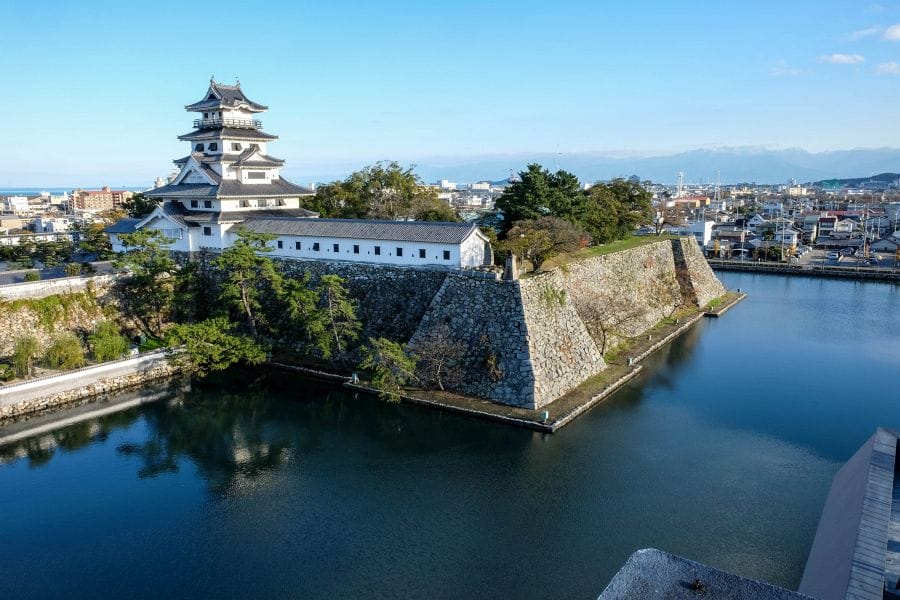
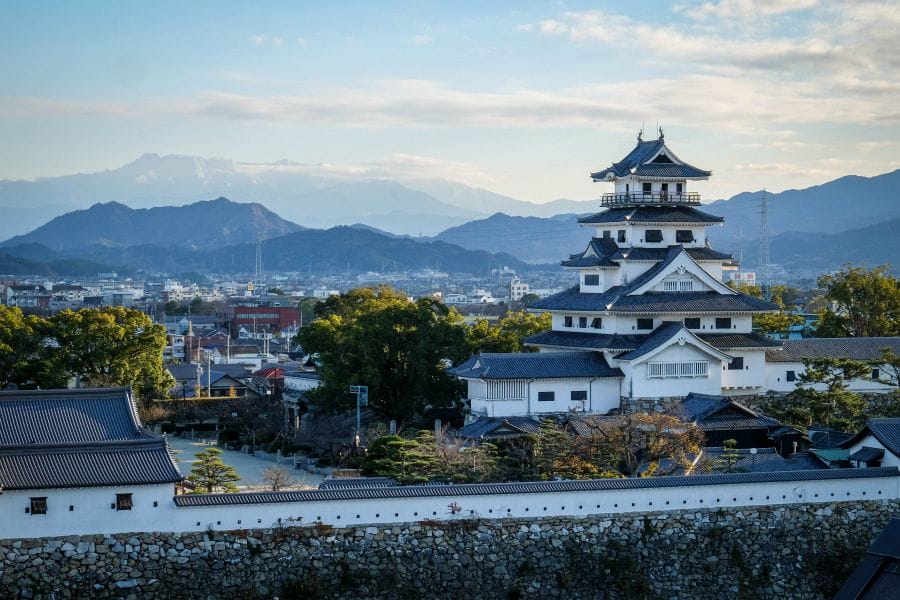
A gate donated when Imabari Castle was demolished in the early Meiji period is now used as a rest area.
There are three haiku stones, one by Matsuo Basho
My lips are cold with the autumn wind
By Kofutei Seidō
As evening falls, I bow to the autumn mountains for a mile
By Fukagawa Shōichirō
I play in the whirlpools of Kurushima on my autumn pilgrimage
History
Sometime around 703, Nankōbō was established as a sub-shrine of Ōyamazumi Shrine on Ōmishima Island. It was intended as a place to worship the Ōyamazumi deity when bad weather prevented sea crossings.
When Chōsokabe Motochika conquered Shikoku, Nankōbō was burned down by his army.
In 1600, when Tōdō Takatora was appointed lord of the Imabari domain, Nankōbō was rebuilt. It was designated as the Imabari domain’s prayer hall and the Yakushi Hall was rebuilt. During the Edo period, it continued to be revered by the Hisamatsu family, the feudal lords of Imabari, and was designated as a place of prayer. It boasted a vast temple grounds.
In the early Meiji period, in accordance with the Separation of Shintō and Buddhism Edict, Nankōbō was officially separated from Ōyamazumi Shrine.
During World War II, the temple suffered heavily in the Imabari air raid in August 1945, and most of the temple buildings, including the main hall with the principal image, and the priest’s quarters, were destroyed by fire, with the exception of the Konpira Hall and the Daishi Hall.
The main hall was rebuilt in 1981. The Yakushi Hall was rebuilt in 1991, the main gate was completed in 1998, and the Four Heavenly Kings statues were enshrined in 2002. The Daishi Hall was renovated in 2010.
Legends
Kūkai is said to have visited the branch shrine during his pilgrimage of Shikoku and performed Buddhist rituals at the temple.
According to legend, although numerous incendiary bombs were dropped on the temple grounds, all of them slid off the roof of the Daishi Hall, and everyone who had taken refuge inside was unharmed.
Information
Name in Japanese: 南光坊
Pronunciation: nan-kōbō
Address: 3-1 Bekkucho, Imabari, Ehime 794-0026