Temple 57, Eifuku-ji
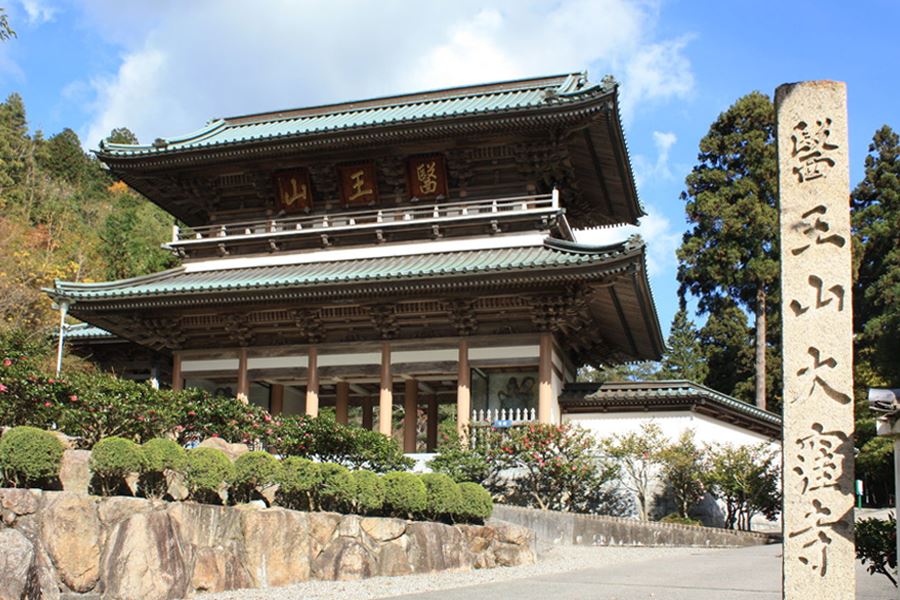
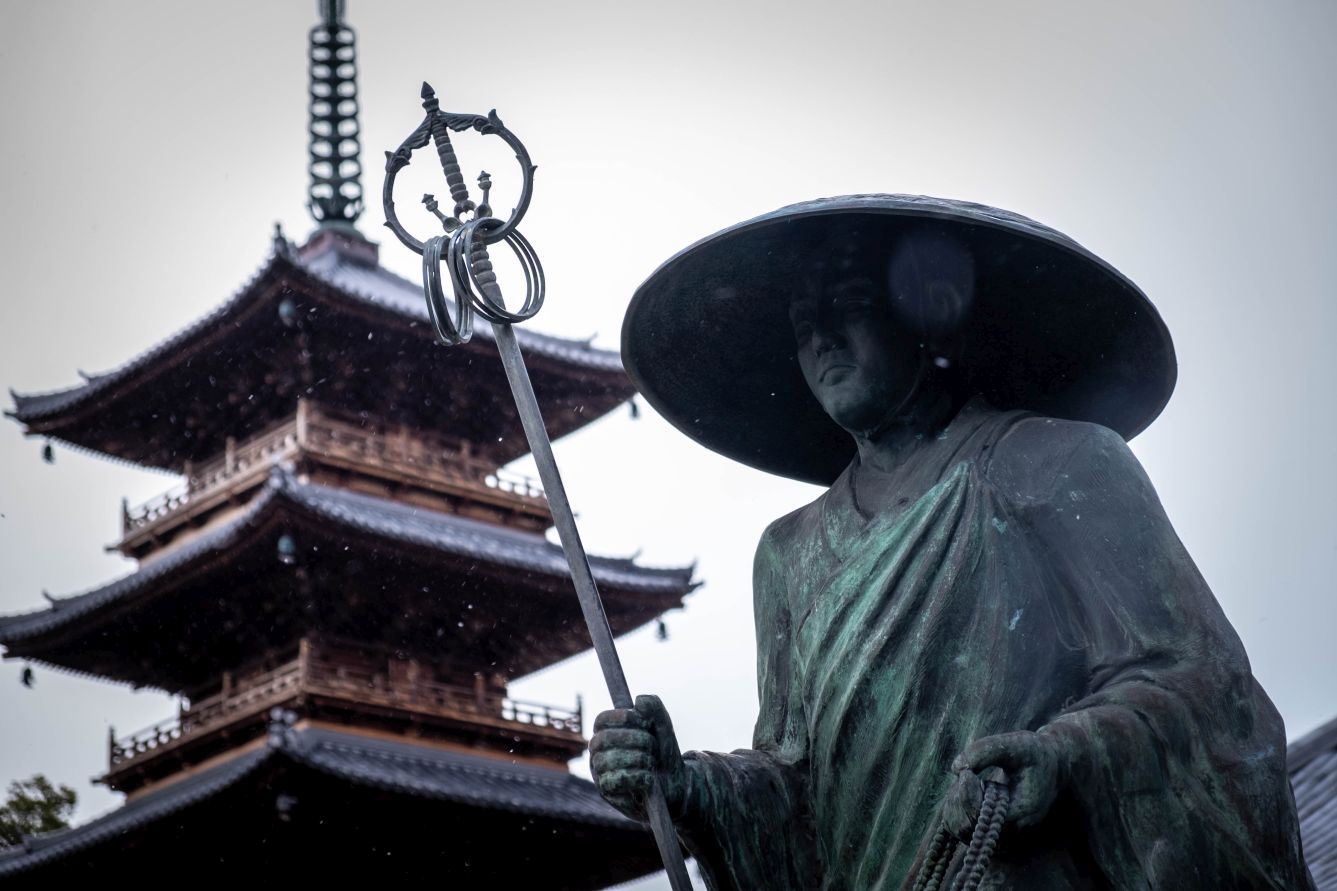
Eifuku-ji is temple No. 57 on the Shikoku pilgrimage or Henro. The temple is located in the countryside outside of Imabari, in a beautiful bamboo grove.
What to see
When you approach the temple from a distance, the first thing you’ll notice is the newly built priest’s quarters. This an adobe tower with oddly slanted windows designed by the architect Shirakawa Zai, the older brother of the current head priest, Shirakawa Mitsunari. You’ll also notice that its style is not consistent with the older temple buildings. You may conclude that for better or worse, Japan is a very free country in the matter of architectural planning.
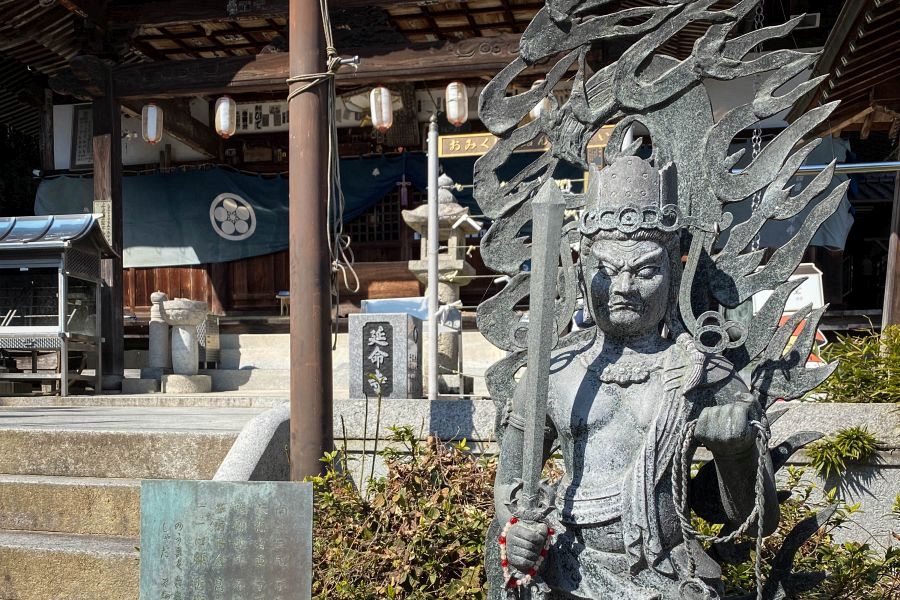
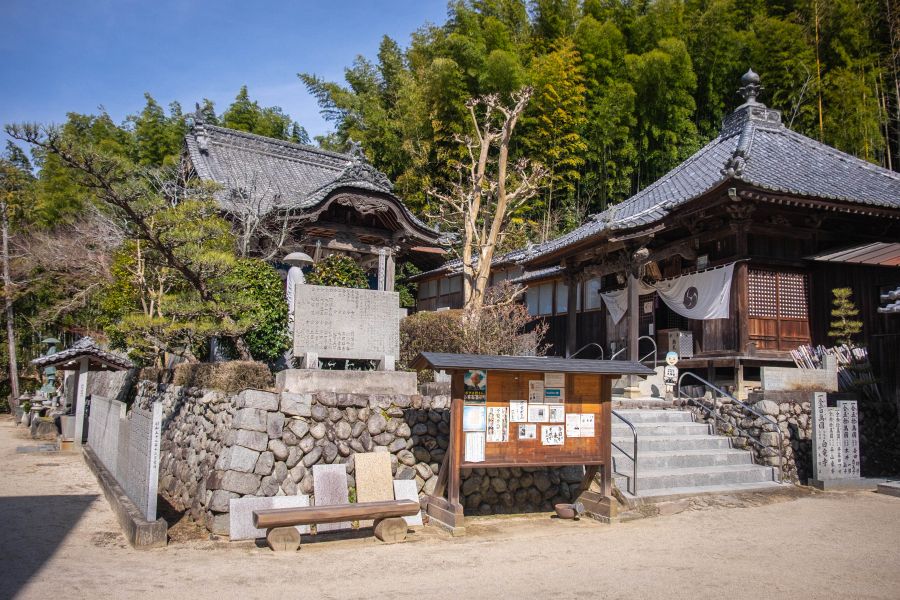
The temple is located on the shoulder of a mountain ridge. A steep path leads straight up towards Hachiman Shrine on the top of the ridge. The entrance to Eifuku-ji is to the right before the steps to the shrine. You enter from the right near the west entrance to Hachiman Shrine. On the left is a stone with a poem by Kūkai next to the washbasin;
The Shikoku Road is the pilgrimage route of early spring.
There’s a belfry to the right. The approach switches back to the left in front of the priest’s new tower, and the temple office is next to the priest’s quarters.
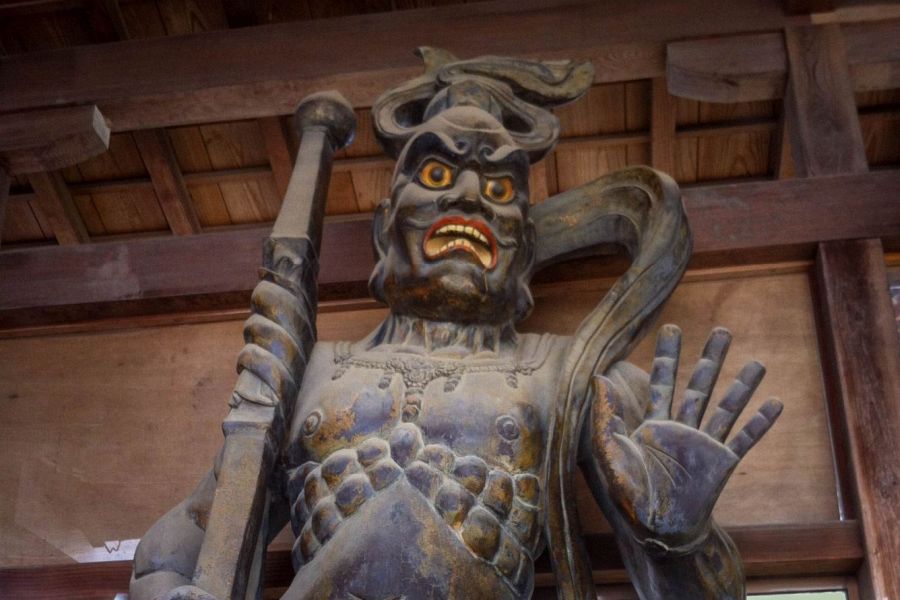
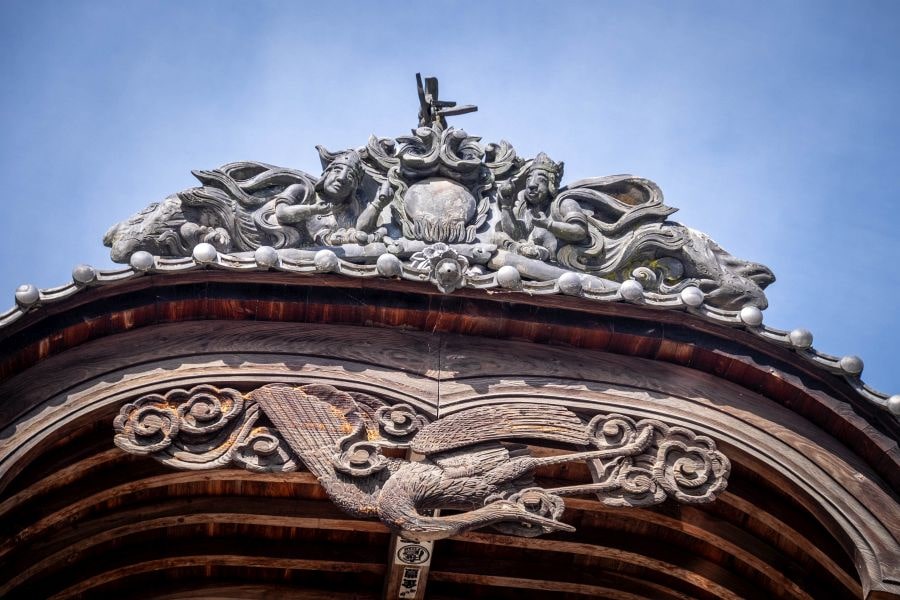
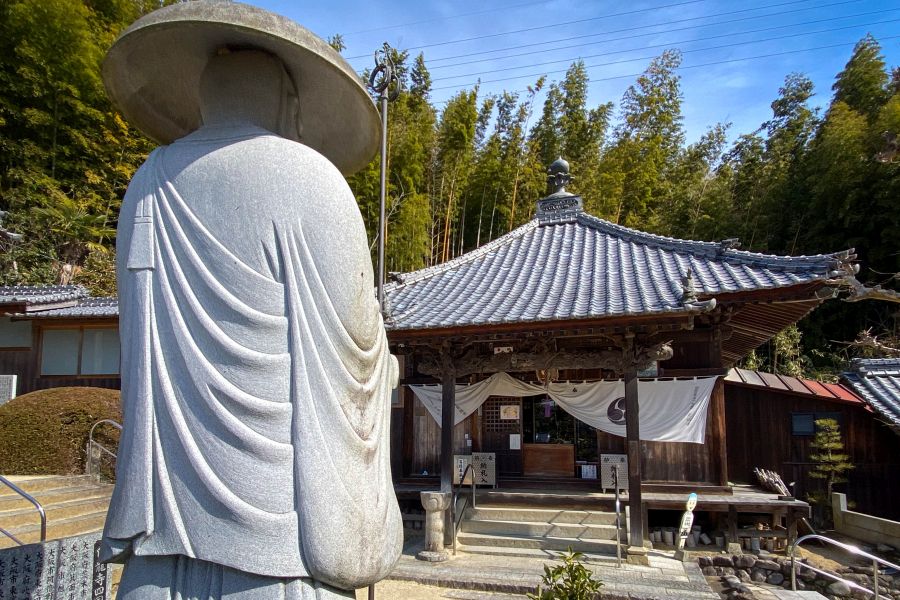
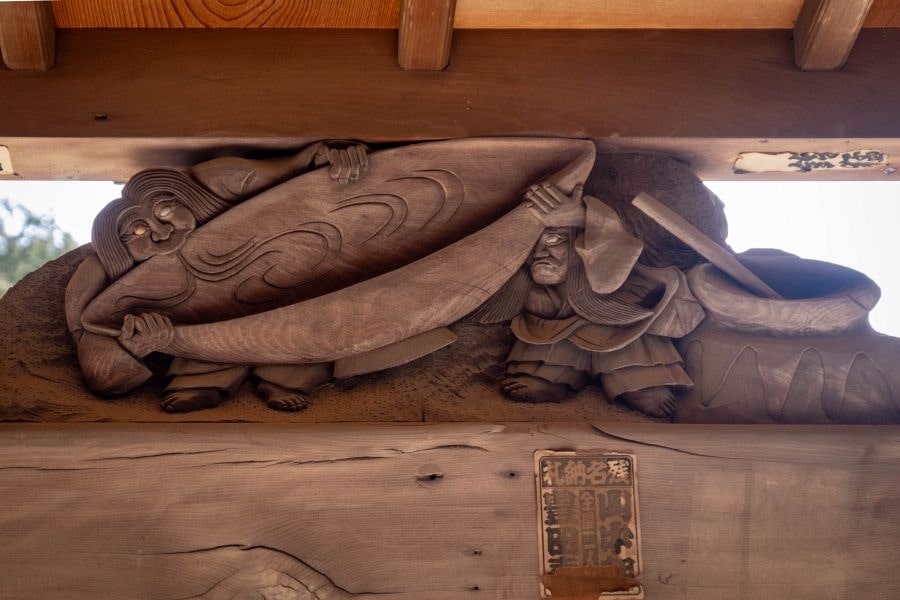
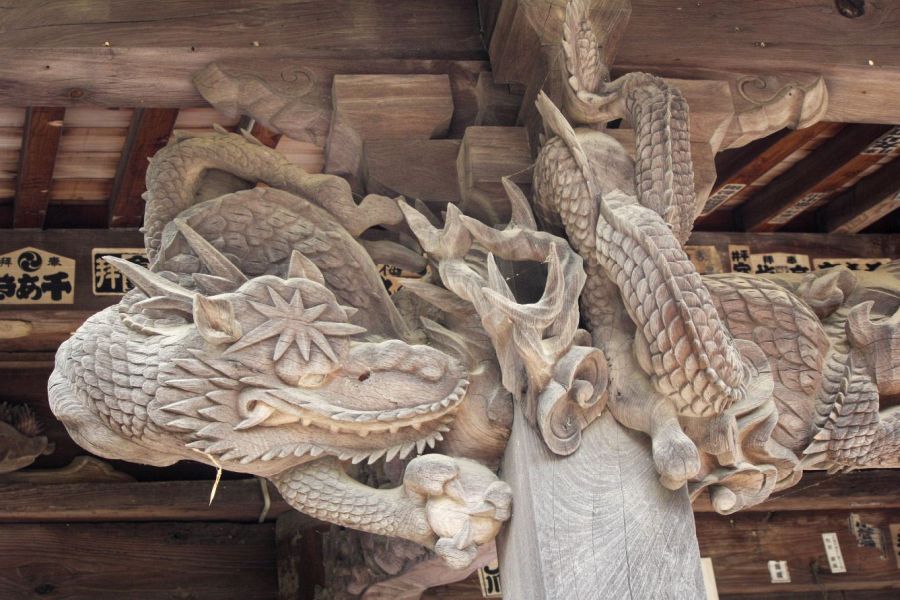
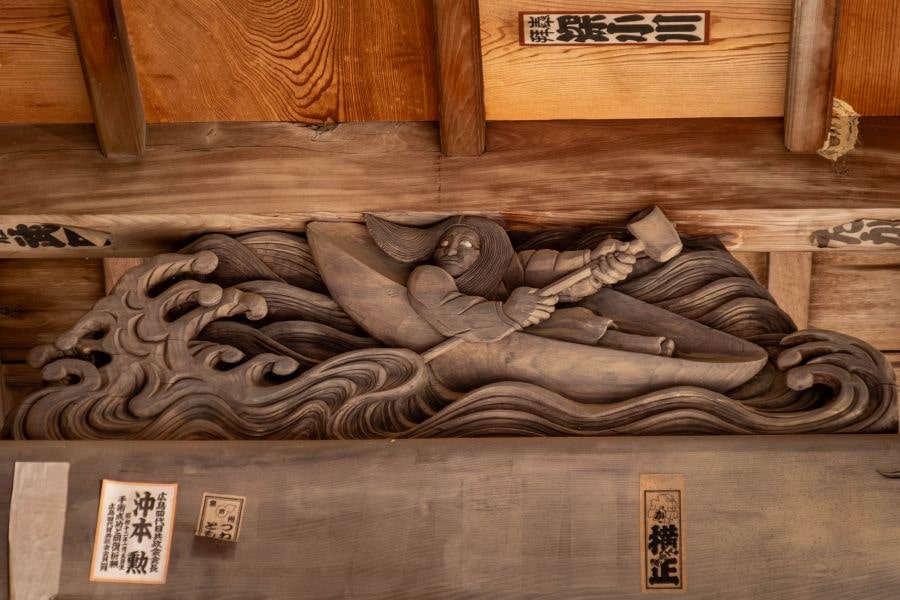
In a line from the temple office are the Konpira Hall, Yakushi Hall, and Daishi Hall, then the main hall. All are small, modest buildings, although the Daishi Hall and main hall have attractive wood carving.
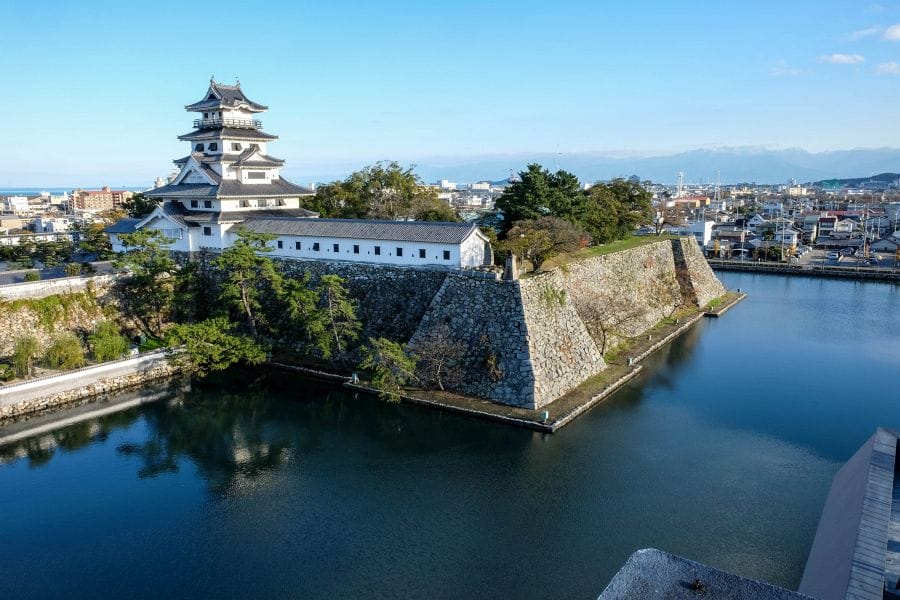
On the hill above the temple is a Shintō shrine which used to be part of the same complex before Buddhism and Shintō were separated. The shrine affords a panoramic view over Imabari and the Seto Inland Sea. Both the shrine and the temple are popular places to pray for safety at sea. The ashes of incense burned at the Yakushi Hall are believed to offer protection from illness.
History
The origins of the temple are opaque, but it has always been a temple dedicated to Yakushi, the Buddha of healing, closely associated with the Hachiman shrine on the hill above it. The temple was destroyed in the wars of the medieval period. In the Edo period, pilgrims visited both the temple and shrine.
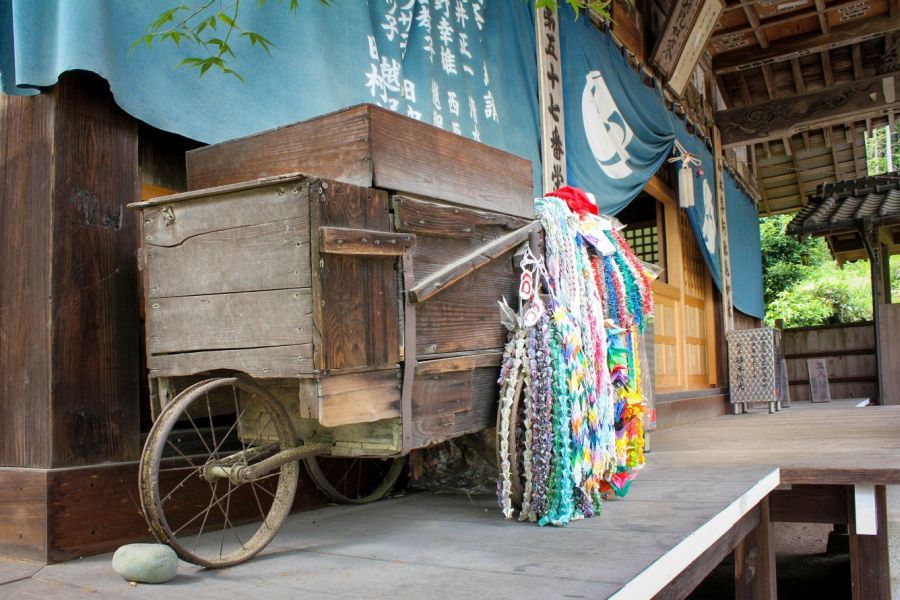
With the separation of Shinto and Buddhism in the early Meiji period, the shrine and temple became independent. Since 1933, the temple has been revered as a place of worship for protection of the legs and hips, based on the story of a 15-year-old boy with a leg disability who was cured at this temple after being pulled by a dog-drawn cart, and who then donated the cart to the temple.
The temple was the location for the film “I Am a Monk”.
Legends
According to temple tradition, Kūkai visited the area and, at the request of Emperor Saga, performed a fire ritual at the summit of Mt. Futo to pray for the appeasement of storms in the Seto Inland Sea. On the day his prayers were answered, the sea calmed and a statue of Amida Nyorai appeared on the sea. The sacred image was brought to the summit, a temple was built, and it was enshrined as the principal object of worship.
Later, in 859, Gyōkyō, a priest from Daian-ji Temple in Yamato, was sailing across the sea to establish a branch shrine of Usa Hachiman in Kyōto’s Yamashiro region when he encountered a violent storm and was washed ashore here. The priest noted that the shape of Mount Futo resembled that of Mount Ono in Yamashiro, and since Amida Buddha is the original Buddha of Hachiman Bodhisattva, he enshrined Hachiman Myōjin in the sanctuary on the mountain peak and established the Shinto-Buddhist syncretic Katsuo Hachiman Shrine.
Information
Name in Japanese: 栄福寺
Pronunciation: eifuku-jee
Address: 200 Yawata, Tamagawacho, Imabari, Ehime 794-0114