Temple 65, Sankaku-ji
Sankaku-ji is temple No. 65 on the Shikoku pilgrimage or Henro. It’s the last temple in Ehime, known as the place of Enlightenment.
What to see
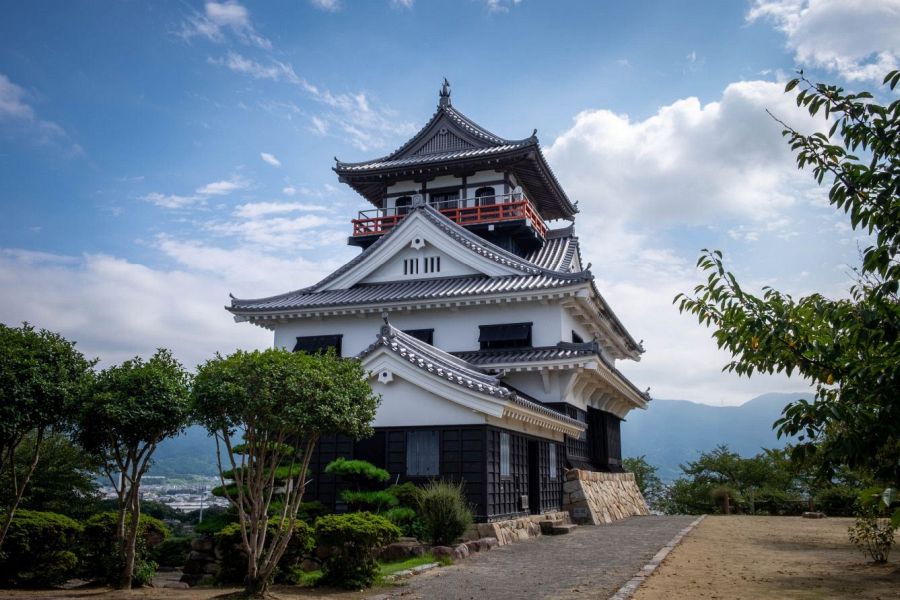
The temple is located at an elevation of 450 m near the top of a mountain at the eastern end of the Ishizuchi mountain range. Below the mountain is the industrial city of Shikokuchūō with its many chimneys belching smoke. You can see the city with its factories and castle as you climb up to the temple. But Sankaku-ji is a mossy haven where fresh water pours from the mountainside, and a variety of birds sing. An interesting contrast indeed.
The temple is famed for its cherry trees. A mountain cherry tree planted about three hundred years ago fills the precincts with blossom around mid-April. A four-season cherry, which blooms sporadically throughout the year, is also famous among pilgrims.
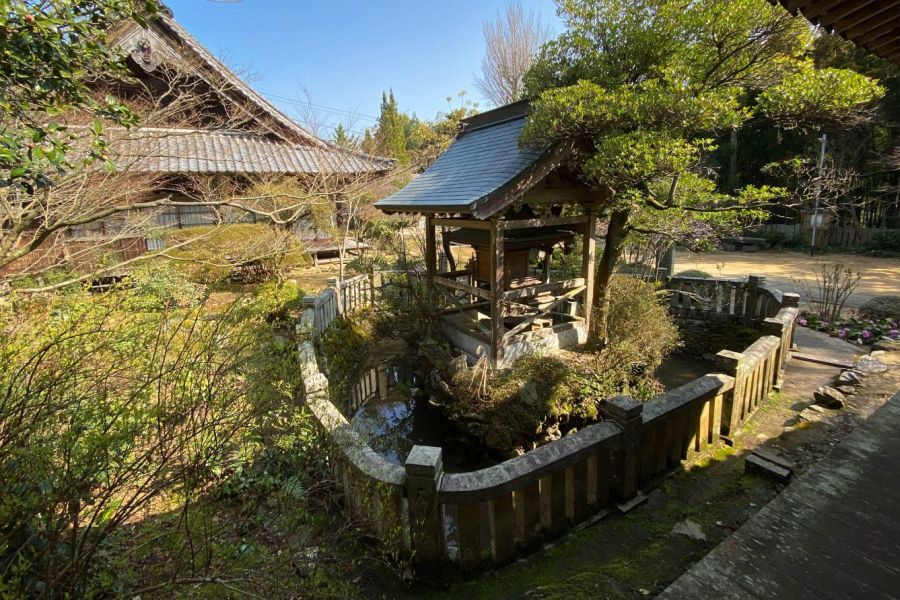
The name Sankaku-ji – the temple of the triangle – refers to a triangular altar used by Kūkai for a Goma fire ritual used to tame a dragon that was terrorising the region. Today, the roughly triangular remains of this altar can be seen in a pond in the temple precincts. Close to the pond is a small structure where Benzaiten, the goddess of music is enshrined.
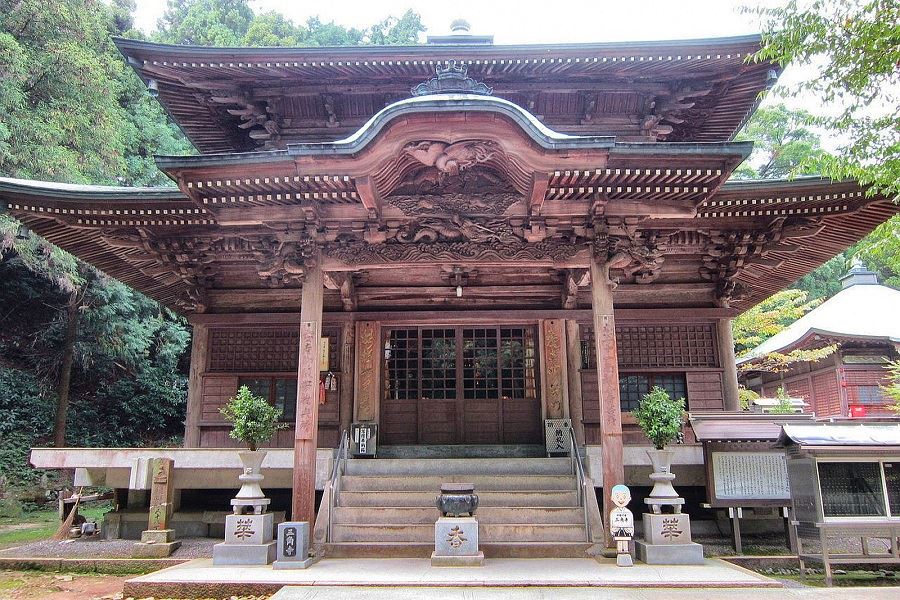
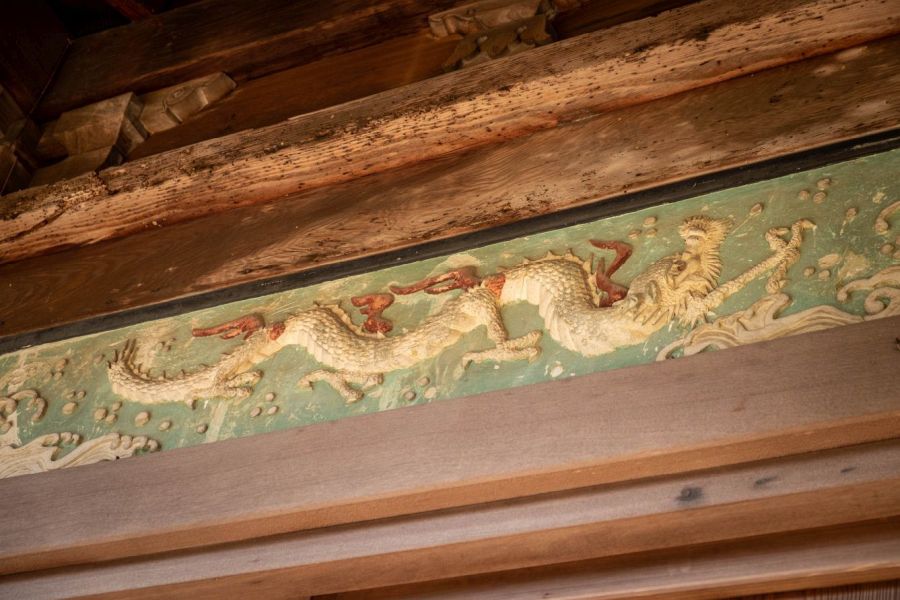
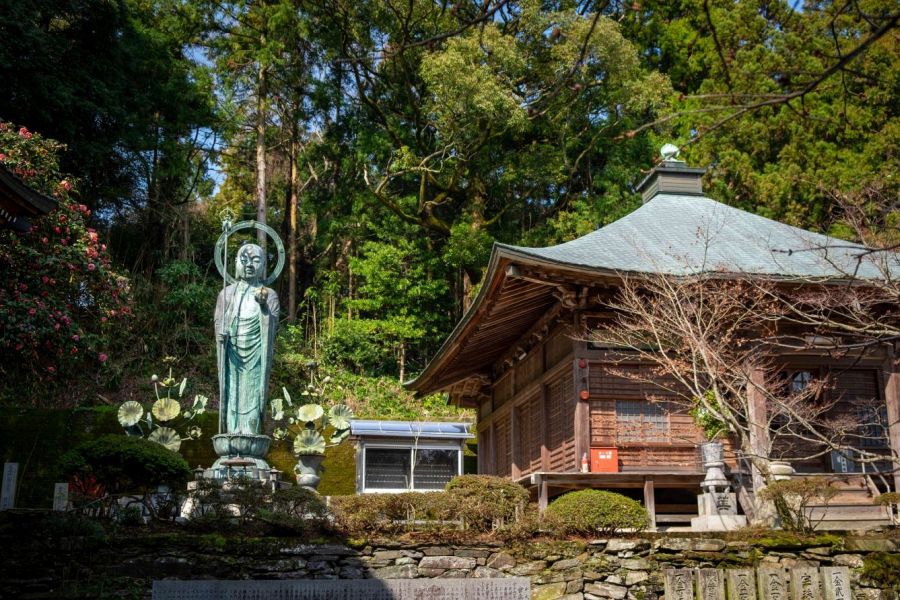
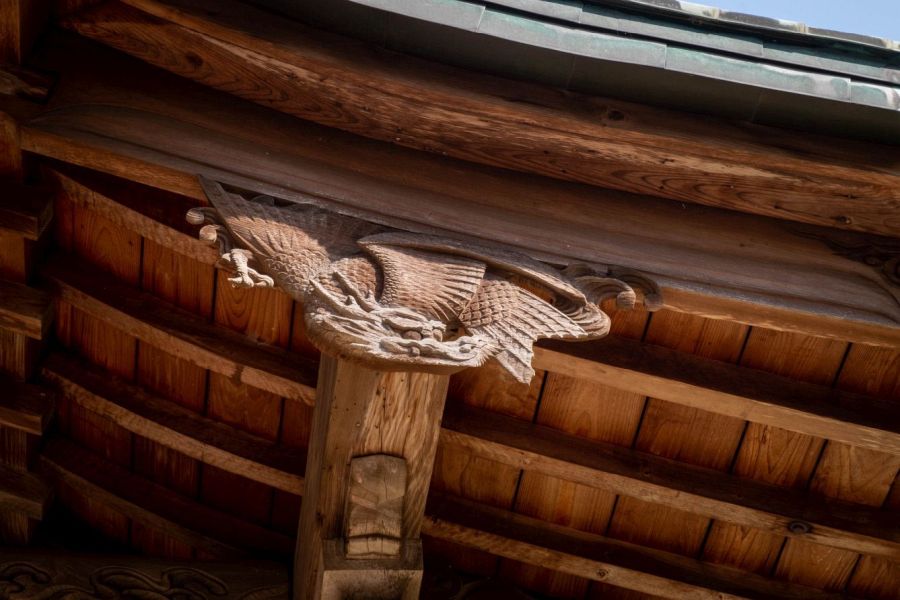
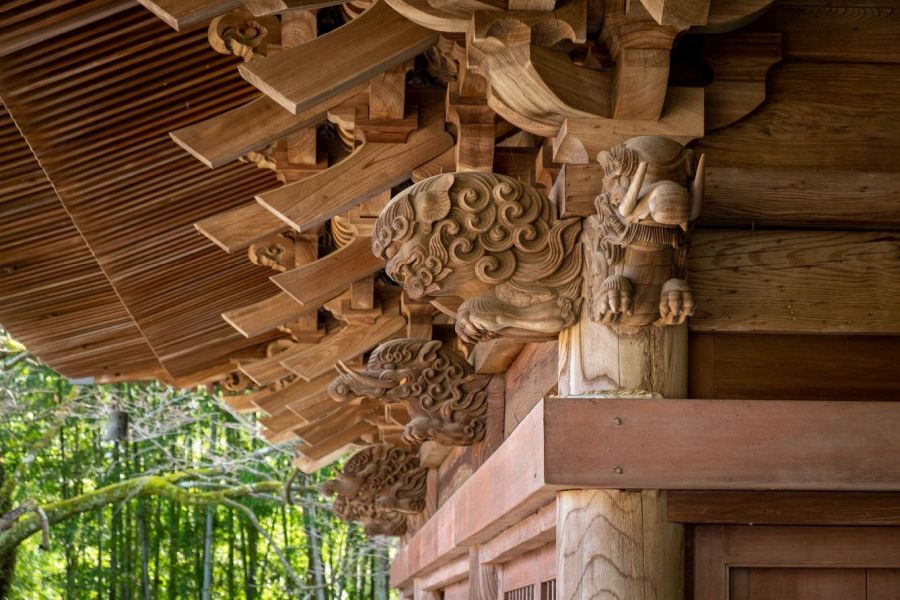
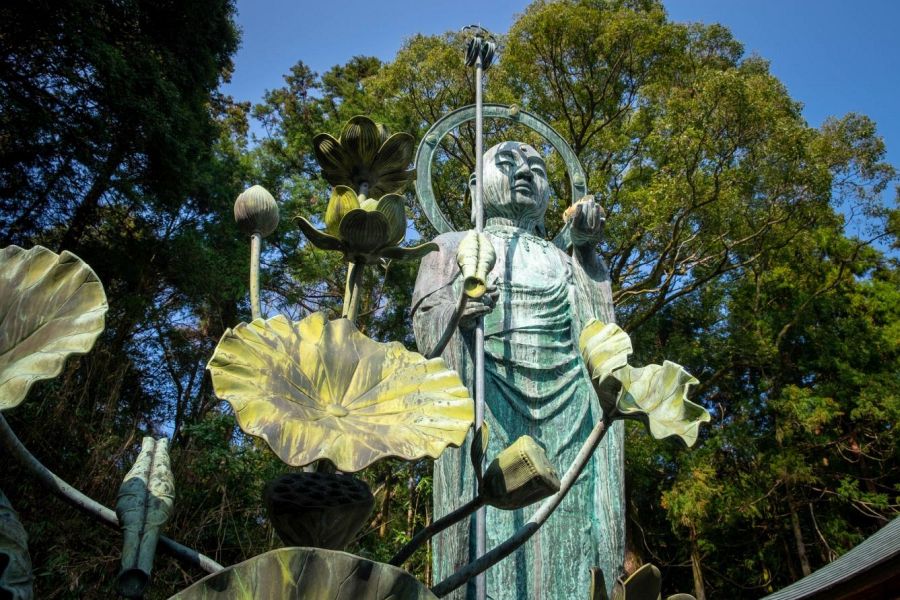
There’s some fine wood carving on the Main Hall, and the Daishi Hall is embellished with dragons in plaster and wood. Next to the Daishi Hall is a large bronze Jizō statue surrounded by lotus plants.
Another small structure is the Yakushi Hall, dedicated to the god of medicine. At Sankaku-ji, this deity specialises in orthopaedics, curing verrucae and corns. If you dedicate a votive picture of an octopus and pray for relief, the octopus will pull off your corns with its suckers.
A monument with a haiku by Issa stands before the main hall. Another inscribed with Kondō Atsuzan’s haiku: ‘Great cedar and sacred images stand together in the autumn rain’, stands in front of the Yakushi Hall.
History
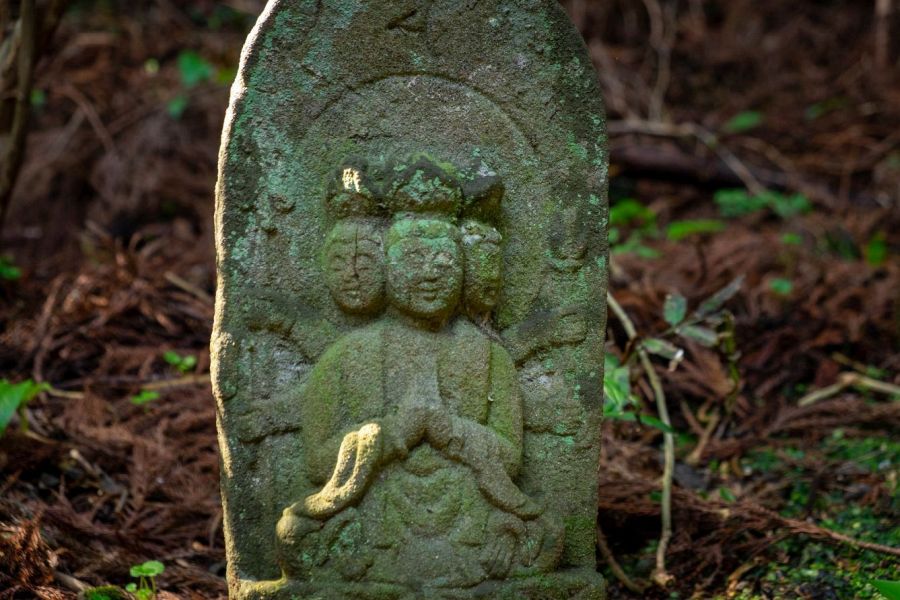
The temple was founded by Gyōki at the request of Emperor Shōmu, with the aim of recreating the Pure Land on earth. Kukai visited in 815 and carved a statue of the eleven-faced Kannon and another of the fierce god Fudō Myō-ō. He also built the triangular altar at which he performed a ritual for the peace and well-being of the realm for 21 days.
The temple thrived under the patronage of Emperor Saga, who greatly favoured Kūkai. In its heyday, it possessed twelve sub-temples and a full seven-hall temple complex.
Centuries later, Sankaku-ji was damaged in the invasion of the Chōsokabe forces. The current main hall was rebuilt in 1849 and restored in 1971.
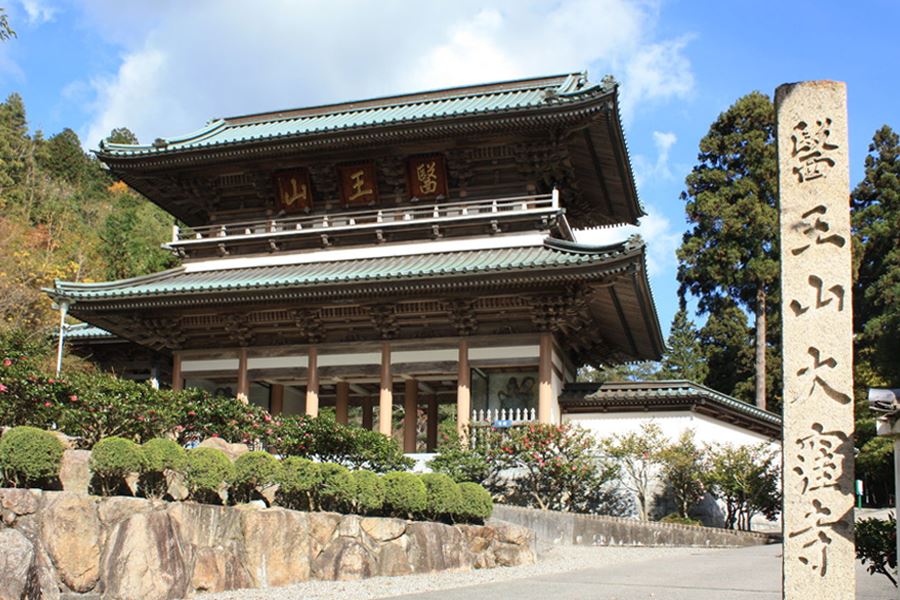
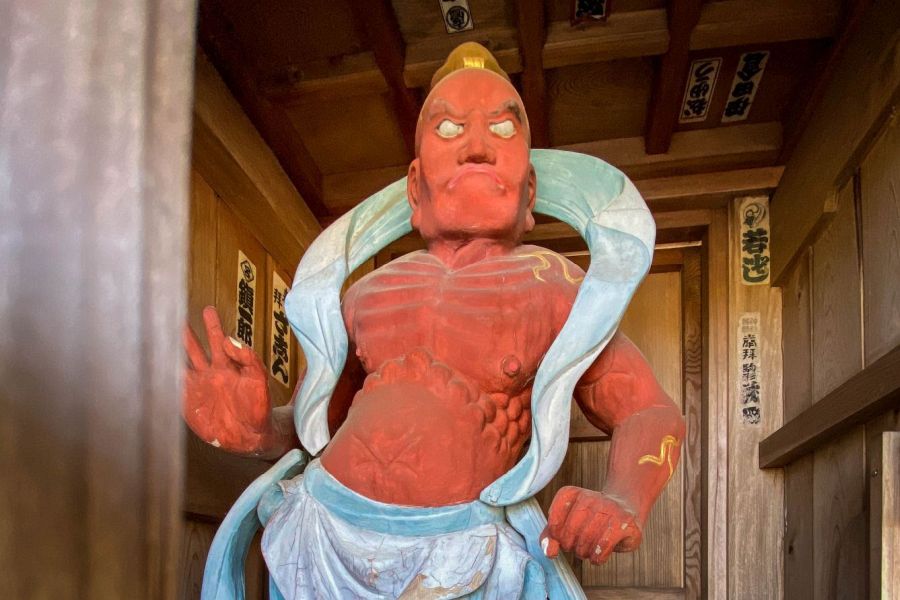
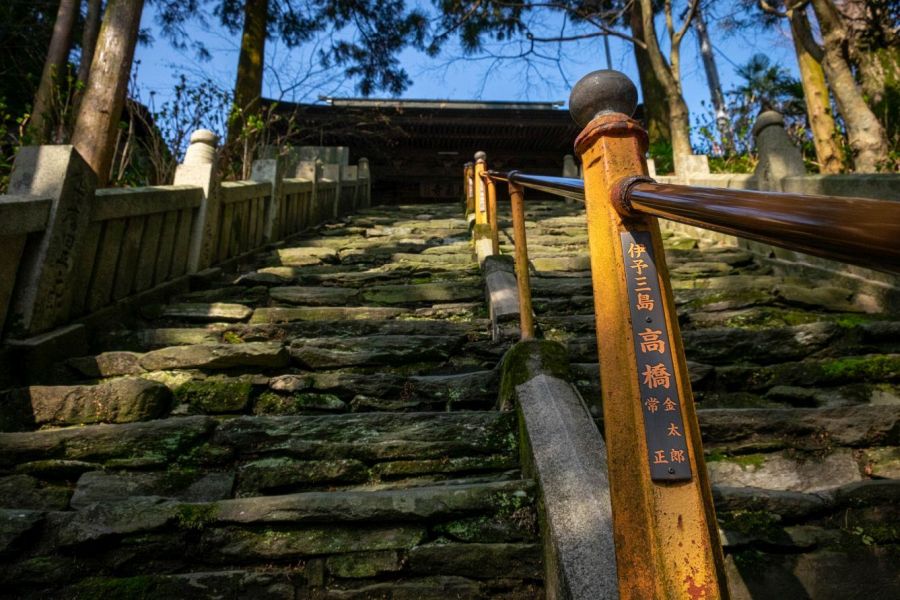
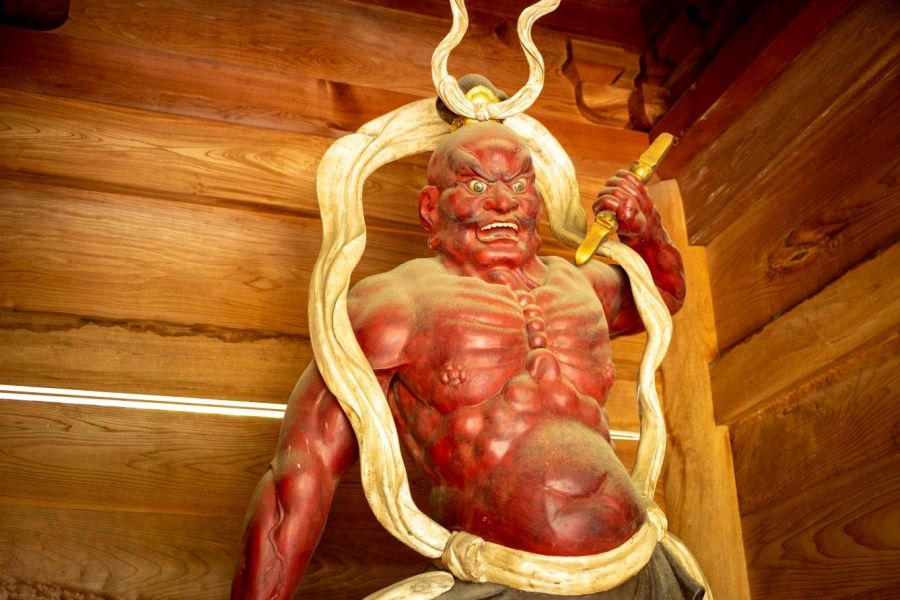
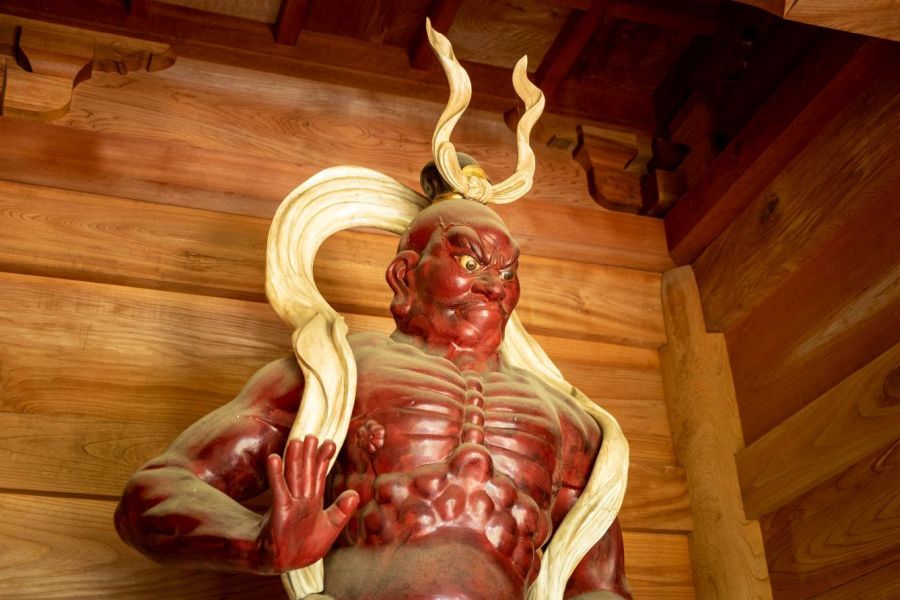
The temple was once hard to reach and there’s a climb up 73 steep stone steps before the Niō Gate. The Edo-period haiku poet Kobayashi Issa visited in 1795 and wrote:
Now this makes the climb worthwhile – mountain cherry blossoms.
Legends
The Kannon carved by Kūkai is revered for warding off evil and promoting fertility. Couples who are unable to have children receive an amulet, a waist band, and a rice scoop. If they eat together using the scoop to serve their rice, they’re assured of producing offspring. Once a child is born, the couple should devote a new scoop at the temple.
Information
Name in Japanese: 三角寺
Pronunciation: san-kaku-jee
Address: Ko 75, Sankakuji, Shikokuchuo, Ehime 799-0124