Temple 66, Unpen-ji
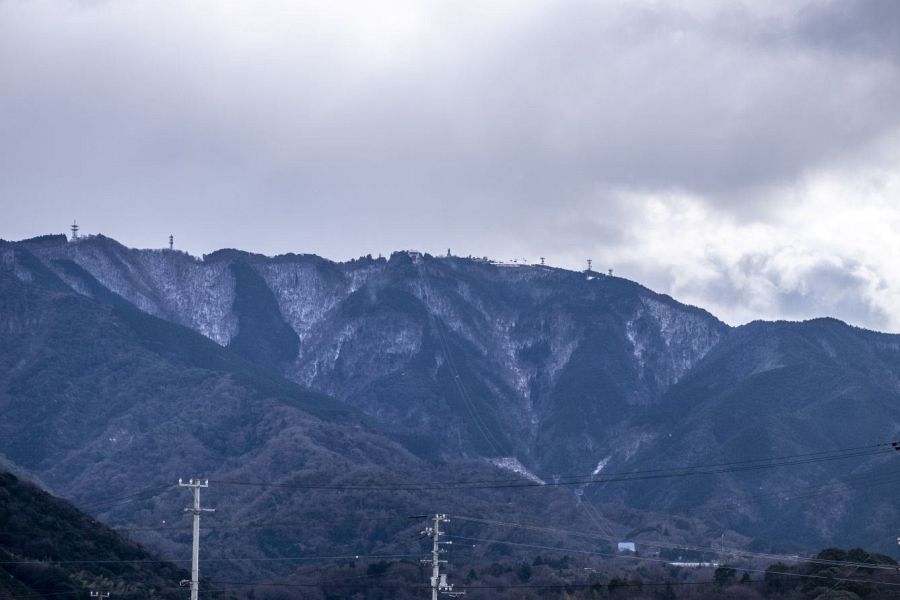
Unpen-ji is Temple No. 66 on the Shikoku Pilgrimage, or Henro. Although counted as being in Kagawa Prefecture, it’s actually just across the prefectural border in Tokushima. Located at an elevation of 911 metres, this is the highest temple on the pilgrimage, and it’s one the nansho, ‘difficult places’ that test the will of pilgrims. Each prefecture has a sekishodera, a temple considered the most difficult to access in the days when pilgrims only walked, and Unpen-ji is the sekishodera of Kagawa. The cable car that starts in Kagawa makes it much easier to get up to the top now.
What to see
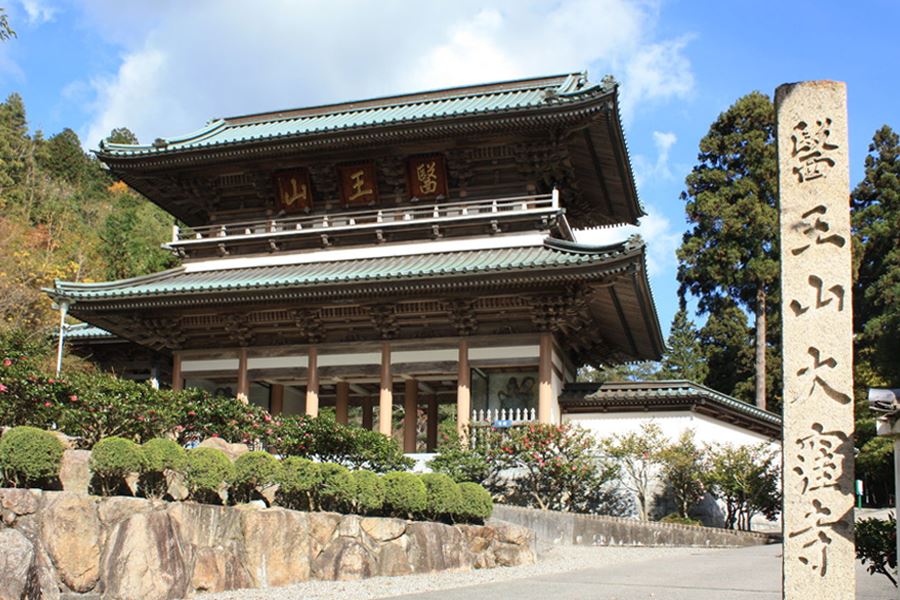
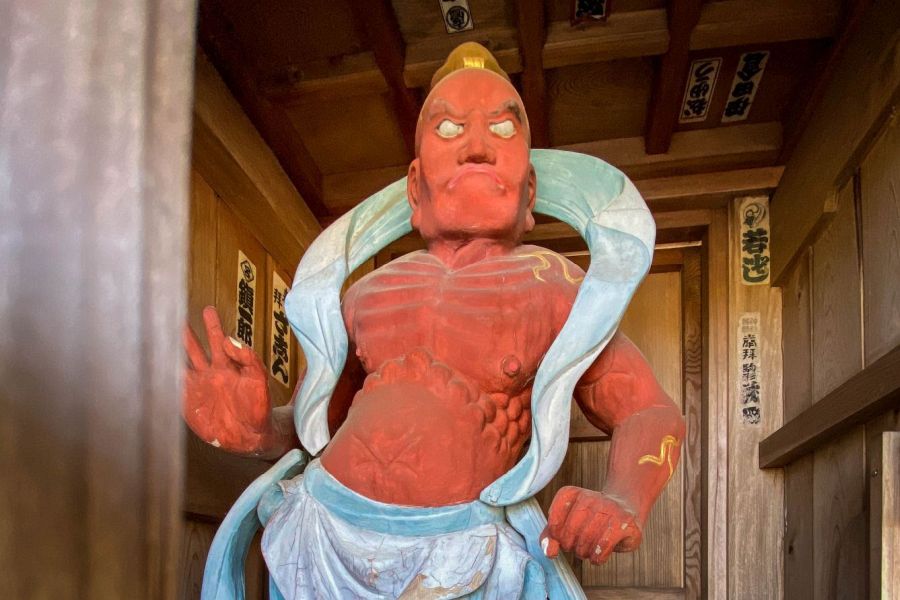
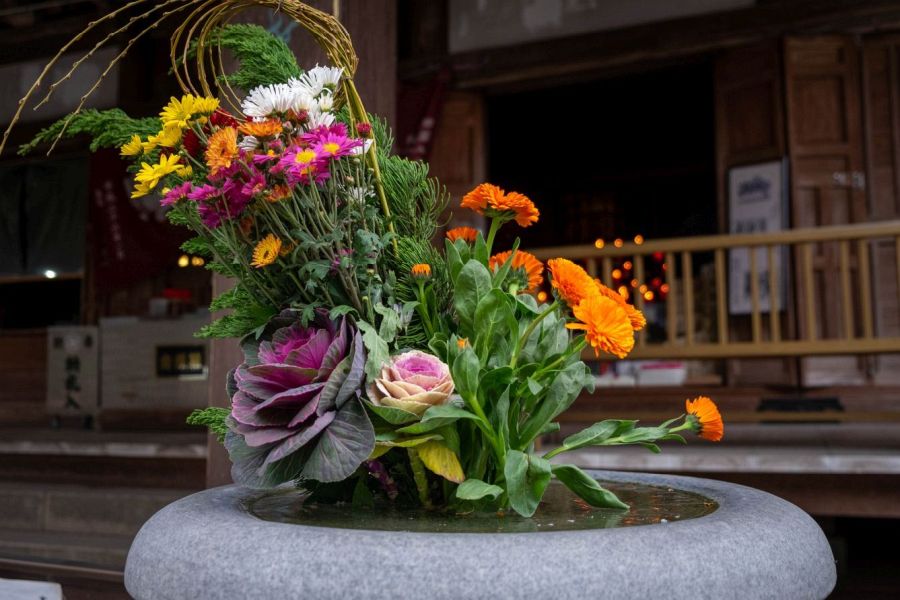
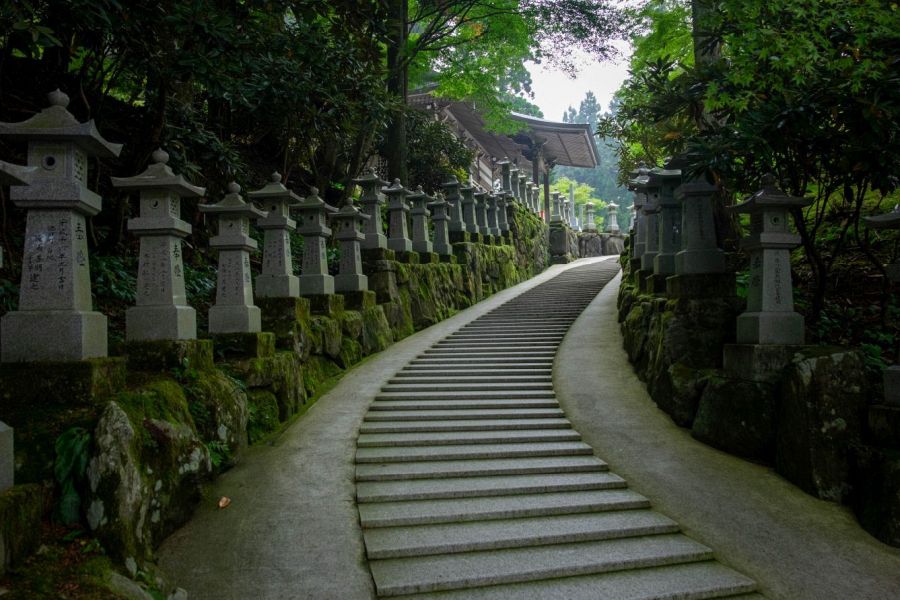
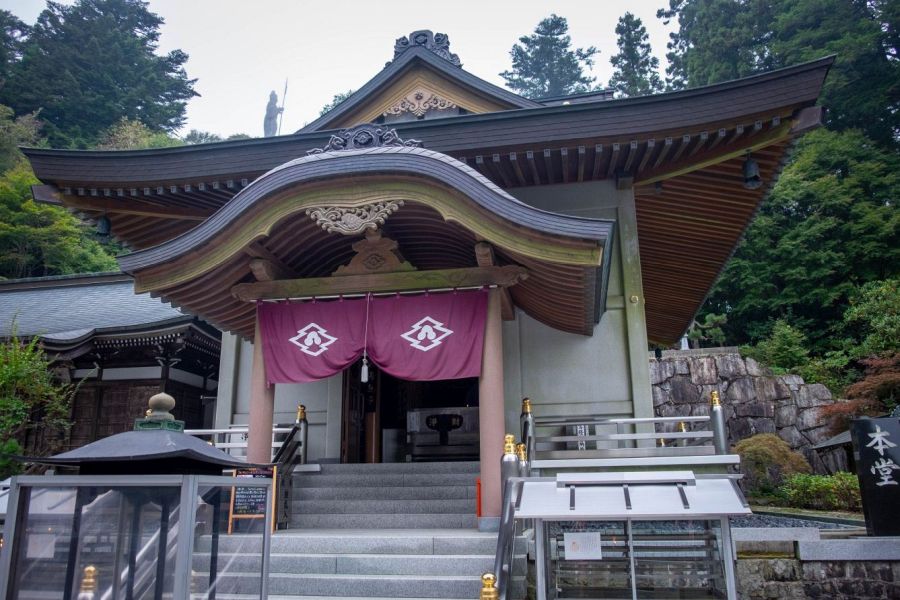
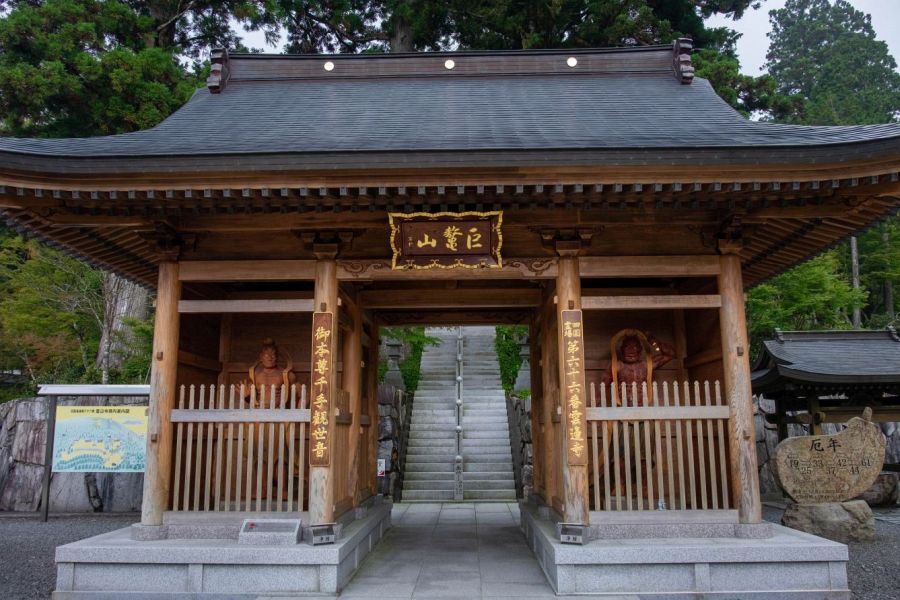
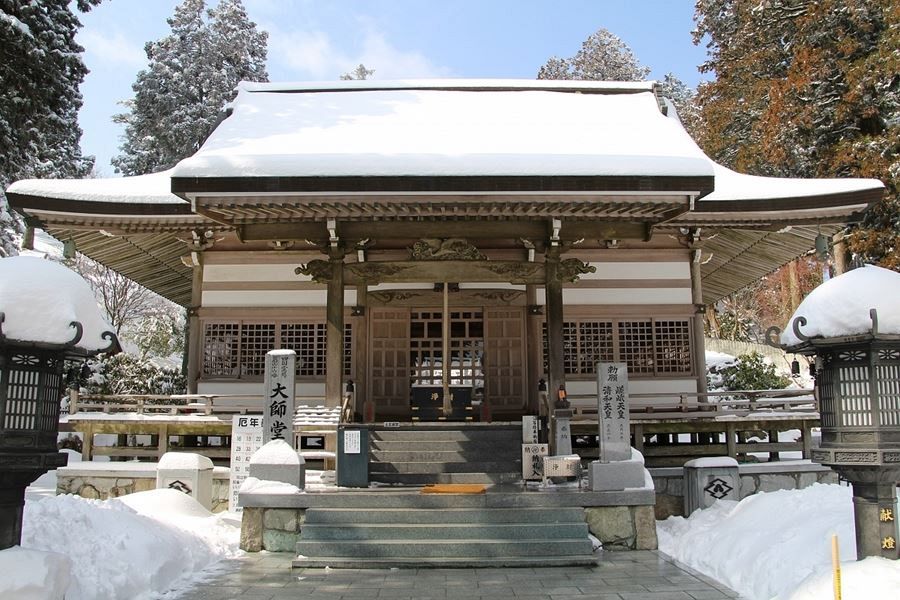
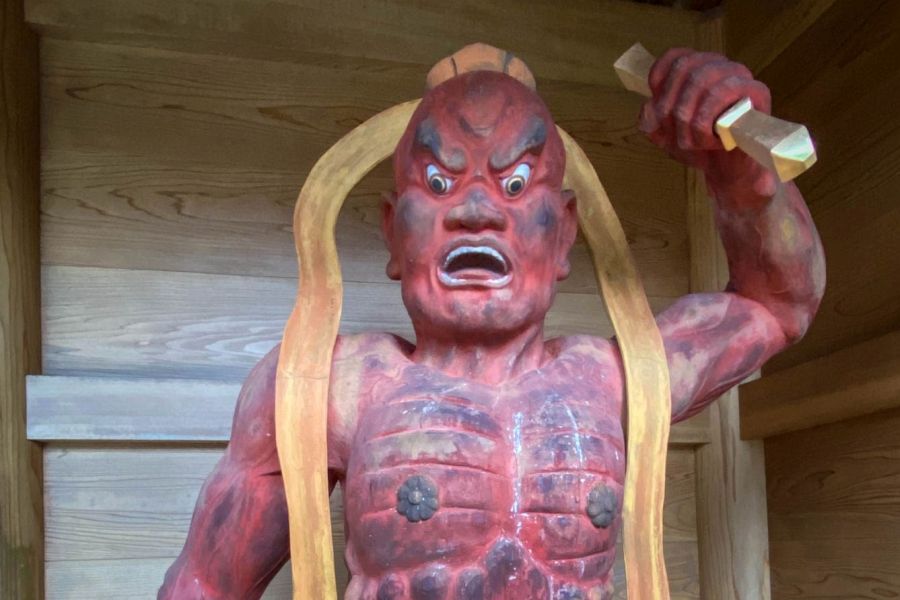
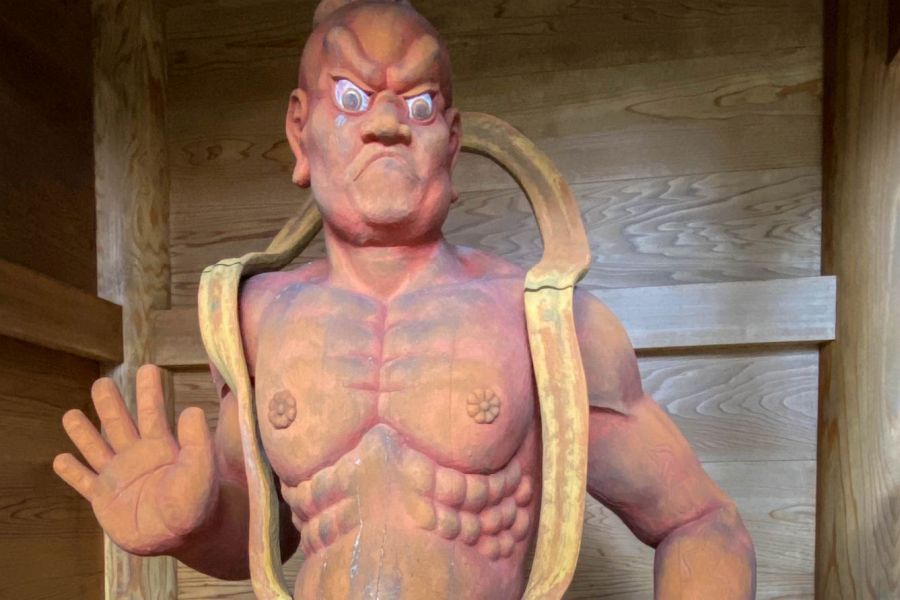
The temple complex laid out over a series of hills is huge, and there’s much to see. A water basin stands beside the Niō Gate. Passing through the Niō Gate and ascending the stone steps, the bell tower is to the right. Straight ahead and further back lies the Daishi Hall. Remove your footwear, walk around the corridor to the rear, and you’ll find the inner hall of the Daishi Hall. Descending the slope to the left front of the Daishi Hall worship hall reveals the concrete side of the main hall, with the temple office to the left. To the left of the main hall is the Goma Hall.
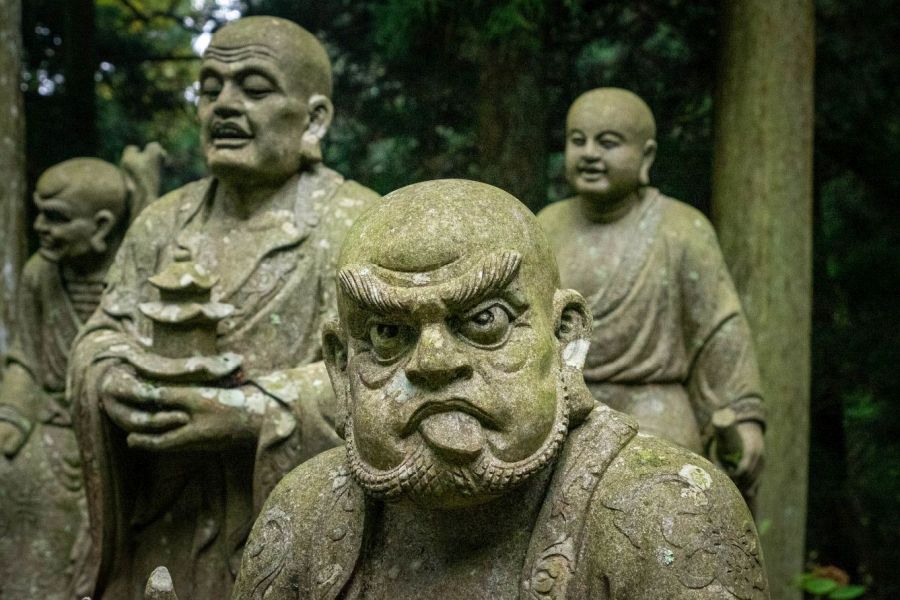
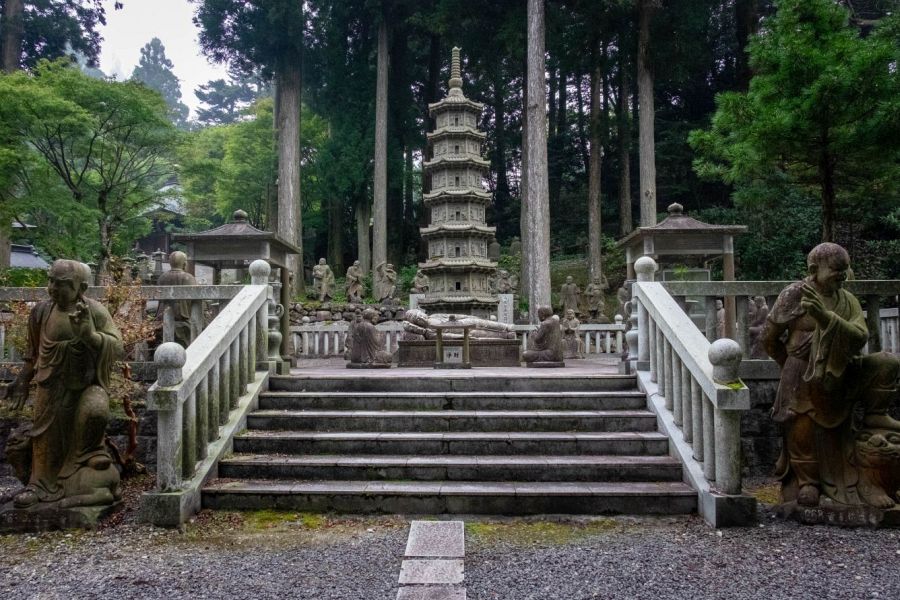
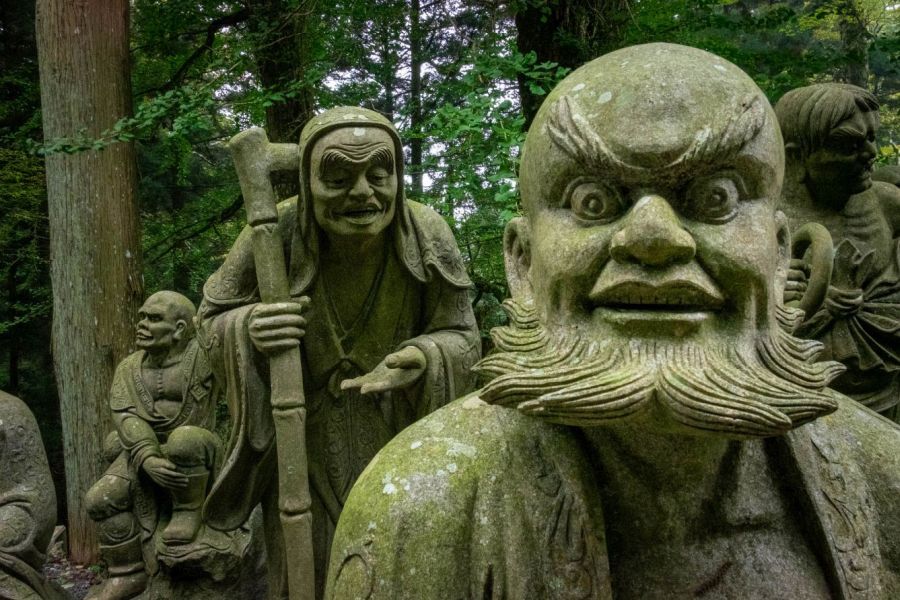
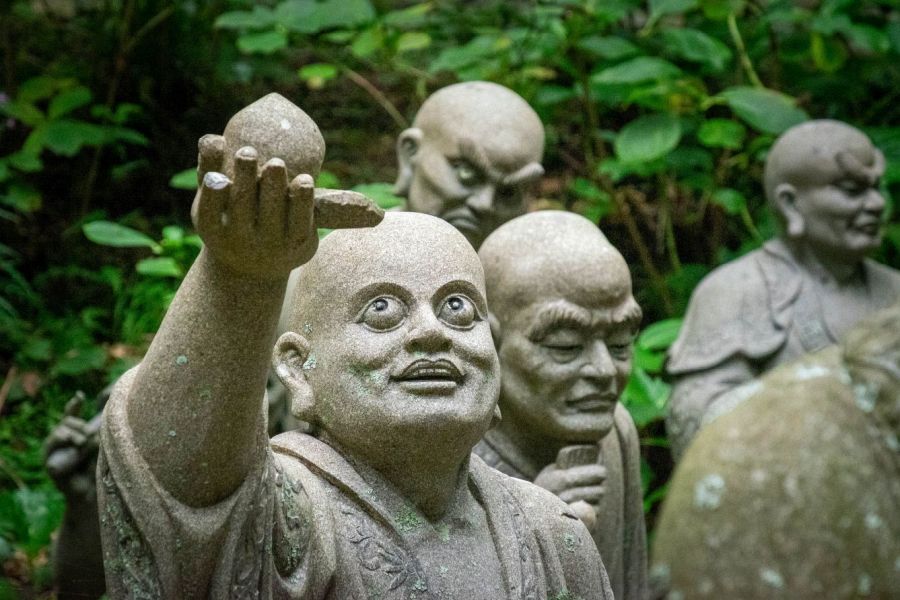
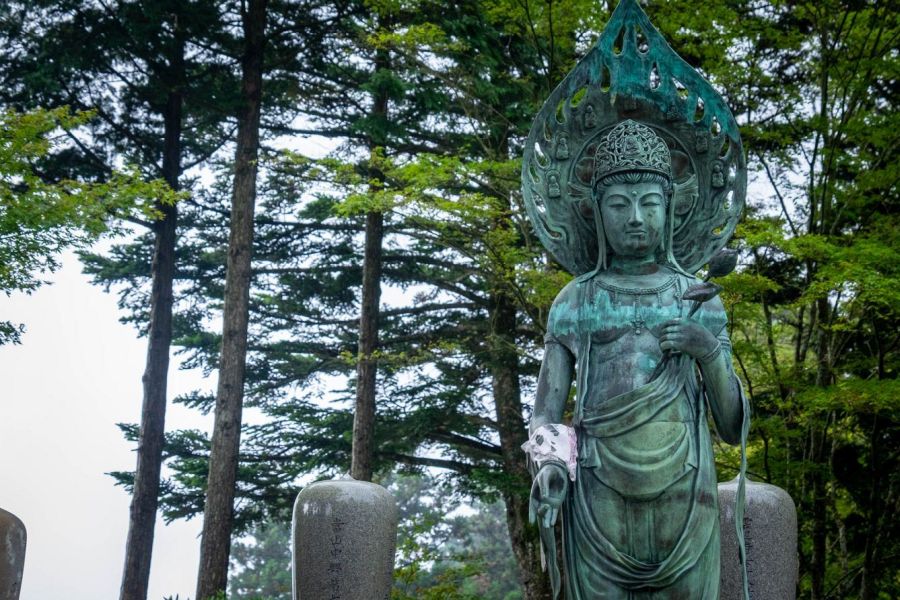
In the temple grounds are masses of stone statues of followers of the Buddha standing among cedar trees and hydrangeas. There’s a stone statue of Fudō Myō-ō, and a stone eggplant on which visitors stick fortune slips.
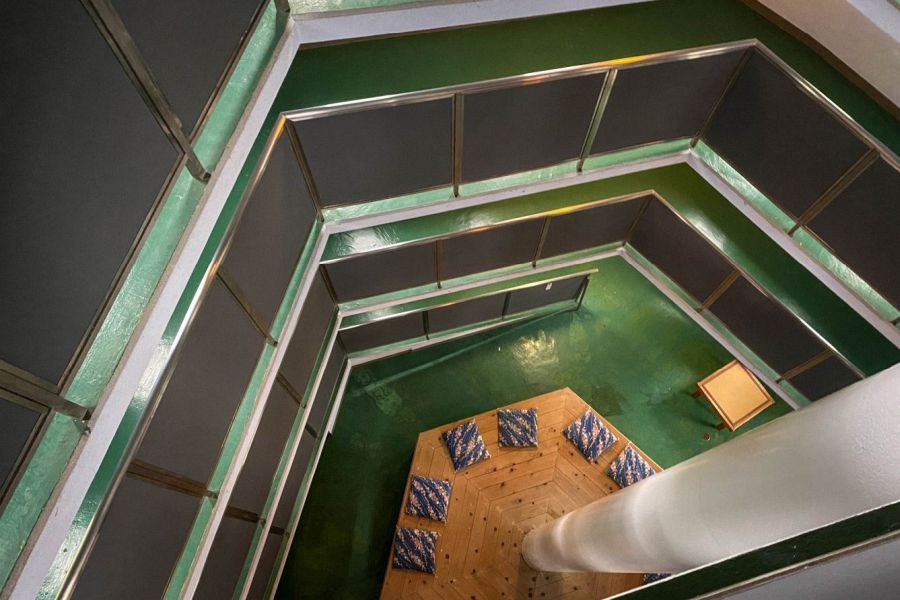
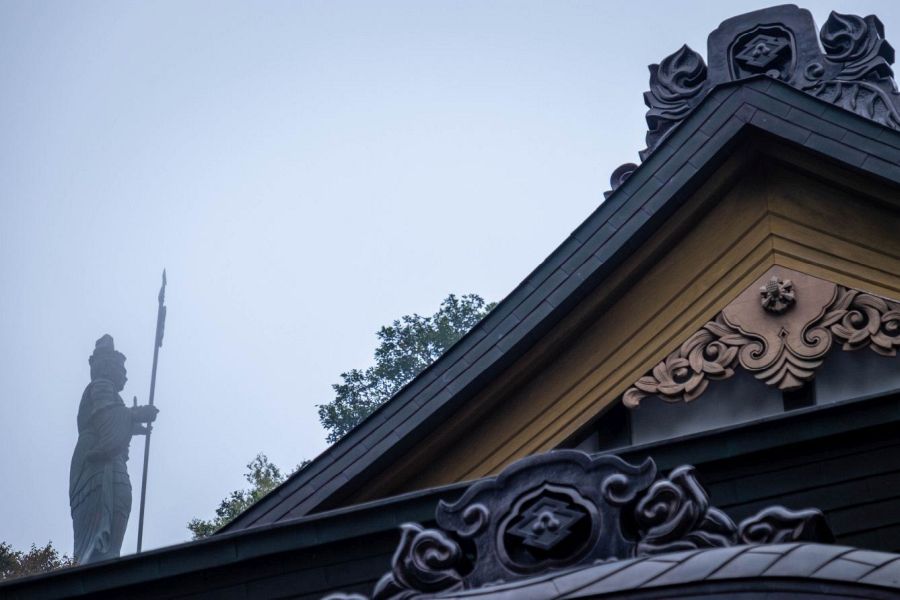
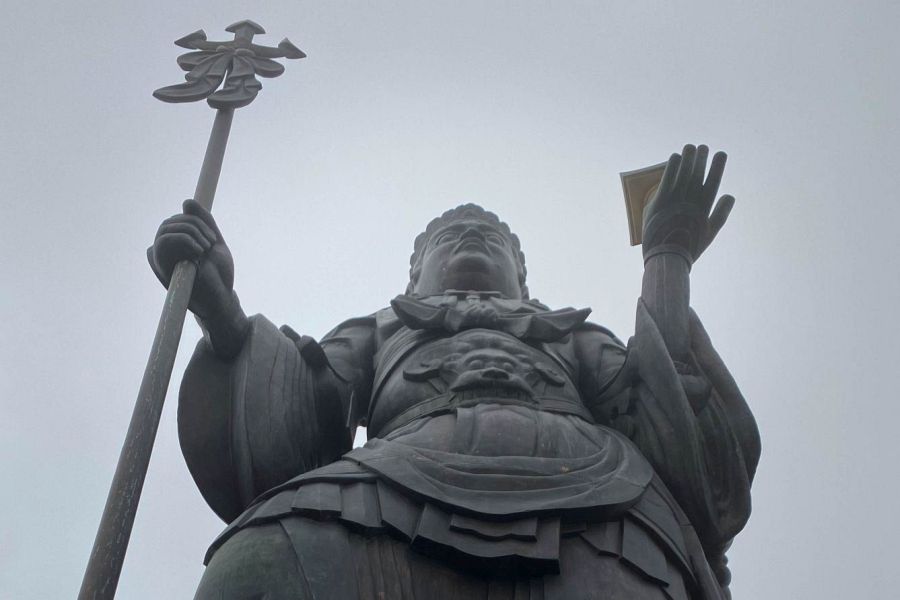
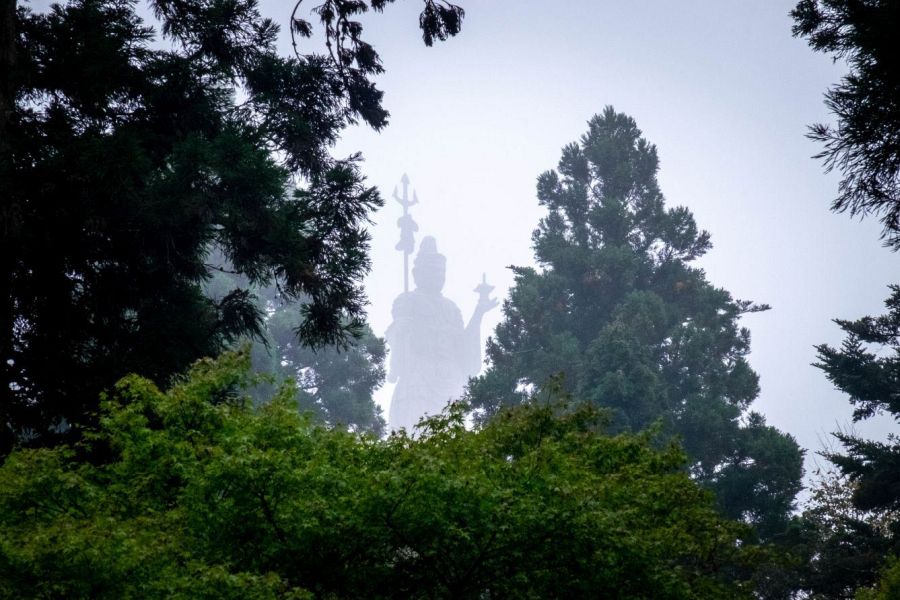
At the highest point of the mountain is a hexagonal tower topped by a huge statue of Bishamonten. The roof of the tower is an observation deck, from which you can see much of eastern Shikoku, if the mountaintop isn’t shrouded in cloud.
History
The temple is said to have been founded by a youthful Kūkai in 789, who ascended the mountain seeking timber for the construction of Zentsū-ji Temple. He recognised the mountain as sacred and established a temple hall here. Kūkai also performed the secret abhisheka ritual here in 807. In 818, by imperial decree of Emperor Saga, he carved the principal image and conducted the Seven Buddhas Offering. Unpen-ji was later known as the “Kōya of Shikoku”, after it became a training ground for monks and was designated an Imperial Temple by Emperor Seiwa around 860.
In the late 16th century, Chōsokabe Motochika of Tosa climbed to the temple and was inspired by the view to make himself master of the other three provinces of Awa, Iyo, and Sanuki which it overlooks. The head priest Shunjūbō tried to dissuade him but was unsuccessful, and Chōsokabe went on to burn down many temples in his successful bid to make Shikoku his own, although he spared Unpen-ji. At one time the temple had the full complement of seven buildings, twelve affiliated halls, and eight branch temples.
In 1987, the temple became more accessible when a cable car connected it to the foothills on the Kannonji city side of Kagawa Prefecture.
Legends
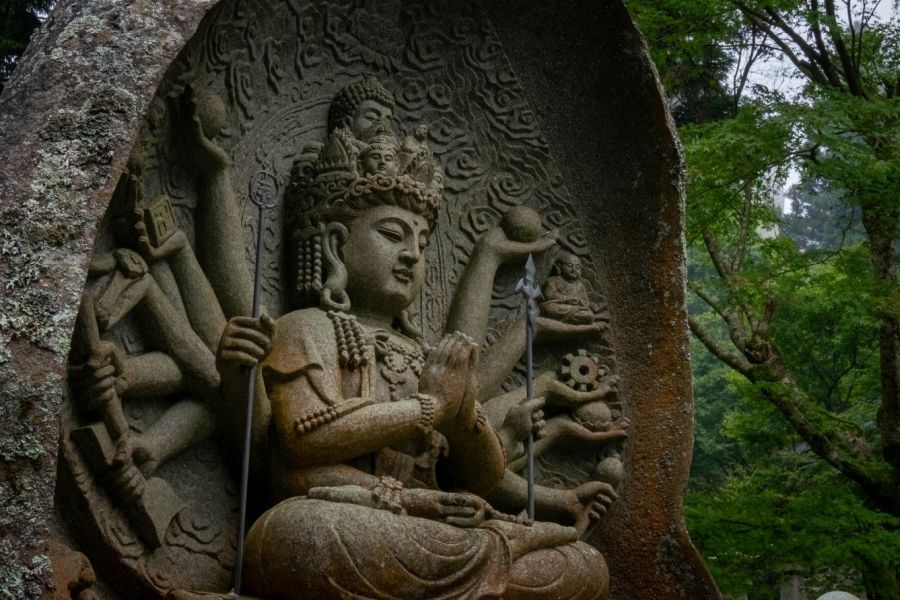
Though the entire mountain was destroyed by fire in 1098, a hunter named Yonari, who had entered the area pursuing deer, was moved by the majestic presence of Kannon Bodhisattva appearing in a tree and resolved to rebuild the temple buildings.
Information
Name in Japanese: 雲辺寺
Pronunciation: unpen-jee
Address: Norochi-763-2 Hakuchi, Ikedacho, Miyoshi, Tokushima 778-5251