Temple 70, Motoyama-ji
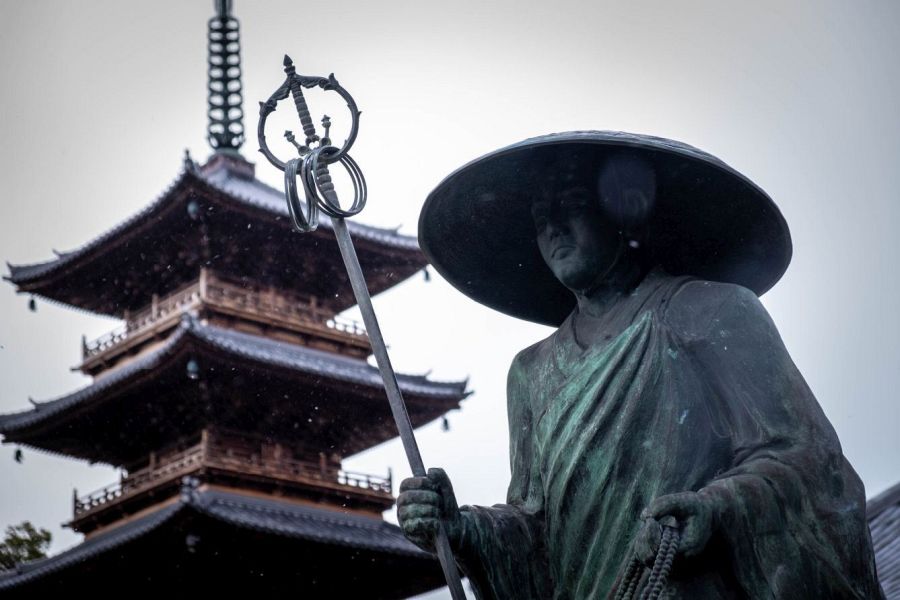
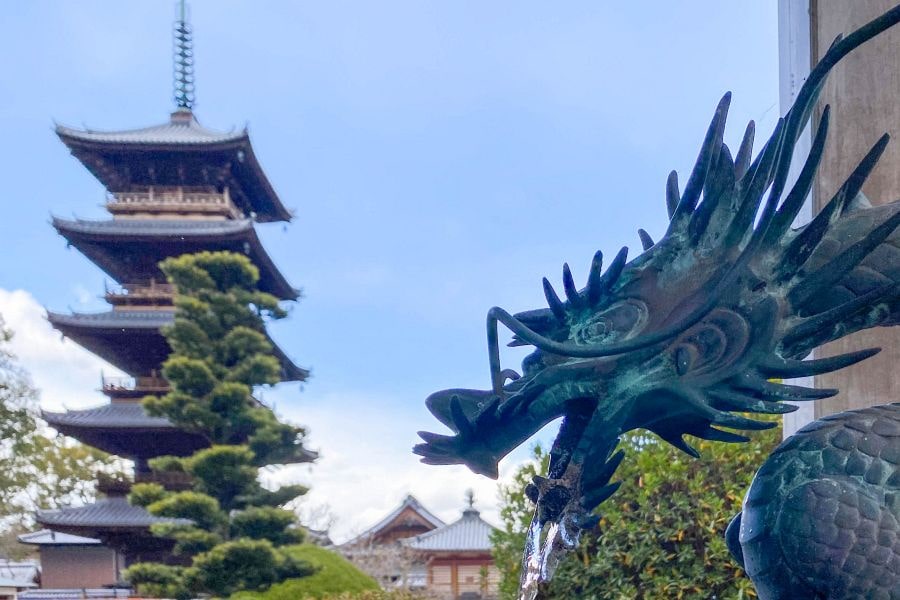
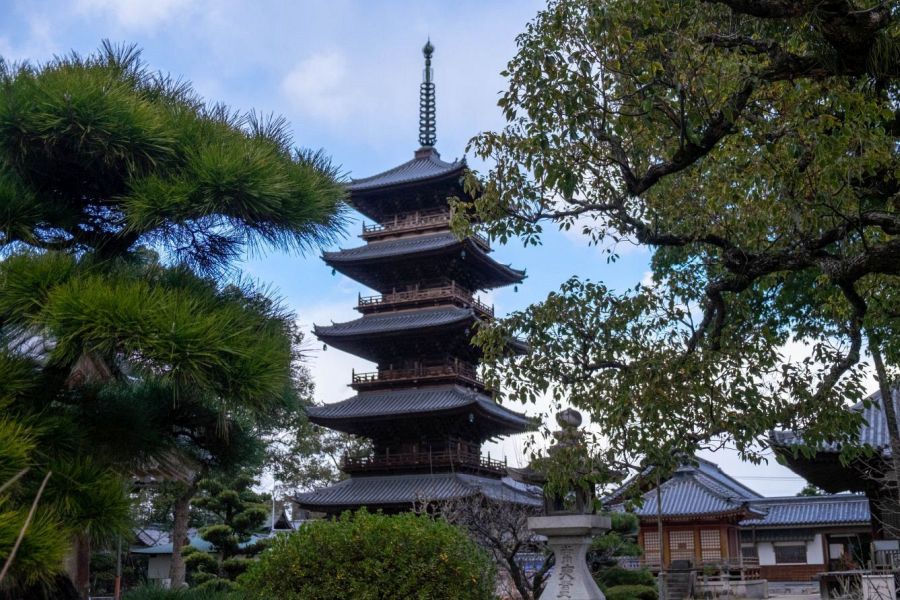
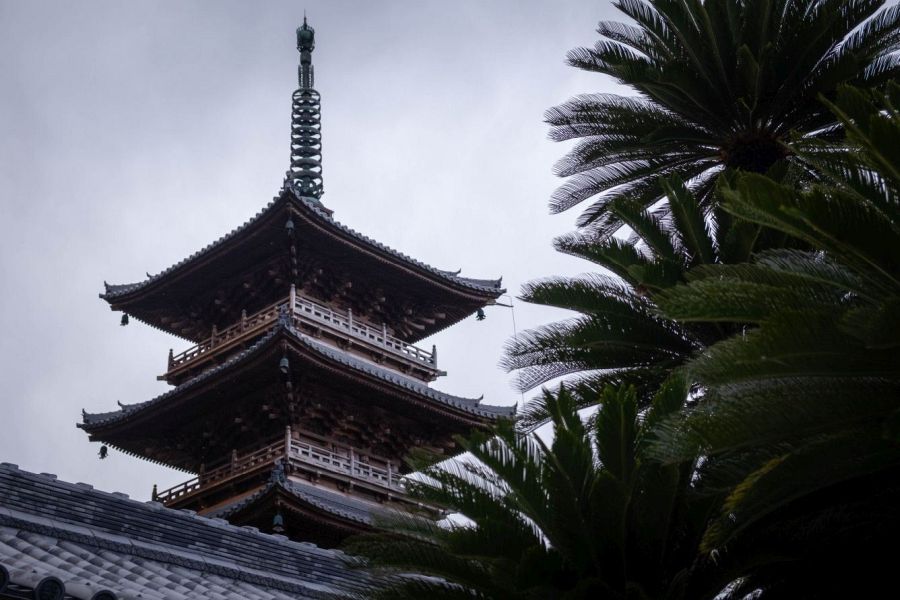
Motoyama-ji is temple No. 70 on the Shikoku pilgrimage. It stands on a plain close to the Saita River, and its tall, five-storey pagoda is a significant landmark.
What to see
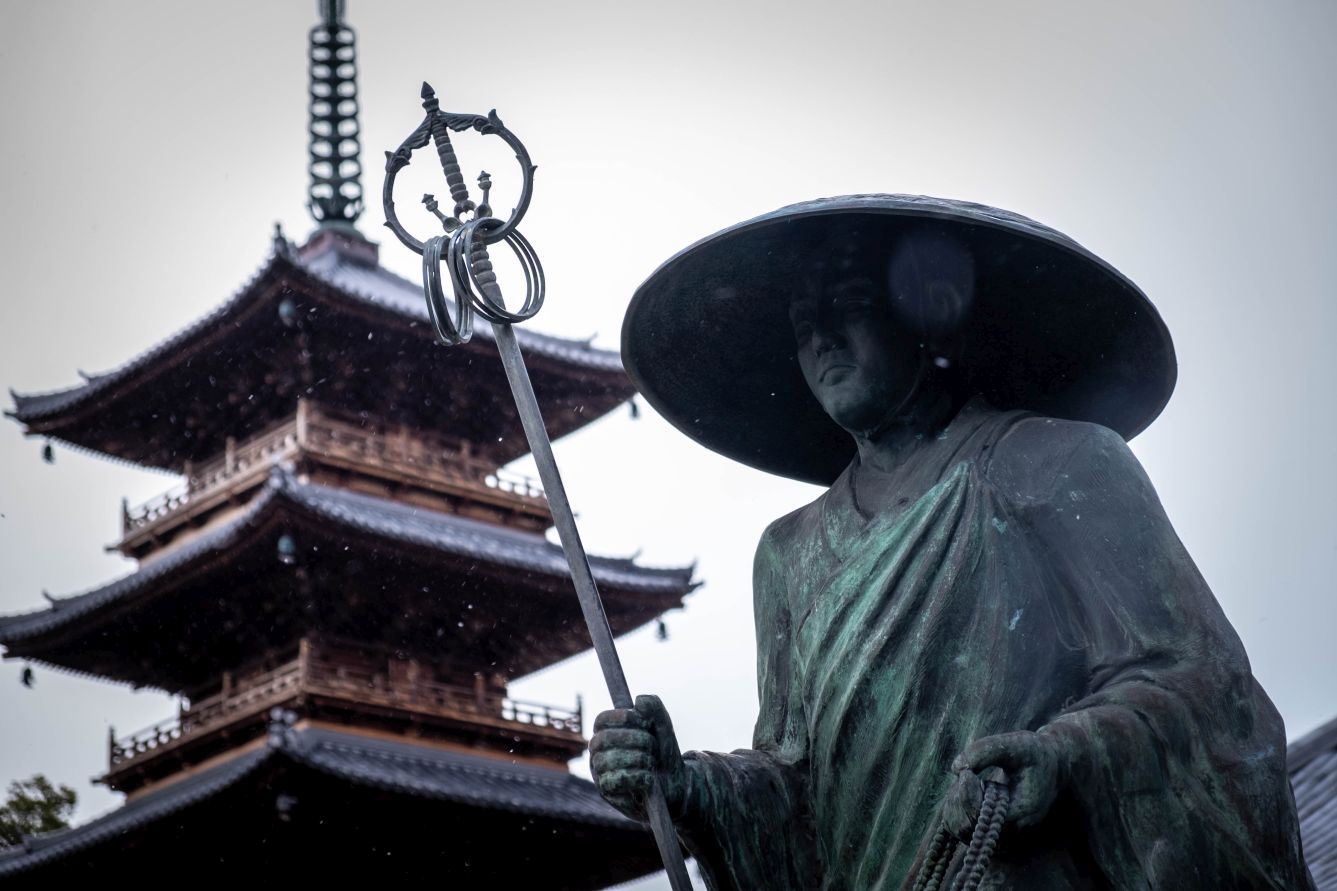
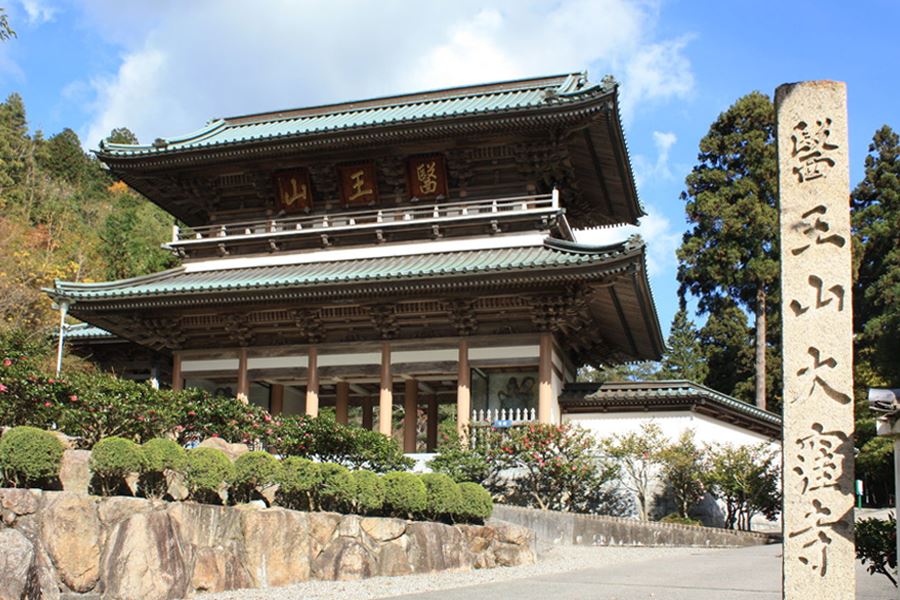
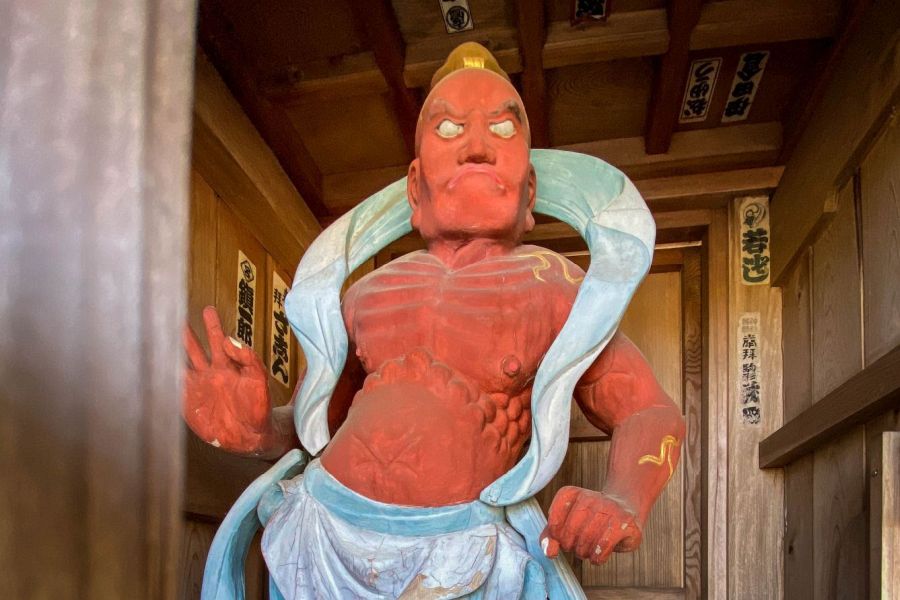
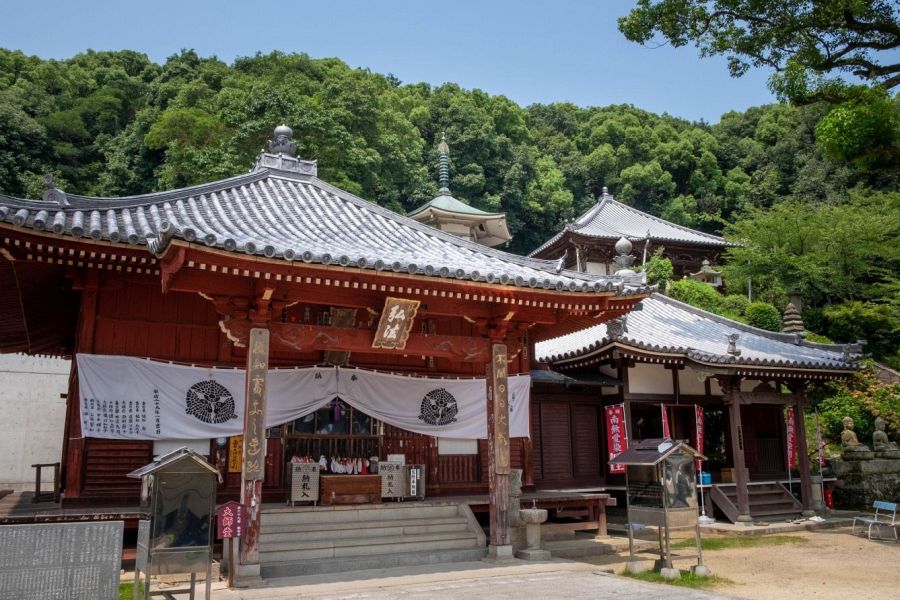
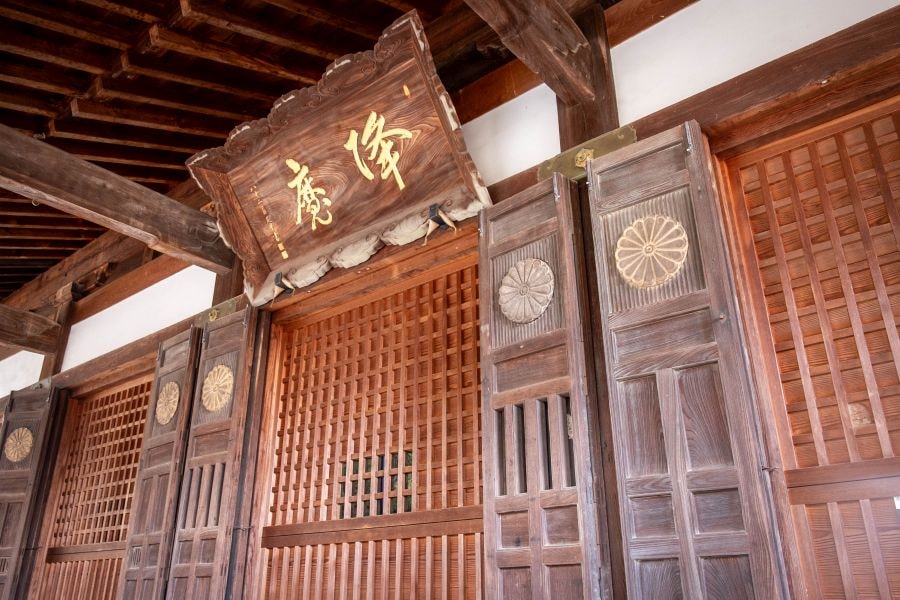
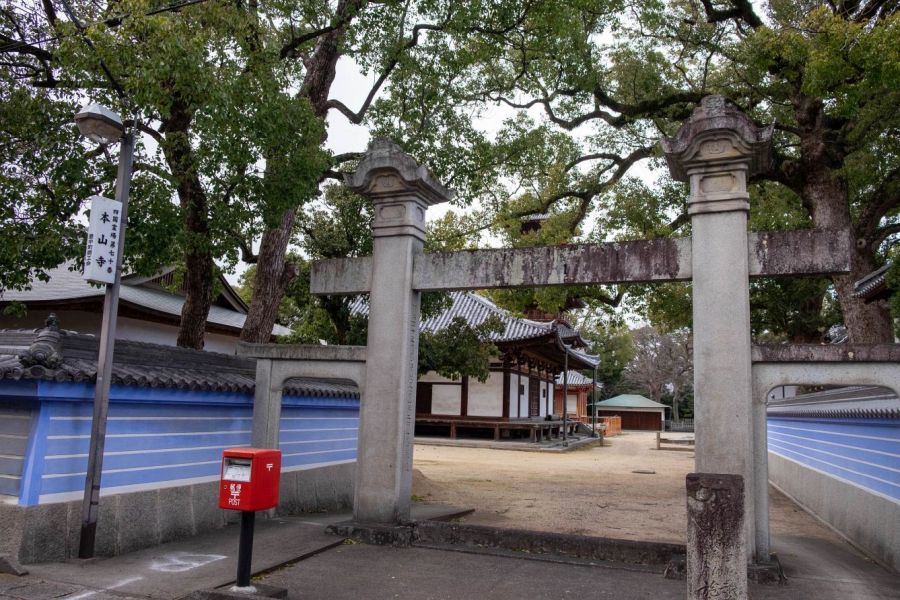
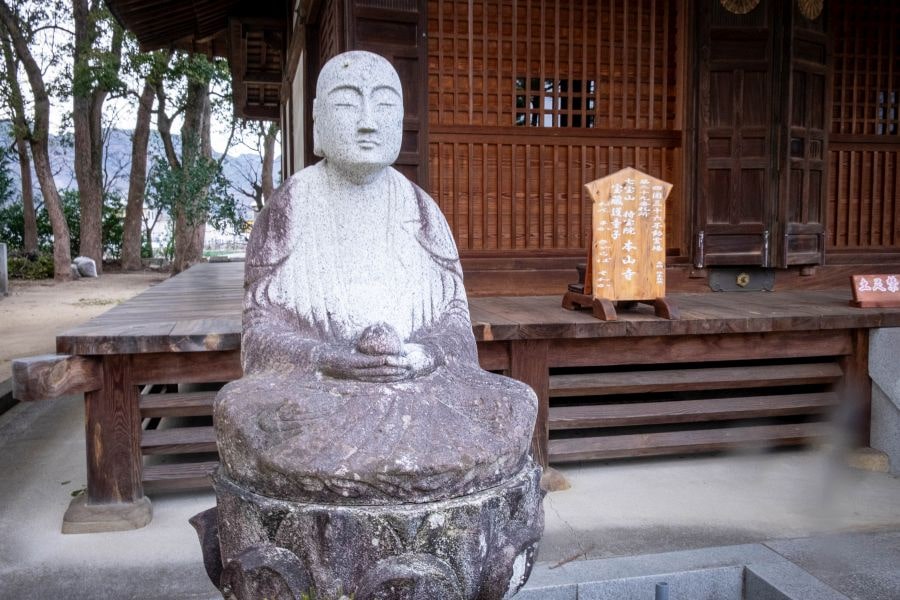
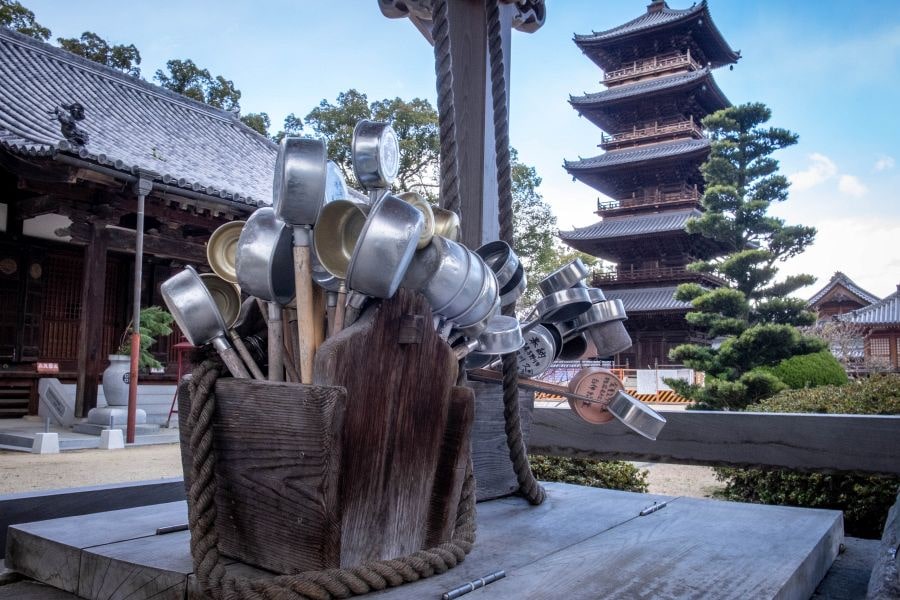
The temple was once the biggest on Shikoku, and even today, the large compound is suggestive of its former size. It has a main gate built in 1147, and a main hall in built 1300 in the Nara style. The compound also includes a guardian hall, the Daishi Hall, the Ten Kings hall, the red hall, the memorial hall, a belfry, and a guest hall. It’s one of only four of the eighty-eight temples with a five-storey pagoda. The others are Chikurin-ji, Shido-ji, and Zentsū-ji. There are some fine old trees within the temple grounds. The bronze statue of Kūkai on the pilgrimage is one of the most dynamic and lifelike of them all.
History
The temple was built by Kūkai in 807 on the orders of Emperor Heizei. Kūkai also carved a statue of a horse-headed Kannon, accompanied by statues of Amida Nyorai and Yakushi Nyorai. The pagoda was rebuilt in 1910 during the Meiji period.
Legends
Legend has it that Kūkai completed the temple in a night. When Chōsokabe Motochika of Kōchi sought to unify Shikoku, he wanted to make the temple his headquarters in the Province of Sanuki. A priest who resisted his forces was cut down, whereupon the doors of the main hall opened, and blood flowed from the right hand of Amida Nyorai who was at the side of the Buddha. In fear, the soldiers left. Another story has it that the soldiers were driven off by a swarm of bees.
Information
Name in Japanese: 本山寺
Pronunciation: moto-yama-jee
Address: 1445 Motoyama, Toyonaka, Mitoyo, Kagawa 769-1506