Temple 78, Gōshō-ji
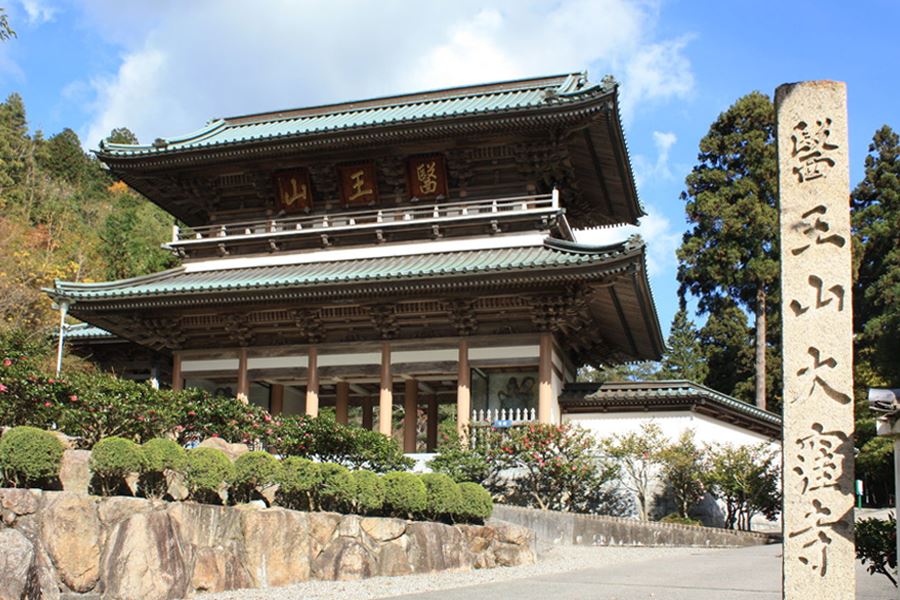
Goshō-ji is temple No. 78 on the Shikoku pilgrimage, or Henro. It stands on the lower slopes of Aonoyama, a small mountain near the Inland Sea in Utazu.
What to see
Goshō-ji is unusual among the pilgrimage temples in that two different sects, Shingon and the minor Ji-shū sect, coexist within the same temple grounds. Also the temple is associated with the Kōshin faith, a folk religion with Chinese Taoist origins, influenced by Buddhism, Shintō, and other local folklore.
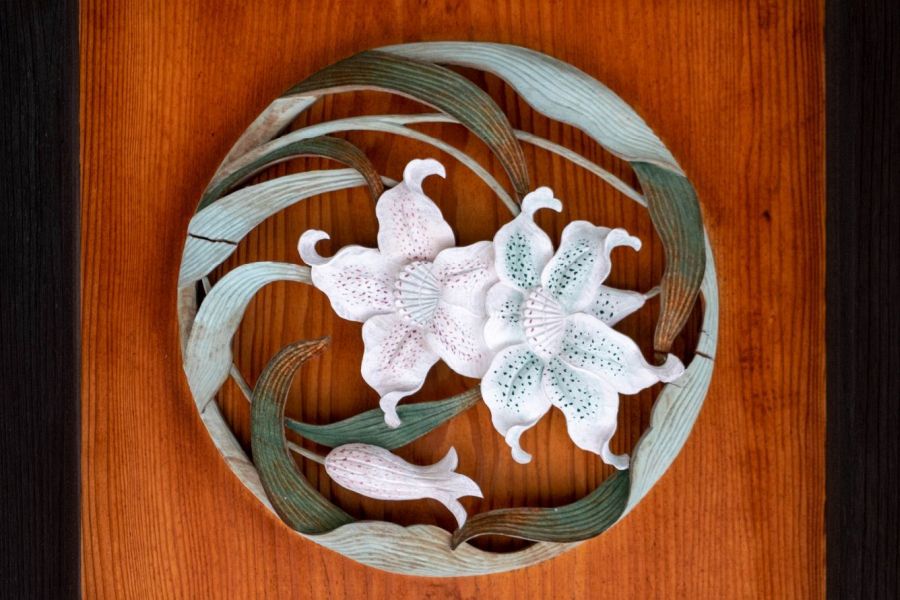
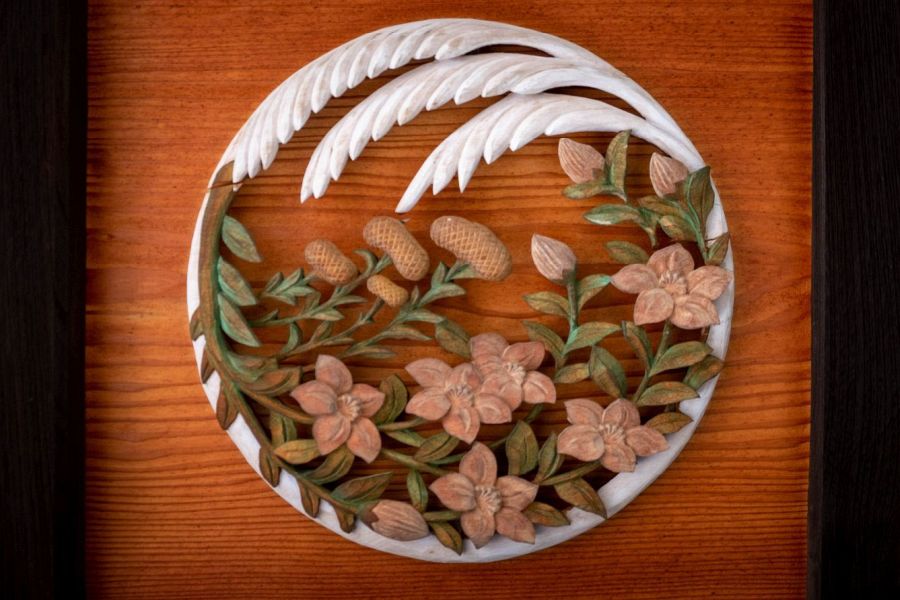
Outside the main gate are statues of the three monkeys who see, hear and speak no evil. In the main hall, three more monkeys surround the blue-faced deity with six hands Aizen Myō-ō. This deity is the local guardian of health. In the Kōshin faith, monkeys were originally regarded as messengers. The ceiling of the main hall is decorated with beautifully painted carvings of flowers of all sorts.
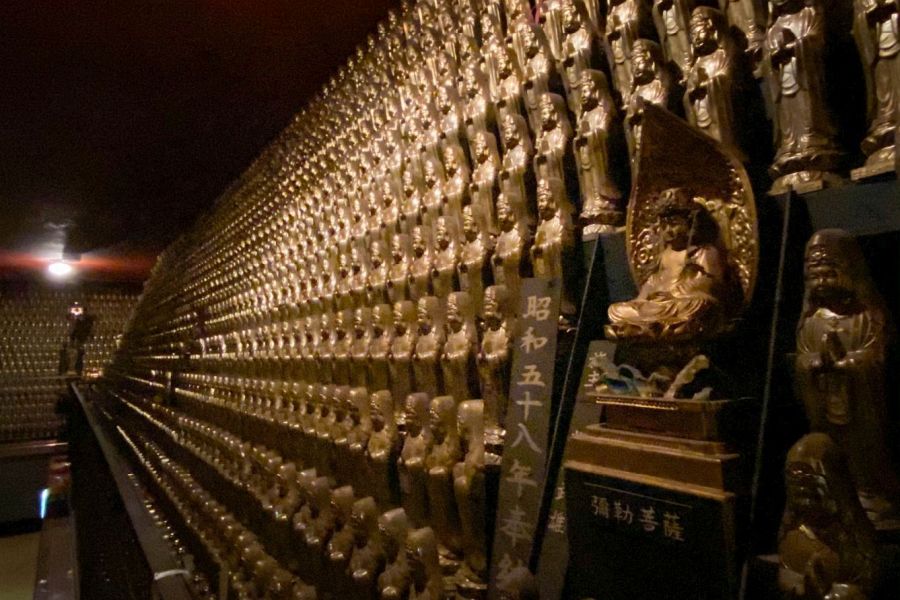
Behind the main hall, there is a stairway into a tunnel with thousands of statues of Amida Buddha.
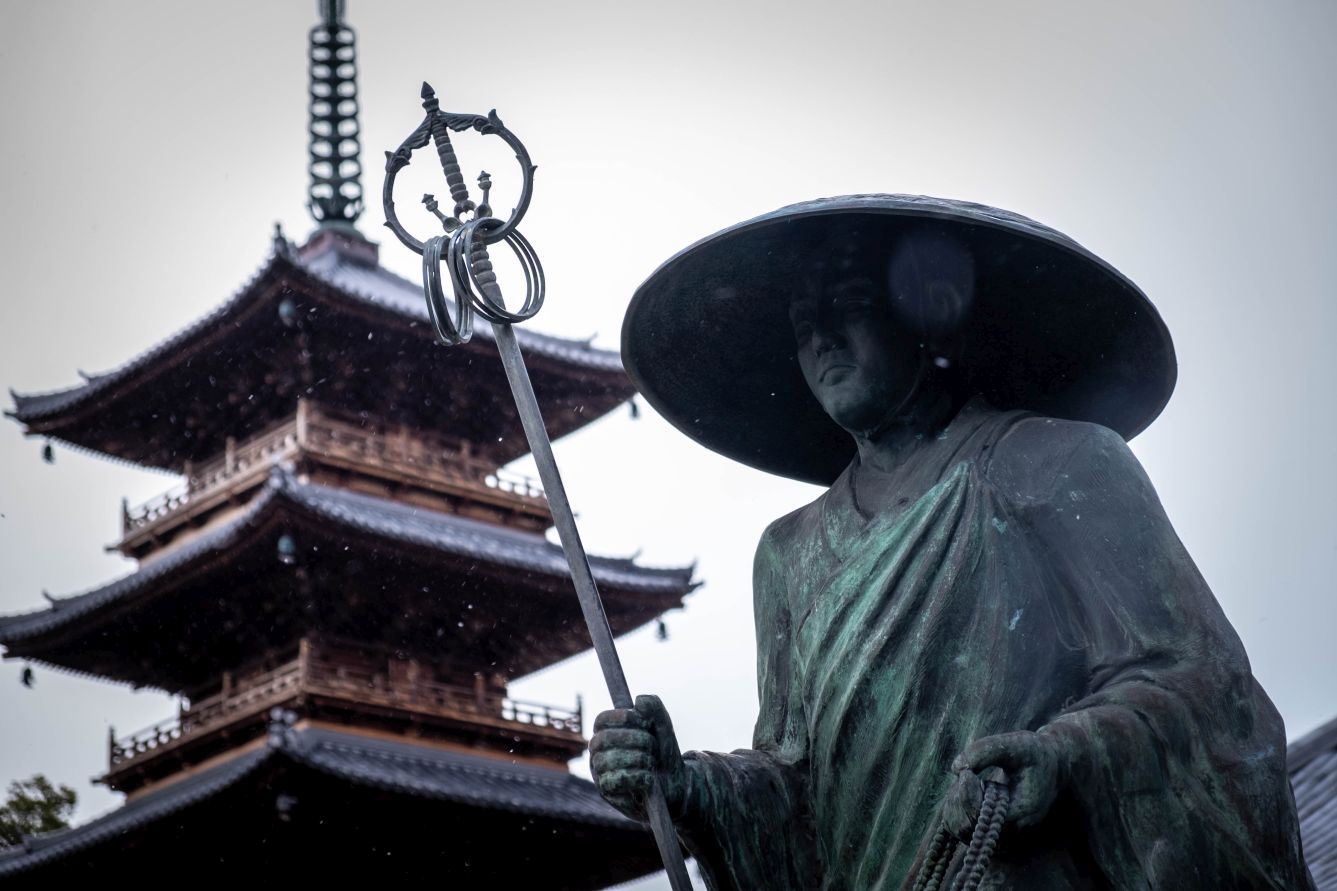
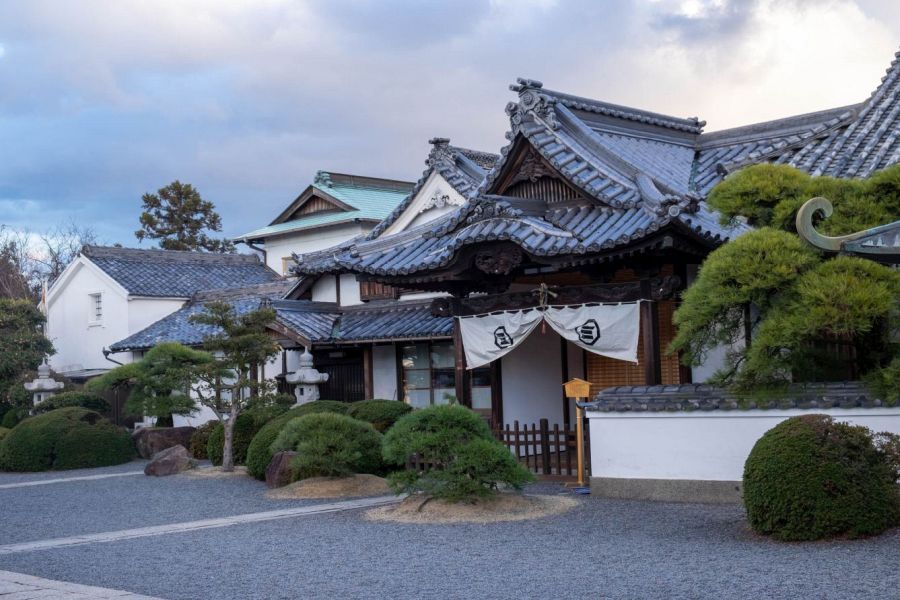
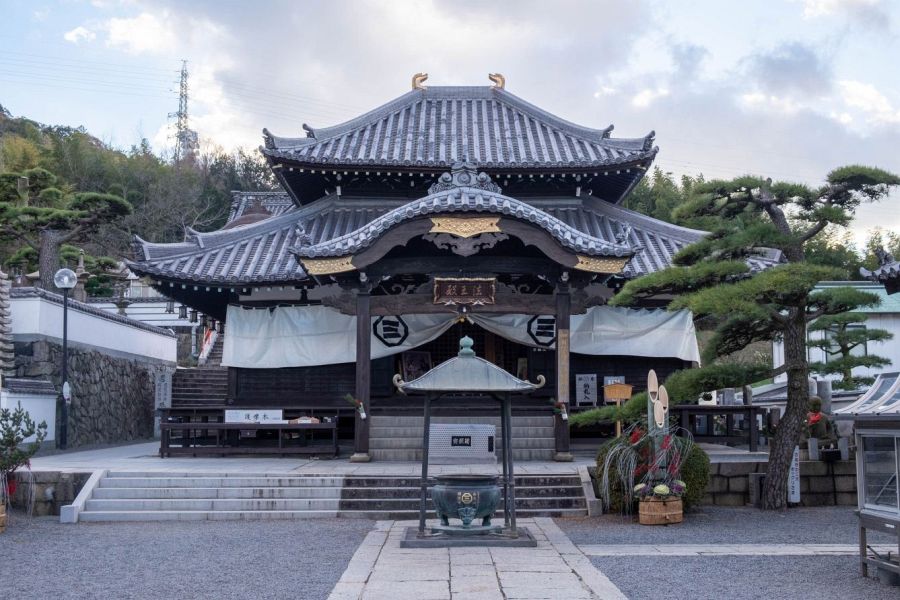
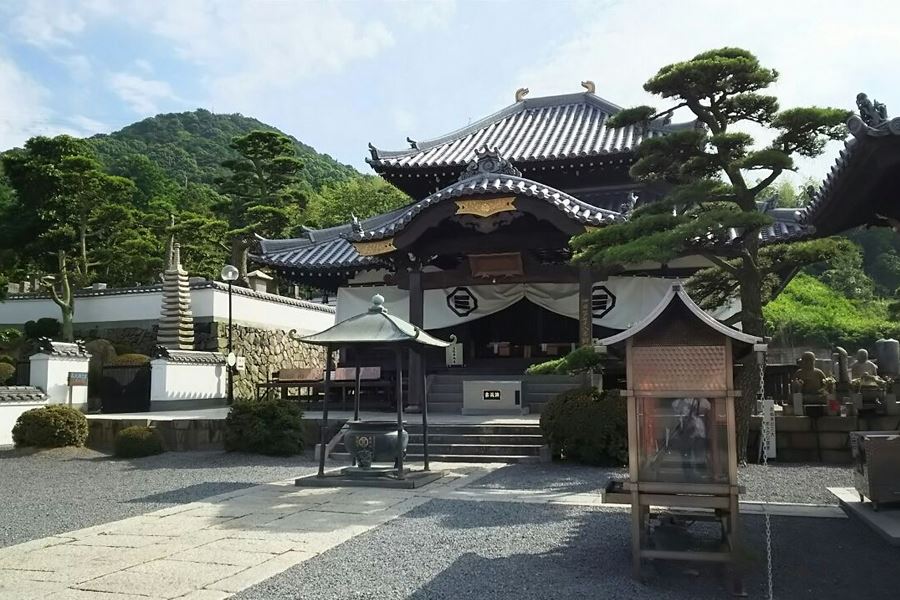
After passing through the main gate, you ascend the stone steps on the left to reach the car park. Climb the few stone steps in front of the bell tower and water basin on the left to find the temple office on the left and the main hall further ahead on the right. A statue of the itinerant priest Ippen stands on the right side. Passing through the passageway to the left of the main hall and ascending the stone steps brings you to the Daishi Hall directly ahead.
In front of the Daishi Hall to the left, stairs descend to the Hall of Ten Thousand Kannon, where identical Kannon statues stand in rows on shelves.
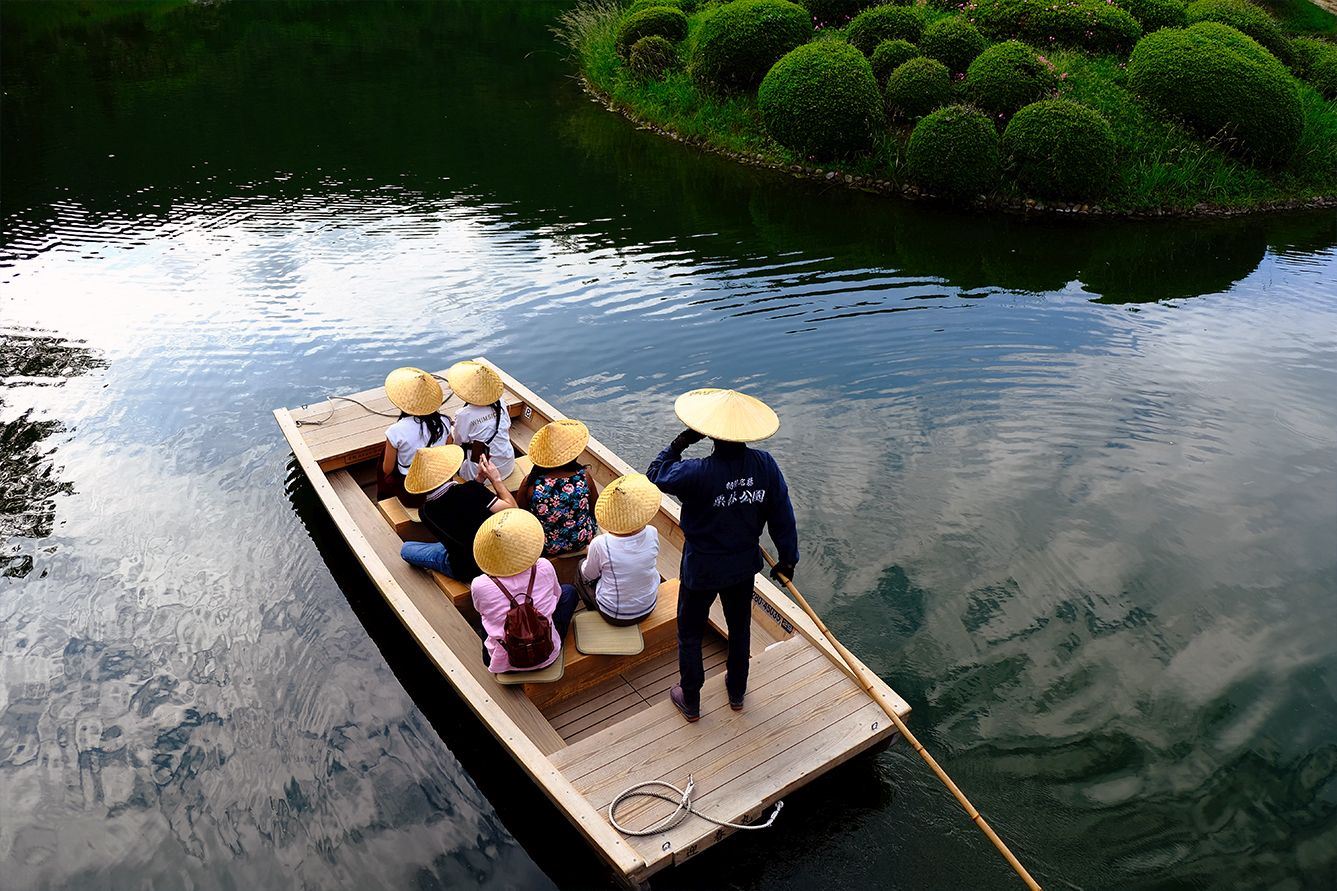
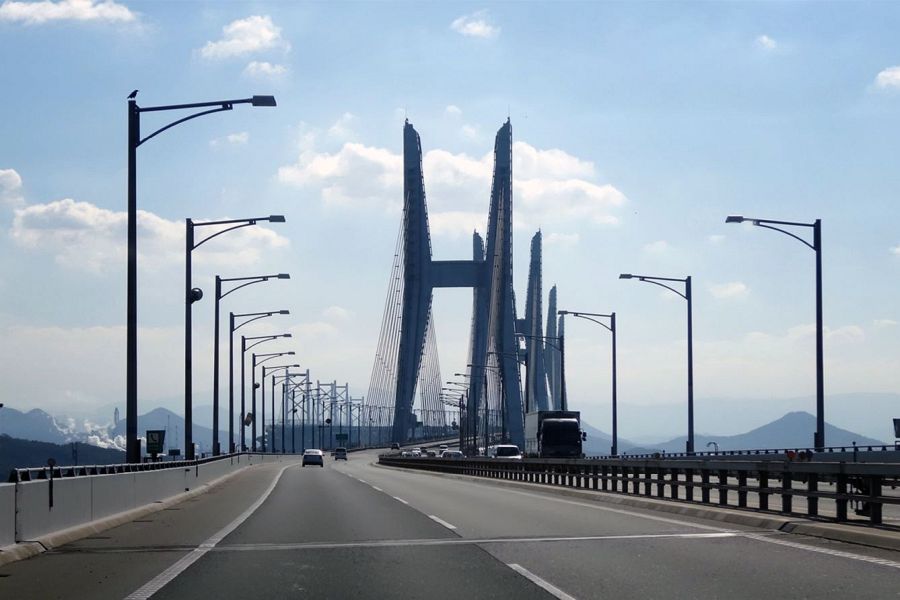
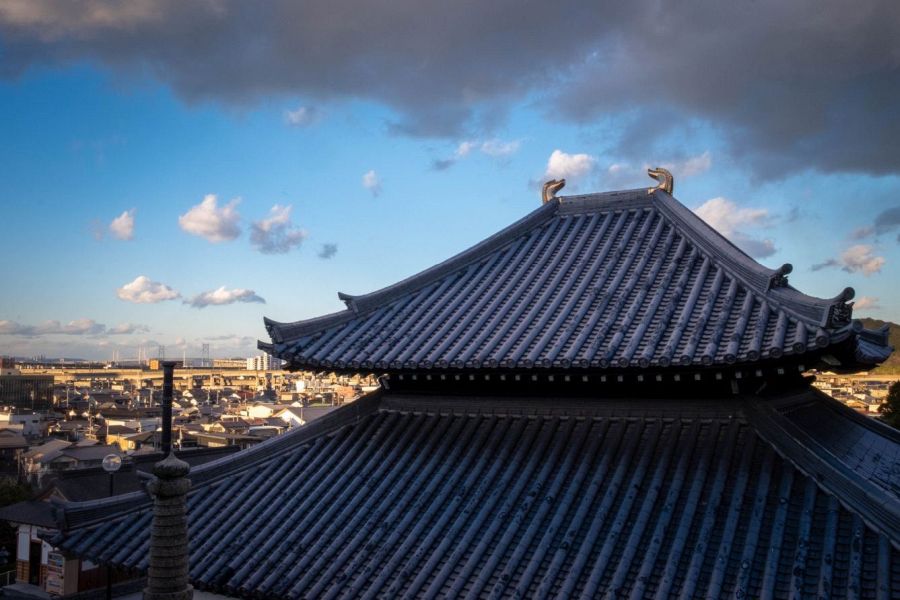
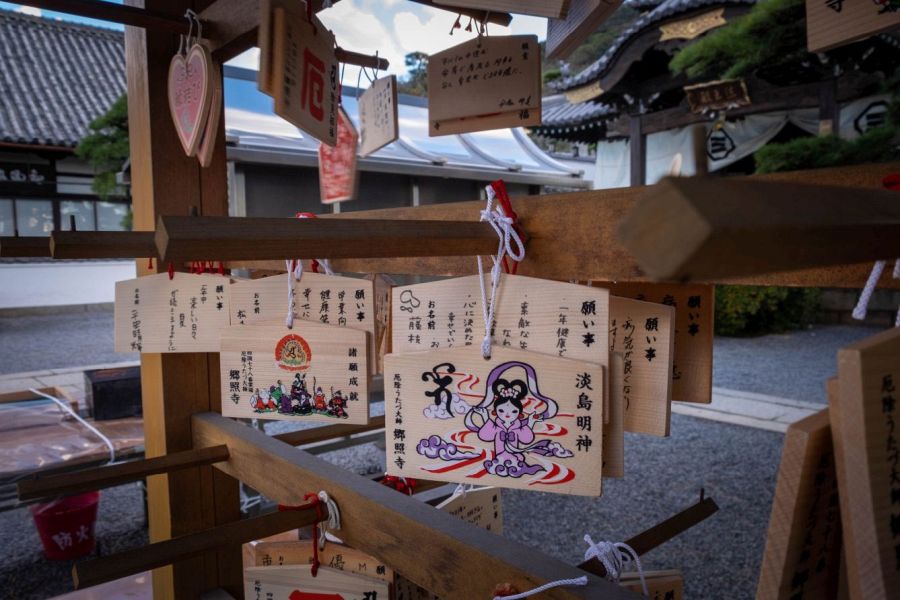
There’s also a Kōshin Hall with an image of Aizen Myō-ō, an Awashima Myōjin Shrine, a Tokiwamyo Shrine, and a Fudō Myō-ō Hall, built in 2024. Behind the priest’s quarters is a beautiful garden with a pond that can be viewed freely. From the higher points of the temple precincts, there’s a distant view of the Seto Ohashi Bridge.
History
According to temple tradition, Gyōki founded the temple in 725 as Dōjō-ji, enshrining a principal image of Amida Nyorai. In 1288, the monk Ippen stayed for three months during his itinerant travels and established a practice hall for the dancing nembutsu. It continued to flourish thereafter, but the temple buildings were destroyed in the wars of the late 1500s. The temple was rebuilt in 1664 by Matsudaira Yoriyasu, lord of the Takamatsu domain. Due to the relationship between the abbot at that time and the Tokugawa family, it became affiliated with the Ji-shū sect and was renamed Gōshō-ji.
Legend
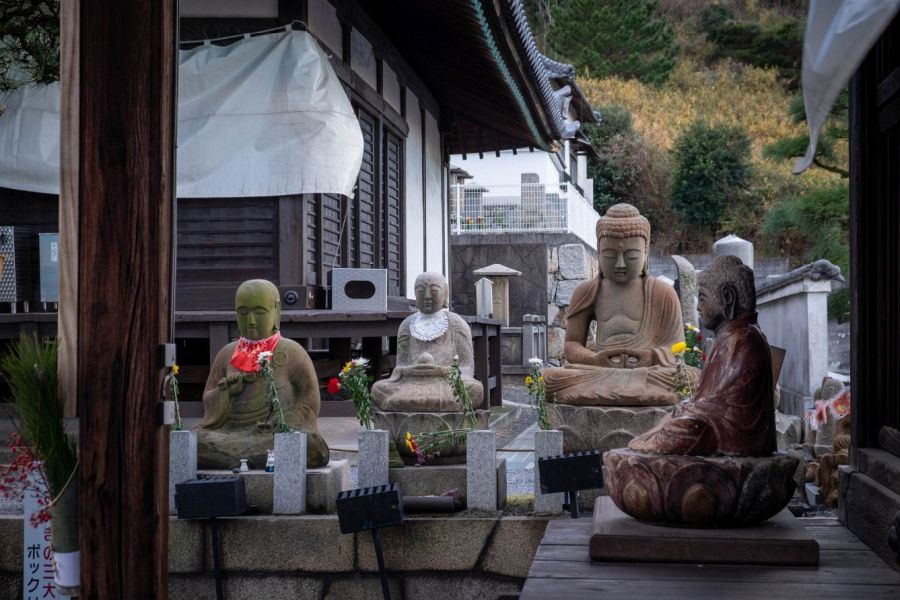
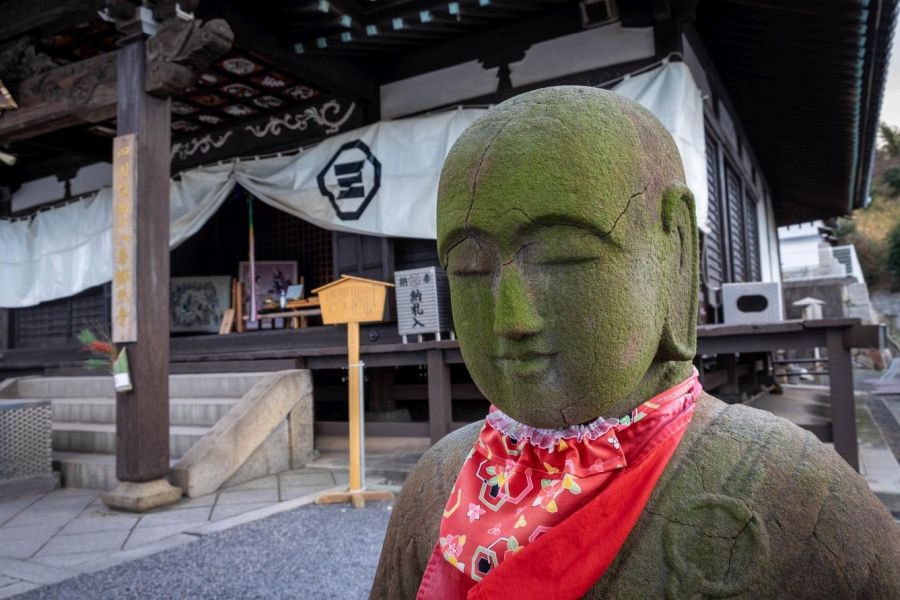
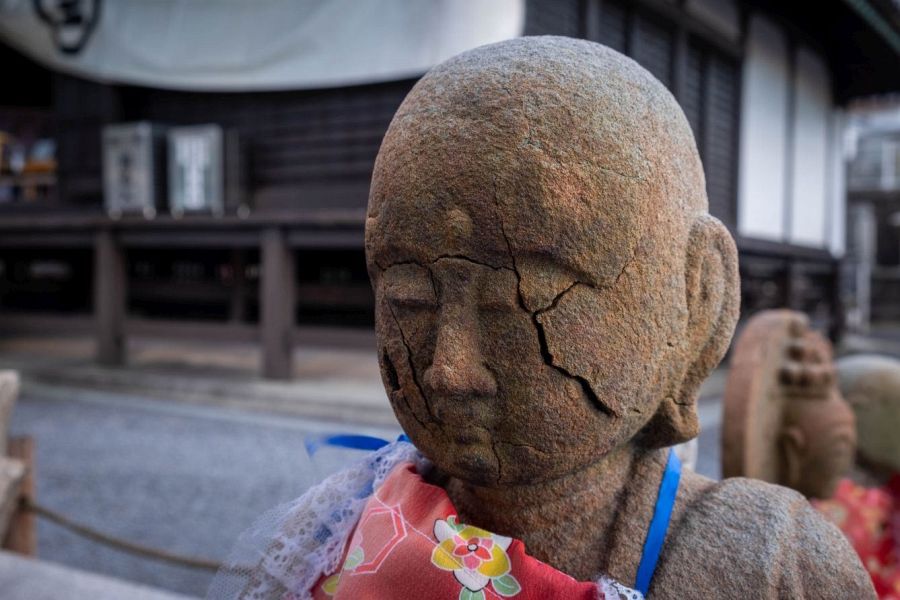
In front of the main hall is a row of stone Jizō statues in various styles. The second from the left is a Pokkuri Jizō — you can pray to him for an easy death when the time comes.
Information
Name in Japanese: 郷照寺
Pronunciation: gō-shō-jee
Address: 1435 Utazu, Ayauta, Kagawa 769-0210