Temple 83, Ichinomiya-ji
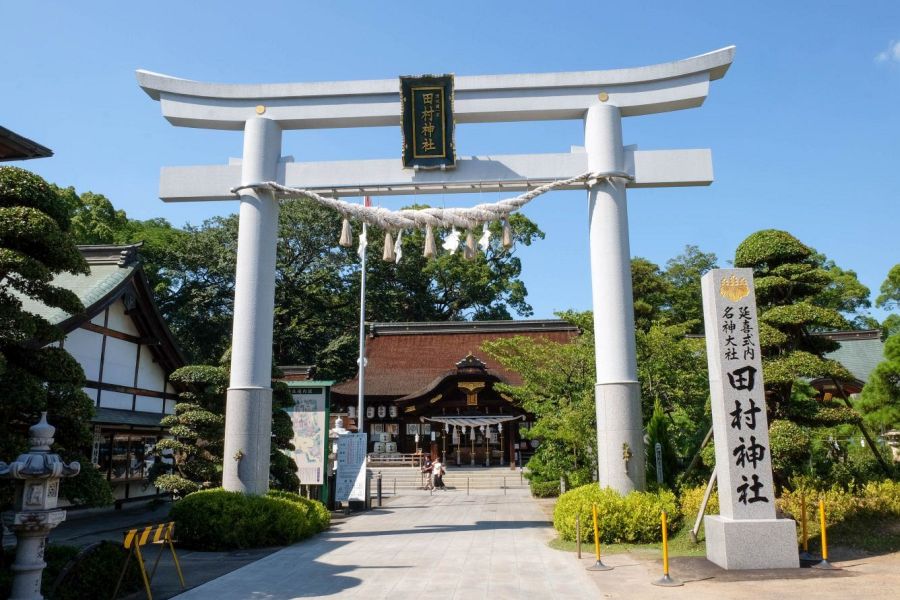
Ichinomiya-ji is temple No. 83 on the Shikoku pilgrimage, or Henro. It stands among fields and houses on the Takamatsu plain. It adjoins Tamura Shrine, the principal shrine of Sanuki Province.
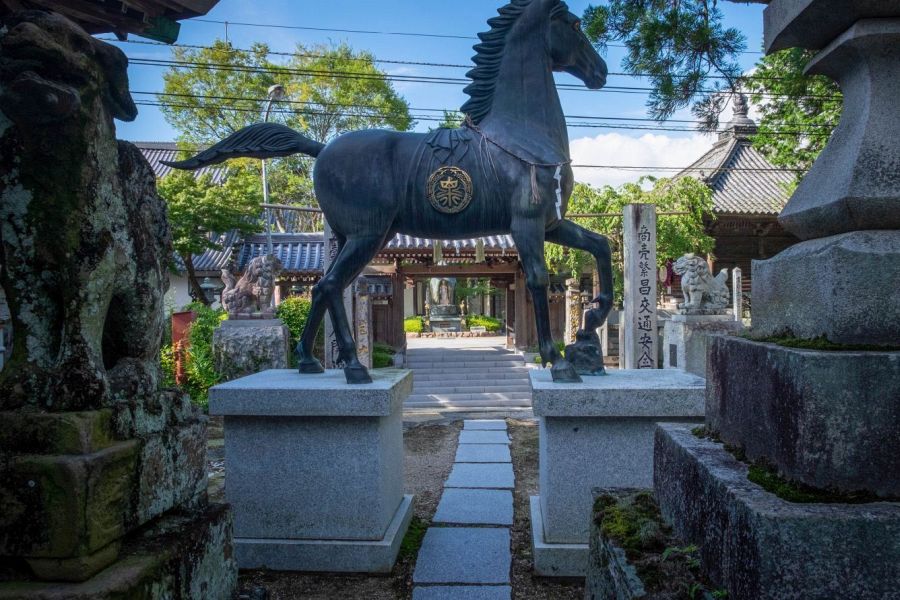
The present temple dates from 1701. There are several small Shintō torii gates in the compound, and pilgrims crawl through them as a purification ritual.
What to see
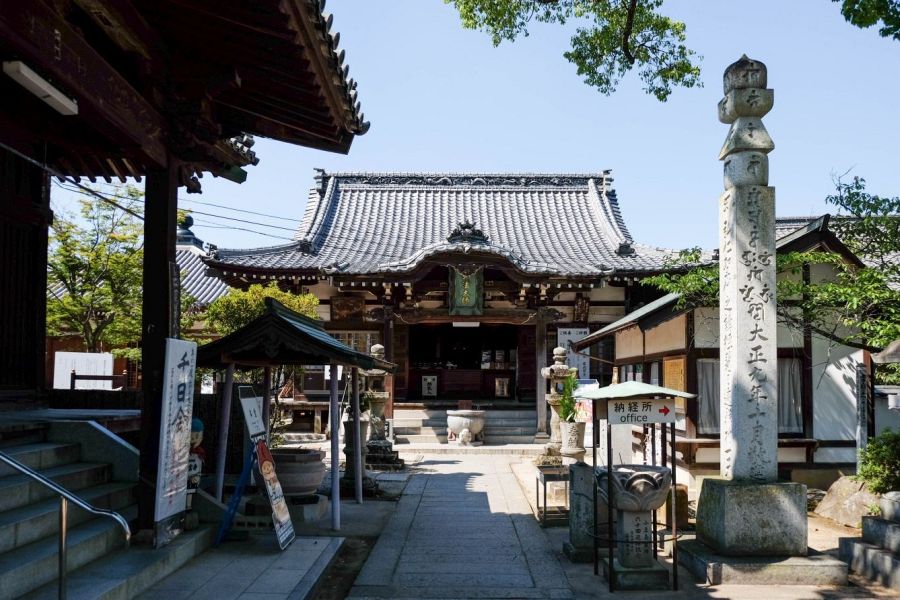
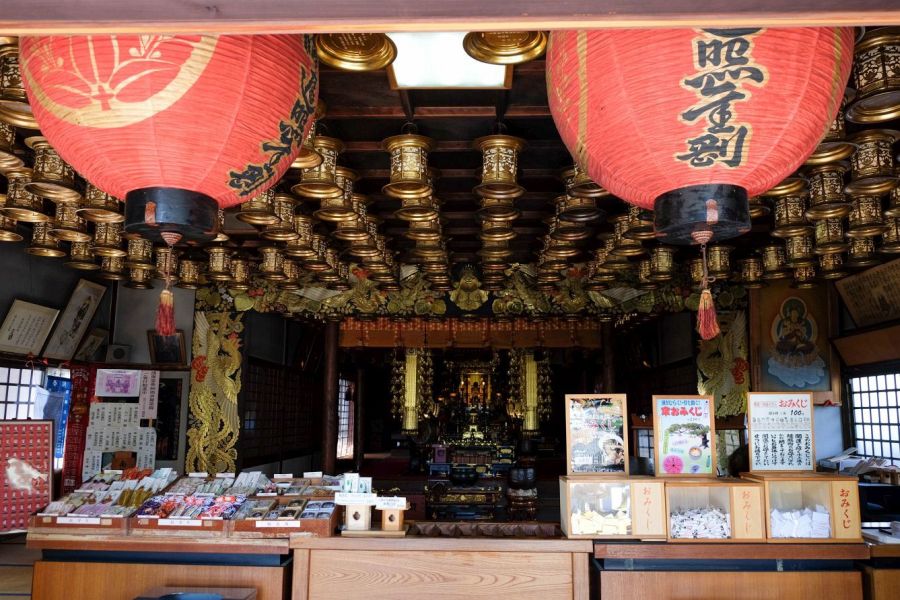
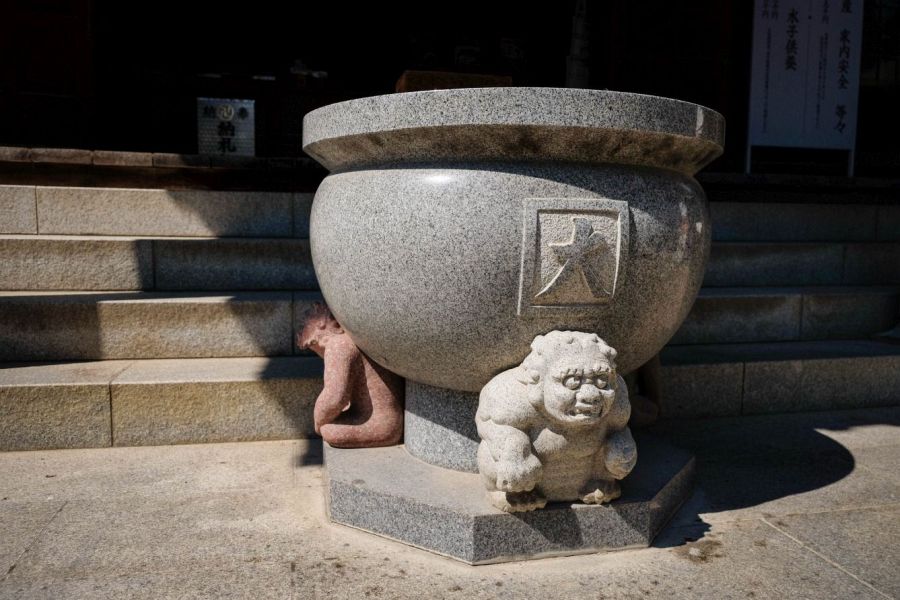
Most visitors enter the temple the small west gate from the car park, bringing them to the left of the main hall. The Daishi Hall is to the right of the main hall. The large doors bear the engraved character “Dai” from Daibō-in, another name for the temple. The recently built Goma Hall is to the left of the Daishi Hall, the temple office is to the left when heading from the main hall towards the Niō Gate, and the belfry is to the right.
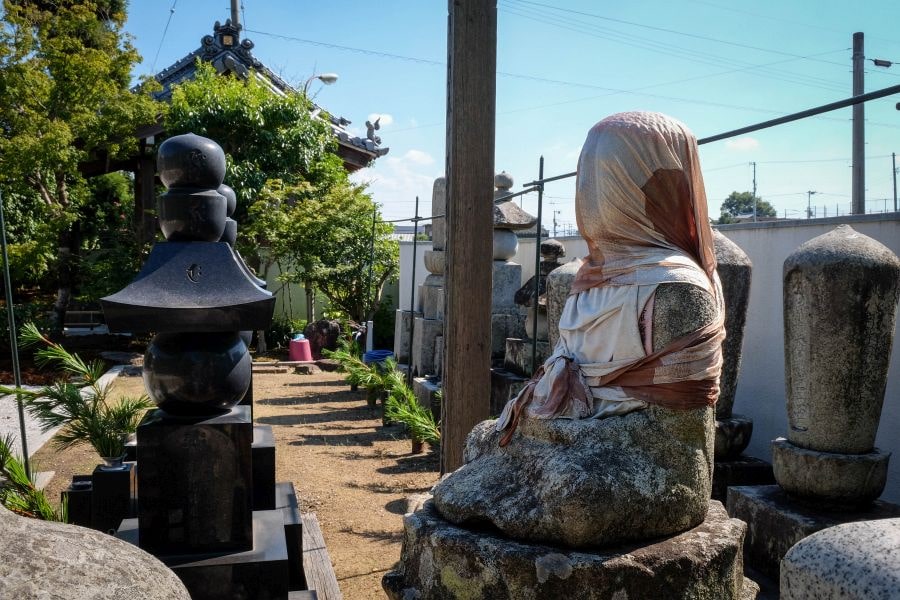
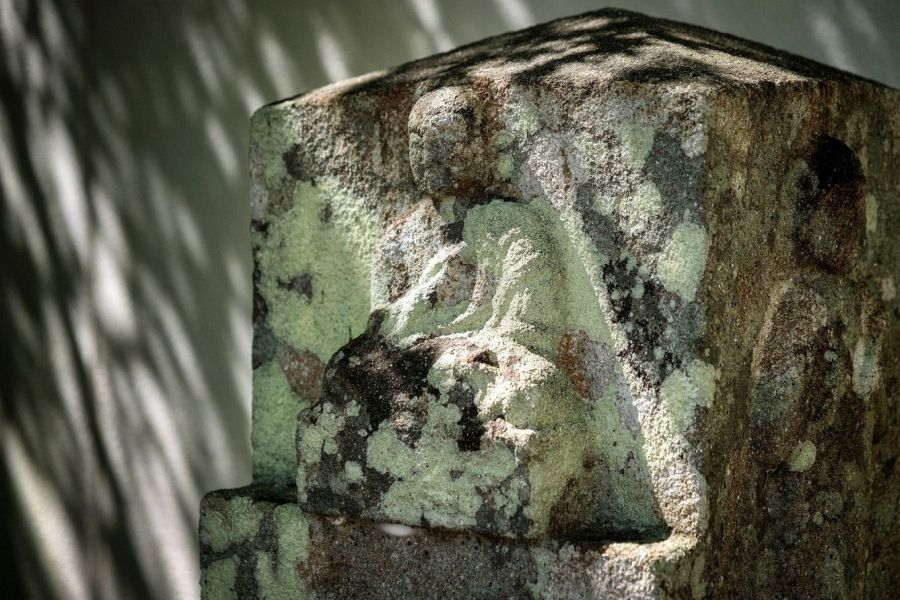
The Ichinomiya Imperial Mausoleum is behind the water basin. These three weathered stone pagodas are said to be monuments to the semi-legendary Emperor Kōrei and his son and daughter.
Behind these pagodas is a stone carved with the haiku
Fragrant smoke
rising now and then
an evening pilgrim
The reinforced concrete columbarium was built in 2020.
History
According to temple tradition, it was founded as a Hossō sect temple by the priest Gien in the early 700s, and named Taibō-in. Later when principal shrines were established in each province, Gyōki renovated the temple buildings as the chief priest of Sanuki’s principal shrine, Tamura Shrine, and renamed it Ichinomiya-ji. Subsequently, in the early 800s, Kūkai reorganised the temple precincts, carved a statue of the Kannon, and converted the temple to the Shingon sect.
The temple was destroyed by fire during the military conflict between the Awa Miyoshi forces and the Kōzai clan in 1574, but was revived by the monk Yūsei Daitoku.
In 1679, Matsudaira Yoritsune, then lord of the Takamatsu domain, reformed Tamura Shrine from Ryōbu Shintō to the Shintō of the sole deity. Consequently, the twelve temple-shrines said to exist besides this temple were abolished. This temple, the sole survivor permitted to continue, had previously been integrated with the shrine on the same site. It was separated and relocated to its present location. The temple’s chief priest was dismissed, and the sacred Kannon statue, which had been the shrine’s principal image, became the temple’s principal object of worship. Furthermore, the temple inherited the role of the 83rd station of the Shikoku 88 Temple Pilgrimage, a position previously held by the shrine, which had been selected as the principal shrine of the province. This separation of Shinto and Buddhism occurred some 200 years before the Meiji Restoration’s official policy, and the arrangement has continued to the present day.
Legends
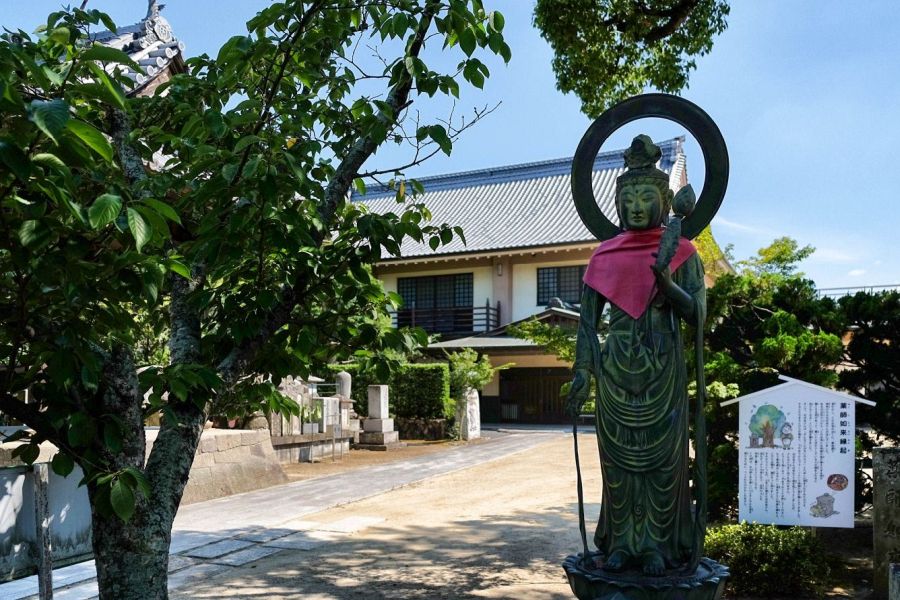
At the Yakushi Nyorai shrine, the sound of boiling cauldrons from hell is said to be heard. It’s rumoured that those who have done wrong and put their head inside can’t pull it out again.
Information
Name in Japanese: 一宮寺
Pronunciation: ichee-nomeeya-jee
Address: 607 Ichinomiyachō, Takamatsu, Kagawa 761-8084