Wang Zhí
Name In Japanese: 王直
Pronunciation: oh choku
Period: 1501 to 1560
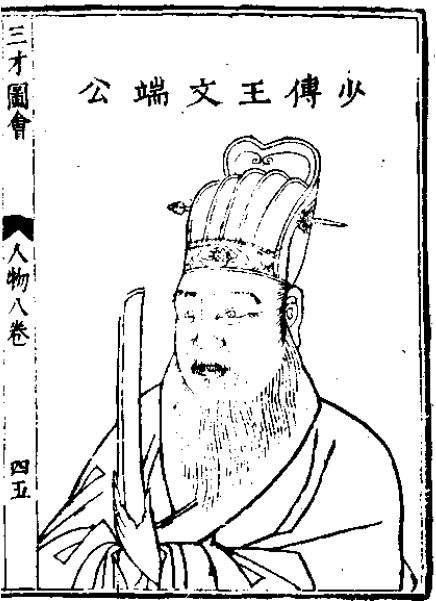
Wang Zhí was a 16th-century Chinese merchant and smuggler who became the supreme commander of the wakō, the heavily armed, multinational trader-pirates who operated throughout the East China Sea. While he originally came from Anhui Province in China, his entire operational career was tied to Nagasaki Prefecture where he’s called Ō Choku, the Japanese pronunciation of his name. By negotiating strategic alliances with local feudal lords, he acquired sovereign territories that allowed him to control the most lucrative maritime trading routes in East Asia. His activities fundamentally altered the local economy, establishing western Kyūshū as Japan’s principal early gateway for international trade and European contact well before the development of Nagasaki city.
You can trace the earliest stage of his Japanese operations on Fukue Island, the largest of the Gotō Islands. In 1540, Wang Zhí arrived here seeking a stable outer port for his smuggling fleets. The local ruler, Uku Morisada, was facing severe financial difficulties and chose to ignore the central government’s strict isolationist laws to strike a clandestine deal. He granted Wang Zhí an area near his castle town to establish a permanent Chinese merchant settlement.
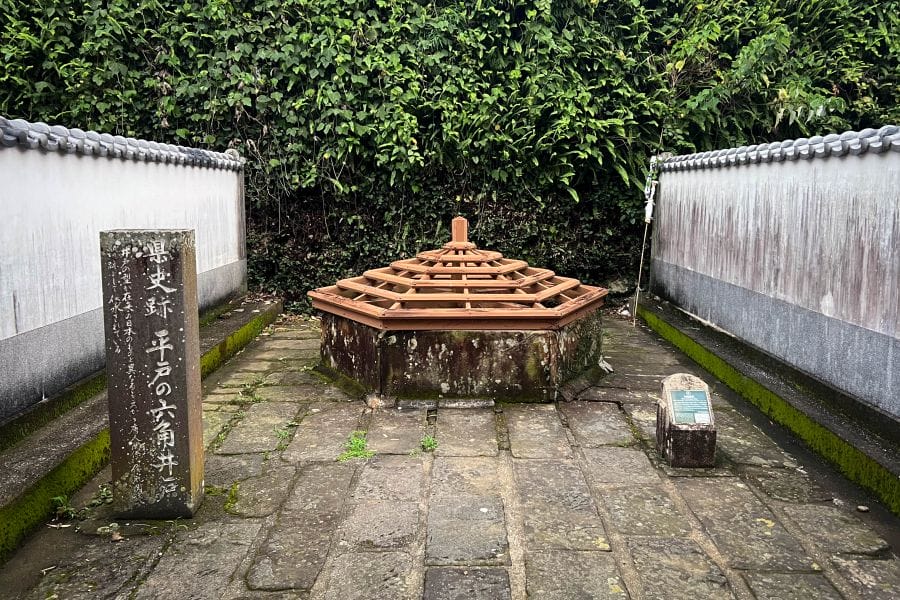
Because his regional presence and fleets were based entirely around this five-island chain, he came to be known across the region as the “Lord of the Five Islands.” Today, you can explore the remnants of this pirate-merchant colony in Fukue’s Tōjin-machi district. The site contains a highly unusual stone well built by Wang Zhí’s crew, featuring a unique six-sided design engineered to protect the freshwater supply from saltwater intrusion, alongside a reconstructed Chinese-style shrine called the Minjindō, where his sailors prayed for safe voyages.
While standard English histories often depict the arrival of Europeans in Japan as a random accident, contemporary Japanese accounts reveal that Wang Zhí was the actual mastermind behind the historic event. The Teppōki—a Japanese chronicle written in the early 17th century detailing the arrival of firearms—records that Wang Zhí was physically on board the Chinese junk that carried the first Portuguese traders to Tanegashima Island in 1543, operating under his Japanese art name, Gō Hō. When the vessel landed, the local island officials couldn’t understand the Portuguese crew. The Teppōki details how Wang Zhí stepped forward and used a stick to write classical Chinese characters in the sand, successfully translating and negotiating the trade deal that introduced the first muskets into Japan.
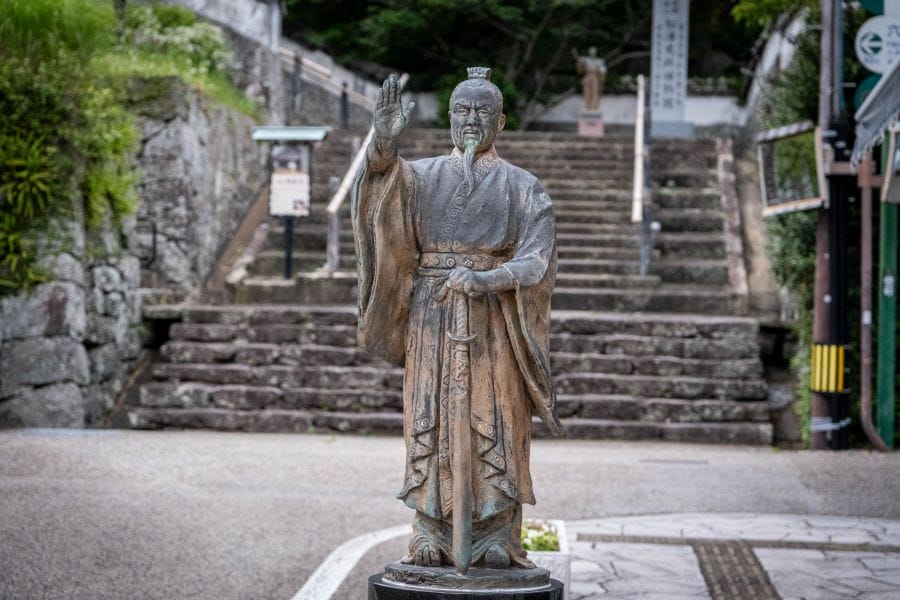
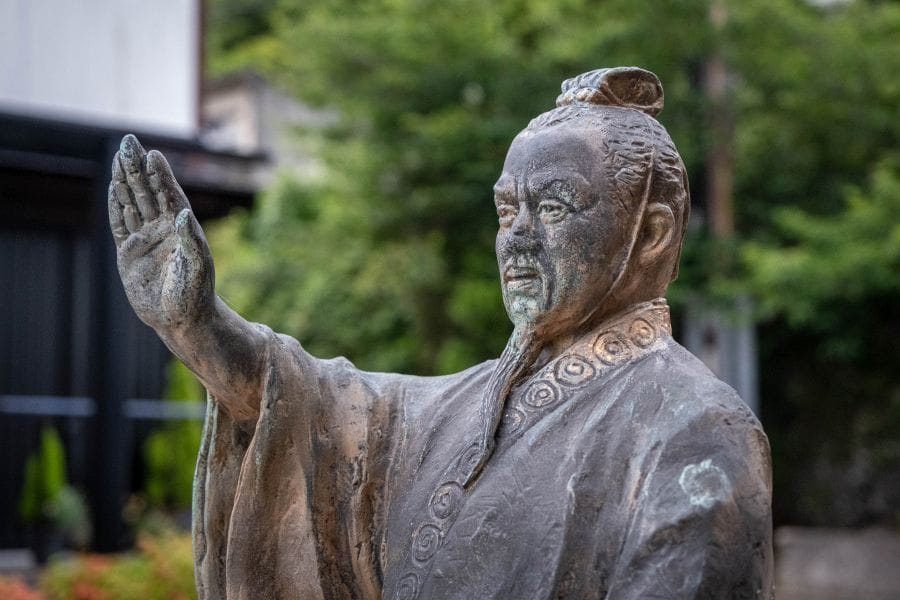
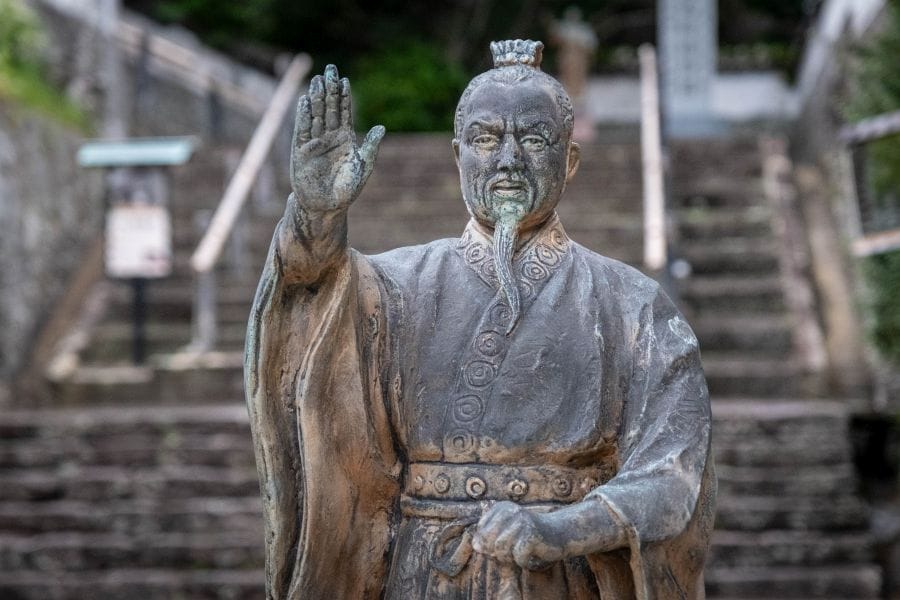
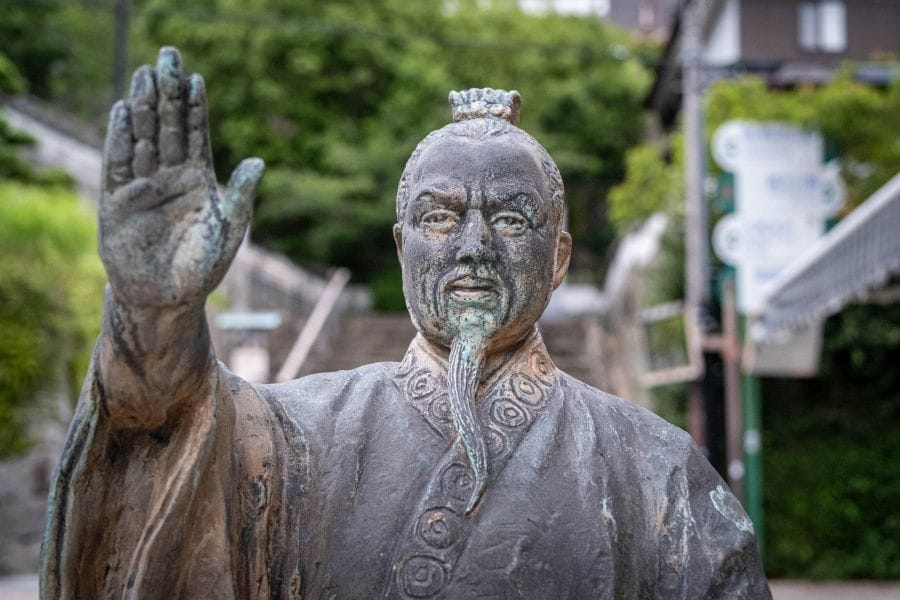
As his commercial empire expanded, Wang Zhí shifted his primary residence north to the island of Hirado, where he could operate on a grander scale under the direct patronage of the powerful lord Matsuura Takanobu. Local records show that he didn’t live the hidden life of a criminal fugitive; instead, he maintained the status of a merchant prince. He constructed a massive, lavish Chinese-style mansion in Hirado’s Kagamigawa district and provided the Matsuura clan with the financial backing and military weaponry they needed to assert independence from central Japanese authorities. Today, you can walk through the Ōchoku Yashiki—the actual site of his former estate—where the heavy, foreign-style stone walls of the original Chinese quarter are still standing near the local harbour. A short distance away along the hillside pedestrian path known as the Rekishi no Michi, a bronze standing statue of Wang Zhí commemorates his role in the town’s international history.
Wang Zhí’s power peaked when he declared himself the “King of Huī,” adopting imperial yellow robes and operating a fleet of hundreds of ships manned by thousands of subordinates. His downfall, however, was driven by a desire to legalise his business rather than a defeat in battle. In 1557, lured by the promise of an official trade pardon from the Ming Dynasty official Hú Zōngxiàn, Wang Zhí made the calculated decision to return to China. He was immediately arrested upon landing. While imprisoned, he wrote a final petition titled Zìshù, arguing that China’s maritime bans were what drove coastal populations to piracy, and that opening state-sanctioned trade would bring lasting peace. The imperial court rejected his plea, and he was executed in Hángzhōu in 1559. Local legend in Hirado long maintained that his character was so unyielding that his torso remained standing upright even after he was decapitated, cementing his mythic status along the coasts of Nagasaki Prefecture.