William Adams
Name In Japanese: 三浦按針
Pronunciation: mee-yura an-jin
Period: 1564 to 1620
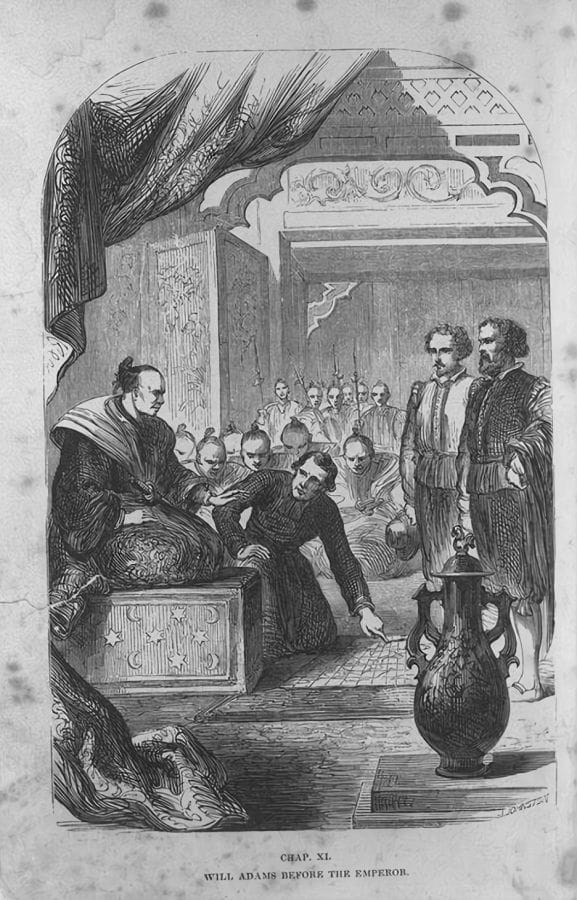
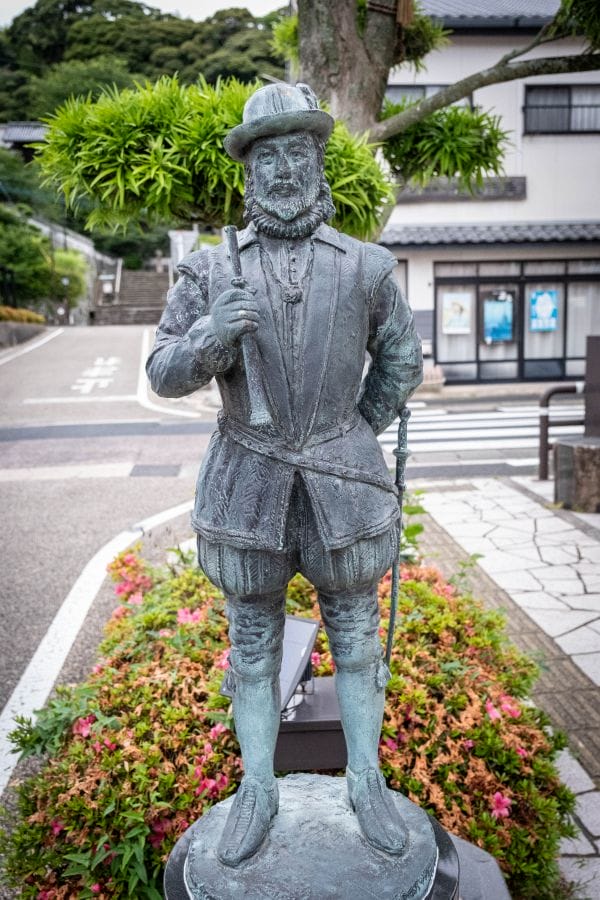
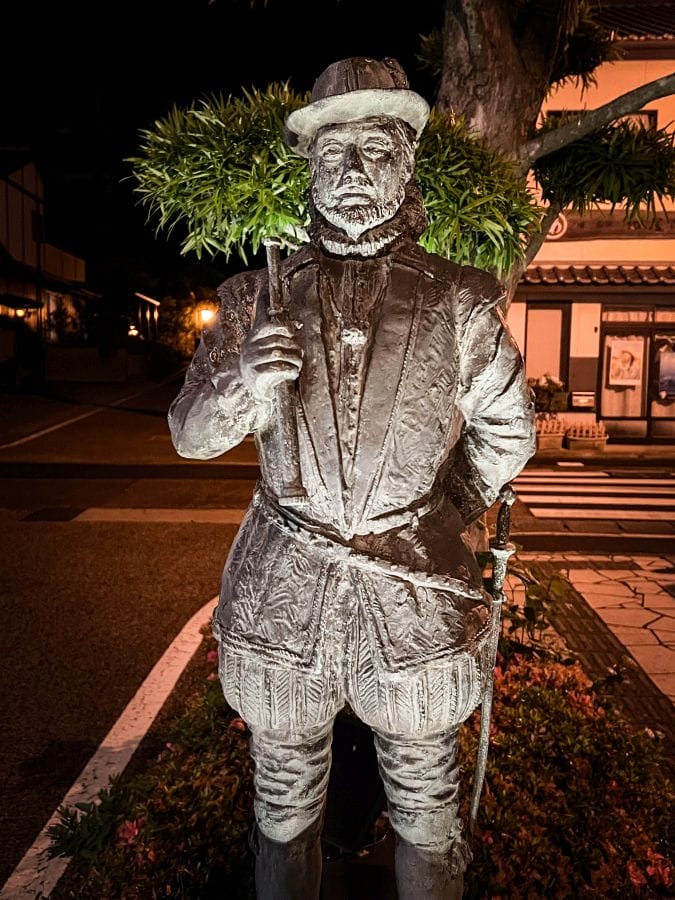
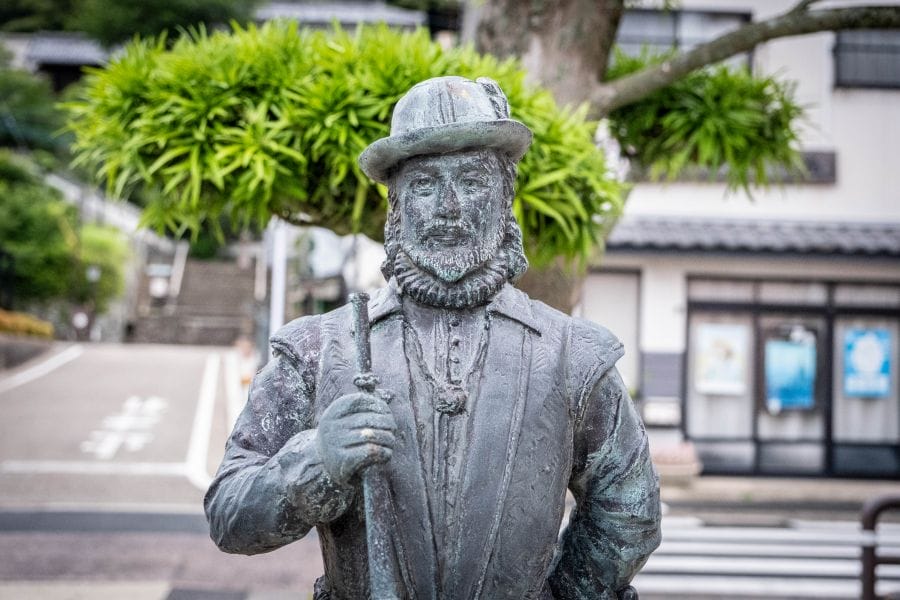
William Adams, better known to the Japanese as Mīura Anjin, was an English navigator who became one of the most influential foreigners in early modern Japan. He arrived in 1600 after a disastrous journey as the pilot-major of a decimated Dutch trading fleet, but he won the trust of Tokugawa Ieyasu, the warlord who united Japan and established the Tokugawa shogunate. Adams was granted the status of a samurai, complete with an estate on the Mīura Peninsula and a salary paid in rice, acting as a key diplomatic and commercial advisor to the government. His later years were deeply intertwined with the port town of Hirado, an island off the coast of Nagasaki Prefecture that served as Japan’s primary window to European trade. Here, he worked alongside Richard Cocks, the head of the English trading post, bridging the gap between his native country and his adopted homeland.
A fervent Protestant who loathed Catholics, Adams stoked Tokugawa Ieyasu’s geopolitical fears by exposing the colonial ambitions of Catholic Spain and Portugal and highlighting the religious-political divides in Europe. While Toyotomi Hideyoshi had already initiated crackdowns and crucifixions in the late 16th century, the broader and more systematic persecution that culminated in the 1614 banishment of missionaries and the total suppression of the faith was accelerated by Adams’ influence. Adams advised Ieyasu that European Catholics and Protestants were fierce political enemies. He assured the Shōgun that Protestant merchants (like the English and Dutch) were strictly interested in trade and not in subverting the state or allegiance to a foreign Pope. It was advice of this tenor that set the stage for the Edo period persecution of Christianity and the age of the Hidden Christians.
Adams’ role in Japan shifted significantly after Ieyasu’s death in 1616. The new Shōgun, Tokugawa Hidetada, was far more suspicious of foreign influence and restricted European trade strictly to the ports of Nagasaki and Hirado. Adams relocated his commercial operations to Hirado, where the British East India Company had established a merchant house, or “factory,” in 1613. The head of this enterprise was Richard Cocks, a meticulous, book-loving English gentleman whose extensive diaries provide the most vivid, firsthand accounts of Adams’ final years. Though Cocks technically outranked Adams within the company hierarchy, he relied heavily on Adams’ linguistic skills, deep understanding of Japanese etiquette, and lingering influence at the shogunal court to navigate the increasingly hostile political landscape.
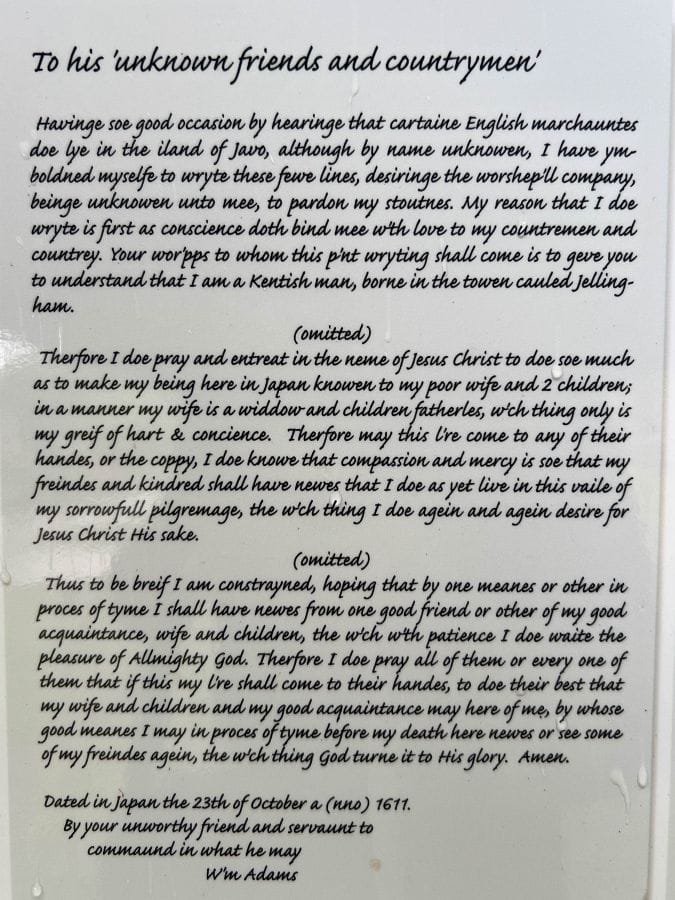
Their relationship was a complex mix of professional dependence and personal friction. Japanese records and Cocks’ own diaries reveal that Cocks frequently grew frustrated with Adams, suspecting that his loyalties lay more with his Japanese hosts and Dutch rivals than with his fellow Englishmen. Adams had spent over a decade thoroughly integrating into Japanese society before the English arrived; he spoke fluent Japanese, wore traditional clothing, and had a Japanese wife and children. Cocks, who struggled to comprehend the nuances of Japanese customs, often misread Adams’ insistence on proper Japanese protocol as obstinacy. Despite these tensions, the two men achieved notable cultural exchanges. In 1615, Adams brought sweet potato tubers back to Hirado from a voyage to the Ryūkyū Islands (modern-day Okinawa). Cocks planted these in a rented garden, marking the first recorded cultivation of sweet potatoes in main-island Japan—a crop that would later save millions from famine.
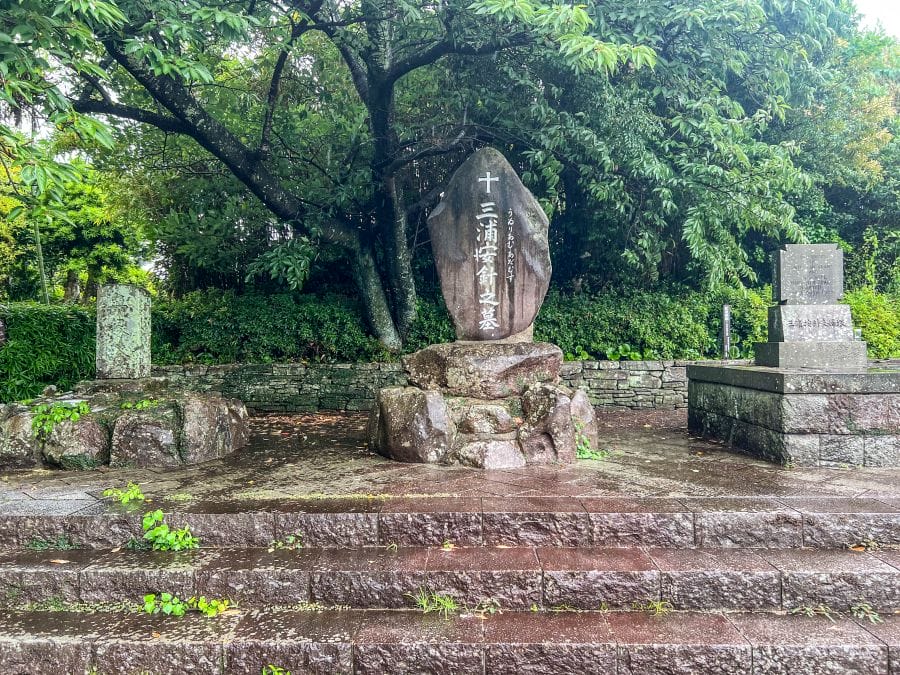
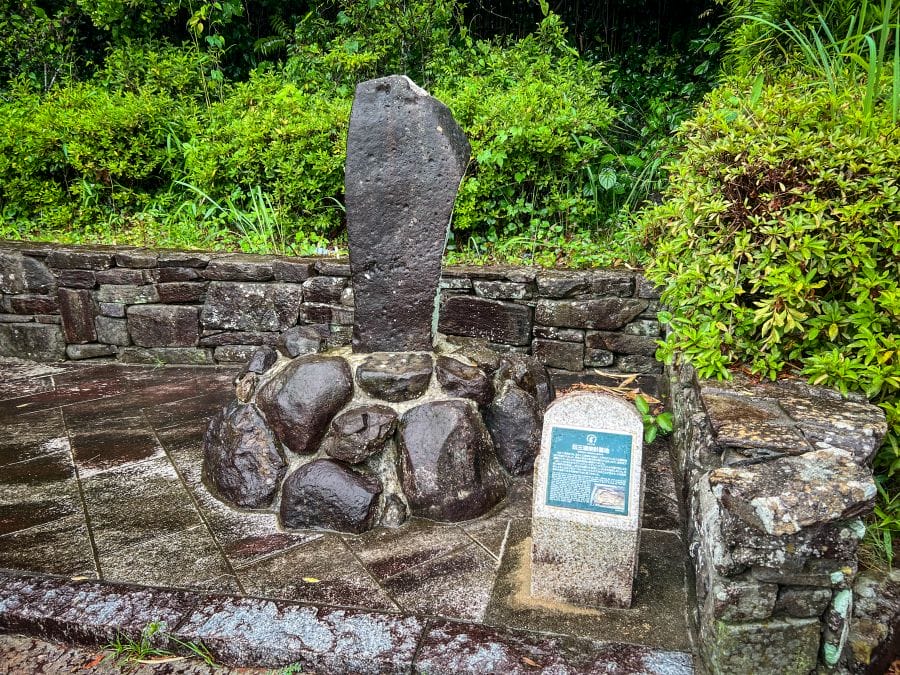
You can still trace the legacy of Adams and Cocks in Hirado today. On a hillside overlooking the harbour in Sakigata Park stands the grave of William Adams, who died in Hirado in 1620. Alongside it is a unique “couple’s tomb” erected in 1964; because Adams’ English wife, Mary, died in Britain, a small pebble was brought from her English gravesite and interred here to symbolically reunite the couple across the oceans. Nearby, a memorial monument honours the eighteen English adventurers who died in Hirado during this era of exploration. While the original English factory building no longer stands, the nearby Dutch Trading Post has been meticulously reconstructed on the waterfront, featuring a museum that houses regional artifacts, trade documents, and exhibits detailing the tumultuous decades when Adams and Cocks attempted to secure England’s foothold in Japan.