Temple 41, Ryūkō-ji
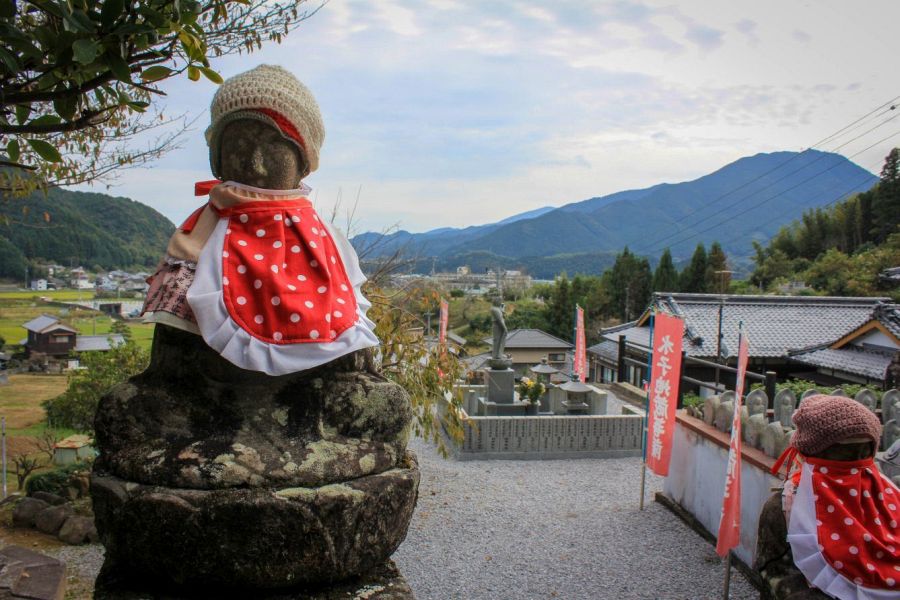
Ryūkō-ji is temple No. 41 on the Shikoku pilgrimage, or Henro. The temple is located in the countryside not far from Uwajima, on a steep hillside with a fine view down a pastoral valley.
What to See
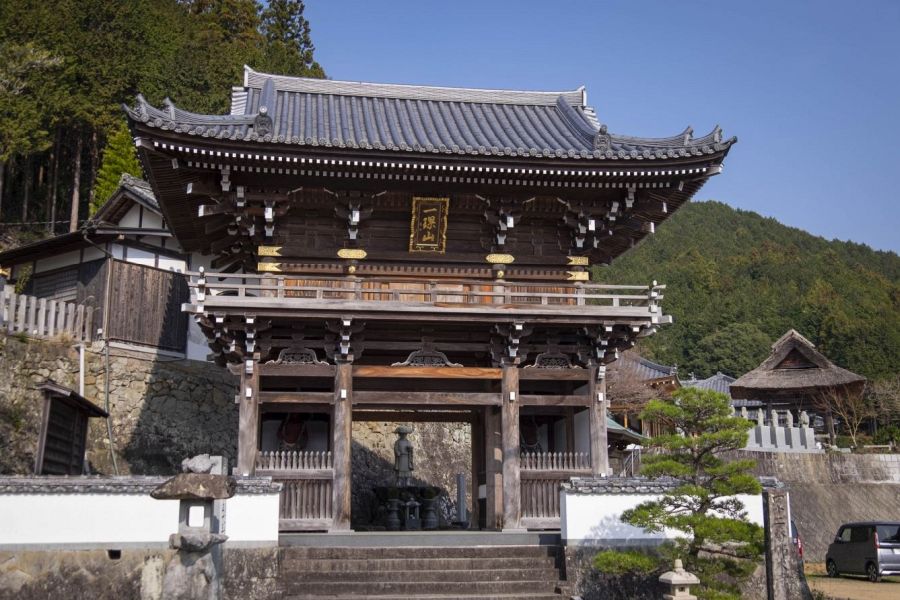
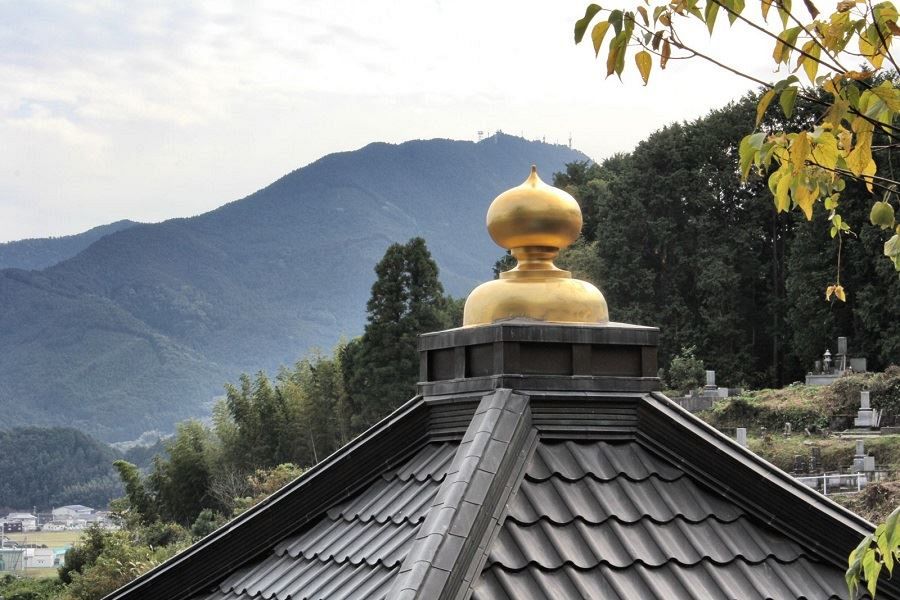
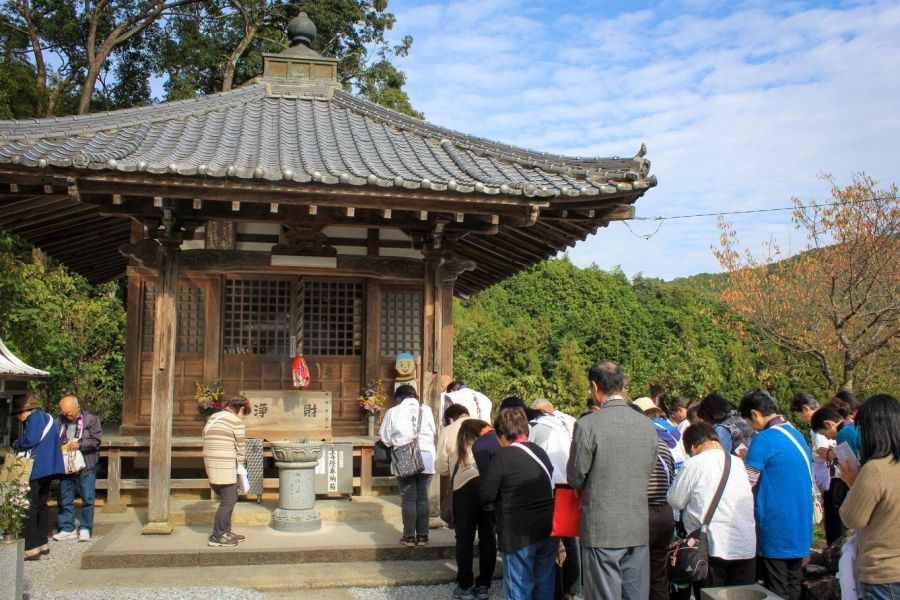
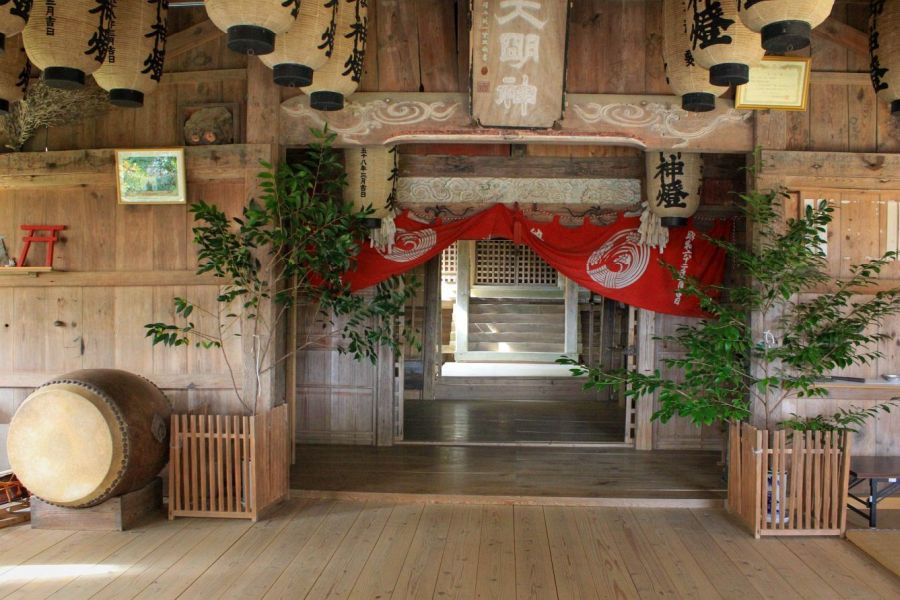
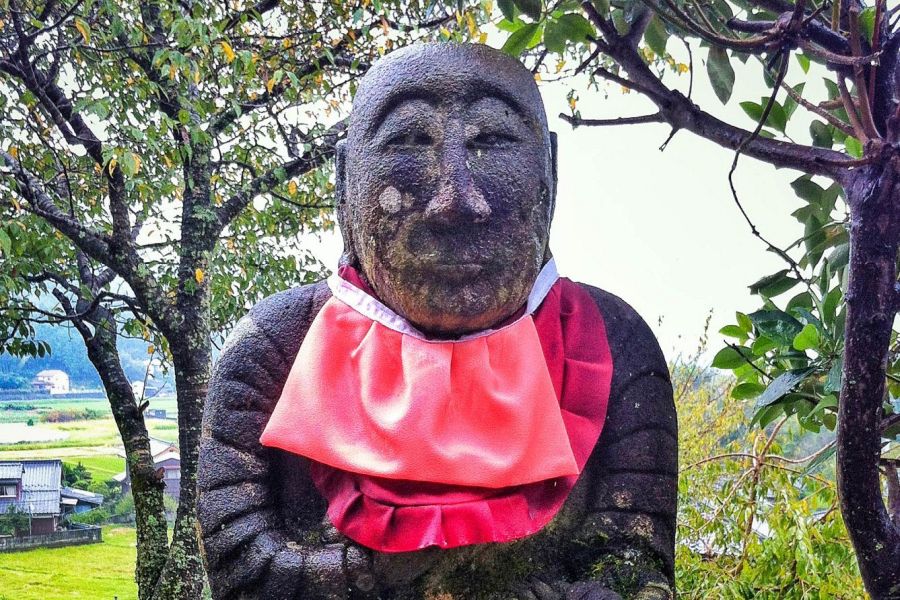
A stone torii gate stands at the entrance to the approach, marking this as a temple with a strong Shintō presence. A rustic eatery for pilgrims stands next to the torii. The sloping approach is lined with houses and allotments on both sides. Steep stone steps bring you into the precincts which are guarded by komainu guardian dogs. On the left is the belfry, and on the right is a statue of Mizuko Jizō. Up a few more steps, on the left is the main hall topped with a gold finial, and on the right is the Daishi Hall, watched over by the seven lucky gods. The temple office is on the left side of the main hall.
A long, steep flight of stone steps leads up to a red torii gate marking the entrance to Inari Shrine. The view from the top of the steps down over the temple and the valley beyond is impressive.
History
The temple was originally located a short distance southeast of the current site but it was destroyed by fire. When the priest Chōzen visited in 1653, only a small hall remained in the rice fields. In 1688, it was moved to its current location, where the Inari Shrine took central place with a Kannon Hall to the east and the Daishi Hall below. By the mid-Edo period, when the “Shikoku Pilgrimage Scenic Spots Illustrated” was published in 1800, the current layout had been established, and it was known as the “Three-Hall Inari” syncretizing Shintō and Buddhism.
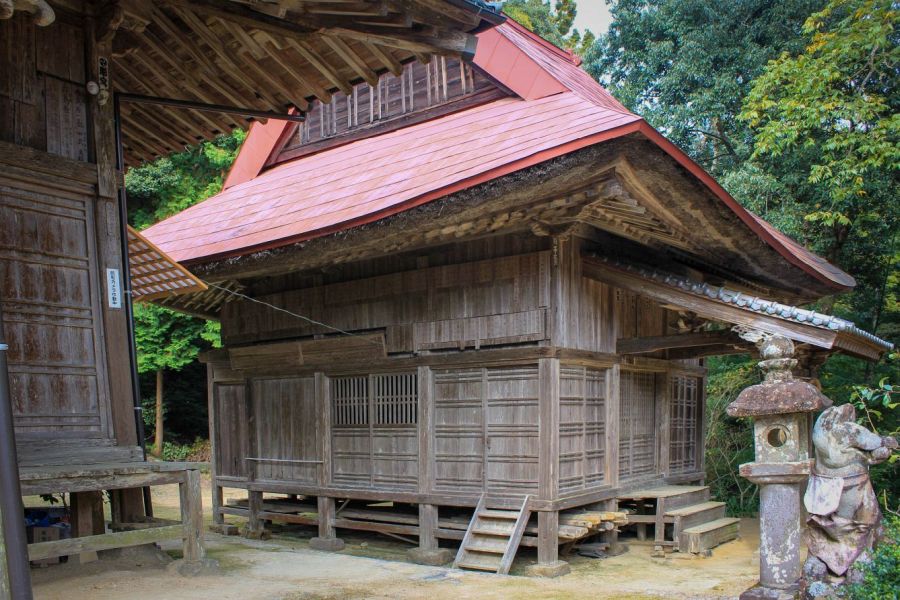
With the separation of Shintō and Buddhism in the Meiji period, Inari Shrine and the temple were separated, and the old main hall became the shrine hall of Inari Shrine. The various Shintō and Buddhist statues were also redistributed into the appropriate buildings according to the new rules.
Legends
According to temple lore, Kūkai encountered an old man with white hair while traveling through this area. Recognizing him as the incarnation of the deity Gokoku Daimyōjin, Kukai carved an image of Inari Myōjin and enshrined it there. Gokoku Daimyōjin is a deity associated with the five grains (wheat, rice, beans, and two species of millet) and is often identified as an incarnation of the Inari deity. Kukai also carved an image of the Eleven-Faced Kannon as the principal image, with Fudō Myō-ō and Bishamonten as attendant deities, indicating his intent that the temple should be the guardian of the Shikoku pilgrimage sites.
The Kannon and Inari Myōjin statues in the main hall, as well as a stone said to be a dragon’s eye, are never shown, and the current priest has never seen them.
Information
Name in Japanese: 龍光寺
Pronunciation: ryū-kō-jee
Address: 173 Mimachō Togari, Uwajima, Ehime