Temple 50, Hanta-ji
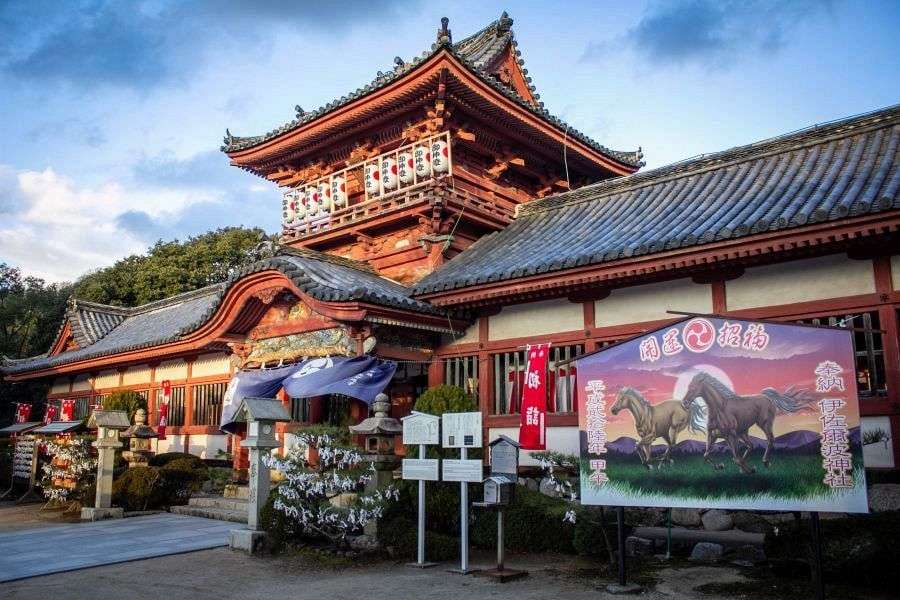
Hanta-ji is temple No. 50 on the Shikoku pilgrimage, or Henro. A winding road up a little slope brings you to Hanta-ji, tucked against a hillside.
What to see
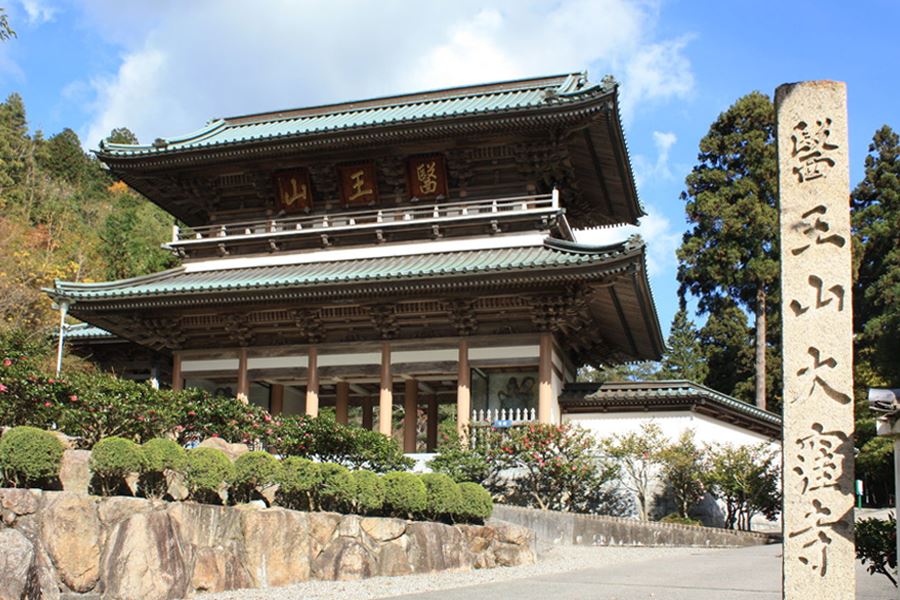
The simple and plain main gate stands between two large ponds inhabited by various kinds of duck. Beyond rises a mountain designated as a Scenic Forest Protection Zone, renowned for its cherry blossoms, wisteria, and autumn foliage. Atop this mountain is the Awajigatōge Pass, one of many fine hiking trails.
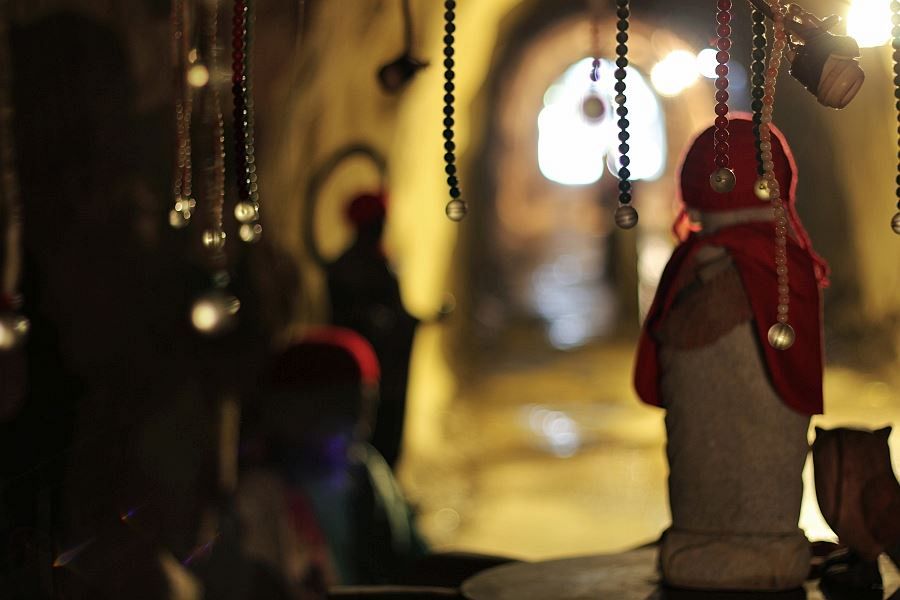
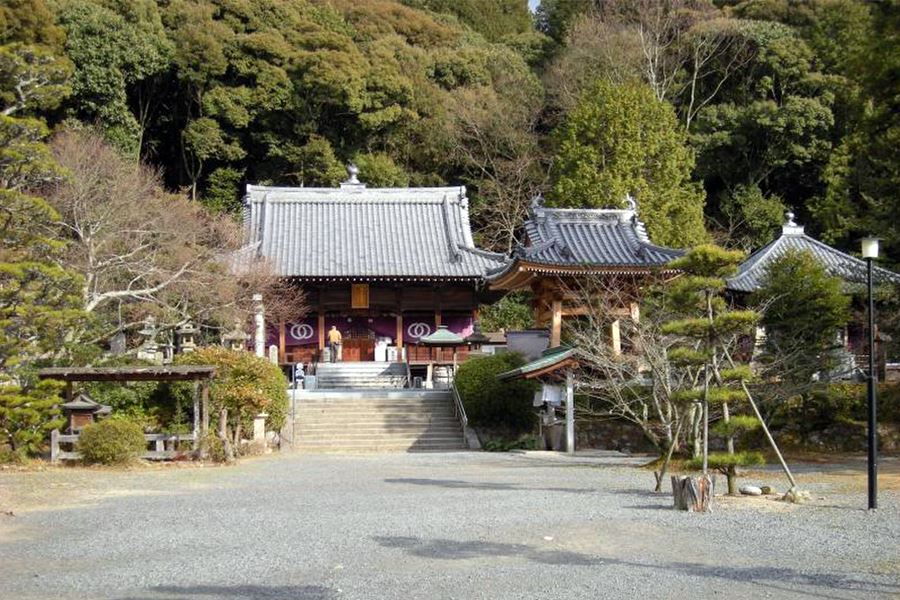
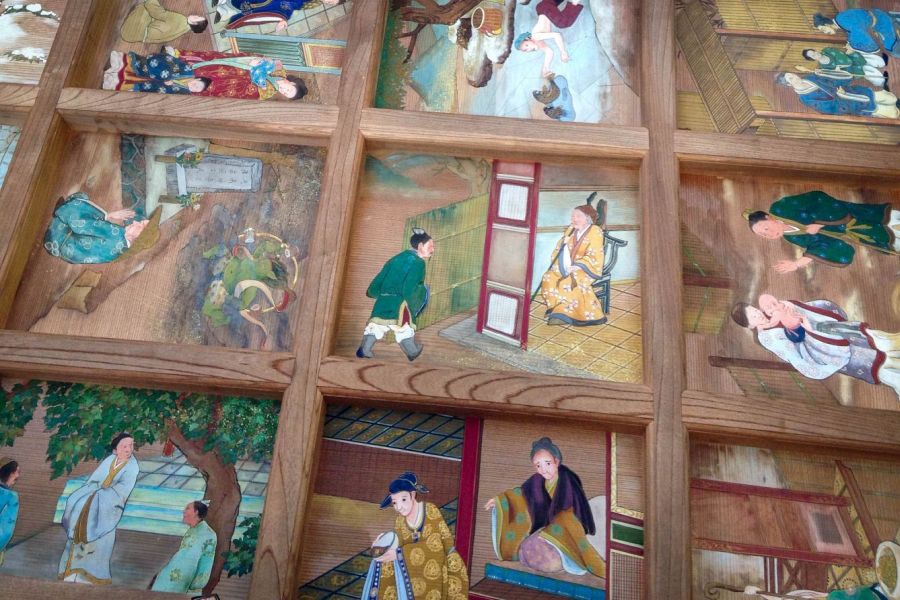
Through the gate, you enter a long gravelled plaza that offers splendid views to the west and south, commanding a vista over Matsuyama Castle and the Seto Inland Sea. On the left is a small Jizō Hall housing six stone statues. On a raised platform stands the priest’s residence and temple office. Notice the rare temply public telephone box. Beyond is a small pond with a Benzaiten shrine. The purification basin is on the right. Ascending the stone steps, the bell tower stands to the right. Paintings on its ceiling depict charming scenes from the Chinese Twenty-Four Filial Exemplars. The bell was donated by believers in 1696.
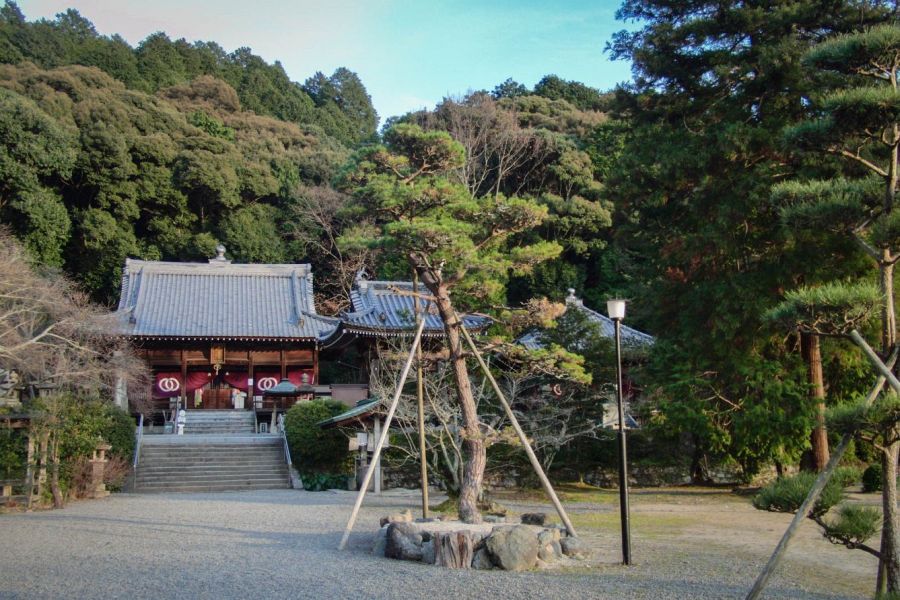
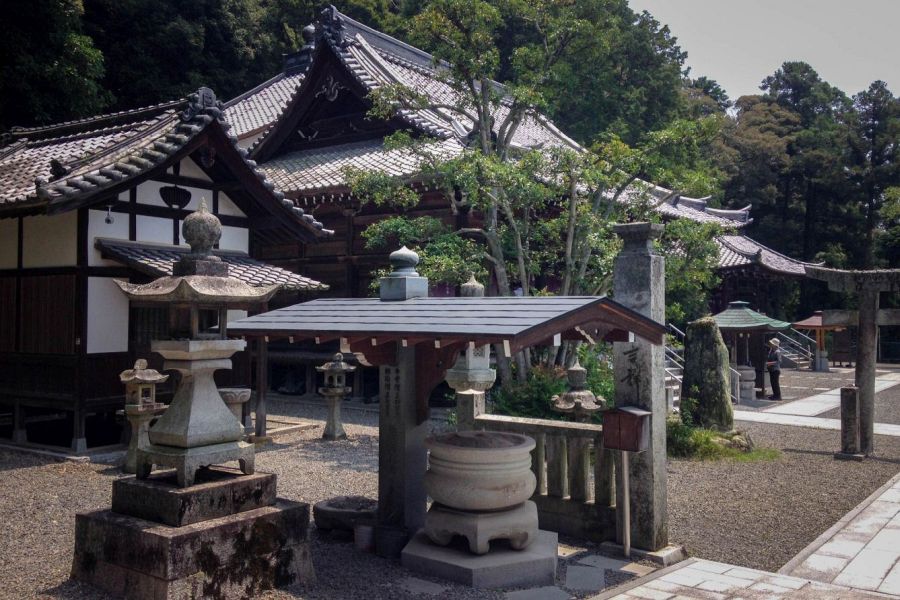
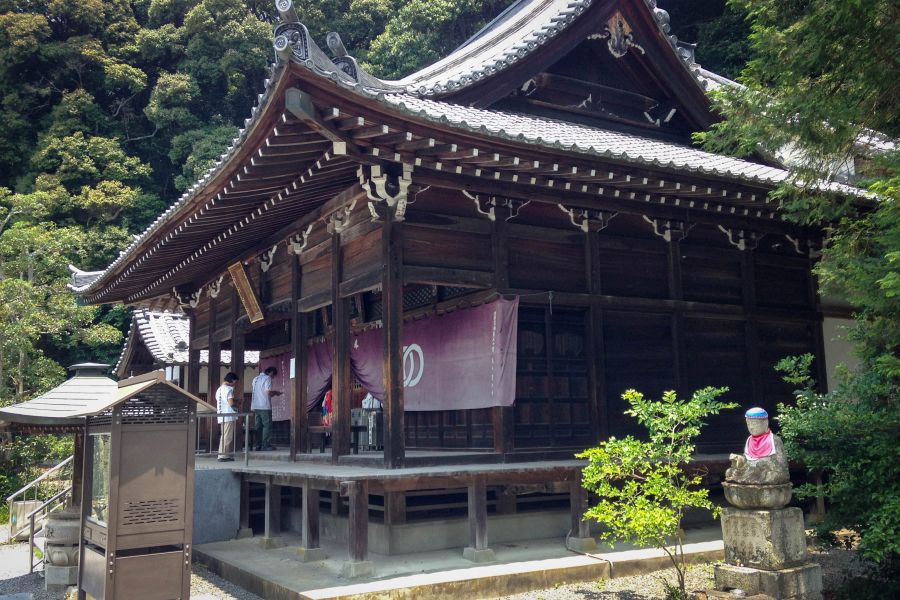
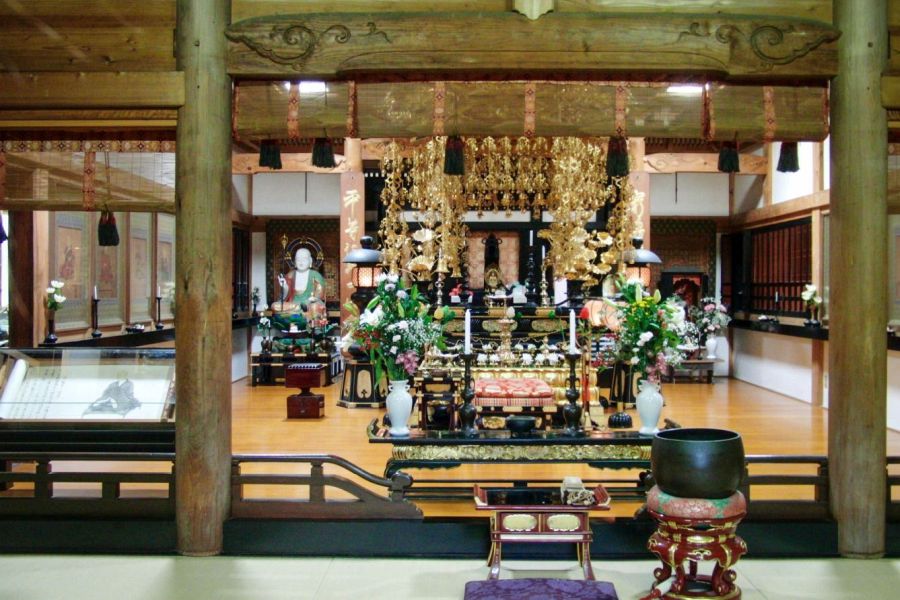
The main hall is located directly in front with the modest Bishamonten Hall to its left. There’s a stone torii gate stands to the left, beyond which lies the Kangi-ten Hall. This houses a secret Buddha, one of the three personal guardian Buddhas of the 4th Shogun, Ietsuna. It attracts many worshippers seeking prosperity in business, protection from misfortune, and success in exams.
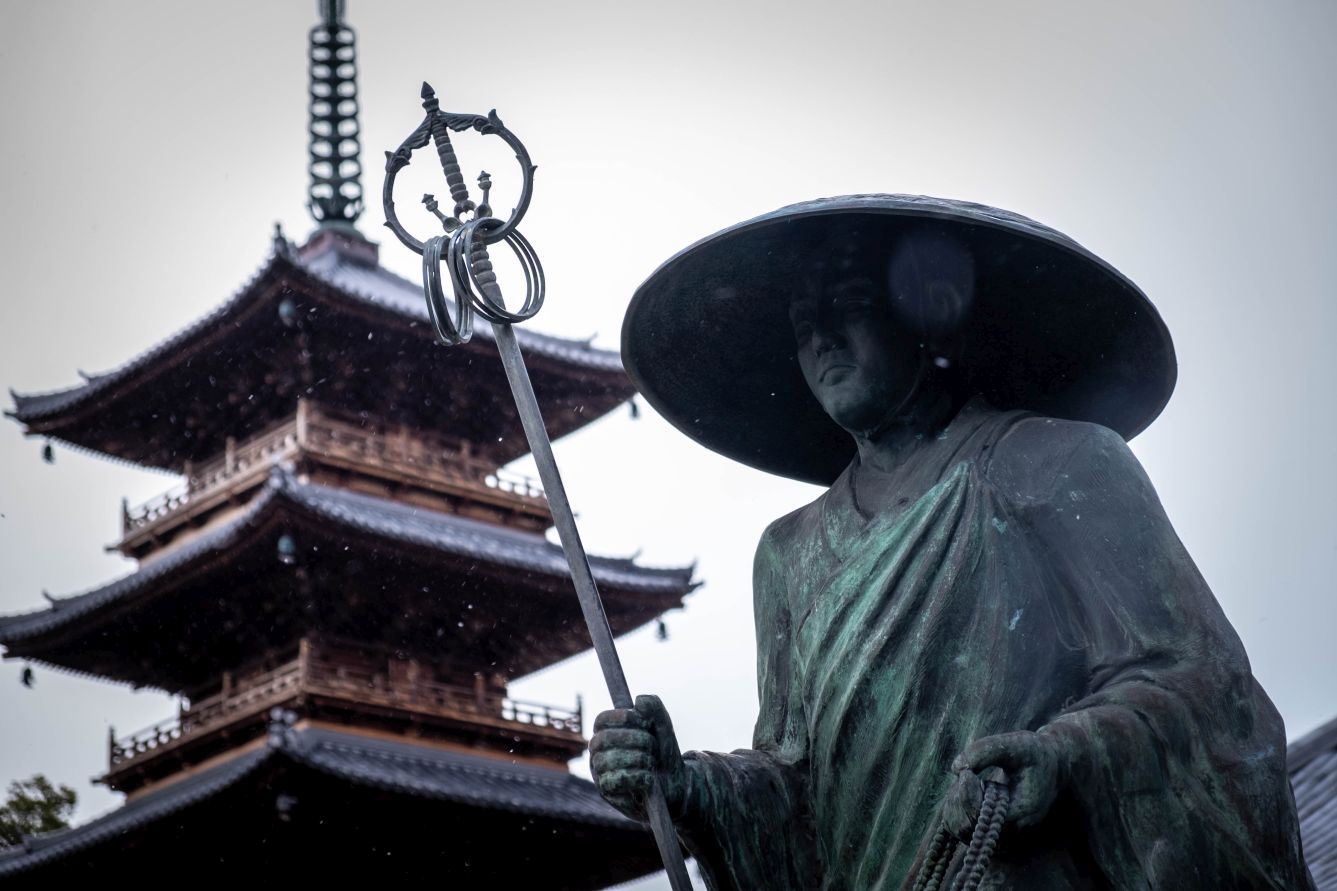
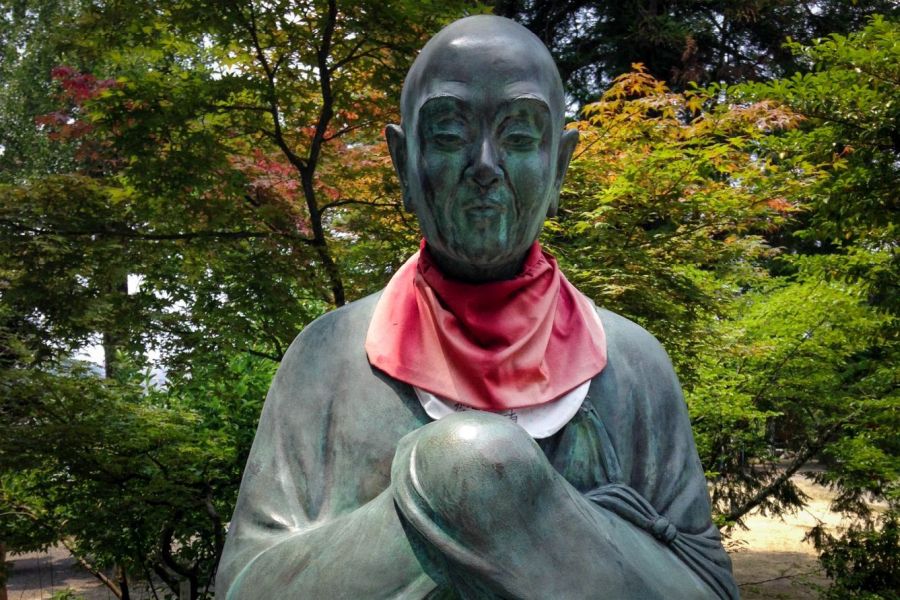
The Daishi Hall is situated to the right of the main hall with a bronze statue of Kūkai.
History
The origin of the temple goes back to the monk Gyōki, who carved and enshrined a statue of Yakushi Nyorai here. Kūkai also stayed at the temple.
After that, the temple declined for a while, until it was revived with the help of the provincial governor, Minamoto Yoriyoshi, and the celebrated monk, Takaren. In 1279, Emperor Gōda ordered Takaren to pray at Hatan-ji to repel the Mongolian invasion.
When Ippen Shōnin, who founded of the Jishu sect in 1275, studied here as a youth, it was a prosperous temple, with 36 buildings. It also controlled 120 other temples. In 1288, in the last year of his life, Ippen gave the temple the three major sutras of Pure Land Buddhism which his father had owned.
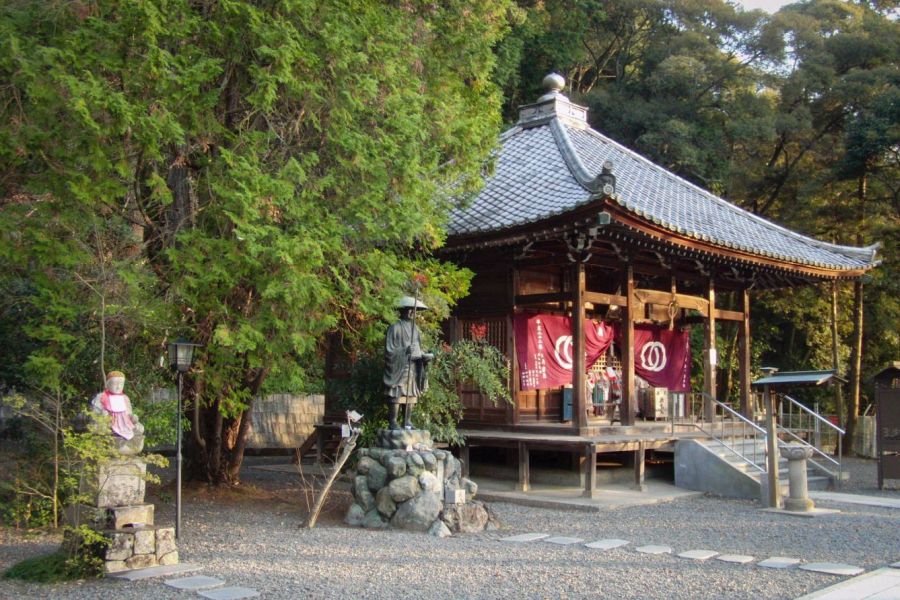
The temple enjoyed the patronage of the Emperors in Kyōto, and subsequently of the Tokugawa shogunate in the Edo period. This patronage brought the temple to its zenith, expanding into a major complex with 66 sub-temples and over 100 branch temples. The symbol of two rings interlinked on the curtain is the crest of the Wakisaka clan who were awarded land in this area for their services at the Battle of Sekigahara in 1600.
Information
Name in Japanese: 繁多寺
Pronunciation: han-tajee
Address: 32 Hataderamachi, Matsuyama, Ehime 790-0912